

OBD-II Code P1070: Manufacturer-Specific Control Module or System Fault
What P1070 means, why it triggers, and how to fix it
- Search your specific vehicle make and model alongside P1070 first, as this manufacturer-specific code means entirely different things for Isuzu (ECM failure), Cadillac (Start/Stop fault), or BMW (vacuum leak).
- For 1994-2004 Isuzu and Honda Passport models, P1070 indicates a critical Engine Control Module (ECM) failure that causes sudden stalling and requires a $400-$900 module replacement.
- On 2016-2019 Cadillac ATS and CTS models, do not replace the Start/Stop module; GM TSB 17-NA-162 dictates a 1.5-hour dealership software update to fix the issue.
- Always test your battery and perform a voltage drop test on module grounds before buying parts, as voltage drops below 12.4V frequently trigger false P1070 codes across multiple brands.
What Does P1070 Mean?
P1070 is a manufacturer-specific code, meaning its definition changes depending on your vehicle. For Isuzu and related GM models, it points to an internal Engine Control Module (ECM) failure. For Honda and Acura, it indicates a secondary air injection system problem. On Cadillac models, it relates to the auto start/stop system. For Volkswagen diesels, it indicates a NOx sensor heater fault, and on BMWs, it points to a fuel trim issue caused by vacuum leaks.
Technical definition: Because P1070 is not a standard SAE code, its formal definition varies. Common definitions include: Isuzu/GM: Engine Control Module (ECM) Internal Test Failure. Honda/Acura: Secondary Air Injection (AIR) Pump Circuit Malfunction. Cadillac: Auto Start/Stop System Fault (RPO Code KL9). Toyota: Turbo Charger Permanent Closed Governor Deviation. Volkswagen: Nitrogen oxides (NOx) sensor heater control short to positive. BMW: Fuel Trim Malfunction Bank 1.
Can I Drive With P1070?
Yes, But With Caution. Driving is possible, but the risk varies significantly by manufacturer. For Isuzu and Honda Passport, it signals an ECM failure that causes sudden stalling, making it unsafe. For Cadillac, Honda, and VW, the vehicle is safe to drive as the fault affects non-essential systems like Auto Start/Stop or emissions controls. However, ignoring an emissions-related fault leads to a failed emissions test and causes expensive downstream damage to the catalytic converter or DPF.
Common Causes
- Faulty Engine Control Module (ECM) (Very Common) — For 1994-2004 Isuzu and Honda Passport models, this code directly indicates an internal processing error within the main engine computer, often caused by age, vibration, or voltage spikes.
- ECM Software Anomaly (Cadillac) (Very Common) — On 2016-2019 Cadillac ATS/CTS models, a software glitch triggers this code. GM TSB 17-NA-162 states the only required repair is reprogramming the ECM with updated software.
- Faulty Secondary Air Injection Pump or Relay (Common) — On Honda and Acura vehicles, the electric pump that pushes air into the exhaust on cold starts fails, or its control relay burns out.
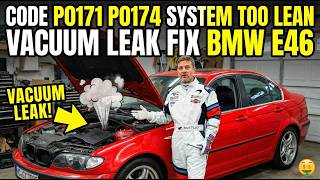
- Cracked or Leaking Air Intake Boot (BMW) (Common) — On BMW models like the Z3 and E46 3-Series, unmetered air enters the engine through cracks in aging rubber air intake boots, causing a lean condition.
- Low Battery Voltage or Charging System Fault (Common) — An undercharged battery (below 12.4V) causes unpredictable electronics behavior, triggering false ECM internal faults (Isuzu) or disabling the start/stop system (Cadillac).
- Damaged Wiring or Poor Ground Connection (Common) — A shorted, corroded, or loose wire triggers the code. On Cadillac CTS models, wiring at the K176 Start/Stop module's X1 connector in the trunk frequently chafes and breaks.
- Faulty NOx Sensor Heater Circuit (Volkswagen) (Less Common) — On Volkswagen TDI models, a short circuit in the NOx sensor's heater element triggers the code and causes an automatic emissions test failure.
- Sticking Turbocharger Actuator/Vanes (Toyota) (Less Common) — On Toyota 1KD-FTV diesel engines, carbon buildup causes the variable nozzle turbocharger (VNT) actuator or vanes to stick, often appearing alongside code P1251.
Symptoms
- Check Engine Light is On — This is the most common and often the only symptom you notice.
- Engine Stalls or Will Not Start — If the code is due to an ECM failure (Isuzu and Honda Passport), the engine stalls while driving or cranks without starting.
- Auto Start/Stop System Disabled — On Cadillac models, the fuel-saving start/stop feature turns off and a warning message appears on the dash.
- Abnormal Noise on Cold Start — On Honda/Acura models, a loud whirring or groaning noise occurs for the first 30-90 seconds after a cold start, indicating a failing secondary air pump.
- Poor Engine Performance or Rough Idle — The vehicle experiences rough idling, hesitation, or a lack of power if there is a significant vacuum leak (BMW).
- Failed Emissions Test (scan-tool only — no driver-felt sign) — A failed secondary air injection pump (Honda), bad NOx sensor heater (Volkswagen), or major vacuum leak (BMW) causes an automatic emissions test failure.
Diagnostic Flowchart
Tap your situation to follow the diagnostic path that matches what you're seeing on this code.
Common Fixes & Costs
- ECM Reprogram (Software Update) — Parts: $0, Labor: $150-$400, ~1.5 hr book time (Professional)
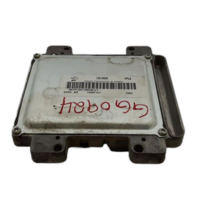
- Replace the Engine Control Module (ECM)
— Parts: $250-$600, Labor: $150-$300, ~1.2 hr book time
(Professional)
2002 Isuzu Rodeo (3.2L): OEM 8972648803 / 12216499 (Alt: Cardone (Remanufactured), FS1 Inc. (Remanufactured)) - Replace Air Intake Boot(s)
— Parts: $40-$120, Labor: $75-$150, ~0.7 hr book time
(DIY)
BMW E46 325i/330i (M54): OEM 13541705209 (Upper), 13541438759 (Lower) (Alt: URO Parts, Meyle, Rein) - Replace the Secondary Air Injection Pump
— Parts: $150-$400, Labor: $100-$200, ~1 hr book time
(Intermediate)
2007 Honda Accord / 2008 Acura TL: OEM 36281-RAA-A01 (Valve Assy) (Alt: Dorman 306-010 (Pump Assembly), Standard Motor Products) - Replace NOx Sensor
— Parts: $300-$600, Labor: $100-$150, ~0.8 hr book time
(Intermediate)
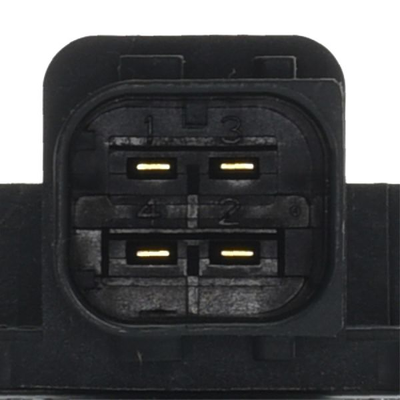
2013-2015 VW Jetta/Passat TDI: OEM 04L907807AP (Alt: Bosch (OEM Supplier), Walker Products) - Replace the Car Battery — Parts: $150-$350, Labor: $0-$50, ~0.3 hr book time (DIY)
- Repair Damaged Wiring or Ground — Parts: $5-$25, Labor: $150-$400, ~2.5 hr book time (Professional)
Used vs. New Parts: Buying Guide
When a used part is worth it: For expensive electronic modules like an ECM or a NOx sensor on an older, high-mileage vehicle, a used or remanufactured part is a cost-effective option. Remanufactured parts are rebuilt to factory specs and are generally safer than raw used parts.
Donor-vehicle mileage cap: roughly under 100000 miles for the part to have meaningful remaining life.
Donor quality checklist:
- Verify the exact part number matches; superseded numbers are often incompatible.
- Purchase from a reputable supplier that tests components and offers a warranty.
- Avoid parts from vehicles scrapped due to flood or fire damage.
Decision logic:
- If The part is an ECM for a vehicle with an immobilizer → Buy from a supplier who programs it to your VIN before shipping, or prepare for professional programming costs.
- If The vehicle is newer or under warranty → Buy a new OEM part to ensure compatibility and avoid voiding the warranty.
- If The part is a NOx sensor or Secondary Air Pump → A new aftermarket part from a quality brand provides a better balance of cost and reliability compared to a used part with unknown history.
Warranty tradeoff: Used parts typically come with a 30-90 day warranty. Remanufactured parts often have a 1-year to lifetime warranty. New OEM parts carry the manufacturer's warranty, which is typically 1-2 years.
Worst-case if a used part fails: $300-$800 if a used/remanufactured ECM fails after installation, requiring repeat labor for removal, replacement, and potential reprogramming.
What Happens If You Wait — Timeline
- 0-1 month: Code sets and Check Engine Light turns on. For emissions-related faults (Honda AIR, VW NOx, BMW vacuum leak), there are no noticeable driving symptoms. For Isuzu (ECM) or Cadillac (Start/Stop), intermittent electronic glitches begin. (MPG impact: 0-5%% · Added cost: $0)
- 1-4 months: For a BMW with a vacuum leak, fuel trims run consistently high (>10%), causing a noticeable drop in fuel economy and a rough idle. For a Honda, the AIR pump becomes progressively louder or seizes. For a VW, the failed NOx sensor prevents proper SCR/DPF operation. (MPG impact: 5-10%% · Added cost: $50-150 in wasted fuel.)
- 4-12 months: Sustained lean conditions from a vacuum leak (BMW) or improper emissions control (VW) stress the catalytic converter or DPF by causing them to run too hot or become contaminated. The Isuzu's ECM fault leads to frequent stalling, becoming a safety hazard. (MPG impact: 10-15%% · Added cost: $0-$500 (Early stage damage to emissions components may not yet be irreversible).)
- 12+ months: Catastrophic failure of downstream components. The catalytic converter substrate melts from prolonged high temperatures (BMW), costing thousands to replace. The DPF on a VW becomes permanently clogged with soot. The Isuzu's ECM fails completely, resulting in a no-start condition. (MPG impact: 15-25%% · Added cost: $1,500-$3,500+ for catalytic converter or DPF replacement, plus potential towing fees.)
Cost of Not Fixing It
- Immediate: For Isuzu/Passport, risk of sudden engine stalling creates a safety hazard. For all others, an automatic failure of any state emissions inspection. (Added cost: Towing costs ($100-$250) if stranded.)
- 1-6 months: On Honda/BMW/VW, ignoring the emissions-related fault reduces fuel economy and puts extra stress on the catalytic converter or DPF. (Added cost: $50-$200 in wasted fuel.)
- 6+ months: Prolonged rich or lean conditions (BMW) or a non-functional AIR system (Honda) overheats and destroys the catalytic converter. A bad NOx sensor (VW) leads to DPF and SCR system damage. (Added cost: $1200-$3000+ for catalytic converter, DPF, or SCR system replacement.)
Diagnosis Steps
- Identify Your Vehicle's Specific Definition
Search online for "P1070 [Your Car's Make, Model, and Year]" to determine what the code means for your specific vehicle (e.g., ECM, Air Pump, NOx Sensor, or Vacuum Leak).
Tools: Internet access (Beginner) - Scan for Additional Codes and Check TSBs
Use an OBD-II scanner to read all stored codes. For Cadillac, immediately check for TSBs 17-NA-162, PIE0497, and PI1519B/D, as they provide specific repair paths.
Tools: OBD-II Scanner (Beginner) - Test the Battery and Charging System
Ensure the battery is fully charged (above 12.4V at rest) and the alternator is charging correctly (13.2-14.8V when running). Low voltage is a primary cause of this code on Isuzu and Cadillac models.
Tools: Multimeter, Battery Tester (Beginner) - Inspect for Vacuum Leaks (BMW)
Visually inspect the upper and lower rubber intake boots between the mass air sensor and the throttle body. Look for cracks in the accordion sections. A smoke test is the most effective way to confirm a leak.
Tools: Flashlight, Smoke Machine (Intermediate) - Test the Secondary Air Injection System (Honda/Acura)
On a cold engine, command the AIR pump on with a bi-directional scanner. If it doesn't run, check the AIR pump relay and fuse. Apply 12V directly to the pump motor with jumper wires; if it runs, the relay or wiring is the issue. If not, the pump is bad.
Tools: Bi-directional Scan Tool, Multimeter, Jumper Wires (Intermediate) - Inspect for Damaged Wiring (Cadillac)
On Cadillac CTS/ATS, open the trunk and pull back the liner on the driver's side. Inspect the wiring at the X1 connector of the K176 Start/Stop Control Module for cut, chafed, or broken wires. Check the G402 ground nut for tightness.
Tools: Flashlight, Trim Removal Tools (Intermediate) - Pro Tip: Perform a Voltage Drop Test on ECM/Module Grounds
For suspected ECM (Isuzu) or module (Cadillac) issues, set a multimeter to a low DC volts scale. Place the positive lead on the negative battery terminal and the negative lead on the module's ground pin. With the key on, the reading must be less than 0.1V (100mV). Anything over 0.1V confirms a bad ground.
Tools: Multimeter, Wiring Diagram (Advanced) - Pro Tip: Analyze Fuel Trim and MAF Data (BMW)
Monitor live data at warm idle. Mass Airflow (MAF) should read 3.0-5.0 g/s for a 2.5L/3.0L engine. Long Term Fuel Trims (LTFT) consistently above +10% strongly suggest a vacuum leak, which is the root cause of P1070 on these models.
Tools: OBD-II Scan Tool with Live Data (Advanced) - Pro Tip: Test NOx Sensor Heater Circuit Resistance (VW)
Disconnect the NOx sensor connector. Measure the resistance between the two heater circuit pins on the sensor side. A good heater circuit has a resistance between 3 and 15 ohms. A reading of infinity (OL) indicates an open circuit (bad heater).
Tools: Multimeter, Wiring Diagram (Advanced) - Pro Tip: Check AIR Control Driver Signal (Honda/Acura)
Using an oscilloscope, back-probe the diagnostic signal wire from the Air Injection Control Driver (AID) to the ECM. When the secondary air system is commanded ON, the duty cycle signal should be 70%-90%. If stuck at a fixed value like 40%, the AID or its circuits have failed.
Tools: Scan Tool with Oscilloscope, Wiring Diagram (Advanced)
When This Code Triggers (Freeze-Frame Conditions)
- Engine Coolant Temp: Varies by fault (For AIR pump faults (Honda), temp is low (<122°F/50°C) as the system runs at cold start. For ECM or vacuum leak issues, temp is at full operating range (180-210°F).)
- Engine RPM: Varies by fault (For vacuum leaks (BMW), the code sets at idle (600-800 RPM) where unmetered air has the greatest effect. For ECM failures (Isuzu), it sets at steady cruise (1500-2500 RPM).)
- Engine Load: 20-50% (The fault is captured under light to moderate engine load, such as steady-state cruising or gentle acceleration.)
- Fuel System Status: Closed Loop (For most faults (except cold-start AIR pump issues), the code sets when the engine is in closed loop, using O2 sensor data to control fueling.)
- Long Term Fuel Trim (LTFT): > +10% (For BMW P1070, the key freeze frame data is a high positive long-term fuel trim, indicating the computer is adding significant fuel to compensate for a vacuum leak.)
Related Codes
- P1251 — On Toyota 1KD-FTV engines, P1251 (Turbo stepper motor circuit) is very commonly seen with P1070. P1070 indicates a deviation in the turbo governor, while P1251 points directly to the actuator circuit.
- P0410 / P0411 — On Honda/Acura vehicles, these codes are often seen with P1070. P0410 and P0411 are general secondary air system codes, while P1070 points specifically to an electrical fault in the AIR pump circuit itself.
- P0171 / P0174 — On a BMW where P1070 is a fuel trim code, it is almost always accompanied by P0171 or P0174 (System Too Lean). P1070 is the manufacturer-specific code for the condition that causes the generic lean codes.
- U-Series Codes (e.g., U0100) — If P1070 appears with a U-code like U0100 (Lost Communication with ECM), it is a strong indicator that the ECM is failing. The U-code confirms that other modules can no longer communicate with the ECM.
Climate & Environmental Factors
- Cold Weather: Significantly reduces a battery's chemical efficiency and available voltage. This voltage drop is a primary trigger for the P1070 code on Isuzu and Cadillac models, which are highly sensitive to system voltage.
- High Humidity and Road Salt: Saltwater spray and high humidity accelerate the corrosion of copper wiring and ground points. This directly causes the known wiring failures in the Cadillac trunk area and high resistance in the ECM ground circuit on Isuzu models.
- Age and Heat Cycles: Prolonged exposure to engine heat causes rubber components, like BMW intake boots, to become brittle and crack. This is the definitive cause of the vacuum leaks that trigger P1070 on those vehicles.
How to Clear the Code After You Fix It
- Fix the underlying mechanical or electrical fault.
- Use an OBD-II scan tool to clear the Diagnostic Trouble Codes (DTCs).
- Perform a complete drive cycle to allow the readiness monitors to run.
Drive cycle (~30 minutes): A general drive cycle includes: 1. Cold start (engine off for 8+ hours). 2. Idle for 2-3 minutes with electrical loads on (like A/C and rear defroster). 3. Drive for 15 minutes in mixed city/stop-and-go conditions. 4. Drive for 5-10 minutes at a steady highway speed (55-60 mph). 5. Let the vehicle cool down.
Readiness monitors affected: Comprehensive Component Monitor (CCM), Catalyst (CAT) Monitor, Oxygen (O2) Sensor Monitor, Secondary Air System (AIR) Monitor
Before emissions retest: drive at least 100 miles to fully set monitors.
Watch out for:
- Clearing the code without fixing the root cause results in the code returning.
- Taking the vehicle for an emissions test immediately after clearing codes results in a 'Not Ready' failure because the internal self-tests have not completed.
- Simply driving on the highway for a long distance is not enough; a mix of driving conditions is required to set all monitors.
Will This Fail Emissions / State Inspection?
Yes — this code typically fails an OBD-II emissions inspection.
- California: An illuminated Check Engine Light is an automatic failure. After clearing the code, you must complete a full drive cycle. California only allows the EVAP monitor to be 'Not Ready' on most vehicles.
- New York: A Check Engine Light results in an automatic failure. NYS allows one readiness monitor to be incomplete for model years 2001 and newer.
- Texas: In the 17 counties requiring emissions testing, an illuminated Check Engine Light is an automatic fail. Texas allows one monitor to be 'Not Ready' for 2001 and newer vehicles.
Most Commonly Affected Vehicles
- Isuzu Rodeo (1994-2004) — Prone to ECM failures that set this code. Low battery voltage is a common trigger. The ECM is a known failure point on these models.
- Honda Passport (1994-2002) — This vehicle is a rebadged Isuzu Rodeo and shares the exact same ECM failure issues. Diagnosis is identical to the Rodeo.
- Cadillac ATS / CTS (2016-2019) — Code P1070 is specific to the Auto Start/Stop system. For 2016-2018 models, check TSB 17-NA-162 for an ECM reprogram. For all years, check for damaged wiring in the trunk near the K176 module.
- Honda Accord (2005-2012) — The code typically points to a failure of the secondary air injection pump or its relay. The pump part number varies between early (2005-2007) and late (2008-2012) models.
- Acura TL (2004-2008) — Shares its platform with the Honda Accord, and P1070 is commonly related to the secondary air injection system. Prevalent on 3.2L and 3.5L V6 models.
- Volkswagen Jetta / Golf / Passat (TDI) (2009-2015) — On diesel models, this code points to a short in the NOx sensor heater circuit. Ensure you have the correct updated part number for your VIN (e.g., 04L907807AP).
- BMW Z3 / 3-Series (E46) (1998-2006) — Commonly triggered by unmetered air from cracked rubber intake boots. The upper boot (13541705209) and lower boot (13541438759) are frequent failure points on M52 and M54 engines.
- Toyota Hilux / Land Cruiser / Prado (2005-2015) — On models with the 1KD-FTV diesel engine, this code indicates the variable nozzle turbocharger (VNT) governor is stuck or the stepper motor has failed. Frequently appears with code P1251.
Manufacturer-Specific Notes
- Isuzu / Honda (Passport): The code frequently condemns the ECM, but a weak battery is a very common trigger that must be ruled out first. Check the main ECM ground connection for corrosion before replacing the module.
- General Motors (Cadillac): Do not replace parts for P1070 until you check for TSBs. GM has issued multiple bulletins for this code, with fixes ranging from a simple ECM software update (TSB 17-NA-162) to specific wiring repairs in the trunk.
- Honda / Acura: The secondary air injection pump only operates for a minute or two on a cold start to heat the catalytic converter faster. A failure here does not affect drivability but causes an automatic emissions test failure.
- BMW: The rubber intake boots are considered a maintenance item. They crack from age and heat, causing vacuum leaks. If you have a P1070/P0171/P0174 on an older E46 or Z3, the intake boots are the most likely cause.
- Volkswagen (TDI): Check warranty status before repair. The NOx sensor is part of the emissions system and is often covered under the 'Dieselgate' Extended Emissions Warranty, potentially making the repair free at a VW dealer.
Real Owner Stories
2017 Cadillac CTS at 65,000 miles
Check Engine Light came on, and the Auto Start/Stop feature stopped working. No other symptoms.
What they tried:
- Took it to an independent shop that diagnosed a faulty Start/Stop Control Module and quoted $950 for replacement.
- Owner searched forums for P1070 on their specific car and found GM TSB 17-NA-162.
- Took the car to a Cadillac dealership and specifically requested the TSB be performed.
Outcome: Dealer confirmed the TSB applied and reprogrammed the ECM for a 1.5-hour labor charge ($280). The code was resolved without replacing any parts.
Lesson: Always search for Technical Service Bulletins (TSBs) for your specific vehicle and code. A simple software update saved over $600 compared to replacing a module that wasn't broken.
2008 Honda Accord at 115,000 miles
Loud 'vacuum cleaner' noise from the engine bay for the first 60 seconds after a cold start, followed by a Check Engine Light with codes P1070 and P0410.
What they tried:
- Initial diagnosis pointed to a failed Secondary Air Injection (SAI) pump.
- Before buying a new $300 pump, the owner tested the old one by applying 12V directly from the battery; the pump ran perfectly.
- Checked the SAI pump fuse (good) and swapped the SAI pump relay with an identical one from the horn circuit.
Outcome: After swapping the relay, the horn stopped working and the SAI pump worked correctly on the next cold start. The Check Engine Light did not return. A new relay cost $15.
Lesson: Don't immediately replace the most expensive part. A loud pump is often a symptom of a failing relay causing erratic operation. A simple relay swap is a free and effective diagnostic test.
2003 BMW 325i (E46) at 140,000 miles
Check Engine Light on with codes P1070, P0171, and P0174 (System Too Lean, Banks 1 & 2). Car had a slightly rough idle and reduced fuel economy.
What they tried:
- Replaced the Mass Airflow (MAF) sensor, no change.
- Replaced both pre-cat O2 sensors, no change.
- Performed a 'smoke test' by forcing smoke into the intake system. Smoke was seen billowing from a large crack in the lower intake boot.
Outcome: Replaced both the upper and lower rubber intake boots ($60 for parts). Cleared codes, and the fuel trims returned to normal. The lean codes and P1070 did not come back.
Lesson: For lean codes on older BMWs, a vacuum leak is the most common cause. Don't waste money on expensive sensors before thoroughly inspecting the intake boots for cracks. A smoke test is the definitive way to find hidden leaks.
2001 Isuzu Rodeo at 160,000 miles
Vehicle randomly stalled while driving, sometimes refusing to restart for 10-15 minutes. Check Engine Light was on for P1070 (ECM Internal Failure).
What they tried:
- Mechanic initially suspected a fuel pump issue, but pressure was good.
- Tested the battery and alternator, both were healthy.
- Checked the main ECM ground connection and found it was clean and tight.
- Given the symptoms and the specific code definition for this vehicle, the mechanic diagnosed a failing ECM.
Outcome: A remanufactured ECM was ordered, pre-programmed to the vehicle's VIN ($850). After installation and a security relearn procedure, the stalling issue was completely resolved.
Lesson: While it's wise to rule out cheaper causes like low voltage first, P1070 on an Isuzu combined with random stalling is a classic sign of internal ECM failure. Replacing the computer is the correct solution.
How to Prevent This Code From Triggering
- Perform regular battery terminal cleaning and protection (Every 6 months or during oil change) — Corrosion on battery terminals increases electrical resistance and lowers system voltage. For voltage-sensitive vehicles like Isuzu and Cadillac, this prevents the random triggering of module fault codes like P1070.
- Test battery health annually (Once per year (especially before winter)) — A weak battery is a primary cause of P1070 on several makes. An annual load test identifies a failing battery before it causes intermittent electronic issues or leaves you stranded.
- Inspect and clean engine and chassis ground connections (Every 2-3 years or if in a rust-prone area) — A corroded or loose ground point causes high resistance, forcing electrical current to find other paths and tricking modules into thinking there's an internal fault. Disconnecting, cleaning, and re-securing grounds is key.
- For VW TDI, use a diesel fuel additive and ensure complete DPF regenerations (Periodically) — Soot and contamination are major causes of NOx sensor failure. Using quality fuel and additives promotes cleaner combustion. Allowing the DPF to complete its regeneration cycles helps burn off contaminants.
- For Honda/Acura, listen for changes in the AIR pump sound (On cold starts) — The secondary air pump check valve fails, allowing exhaust moisture back into the pump, causing it to rust. If the pump sounds louder or groans, it's an early warning. Replacing a faulty check valve prevents the failure of the expensive pump assembly.
Frequently Asked Questions
What are the most common misdiagnosis mistakes for P1070?
The most common mistake is replacing the ECM on an Isuzu Rodeo or Honda Passport without first testing the battery and charging system. The second is replacing the Auto Start/Stop module on a Cadillac when the true cause is a known software glitch fixed by a dealer reprogram (TSB 17-NA-162). Always verify voltage and TSBs first.
My car has P1070 but drives fine. Can I ignore it?
You should not ignore it. While some causes, like a failed secondary air pump on a Honda, do not affect drivability, they cause an automatic emissions test failure. If the code is on an Isuzu, it signals an impending ECM failure that will leave you stranded.
What does P1070 mean on my 2017 Cadillac ATS?
On a 2016-2019 Cadillac ATS or CTS, P1070 means there is a fault in the Auto Start/Stop system. The most common cause is a software issue that requires a dealer to reprogram the ECM per TSB 17-NA-162. Other causes include a weak battery or damaged wiring in the trunk.
Can a bad ground cause code P1070?
Yes. A poor ground connection to the ECM (Isuzu) or the Start/Stop control module (Cadillac G400/G402) is a known cause. A voltage drop test on the ground circuit confirms this; a reading over 0.1V indicates a problem requiring repair.
How much does it cost to fix P1070?
Costs vary widely by manufacturer. A software reprogram for a Cadillac is typically $150-$400, while a secondary air pump replacement on a Honda costs $250-$600. A full ECM replacement on an Isuzu is the most expensive fix, ranging from $400 to $900.
Will clearing the code make it go away?
No. Clearing the code turns off the Check Engine Light temporarily, but it returns as soon as the vehicle's computer runs its self-test and detects the hard fault again.
Is the P1070 code serious?
The severity is moderate to high depending on the brand. An ECM issue on an Isuzu is very serious and causes stalling. An air pump on a Honda or NOx sensor on a VW is less serious for drivability but prevents you from passing an emissions test.
What is the difference between P1070 and P0170?
P0170 is a generic OBD-II code for 'Fuel Trim Malfunction (Bank 1)'. On BMWs, P1070 is a manufacturer-specific version of this code providing more detail about a vacuum leak. On Isuzu models, the two codes are unrelated; P1070 is an ECM fault while P0170 is a separate fuel system issue.
Key Takeaways
- Search your specific vehicle make and model alongside P1070 first, as this manufacturer-specific code means entirely different things for Isuzu (ECM failure), Cadillac (Start/Stop fault), or BMW (vacuum leak).
- For 1994-2004 Isuzu and Honda Passport models, P1070 indicates a critical Engine Control Module (ECM) failure that causes sudden stalling and requires a $400-$900 module replacement.
- On 2016-2019 Cadillac ATS and CTS models, do not replace the Start/Stop module; GM TSB 17-NA-162 dictates a 1.5-hour dealership software update to fix the issue.
- Always test your battery and perform a voltage drop test on module grounds before buying parts, as voltage drops below 12.4V frequently trigger false P1070 codes across multiple brands.
Helpful Videos
Shop the Parts Behind P1070
Below are the parts most often responsible for code P1070, ranked by how frequently each one is the actual culprit (per the diagnosis above). Tap any to see what we have for your vehicle.





The information in this article is provided for general reference and educational purposes only. Vehicle specifications, procedures, and part compatibility can vary by production date, trim level, and region. Always consult your vehicle's factory service manual and verify part numbers before purchasing or performing repairs. Safety-critical components such as airbags, seat belts, and braking systems should be installed by a qualified professional.
- 🧭 Diagnostic Flowchart
- 🎬 Helpful Videos
- 🛍️ Shop This Part
- What Does P1070 Mean?
- Can I Drive With P1070?
- Common Causes
- Symptoms
- Common Fixes & Costs
- Used vs. New Parts: Buying Guide
- What Happens If You Wait — Timeline
- Cost of Not Fixing It
- Diagnosis Steps
- When This Code Triggers (Freeze-Frame Conditions)
- Related Codes
- Climate & Environmental Factors
- How to Clear the Code After You Fix It
- Will This Fail Emissions / State Inspection?
- Most Commonly Affected Vehicles
- Manufacturer-Specific Notes
- Real Owner Stories
- 2017 Cadillac CTS at 65,000 miles
- 2008 Honda Accord at 115,000 miles
- 2003 BMW 325i (E46) at 140,000 miles
- 2001 Isuzu Rodeo at 160,000 miles
- How to Prevent This Code From Triggering
- Frequently Asked Questions
- What are the most common misdiagnosis mistakes for P1070?
- My car has P1070 but drives fine. Can I ignore it?
- What does P1070 mean on my 2017 Cadillac ATS?
- Can a bad ground cause code P1070?
- How much does it cost to fix P1070?
- Will clearing the code make it go away?
- Is the P1070 code serious?
- What is the difference between P1070 and P0170?
- Key Takeaways
- 🎟️ Get 5% Off