

P1072 (Likely P0172) on 2010-2017 Audi A8 4.2L V8: Rich Fuel Causes and Fixes
P1072 is not a valid code for this Audi. It is almost certainly a typo for P0172 (System Too Rich, Bank 1). On the 4.2L V8 (engine code: CDRA), this is very often caused by a failing high-pressure fuel pump (HPFP) leaking gasoline into the engine oil. Expect to replace the HPFP and change the oil and filter. It is highly recommended to replace both pumps simultaneously.
- The code P1072 is not valid; the actual code is almost certainly P0172 (System Too Rich).
- On the 4.2L V8, the most likely cause is one or both high-pressure fuel pumps (HPFPs) failing and leaking fuel into the engine oil.
- Immediately check your oil level and smell it for gasoline. If it's high and smells of fuel, do not drive the car.
- Replacing both HPFPs at the same time is the recommended repair, followed by an essential oil and filter change.
What's Unique About the 2010-2017 Audi A8
On the Audi 4.2L FSI V8 engine (engine code CDRA for 2010-2012 models) from this era, the P0172 code (and its Bank 2 counterpart, P0175) has a very common and vehicle-specific cause. The direct-injection system uses two camshaft-driven high-pressure fuel pumps (HPFPs), one for each bank. The internal seals of these pumps are a known weak point and are prone to failure. This failure allows raw gasoline to leak past the seals and directly into the engine crankcase, contaminating the engine oil. This raises the oil level, saturates the PCV system with fuel vapor, and creates a system-wide rich condition that the oxygen sensors detect.
Symptoms You May Notice
- Check Engine Light is on
- Strong smell of fuel from the exhaust or engine bay
- Black smoke from the exhaust pipe
- Rough or unstable idle
- Reduced fuel economy
- Engine oil level is unexpectedly high or overfilled
- Engine oil smells strongly of gasoline
- Misfire codes (e.g., P0300-P0304) may accompany the rich code
- Hesitation or loss of power during acceleration
- Replacing oxygen sensors first. While an O2 sensor can fail, it's often correctly reporting the rich condition caused by another component, like the HPFP. On this Audi, suspecting the HPFP first is crucial, especially if the oil smells of fuel.
Most Likely Causes
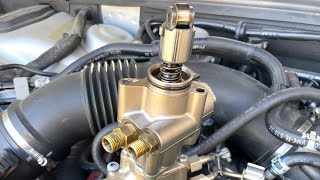
- Failing High-Pressure Fuel Pump(s) (HPFP) 🔴 High Probability The seals within the HPFPs on this direct-injection engine can wear out, allowing fuel to leak into the crankcase. This is a well-documented failure mode for this specific powertrain and other Audi 4.2L FSI engines.
How to confirm: Carefully check the engine oil level. The D4 A8 uses an electronic oil level sensor, so a physical dipstick may be needed to properly check the level and smell the oil. If the level is over the 'MAX' mark and smells strongly of gasoline, the HPFP is almost certainly the cause. A technician can also perform fuel pressure tests, but fuel-in-oil is the most definitive sign on this platform.
Typical fix: Replace the faulty high-pressure fuel pump. Since there are two pumps of the same age and design, it is strongly recommended to replace both at the same time to prevent a repeat failure of the second pump. An immediate and thorough engine oil and filter change is mandatory to remove the contaminated oil.
Est. part cost: $300 - $600 per pump - Leaking Fuel Injector(s) 🟡 Medium Probability Direct injection injectors operate under very high pressure and can develop leaks over time, either from the nozzle tip or internal seals. This can cause excess fuel to enter a specific cylinder.
How to confirm: Requires specialized testing to measure fuel rail pressure bleed-down or to observe injector spray patterns. A mechanic can also check spark plugs on the affected bank; a wet or black, sooty plug can indicate a leaking injector in that cylinder. This is a more likely cause if only one bank is running rich (only P0172) and the oil is not contaminated with fuel.
Typical fix: Replace the faulty fuel injector(s). It's often recommended to replace all injectors on the affected bank at the same time.
Est. part cost: $50 - $150 per injector - Faulty Mass Air Flow (MAF) Sensor ⚪ Low Probability
How to confirm: A dirty or failing MAF sensor can under-report the amount of air entering the engine, causing the ECU to inject too much fuel. It can be inspected, cleaned with a dedicated MAF sensor cleaner, and its readings can be checked with a diagnostic scan tool. This would typically cause both banks to run rich, triggering P0172 and P0175.
Typical fix: First, attempt to clean the sensor. If the problem persists, replace the MAF sensor.
Est. part cost: $100 - $250 - Faulty Front Oxygen (O2) Sensor ⚪ Low Probability → Shop Oxygen Sensor
How to confirm: A lazy or failing O2 sensor (also called an air-fuel ratio sensor) can send incorrect signals to the ECU, causing a rich condition. However, a faulty sensor will usually trigger its own specific trouble code. It is more likely the O2 sensor is correctly reporting a rich condition caused by another component.
Typical fix: Replace the Bank 1, Sensor 1 Oxygen Sensor.
Est. part cost: $80 - $200
Rare But Worth Checking
- Faulty Fuel Pressure Regulator: If the regulator fails and allows excessive fuel pressure to build in the system, it can cause a rich condition across both engine banks.
- Severe Intake Valve Carbon Buildup: The 4.2L FSI engine is known for significant carbon buildup on the intake valves. While this more commonly causes lean codes or misfires, severe buildup can disrupt airflow and contribute to fuel mixture problems. This is a maintenance item that should be considered on engines with over 60,000 miles.
Diagnosis Steps
- Confirm the code with an OBD-II scanner. Verify if it is P1072 or, more likely, P0172.
- Check for other codes. Pay special attention to P0175 (Bank 2 Rich), as having both codes strongly points to a systemic issue.
- CRITICAL STEP: Turn off the engine and let it sit for a few minutes. Check the engine oil dipstick (a physical tool may be required as the car primarily uses an electronic sensor). Note if the level is above the maximum fill line and if the oil has a strong gasoline odor. This is the primary indicator of HPFP failure on this engine.
- If the oil is contaminated with fuel, do not proceed with other diagnostics. The high-pressure fuel pump(s) must be replaced.
- If the oil seems normal, inspect the air intake system for any blockages or a severely dirty air filter.
- Inspect the MAF sensor for contamination. Consider cleaning it with a dedicated cleaner as a preliminary step.
- If only Bank 1 is rich and the oil is fine, inspect the spark plugs on that bank (cylinders 1-4) for signs of richness (black, sooty deposits), which could point to a leaking injector.
- If the issue persists, a professional diagnosis involving fuel pressure testing and fuel injector analysis is required.
Parts You'll Likely Need
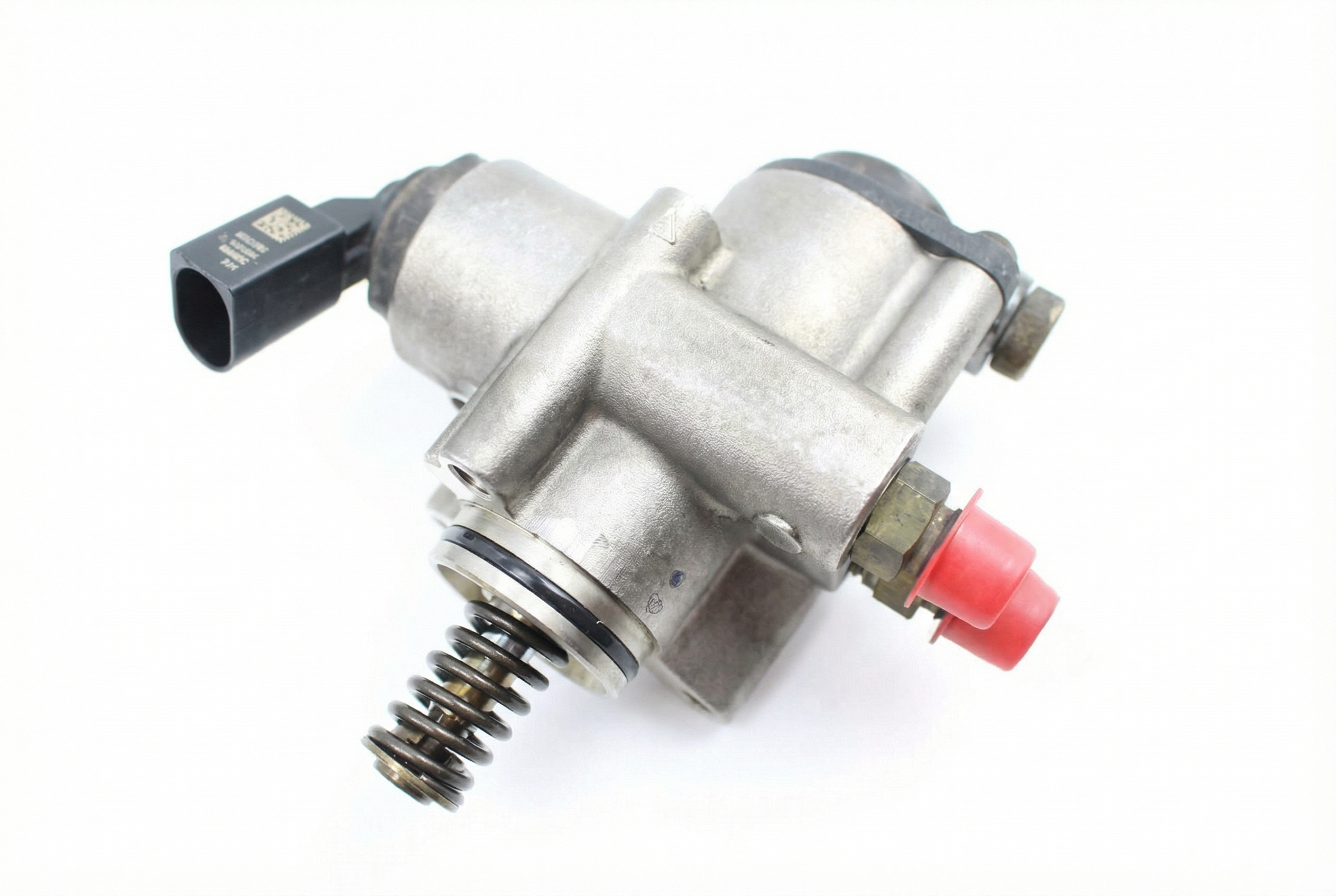
- High-Pressure Fuel Pump (HPFP)
(OEM #079127026R / 079127025Q (Verify by VIN))— This is the most common cause of a P0172/P0175 rich condition on the Audi 4.2L V8 due to internal seals failing and leaking fuel into the engine oil.
Trusted brands: Bosch, Hitachi
OEM price range: $500-$700 per pump
Aftermarket price range: $300-$500 per pump - Engine Oil and Filter — If the HPFP has failed, the engine oil is contaminated with gasoline and MUST be changed to prevent severe engine damage.
Trusted brands: Liqui Moly, Motul, Castrol EDGE, Mann-Filter, Mahle
OEM price range: $80-$120
Aftermarket price range: $60-$90
Related Codes That Often Appear With This One
- P0175 — This is the 'System Too Rich' code for Bank 2. If the cause is a system-wide issue like leaking HPFPs contaminating the oil or a faulty MAF sensor, both banks will often run rich and trigger both codes simultaneously.
- P0087 — This code for 'Fuel Rail/System Pressure - Too Low' can sometimes appear with a failing HPFP. The pump's performance may become erratic before it fails completely and starts leaking internally.
- P0300-P0308 — These are random or cylinder-specific misfire codes. An excessively rich mixture can foul spark plugs and cause incomplete combustion, leading to misfires on the affected bank(s).
Mechanic-Grade Diagnostic Values
- Long-Term Fuel Trim (LTFT) and Short-Term Fuel Trim (STFT) — expected: Consistently between -10% and +10% at idle and under load.. Failure: For a P0172 rich code, values will be significantly negative, often -10% to -30% or more, as the ECU subtracts fuel.
- High-Pressure Fuel System Pressure (at fuel rail) — expected: 30 to 150 bar (435 to 2175 PSI) depending on engine load. At idle, pressure is typically around 25-26 bar.. Failure: A significant pressure drop after the engine is turned off (e.g., from 25 bar to under 9 bar in less than 5 minutes) can indicate a leaking HPFP or fuel injector.
- Low-Pressure Fuel System Pressure (supply to HPFPs) — expected: A service manual for a similar FSI V8 specifies a check pressure of 4 bar.. Failure: Pressure dropping below 3 bar within 10 minutes of engine off indicates a leak in the low-pressure system or a faulty check valve.
- VCDS/VAG-COM Measuring Block for Long-Term Fuel Trims — expected: Group 032. Field 1 shows Bank 1 idle trim (Additive). Field 2 shows Bank 1 partial load trim (Multiplicative).. Failure: Large negative percentages in these fields indicate a rich condition on Bank 1.
- VCDS/VAG-COM Measuring Block for Short-Term Fuel Trims — expected: Group 033. Field 1 shows the current STFT for Bank 1.. Failure: Consistently negative percentages show the ECU is actively pulling fuel to correct a rich mixture.
Scan Tool Commands That Help
- VCDS, ODIS, or equivalent professional scanner: Reset Adaptive Fuel Trim Memory / Clear Fuel Trims — This should be performed after replacing a component that caused the rich condition, such as an HPFP or fuel injector. This clears the old, learned negative trim values and allows the ECU to relearn the correct fuel strategy with the new parts, preventing the new parts from being governed by old, incorrect data.
Wiring & Ground Locations
- HPFP Electrical Connector — On the top of each high-pressure fuel pump, located on the valve covers for each cylinder bank.. Each HPFP has a 2-pin connector for its fuel metering valve (N290/N402). While rarely the cause of a rich code compared to mechanical failure, checking for a secure connection and undamaged wiring is a basic electrical diagnostic step.
Real Owner Repair Stories
- The Auto Connect repair shop video (Audi A8 4.2L V8 (D4 generation)) — Check Engine Light with codes P0172 and P0175, and a dash warning for 'oil overfilled max level'.
❌ Tried (didn't work) The video implies the diagnosis was direct, but notes that customers often drive much longer than they should with the light on, leading to severe fuel contamination.
✅ What actually fixed it The technician identified that both high-pressure fuel pumps were leaking fuel into the crankcase. The definitive fix was to replace both HPFPs, perform an engine flush with a treatment like Liqui Moly, and then perform a complete oil and filter change to remove the gasoline-contaminated oil.
"I Checked Everything" — The Actual Cause
- In a documented case on a similar Audi FSI engine with rich codes P1127 and P0172, a technician performed a smoke test which did find and fix a minor vacuum leak at a hose clamp. However, the rich codes returned shortly after. The actual root cause was not an air leak, but a failing high-pressure fuel pump (HPFP) leaking fuel into the crankcase. This was confirmed by observing extremely negative long-term fuel trims (-36%) on a scan tool. This highlights that for this platform, a clean smoke test does not rule out the primary cause of rich conditions.
OEM Part Supersession History
079127026R (Bank 1 / Right Side)→079127026AB, 079127026AC, 079127026J.— Revisions by the manufacturer to improve reliability or address known issues.079127025Q (Bank 2 / Left Side)→079127025AD, 079127025AF, 079127025N.— Revisions by the manufacturer to improve reliability or address known issues.
Diagnostic Flowchart
Other Known Issues on This Vehicle
Issues unrelated to this code that are worth knowing about as an owner of this generation:
- Intake Valve Carbon Buildup 🔴 High — Commonly requires cleaning every 40,000-60,000 miles. A known characteristic of all early FSI (direct injection) engines.
- Air Suspension Failure 🟠 Medium — Leaking air springs/struts or failing compressors are common as the vehicle ages, typically around 8-10 years or 80,000+ miles.
- Timing Chain Tensioner Rattle on Cold Start 🟠 Medium — A brief (1-3 second) rattle on cold start can occur due to hydraulic tensioners bleeding down. While Audi has sometimes deemed this acceptable, a persistent or worsening rattle can indicate worn tensioners or guides, which is an engine-out repair. (Ref: A TSB exists for a similar issue on the 3.0T engine, suggesting it's a known characteristic of the engine family.)
- Premature Control Arm Bushing Wear 🟠 Medium — The front suspension control arm bushings can wear out prematurely, leading to clunking noises over bumps and vibrations.
- Water Ingress in Plenum Chamber 🔴 High — Clogged plenum drains under the windshield can cause water to accumulate and leak into the cabin, potentially damaging the brake booster or other electronic modules.
- Oil Leaks (Timing Covers, Oil Filter Housing) 🟡 Low — The 4.2L V8 can develop oil leaks from the timing covers, valley pan, and oil filter housing gaskets as the vehicle ages.
Used vs. New Parts: Buying Guide for This Vehicle
When a used part is the smart pick: For this specific P0172 issue, which is overwhelmingly caused by the HPFP, using a used part is NOT recommended. For less common causes like a MAF sensor or other electronic modules, a used part from a reputable dismantler with a warranty can be a cost-effective option.
Donor-vehicle mileage cap: roughly under 60000 miles for the part to have meaningful remaining life.
What to inspect on the donor part:
- Verify the donor vehicle was not in a front-end collision.
- Ask for the VIN to check the donor's service history if possible.
- For electronic parts, ensure there is no visible corrosion on pins or connectors.
OEM-only on this vehicle (don't cheap out):
- High-Pressure Fuel Pump (HPFP): The failure mode is wear and tear on internal seals. A used pump has unknown wear and is highly likely to fail again in a short time. The labor cost makes it a poor gamble.
Aftermarket brands forum-validated for this vehicle:
- Hitachi (OEM supplier for this part)
- Bosch (Major OEM supplier for German fuel systems)
Brands owners have reported issues with on this vehicle:
- Unbranded, low-cost HPFPs from online marketplaces. These often use inferior seals and materials and can fail prematurely, leading to a repeat of the same costly repair.
Real Owner Stories
Aggregated from forums and TSBs cited above. Mileages and costs reflect what owners reported in those sources.
2012 Audi A8 4.2L V8
Symptoms: Intermittent rough idle and misfires accompanied by P0172 and P0175 codes.
What fixed it: Diagnosis confirmed HPFP failure was leaking fuel into the oil; replacement of the high-pressure fuel pumps is the standard resolution for these symptoms on this platform.
Source hint: Ross-Tech Forums - '2012 Audi A8, 4.2L, Intermittent rough idle, misfire'
2016 Audi A8 4.0T — 118000 miles
Symptoms: Codes P0172 and P0175 triggered simultaneously.
What fixed it: High-pressure fuel pump failure was identified as the cause, corroborating the failure pattern seen across the D4 A8 platform.
Source hint: AudiWorld Forums - '2016 A8 4.0T 118K Codes P0172 and P0175 HIGH PRESSURE FUEL PUMP FAILURE'
Related OBD-II Codes
Frequently Asked Questions
My 2012 Audi A8 4.2L has a rough idle and P0172/P0175 codes; is it true the high-pressure fuel pumps are a common failure point?
How can I tell if my HPFP is leaking fuel into the oil without a physical dipstick?
Should I replace both high-pressure fuel pumps if only one is suspected of causing the P1072/P0172 code?
Is there a TSB for the timing chain rattle I hear on my A8 4.2L during cold starts?
Can a dirty MAF sensor cause my Audi A8 to run rich on both Bank 1 and Bank 2?
What else should I check on my 4.2L V8 if I have a rich code but the oil doesn't smell like gas?
Helpful Videos
Used OEM Parts in Stock
New Aftermarket Parts Available

The information in this article is provided for general reference and educational purposes only. Vehicle specifications, procedures, and part compatibility can vary by production date, trim level, and region. Always consult your vehicle's factory service manual and verify part numbers before purchasing or performing repairs. Safety-critical components such as airbags, seat belts, and braking systems should be installed by a qualified professional.
- Audi A8:
- 🧭 Diagnostic Flowchart
- 🎬 Helpful Videos
- 🛍️ Shop This Part
- What's Unique About the 2010-2017 Audi A8
- Symptoms You May Notice
- Most Likely Causes
- Rare But Worth Checking
- Diagnosis Steps
- Parts You'll Likely Need
- Related Codes That Often Appear With This One
- Mechanic-Grade Diagnostic Values
- Scan Tool Commands That Help
- Wiring & Ground Locations
- Real Owner Repair Stories
- "I Checked Everything" — The Actual Cause
- OEM Part Supersession History
- Other Known Issues on This Vehicle
- Used vs. New Parts: Buying Guide for This Vehicle
- Real Owner Stories
- 2012 Audi A8 4.2L V8
- 2016 Audi A8 4.0T — 118000 miles
- Related OBD-II Codes
- Frequently Asked Questions
- 🎟️ Get 5% Off