

P1072 on 2014-2018 Chevy Silverado: Why It's Almost Always P0172 (System Too Rich)
The code P1072 is not a valid code for a 2014-2018 Chevrolet Silverado. It is almost certainly a typo or a scan tool error for the code P0172 (Fuel System Too Rich, Bank 1). The most common cause for P0172 on these trucks is a failing high-pressure fuel pump leaking fuel directly into the engine oil, a known issue with the EcoTec3 direct-injection engines.
- P1072 is not a valid code for your Silverado; the actual code is almost certainly P0172 (System Too Rich).
- The most common and vehicle-specific cause is a leaking high-pressure fuel pump (HPFP). Check your oil for a gasoline smell immediately.
- Before replacing parts, perform simple checks like inspecting the air filter housing for defects (TSB PIP5446A) and cleaning the MAF sensor.
- If you have a Flex Fuel model, an incorrect alcohol percentage reading can cause this code and must be reset with a proper scan tool.
What's Unique About the 2014-2018 Chevrolet Silverado 1500
The EcoTec3 engines in the 2014-2018 Silverado use direct injection, which requires a camshaft-driven high-pressure fuel pump (HPFP). A widely documented failure point on these trucks is the internal seal on this pump. When it fails, it leaks raw gasoline directly into the crankcase, contaminating the engine oil. This fuel vapor is then pulled into the intake via the PCV system, causing a rich condition that the oxygen sensors detect, triggering P0172. Always smelling the engine oil on the dipstick for a gasoline odor is a critical first diagnostic step unique to these direct-injected engines.
Symptoms You May Notice
- Check Engine Light is on
- Strong smell of gasoline from the exhaust or in the engine bay
- Noticeable smell of gasoline in the engine oil when checking the dipstick
- Black smoke from the exhaust
- Rough or unstable idle, especially after extended idling
- Decreased fuel economy
- Hard shifting or surging
- Engine may continue to run for a moment after being shut off
- Weak acceleration or hesitation
- Replacing the oxygen sensor first. While a possible cause, it's less likely than a leaking HPFP or MAF issue on these specific trucks. The O2 sensor is often correctly reporting the rich condition, not causing it.
Most Likely Causes
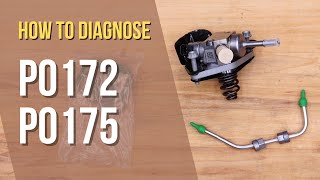
- Leaking High-Pressure Fuel Pump (HPFP) 🔴 High Probability The direct-injection EcoTec3 engines rely on a camshaft-driven HPFP. The internal seals are a known, widespread failure point, allowing fuel to leak directly into the crankcase. This is the most cited cause for P0172/P0175 on this platform in owner forums and repair videos.
How to confirm: Remove the oil dipstick and smell it for a strong gasoline odor. This is the most definitive sign. Using a scan tool, you can also isolate the PCV system by capping the ports and observing if the negative fuel trims improve, which would confirm fuel vapors from the crankcase are the source.
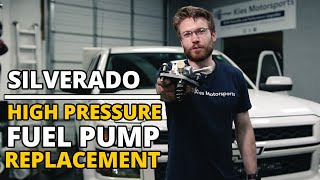
Typical fix: Replace the high-pressure fuel pump. An immediate oil and filter change is mandatory to remove the fuel-contaminated oil and prevent engine damage. The single-use high-pressure fuel line should also be replaced. 🎬 Watch: Step-by-step high-pressure fuel pump replacement guide
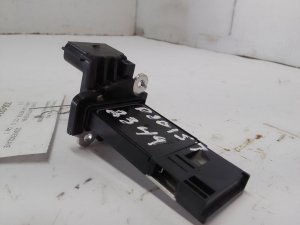
Est. part cost: $250-$600 - Faulty Mass Airflow (MAF) Sensor 🟡 Medium Probability The MAF sensor can become dirty or fail, providing incorrect airflow readings to the ECU, which then calculates an incorrect amount of fuel. This is a common issue on many vehicles, but is a frequent culprit for these codes on the Silverado.
How to confirm: Clean the MAF sensor with a dedicated MAF sensor cleaner first. If the problem persists, monitor the MAF reading on a scan tool for erratic behavior or readings that don't correspond to engine RPM. Expected values at idle are around 5.3 to 6.2 g/s for the V8 engines. Unplugging the MAF sensor and seeing if the engine runs better can also be a diagnostic clue.
Typical fix: Clean or replace the MAF sensor.
Est. part cost: $60-$150 - Leaking Fuel Injector(s) 🟡 Medium Probability
How to confirm: This is more difficult to diagnose on a direct injection engine. A scan tool can be used to perform an injector balance test. Another method is to monitor fuel rail pressure with the engine off; a steady drop in pressure can indicate a leaking injector. A healthy system should not see a continuous pressure drop after shutdown.
Typical fix: Replace the faulty fuel injector(s).
Est. part cost: $50-$150 per injector - Faulty Upstream Oxygen (O2) Sensor ⚪ Low Probability → Shop Oxygen Sensor
How to confirm: A failing O2 sensor can get 'lazy' or biased, incorrectly reporting a lean condition, which causes the ECU to add too much fuel. Monitor the O2 sensor voltage on a scan tool; it should fluctuate rapidly between approximately 0.1V and 0.9V. A sensor with slow response or one that is stuck at a high voltage is likely faulty.
Typical fix: Replace the Bank 1, Sensor 1 (upstream) oxygen sensor.
Est. part cost: $50-$100 - Incorrect Fuel Alcohol Content Reading (Flex Fuel Vehicles) ⚪ Low Probability GM's virtual flex fuel system, which estimates ethanol content rather than using a physical sensor, can incorrectly 'learn' a high ethanol percentage. This causes the ECU to command more fuel than necessary. This can happen after refueling, after a battery disconnect, or for no apparent reason.
How to confirm: Use a scan tool to view the 'Fuel Alcohol Percentage' or 'Fuel Composition' PID. If you use regular gasoline (E10/E15), this value should be under 15%. If it's reading high (e.g., 35% or more), it's incorrect and is causing the rich condition.
Typical fix: Reset the fuel alcohol content and fuel trims using a capable bidirectional scan tool. This procedure is often called 'Fuel Composition Reset'.
Est. part cost: $0 (requires scan tool)
Rare But Worth Checking
- Casting Flash in Air Filter Housing: TSB PIP5446A points out that excess plastic molding (flash) in the air filter housing lid, near the MAF sensor, can disrupt airflow and cause rich/lean codes. It's a simple visual inspection that can save a lot of diagnostic time. The fix is to sand down the flash or replace the air filter housing lid.
- Saturated EVAP Purge Canister: If the EVAP canister becomes saturated with fuel (often from overfilling the gas tank), it can release raw fuel vapors into the intake via the purge valve, causing a rich condition. A stuck-open purge valve can also cause this.
- Fuel Dilution from Short-Trip Driving: TSB 18-NA-246 notes that frequent short trips can cause fuel to accumulate in the crankcase oil. The fuel vapors are then ingested by the PCV system, causing a P0172 code. The fix involves an ECM reprogram, an updated PCV valve, and a mandatory oil change.
Diagnosis Steps
- Verify the code with a reliable OBD-II scanner. Confirm if it is P1072 or the more likely P0172.
- Check the engine oil dipstick for a strong smell of raw gasoline. If present, the high-pressure fuel pump is the most likely culprit and should be replaced immediately, followed by an oil change.
- If no fuel smell is in the oil, inspect the entire air intake system for leaks or blockages, from the air filter to the throttle body.
- Specifically inspect the inside of the air filter housing lid for excess plastic flashing near the MAF sensor, as noted in TSB PIP5446A. If found, smooth it down or replace the lid.
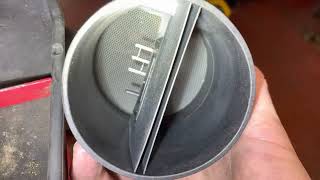
- Clean the Mass Airflow (MAF) sensor using a dedicated cleaner. Do not touch the delicate wires. 🎬 Watch: How a dirty MAF sensor triggers these codes
- Using a scan tool, monitor live data. Check Long Term Fuel Trim (LTFT) and Short Term Fuel Trim (STFT) for Bank 1. Negative numbers (e.g., -20% or lower) confirm a rich condition.
- If you have a Flex Fuel vehicle, check the 'Fuel Alcohol Percentage' reading on the scan tool. If it's abnormally high (e.g. >20%) for the fuel you're using, it needs to be reset with a bidirectional tool.
- If other causes are ruled out, test the Bank 1 Sensor 1 oxygen sensor for proper operation using a scan tool to view its voltage fluctuations. It should switch rapidly from below 0.2V to above 0.8V.
- If the issue persists, perform a fuel pressure test and a fuel injector leak-down test by monitoring fuel rail pressure after the engine is shut off.
Parts You'll Likely Need
- High-Pressure Fuel Pump
(OEM #12691963 (replaces 12649902, 12673522))— This is the most common cause of a P0172 code on the 2014-2018 Silverado due to internal seal failure leading to oil contamination.
Trusted brands: ACDelco (GM Genuine), Bosch, Delphi
OEM price range: $350-$600
Aftermarket price range: $250-$450 - Mass Airflow (MAF) Sensor
(OEM #ACDelco 213-4675 or GM 13505433)— A dirty or failed MAF sensor provides incorrect data to the ECU, leading to an improper air-fuel mixture.
Trusted brands: ACDelco, Denso, Hitachi
OEM price range: $100-$150
Aftermarket price range: $60-$100
Related Codes That Often Appear With This One
- P0175 — This is the code for 'System Too Rich, Bank 2'. If both P0172 and P0175 are present, it indicates a problem affecting the entire engine, strongly pointing towards a common source like the high-pressure fuel pump, MAF sensor, or EVAP system.
- P0101 — This code for 'Mass Air Flow (MAF) Circuit Range/Performance' often appears with P0172 if the MAF sensor itself or the casting flash in the airbox is the root cause.
- P0300 — This code for 'Random/Multiple Cylinder Misfire' can be triggered because a severely rich condition can foul spark plugs and lead to incomplete combustion.
Technical Service Bulletins (TSBs) & Recalls
- PIP5446A: Addresses rough idle and rich/lean codes (P0172, P0175) caused by excessive casting flash in the air filter housing.
- 18-NA-246: Addresses P0172 caused by fuel accumulation in the crankcase from frequent short-trip driving, requiring an updated PCV valve and ECM reprogram.
Platform-Specific Known Issues
- A known issue involves the high-pressure fuel pump (HPFP) leak
Mechanic-Grade Diagnostic Values
- Long-Term Fuel Trim (LTFT) at Idle — expected: -10% to +10%. Failure: Consistently more negative than -20% to -25%.
- Mass Airflow (MAF) Sensor at Hot Idle — expected: Approximately 5.3 g/s to 6.2 g/s for 5.3L/6.2L V8s.. Failure: Reading is significantly lower or higher, or does not increase smoothly with RPM.
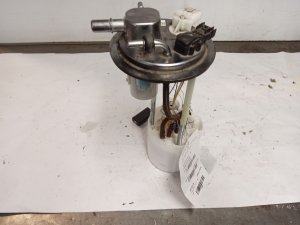
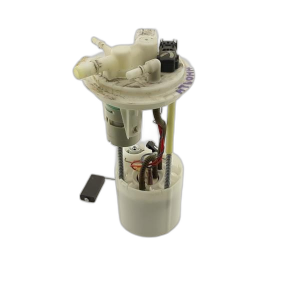
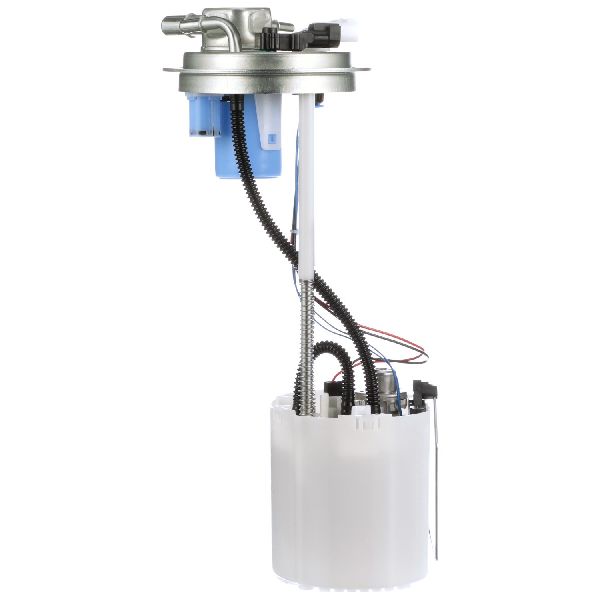
- Low-Side (In-Tank Pump) Fuel Pressure — expected: Around 72 PSI (500 kPa).. Failure: Pressure significantly below this range indicates a failing in-tank pump, not the HPFP.
- High-Pressure Fuel System (Engine Off, Hot) — expected: Pressure should remain stable or rise slightly after engine shutdown.. Failure: A steady, continuous drop in pressure indicates a leak, possibly from an injector or the HPFP itself.
- Fuel Alcohol Content PID (Flex Fuel) — expected: <15% when using standard E10/E15 gasoline.. Failure: A reading significantly higher than 15% (e.g., 30-80%) will cause the ECM to command excess fuel.
Scan Tool Commands That Help
- GDS2 / Professional Scan Tool: Fuel Composition Reset — This is the primary fix when the 'Fuel Alcohol Percentage' PID is reading incorrectly high on a Flex Fuel vehicle, causing a rich condition. It resets the learned value to a default.
- GDS2 / Professional Scan Tool: Fuel Trim Reset — After performing any repair for a fuel system fault (like replacing an HPFP or resetting fuel composition), this command should be used to clear the long-term learned adaptive values, allowing the ECM to relearn fuel strategy immediately.
- GDS2 / Professional Scan Tool: Injector Balance Test — Used to diagnose a potentially leaking fuel injector. The tool systematically pulses each injector while monitoring fuel pressure drop to see if one is leaking down faster than the others.
Wiring & Ground Locations
- G103 / G104 — Typically located on the rear of the cylinder heads or on the engine block itself, often on the passenger or driver side rear.. These are primary engine-to-chassis grounds. Corrosion or a loose connection at these points can create electrical noise and voltage drops, potentially affecting sensor readings for the MAF, O2 sensors, and fuel pump, leading to incorrect fuel calculations.
Real Owner Repair Stories
- YouTube channel 'Flat Rate Mechanic' (Chevrolet Suburban with 5.3L EcoTec3 engine) — P0172 and P0175, with long-term fuel trims at -30%.
❌ Tried (didn't work) Checking for vacuum leaks, Blocking off the EVAP purge valve hose
✅ What actually fixed it The 'Fuel Alcohol Content' was reading 67%. Using a scan tool to perform a 'Fuel Compensation Reset' immediately brought the long-term fuel trims back to normal without replacing any parts. - YouTube channel 'The Sundae Drive' (2014 Chevrolet Silverado 5.3L) — P0172 and P0175, strong smell of fuel in the engine oil.
❌ Tried (didn't work) Diagnosis confirmed by a dealer who noted it was not a powertrain warranty item.
✅ What actually fixed it The high-pressure fuel pump had failed and was leaking fuel into the crankcase. The fix was replacing the high-pressure fuel pump and performing an oil change.
OEM Part Supersession History
12649902, 12673522→12691963— GM has updated the High-Pressure Fuel Pump (HPFP) multiple times, likely to improve the internal seal design and mitigate the common failure of fuel leaking into the crankcase.
Heads up: When replacing, ensure you are using the latest part number (12691963 or its successor) to get the most revised and reliable version of the pump.
Model Year Variations Within This Range
- 2016-2018: The 8-speed automatic transmission became available on 5.3L V8 models in LTZ and High Country trims starting in 2016, previously it was only on the 6.2L V8. This doesn't directly affect the cause of P0172 but is a key powertrain difference within the generation.
- 2014-2015: Early models of this generation were more prone to complaints of harsh shifting and transmission issues, which were addressed with software updates and running changes in later years. While not a direct cause, erratic transmission behavior can sometimes be reported alongside engine performance codes.
- 2018: An eAssist mild hybrid system on the 5.3L V8 became available nationwide on LT and LTZ trims. Previously it was limited to specific states. This system adds a start/stop capability and has a different charging system but does not fundamentally change the direct injection fuel system that causes P0172.
Diagnostic Flowchart
Other Known Issues on This Vehicle
Issues unrelated to this code that are worth knowing about as an owner of this generation:
- AFM/DFM Lifter Failure 🔴 High — Very common, typically appears between 80,000 and 120,000 miles. Affects both 5.3L and 6.2L engines. (Ref: Multiple TSBs issued over several years (e.g., TSB 14-06-01-002, 22-NA-110), but no recall. A class-action lawsuit has been filed regarding this issue.)
- 8-Speed (8L90) Transmission Shudder / Hard Shifting 🔴 High — Widespread issue on 2015-2018 models equipped with the 8L90 transmission. Often described as driving over rumble strips between 25-80 mph. (Ref: TSB 18-NA-355 recommends a specific fluid flush with Mobil 1 Synthetic LV ATF HP. Often requires torque converter replacement for a permanent fix.)
- A/C Condenser Failure 🟠 Medium — Common failure where the condenser cracks and leaks refrigerant, causing the A/C to stop blowing cold air. (Ref: GM issued a special coverage adjustment for some model years, extending the warranty for this specific part.)
- Brake Booster Vacuum Pump Failure 🔴 High — The engine-driven vacuum pump can fail, leading to a hard brake pedal and reduced braking assistance, which is a significant safety concern. (Ref: A recall (N182182890) was issued for certain 2014-2018 trucks to address this issue.)
- Excessive Oil Consumption 🟠 Medium — Often related to the AFM system, where oil consumption can exceed 1 quart per 2,000 miles due to issues with piston rings and the PCV system on the deactivated cylinders. (Ref: Several TSBs have been issued, often involving updated valve covers or PCV components, but the issue can be persistent without an AFM delete.)
Used vs. New Parts: Buying Guide for This Vehicle
When a used part is the smart pick: For this specific repair, used parts are generally not recommended for the primary failure components. However, a used Air Filter Housing Lid from a junkyard is a very smart choice if the 'casting flash' issue (TSB PIP5446A) is identified as the cause.
Donor-vehicle mileage cap: roughly under 75000 miles for the part to have meaningful remaining life.
What to inspect on the donor part:
- For an Air Filter Housing Lid, ensure there are no cracks and the mounting points are intact.
- Check the vehicle history of the donor if possible to avoid parts from a truck that had similar fuel system issues.
OEM-only on this vehicle (don't cheap out):
- High-Pressure Fuel Pump (HPFP): Due to the high failure rate and critical nature of this part, using a new OEM (ACDelco) or reputable OE supplier (Bosch, Delphi) part is strongly advised to prevent repeat failures and potential engine damage.
- Sensors (MAF, O2): While aftermarket sensors are available, OEM or OE supplier sensors (ACDelco, Denso) are recommended for accurate readings and longevity. Cheap aftermarket sensors are a common cause of persistent, hard-to-diagnose issues.
Aftermarket brands forum-validated for this vehicle:
- ACDelco (GM Genuine/OE)
- Bosch (Often the OE supplier for fuel components)
- Delphi (Also a major OE supplier for GM)
- Denso (For O2 and other sensors)
Brands owners have reported issues with on this vehicle:
- Generic, unbranded 'white-box' electronic parts (sensors, fuel pumps) from online marketplaces are frequently reported on forums to be dead-on-arrival or fail prematurely.
Real Owner Stories
Aggregated from forums and TSBs cited above. Mileages and costs reflect what owners reported in those sources.
2014 Chevrolet Silverado 1500 5.3L V8 — ~125000 miles
Symptoms: Multiple users reported getting both P0172 and P0175 rich codes simultaneously.
What fixed it: Diagnosis pointed to the MAF sensor, MAP sensor, or the need for a virtual flex fuel sensor reset.
Source hint: gm-trucks.com: Thread '2014 Sierra P0172 and P0175'
2016 Chevrolet Silverado 1500 — 158000 miles
Symptoms: Erratic fuel rail pressure readings that did not align with the pressure commanded by the computer.
What fixed it: Replacement of the failing High Pressure Fuel Pump (HPFP).
Source hint: ChevroletForum.com: Thread 'P0175 and P0172'
2018 GMC Sierra 1500 (Platform Mate)
Symptoms: Rough idle, weak acceleration, and poor fuel economy.
What fixed it: Community feedback identified the High-Pressure Fuel Pump (HPFP) as the cause.
Source hint: Reddit r/MechanicAdvice: Thread 'P0172 and P0175 codes'
2016 Chevrolet Silverado 1500
Symptoms: Owner performed extensive diagnosis using freeze frame data which pointed toward a fuel pressure issue.
What fixed it: High-pressure fuel pump (HPFP) replacement.
Source hint: gm-trucks.com: Thread 'P0172, P0175'
Related OBD-II Codes
Frequently Asked Questions
My 2014 Silverado is throwing P0172 and P0175; could this be related to the air filter housing mentioned in TSB PIP5446A?
I have a Flex Fuel Silverado and the fuel trims are rich. Could the 'virtual' sensor be the problem?
Why does my oil smell like gas on my 5.3L EcoTec3 engine?
Does TSB 18-NA-246 apply to my truck if I only drive short distances?
What is the expected MAF sensor reading at idle for the 5.3L or 6.2L V8?
If I replace my High-Pressure Fuel Pump to fix the rich condition, do I need to replace the fuel line too?
Helpful Videos
Used OEM Parts in Stock
New Aftermarket Parts Available


The information in this article is provided for general reference and educational purposes only. Vehicle specifications, procedures, and part compatibility can vary by production date, trim level, and region. Always consult your vehicle's factory service manual and verify part numbers before purchasing or performing repairs. Safety-critical components such as airbags, seat belts, and braking systems should be installed by a qualified professional.
- Chevrolet Silverado 1500:
- 🧭 Diagnostic Flowchart
- 🎬 Helpful Videos
- 🛍️ Shop This Part
- What's Unique About the 2014-2018 Chevrolet Silverado 1500
- Symptoms You May Notice
- Most Likely Causes
- Rare But Worth Checking
- Diagnosis Steps
- Parts You'll Likely Need
- Related Codes That Often Appear With This One
- Technical Service Bulletins (TSBs) & Recalls
- Platform-Specific Known Issues
- Mechanic-Grade Diagnostic Values
- Scan Tool Commands That Help
- Wiring & Ground Locations
- Real Owner Repair Stories
- OEM Part Supersession History
- Model Year Variations Within This Range
- Other Known Issues on This Vehicle
- Used vs. New Parts: Buying Guide for This Vehicle
- Real Owner Stories
- 2014 Chevrolet Silverado 1500 5.3L V8 — ~125000 miles
- 2016 Chevrolet Silverado 1500 — 158000 miles
- 2018 GMC Sierra 1500 (Platform Mate)
- 2016 Chevrolet Silverado 1500
- Related OBD-II Codes
- Frequently Asked Questions
- 🎟️ Get 5% Off