

P1072 on 2013-2018 Ford C-Max: Understanding This Undefined Code
The trouble code P1072 is not a standard or recognized manufacturer-specific code for the Ford C-Max. It is highly likely to be a typographical error for the common code P0172 (System Too Rich). Before any repair, it is critical to double-check the code with a high-quality OBD-II scanner.
- The code P1072 is not defined for Ford vehicles and should be considered an error.
- The most important first step is to re-scan your vehicle with a quality scanner to confirm the real trouble code.
- It is highly likely the actual code is P0172, which indicates a "System Too Rich" condition.
- If P0172 is confirmed, the most common cause on the 2.0L Hybrid engine is a faulty canister purge valve.
- Do not replace any parts in an attempt to fix an unverified P1072 code.
What's Unique About the 2013-2018 Ford C-Max
The Ford C-Max shares its 2.0L Atkinson-cycle hybrid powertrain and HF35 eCVT transmission with the Ford Fusion Hybrid and Lincoln MKZ Hybrid. None of these platform mates have a documented definition for code P1072. The consistent lack of information for this specific code across the entire Ford platform suggests it is not used. In contrast, the code P0172 is a well-documented issue on this powertrain, often caused by a faulty canister purge valve, as noted in Ford TSB 19-2207 for the Fusion Hybrid.
Symptoms You May Notice
- Check Engine Light is on.
- No other symptoms can be attributed to P1072 as the code is undefined.
- If the actual code is P0172, symptoms may include: poor fuel economy, a smell of gasoline, black exhaust smoke, rough idle, and hesitation on acceleration.
- Attempting to diagnose any vehicle system based on the P1072 code before verifying it is correct.
- Replacing the oxygen sensor for a P0172 code without first checking for the more common faulty purge valve on this specific platform.
Most Likely Causes
- Typographical Error / Scanner Error 🔴 High Probability Not vehicle-specific, but a common issue with manual data entry or non-compliant scan tools.
How to confirm: Re-scan the vehicle's computer with a different, high-quality OBD-II scanner.
Typical fix: Confirm the actual trouble code. If P0172 is found, begin diagnosis for a 'System Too Rich' condition.
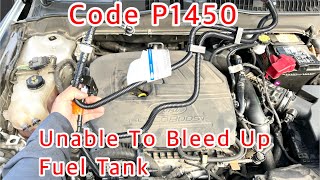
Est. part cost: $0 - Faulty Canister Purge Valve (if code is P0172) 🔴 High Probability This is a very common failure item on the 2.0L Hybrid powertrain shared by the C-Max and Fusion Hybrid, often causing P0172 and sometimes P1450. A key symptom is difficulty starting the engine immediately after refueling.
How to confirm: With the engine idling, disconnect the vapor line from the purge valve. If you can feel vacuum suction from the valve port, it is stuck open and faulty.
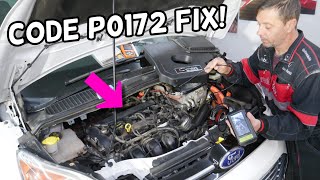
Typical fix: Replace the canister purge valve solenoid. This is a relatively simple repair. 🎬 Watch this quick guide to replace the purge valve yourself.
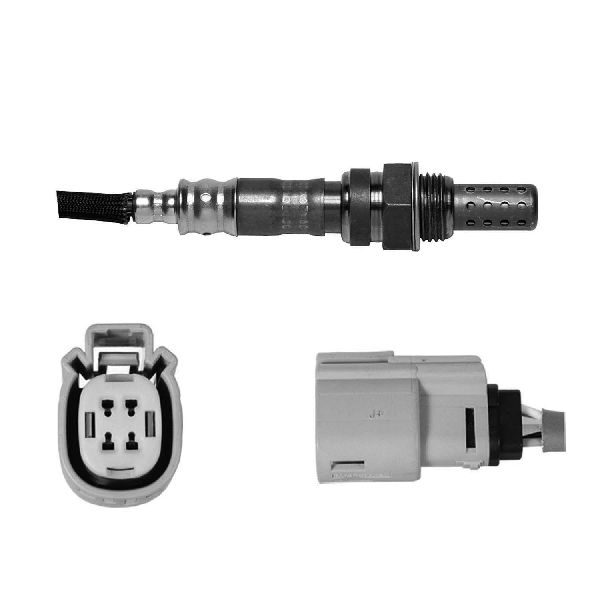
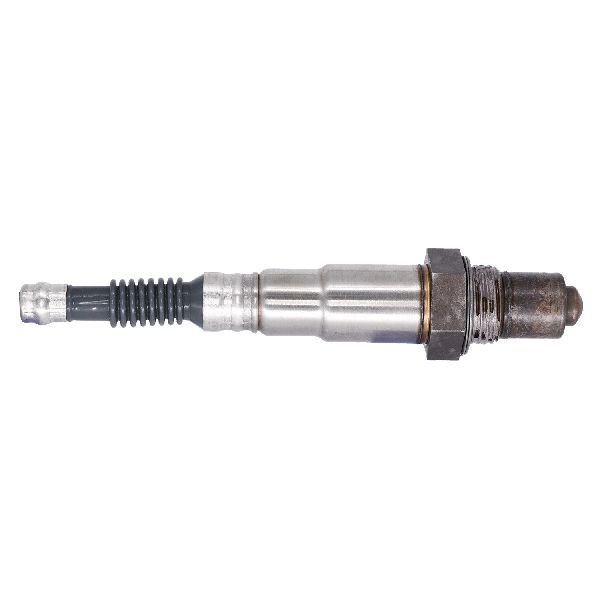
Est. part cost: $40 - $80 - Faulty Upstream Oxygen (O2) Sensor (if code is P0172) 🟡 Medium Probability → Shop Oxygen Sensor O2 sensors are a common failure point on all modern vehicles as they age. A failing sensor can send incorrect data to the PCM, causing a rich condition.
How to confirm: Monitor the O2 sensor voltage with a scan tool. A sensor that is slow to respond or provides a steady high voltage reading may be faulty.
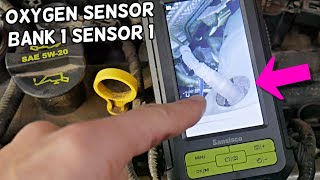
Typical fix: Replace the upstream O2 sensor (Bank 1, Sensor 1). 🎬 Watch this video to locate and replace the upstream O2 sensor.
Est. part cost: $70 - $110
Rare But Worth Checking
- Dirty or Faulty Mass Airflow (MAF) Sensor (if code is P0172):
- Leaking Fuel Injectors (if code is P0172):
Diagnosis Steps
- Confirm the Code: The primary and most critical step is to re-scan the vehicle's Powertrain Control Module (PCM) with a reliable, professional-grade scan tool to verify the code. Note if the code is actually P0172.
- Cease Diagnosis for P1072: Do not replace any parts or perform any diagnostic procedures based on the unverified P1072 code.
- Proceed with Correct Code (Assuming P0172): If P0172 is confirmed, begin the standard diagnostic procedure.
- Check Canister Purge Valve: This is the most likely culprit on this powertrain. With the engine at idle, disconnect the hose leading from the EVAP canister to the purge valve. Feel for vacuum at the valve's port. If suction is present, the valve is stuck open and must be replaced.
- Inspect Air Intake System: Check the engine air filter for dirt and ensure the intake tract is free of obstructions.
- Analyze O2 Sensor Data: Use a scan tool to observe the live data for the upstream O2 sensor (Bank 1, Sensor 1). The voltage should fluctuate rapidly. If it is stuck high (above 0.8v) or is slow to respond, the sensor is likely faulty.
- Inspect MAF Sensor: Visually inspect the Mass Airflow sensor wires for contamination. If dirty, clean with dedicated MAF sensor cleaner. Do not touch the wires.
- Check Fuel Pressure: If other tests are inconclusive, check for excessive fuel pressure, which could indicate a faulty fuel pressure regulator or restricted return line.
Parts You'll Likely Need
- Canister Purge Valve
- Upstream Oxygen Sensor (Bank 1 Sensor 1)
Related Codes That Often Appear With This One
- P1450 —
- P0496 —
Technical Service Bulletins (TSBs) & Recalls
- TSB 19-2207 (for Ford Fusion): While not for the C-Max directly, this TSB addresses P0172 and P1450 on the identical powertrain and points to a faulty canister purge valve.
- TSB 17-0039: Addresses a thumping, rubbing, or grinding noise from the HF35 transmission in 2013-2016 C-Max and Fusion models, which may require transmission repair or replacement.
- Recall 14S18: Issued for a small batch of 2014 C-Max and Focus vehicles due to incorrectly assembled steering gears that could lead to a loss of steering.
Platform-Specific Known Issues
- The canister purge valve is a notoriously common failure point on the 2.0L Hybrid engine, making it the prime suspect for a P0172 code. Owners often report difficulty starting after refueling as a key symptom before the check engine light appears.
Mechanic-Grade Diagnostic Values
- Long-Term Fuel Trim (LTFT) for Bank 1 — expected: Close to 0%, typically within +/- 10%. Failure: Sustained negative values beyond -20% to -25% will trigger P0172.
- Canister Purge Valve Solenoid Resistance — expected: 30 to 38 Ohms.. Failure: An open circuit (infinite resistance) or a short (near zero resistance) indicates a failed coil.
- Upstream O2 Sensor (Bank 1, Sensor 1) Heater Circuit Resistance — expected: Typically between 5-20 Ohms.. Failure: An infinite resistance (open circuit) reading confirms the internal heater has failed.
- Mass Air Flow (MAF) Sensor Reading at Idle — expected: Approximately 2.0 grams per second (g/s) for a 2.0L engine.. Failure: A significantly higher reading at idle could indicate a contaminated sensor falsely reporting more air, causing the PCM to add too much fuel.
Scan Tool Commands That Help
- FORScan / Ford IDS: EVAP Purge Valve Command (EVAPCV) or VMV Duty Cycle — This bidirectional control allows a technician to command the purge valve open and closed. At idle, the command should be 0%. If vacuum is still felt at the valve's port when commanded to 0%, it confirms the valve is mechanically stuck open.
- FORScan / Ford IDS: EVAP System Test — This is a guided routine that commands the entire EVAP system through a test sequence to check for leaks and proper solenoid function, which can help confirm or rule out the purge valve as the cause of P0172.
- FORScan / Ford IDS: Reset All Adaptations — This function must be used after replacing a component affecting the air/fuel mixture, such as an O2 sensor, MAF sensor, or canister purge valve. It clears the PCM's learned long-term fuel trim values, forcing it to relearn with the new part.
Wiring & Ground Locations
- Main Engine Compartment Ground — Located to the right of the 12V battery, near the engine compartment fuse box.. A poor ground at this location can cause erratic voltage readings for various sensors, including the O2 and MAF sensors, potentially leading to incorrect fuel calculations and a P0172 code.
- G108 — On the right rear of the engine compartment.. This is a key engine compartment ground point. A corroded or loose G108 can cause erratic behavior in various sensors and actuators controlled by the PCM, potentially leading to incorrect readings and fault codes like P0172.
- Downstream O2 Sensor Connector — Located behind the CV axle.. This location is exposed to road debris and moisture. When diagnosing related O2 sensor codes that can accompany P0172, checking this connector for corrosion or damage is a critical step.
OEM Part Supersession History
AU5Z-9C915-B, AU5Z-9C915-C, AU5Z-9C915-D→AU5Z-9C915-E— Standard part revision and improvement by the manufacturer to address sealing issues.
Heads up: The latest revision, AU5Z-9C915-E, is the recommended replacement for all previous versions.
Model Year Variations Within This Range
- 2017-2018: For the 2017 model year, the C-Max received a minor facelift with restyled headlights and taillights. The SEL trim was renamed 'Titanium'. However, the 2.0L hybrid powertrain and its core components related to code P0172 (purge valve, O2 sensors, etc.) remained unchanged from the 2013-2016 models.
Diagnostic Flowchart
Other Known Issues on This Vehicle
Issues unrelated to this code that are worth knowing about as an owner of this generation:
- HF35 Transmission Bearing Failure 🔴 High — Affects 2013-2016 models. Can manifest as a thumping, rubbing, or grinding noise from the transmission. (Ref: TSB 17-0039)
- Chronic 12V Battery Drain 🟠 Medium — Common across many model years, especially 2013-2014. Owners report a dead battery overnight or after short periods. Often attributed to software glitches or parasitic draws from modules that fail to sleep. (Ref: TSB SSM 46368 (for 2016-2017 models))
- Faulty Steering Gear / Loss of Power Steering 🔴 High — A recall was issued for a small batch of 2014 models for improperly assembled steering gears. Other model years also have reports of power steering failure. (Ref: Recall 14S18)
- PCM/TCM Software Faults 🟡 Low — Early (2013) models in particular could exhibit various warning lights (wrench, red triangle) due to software issues requiring a PCM reprogram. (Ref: TSB 13-4-22)
Used vs. New Parts: Buying Guide for This Vehicle
When a used part is the smart pick: For this vehicle and the likely P0172 fault, sourcing a used part is generally not recommended for the primary failure items. The canister purge valve is a known high-failure part, and a used one may have limited remaining life. Electronic sensors like O2 and MAF sensors are also wear items where a new part provides much greater reliability.
Donor-vehicle mileage cap: roughly under 40000 miles for the part to have meaningful remaining life.
What to inspect on the donor part:
- For a purge valve, ensure the donor vehicle is from a late model year to increase the chance of getting a revised part.
- Check for any visible cracks or damage on the plastic housing of the valve or sensor.
- If possible, ask for the VIN of the donor car to check its history for related EVAP or fuel system issues.
OEM-only on this vehicle (don't cheap out):
- Canister Purge Valve: While aftermarket options exist, the OEM Motorcraft part is highly recommended due to known issues with aftermarket valve seals and calibration on this platform.
- Oxygen (O2) Sensors: OEM (Motorcraft) or OEM-supplier brands like NTK, Denso, or Bosch are strongly advised. Cheap, unbranded sensors are notorious for failing quickly or having incorrect heater resistance, causing codes to return.
Aftermarket brands forum-validated for this vehicle:
- NTK/NGK (for Oxygen Sensors)
- Denso (for Oxygen Sensors)
- Bosch (for Oxygen Sensors)
Brands owners have reported issues with on this vehicle:
- Unbranded or 'white-box' electronic sensors (O2, MAF) from online marketplaces are frequently cited in forums as being unreliable.
Real Owner Stories
Aggregated from forums and TSBs cited above. Mileages and costs reflect what owners reported in those sources.
2013 Ford C-Max Hybrid 2.0L
Symptoms: Recurring dead 12V battery issue, often occurring overnight or after short periods of the vehicle sitting.
What fixed it: The issue is often attributed to software glitches or parasitic draws from modules that fail to sleep, requiring software updates or module replacement.
Source hint: Car Talk Community - '2013 Ford C-Max Hybrid 12V battery'
2013-2018 Ford C-Max 2.0L Hybrid
Symptoms: Difficulty starting the engine immediately after refueling; check engine light eventually appeared.
What fixed it: Replacement of the canister purge valve solenoid.
Source hint: vehicle_specific_issues
2016-2017 Ford C-Max Hybrid
Symptoms: Chronic 12V battery drain where the battery is dead after the car is left alone.
What fixed it: Addressed under TSB SSM 46368 regarding parasitic draws.
Source hint: known_issues
Related OBD-II Codes
Frequently Asked Questions
I have a 2013 Ford C-Max and hear a grinding noise from the transmission; is there a TSB for this?
My C-Max Hybrid is hard to start right after I fill up the gas tank. Could this be related to a P0172 code?
Is there a recall for steering issues on the 2014 Ford C-Max?
My 2013 C-Max is showing a wrench light and red triangle; does it need a hardware repair?
Which brand of Oxygen sensor should I use for my C-Max Hybrid to ensure the code doesn't return?
Does the Ford Fusion Hybrid share the same purge valve issues as the C-Max?
Helpful Videos

Used OEM Parts in Stock
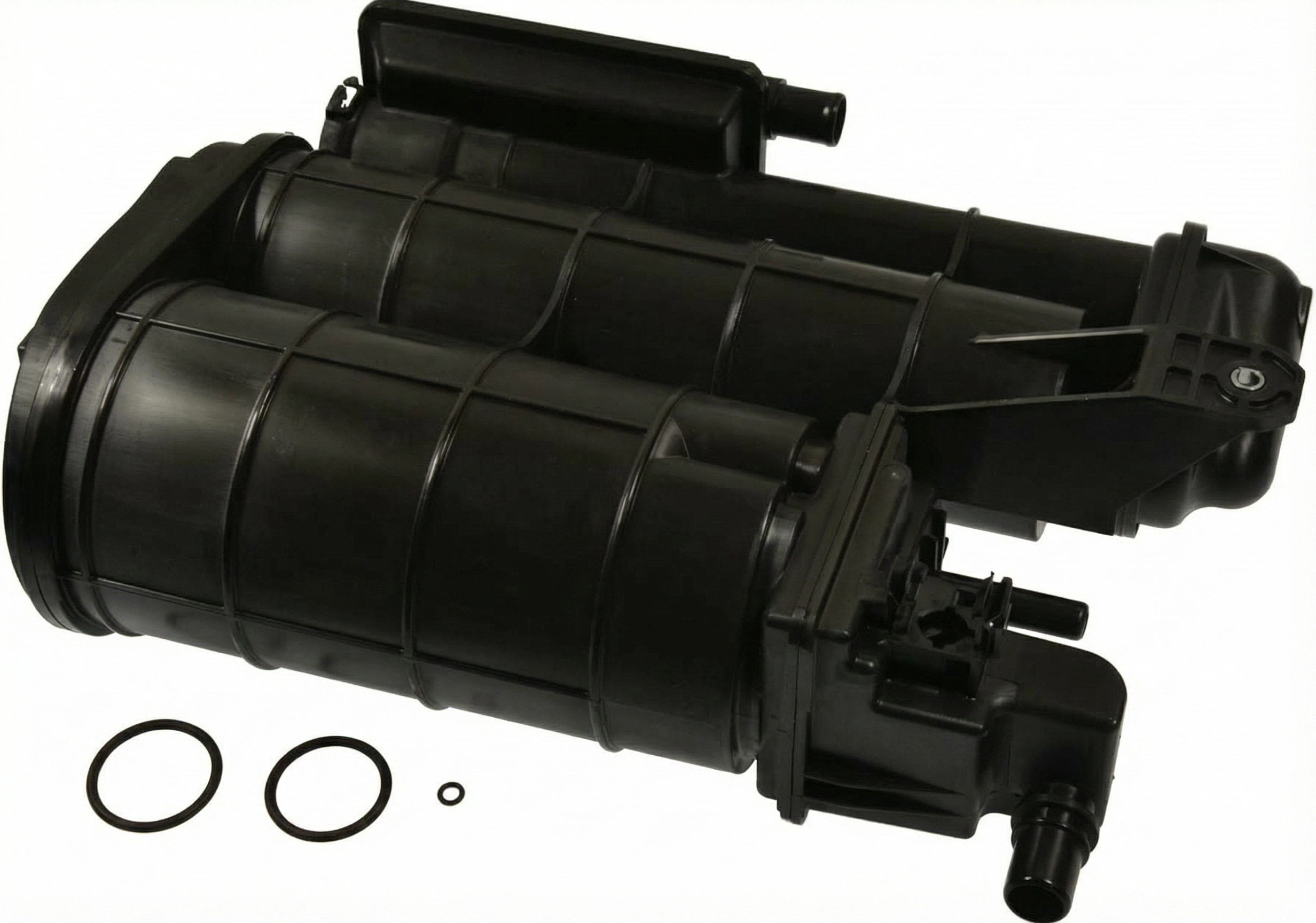
New Aftermarket Parts Available


The information in this article is provided for general reference and educational purposes only. Vehicle specifications, procedures, and part compatibility can vary by production date, trim level, and region. Always consult your vehicle's factory service manual and verify part numbers before purchasing or performing repairs. Safety-critical components such as airbags, seat belts, and braking systems should be installed by a qualified professional.
- Ford C-Max:
- 🧭 Diagnostic Flowchart
- 🎬 Helpful Videos
- 🛍️ Shop This Part
- What's Unique About the 2013-2018 Ford C-Max
- Symptoms You May Notice
- Most Likely Causes
- Rare But Worth Checking
- Diagnosis Steps
- Parts You'll Likely Need
- Related Codes That Often Appear With This One
- Technical Service Bulletins (TSBs) & Recalls
- Platform-Specific Known Issues
- Mechanic-Grade Diagnostic Values
- Scan Tool Commands That Help
- Wiring & Ground Locations
- OEM Part Supersession History
- Model Year Variations Within This Range
- Other Known Issues on This Vehicle
- Used vs. New Parts: Buying Guide for This Vehicle
- Real Owner Stories
- 2013 Ford C-Max Hybrid 2.0L
- 2013-2018 Ford C-Max 2.0L Hybrid
- 2016-2017 Ford C-Max Hybrid
- Related OBD-II Codes
- Frequently Asked Questions
- 🎟️ Get 5% Off