

P1072 on 2014-2024 Mini Cooper B38: Why It's Probably P0172 'System Too Rich'
The code P1072 is not a valid SAE code for this Mini. Your scanner is almost certainly misinterpreting the standard code P0172 (BMW fault 118002), which means the engine is running too rich. The most common cause is a failed PCV system, which is integrated into the valve cover. When the internal diaphragm tears, it creates a large internal vacuum leak, requiring replacement of the entire valve cover for ~$300-$500 in parts.
- The code P1072 is incorrect; the actual code is P0172, meaning 'System Too Rich'.
- The most likely cause on the Mini B38 engine is a failed PCV system, which requires replacing the entire valve cover.
- Before buying parts, smell the engine oil for gasoline. A strong fuel smell points to a bad High-Pressure Fuel Pump (HPFP).
- If the idle is very rough, a single leaking fuel injector could be the cause. Check the spark plugs for evidence.
- This issue is generally DIY-friendly if it's the valve cover, but replacing the HPFP or fuel injectors is more advanced and may require special tools.
What's Unique About the 2014-2024 Mini Cooper
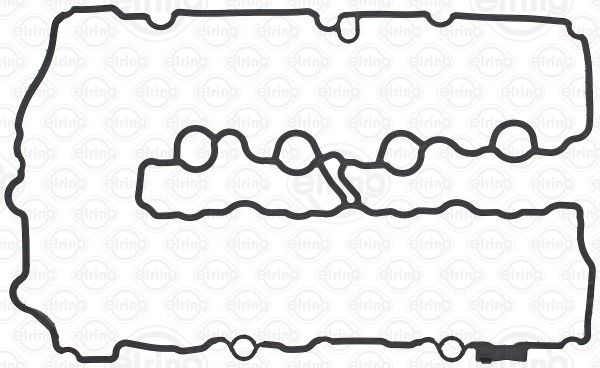
On the B38 engine, the most frequent cause for a P0172 rich condition is a failure of the PCV (Positive Crankcase Ventilation) system. Unlike many cars where the PCV valve is a small, cheap part, on this Mini engine the PCV diaphragm is integrated directly into the plastic valve cover. When it tears, the engine sucks in excessive, unmetered oil and fuel vapors from the crankcase, leading to a rich mixture that the DME cannot compensate for. This design means the entire valve cover assembly must be replaced to fix a failed PCV system.
Symptoms You May Notice
- Check Engine Light is on
- Rough or unstable idle, sometimes stalling on a cold start
- Poor fuel economy
- Hesitation or stumbling during acceleration
- Strong smell of gasoline from the exhaust
- Black soot on the exhaust tip
- In some cases, a hissing sound from the engine bay when the oil cap is removed while running
- Long crank times before the engine starts
- Replacing the downstream (post-catalytic converter) oxygen sensor. The upstream sensor is the primary sensor used for fuel mixture control.
- Assuming a vacuum leak in the intake hoses. While possible, a vacuum leak typically introduces unmetered *air* and causes a lean code (P0171), not a rich code. The PCV failure on this engine is an *internal* vacuum leak that pulls in fuel/oil vapor, causing a rich condition.
Most Likely Causes
- Failed PCV System (Integrated in Valve Cover) 🔴 High Probability The PCV diaphragm is made of rubber that can tear or degrade from heat and age. Because it is built into the valve cover, the entire assembly must be replaced. This is a very common failure on the B38 engine.
How to confirm: With the engine running, try to remove the oil filler cap. If there is a very strong vacuum making it difficult to remove, or if the engine idle changes dramatically and a loud hissing is heard when it's removed, the PCV diaphragm has likely failed. This test is a hallmark diagnostic for this specific issue. 🎬 Watch: Diagnostic steps and repair for the B38 rich condition
Typical fix: Replace the entire engine valve cover assembly. This includes a new integrated PCV system and new gaskets.
Est. part cost: $300-$500 - Leaking High-Pressure Fuel Pump (HPFP) 🟡 Medium Probability The seal on the mechanically-driven HPFP can fail, allowing raw gasoline to leak directly into the engine's crankcase and mix with the oil. The PCV system then pulls these heavy fuel vapors from the crankcase into the intake, causing a rich condition that mimics a primary PCV failure.
How to confirm: Remove the oil dipstick or oil filler cap and smell the oil. If it has a strong, unmistakable gasoline odor, the HPFP is a likely suspect. This is a critical check, as fuel-thinned oil provides poor lubrication and can lead to engine damage. 🎬 See how to diagnose a failing high-pressure fuel pump
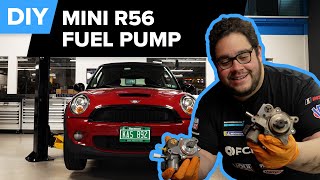
Typical fix: Replace the High-Pressure Fuel Pump and perform an immediate engine oil and filter change 🎬 Watch: Step-by-step guide to replacing the high-pressure fuel pump to remove the contaminated oil.
Est. part cost: $250-$600 - Leaking Fuel Injector(s) 🟡 Medium Probability Direct injectors operate under very high pressure and can fail, sticking open or leaking fuel into a cylinder even when not commanded.
How to confirm: After the engine has run, remove the spark plugs and inspect their tips. A plug from a cylinder with a leaking injector will be wet with fuel and likely covered in black, sooty deposits, while others may look normal. A professional diagnosis may involve monitoring fuel rail pressure bleed-down after shutdown.
Typical fix: Identify and replace the faulty fuel injector(s). It is often recommended to replace them as a set. This job requires special tools and coding the new injectors to the DME.
Est. part cost: $150-$300 per injector - Faulty Upstream Oxygen (O2) Sensor ⚪ Low Probability → Shop Oxygen Sensor
How to confirm: Use an OBD-II scanner with live data capability to monitor the Bank 1, Sensor 1 voltage. It should fluctuate rapidly between approximately 0.1 and 0.9 volts. If it is stuck high (e.g., >0.8V) or responds very slowly, the sensor is likely faulty and is incorrectly telling the DME the engine is rich.
Typical fix: Replace the upstream (pre-catalytic converter) oxygen sensor.
Est. part cost: $100-$200
Rare But Worth Checking
- DME Software Update Needed: BMW/Mini issued a Technical Service Bulletin (SI B11 07 17) for the corresponding fault 118002, noting that overly sensitive software could trigger a rich code, especially in cold weather with short trips. The fault is often triggered by an accumulation of fuel vapors in the crankcase during short drives where the oil doesn't get hot enough. The fix is a dealer-installed software update.
- Dirty or Faulty Mass Air Flow (MAF) Sensor: A MAF sensor contaminated with oil or dirt can under-report the amount of air entering the engine, causing the DME to inject too much fuel. Cleaning with a dedicated MAF sensor cleaner may resolve the issue. However, on this platform, this is less common than the PCV or HPFP issues.
Diagnosis Steps
- Confirm the code is P0172 using a BMW-capable scanner, which should show the specific fault 118002. Note any other codes present.
- Check the oil dipstick and oil cap for a strong smell of gasoline. If present, the High-Pressure Fuel Pump (HPFP) is the primary suspect. Do not run the engine longer than necessary if oil is contaminated.
- With the engine running at idle, carefully attempt to remove the oil filler cap. If a very strong vacuum makes it difficult to remove, or a loud 'sucking' or 'hissing' sound is heard when the cap is loosened, the PCV diaphragm inside the valve cover has almost certainly failed.
- If the above tests are inconclusive, inspect the spark plugs. Black, sooty, or fuel-soaked plugs can indicate a leaking fuel injector in that specific cylinder.
- Using a scanner with live data, monitor the short-term (STFT) and long-term (LTFT) fuel trims. Consistently high negative numbers (e.g., -15% or more combined) confirm the DME is subtracting fuel to combat a rich condition.
- Monitor the upstream O2 sensor (Bank 1, Sensor 1) voltage to ensure it is switching correctly and not stuck high.
- Inspect the engine air filter for severe clogging, which could restrict airflow and cause a rich mixture.
- If all hardware checks out, consult a dealer or specialist shop about TSB SI B11 07 17 to see if a DME software update is applicable, especially if the issue is most prevalent in cold weather.
Parts You'll Likely Need
- Engine Valve Cover Assembly
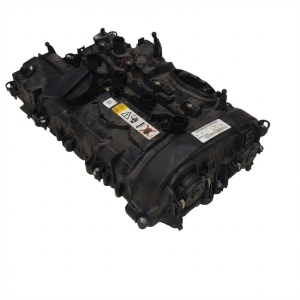
(OEM #11128645888)— This is the most common failure. The PCV system is integrated into the cover and is not serviced separately. A tear in the internal diaphragm causes a massive internal vacuum leak that pulls in oil/fuel vapors, leading to a rich condition.
Trusted brands: Genuine Mini/BMW, Vaico, URO Parts
OEM price range: $400-$550
Aftermarket price range: $250-$400 - High-Pressure Fuel Pump (HPFP)
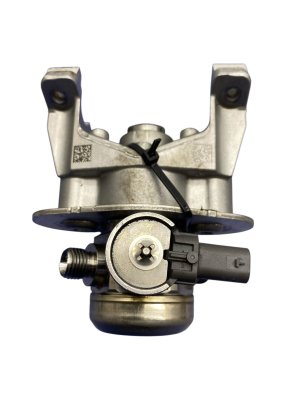
(OEM #13517636881)— A common failure point on modern BMW/Mini direct injection engines. The internal seals can fail, leaking fuel into the engine oil and causing a rich condition via the PCV system.
Trusted brands: Bosch (OEM supplier), Genuine Mini
OEM price range: $450-$600
Aftermarket price range: $250-$400 - Fuel Injector
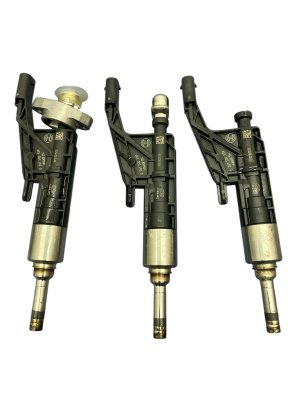
(OEM #13538625396)— A leaking or stuck-open injector will dump excess fuel into a cylinder, causing a rich condition and potential misfires.
Trusted brands: Bosch (OEM supplier), Genuine Mini
OEM price range: $200-$300
Aftermarket price range: $100-$180
Technical Service Bulletins (TSBs) & Recalls
- SI B11 07 17: Addresses fault 118002 (P0172) where the mixture is too rich, particularly in cold weather or with short trips. It notes the cause can be overly sensitive DME software diagnostics combined with fuel vapors in the crankcase that haven't burned off. The fix is to check for other causes, perform an oil change, and update the DME software.
Platform-Specific Known Issues
- The integration of the PCV system into the valve cover is a key design characteristic of the B38 engine that makes this repair more costly than on other vehicles where the PCV is a separate, inexpensive valve.
- Short-trip driving profiles, especially in cold climates, can exacerbate rich-running conditions and may be addressed with an ECU software update per TSB SI B11 07 17.
- The 'gas in oil' smell is a very strong indicator of HPFP failure on this platform and should be investigated immediately to prevent lubrication-related engine damage.
Mechanic-Grade Diagnostic Values
- Long-Term Fuel Trim (LTFT) at idle, engine warm — expected: Typically between -5% and +5%.. Failure: A consistent value more negative than -20% will often trigger the P0172 code. Values in excess of -35% have been observed in cases of severe PCV failure.
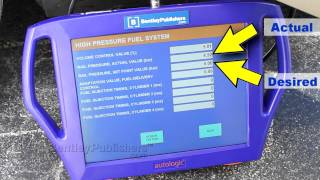
- High-Pressure Fuel Rail Pressure at idle — expected: Approximately 700-1,000 PSI.. Failure: While specific failure values are not well-documented, pressures significantly above this range at idle could suggest a problem. Under load, pressure can rise to over 2,000 PSI.
Hidden / Shadow Codes Worth Checking
- 11A031: Low-pressure fuel system, electric fuel pump: Pressure too low. While not a rich code, it indicates a fault within the fuel delivery system that could be diagnosed alongside P0172. (see via BMW-specific diagnostic tools like ISTA or advanced OBD-II scanners (BimmerLink, Foxwell, etc.).)
Scan Tool Commands That Help
- ISTA/D: Delete engine adaptation values — This function should be performed after replacing major fuel system components like the valve cover (PCV), fuel injectors, or HPFP to force the DME to relearn the fuel mixture from a baseline. The path is: Vehicle Management > Service Functions > Power train > Engine Electronics > Adjustment functions > Delete engine adaptation values.
- ISTA/D: Injector determination — Use this before ordering replacement fuel injectors. Some mid-production B38 engines switched from EU5 to EU6 emissions-standard injectors which are not cross-compatible. This function identifies which type is required, as it cannot be determined by the VIN. The path is: Vehicle Management > Service Functions > Powertrain > Engine Electronics > Injector determination.
Wiring & Ground Locations
- Engine-to-Chassis Ground Strap — On the F56 chassis, the main engine ground strap is located on the left side of the engine bay (driver's side in North America). It connects from the upper engine mount area to the chassis frame rail. Access requires lifting the vehicle and removing the front driver's side wheel and the plastic under-engine cover.. A poor ground can cause erratic behavior from sensors and the DME, potentially leading to incorrect fuel calculations. While not a primary cause of a rich code, verifying grounds is a fundamental step in diagnosing any electronic engine fault.
Real Owner Repair Stories
- Urban Automotive, YouTube (2016 Mini Cooper Clubman 1.5L B38) — Check Engine Light with code P0172 (BMW fault 118002). Fuel trims were extremely negative, over -35%.
❌ Tried (didn't work) Diagnosis confirmed the issue was not injectors or O2 sensors.
✅ What actually fixed it The shop replaced the entire valve cover assembly due to a torn internal PCV diaphragm. An engine oil and filter change was also performed to remove fuel-contaminated oil. After the repair and resetting adaptations, fuel trims returned to a normal range of +/- 5%. - Reddit user Both_Article_7676 (2018 Mini Cooper) — P0172 code appeared randomly after a short drive in very cold (negative digit) weather.
❌ Tried (didn't work) A diagnostic visit to a Mini specialist shop found no hardware faults.
✅ What actually fixed it The code cleared on its own and did not return after the owner began driving more miles, allowing the engine computer to reset its fuel trim adaptations. This outcome aligns with TSB SI B11 07 17, which notes the code can be triggered by short trips in cold weather without any actual part failure.
"I Checked Everything" — The Actual Cause
- A standard smoke test is unlikely to find the cause of P0172 on a B38 engine if it's caused by the common PCV failure. Smoke tests are designed to find vacuum leaks where unmetered *air* is sucked into the intake from the outside, which causes a lean code (P0171). The B38's PCV failure is an *internal* vacuum leak, where the engine sucks excessive crankcase vapors (a mix of air, oil, and unburnt fuel) directly into the intake manifold. This introduces extra fuel, not just air, causing a rich condition that a smoke test will not detect.
OEM Part Supersession History
11127646555→11128645888— Part number 11127646555 is for the older N14/N18 engine and is incorrect for the B38. The correct, current part number for the B38 valve cover is 11128645888. Revisions often aim to improve the durability of the internal PCV diaphragm.
Heads up: The N14/N18 valve cover will not fit the B38 engine.N/A - EU5 Injector→N/A - EU6 Injector— During the production run, BMW/Mini updated the fuel injectors to meet stricter EU6 emissions standards.
Heads up: EU5 and EU6 injectors are physically similar but electronically incompatible. They cannot be mixed. The correct type must be identified using the ISTA 'injector determination' service function before replacement, as the VIN is not a reliable indicator.
Model Year Variations Within This Range
- 2018-2024 (LCI models): The B38 engine was updated for the Life Cycle Impulse (LCI) refresh. Changes include an integrated exhaust manifold/turbocharger housing, a new coolant pump with more effective thermal management, and revised balancer shafts. The engine code was updated from B38A15M0 to B38A15M1. While these changes don't directly alter the common causes of P0172, they mean that related parts like the turbocharger or cooling system components may differ from pre-LCI models.
Diagnostic Flowchart
Other Known Issues on This Vehicle
Issues unrelated to this code that are worth knowing about as an owner of this generation:
- Upper Engine Mount Failure 🟠 Medium — Commonly fails between 60,000 and 100,000 miles. The hydraulic, fluid-filled mount leaks, causing excessive engine vibration at idle and clunking noises.
- Crankshaft Pulley / Harmonic Balancer Separation 🔴 High — The rubber isolator in the pulley degrades over time, causing the outer ring to separate. This leads to a loss of all belt-driven accessories (alternator, water pump), causing a no-charge situation and rapid overheating.
- Oil Filter Housing Gasket Leak 🟠 Medium — The gasket between the oil filter housing and the engine block becomes hard and brittle, causing a significant oil leak down the front of the engine. Often occurs after 70,000 miles.
- Thermostat Housing / Water Pump Leaks 🟠 Medium — The plastic components of the cooling system, particularly the thermostat housing and water pump, can become brittle and crack, leading to coolant leaks.
- Carbon Buildup on Intake Valves 🟡 Low — As a direct-injection engine, fuel doesn't wash over the intake valves. This allows oil vapor from the PCV system to bake onto the valves, causing rough idle, hesitation, and misfires over time. Typically requires cleaning (e.g., walnut blasting) every 60,000-80,000 miles.
Used vs. New Parts: Buying Guide for This Vehicle
When a used part is the smart pick: A used High-Pressure Fuel Pump (HPFP) from a documented low-mileage donor vehicle can be a cost-effective option, as it is not considered a regular wear-and-tear item. Other electronic sensors or modules could also be sourced used.
Donor-vehicle mileage cap: roughly under 60000 miles for the part to have meaningful remaining life.
What to inspect on the donor part:
- For an HPFP, check for any signs of external corrosion or damage to the electrical connector.
- Verify the donor vehicle's mileage and history if possible; avoid parts from vehicles with accident damage to the engine bay.
- When buying online, only purchase from reputable sellers with clear photos of the actual part and a good return policy.
OEM-only on this vehicle (don't cheap out):
- Engine Valve Cover Assembly: Because the primary failure is an age-and-heat-related tear in a rubber diaphragm, a used valve cover has a high risk of failing soon after installation. While some aftermarket options exist, OEM is the safest bet for longevity.
Aftermarket brands forum-validated for this vehicle:
- Bosch: OEM supplier for the High-Pressure Fuel Pump (HPFP) and fuel injectors.
- INA: Known OEM supplier for related components like the HPFP cam follower.
Brands owners have reported issues with on this vehicle:
- Unbranded, low-cost valve covers from online marketplaces are frequently reported on forums to have poor fitment or use lower-quality diaphragms that fail prematurely compared to the OEM part.
Real Owner Stories
Aggregated from forums and TSBs cited above. Mileages and costs reflect what owners reported in those sources.
2017 Mini Cooper B38 1.5L 3-Cylinder Turbo
Symptoms: The Check Engine Light came on for code P0172, but only seemed to happen during the winter on short drives around town.
What fixed it: After confirming there were no vacuum leaks or fuel system issues, the dealer performed an oil change and updated the DME (engine computer) software.
Source hint: TSB SI B11 07 17
2016 Mini Cooper B38 1.5L 3-Cylinder Turbo
Symptoms: The car had a very rough and unstable idle, sometimes stalling on a cold start. When I tried to remove the oil cap with the engine running, there was a loud hissing sound and the engine almost died.
What fixed it: The entire engine valve cover assembly was replaced, which contains the new integrated PCV system.
Cost: $300-$500
Source hint: common_causes: Failed PCV System (Integrated in Valve Cover)
2018 Mini Cooper B38 1.5L 3-Cylinder Turbo
Symptoms: There was a strong smell of raw gas from the exhaust and the Check Engine Light was on. When I checked the oil dipstick, the oil smelled unmistakably like gasoline.
What fixed it: The High-Pressure Fuel Pump (HPFP) was found to be leaking internally. It was replaced, and an immediate engine oil and filter change was performed to remove the contaminated oil.
Cost: $250-$600
Source hint: common_causes: Leaking High-Pressure Fuel Pump (HPFP)
Related OBD-II Codes
Frequently Asked Questions
I heard there's a TSB for the P1072 code on my Mini Cooper. What does it cover?
Why is replacing the PCV system on my B38 engine so expensive?
My mechanic says my engine oil smells strongly of gasoline. What's the most likely cause on this Mini?
How can I perform a quick check for a failed PCV valve at home?
My Mini has a P1072 code, a rough idle, and hesitates when I accelerate. What should I check first?
Does the P1072 rich condition issue affect other BMW models?
Helpful Videos

Used OEM Parts in Stock
New Aftermarket Parts Available

The information in this article is provided for general reference and educational purposes only. Vehicle specifications, procedures, and part compatibility can vary by production date, trim level, and region. Always consult your vehicle's factory service manual and verify part numbers before purchasing or performing repairs. Safety-critical components such as airbags, seat belts, and braking systems should be installed by a qualified professional.
- Mini Cooper:
- 🧭 Diagnostic Flowchart
- 🎬 Helpful Videos
- 🛍️ Shop This Part
- What's Unique About the 2014-2024 Mini Cooper
- Symptoms You May Notice
- Most Likely Causes
- Rare But Worth Checking
- Diagnosis Steps
- Parts You'll Likely Need
- Technical Service Bulletins (TSBs) & Recalls
- Platform-Specific Known Issues
- Mechanic-Grade Diagnostic Values
- Hidden / Shadow Codes Worth Checking
- Scan Tool Commands That Help
- Wiring & Ground Locations
- Real Owner Repair Stories
- "I Checked Everything" — The Actual Cause
- OEM Part Supersession History
- Model Year Variations Within This Range
- Other Known Issues on This Vehicle
- Used vs. New Parts: Buying Guide for This Vehicle
- Real Owner Stories
- 2017 Mini Cooper B38 1.5L 3-Cylinder Turbo
- 2016 Mini Cooper B38 1.5L 3-Cylinder Turbo
- 2018 Mini Cooper B38 1.5L 3-Cylinder Turbo
- Related OBD-II Codes
- Frequently Asked Questions
- 🎟️ Get 5% Off