

P1072 on 2008-2013 Toyota Highlander: An Unlisted Code and Guide to the Likely Issue, P0172
P1072 is not a valid code for this Highlander. You almost certainly have code P0172 'System Too Rich Bank 1'. This is often caused by a failing Air/Fuel Ratio (O2) sensor or a dirty Mass Airflow (MAF) sensor. Cleaning the MAF is a cheap first step, but the A/F sensor is the most common fix. A Reddit thread discussing a 2012 Highlander with P0172, P0175, and P0101 pointed directly to a MAF sensor issue.
- First, confirm the code. P1072 is not a real code for your Highlander; the problem is almost certainly P0172.
- Start your diagnosis with the cheapest and easiest step: cleaning the Mass Airflow (MAF) sensor with dedicated cleaner.
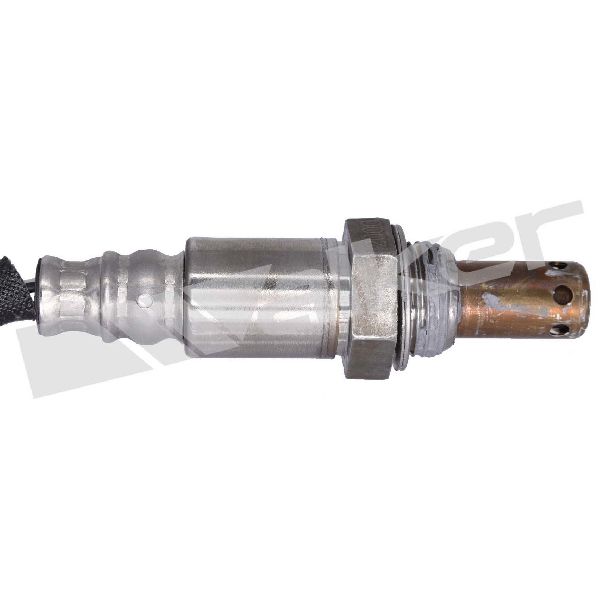
- The most common definitive fix for a P0172 on the 2GR-FE engine is replacing the Bank 1 Air/Fuel Ratio sensor (the upstream O2 sensor on the rear cylinder bank).
- If both P0172 (Bank 1) and P0175 (Bank 2) are present, focus your diagnosis on components that affect the whole engine, like the MAF sensor or fuel pressure.
- Do not ignore this code, as it will decrease your fuel mileage and can eventually damage your catalytic converter, leading to a much more expensive repair.
What's Unique About the 2008-2013 Toyota Highlander
For the 2GR-FE V6 in this generation of Highlander, a 'rich' condition code like P0172 is less common than its 'lean' counterpart (P0171). However, when it does occur, it's frequently traced back to a degraded upstream oxygen sensor, which on these engines is more accurately called an Air/Fuel Ratio (A/F) sensor. Owners often replace leaking fuel injectors, only to find the issue was the sensor all along. Another very common culprit is a dirty Mass Airflow (MAF) sensor, which can cause rich codes on both banks (P0172 and P0175).
Symptoms You May Notice
- Check Engine Light is on
- TRAC OFF light may illuminate along with the Check Engine Light
- Decreased fuel economy
- Rough or stumbling idle
- Noticeable smell of gasoline from the exhaust
- Black smoke from the exhaust in severe cases
- Hesitation on acceleration
- Hard starting when the engine is warm
- Replacing spark plugs first. While fouled plugs can be a symptom of a rich condition, they are rarely the root cause.
- Replacing the downstream (Sensor 2) oxygen sensor. The downstream sensor's primary role is to monitor catalytic converter efficiency and it has minimal impact on fuel trim adjustments. The problem is almost always the upstream (Sensor 1) A/F sensor.
Most Likely Causes
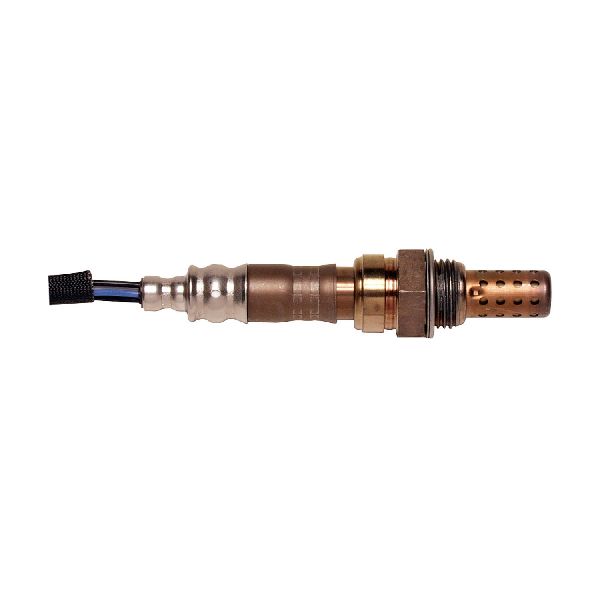
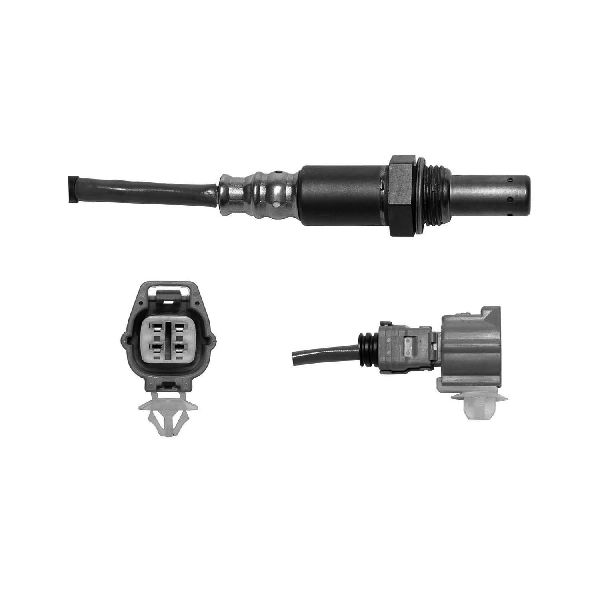
- Failing Air/Fuel Ratio Sensor (Bank 1, Sensor 1) 🔴 High Probability → Shop Oxygen Sensor A/F sensors are a common wear item. As they age, they can become slow to respond or biased, sending incorrect data to the ECM, causing it to inject the wrong amount of fuel. It is the most common cause for a single-bank rich code.
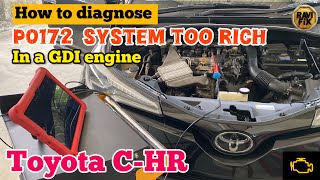
How to confirm: Use a scan tool with live data capability 🎬 See how to test Toyota rich fuel trim codes to graph the Bank 1 Sensor 1 voltage or current. A healthy sensor will show rapid fluctuations. A lazy or failing sensor will have slow, delayed, or flat-lined readings. The upstream sensor is the primary suspect for a P0172 code. Resistance across terminals +B and HA1A should be 1.8-3.4 Ω at 20°C (68°F).
Typical fix: Replace the Bank 1, Sensor 1 Air/Fuel Ratio sensor. Bank 1 is the rear bank, closer to the firewall, which can make access more difficult than Bank 2.
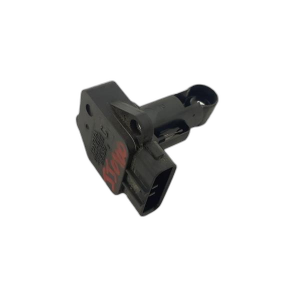
Est. part cost: $100-$200 - Dirty or Faulty Mass Airflow (MAF) Sensor 🔴 High Probability The MAF sensor sits in the intake tract and can get contaminated with dirt, oil, or debris, causing it to incorrectly measure the amount of air entering the engine. This is a very common issue on Toyota engines of this era and often triggers codes for both banks (P0172 & P0175).
How to confirm: Remove the MAF sensor and visually inspect the sensing elements for contamination. A simple and effective first step is to clean it with a dedicated MAF sensor cleaner spray. Do not touch the sensor wires or use other cleaners like brake cleaner. On a scan tool, a healthy 2GR-FE at warm idle should read approximately 3.3 to 4.7 g/s; significantly higher readings suggest a faulty sensor. Some service documents suggest a normal range can be as low as 1.0 to 3.0 g/s at idle.
Typical fix: Clean the MAF sensor. If cleaning does not resolve the issue and the sensor is confirmed to be faulty via live data, replace the sensor. Using an OEM Denso part is highly recommended.
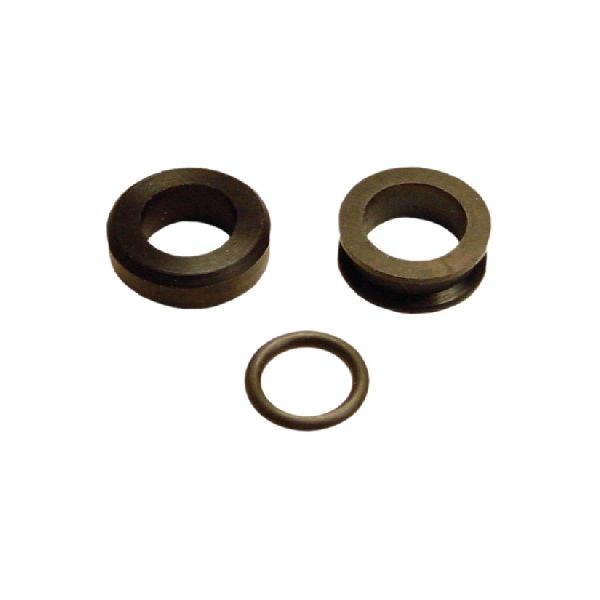
Est. part cost: $15 (cleaner) or $70-$150 (new sensor) - Leaking Fuel Injector(s) 🟡 Medium Probability An injector can fail internally or its O-rings can degrade, allowing it to leak fuel into a cylinder even when it's not supposed to be firing. This adds extra, uncommanded fuel to the mixture, causing a rich condition.
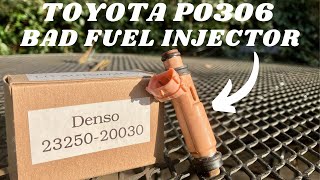
How to confirm: Perform a fuel pressure leak-down test. After shutting the engine off, pressure should remain above 147 kPa (21 psi) for at least 5 minutes. A rapid drop may indicate a leaking injector. Another method is to pull the spark plugs on Bank 1; a plug that is wet with fuel or excessively black and sooty points to the corresponding injector. 🎬 Watch: How to diagnose a bad Toyota fuel injector
Typical fix: Replace the faulty fuel injector(s). It is often recommended to replace them as a set on the affected bank.
Est. part cost: $50-$150 per injector - High Fuel Pressure ⚪ Low Probability A faulty fuel pressure regulator can cause system-wide high fuel pressure, forcing too much fuel through the injectors. This would typically set codes for both banks (P0172 and P0175).
How to confirm: Connect a fuel pressure gauge to the fuel rail. The pressure should be within the manufacturer's specification of 304 to 343 kPa (44.1 to 49.7 psi) at idle.
Typical fix: Replace the fuel pressure regulator or the fuel pump assembly if the regulator is integrated.
Est. part cost: $40-$250
Rare But Worth Checking
- Stuck Open Thermostat: If the engine doesn't reach its proper operating temperature (typically above 167°F or 75°C), the ECM will intentionally run a richer mixture. This would usually be accompanied by a low temperature gauge reading and poor heater performance.
- Leaking EVAP Purge Valve: A purge valve stuck open can allow unmetered fuel vapors from the charcoal canister to enter the intake manifold at the wrong time, creating a rich condition. This is a less common cause but should be considered, and can be tested using a Techstream scan tool.
- Exhaust Leak (Upstream of A/F Sensor): An exhaust leak between the cylinder head and the upstream A/F sensor can draw in outside air. The sensor interprets this extra oxygen as a lean condition and commands the ECM to add more fuel, ironically causing an actual rich condition.
Diagnosis Steps
- Confirm the code. Double-check your scan tool. If it reads P1072, assume it is P0172 for diagnostic purposes.
- Check for other codes. Codes like P0175 or P0101 can significantly narrow down the search to a MAF or fuel pressure problem.
- Inspect Live Data. Use a scan tool to check Long Term and Short Term Fuel Trims for Bank 1. A large negative number (e.g., -15% or more) confirms the rich condition.
- Clean the MAF Sensor. This is the cheapest and easiest first step. Disconnect the battery, remove the sensor, spray generously with MAF cleaner, let it dry completely, and reinstall.
- Inspect the Air Intake System. Check the air filter and ensure the intake tube is free of obstructions or cracks. A clogged filter can restrict air and cause a rich condition.
- Analyze A/F Sensor Performance. Using live data, observe the Bank 1, Sensor 1 voltage/current. If it is lazy, stuck, or not fluctuating as expected, it is likely the culprit. Consider performing a resistance test on the sensor heater circuit.
- Test Fuel Pressure. If the A/F sensor and MAF seem okay, check the fuel pressure at the rail to rule out a faulty regulator.
- Check for Leaking Injectors. If all else fails, perform a fuel pressure leak-down test or have a professional perform an injector balance test.
- Inspect for Upstream Exhaust Leaks. Visually inspect the exhaust manifold and piping before the A/F sensor for any signs of leaks (soot trails, audible ticking).
Parts You'll Likely Need
- Air/Fuel Ratio Sensor (Bank 1, Sensor 1)
(OEM #89467-48120)— This is the most frequent cause of a P0172 code on this engine when it's isolated to one bank. It is the primary sensor used for fuel mixture control.
Trusted brands: Denso
OEM price range: $150-$220
Aftermarket price range: $80-$150 - Mass Airflow (MAF) Sensor
(OEM #22204-31020)— A dirty or failing MAF sensor is a very common cause of incorrect fuel mixtures, often affecting both banks. Cleaning is often sufficient.
Trusted brands: Denso, Hitachi
OEM price range: $120-$180
Aftermarket price range: $60-$110 - Fuel Injector
(OEM #23250-31050)— A leaking injector will cause a rich condition isolated to one cylinder, which can trigger a bank-wide code.
Trusted brands: Denso, Aisin
OEM price range: $120-$170
Aftermarket price range: $40-$90
Related Codes That Often Appear With This One
- P0175 — System Too Rich (Bank 2). If both P0172 and P0175 are present, the problem is affecting the entire engine, pointing strongly toward a faulty MAF sensor, fuel pressure issue, or a stuck open EVAP purge valve.
- P0300, P0301, P0303, P0305 — Misfire codes for Bank 1 cylinders. A severely rich condition can foul spark plugs and cause misfires on the affected bank.
- P0101 — Mass Air Flow (MAF) Circuit Range/Performance. This code directly points to a problem with the MAF sensor, a primary cause of rich conditions. A Reddit user with a 2012 Highlander reported P0172, P0175, and P0101 together, which was resolved by addressing the MAF sensor.
Platform-Specific Known Issues
- Bank 1 A/F Sensor Location: The primary A/F sensor for Bank 1 (the source of the P0172 code) is located on the rear exhaust manifold, close to the firewall. Access can be challenging and may require removing other components for clearance. The torque spec for the sensor is 44 N*m (32 ft-lbf) without a special service tool (SST), or 40 N*m (30 ft-lbf) with an SST.
Mechanic-Grade Diagnostic Values
- A/F Sensor Heater Resistance — expected: 1.8 to 3.4 Ω at 20°C (68°F) between terminals +B and HA1A.. Failure: Resistance outside this range indicates a faulty sensor heater.
- A/F Sensor Insulation Resistance — expected: 10 kΩ or higher between terminals HA1A and A1A-.. Failure: Resistance lower than 10 kΩ indicates an internal short.
- Fuel Pressure at Idle — expected: 304 to 343 kPa (44.1 to 49.7 psi). Failure: Pressure above this range indicates a faulty regulator; pressure below indicates a potential pump, filter, or leak issue.
- Fuel Pressure Leak-Down — expected: Remains at 147 kPa (21 psi) or higher for 5 minutes after engine shutoff.. Failure: A rapid drop in pressure suggests leaking fuel injectors or a faulty fuel pump check valve.
- Injector Pulse Width at Idle — expected: 1.2 to 2.4 ms. Failure: Significantly higher pulse width at idle can indicate a vacuum leak (commanded rich) or other issue; a very low pulse width is commanded to correct a rich condition.
- Engine Coolant Temperature for Closed Loop — expected: Above 75°C (167°F). Failure: If the engine fails to reach this temperature, the ECM will remain in open-loop enrichment mode, causing a rich condition.
Scan Tool Commands That Help
- Toyota Techstream: Active Test: Control the Injection Volume for A/F sensor — To manually alter fuel injection volume and observe the A/F and O2 sensor responses, helping to confirm if the sensors are reacting correctly or are lazy/biased.
- Toyota Techstream: Active Test: Activate the VSV for Evap Control — To manually open and close the EVAP purge valve (VSV) to check for physical operation (clicking) and to see if it affects the air/fuel mixture at idle, diagnosing a stuck-open valve.
- Toyota Techstream: Active Test: FUEL PUMP / SPD — To directly command the fuel pump to run, allowing for fuel pressure checks without needing the engine to be running.
Wiring & Ground Locations
- Engine Harness Ground (Front Head) — A ground wire bundle from the main engine harness attaches to a boss on the side of the front cylinder head (Bank 2).. A poor ground here can affect all engine sensors, including the MAF and A/F sensors, leading to incorrect readings and spurious codes.
- Valve Cover Grounds — There are ground straps running from bolts on top of both valve covers to the chassis, often near the strut towers.. These provide the primary engine-to-chassis ground path. Corrosion or looseness can cause a voltage potential difference, impacting sensor readings.
- ECM Ground (E1 / D4) — The ECM and various sensors are grounded to the chassis at points behind the dashboard and kick panels, often designated E1 or D4 in wiring diagrams.. A compromised interior ground point can directly affect the ECM's reference voltage, leading it to misinterpret sensor signals and incorrectly calculate fuel trim.
Real Owner Repair Stories
- Reddit user in r/ToyotaHighlander (2012 Toyota Highlander Limited AWD, 123,000 miles) — Check Engine and TRAC OFF lights came on. Codes P0172, P0175, and P0101 were present.
❌ Tried (didn't work) Not specified, user was asking for advice.
✅ What actually fixed it The final fix was not posted by the original user, but the combination of codes (rich on both banks plus a MAF performance code) strongly indicates the root cause was a dirty or faulty Mass Airflow sensor. - Tacoma World forum user (Toyota Tacoma (with similar engine management principles)) — Persistent P0172 code.
❌ Tried (didn't work) Not specified, but implied common fixes had failed.
✅ What actually fixed it The problem was a combination of a faulty charcoal canister and the EVAP purge line being connected to the wrong port on the throttle body, which saw constant vacuum. The fresh air hose to the canister was also clogged with dirt.
"I Checked Everything" — The Actual Cause
- A persistent P0172 that doesn't resolve after cleaning the MAF or replacing the A/F sensor could be caused by a faulty EVAP system charcoal canister. A standard smoke test of the intake manifold might not reveal this issue. The canister itself can fail internally, or its vent can become clogged, causing it to release fuel vapors into the intake at the wrong time, creating a rich condition that the ECM cannot account for.
OEM Part Supersession History
89467-48120→89467-0E090— Part revision or consolidation by the manufacturer.
Heads up: While the original part number is still sold, the superseded part number is the latest version from Toyota for this application. Always verify with VIN.
Model Year Variations Within This Range
- 2011-2013: The Highlander received a facelift for the 2011 model year, with updated exterior styling and interior features. However, the 3.5L 2GR-FE V6 engine and its 5-speed automatic transmission remained unchanged from the 2008-2010 models, so the causes and fixes for P0172 are consistent across the entire 2008-2013 generation for the V6 gas engine.
Diagnostic Flowchart
Other Known Issues on This Vehicle
Issues unrelated to this code that are worth knowing about as an owner of this generation:
- VVT-i Oil Line Rupture 🔴 High — Common on early 2GR-FE engines (approx. 2005-2010). A rubber section of the Bank 1 VVT-i oil line degrades and can rupture without warning, causing rapid and catastrophic oil loss, potentially leading to engine seizure. (Ref: Toyota issued a Warranty Enhancement Program (ZE2) and TSB (e.g., T-SB-02011-11) to replace the rubber hose with an all-metal line (part # 15772-31030). Most vehicles should have been updated, but it's a critical check for any new owner.)
- Water Pump Failure 🟠 Medium — The water pump is known to fail, typically between 80,000 and 150,000 miles. The failure often begins as a slow weep from the weep hole, which may not be immediately visible, leading to a gradual loss of coolant. (Ref: No recall, but it is a widely documented failure pattern. Symptoms include a faint grinding/whining noise, coolant smell, and eventually overheating.)
- Melting / Sticky Dashboard 🟡 Low — Very common in Highlanders (and other Toyotas of this era) used in hot, humid climates. The dashboard material degrades, becoming shiny, sticky, and prone to cracking. (Ref: Toyota initiated a Warranty Enhancement Program (ZE6) to replace affected dashboards. The primary coverage ended in 2017, but it acknowledged the widespread material defect.)
Used vs. New Parts: Buying Guide for This Vehicle
When a used part is the smart pick: For this repair, used parts are generally not recommended for the most common causes. However, if a larger component like an intake manifold or a section of wiring harness is confirmed to be the issue, a used part from a reputable salvage yard is a viable option.
Donor-vehicle mileage cap: roughly under 80000 miles for the part to have meaningful remaining life.
What to inspect on the donor part:
- For mechanical parts, look for a donor vehicle with no signs of front-end collision or fire.
- Check for excessive corrosion, especially on electrical connectors and ground points.
- Ask for the VIN to check the donor vehicle's history if possible.
OEM-only on this vehicle (don't cheap out):
- Air/Fuel Ratio Sensor
- Mass Airflow (MAF) Sensor
- Fuel Injectors
Aftermarket brands forum-validated for this vehicle:
- Denso (for A/F sensors, MAF sensor, and injectors - Denso is the Original Equipment Manufacturer)
Brands owners have reported issues with on this vehicle:
- Bosch (for Air/Fuel or Oxygen sensors on Toyota vehicles; multiple forum sources report compatibility issues, poor performance, and premature failure despite being a quality brand for European vehicles)
Real Owner Stories
Aggregated from forums and TSBs cited above. Mileages and costs reflect what owners reported in those sources.
2012 Toyota Highlander 3.5L V6
Symptoms: Check engine light was on with codes P0172, P0175, and P0101 appearing simultaneously.
What fixed it: Cleaning the Mass Airflow (MAF) sensor was identified as the necessary first step by the community.
Source hint: r/ToyotaHighlander / Reddit: A user with a 2012 Highlander reported codes P0172, P0175, and P0101 simultaneously. URL: https://www.reddit.com/r/ToyotaHighlander/comments/1bopg2j/codes_p0172_p0175_p0101/
Related OBD-II Codes
Frequently Asked Questions
Where is the Bank 1 Air/Fuel Ratio sensor located on my 2008-2013 Highlander V6?
My Highlander has both P0172 and P0175; does this change the diagnosis?
What is the correct torque specification for the A/F sensor on the 2GR-FE engine?
Is there a specific part brand recommended for replacing the MAF sensor?
Could a VVT-i oil line issue be related to my check engine light?
What should the MAF sensor readings look like on a scan tool for a healthy Highlander?
Helpful Videos

Used OEM Parts in Stock
New Aftermarket Parts Available



The information in this article is provided for general reference and educational purposes only. Vehicle specifications, procedures, and part compatibility can vary by production date, trim level, and region. Always consult your vehicle's factory service manual and verify part numbers before purchasing or performing repairs. Safety-critical components such as airbags, seat belts, and braking systems should be installed by a qualified professional.
- Toyota Highlander:
- 🧭 Diagnostic Flowchart
- 🎬 Helpful Videos
- 🛍️ Shop This Part
- What's Unique About the 2008-2013 Toyota Highlander
- Symptoms You May Notice
- Most Likely Causes
- Rare But Worth Checking
- Diagnosis Steps
- Parts You'll Likely Need
- Related Codes That Often Appear With This One
- Platform-Specific Known Issues
- Mechanic-Grade Diagnostic Values
- Scan Tool Commands That Help
- Wiring & Ground Locations
- Real Owner Repair Stories
- "I Checked Everything" — The Actual Cause
- OEM Part Supersession History
- Model Year Variations Within This Range
- Other Known Issues on This Vehicle
- Used vs. New Parts: Buying Guide for This Vehicle
- Real Owner Stories
- 2012 Toyota Highlander 3.5L V6
- Related OBD-II Codes
- Frequently Asked Questions
- 🎟️ Get 5% Off