

P1072 on 2010-2015 Toyota Prius: Why It's Really P0172 'System Too Rich' and How to Fix It
The code P1072 is not a valid Toyota code; your scanner is almost certainly misreading the real code, which is P0172 'System Too Rich'. The most common cause on a 2010-2015 Prius is a dirty Mass Air Flow (MAF) sensor. Cleaning it with a dedicated spray (around $15) often fixes the issue. If that fails, the next most likely cause is a failing upstream Air/Fuel Ratio sensor.
- The code P1072 is an error; the actual problem is P0172 (System Too Rich).
- Before buying any parts, spend $15 on a can of MAF sensor cleaner and clean the MAF sensor. This is the most common fix for this code on a 2010-2015 Prius.
- If cleaning the MAF doesn't work, the next most likely culprit is the upstream Air/Fuel Ratio sensor (O2 sensor).
- Ignoring a rich condition will significantly lower your MPG and can lead to costly catalytic converter damage over time.
What's Unique About the 2010-2015 Toyota Prius
The key issue for this platform is the code itself. Many owners report seeing P1072, causing confusion, when the actual underlying fault is P0172. The 2ZR-FXE engine in the third-generation Prius is highly sensitive to sensor inputs. Owner communities and repair data show that a dirty Mass Air Flow (MAF) sensor is a very frequent cause for this rich condition, far more so than leaking injectors or fuel pressure issues on other vehicles. Starting with cleaning the MAF is a platform-specific diagnostic shortcut that resolves the issue in a majority of cases. Additionally, the complex EGR system on this engine can become clogged, indirectly affecting combustion and potentially contributing to mixture issues, a factor less common on simpler non-hybrid engines.
Symptoms You May Notice
- Check Engine Light is on
- Decreased fuel economy
- Rough or unstable idle
- Strong smell of fuel from the exhaust
- Black smoke from the exhaust in severe cases
- Hesitation or stumbling on acceleration
- Replacing the downstream (post-catalyst) oxygen sensor. The downstream sensor primarily monitors catalyst efficiency and has minimal impact on fuel trim; the upstream Air/Fuel Ratio sensor is the one that controls the mixture.
- Immediately replacing the A/F sensor or fuel injectors without first cleaning the MAF sensor, which is the most common and cheapest fix.
Most Likely Causes
- Dirty or Faulty Mass Airflow (MAF) Sensor 🔴 High Probability The MAF sensor in the 2ZR-FXE engine is sensitive and can become contaminated with dirt, oil from the PCV system, or debris over time, causing it to under-report airflow to the ECM. The ECM then injects too much fuel, creating a rich condition. This is the most common cause of P0172 on this vehicle, widely confirmed in owner forums.
How to confirm: Visually inspect the sensor wires inside the MAF housing for contamination. A more definitive test is to use a scan tool to monitor MAF readings at idle; a healthy 2ZR-FXE engine should show around 1.5-2.5 g/s. With the engine off and key on, the MAF should read at or very near 0 g/s; a higher reading indicates a fault. However, cleaning is often performed as the first diagnostic step due to how common the issue is.
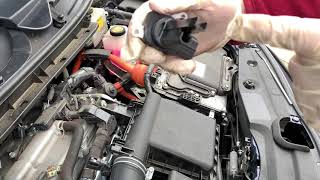
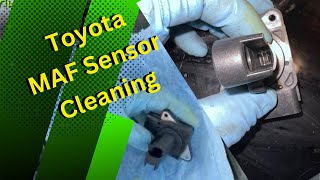
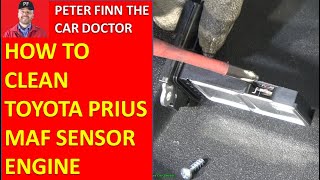
Typical fix: Remove the sensor and clean it carefully using only a dedicated MAF sensor cleaner spray. Do not touch the sensor wires. 🎬 Watch: How to clean your Prius MAF sensor Allow it to dry completely before reinstalling. If cleaning does not resolve the issue, the sensor must be replaced, preferably with an OEM Denso part.
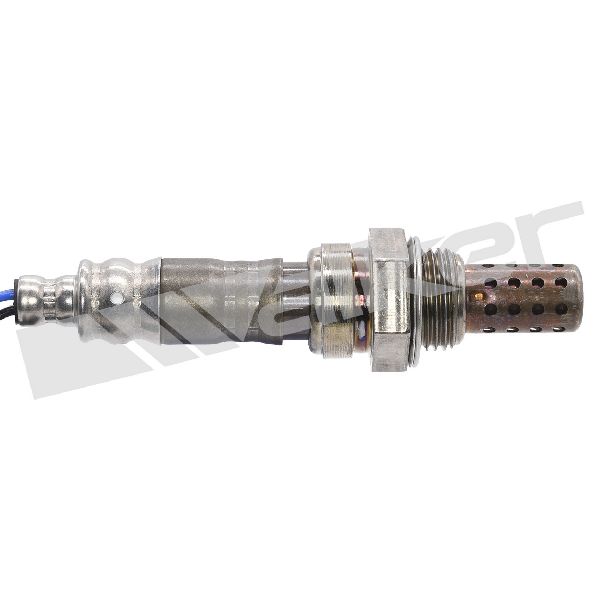
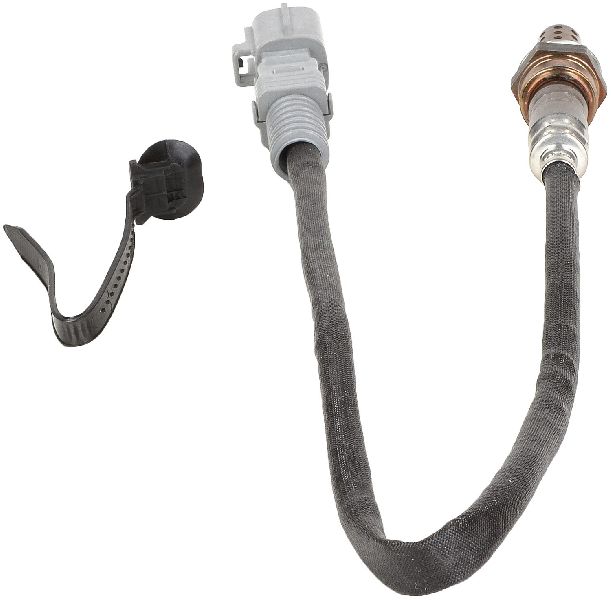
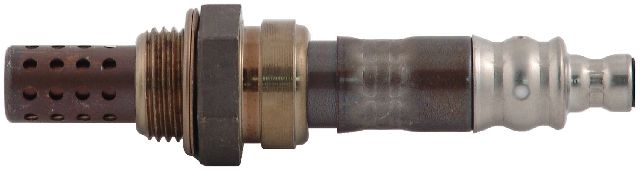
Est. part cost: $10-$20 for cleaner, $60-$180 for a new sensor. - Failing Air/Fuel Ratio Sensor (Upstream O2 Sensor) 🟡 Medium Probability → Shop Oxygen Sensor This is the primary sensor the ECM uses to determine the air-fuel mixture. Over time, these sensors can degrade and send slow or biased signals, tricking the ECM into creating a rich condition. It's the second most likely component to fail after the MAF sensor for this code.
How to confirm: Use a scan tool to graph the A/F sensor's voltage. It should react quickly to changes in throttle. A lazy or flat-lining sensor is faulty. In maintenance mode at idle, the voltage should be around 3.3V; a sensor reading consistently below 3.0V may indicate a problem or a true rich condition.
Typical fix: Replace the Air/Fuel Ratio Sensor (Bank 1, Sensor 1). Using a quality OEM brand like Denso is highly recommended for longevity and proper function, as aftermarket sensors can cause persistent issues. 🎬 See this step-by-step upstream O2 sensor replacement
Est. part cost: $80-$220 - Leaking Fuel Injector(s) ⚪ Low Probability While less common than sensor issues on this platform, a fuel injector can stick partially open or have a degraded seal, dripping excess fuel into a cylinder and causing a rich condition.
How to confirm: Perform a fuel pressure leak-down test. After the engine is off, the fuel rail pressure should hold steady. A rapid drop indicates a leak, likely from an injector. Another method is to pull the spark plugs after the engine has sat and check for one that is wet with fuel or excessively black and sooty compared to the others.
Typical fix: Identify and replace the leaking fuel injector. It is often recommended to replace the seals as a set, or the injectors themselves if one has failed.
Est. part cost: $5-$10 per seal kit, $70-$150 per injector.
Rare But Worth Checking
- High Fuel Pressure: This could be caused by a faulty fuel pressure regulator. Check fuel pressure with a gauge to confirm it is within the manufacturer's specifications (typically 44-50 psi for the 2ZR-FXE).
- Clogged or Sticking PCV Valve: A faulty PCV system can disrupt the air-fuel mixture by allowing unmetered oil vapor and blow-by gases into the intake manifold, contributing to a richer mixture and contaminating the MAF sensor. Inspect the PCV valve and all associated hoses for cracks, leaks, or blockages.
- Exhaust Leak (before the A/F sensor): An exhaust leak between the cylinder head and the upstream A/F sensor can draw in outside air, making the sensor read a false lean condition. The ECM then overcompensates by adding too much fuel, resulting in an actual rich condition and a P0172 code.
- Stuck Open Engine Coolant Thermostat: If the thermostat is stuck open, the engine may not reach its proper operating temperature. The ECM will then continue to command a richer fuel mixture, as it does during a cold start, which can trigger a P0172 code. This would typically be accompanied by the temperature gauge reading low and poor heater performance.
Diagnosis Steps
- Confirm the code with a reliable OBD-II scanner. If it shows P1072, assume the actual code is P0172.
- Use the scanner to view live data, specifically Short-Term Fuel Trim (STFT) and Long-Term Fuel Trim (LTFT). For a P0172, you will see large negative values (e.g., total trim of -20% or more), confirming the ECM is trying to remove fuel.
- Inspect the air intake system between the MAF sensor and the throttle body for any cracks, loose clamps, or unmetered air leaks.
- Inspect the engine air filter. A severely clogged filter can restrict airflow and contribute to a rich condition.
- Remove and clean the Mass Air Flow (MAF) sensor using a dedicated MAF cleaner spray. Allow it to dry completely before reinstalling. Clear the codes and test drive the vehicle to see if the code returns.
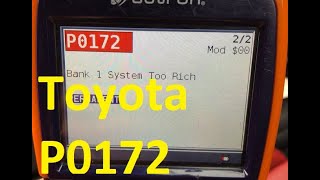
- If the code returns, inspect the PCV valve and hose for blockages or damage. A malfunctioning PCV system is a known issue 🎬 Watch: Diagnostic breakdown of Toyota P0172 causes that can affect the air-fuel mixture.
- If the above steps fail, test the upstream Air/Fuel Ratio sensor (Bank 1, Sensor 1). Graph its live data or test its heater circuit resistance.
- If sensors and intake are good, check for leaking fuel injectors by performing a fuel pressure leak-down test or by inspecting the spark plugs for signs of one cylinder running rich.
- Check fuel pressure to ensure the fuel pressure regulator is functioning correctly.
- Inspect the exhaust manifold for any leaks before the A/F sensor.
- Check the Engine Coolant Temperature (ECT) sensor reading on your scan tool. If the ECM thinks the engine is always cold (e.g., reading below 167°F / 75°C after warm-up), it will command a richer mixture.
Parts You'll Likely Need
- Mass Air Flow (MAF) Sensor Cleaner — This is the cheapest and most common first step, as a dirty MAF sensor is the leading cause of P0172 on this Prius.
Trusted brands: CRC, WD-40 Specialist
Aftermarket price range: $10-$20 - Air/Fuel Ratio Sensor (Bank 1, Sensor 1)
(OEM #89467-47010)— This is the upstream O2 sensor and the second most common failure part for this code if cleaning the MAF does not work. Using OEM Denso parts is strongly recommended by the community to avoid compatibility issues.
Trusted brands: Denso (OEM)
OEM price range: $150-$220
Aftermarket price range: $80-$150 - Mass Air Flow (MAF) Sensor
(OEM #22204-37010)— If cleaning the original sensor doesn't fix the issue, or if it has been cleaned multiple times, the sensor itself may have failed and requires replacement.
Trusted brands: Denso (OEM), Hitachi
OEM price range: $120-$180
Aftermarket price range: $60-$110
Technical Service Bulletins (TSBs) & Recalls
- T-SB-0075-13 (May 30, 2013): Addresses a MIL ON condition with DTC P0401 (EGR Flow Insufficient) on 2010-2012 Prius models, relevant as a clogged EGR system is a major platform issue that can affect combustion.
- T-SB-0116-15 (Nov 19, 2015): Pertains to a 'runs rough' condition and/or misfire codes (P030#) on 2010-2015 Prius models, which can sometimes be related to the same systems that cause fuel mixture issues.
Platform-Specific Known Issues
- Clogged EGR System: The Gen 3 Prius is notorious for its EGR (Exhaust Gas Recirculation) valve, cooler, and intake manifold passages getting clogged with carbon. While this more commonly causes misfire codes (P030x) and insufficient flow codes (P0401), a malfunctioning EGR system can disrupt proper combustion and indirectly contribute to air-fuel mixture problems. Cleaning the entire EGR circuit is a common preventative maintenance item for high-mileage Priuses.
- Repeated MAF Sensor Cleaning: In a documented case on PriusChat, an owner who regularly cleaned their MAF sensor every 30,000 miles eventually had the sensor fail, throwing P0172 and P0101 codes. This suggests that while cleaning is effective, the sensor is a wear item and may eventually fail even with regular maintenance, requiring replacement.
Mechanic-Grade Diagnostic Values
- Long-Term and Short-Term Fuel Trim (LTFT + STFT) — expected: Total trim should be close to 0%, within +/- 10%.. Failure: A combined value more negative than -20% to -25% triggers the P0172 code.
- Mass Air Flow (MAF) Sensor Reading at Idle — expected: 1.5 to 2.5 g/s for a fully warmed-up 1.8L 2ZR-FXE engine.. Failure: A reading significantly lower than expected suggests the sensor is dirty/faulty and under-reporting airflow, causing the rich condition. A reading of 0 g/s with the engine running indicates a dead sensor or wiring issue.
- Upstream Air/Fuel Ratio Sensor Voltage (Bank 1 Sensor 1) — expected: Approximately 3.3V at steady idle in maintenance mode.. Failure: A voltage consistently below 3.0V at idle indicates a rich condition (either real or perceived by a faulty sensor). The voltage should respond rapidly to throttle changes; a slow or lazy response indicates a failing sensor.
- Downstream Oxygen Sensor Voltage (Bank 1 Sensor 2) — expected: Should be relatively stable, typically around 0.7-0.8V when the engine is hot and the catalytic converter is working.. Failure: A reading consistently high (near 0.9V) confirms the exhaust is actually rich, validating the data from the upstream A/F sensor and fuel trims.
- Engine Coolant Temperature (ECT) — expected: Above 167°F (75°C) when fully warmed up.. Failure: A reading that stays low after the engine should be warm indicates a stuck-open thermostat, causing the ECM to remain in a cold-start enrichment mode.
Scan Tool Commands That Help
- Toyota Techstream: Active Test: Control the Injection Volume for A/F Sensor — This function allows a technician to manually command a richer or leaner mixture (+12.5%, +25%, -12.5%). By observing the A/F and O2 sensor voltage reactions, you can confirm if the sensors are responding correctly to mixture changes, which helps isolate a faulty sensor from an actual fuel delivery problem.
- Toyota Techstream: Active Test: EVAP System Check (Purge VSV) — This allows you to command the EVAP purge valve (VSV) to open and close. If the valve is stuck open, it can allow fuel vapors from the charcoal canister to be drawn into the intake manifold at the wrong time, creating a rich condition. This test helps confirm the valve's mechanical operation.
- Toyota Techstream: Reset Memory — After replacing a component like a MAF or A/F sensor, using the 'Reset Memory' function in Techstream is crucial. This clears the long-term fuel trim values that the ECM has learned. Without this reset, the ECM may continue to apply the old, incorrect fuel corrections, making it seem like the new part didn't fix the problem.
Wiring & Ground Locations
- Ground Point EA, EB — Located in the engine compartment, on the left side (driver's side on LHD models), near the engine control module (ECM) and fuse block.. These are the primary ground points for the ECM and multiple engine sensors, including the MAF and A/F sensors. A corroded or loose ground at these locations can cause erratic sensor readings, leading to incorrect fuel calculations and codes like P0172.
- MAF Sensor Connector — On the air filter housing, just after the air filter box.. The connector itself can be a point of failure. Technicians should check for 12V power, a solid ground, and a 5V reference signal at the appropriate pins with the key on. A damaged pin or corroded wire here will directly cause MAF sensor codes or incorrect readings leading to P0172.
- A/F Sensor (Bank 1 Sensor 1) Connector — On the exhaust manifold, before the catalytic converter. The connector is typically clipped to a bracket on the engine or firewall for accessibility.. The wiring for this sensor is exposed to high heat. It's important to inspect the harness for any melting or damage. The heater circuit within the sensor can also be tested for resistance at this connector before deciding to replace the sensor.
Real Owner Repair Stories
- PriusChat Forum User (2012 Prius V Wagon, 196,000 miles) — Check Engine Light with code P0172.
❌ Tried (didn't work) Cleaning the MAF sensor., Replacing the engine air filter with a new Fram Ultra filter.
✅ What actually fixed it The user was advised by other forum members that a dealer-level scan with Toyota Techstream was necessary to properly diagnose the issue, as basic code readers could not provide the detailed live data (like specific A/F sensor voltage and fuel trim responses) needed to differentiate between a bad sensor and other causes. The implication is that part-swapping without advanced diagnostics is often fruitless. - PriusChat Forum User (2010 Prius) — P0172 code, hesitation/skipping at idle after a warm restart.
❌ Tried (didn't work) Using a bottle of BG 44K fuel system cleaner., Putting original spark plugs and coils back in (after trying aftermarket ones).
✅ What actually fixed it The user replaced the MAF sensor with a new OEM Denso part and cleaned the throttle body. This resolved the P0172 code, although it was then followed by a P0304 (Cylinder 4 Misfire) code, indicating the initial rich condition may have fouled the spark plug in that cylinder or that a separate issue (like a failing injector) was now more apparent. This highlights that fixing the primary cause of P0172 can sometimes reveal secondary issues.
OEM Part Supersession History
22204-0V010, 22204-0T040→22204-37010— Part consolidation and potential minor revisions for reliability or manufacturing efficiency across multiple Toyota/Lexus models.
Heads up: While other part numbers may physically fit, using the exact OEM-specified number (22204-37010) is critical for correct calibration on the 2ZR-FXE engine.22204-07010→22204-21010— Updated part for older Toyota models.
Heads up: This part number (22204-21010) is for older Toyota engines and is NOT compatible with the 2010-2015 Prius, despite looking similar. Using it will result in incorrect airflow readings.
Model Year Variations Within This Range
- 2010-2015: While the 2ZR-FXE engine is mechanically identical throughout the 2010-2015 model years, later models (approx. 2014-2015) received updated piston rings from the factory to reduce oil consumption issues that plagued earlier Gen 3 models. While not a direct cause of P0172, excessive oil consumption can contribute to faster contamination of the MAF sensor, A/F sensor, and catalytic converter, potentially making the code appear more frequently on higher-mileage 2010-2013 models.
Diagnostic Flowchart
Other Known Issues on This Vehicle
Issues unrelated to this code that are worth knowing about as an owner of this generation:
- Head Gasket Failure 🔴 High — Commonly occurs between 130,000-200,000 miles. A primary cause is a clogged EGR system leading to engine knock and overheating in cylinder 1.
- Clogged EGR System (Valve, Cooler, Pipe) 🟠 Medium — Very common on vehicles over 100,000 miles. Leads to rough idle, engine knocking, misfires, and eventual head gasket failure if not addressed. (Ref: T-SB-0075-13)
- Brake Booster / Actuator Assembly Failure 🔴 High — A significant and widely reported safety issue, causing a loss of braking assist. Failures can occur at various mileages. (Ref: Customer Support Program ZJB (Warranty Enhancement) covers certain failures with DTCs C1391, C1252, C1256, or C1253.)
- Excessive Oil Consumption 🟠 Medium — Often reported in higher-mileage (120,000+) models. Attributed to issues with piston ring design, which can get clogged and allow oil to burn.
- Inverter Failure 🔴 High — Less common than other issues but can cause a total loss of motive power. Primarily affects 2010-2014 models. (Ref: Subject to several recalls and warranty extensions over the years for updates and potential replacement.)
Used vs. New Parts: Buying Guide for This Vehicle
When a used part is the smart pick: For this specific repair, used parts are generally not recommended due to the sensitivity of the components involved. However, if on a strict budget, a used fuel injector from a low-mileage, verified-running donor vehicle could be considered. Major mechanical parts like the engine long block are commonly sourced from low-mileage JDM imports if a replacement is needed.
Donor-vehicle mileage cap: roughly under 80000 miles for the part to have meaningful remaining life.
What to inspect on the donor part:
- For a used injector: Ask for the VIN of the donor car to verify low mileage and lack of accident history.
- For a JDM engine: Buy from a reputable importer that provides compression test results and a warranty (typically 90 days).
- Visually inspect for corrosion, damaged connectors, or signs of heavy oil leaks.
OEM-only on this vehicle (don't cheap out):
- Mass Air Flow (MAF) Sensor
- Air/Fuel Ratio Sensor (Upstream O2 Sensor)
Aftermarket brands forum-validated for this vehicle:
- Denso (This is the Original Equipment Manufacturer for Toyota; their aftermarket parts are identical to OEM)
Brands owners have reported issues with on this vehicle:
- Generic, unbranded, or 'white-box' sensors from online marketplaces. Forum users consistently report that cheap aftermarket MAF and A/F sensors for this vehicle are improperly calibrated, leading to the code returning or new codes appearing.
Real Owner Stories
Aggregated from forums and TSBs cited above. Mileages and costs reflect what owners reported in those sources.
2012 Toyota Prius v 1.8L I4 Hybrid — 196000 miles
Symptoms: System Too Rich Bank 1 code; owner evaluated the MAF, air filter, A/F sensor, and coolant temp sensor.
What fixed it: The diagnostic process involved cleaning the MAF and replacing the air filter as initial steps.
Source hint: PriusChat.com: Thread 'P0172 code Rich Fuel Bank 1 2012 Prius V Wagon 196,000 miles.'
2010-2015 Toyota Prius 1.8L I4 Hybrid — ~150000 miles
Symptoms: P0172 and P0101 codes appearing despite regular maintenance.
What fixed it: Replacement of the Mass Air Flow (MAF) sensor after repeated cleanings every 30,000 miles failed to prevent eventual component failure.
Source hint: vehicle_specific_issues: 'Repeated MAF Sensor Cleaning'
2010-2015 Toyota Prius 1.8L I4 Hybrid
Symptoms: P0172 code; owner was 'at the end of my wits' trying to diagnose the rich condition.
What fixed it: Following expert advice to check fuel trims and prioritize the diagnostic hierarchy: MAF, A/F sensor, then fuel pressure/injectors, using only OEM Denso sensors.
Source hint: PriusChat.com: Thread 'At the end of my wits with P0172 code.'
2010-2015 Toyota Prius 1.8L I4 Hybrid
Symptoms: P0172 code on a 'new to us' vehicle.
What fixed it: Replacing the MAF sensor with a new Denso part and cleaning the throttle body.
Source hint: PriusChat.com: Thread 'New to us Prius now has P0172'
Related OBD-II Codes
Frequently Asked Questions
My scanner shows P1072 on my 2012 Prius, but I can't find much info on it. Is this a common Toyota code?
I've cleaned my MAF sensor several times to fix this rich condition. Should I just keep cleaning it?
Could my Prius's notorious EGR clogging issue be causing this P0172 code?
What are the specific live data values I should look for on my 2ZR-FXE engine to confirm a bad MAF?
Is there a TSB for the rough idling and misfiring I'm experiencing alongside the rich code?
What voltage should my Air/Fuel Ratio sensor show if it's working correctly?
Helpful Videos

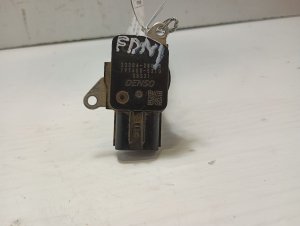
Used OEM Parts in Stock
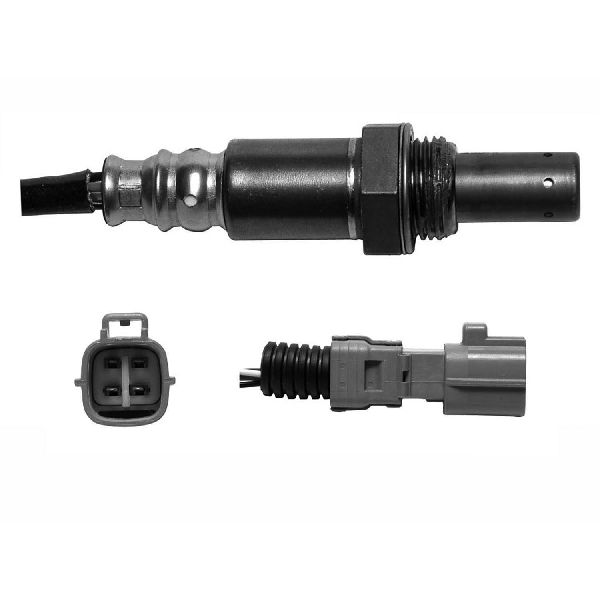
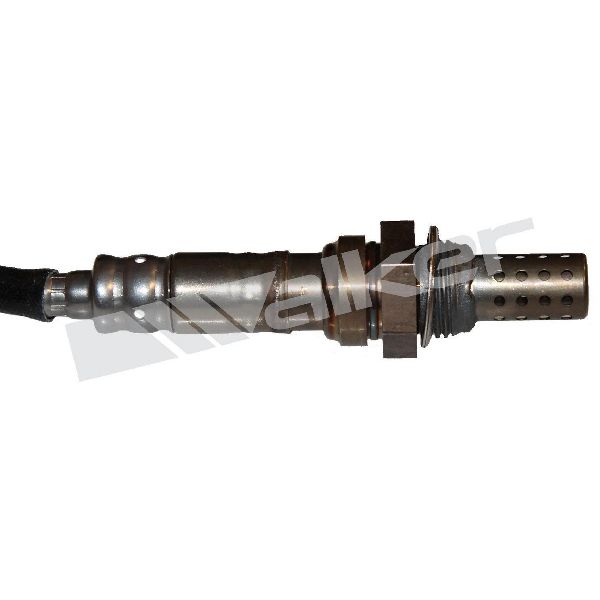
New Aftermarket Parts Available


The information in this article is provided for general reference and educational purposes only. Vehicle specifications, procedures, and part compatibility can vary by production date, trim level, and region. Always consult your vehicle's factory service manual and verify part numbers before purchasing or performing repairs. Safety-critical components such as airbags, seat belts, and braking systems should be installed by a qualified professional.
- Toyota Prius:
- 🧭 Diagnostic Flowchart
- 🎬 Helpful Videos
- 🛍️ Shop This Part
- What's Unique About the 2010-2015 Toyota Prius
- Symptoms You May Notice
- Most Likely Causes
- Rare But Worth Checking
- Diagnosis Steps
- Parts You'll Likely Need
- Technical Service Bulletins (TSBs) & Recalls
- Platform-Specific Known Issues
- Mechanic-Grade Diagnostic Values
- Scan Tool Commands That Help
- Wiring & Ground Locations
- Real Owner Repair Stories
- OEM Part Supersession History
- Model Year Variations Within This Range
- Other Known Issues on This Vehicle
- Used vs. New Parts: Buying Guide for This Vehicle
- Real Owner Stories
- 2012 Toyota Prius v 1.8L I4 Hybrid — 196000 miles
- 2010-2015 Toyota Prius 1.8L I4 Hybrid — ~150000 miles
- 2010-2015 Toyota Prius 1.8L I4 Hybrid
- 2010-2015 Toyota Prius 1.8L I4 Hybrid
- Related OBD-II Codes
- Frequently Asked Questions
- 🎟️ Get 5% Off