

OBD-II Code P1078: Intake Manifold Runner Control System Malfunction
What P1078 means, why it triggers, and how to fix it for Honda, Nissan, BMW, and more.
- P1078 is a manufacturer-specific code that means a stuck Intake Manifold Runner Control (IMRC) system on Hondas, but a failed Bank 1 exhaust camshaft position sensor on Nissans.
- Test the $80 Honda IMRC vacuum control solenoid with a multimeter before replacing the $250 actuator assembly, as the cheaper solenoid is the most frequent culprit.
- Fix Nissan and Infiniti P1078 codes by installing an OEM Hitachi camshaft position sensor (part #23731-6J90B); aftermarket sensors fail at a high rate and cause the code to return.
- Expect to pay between $150 and $650 for a professional repair, but DIYers can often fix vacuum-related P1078 codes for under $25 by replacing cracked rubber hoses.
What Does P1078 Mean?
P1078 indicates your car's Engine Control Module (ECM) detected a malfunction in the Intake Manifold Runner Control (IMRC) system. This system uses butterfly valves inside the intake manifold to change the length of air passages, optimizing engine efficiency at all speeds. The code triggers when the valve sticks in one position or the system fails to respond to ECM commands.
Technical definition: The SAE definition for P1078 is manufacturer-specific. For Honda/Acura, it is 'Intake Manifold Runner (IMR) Control System Malfunction (High rpm)'. For Nissan/Infiniti, it is 'Exhaust Valve Timing Control Position Sensor Circuit - Bank 1'. For BMW, it relates to 'Valvetronic (VVT) Overload Protection Control Motor Current High'.
Can I Drive With P1078?
Yes, But With Caution. You can drive with this code, but your car will experience reduced power, poor acceleration, and worse gas mileage. Continued driving for hundreds of miles strains the engine and destroys the catalytic converter due to an inefficient air-fuel mixture, turning a minor issue into a $1,500+ repair.
Common Causes
- Faulty IMRC Vacuum Control Solenoid (Honda/Acura) (Very Common) — A separate vacuum control solenoid regulates vacuum supplied to the IMRC actuator. This solenoid frequently fails electrically or sticks closed, starving the actuator of the vacuum needed to move the runners.
- Faulty Camshaft Position Sensor (Nissan/Infiniti) (Very Common) — On Nissan and Infiniti models, P1078 points directly to a failed exhaust camshaft position sensor on Bank 1. Using non-OEM (aftermarket) sensors guarantees repeat failures. Over-tightening the sensor bolt also causes immediate malfunction.
- Torn or Sticking IMRC Actuator (Common) — The actuator is a motor or vacuum-operated diaphragm that physically moves the runner flaps. The internal rubber diaphragm tears over time, creating a vacuum leak that renders the actuator useless.
- Damaged or Leaking Vacuum Lines (Common) — Old, brittle rubber hoses crack, split, or disconnect, causing a vacuum leak that prevents the actuator from moving the flaps. This is the cheapest and easiest fix.
- Carbon Buildup in Intake Manifold (Common) — Carbon and oil sludge from the crankcase ventilation system coat the runner flaps and intake manifold walls. This sticky buildup physically binds the flaps, preventing movement even if the actuator works perfectly.
- Wiring or Connector Issues (Less Common) — Frayed wires, corroded pins, or a loose connector at the IMRC actuator or camshaft sensor disrupt the signal. On Nissans, a connector that fails to 'click' and lock onto the cam sensor is a known failure point.
- Low or Dirty Engine Oil (Nissan/Infiniti) (Rare) — The exhaust valve timing system relies on engine oil pressure. Low or sludgy oil blocks the small hydraulic passages, preventing the system from operating and triggering the code.
Symptoms
- Check Engine Light is On — The ECM illuminates the check engine light immediately upon detecting the fault.
- Poor Acceleration at High RPMs — The car feels sluggish and hesitates when accelerating above 3,500 RPM because the engine is starved for air.
- Reduced Fuel Economy — The stuck intake runners create an inefficient air-fuel mixture, forcing the engine to burn significantly more gas.
- Engine Stalling or Hard Starting (Nissan/Infiniti) — A failing camshaft sensor causes the engine to stall unexpectedly while driving or struggle to start.
- Rough Idle and Surging — The engine shakes at a stop or surges slightly when holding a constant speed (e.g., 3,000 RPM) as the ECM fights the incorrect airflow.
Diagnostic Flowchart
Tap your situation to follow the diagnostic path that matches what you're seeing on this code.
Common Fixes & Costs
- Replace IMRC Actuator or Solenoid — Parts: $50-$250, Labor: $100-$400, ~1.5 hr book time (Intermediate)
- Replace Camshaft Position Sensor (Nissan/Infiniti) — Parts: $80-$120, Labor: $50-$150, ~0.8 hr book time (DIY)
- Replace Cracked Vacuum Hoses — Parts: $5-$25, Labor: $0-$95, ~0.3 hr book time (DIY)
- Clean Intake Manifold and Runners — Parts: $20-$60, Labor: $300-$800, ~4.5 hr book time (Professional)
- Repair Wiring or Connector — Parts: $15-$50, Labor: $100-$250, ~1.5 hr book time (Intermediate)
Used vs. New Parts: Buying Guide
When a used part is worth it: Buy used ONLY for a complete intake manifold assembly (common for Ford repairs) from a low-mileage donor car. Never buy used electronic sensors or vacuum solenoids.
Donor-vehicle mileage cap: roughly under 60000 miles for the part to have meaningful remaining life.
Donor quality checklist:
- Verify the part number stamped on the manifold matches exactly.
- Ensure all plastic linkage arms are intact and move freely without binding.
- Source parts from southern or western states to avoid salt corrosion on metal linkages.
Decision logic:
- If The failed part is a Nissan camshaft sensor → Buy a brand new OEM Hitachi sensor. Used or aftermarket sensors are a waste of money.
- If The failed part is a Honda IMRC solenoid or actuator → Buy new OEM or premium aftermarket. Used electronics are too risky given the labor required to install them.
- If The failed part is a Ford intake manifold with broken linkage → A low-mileage used manifold saves $400+, making it a smart choice for older trucks.
Warranty tradeoff: Used parts carry a 30-day warranty, covering the part but not the 4 hours of labor to swap it. New OEM parts carry a 12-month/12,000-mile warranty.
Worst-case if a used part fails: 500-1000. If a used intake manifold fails, you pay the massive labor bill twice.
What Happens If You Wait — Timeline
- 0-1 month: Check Engine Light illuminates. Honda/Ford drivers notice sluggish acceleration above 3,500 RPM. Nissan drivers experience slightly longer crank times when starting. (MPG impact: 0-5%% · Added cost: $0-40 in wasted fuel)
- 1-4 months: Fuel economy drops noticeably. Nissans begin stalling intermittently at red lights. Hondas run consistently rich, dumping unburned fuel into the exhaust. (MPG impact: 5-15%% · Added cost: $50-150 in wasted fuel)
- 4-8 months: Unburned fuel overheats the catalytic converter, melting its internal honeycomb structure. A P0420 (Catalyst Efficiency) code appears. (MPG impact: 10-20%% · Added cost: $800-$2500 (Catalytic converter replacement required))
- 8+ months: The melted catalytic converter creates a total exhaust blockage. The engine loses all power, misfires violently, and refuses to start. (MPG impact: 50%% · Added cost: $1500-3500+)
Cost of Not Fixing It
- 0-1 month: Noticeable drop in fuel economy (10-15%) and sluggish acceleration above 3,500 RPM. Annoying, but causes no immediate mechanical damage. (Added cost: 25-75)
- 1-6 months: The incorrect air/fuel mixture forces the catalytic converter to operate outside its safe temperature range, causing the internal honeycomb structure to overheat and melt. (Added cost: 800-2500)
- 6+ months: A melted catalytic converter creates extreme exhaust backpressure, leading to a total loss of engine power, severe misfires, and potential internal engine damage. (Added cost: 1500-3500)
Diagnosis Steps
- Read the Trouble Code and Freeze Frame Data
Use an OBD-II scanner to confirm P1078. Note companion codes (e.g., P1077, P0661, P2004) which pinpoint the root cause. Record the freeze frame data to see the exact engine conditions when the fault occurred.
Tools: OBD-II Scanner (Beginner) - Inspect Vacuum Lines and Connectors
Examine the intake manifold area. Look for broken, cracked, or disconnected vacuum hoses attached to the IMRC actuator and solenoid. Ensure all electrical connectors are securely locked and free of corrosion.
Tools: Flashlight (Beginner) - Test Vacuum-Operated Actuators
Disconnect the vacuum hose from the actuator and attach a handheld vacuum pump. Apply 15-20 inHg of vacuum. The actuator linkage must move and hold the vacuum without leaking down. If it fails to hold vacuum, the internal diaphragm is torn and requires replacement.
Tools: Handheld Vacuum Pump, Pliers (Intermediate) - Test IMRC Control Solenoid (Honda/Acura)
Unplug the IMRC vacuum control solenoid. Use a multimeter to check for resistance between its two pins; a healthy solenoid reads 20-30 ohms. An open circuit (infinite resistance) or direct short (zero resistance) confirms the solenoid is dead.
Tools: Multimeter (Intermediate) - Diagnose Nissan/Infiniti Camshaft Sensor
For Nissan/Infiniti, inspect the Bank 1 exhaust camshaft position sensor connector. It must 'click' securely. If the wiring is intact, replace the sensor. You must use an OEM Hitachi sensor; aftermarket brands fail immediately in this application.
Tools: 10mm Socket, Ratchet (Intermediate) - Command Actuator with Bi-Directional Scanner
Use a bi-directional scanner's 'IMT Test' to command the IMRC system open and closed. Listen for the motor and watch the live data for the IMRC position sensor PID. If the scanner cannot command the actuator, you have a wiring, motor, or PCM failure.
Tools: Bi-directional OBD-II Scanner (Advanced) - Check for Carbon Buildup
If the actuator and electronics pass all tests but the runners refuse to move, they are physically jammed by carbon. Remove the intake manifold and manually clean the runner flaps and passages with solvent and scrapers.
Tools: Socket Set, Intake Cleaner, Scrapers, Shop Vacuum, New Gaskets (Advanced)
When This Code Triggers (Freeze-Frame Conditions)
- Engine Coolant Temp: 175-210°F (The engine is fully warmed up. The ECU rarely runs this monitor on a cold engine.)
- RPM: 1500-3000 RPM (The code sets during steady-state cruising or light acceleration, not during high-RPM, heavy-load conditions.)
- Engine Load: 25-60% (Indicates a moderate load, consistent with highway cruising or maintaining speed on a slight incline.)
- Vehicle Speed: 40-65 mph (The fault is detected during city or highway driving, not at idle.)
Related Codes
- P1077 — The companion code to P1078 on Honda/Acura. P1077 means the valve is stuck closed (low RPM), while P1078 means it is stuck open (high RPM). They frequently appear together.
- P0661 — Indicates 'Intake Manifold Tuning Valve Control Circuit Low'. This points to a hard electrical fault. If you have P0661 alongside P1078, test the IMRC solenoid and wiring harness first.
- P2004 - P2007 — Generic OBD-II codes for IMRC faults (e.g., P2004 is 'IMRC Stuck Open Bank 1'). The diagnostic process for these is identical to a Honda P1078.
- P1084 — The Bank 2 (driver's side) equivalent of P1078 on Nissan/Infiniti. If both codes are present, check engine oil level and condition before replacing sensors.
Climate & Environmental Factors
- Cold Weather: On Honda K-series engines, sub-freezing temperatures thicken the oil and carbon sludge inside the IMRC valve assembly. This gummy residue binds the rotary valve, triggering P1078 on a cold start. The code often clears itself once the engine reaches operating temperature.
How to Talk to a Mechanic About This Code
Say this: "I have a P1078 code. For my Honda, please test the IMRC vacuum solenoid and actuator before quoting a replacement. For my Nissan, please quote a Bank 1 exhaust camshaft position sensor replacement using an OEM Hitachi part."
This proves you understand the manufacturer-specific nature of the code. It prevents shops from blindly replacing a $250 Honda actuator when a $80 solenoid is at fault, or installing a cheap Nissan sensor that will fail next week.
Avoid saying:
- 'My check engine light is on, can you look at it?' (Invites a broad, expensive diagnostic fee).
- 'Just fix whatever is wrong.' (Gives the shop a blank check).
- 'The internet said I need a new intake manifold.' (Never self-diagnose without asking for specific tests).
Questions to ask before authorizing the repair:
- Honda: Did you verify the IMRC actuator holds vacuum with a hand pump?
- Nissan: Can you guarantee in writing that you are installing a Hitachi-brand sensor?
- What is your warranty on parts and labor if the code returns next week?
Where to Take It: Dealer vs Independent vs Chain
- Dealer:
Avoid unless you drive a BMW or are under warranty.
Best for: Vehicles under powertrain warranty., BMW models requiring specialized Valvetronic software diagnostics.
Downsides: Highest labor rates ($150-$250/hr)., Will refuse to clean carbon buildup, opting instead to sell you a brand new $1,200 intake manifold. (Typical cost: +50% vs. baseline) - Independent Shop:
The best choice. A good independent shop will properly test the Honda solenoid and happily install the correct Hitachi sensor on your Nissan.
Best for: All out-of-warranty Honda, Acura, Nissan, and Ford repairs., Mechanics willing to clean a manifold rather than just replace it.
Downsides: Diagnostic skill varies; check reviews for electrical troubleshooting expertise. (Typical cost: +0% vs. baseline) - Chain Shop:
Avoid. They lack the diagnostic nuance for Honda IMRC systems and will use the wrong sensor on your Nissan.
Best for: Simple code reading.
Downsides: High pressure to upsell unnecessary fuel system cleanings., Mandated to use cheap aftermarket sensors supplied by their corporate network, guaranteeing a Nissan comeback. (Typical cost: -10% vs. baseline)
When to Walk Away From the Repair
If the repair estimate exceeds 40% of the vehicle's private-party value, sell the car as-is.
- Car worth $3000, fix is $1500: Walk away. Spending 50% of the car's value on a Ford intake manifold replacement is a poor investment.
- Car worth $6000, fix is $250: Fix it. A $250 Honda solenoid replacement is a minor maintenance cost to keep a reliable car running.
What Scan Tool You Need for This Code
Minimum: A scanner that displays live data PIDs. You must be able to see the IMRC position sensor voltage in real-time.
A $20 code reader only shows 'P1078'. It cannot command the Honda actuator to move or show you if the Nissan cam sensor is dropping its signal, leaving you guessing which part to buy.
Budget: BlueDriver Pro Scan Tool (~$100) — Connects via Bluetooth to your phone. Displays live data so you can watch the Honda IMRC voltage change as you rev the engine, confirming sensor operation.
Mid-range: Foxwell NT510 Elite (~$180) — Provides bi-directional control. You can press a button on the scanner to command the Honda IMRC actuator open and closed. If it moves, you instantly know the motor and wiring are perfect.
Professional: Autel MaxiCOM MK900 (~$550) — Offers dealer-level bi-directional control and graphing for all makes. Overkill for a one-time DIYer, but essential for independent shops diagnosing complex BMW Valvetronic faults.
Rent vs buy: Buy the Foxwell NT510. Auto parts stores rent basic readers for free, but they lack the bi-directional controls required to properly diagnose a Honda IMRC system without guessing.
How to Clear the Code After You Fix It
- Connect an OBD-II scan tool and clear the diagnostic trouble code (DTC).
- Perform a complete drive cycle to force the vehicle's readiness monitors to run.
- Re-scan the vehicle to confirm P1078 remains clear and all monitors read 'Ready'.
Drive cycle (~30 minutes): Start with a cold engine (off for 8 hours). Idle for 3 minutes, drive 15 minutes in stop-and-go traffic, then drive 15 minutes at a steady 55-60 mph on the highway. Finish with a long coasting deceleration without touching the brakes.
Readiness monitors affected: Catalyst (CAT) monitor, Evaporative System (EVAP) monitor, Oxygen (O2) Sensor monitor
Before emissions retest: drive at least 50 miles to fully set monitors.
Watch out for:
- Disconnecting the battery clears the code but resets all readiness monitors to 'Not Ready', resulting in an automatic emissions test failure.
- Failing to complete the steady highway cruising portion of the drive cycle prevents the Catalyst monitor from running.
Will This Fail Emissions / State Inspection?
Yes — this code typically fails an OBD-II emissions inspection.
- California: An active P1078 triggers an automatic smog failure. You must repair the fault and complete a full drive cycle to set all monitors to 'Ready' before re-testing.
- New York: NYS emissions computers will instantly fail a vehicle with P1078. Clearing the code in the parking lot results in a rejection due to 'Not Ready' monitors.
- Texas: Vehicles in emissions-testing counties cannot renew their registration until P1078 is repaired and the OBD-II system passes inspection.
Most Commonly Affected Vehicles
- Honda CR-V (2002-2006) — Extremely common. The IMRC valve sticks due to carbon buildup or a failed vacuum diaphragm. The rotary valve and position sensor are usually replaced as a unit.
- Acura RSX (2002-2006) — Shares the K-series engine with the CR-V. The plastic IMRC valve is frequently broken by mechanics leaning on it during starter replacements.
- Honda Accord V6 (2003-2007) — The J-series V6 IMRC actuator, located on the front of the intake manifold, fails electrically or binds from carbon.
- Infiniti G35 (2005-2007) — P1078 indicates a faulty exhaust camshaft position sensor on Bank 1 (passenger side), not an intake runner issue. 'Rev-Up' engines are highly susceptible.
- Nissan 350Z (2006) — Identical issue to the G35. Using a non-Hitachi brand replacement sensor guarantees the code will return within weeks.
- Ford F-150 (5.0L / 5.4L V8) (2004-2017) — The plastic linkage arms on the Charge Motion Control Valves (Ford's name for IMRC) snap off. This usually requires replacing the entire intake manifold assembly.
- BMW 3-Series (N52/N20 engines) (2006-2015) — P1078 indicates a 'VVT Overload Protection' fault in the Valvetronic system, pointing to a failing eccentric shaft sensor or servomotor. This is a complex, expensive repair.
Manufacturer-Specific Notes
- Honda / Acura: Mechanics frequently misdiagnose this by replacing the expensive IMRC actuator when the true fault is the cheaper, separate vacuum control solenoid. Always test the solenoid's resistance before buying an actuator.
- Nissan / Infiniti: This code has absolutely nothing to do with the intake manifold. It points exclusively to the Bank 1 Exhaust Valve Timing Control Position Sensor. You must use an OEM Hitachi sensor.
- BMW: P1078 signifies an issue with the Valvetronic (VVT) variable valve lift system, not intake runners. It requires specialized BMW diagnostic software to test the VVT servomotor.
- Ford: Ford uses plastic linkage arms that break and disconnect the flaps from the actuator. Because Ford does not sell the linkage separately, you must replace the entire intake manifold.
Real Owner Stories
2005 Honda CR-V at 150K miles - The Cold Weather Fix
The Check Engine Light illuminated during a winter cold snap. The car drove fine, but P1078 was active. The light occasionally turned off after a long highway drive.
What they tried:
- Suspected the IMRC valve was binding due to cold, thickened oil sludge inside the manifold.
- Removed the intake manifold to access the IMRC rotary valve.
- Scrubbed the oily gunk from the valve and manifold walls using brake cleaner and a nylon brush.
Outcome: Thorough cleaning restored free movement to the valve. The code cleared and never returned. Total cost: $15 for cleaner and a new gasket.
Lesson: On high-mileage Hondas, cold weather turns oil vapor into a glue that binds the IMRC valve. Cleaning the manifold is highly effective and saves hundreds over replacing parts.
2006 Nissan 350Z - The Aftermarket Sensor Trap
P1078 triggered alongside intermittent engine stalling at red lights. A shop diagnosed a bad Bank 1 camshaft sensor.
What they tried:
- Replaced the sensor with a $30 aftermarket part from a local auto parts store. The code returned in two days.
- Replaced the connector pigtail, assuming a wiring fault. Code remained.
- Finally purchased an $85 OEM Hitachi sensor from the dealer.
Outcome: Installing the OEM Hitachi sensor instantly permanently resolved the stalling and the P1078 code.
Lesson: Never use aftermarket camshaft sensors on Nissan/Infiniti V6 engines. They lack the precise magnetic shielding required by the ECM and will cause endless diagnostic headaches.
2004 Acura RSX - The Missing Linkage
Persistent P1078 code. The owner replaced the entire intake manifold with a used unit, but the code persisted.
What they tried:
- Pulled a second intake manifold from a wrecked 2004 CR-V at a junkyard.
- Compared the two units side-by-side on a workbench.
- Discovered a tiny plastic retaining clip was missing from the end of the rotary valve on his car, preventing the actuator from turning the flap.
Outcome: Swapping the complete, undamaged IMRC valve from the donor car fixed the code permanently.
Lesson: When replacing parts doesn't work, inspect the mechanical linkages closely. A broken 50-cent plastic clip will trigger the exact same code as a dead $250 actuator motor.
How to Prevent This Code From Triggering
- Change engine oil every 5,000 miles with high-quality synthetic. (Every 5,000 miles) — Clean oil prevents sludge buildup in Nissan hydraulic timing passages and reduces the oily blow-by that coats Honda intake runners with sticky carbon.
- Replace the PCV (Positive Crankcase Ventilation) valve. (Every 60,000 miles) — A clogged PCV valve forces pressurized oil vapor directly into the intake manifold, rapidly accelerating the carbon buildup that jams IMRC flaps.
- Use Top Tier rated gasoline. (Every fill-up) — Top Tier fuels contain high detergent levels that wash away soft carbon deposits before they harden and bind the intake runner linkages.
Frequently Asked Questions
Can I just clean the IMRC valve instead of replacing it?
Yes, if the problem is strictly carbon buildup causing the flaps to stick. However, if the actuator motor is dead or the vacuum diaphragm is torn, cleaning will not fix the mechanical failure.
What is the most common misdiagnosis for P1078?
On Hondas, it is replacing the actuator when the vacuum control solenoid is actually at fault. On Nissans, it is installing a cheap aftermarket camshaft sensor that fails immediately, leading the mechanic to chase non-existent wiring issues.
Do I have to use OEM parts for this repair?
For Nissan/Infiniti camshaft sensors, absolutely yes; aftermarket sensors have a near 100% failure rate for this specific application. For Honda actuators and vacuum hoses, high-quality aftermarket parts are perfectly acceptable.
I replaced the part but the Check Engine Light came back. What now?
Ensure you cleared the code with a scanner. If it returns on a Nissan, verify you used a Hitachi sensor and that the connector is securely locked. On a Honda, check for cracked vacuum lines you may have missed.
What is 'Bank 1'?
Bank 1 is the side of the engine containing cylinder #1. On transverse V6 engines, it is usually the bank closer to the firewall. On longitudinal engines (like the Nissan 350Z), it is typically the passenger side. Inline 4-cylinder engines only have one bank.
Will a fuel additive or intake cleaner spray fix this?
No. The carbon deposits that bind intake runners are thick and baked-on. Spray-in cleaners are not potent enough to dissolve this buildup; it requires manual scraping with the manifold removed.
What does 'stuck in low RPM position' mean?
It means the intake runners are jammed in the long air path configuration used for low speeds. This provides good low-end torque but starves the engine of air at high RPMs, killing acceleration.
Key Takeaways
- P1078 is a manufacturer-specific code that means a stuck Intake Manifold Runner Control (IMRC) system on Hondas, but a failed Bank 1 exhaust camshaft position sensor on Nissans.
- Test the $80 Honda IMRC vacuum control solenoid with a multimeter before replacing the $250 actuator assembly, as the cheaper solenoid is the most frequent culprit.
- Fix Nissan and Infiniti P1078 codes by installing an OEM Hitachi camshaft position sensor (part #23731-6J90B); aftermarket sensors fail at a high rate and cause the code to return.
- Expect to pay between $150 and $650 for a professional repair, but DIYers can often fix vacuum-related P1078 codes for under $25 by replacing cracked rubber hoses.
Helpful Videos
Shop the Parts Behind P1078
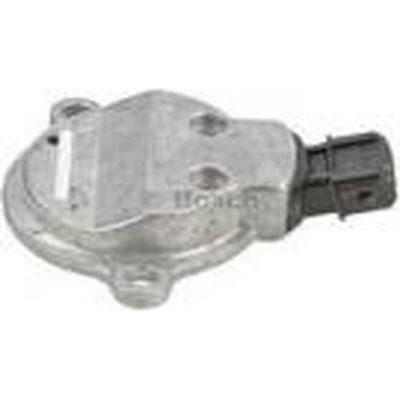
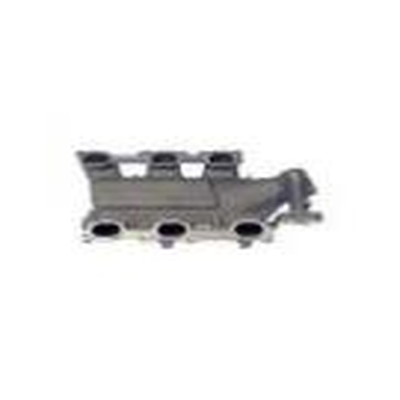
Below are the parts most often responsible for code P1078, ranked by how frequently each one is the actual culprit (per the diagnosis above). Tap any to see what we have for your vehicle.


The information in this article is provided for general reference and educational purposes only. Vehicle specifications, procedures, and part compatibility can vary by production date, trim level, and region. Always consult your vehicle's factory service manual and verify part numbers before purchasing or performing repairs. Safety-critical components such as airbags, seat belts, and braking systems should be installed by a qualified professional.
- 🧭 Diagnostic Flowchart
- 🎬 Helpful Videos
- 🛍️ Shop This Part
- What Does P1078 Mean?
- Can I Drive With P1078?
- Common Causes
- Symptoms
- Common Fixes & Costs
- Used vs. New Parts: Buying Guide
- What Happens If You Wait — Timeline
- Cost of Not Fixing It
- Diagnosis Steps
- When This Code Triggers (Freeze-Frame Conditions)
- Related Codes
- Climate & Environmental Factors
- How to Talk to a Mechanic About This Code
- Where to Take It: Dealer vs Independent vs Chain
- When to Walk Away From the Repair
- What Scan Tool You Need for This Code
- How to Clear the Code After You Fix It
- Will This Fail Emissions / State Inspection?
- Most Commonly Affected Vehicles
- Manufacturer-Specific Notes
- Real Owner Stories
- 2005 Honda CR-V at 150K miles - The Cold Weather Fix
- 2006 Nissan 350Z - The Aftermarket Sensor Trap
- 2004 Acura RSX - The Missing Linkage
- How to Prevent This Code From Triggering
- Frequently Asked Questions
- Can I just clean the IMRC valve instead of replacing it?
- What is the most common misdiagnosis for P1078?
- Do I have to use OEM parts for this repair?
- I replaced the part but the Check Engine Light came back. What now?
- What is 'Bank 1'?
- Will a fuel additive or intake cleaner spray fix this?
- What does 'stuck in low RPM position' mean?
- Key Takeaways
- 🎟️ Get 5% Off