

OBD-II Code P1092: Comprehensive Diagnosis and Repair Guide
The Ultimate Guide to Understanding, Diagnosing, and Fixing P1092 for All Major Makes
- P1092 requires a make-specific diagnosis: BMW/MINI indicates a lean condition, Subaru points to a stuck TGV, and Nissan/Infiniti signals a VVEL system fault.
- On BMW and MINI vehicles, diagnose P1092 by performing a smoke test to locate vacuum leaks before spending $150+ on replacement O2 sensors.
- Subaru owners must inspect the Bank 2 Tumble Generator Valve (TGV); a stuck valve requires replacing the $300-$600 assembly or performing an aftermarket TGV delete.
- Nissan and Infiniti models require testing the VVEL sensor voltage at exactly 0.5V; failure to calibrate this sensor guarantees the P1092 code will return.
- Driving with an active P1092 lean condition for more than 3 months burns the catalytic converter substrate, turning a $100 vacuum leak into a $2,000 exhaust repair.
What Does P1092 Mean?
P1092 is a manufacturer-specific diagnostic trouble code (DTC) indicating a critical fault in the engine's air-fuel mixture or intake control system. Because it is manufacturer-specific, the exact definition changes based on your vehicle. On BMW and MINI, it means the engine is running dangerously lean (too much air, not enough fuel) on Bank 2. On Subaru, it indicates a stuck Tumble Generator Valve (TGV). On Nissan and Infiniti, it signals a failure in the Variable Valve Event and Lift (VVEL) system.
Technical definition: The SAE/OBD-II definition for P1092 varies by manufacturer: 'Pre-Catalyst Fuel Trim Too Lean Bank 2' (MINI/BMW), 'Tumble Generator Valve #2 Malfunction Stuck Open' (Subaru), 'VVEL Control Shaft Position Sensor Circuit Bank 2' (Nissan/Infiniti), or 'Common Rail Fuel Pressure - Data Erratic, Intermittent or Incorrect' (Paccar).
Can I Drive With P1092?
Yes, But With Caution. You can drive short distances, but it is not recommended. You will experience reduced engine power, poor fuel economy, and potential stalling in traffic. Continuing to drive with a lean condition (BMW/MINI) causes engine overheating and melts the catalytic converter, escalating a minor repair into a $1,000 to $4,000 exhaust replacement. Address the issue immediately.
Common Causes
- Vacuum Leaks & PCV/CCV Failures (BMW/MINI) (Very Common) — Cracked vacuum hoses, torn intake boots, or a ruptured Crankcase Ventilation (CCV) valve allow unmetered air into the engine. This disrupts the air-fuel ratio, causing a severe lean condition.
- Stuck Tumble Generator Valve (TGV) (Subaru) (Very Common) — Subaru TGV valves improve cold-start emissions. They frequently stick open due to heavy carbon buildup, actuator motor failure, or position sensor failure on Bank 2.
- Faulty VVEL Position Sensor or Actuator (Nissan/Infiniti) (Common) — On VQ37VHR engines, this code points directly to a fault in the Variable Valve Event and Lift (VVEL) system for Bank 2. The position sensor, wiring harness, or the entire actuator assembly fails. 🎬 See this walkthrough on fixing Nissan and Infiniti VVEL faults.
- Failing Fuel Pump or HPFP (MINI/BMW) (Common) — A weak in-tank fuel pump or a failing High-Pressure Fuel Pump (HPFP on direct-injection MINIs) cannot supply adequate fuel pressure, resulting in a lean mixture and triggering P1092 alongside P0087.
- Dirty or Failing Mass Air Flow (MAF) Sensor (Common) — A dirty MAF sensor under-reports the volume of air entering the engine. The ECU injects too little fuel based on this bad data, causing a lean condition.
- Clogged Fuel Injectors (Less Common) — Carbon deposits restrict fuel flow from Bank 2 injectors. The ECU detects the resulting lean condition via the O2 sensors and sets the code.
- Exhaust Leak Before the O2 Sensor (Rare) — A cracked exhaust manifold or leaking gasket draws outside oxygen into the exhaust stream. The O2 sensor detects this and falsely reports a lean condition to the ECU.
Symptoms
- Check Engine Light is On — The Malfunction Indicator Lamp (MIL) illuminates immediately when the ECU detects the fault.
- Reduced Engine Power and Limp Mode — The vehicle hesitates upon acceleration or enters a protective 'limp mode' with severely restricted RPMs (highly common on Nissan/Infiniti VVEL faults).
- Rough Idling and Stalling — The engine idles unevenly, shakes, surges, or stalls completely when coming to a stop due to massive vacuum leaks.
- Poor Fuel Economy — Fuel consumption spikes as the ECU commands maximum injector pulse widths to compensate for the perceived lean condition.
- Pinging or Knocking Noises — A lean mixture burns too hot, causing detonation (engine knock) that sounds like rattling marbles during acceleration.
Diagnostic Flowchart
Tap your situation to follow the diagnostic path that matches what you're seeing on this code.
Common Fixes & Costs
- Repair Vacuum Leak / Replace CCV System
— Parts: $50 - $200, Labor: $150 - $500, ~3.0 hr book time
(Intermediate)
: OEM 11617544805 (Full CCV Kit), 11617504536 (Lower Intake Boot) (Alt: Rein, Febi Bilstein, URO Parts) - Replace TGV Motor or Assembly (Subaru)
— Parts: $200 - $800, Labor: $300 - $600, ~3.5 hr book time
(Professional)
: OEM 14011AB931 (TGV Assembly Bank 2), 22633AA210 (Position Sensor) (Alt: Dorman, Standard Motor Products) - Replace VVEL Position Sensor or Actuator (Nissan/Infiniti)
— Parts: $150 - $1500, Labor: $200 - $1200, ~5.0 hr book time
(Professional)
: OEM 23731-EY00B (VVEL Position Sensor Bank 2) (Alt: Hitachi (OEM Supplier)) - Replace High-Pressure Fuel Pump (HPFP)
— Parts: $700 - $1100, Labor: $200 - $400, ~2.0 hr book time
(Intermediate)
: OEM 13517588879 (HPFP for R56 Cooper S N14) (Alt: Vitesco-PSA (OEM Supplier)) - Clean or Replace MAF Sensor
— Parts: $10 - $250, Labor: $50 - $100, ~0.5 hr book time
(DIY)
: OEM 13627567451 (M54 3.0L MAF) (Alt: VDO/Siemens, Bremi)
Used vs. New Parts: Buying Guide
When a used part is worth it: Buy used for expensive, complex assemblies like Subaru TGV housings or Infiniti VVEL actuators from low-mileage donor cars. Never buy used high-failure wear items like the MINI High-Pressure Fuel Pump (HPFP) or BMW CCV hoses.
Donor-vehicle mileage cap: roughly under 75000 miles for the part to have meaningful remaining life.
Donor quality checklist:
- Verify the exact OEM part number matches your vehicle.
- Check the donor car's VIN history for front-end collisions that may have damaged intake components.
- Ensure electronic sensors include intact, uncorroded wiring pigtails.
Decision logic:
- If The part is a known wear item with a high failure rate (e.g., MINI HPFP, BMW CCV). → Buy new OEM or a reputable remanufactured unit with a lifetime warranty.
- If The part is a complex mechanical assembly (e.g., TGV, VVEL actuator). → A used part from a low-mileage donor saves 50-70% over dealer prices.
- If The part is a simple sensor (e.g., MAF). → Buy a new OEM or OEM-supplier part (e.g., VDO/Siemens, Hitachi) for reliability.
Warranty tradeoff: Used salvage parts offer 30-90 day warranties. New aftermarket parts offer 1-year warranties. New OEM parts carry 1-2 year warranties.
Worst-case if a used part fails: $300 - $1000 in repeated diagnostic and installation labor if a cheap aftermarket part fails prematurely.
What Happens If You Wait — Timeline
- 0-1 Month: Check Engine Light illuminates. Minor drop in fuel economy. Rough cold starts or brief hesitation become noticeable. (MPG impact: 0-5%% · Added cost: $0 - $40 in wasted fuel)
- 1-3 Months: Rough idle is consistent. The ECU hits its maximum +25% fuel trim limit. The catalytic converter begins running dangerously hot. (MPG impact: 5-15%% · Added cost: $50 - $150 in wasted fuel)
- 3-6 Months: Sustained lean-burn heat melts the catalytic converter's internal substrate. The car stalls intermittently at low speeds. (MPG impact: 10-20%% · Added cost: $1,200 - $4,000 (Catalytic converter replacement required))
- 6+ Months: Catastrophic failure. A melted catalytic converter creates a major exhaust blockage. Extreme heat burns exhaust valves and damages pistons. (MPG impact: 15-25%+% · Added cost: $4,000 - $10,000 (Engine rebuild required))
Cost of Not Fixing It
- 0-1 Month: Reduced fuel economy (5-15% drop), rough idling, and hesitation. The vehicle enters 'limp mode' with restricted power. (Added cost: $20 - $80 in wasted fuel.)
- 1-6 Months: The lean mixture burns excessively hot, melting the internal substrate of the catalytic converter and causing a severe exhaust blockage. (Added cost: $1,200 - $4,000 for catalytic converter replacement.)
- 6+ Months: Severe internal engine damage. Prolonged lean conditions burn exhaust valves, damage pistons, and score cylinder walls. (Added cost: $4,000 - $10,000 for major engine repair or replacement.)
Diagnosis Steps
- Read Freeze Frame and Fuel Trims
Use an OBD-II scanner to pull freeze frame data. Observe live Short-Term (STFT) and Long-Term Fuel Trims (LTFT) for Bank 1 and Bank 2. Combined trims exceeding +15% confirm a severe lean condition.
Tools: OBD-II Scanner with Live Data (Beginner) - 2500 RPM Fuel Trim Test (BMW/MINI)
If LTFT is high at idle (+15% or more), hold the engine at 2500 RPM. If the trims drop significantly toward 0%, you have a vacuum leak. If trims remain high, suspect a fuel delivery issue or bad MAF sensor.
Tools: OBD-II Scanner with Live Data (Intermediate) - Perform a Smoke Test for Vacuum Leaks
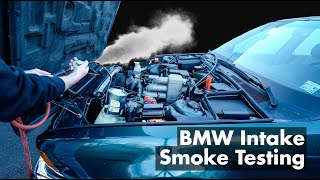
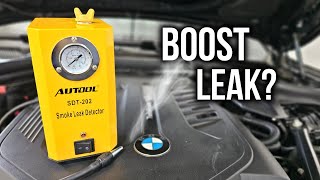
Connect a smoke machine to the intake system. Pressurize with low-pressure smoke and watch for leaks at the intake boots, CCV/PCV hoses, intake manifold gaskets, and oil dipstick O-ring.
Tools: Automotive Smoke Machine (Intermediate) - Inspect Tumble Generator Valves (Subaru)
Visually inspect the Bank 2 TGV actuator (driver's side). Have a helper turn the ignition ON (engine off). The actuator arm must move. If it doesn't, the motor is dead or the internal valve is jammed with carbon.
Tools: Basic Hand Tools, Flashlight (Intermediate) - Test VVEL Sensor Voltage (Nissan/Infiniti)
With ignition ON and engine OFF, back-probe the VVEL position sensor connector. Measure voltage between the signal and ground wires. It must read exactly 0.5V (452-548mV). If off, the sensor requires calibration or replacement.
Tools: Multimeter, Back-probe Kit (Advanced) - Test Fuel Pressure (Low and High)
Connect a fuel pressure gauge to the Schrader valve. Verify pressure meets OEM specs at idle and under load. For direct-injection MINIs, use a scanner to verify the High-Pressure Fuel Pump (HPFP) reaches ~725 PSI at idle and 1700+ PSI under load.
Tools: Fuel Pressure Gauge, OBD-II Scanner (Advanced) - Test Mass Air Flow (MAF) Sensor
Monitor the MAF sensor's airflow in grams per second (g/s) using live data. A healthy 3.0L engine reads ~3.5-5.0 g/s at warm idle and climbs smoothly to 120+ g/s at wide-open throttle. Low readings indicate a failing sensor.
Tools: OBD-II Scanner with Live Data (Advanced) - Graph Pre-Catalyst O2 Sensor Response
Graph the upstream O2 sensor voltage. It must fluctuate rapidly between 0.1V and 0.9V. A sensor stuck low (lean) is usually accurately reporting a vacuum leak upstream. Do not replace the sensor until ruling out air/fuel faults.
Tools: Graphing OBD-II Scanner (Advanced)
When This Code Triggers (Freeze-Frame Conditions)
- Engine Coolant Temp: 170-210°F (77-99°C) (Fully warmed up. The code sets after the engine exits cold-start enrichment and enters closed-loop fuel control.)
- RPM: 800-2500 RPM (Idle or steady-state cruise. Lean codes trigger during stable engine operation when the ECU expects predictable sensor readings.)
- Engine Load: 20-40% (Low to moderate load. The fault is captured when fuel trim adjustments hit their maximum limit without heavy acceleration.)
- Vehicle Speed: 0-60 mph (Varies from stationary idle to highway cruise, depending on whether the underlying fault is a vacuum leak (worse at idle) or fuel starvation (worse under load).)
Related Codes
- P0174 — The generic equivalent of BMW/MINI's P1092 ('System Too Lean Bank 2'). P1092 means the ECU has hit its absolute maximum corrective limit. If you have both, the vacuum leak is massive.
- P1090 / P1093 — Subaru sister codes. P1090 is 'TGV #1 (Bank 1) Stuck Open'. P1093 is 'TGV #2 (Bank 2) Stuck Closed'. A stuck-closed valve causes severe high-RPM power loss.
- P0087 — Generic code for 'Fuel Rail Pressure Too Low'. Often appears with P1092 when the root cause is a failing fuel pump. If both are present, prioritize fuel system diagnostics.
- P2004 / P2007 — Generic codes for 'Intake Manifold Runner Control Stuck Open/Closed'. On Subarus, the TGV is a runner control system. Scanners may show these generic codes instead of P1092.
Climate & Environmental Factors
- Cold Weather: Cold temperatures harden plastic intake boots and rubber vacuum hoses, opening up micro-cracks that cause vacuum leaks. Subaru TGVs are heavily utilized during cold starts, making failures obvious in winter.
- High Altitude: Thinner air at high altitudes reduces the engine's margin for error. A minor vacuum leak or weak fuel pump that functions fine at sea level will trigger a lean code at elevation.
- Humidity: High humidity slightly displaces oxygen. A healthy MAF sensor compensates automatically, but a failing MAF will struggle to calculate air density correctly in extreme humidity.
How to Talk to a Mechanic About This Code
Say this: "{'BMW_MINI': 'I have a P1092 lean code. Can you please check long-term fuel trims and perform a smoke test for vacuum leaks before looking at O2 sensors?', 'Subaru': 'I have a P1092 TGV code. Are your technicians familiar with diagnosing and replacing the Tumble Generator Valve assembly?', 'Nissan_Infiniti': 'I have a P1092 VVEL code. Can you confirm your shop has experience with the VVEL system and can perform the 0.5V sensor calibration?'}"
This specific language proves you understand the manufacturer-specific nature of the code. It prevents shops from wasting your money on generic, incorrect fixes like replacing O2 sensors.
Avoid saying:
- 'My check engine light is on, can you just fix it?'
- 'I think it's the O2 sensor.'
- 'Just do whatever you think is best.'
Questions to ask before authorizing the repair:
- Can you provide a written estimate separating parts and labor?
- For BMW/MINI: What were the long-term fuel trim values at idle versus 2500 RPM?
- For Infiniti: Are you able to perform the post-installation VVEL voltage adjustment?
Where to Take It: Dealer vs Independent vs Chain
- Dealer:
Best for: Vehicles under warranty., Complex Nissan/Infiniti VVEL actuator replacements requiring specialized mechanical adjustment., MINI HPFP warranty extensions.
Downsides: Highest labor rates ($150-$250/hr)., Will not install aftermarket parts or perform TGV deletes. (Typical cost: +50% vs. baseline) - Independent Shop:
Specialist Recommended. A reputable European or Japanese independent specialist is the best value for diagnosing make-specific P1092 faults.
Best for: Out-of-warranty BMWs needing CCV replacements or smoke tests., Subaru owners looking for TGV replacements or deletes.
Downsides: General mechanics may lack the specific knowledge to calibrate Infiniti VVEL sensors. (Typical cost: +0% vs. baseline) - Chain Shop:
AVOID. The risk of misdiagnosis and wasted money is too high for this specific code.
Best for: Routine maintenance like oil changes and tires.
Downsides: Highly likely to misdiagnose complex manufacturer-specific codes., Will frequently sell unnecessary O2 sensors for lean codes. (Typical cost: -10% vs. baseline)
When to Walk Away From the Repair
If the estimated repair cost exceeds 50% of the car's private-party market value, seriously consider your alternatives.
- Car worth $4500, fix is $800: Fix it. The repair cost is well below the threshold and restores a functional vehicle.
- Car worth $8500, fix is $2500: Borderline. A 2012 Infiniti G37 needing a full VVEL actuator replacement hits a significant percentage of the car's value. Get a second opinion.
- Car worth $2500, fix is $1800: Walk away. The repair cost is over 70% of the vehicle's value.
What Scan Tool You Need for This Code
Minimum: A scanner that reads and graphs live data, specifically Short-Term and Long-Term Fuel Trims (STFT/LTFT).
A $20 code reader only gives you the P1092 code. It cannot show fuel trims, which are mandatory for differentiating between a vacuum leak and a failing fuel pump.
Budget: BlueDriver Pro (~$120) — Connects via Bluetooth to graph live fuel trims and MAF sensor data, allowing DIYers to diagnose lean conditions accurately.
Mid-range: Foxwell NT510 Elite (~$159) — Provides manufacturer-specific codes and bidirectional control, allowing you to command the Subaru TGV motor or fuel pump directly.
Professional: Autel MaxiCOM MK808S (~$400-550) — A professional tablet offering all-system diagnostics, extensive live data graphing, and robust bidirectional controls for complex VVEL and HPFP testing.
How to Clear the Code After You Fix It
- Use an OBD-II scan tool to clear the diagnostic trouble codes.
- Reconnect the battery if it was disconnected during repair.
- Perform a complete drive cycle to run the vehicle's readiness monitors.
Drive cycle (~30 minutes): 1) Cold start (sit for 8+ hours). 2) Idle for 3 minutes. 3) Drive at a steady 55-60 mph for 10 minutes. 4) Perform 10 minutes of stop-and-go city driving. 5) Coast down from 50 mph without braking.
Readiness monitors affected: Catalyst (CAT) monitor, Oxygen (O2) Sensor monitor, Evaporative (EVAP) System monitor, Fuel System monitor
Before emissions retest: drive at least 50 miles to fully set monitors.
Watch out for:
- Disconnecting the battery clears the code but resets all readiness monitors, guaranteeing an immediate emissions test failure.
- The code returns within two drive cycles if the mechanical or electrical fault was not repaired.
- Failing to keep the fuel tank between 1/4 and 3/4 full prevents the EVAP monitor from running.
Will This Fail Emissions / State Inspection?
Yes — this code typically fails an OBD-II emissions inspection.
- California: An active P1092 is an automatic failure. After repair, all readiness monitors must be 'Ready.' Expect to drive 50-100 miles over several trips before the system is ready for a re-test.
- New York: A Check Engine Light with code P1092 results in immediate failure. A specific drive cycle must be completed to set readiness monitors before re-inspection.
- Texas: In emissions-testing counties, P1092 causes an OBD failure. The vehicle cannot be tested until the fault is repaired and monitors are set.
Most Commonly Affected Vehicles
- Subaru Impreza WRX, Forester XT, Legacy GT (2002-2014) — Extremely prone to Tumble Generator Valve (TGV) failure on Bank 2. Failure is usually the motor, position sensor, or internal carbon binding.
- BMW X5 (E53), 3-Series (E46), 5-Series (E39) (2000-2006) — The M54 engine is notorious for vacuum leaks. P1092 is almost always a torn lower intake boot, failed CCV system, or bad MAF sensor. Do not replace O2 sensors first.
- MINI Cooper S (R56) (2007-2013) — P1092 is a strong early indicator of a failing High-Pressure Fuel Pump (HPFP) on these direct-injection N14 engines.
- Infiniti G37, Q50, QX70 (2008-2015) — Specific to the VQ37VHR engine, this code indicates a fault with the VVEL control shaft position sensor or actuator on Bank 2.
- Nissan Patrol, 370Z (2010-2018) — Points to a problem with the VVEL position sensor circuit. Loose or corroded connectors are a common culprit.
- Paccar MX-13 Engines (Kenworth, Peterbilt) (2010-2024) — Indicates erratic common rail fuel pressure. The cause is often corrosion on the fuel rail pressure relief valve connector or a failing pressure sensor.
Manufacturer-Specific Notes
- Subaru: The code almost always points to the TGV assembly on the driver's side. Before replacing the $400 assembly, check the electrical connector, which is easily damaged during turbo swaps.
- BMW: The definition 'Pre-Catalyst Fuel Trim Too Lean' tricks mechanics into replacing the O2 sensor. The O2 sensor is fine; it is accurately reporting a massive vacuum leak. Always smoke test first.
- MINI: P1092 is a classic warning sign of HPFP failure. MINI USA extended the warranty on the HPFP for many 2007-2009 models to 10 years/120,000 miles. Check your VIN with a dealer.
- Nissan / Infiniti: Replacing the VVEL sensor rarely fixes the issue permanently unless it is perfectly calibrated to 0.5V. If calibration fails, the entire VVEL actuator requires replacement by a specialist.
Real Owner Stories
Infiniti G37 with 105K miles - Misdiagnosis leads to DIY
Check Engine Light illuminated with P1092. The car entered limp mode. A shop quoted $4,000 for an engine swap, claiming the motor was shot.
What they tried:
- Replaced camshaft position sensors (code returned).
- Studied the Factory Service Manual to understand the VVEL system.
Outcome: The owner diagnosed a faulty VVEL actuator, bought an OEM replacement online for $200, and performed the 6-hour repair themselves, saving thousands.
Lesson: Many general shops misdiagnose Infiniti VVEL faults as catastrophic engine failure. Always consult a Nissan/Infiniti specialist before authorizing an engine replacement.
2006 BMW X5 3.0i with 90K miles - The long chase
SES light with P1092 stayed on for 18 months. The owner threw parts at the car without proper diagnosis.
What they tried:
- Replaced MAP sensor, spark plugs, and two front O2 sensors.
- Paid for a fuel adaptation reset (light returned after 1,000 miles).
Outcome: The issue remained unresolved. The owner wasted over $500 on sensors because they never performed a smoke test to find the underlying vacuum leak.
Lesson: Never replace O2 sensors for a BMW lean code without first performing a smoke test and checking fuel trims.
2008 MINI Cooper S (R56) - Classic HPFP Failure
Car exhibited hard cold starts, rough idle, and intermittent power loss with P1092 and P0087 codes.
What they tried:
- Confirmed low fuel pressure via OBD-II live data.
- Called the local MINI dealer to check VIN warranty status.
Outcome: The dealer confirmed the HPFP was covered under a 10-year/120k-mile extended warranty. The $1,000 repair was completed for free.
Lesson: If your MINI has fuel starvation codes, immediately check for HPFP extended warranty eligibility before spending money on parts.
How to Prevent This Code From Triggering
- Proactively replace plastic/rubber intake lines (Every 8-10 years or 100,000 miles) — Engine bay heat causes BMW CCV hoses and intake boots to become brittle and crack, creating the vacuum leaks that trigger lean codes.
- Clean the Mass Air Flow (MAF) sensor (Every 30,000 miles) — Contaminants coat the MAF's sensitive wire, causing it to under-report airflow and forcing the ECU to run the engine lean.
- Perform regular intake valve cleaning (Every 50,000 miles) — On direct-injection engines, carbon buildup binds Subaru TGV plates and restricts airflow, leading directly to P1092 faults.
Frequently Asked Questions
Can a bad O2 sensor cause a P1092 code?
It is highly unlikely. A faulty O2 sensor is usually the messenger reporting a lean condition, not the cause. The actual problem is almost always unmetered air (vacuum leak) or a fuel delivery issue.
What is the difference between P1092 and P0174 on a BMW?
P0174 is the generic warning for a lean system. P1092 is the final alarm indicating the ECU has reached its maximum +25% fuel trim limit and cannot correct the mixture. If you have P1092, the vacuum leak is severe.
My Subaru has a P1092 code. Can I just delete the TGV system?
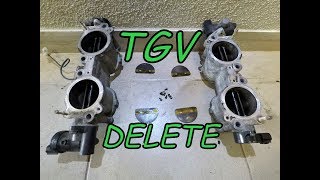
Yes, TGV deletes are a common performance modification. You must physically remove the internal valve plates and use tuning software (like Cobb Accessport) to disable the code in the ECU.
I replaced the VVEL sensor on my Infiniti, but the P1092 code came back. What's next?
The sensor must be manually calibrated to exactly 0.5V with a multimeter. If calibration is correct, the internal VVEL actuator motor has failed and requires a costly replacement.
What does 'Bank 2' mean?
Bank 2 refers to the side of the engine that does not contain cylinder #1. On inline-6 engines, the ECU logically divides the cylinders (e.g., cylinders 4-6 are Bank 2) for precise fuel control.
Will using a fuel injector cleaner fix a P1092 code?
It only helps if the root cause is mildly clogged injectors. It will have zero effect on vacuum leaks, failing fuel pumps, or broken TGV/VVEL actuators.
The code appeared right after another repair. Could they be related?
Yes, this is an 'induced fault.' A vacuum hose was likely knocked loose, a gasket unseated, or a sensor connector damaged during the previous repair. Re-inspect the work area immediately.
Why did my mechanic quote me $4,000+ for a P1092 on my Infiniti?
Shops unfamiliar with the VVEL system often incorrectly recommend a full engine replacement. A Nissan specialist can usually fix the issue by replacing just the VVEL actuator for significantly less.
Key Takeaways
- P1092 requires a make-specific diagnosis: BMW/MINI indicates a lean condition, Subaru points to a stuck TGV, and Nissan/Infiniti signals a VVEL system fault.
- On BMW and MINI vehicles, diagnose P1092 by performing a smoke test to locate vacuum leaks before spending $150+ on replacement O2 sensors.
- Subaru owners must inspect the Bank 2 Tumble Generator Valve (TGV); a stuck valve requires replacing the $300-$600 assembly or performing an aftermarket TGV delete.
- Nissan and Infiniti models require testing the VVEL sensor voltage at exactly 0.5V; failure to calibrate this sensor guarantees the P1092 code will return.
- Driving with an active P1092 lean condition for more than 3 months burns the catalytic converter substrate, turning a $100 vacuum leak into a $2,000 exhaust repair.
Helpful Videos

Shop the Parts Behind P1092
Below are the parts most often responsible for code P1092, ranked by how frequently each one is the actual culprit (per the diagnosis above). Tap any to see what we have for your vehicle.



The information in this article is provided for general reference and educational purposes only. Vehicle specifications, procedures, and part compatibility can vary by production date, trim level, and region. Always consult your vehicle's factory service manual and verify part numbers before purchasing or performing repairs. Safety-critical components such as airbags, seat belts, and braking systems should be installed by a qualified professional.
- 🧭 Diagnostic Flowchart
- 🎬 Helpful Videos
- 🛍️ Shop This Part
- What Does P1092 Mean?
- Can I Drive With P1092?
- Common Causes
- Symptoms
- Common Fixes & Costs
- Used vs. New Parts: Buying Guide
- What Happens If You Wait — Timeline
- Cost of Not Fixing It
- Diagnosis Steps
- When This Code Triggers (Freeze-Frame Conditions)
- Related Codes
- Climate & Environmental Factors
- How to Talk to a Mechanic About This Code
- Where to Take It: Dealer vs Independent vs Chain
- When to Walk Away From the Repair
- What Scan Tool You Need for This Code
- How to Clear the Code After You Fix It
- Will This Fail Emissions / State Inspection?
- Most Commonly Affected Vehicles
- Manufacturer-Specific Notes
- Real Owner Stories
- Infiniti G37 with 105K miles - Misdiagnosis leads to DIY
- 2006 BMW X5 3.0i with 90K miles - The long chase
- 2008 MINI Cooper S (R56) - Classic HPFP Failure
- How to Prevent This Code From Triggering
- Frequently Asked Questions
- Can a bad O2 sensor cause a P1092 code?
- What is the difference between P1092 and P0174 on a BMW?
- My Subaru has a P1092 code. Can I just delete the TGV system?
- I replaced the VVEL sensor on my Infiniti, but the P1092 code came back. What's next?
- What does 'Bank 2' mean?
- Will using a fuel injector cleaner fix a P1092 code?
- The code appeared right after another repair. Could they be related?
- Why did my mechanic quote me $4,000+ for a P1092 on my Infiniti?
- Key Takeaways
- 🎟️ Get 5% Off