

OBD-II Code P1093: Fuel System Imbalance
What P1093 means, why it triggers, and how to fix it
- Always verify the P1093 definition for your specific vehicle make before replacing parts, as it means a vacuum leak on a GM V8 but a failed Tumble Generator Valve on a Subaru.
- On VW and Audi 2.0T FSI engines, inspect the high-pressure fuel pump (HPFP) cam follower immediately; a $50 replacement prevents a $1,500 camshaft failure.
- Do not replace the oxygen (O2) sensor without testing; in 80% of P1093 cases, the sensor is correctly reporting a lean condition caused by an unmetered vacuum leak.
- For Duramax and Cummins diesel engines, replace the fuel filter first, then perform a 'bottle test' to check for a leaking fuel pressure relief valve before buying a $700 injection pump.
What Does P1093 Mean?
P1093 is a manufacturer-specific code. On GM gasoline vehicles, the engine control unit (ECU) detects a severe lean condition (too much air or insufficient fuel) on Bank 2 and has maxed out its fuel compensation limits. On BMW, Volkswagen, or Subaru, it points to high-pressure fuel pump failures, stuck emissions valves, or data communication errors.
Technical definition: The formal definition of P1093 varies by manufacturer. For General Motors (GM), it is 'Bank 2 Fuel Trim at Rich Limit' or 'Fuel Rail Pressure Low During Power Enrichment' on diesels. For BMW, it is 'Pre-catalyst fuel trim, bank 2, too lean'. For Volkswagen/Audi, it is 'Bank 1, Fuel Measuring System 2: Malfunction'. For Subaru, it means 'Tumble Generator Valve #2 (RH) Malfunction'. For Nissan/Infiniti, it indicates 'VVEL System Performance (Bank 2)'.
Can I Drive With P1093?
Yes, But With Caution. You can drive, but expect reduced power, hesitation, or stalling. Some vehicles enter a severely restricted 'limp mode'. Ignoring the code causes a persistent lean condition that increases combustion temperatures, leading to burned valves or damaged pistons. It destroys catalytic converters, adding $800-$2,500 to the repair bill. Diagnose the issue within 100 miles.
Common Causes
- Vacuum Leaks (Very Common) — Cracked or disconnected vacuum hoses, a leaking intake manifold gasket, or a torn intake boot are the most frequent culprits. This allows unmetered air into the engine, creating a lean condition the ECU cannot correct.
- Faulty PCV/CCV System (Very Common) — On many vehicles, especially VW, Audi, and BMW, a failed Positive Crankcase Ventilation (PCV) or Crankcase Ventilation (CCV) valve creates a massive internal vacuum leak. A strong suction noise or heavy vacuum when removing the oil cap at idle confirms a failed PCV valve.
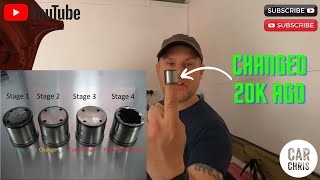
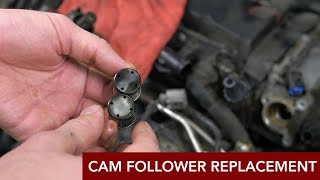
- Worn HPFP Cam Follower (VW/Audi) (Common) — On VW/Audi 2.0T FSI engines (2005-2009), a worn intake camshaft lobe destroys the high-pressure fuel pump (HPFP) cam follower. This causes insufficient fuel pressure under load.
- Low Fuel Pressure (Common) — A weak fuel pump, clogged fuel filter, or faulty fuel pressure regulator prevents the engine from getting enough fuel to match the incoming air.
- Dirty Mass Airflow (MAF) Sensor (Common) — A contaminated MAF sensor miscalculates incoming air, causing the computer to command incorrect fuel delivery. Cleaning the sensor resolves minor contamination.
- Weak Fuel Pressure Relief Valve (Diesel) (Less Common) — On Duramax and Cummins diesels, the fuel rail pressure relief valve weakens and leaks pressure back to the tank prematurely, causing fuel starvation under heavy load.
- Faulty Oxygen (O2) Sensor (Less Common) — A slow or failing upstream O2 sensor (Bank 2, Sensor 1) sends incorrect air-fuel data. However, the sensor usually reports a legitimate lean condition and requires testing before replacement.
- Leaking Fuel Injectors (Rare) — An injector stuck open, leaking, or clogged disrupts the air-fuel ratio on that cylinder, contributing to a bank-wide fuel trim problem.
- Exhaust Leaks (Rare) — A leak in the exhaust manifold before the upstream O2 sensor draws in outside air, tricking the sensor into reporting a false lean condition.
Symptoms
- Check Engine Light is On — The ECU illuminates the Malfunction Indicator Lamp (MIL) to alert the driver of the fault.
- Reduced Engine Power and Acceleration — The car feels sluggish, hesitates, or stumbles during acceleration. The vehicle often enters a low-power 'limp mode' to prevent damage.
- Rough Idle or Stalling — The engine shakes, runs unevenly, or shuts off when stopped. This worsens as the engine warms up.
- Decreased Fuel Economy — Fuel consumption increases by 5-15% because the engine runs inefficiently to compensate for the imbalance.
- Engine Surging (Diesel) — On diesel trucks, a faulty fuel pressure relief valve causes the engine RPM to hunt or surge at idle as the ECU struggles to maintain stable fuel pressure.
Diagnostic Flowchart
Tap your situation to follow the diagnostic path that matches what you're seeing on this code.
Common Fixes & Costs
- Repairing a Vacuum Leak (Hose/Intake Boot) — Parts: $10-$75, Labor: $50-$150, ~0.8 hr book time (DIY)
- Replacing PCV/CCV Valve Assembly — Parts: $50-$200, Labor: $100-$400, ~1.5 hr book time (Intermediate)
- Replacing HPFP Cam Follower (VW/Audi 2.0T) — Parts: $40-$70, Labor: $120-$200, ~1.2 hr book time (Intermediate)
- Replacing Intake Manifold Gaskets (GM V8) — Parts: $80-$150, Labor: $300-$600, ~3.5 hr book time (Professional)
- Replacing Fuel Filter (Diesel) — Parts: $30-$100, Labor: $50-$150, ~0.6 hr book time (DIY)
- Replacing Fuel Pressure Relief Valve (Duramax) — Parts: $100-$250, Labor: $100-$200, ~1.2 hr book time (Intermediate)
- Replacing the Fuel Pump (Low Pressure) — Parts: $200-$700, Labor: $300-$800, ~2.5 hr book time (Professional)
DIY vs Professional
- Repairing a Vacuum Leak (Hose/Intake Boot) — Beginner:
- Replacing PCV/CCV Valve Assembly — Beginner:
- Replacing Intake Manifold Gaskets (GM V8) — Beginner:
- Replacing HPFP Cam Follower (VW/Audi 2.0T) — Beginner:
Used vs. New Parts: Buying Guide
When a used part is worth it: For purely mechanical, non-wear items like an intake manifold, a used part offers significant savings. Never buy used electronic parts like fuel pumps, MAF sensors, or O2 sensors.
Donor-vehicle mileage cap: roughly under 80000 miles for the part to have meaningful remaining life.
Donor quality checklist:
- Verify the donor vehicle was not scrapped for an engine fire or severe overheating.
- Inspect plastic intake manifolds carefully for hairline cracks or warped mating surfaces.
- Match the OEM part number exactly. Superseded parts may lack necessary sensor ports.
Decision logic:
- If The part is electronic or a high-failure item (e.g., fuel pump, PCV valve). → Always buy new. The repeat labor cost negates any savings.
- If The vehicle is over 150,000 miles and the budget is tight. → A used mechanical part is acceptable, but accept the risk of a shorter lifespan.
- If The part is a gasket, seal, or one-time-use bolt. → Always buy new. These are inexpensive and critical for a leak-free repair.
Warranty tradeoff: Salvage yards offer 30-90 day part-only warranties. New aftermarket parts offer 1-year warranties. New OEM parts carry 1-2 year warranties.
Worst-case if a used part fails: $500-$1500 if a used fuel pump fails, requiring repeat labor costs plus a new part.
What Happens If You Wait — Timeline
- 0-2 weeks: Check Engine Light illuminates. Freeze frame data shows LTFT on Bank 2 exceeded +25%. No symptoms are noticeable to the driver. (MPG impact: 0-5%% · Added cost: $0)
- 2 weeks - 3 months: Driver notices a consistent drop in fuel economy. The engine develops a rough idle and hesitates on acceleration. The risk of stalling increases. (MPG impact: 5-15%% · Added cost: $50-$200 in wasted fuel.)
- 3-8 months: A sustained lean condition overheats the catalytic converter, melting the precious metal substrate and triggering a P0430 code. (MPG impact: 10-20%% · Added cost: $1,200-$2,800 for catalytic converter replacement.)
- 8+ months: Extreme combustion temperatures cause physical engine damage. Exhaust valves burn or piston crowns melt, requiring major mechanical repair. (MPG impact: 20-35%+% · Added cost: $2,500-$7,000+ for an engine overhaul.)
Cost of Not Fixing It
- 0-1 month: Noticeable 5-15% drop in fuel economy, poor acceleration, and stalling. Automatic emissions test failure. (Added cost: $50-$150 in wasted fuel.)
- 1-6 months: A persistent lean condition significantly increases exhaust gas temperatures, melting the catalytic converter substrate and triggering a P0420/P0430 code. (Added cost: $1200-$2800 for catalytic converter replacement.)
- 6+ months: Sustained high combustion temperatures cause severe internal engine damage, including burned exhaust valves or melted pistons, requiring an engine overhaul. (Added cost: $2500-$7000 for engine repairs.)
Diagnosis Steps
- Scan for Codes & Review Freeze Frame Data
Read all stored trouble codes. Codes like P0171/P0174 (System Too Lean) or P0087 (Fuel Rail Pressure Too Low) provide critical clues. Analyze the freeze-frame data to see the engine RPM and load when the code set.
Tools: OBD-II Scanner (Beginner) - Perform a Visual Inspection
Look for cracked, disconnected, or collapsed vacuum hoses around the intake manifold and PCV system. Check the air intake tube for tears between the MAF sensor and the throttle body.
Tools: Flashlight (Beginner) - Perform a Smoke Test for Vacuum Leaks
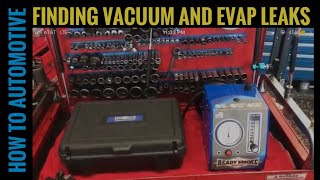
Force low-pressure smoke into the intake system. Escaping smoke instantly reveals hidden vacuum leaks from gaskets, hoses, or a faulty PCV valve. Pay close attention to the intake manifold gasket area.
Tools: Automotive Smoke Machine (Intermediate) - Analyze Fuel Trim and O2 Sensor Live Data
View live data. For a lean condition, Long Term Fuel Trim (LTFT) on Bank 2 will exceed +15%. Watch the upstream O2 sensor on Bank 2 (B2S1); it must switch rapidly between 0.1V and 0.9V. A sensor stuck low confirms the lean condition.
Tools: Advanced OBD-II Scanner (Intermediate) - Analyze MAF Sensor Live Data (g/s)
With the engine warm and idling, view the Mass Airflow (MAF) sensor reading. A healthy engine reads approximately 1 gram per second (g/s) per liter of displacement (e.g., a 5.3L V8 reads 4.2-6.0 g/s). A significantly lower reading confirms a vacuum leak after the sensor.
Tools: Advanced OBD-II Scanner (Advanced) - Inspect HPFP Cam Follower (VW/Audi)
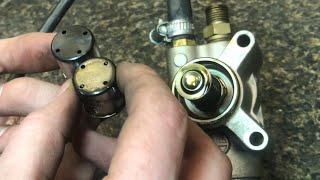
For VW/Audi 2.0T FSI engines, remove the high-pressure fuel pump (HPFP) to inspect the cam follower. Any wear through the black coating, scoring, or a hole requires immediate replacement of the follower and potentially the camshaft.
Tools: Ratchet/Socket Set, Torx Sockets (Advanced) - Test Fuel Pressure (Low and High Side)
Connect a fuel pressure gauge to the fuel rail. Compare the reading at idle and under load to specifications. For direct injection, check the high-pressure rail value via a scan tool. Low pressure points to a weak pump or clogged filter.
Tools: Fuel Pressure Gauge Kit, Advanced OBD-II Scanner (Intermediate) - Duramax FPRV 'Bottle Test'
Disconnect the return hose from the rear of the driver's side fuel rail. Plug the hose and run a new line from the rail port into a clear bottle. Perform a hard acceleration test drive. Fuel in the bottle confirms a leaking relief valve.
Tools: Hose, Hose Plug, Collection Bottle, Basic Hand Tools (Advanced) - Test Fuel Rail Pressure Sensor Voltage
Back-probe the FRP sensor connector. With the key on, verify a 5V reference and ground. The signal wire should read ~0.5V, rise to ~1.3V at idle, and jump to 3.7V+ during snap acceleration. A stuck voltage indicates a faulty sensor.
Tools: Multimeter, Back-probe Kit (Advanced) - Check TGV Sensor Resistance (Subaru)
For Subaru TGV faults, disconnect the position sensor and measure resistance between its terminals. It should read 2-3 kΩ and change smoothly as you manually operate the valve. Infinite or zero resistance confirms a failed sensor.
Tools: Multimeter (Advanced) - Analyze O2 Sensor Waveform
Connect a lab scope to the Bank 2 upstream O2 sensor signal wire. A healthy sensor produces a rapid sine wave between 0.1V and 0.9V. A flattened waveform definitively proves if the sensor is faulty or accurately reporting a mixture problem.
Tools: Automotive Oscilloscope (Professional)
When This Code Triggers (Freeze-Frame Conditions)
- Engine Coolant Temp: 180-210°F (The engine must be fully warmed up and operating in closed-loop fuel control.)
- Engine RPM: 1500-2500 RPM (The code sets during steady-state cruising or light acceleration, rarely at idle.)
- Engine Load: 20-60% (A moderate engine load is present, consistent with highway cruising or climbing a slight incline.)
- Long Term Fuel Trim (Bank 2): > +25% (The long-term fuel correction reaches its maximum positive limit, indicating a persistent lean condition the ECU cannot compensate for.)
Related Codes
- P0171 / P0174 — Generic codes for 'System Too Lean'. P1093 is a severe version set when fuel trims hit their maximum limit. If P1093 and P0174 appear together, the fault is confirmed on Bank 2 and is almost certainly a vacuum leak.
- P0087 — 'Fuel Rail Pressure Too Low'. This confirms a fuel delivery issue. When seen with P1093 on a diesel or direct-injection engine, ignore vacuum leaks and immediately test fuel pressure.
- P0300, P0302 — 'Random/Multiple Cylinder Misfire'. A severe lean condition starves cylinders of fuel, causing misfires. Fix the cause of P1093 first; the misfires are a symptom, not the root cause.
- P0101 — 'MAF Circuit Range/Performance'. If P1093 appears with P0101, the MAF sensor is the primary suspect. The ECU is receiving implausible data, causing the incorrect fuel calculations.
Climate & Environmental Factors
- Cold Weather: Cold temperatures cause plastic and rubber vacuum hoses to harden and contract. This turns a minor seal imperfection into a major vacuum leak, triggering a lean code that disappears in warmer weather.
- High Altitude: At high altitudes, the air is less dense. While modern ECUs adjust the mixture, a pre-existing weakness like a weak fuel pump is exposed because the system has less margin for correction, triggering P1093.
- Extreme Cold (Diesel): In temperatures below freezing, diesel fuel gels and forms wax crystals. This clogs the fuel filter, restricting fuel flow to the high-pressure pump and causing fuel starvation under load.
How to Talk to a Mechanic About This Code
Say this: "I have a P1093 check engine light code. I understand this is a manufacturer-specific code that often indicates a severe lean condition on Bank 2. I'd like to schedule a diagnostic to confirm the code's meaning for my car and pinpoint the cause. Please focus on testing for vacuum leaks and checking fuel pressure before recommending any sensor replacements."
This signals you know the code has multiple possible causes and are requesting a proper diagnostic procedure rather than just replacing parts. It prevents a shop from immediately selling you an O2 sensor.
Avoid saying:
- 'Just fix whatever's wrong'
- 'My check engine light is on, can you look at it?'
- 'Whatever you recommend'
Questions to ask before authorizing the repair:
- What were the long-term fuel trim readings for Bank 2? Can you show me the live data?
- If you found a vacuum leak, can you show me where the smoke test revealed the leak?
- If you're recommending a fuel pump, what was the measured fuel pressure at idle and under load compared to the specification?
- If you're recommending an O2 sensor, what test showed it was faulty, rather than just reporting the lean condition?
Where to Take It: Dealer vs Independent vs Chain
- Dealer:
Best for: Vehicles still under powertrain or emissions warranty., Complex, manufacturer-specific versions of P1093 (e.g., Subaru TGV, Nissan VVEL).
Downsides: Highest labor rates, often 1.5-2x more than an independent shop., Recommends expensive assembly replacements over fixing a smaller component. (Typical cost: +50% vs. baseline) - Independent Shop:
Best fit for most scenarios. A trusted independent specialist offers a perfect balance of expertise and value.
Best for: Out-of-warranty vehicles., Common P1093 causes like GM intake manifold gaskets or diesel fuel filter changes., Finding a specialist (e.g., German auto, diesel performance) with deep experience.
Downsides: Quality varies greatly; vet shops by reviews and ASE certifications., A general shop lacks the specific tools for quirky P1093 variants. (Typical cost: +0% vs. baseline) - Chain Shop:
AVOID for initial diagnosis. The manufacturer-specific nature of P1093 makes it a poor fit for chain shops. Use only for simple, pre-diagnosed part replacements.
Best for: Simple, visible repairs like a cracked vacuum hose that you have already identified.
Downsides: Technician skill varies dramatically., High pressure to upsell services; lacks the advanced diagnostic tools needed for complex P1093 diagnosis. (Typical cost: -10% vs. baseline)
When to Walk Away From the Repair
If the estimated repair cost exceeds 50% of the car's private-party value, sell the car as-is or trade it in.
- Car worth $4000, fix is $2200: Walk away. The repair cost is over 50% of the car's value. The risk of other age-related failures is high.
- Car worth $15000, fix is $1800: Fix it. The repair cost is well below the threshold and restores a valuable asset.
- Car worth $2500, fix is $1500: Walk away. A $1,500 repair on a $2,500 car is a bad investment; you will not recoup the cost on resale.
What Scan Tool You Need for This Code
Minimum: An OBD-II reader that displays live sensor data, specifically Long-Term and Short-Term Fuel Trims (LTFT/STFT).
A basic $20 code reader only gives you the 'P1093' code. To diagnose it, you MUST see live fuel trim data to confirm the lean condition and monitor the MAF and O2 sensors.
Budget: BlueDriver Pro Bluetooth Scanner (~$100) — Pairs with your smartphone to graph live data like fuel trims and O2 sensor voltage. It provides repair reports based on a database of verified fixes.
Mid-range: Foxwell NT510 Elite (~$180) — Loads manufacturer-specific software to read proprietary codes and access modules beyond the engine, crucial for brand-specific versions of P1093 on Subaru or Nissan.
Professional: Autel MaxiCOM MK808BT (~$500) — Provides full bidirectional control to command components like fuel pumps or TGV motors directly. Offers OE-level diagnostics essential for complex relearn procedures.
Rent vs buy: If this is a one-time diagnosis, auto parts stores have a loaner tool program. You pay a deposit, fully refunded upon return. Buy a scanner only if you plan to do regular diagnostics.
How to Clear the Code After You Fix It
- Use an OBD-II scan tool to erase the trouble codes.
- Ensure the fuel tank is between 25% and 75% full.
- Perform a complete OBD-II drive cycle to allow the readiness monitors to run.
Drive cycle (~30 minutes): A drive cycle requires a cold start (engine off for 8+ hours), a 3-minute idle, 15 minutes of steady highway driving at 55 mph, and 10 minutes of stop-and-go city driving.
Readiness monitors affected: Catalyst (CAT) Monitor, Oxygen (O2) Sensor Monitor, Evaporative (EVAP) System Monitor
Before emissions retest: drive at least 100 miles to fully set monitors.
Watch out for:
- Clearing the code resets all readiness monitors to 'Not Ready', causing an automatic emissions test failure.
- The code returns within two drive cycles if the underlying vacuum leak or fuel pressure fault is not repaired.
- Highway driving alone will not set all monitors; a mix of city and highway driving is mandatory.
Will This Fail Emissions / State Inspection?
Yes — this code typically fails an OBD-II emissions inspection.
- California: An illuminated Check Engine Light is an automatic failure. You must complete a full drive cycle, as the BAR-OIS test requires readiness monitors to be 'Ready'.
- New York: An active Check Engine Light automatically fails the NYS inspection. Clearing the code just before the test results in a failure due to 'Not Ready' monitors.
- Texas: In the 17 counties requiring emissions testing, an illuminated Check Engine Light results in an automatic failure of the OBD-II test.
Most Commonly Affected Vehicles
- Chevrolet Silverado, Tahoe, Suburban (2003-2014) — V8 engines (5.3L, 6.0L, 6.2L) frequently fail intake manifold gaskets, causing a vacuum leak and triggering P1093. The failure is most common on the driver's side rear cylinder.
- GMC Sierra, Yukon, Yukon XL (2003-2014) — Shares the same V8 engines and intake manifold gasket issues as Chevrolet trucks. Upgraded Fel-Pro gaskets resolve the issue permanently.
- Chevrolet/GMC Silverado/Sierra 2500/3500 HD (Duramax) (2004.5-2010) — P1093 means 'Fuel Rail Pressure Low'. It is caused by a clogged fuel filter, a weak fuel pressure relief valve (FPRV), or air entering from deteriorated rubber fuel lines.
- Volkswagen/Audi GTI, Jetta, A3, A4 (2.0T FSI) (2005-2009) — Code means 'Fuel Measuring System Malfunction'. It is commonly caused by a worn high-pressure fuel pump (HPFP) cam follower or a failed PCV valve.
- BMW 3-Series (E46), 5-Series (E39), X5 (E53) (1999-2006) — P1093 means 'Pre-catalyst fuel trim too lean'. Common causes include a failing fuel pump or a massive vacuum leak from a deteriorated crankcase ventilation (CCV) system.
- Subaru Impreza, WRX, Forester, Legacy (2002-2007) — The code means 'Tumble Generator Valve (TGV) Malfunction'. The position sensor is often installed incorrectly without preloading the spring after other service.
- Infiniti/Nissan G37, QX56, M37 (2008-2017) — P1093 points to a 'VVEL Actuator Motor' performance issue on Bank 2. This is a mechanical/electrical issue with the variable valve lift system, not a fuel mixture problem.
- Ram 2500/3500 (Cummins Diesel) (2007.5-2018) — Indicates low fuel rail pressure under load. A common failure point is the fuel rail pressure relief valve leaking pressure back to the tank, or a clogged fuel filter.
- Hyundai Santa Fe (Diesel) (2007-2012) — P1093 triggers alongside P0193, indicating a 'Circuit High Input' fault where the Fuel Rail Pressure Sensor sends an abnormally high voltage signal to the ECU.
Manufacturer-Specific Notes
- General Motors (Gasoline): P1093 is frequently caused by a failed intake manifold gasket on V8 engines. The leak occurs at the rear of the manifold on the driver's side (Bank 2).
- General Motors (Duramax Diesel): The code points to low fuel rail pressure under load. Replace the fuel filter first. If that fails, perform the 'bottle test' to check for a weak fuel pressure relief valve.
- Volkswagen / Audi (2.0T FSI): Check TSB 2015153 (VW) or 2013147 (Audi) regarding a worn intake camshaft lobe and HPFP cam follower. The cam follower must be inspected every 20,000 miles.
- BMW: The definition is 'Pre-catalyst fuel trim, bank 2, too lean'. A failing fuel pump or a deteriorated Crankcase Ventilation (CCV) system buried under the intake are the top suspects.
- Subaru: The definition points to a stuck Tumble Generator Valve (TGV). A common mistake is improper installation of the position sensor; it must be rotated against spring pressure to function correctly.
- Nissan / Infiniti: The code relates to the VVEL actuator motor on Bank 2. Diagnosis involves checking the motor's electrical circuit and requires relearning procedures with an advanced scan tool.
Real Owner Stories
2008 VW GTI (2.0T FSI) at 110K miles
Check Engine Light came on with P1093. Car felt sluggish accelerating onto the highway, with a noticeable drop in fuel economy.
What they tried:
- Suspected a vacuum leak but found no cracked hoses.
- Removed the High-Pressure Fuel Pump (HPFP) to inspect the cam follower.
Outcome: The cam follower had a hole worn completely through it, scoring the camshaft lobe. Replaced the cam follower, HPFP, and intake camshaft for $1,200. Power was restored.
Lesson: On VW/Audi 2.0T FSI engines, P1093 is frequently caused by cam follower failure. Treat it as a routine inspection item every 20,000 miles to avoid costly camshaft damage.
2006 Chevy Silverado 1500 (5.3L V8) at 155K miles
P1093 and P0174 codes appeared together. The truck had a slightly rough idle when cold.
What they tried:
- Cleaned the MAF sensor with no change.
- Replaced the Bank 2 upstream O2 sensor, but the code returned within 50 miles.
- Performed a smoke test, revealing a massive leak from the back of the intake manifold.
Outcome: Replaced the intake manifold gaskets with an upgraded Fel-Pro set. The rough idle disappeared, and the codes never returned.
Lesson: On GM V8s, P1093 is synonymous with a leaking intake manifold gasket. Replacing the O2 sensor is a common misdiagnosis; a smoke test definitively confirms the leak.
2005 Subaru WRX at 130K miles
Car threw a P1093 code after replacing the throttle body. The car had very poor power and barely accelerated.
What they tried:
- Checked all vacuum lines and electrical connectors.
- Searched Subaru forums for the P1093 definition ('Tumble Generator Valve Malfunction').
- Realized the TGV position sensor was installed incorrectly during the previous repair.
Outcome: Removed the TGV position sensor and re-installed it correctly by 'pre-loading' the spring (rotating it 90 degrees before bolting it down). Performance returned to normal immediately.
Lesson: Code definitions are manufacturer-specific. On a Subaru, P1093 points to the TGV system. Improper installation of the position sensor is a primary cause.
2007 GMC Sierra 2500HD (Duramax LBZ) at 180K miles
P1093 ('Fuel Rail Pressure Low') appeared only when towing a heavy trailer up a grade. The truck went into 'limp mode'.
What they tried:
- Replaced the fuel filter, but the problem persisted.
- Performed a 'bottle test' on the Fuel Pressure Relief Valve (FPRV). Fuel filled the bottle after a hard pull.
Outcome: Replaced the weak FPRV with a new Bosch part. The truck maintained desired fuel rail pressure under heavy load, and the code did not return.
Lesson: On Duramax diesels, P1093 under load is a classic symptom of a weak FPRV. The 'bottle test' definitively confirms a bad valve before buying an expensive injection pump.
How to Prevent This Code From Triggering
- Use TOP TIER™ certified gasoline. (Every fill-up.) — Higher levels of detergents prevent carbon deposits on fuel injectors. Clogged injectors cause a lean condition.
- Inspect VW/Audi 2.0T FSI Cam Follower. (Every 15,000-20,000 miles.) — Proactive inspection and replacement of the $50 follower prevents a $1,500 repair bill for a destroyed camshaft and high-pressure fuel pump.
- Replace diesel fuel filter(s) regularly. (Every 10,000-15,000 miles.) — A clogged fuel filter is the #1 cause of P1093 on Duramax and Cummins engines. Clean filters ensure adequate fuel supply under load.
- Use a diesel anti-gel additive in cold climates. (At every fill-up when temperatures are below freezing (32°F).) — Prevents paraffin wax in diesel fuel from crystallizing and clogging the fuel filter, which causes fuel starvation.
- Perform a periodic smoke test. (Every 60,000-80,000 miles.) — Proactively finds small vacuum leaks from aging hoses and gaskets before they trigger a Check Engine Light.
Frequently Asked Questions
What is the difference between P1093 and P0174?
P0174 is the generic OBD-II code for 'System Too Lean (Bank 2)'. P1093 is a manufacturer-specific code indicating the ECU's fuel trims have hit their maximum corrective limit. On Subaru or Nissan, P1093 points to a completely different mechanical system.
What does 'Bank 2' mean?
Bank 2 refers to the side of the engine that does not contain cylinder #1. On V-shaped engines, this is typically the passenger's side on rear-wheel-drive American vehicles and the driver's side on many German vehicles.
What is the most common misdiagnosis for P1093?
Replacing the oxygen (O2) sensor without proper diagnosis is the most common mistake. A lean code causes the O2 sensor to report low voltage, meaning it is doing its job correctly. The actual fault is usually a vacuum leak or fuel delivery issue.
Can I fix a P1093 code myself?
Simple fixes like cleaning the MAF sensor, replacing a fuel filter, or fixing a cracked vacuum hose are DIY-friendly. Stop DIY and take the vehicle to a shop if you need to replace intake manifold gaskets or diagnose direct-injection systems requiring specialized tools.
How much does it cost to diagnose a P1093 code?
Most repair shops charge a diagnostic fee equal to one hour of labor. Expect to pay between $120 and $200 for a professional diagnosis. This includes scanning live data and performing preliminary tests like a smoke test or fuel pressure check.
I cleared the code and it came back. What's next?
A returning code indicates a hard mechanical or electrical fault. You must perform a systematic diagnosis starting with a smoke test for vacuum leaks or a fuel pressure test. Simply clearing the code never fixes the underlying problem.
Can an aftermarket engine tune or performance part cause P1093?
Yes. An improper engine tune commands an incorrect air/fuel ratio, and aftermarket cold air intakes cause turbulence across the MAF sensor. On modified diesel trucks, aggressive tunes expose weak fuel pressure relief valves, triggering P1093 under load.
Will a bad gas cap cause a P1093 code?
No. A loose or faulty gas cap causes an EVAP system code like P0455 or P0457. It does not cause a fuel trim code like P1093.
Key Takeaways
- Always verify the P1093 definition for your specific vehicle make before replacing parts, as it means a vacuum leak on a GM V8 but a failed Tumble Generator Valve on a Subaru.
- On VW and Audi 2.0T FSI engines, inspect the high-pressure fuel pump (HPFP) cam follower immediately; a $50 replacement prevents a $1,500 camshaft failure.
- Do not replace the oxygen (O2) sensor without testing; in 80% of P1093 cases, the sensor is correctly reporting a lean condition caused by an unmetered vacuum leak.
- For Duramax and Cummins diesel engines, replace the fuel filter first, then perform a 'bottle test' to check for a leaking fuel pressure relief valve before buying a $700 injection pump.
Helpful Videos
Shop the Parts Behind P1093
Below are the parts most often responsible for code P1093, ranked by how frequently each one is the actual culprit (per the diagnosis above). Tap any to see what we have for your vehicle.





The information in this article is provided for general reference and educational purposes only. Vehicle specifications, procedures, and part compatibility can vary by production date, trim level, and region. Always consult your vehicle's factory service manual and verify part numbers before purchasing or performing repairs. Safety-critical components such as airbags, seat belts, and braking systems should be installed by a qualified professional.
- 🧭 Diagnostic Flowchart
- 🎬 Helpful Videos
- 🛍️ Shop This Part
- What Does P1093 Mean?
- Can I Drive With P1093?
- Common Causes
- Symptoms
- Common Fixes & Costs
- DIY vs Professional
- Used vs. New Parts: Buying Guide
- What Happens If You Wait — Timeline
- Cost of Not Fixing It
- Diagnosis Steps
- When This Code Triggers (Freeze-Frame Conditions)
- Related Codes
- Climate & Environmental Factors
- How to Talk to a Mechanic About This Code
- Where to Take It: Dealer vs Independent vs Chain
- When to Walk Away From the Repair
- What Scan Tool You Need for This Code
- How to Clear the Code After You Fix It
- Will This Fail Emissions / State Inspection?
- Most Commonly Affected Vehicles
- Manufacturer-Specific Notes
- Real Owner Stories
- 2008 VW GTI (2.0T FSI) at 110K miles
- 2006 Chevy Silverado 1500 (5.3L V8) at 155K miles
- 2005 Subaru WRX at 130K miles
- 2007 GMC Sierra 2500HD (Duramax LBZ) at 180K miles
- How to Prevent This Code From Triggering
- Frequently Asked Questions
- What is the difference between P1093 and P0174?
- What does 'Bank 2' mean?
- What is the most common misdiagnosis for P1093?
- Can I fix a P1093 code myself?
- How much does it cost to diagnose a P1093 code?
- I cleared the code and it came back. What's next?
- Can an aftermarket engine tune or performance part cause P1093?
- Will a bad gas cap cause a P1093 code?
- Key Takeaways
- 🎟️ Get 5% Off