

OBD-II Code P1096: Manufacturer-Specific Fault Guide
The Ultimate Guide to P1096: What It Means, Why It Triggers, and Exactly How to Fix It
- P1096 is a manufacturer-specific code that requires looking up your exact make and model; it usually means a failed Subaru TGV, a Porsche MAF sensor issue, or a slow BMW oxygen sensor.
- Never replace a Porsche MAF sensor for P1096 without performing a smoke test first, as unmetered air from a vacuum leak is the most common trigger.
- Volkswagen and Audi owners with 2.0T TSI engines should call a dealer with their VIN before paying for repairs, as VW extended the intake manifold warranty to 10 years or 120,000 miles.
- Driving with a P1096 code for more than 100 miles forces the engine to run rich or lean, which destroys the catalytic converter and adds $1,000 to $3,000 to your repair bill.
What Does P1096 Mean?
P1096 is a manufacturer-specific code with entirely different definitions based on your car brand. On Subarus, it indicates an open circuit in the Tumble Generator Valve (TGV) system. On Porsches and VWs, it flags an 'implausible' Mass Air Flow (MAF) sensor reading. On BMWs, it signals a slow-responding oxygen sensor.
Technical definition: The official SAE/ISO definition for P1096 varies by manufacturer. Common definitions include: Subaru: Tumble Generator Valve (TGV) Circuit #2 (Open Circuit). Porsche: Mass Air Flow (MAF) Ahead of Throttle Valve - Implausible. BMW: O2 Sensor Circuit Slow Switching From Lean to Rich (Bank 2, Sensor 1). Volkswagen/Audi: Intake Manifold Runner Position Sensor (G336) Short to Ground. Ford: O2 sensor is taking too long to warm up.
Can I Drive With P1096?
Yes, But With Caution. You can drive to a repair shop, but continued driving destroys your catalytic converter due to an incorrect air-fuel mixture. You will experience reduced engine power, rough idling, and poor fuel economy. Driving for more than 100 miles adds $1,000 to $3,000 to your final repair bill.
Common Causes
- Faulty Tumble Generator Valve (TGV) Motor or Sensor (Subaru) (Very Common) — On Subarus, the electric motor that operates the TGV or the position sensor that reports its location fails electronically. This creates an open circuit and immediately triggers the code.
- Vacuum Leaks (Porsche, VW) (Very Common) — On vehicles where P1096 is MAF-related, a significant leak in the air intake system after the MAF sensor allows unmetered air into the engine. This causes the MAF's reading to be much lower than the actual airflow, which the ECU flags as implausible.
- Dirty or Faulty Mass Air Flow (MAF) Sensor (Porsche, VW) (Common) — A dirty or electronically failed MAF sensor sends incorrect data to the ECU. Oil contamination from a failing Air-Oil Separator (AOS) is a known cause of repeated MAF failure on Porsche vehicles.
- Faulty Intake Manifold Runner Position Sensor (VW) (Common) — On VW/Audi models, P1096 points specifically to a fault with the Intake Manifold Runner Position Sensor (G336), which is part of a larger intake manifold assembly known for high failure rates.
- Failing or Slow Oxygen (O2) Sensor (BMW, Ford) (Common) — On BMWs and Fords, this code points to an aging upstream oxygen sensor (Bank 2, Sensor 1 for BMW) that responds too slowly to changes in the air-fuel mixture, or has a failing internal heater.
- Wiring or Connector Issues (Less Common) — Damaged wires, loose connections, or corrosion in the electrical circuits for the TGV, MAF, or O2 sensor interrupt the signal. This happens frequently from heat cycling, vibration, or rodent damage.
- Carbon Buildup on TGV Flaps (Subaru) (Less Common) — Carbon from the engine's crankcase and EGR systems builds up on the TGV flaps, causing them to stick open or closed and preventing smooth mechanical operation.
- Clogged Catalytic Converter (Rare) — A severely clogged catalytic converter creates exhaust backpressure that restricts airflow through the engine. This forces the MAF sensor to report an airflow value that is implausibly low for a given RPM.
- Faulty Throttle Body (Porsche) (Rare) — A sluggish or heavily soiled electronic throttle body causes this code on Porsches. The ECU compares MAF readings to the throttle position, and a faulty throttle body makes the MAF signal appear implausible.
- Faulty Engine Control Module (ECM/DME) (Very Rare) — The fault occasionally lies within the engine's computer itself. For Porsche, a faulty ambient pressure sensor within the DME triggers the code. Rule out all wiring and sensor issues before replacing the ECM.
Symptoms
- Check Engine Light is On — The check engine light (CEL) illuminates immediately when the ECU detects the fault.
- Reduced Engine Power and Acceleration — The car feels sluggish, hesitates, or enters a 'limp mode' to prevent damage. Porsches actively limit turbo boost under this condition.
- Rough Idle or Stalling — The engine runs poorly, shakes at idle, or stalls. This is highly noticeable when the engine is cold (Subaru TGV) or at operating temperature (Porsche MAF).
- Poor Fuel Economy — The incorrect air-fuel mixture forces the engine to burn 10% to 25% more fuel than necessary.
- Difficulty Starting the Engine — A stuck TGV (Subaru) or a bad MAF sensor (Porsche) makes the engine difficult to start, particularly during cold weather.
- Black Smoke from Exhaust — The engine runs excessively rich, causing puffs of black smoke from the exhaust during acceleration.
Diagnostic Flowchart
Tap your situation to follow the diagnostic path that matches what you're seeing on this code.
Common Fixes & Costs
- Replace Tumble Generator Valve (TGV) Assembly (Subaru)
— Parts: $450-$850 for a set, Labor: $250-$450, ~2.5 hr book time
(Intermediate)
: OEM - Repair Vacuum Leak — Parts: $10-$100 (hoses, gaskets), Labor: $150-$300, ~1.5 hr book time (Professional)
- Replace Mass Air Flow (MAF) Sensor (Porsche)
— Parts: $250-$450 (OEM), Labor: $75-$150, ~0.5 hr book time
(DIY)
: OEM - Replace Oxygen (O2) Sensor (BMW)
— Parts: $150-$250 (OEM Bosch), Labor: $150-$250, ~1.2 hr book time
(Intermediate)
: OEM - Replace Intake Manifold Runner Position Sensor (VW)
— Parts: $50-$150, Labor: $100-$200, ~1.0 hr book time
(Intermediate)
: OEM - Repair Damaged Wiring — Parts: $5-$20, Labor: $100-$400, ~2.0 hr book time (Intermediate)
DIY vs Professional
- Replace Mass Air Flow (MAF) Sensor (Porsche) 🟢 Beginner
Tools: Security Torx bit set (T20 or T25), flathead screwdriver. - Replace Oxygen (O2) Sensor (BMW) 🟢 Beginner
Tools: 22mm O2 sensor socket, long ratchet extensions, universal joint/swivel, penetrating oil, torque wrench. - Replace Tumble Generator Valve (TGV) Assembly (Subaru) 🟢 Beginner
Tools: Extensive socket set, torque wrench, fuel line disconnect tools, pliers, screwdrivers. - Repair Vacuum Leak 🟢 Beginner
Tools: Smoke machine, basic hand tools.
Used vs. New Parts: Buying Guide
When a used part is worth it: For mechanical assemblies like a Subaru TGV housing, a used part from a low-mileage vehicle is a cost-effective option. For electronic sensors like MAF and O2 sensors, buying new is mandatory as they are wear items.
Donor-vehicle mileage cap: roughly under 60000 miles for the part to have meaningful remaining life.
Donor quality checklist:
- Verify the part number matches exactly.
- Avoid used MAF or O2 sensors entirely.
- For mechanical parts, check for physical damage, corrosion, or signs of extreme heat.
Decision logic:
- If The failed part is a MAF or O2 sensor → Always buy new. The risk of a used sensor failing shortly after installation is too high.
- If The part is a TGV assembly and budget is a primary concern → A used part from a donor with less than 60,000 miles is a reasonable risk.
- If Vehicle is a high-performance model (Porsche 911, Subaru WRX STI) → Favor new OEM parts to maintain performance and reliability.
Warranty tradeoff: Used parts from a salvage yard typically have a 30-90 day warranty. New OEM parts carry a 1-2 year warranty.
Worst-case if a used part fails: $200-$600 if a used part fails shortly after installation, primarily due to repeated labor costs.
What Happens If You Wait — Timeline
- 0-1 month: Check Engine Light is on. The ECU defaults to a safe, rich fuel map. No major symptoms are felt, but fuel economy drops. (MPG impact: 5-10%% · Added cost: $20-$50 in wasted fuel)
- 1-3 months: Sustained rich running affects the catalytic converter. Unburned fuel entering the exhaust overheats the catalyst substrate. Driver notices rough idle or hesitation. (MPG impact: 10-15%% · Added cost: $50-$150 in wasted fuel)
- 3-6 months: The catalytic converter's internal honeycomb structure melts or cracks from excessive heat. A 'rotten egg' smell is noticeable. Engine performance becomes sluggish as exhaust flow is restricted. (MPG impact: 15-25%% · Added cost: $1200-$2500 (catalytic converter replacement is required))
- 6+ months: The catalytic converter substrate breaks apart completely, creating a major exhaust blockage. The engine stalls, loses extreme power, or fails to start. (MPG impact: >25%% · Added cost: $1500-$3500+ (cost of catalytic converter plus damaged exhaust components))
Cost of Not Fixing It
- 0-1 month: Noticeable drop in fuel economy (5-15%), rough idle, and poor acceleration. Failed emissions test. (Added cost: Negligible, aside from increased fuel consumption.)
- 1-6 months: A persistent rich or lean condition overheats the catalytic converter, causing its internal structure to melt or break apart. (Added cost: $1200-$2500)
- 6+ months: Severe catalytic converter damage leads to a complete blockage of the exhaust, causing extreme loss of power and potential engine damage. (Added cost: $2000-$4000+)
Diagnosis Steps
- Confirm the Code's Meaning for Your Vehicle
Search your specific year, make, and model plus 'P1096' to confirm the definition. A Subaru requires a TGV diagnostic path, while a Porsche requires a MAF/Vacuum path.
Tools: Internet access (Beginner) - Scan for Additional Fault Codes
Use an OBD-II scanner to check for accompanying codes. P2004 on a Subaru confirms a TGV issue, while P0101 on a Porsche confirms an air metering issue. Address other codes first.
Tools: OBD-II Scanner (Beginner) - Perform a Smoke Test for Vacuum Leaks (Porsche/VW)
For MAF-related codes, fill the intake system with smoke. Leaks from cracked hoses, bad gaskets, or loose clamps become immediately visible. Do this before replacing an expensive MAF sensor.
Tools: Smoke machine (Intermediate) - Test Component Function with a Scan Tool (Subaru)
Command the Tumble Generator Valves to open and close using a bi-directional scan tool. If the valve doesn't move or the position sensor value doesn't change, the TGV motor or sensor assembly is dead.
Tools: Bi-directional Scan Tool (Advanced) - [PRO TIP] Analyze MAF Sensor Live Data (Porsche/VW)
Monitor the Mass Airflow PID. At a warm idle, a 2.0L engine reads roughly 1.6-2.4 g/s. Readings under 2 g/s indicate a large vacuum leak, while readings that don't increase with RPM point to a failed sensor.
Tools: Advanced Scan Tool (Advanced) - [PRO TIP] Analyze O2 Sensor Switching (BMW)
Monitor the voltage of the upstream O2 sensor (Bank 2, Sensor 1). A healthy sensor switches rapidly between 0.1V and 0.9V. A slow, lazy sine wave confirms the 'slow switching' fault.
Tools: Advanced Scan Tool or Oscilloscope (Advanced) - Inspect Wiring and Connectors
Visually inspect the wiring harness and electrical connector for the TGV motor, MAF sensor, or O2 sensor. Look for frayed wires, melted insulation, or corrosion. Re-seat the connector firmly.
Tools: Flashlight (Beginner) - Check Fuel Trims
Observe Short-Term (STFT) and Long-Term (LTFT) fuel trims. For a vacuum leak, LTFT is high at idle (> +15%) and decreases toward 0% as RPMs increase. If the MAF is failing, trims are highly negative (< -15%).
Tools: OBD-II Scanner with Live Data (Advanced) - Clean the Component (MAF or TGV)
For Porsche/MAF issues, remove the MAF sensor and clean it ONLY with dedicated MAF sensor cleaner spray. For Subaru/TGV issues, cleaning carbon buildup requires removing the intake manifold.
Tools: MAF Sensor Cleaner, Basic hand tools (Intermediate) - Test MAF Sensor Voltage (Porsche)
Probe the MAF signal wire. With ignition ON and engine OFF, voltage is ~1.0V. At a warm idle, it is ~1.2-1.3V. If the voltage is stuck at a fixed value, the sensor has failed electronically.
Tools: Multimeter with back-probe pins (Advanced) - Test TGV Position Sensor (Subaru)
Measure resistance between the ground and signal pin while manually operating the TGV flap. The resistance sweeps smoothly. A jump or dropout in the reading indicates a dead spot in the sensor.
Tools: Multimeter, Service Manual (Advanced)
When This Code Triggers (Freeze-Frame Conditions)
- Engine Coolant Temp: 180-200°F (82-93°C) (Fully warmed up (for MAF/O2 sensor faults).)
- RPM: 1500-2500 RPM (Cruise or steady throttle, when the ECU compares sensor values against expected models.)
- Engine Load: 20-50% (Light to moderate load during steady driving.)
- Vehicle Speed: 40-60 mph (Steady highway or arterial road speed.)
- Cold Start (Subaru TGV): < 140°F (60°C) (The fault sets within the first few minutes after a cold start when the TGV system is active.)
Related Codes
- P2004, P2005, P2007 — Generic codes for 'Intake Manifold Runner Control Stuck Open/Closed'. On Subarus, they directly relate to a malfunctioning TGV and log alongside P1096.
- P0101, P0102, P0068 — Relate to MAF sensor range/performance issues. They indicate the core problem is with the air metering system, which P1096 specifies as 'implausible'.
- P2096, P2270 — Indicate a 'Post Catalyst Fuel Trim System Too Lean' or 'O2 Sensor Signal Stuck Lean'. They accompany P1096 on BMWs.
- P2014, P2015 — On VW/Audi vehicles, these codes for 'Intake Manifold Runner Position Sensor/Switch Circuit' are directly related to P1096.
Climate & Environmental Factors
- Cold Weather: Subaru TGV codes occur during cold starts, the primary window for the TGV system to improve emissions. Low temperatures exacerbate mechanical stickiness in the valve flaps. Ford O2 heater codes trigger when the sensor fails to reach operating temperature quickly in freezing weather.
- High Altitude: Rapid changes in altitude trigger MAF-related codes on Porsches and VWs. Air density decreases with altitude, and a dirty MAF sensor provides readings outside the ECU's plausible range.
How to Talk to a Mechanic About This Code
Say this: "I have a P1096 code on my [Your Car's Make/Model]. Based on my research, this points to a [Subaru: TGV issue | Porsche: MAF implausibility/vacuum leak | BMW: slow O2 sensor]. I'd like to book a diagnostic appointment. For a Porsche, please start with a smoke test before quoting a MAF sensor. For a BMW, please check the live data for O2 sensor switching speed. For a Subaru, please test the TGV motor circuit."
This signals you are an informed consumer. It directs the technician to the most likely cause, saving diagnostic time and preventing them from starting with unnecessary part replacements.
Avoid saying:
- 'My check engine light is on, can you just fix it?'
- 'I think I need a new [part name].'
- 'Just do whatever it takes.'
Questions to ask before authorizing the repair:
- Can you show me the diagnostic proof (e.g., the video of the smoke leak, the live data graph of the O2 sensor)?
- Is this repair estimate based on OEM or aftermarket parts?
- What is your warranty on both the parts and the labor for this specific repair?
- If this doesn't fix the P1096 code, what is the next step, and will I be charged for further diagnosis?
Where to Take It: Dealer vs Independent vs Chain
- Dealer:
Recommended for VW/Audi owners to check for warranty coverage first. For out-of-warranty Porsche, BMW, or Subaru, a specialist is a better choice.
Best for: Vehicles under warranty (especially VW/Audi for intake manifold coverage)., Complex software-related issues or recalls specific to your VIN.
Downsides: Highest labor rates., Less flexibility on parts choice (typically OEM only). (Typical cost: +50% vs. baseline) - Independent Shop:
Best overall fit. An independent specialist for your brand (Porsche, Subaru, BMW) diagnoses this code more efficiently and cost-effectively than a dealer or chain.
Best for: Out-of-warranty vehicles, especially European or Japanese specialty shops., Complex but known issues like Porsche AOS/vacuum leaks or Subaru TGV failures.
Downsides: Quality and expertise vary widely; vetting is crucial. (Typical cost: +0% vs. baseline) - Chain Shop:
AVOID for diagnosing P1096. They lack the specific tools (smoke machine, bi-directional scanners) or expertise for this code and are highly likely to misdiagnose it.
Best for: Getting a basic code read for free to start your own research.
Downsides: Technician skill varies dramatically., Lack the in-depth, brand-specific knowledge needed for P1096., High pressure to upsell common items. (Typical cost: -10% vs. baseline)
When to Walk Away From the Repair
If the estimated repair cost exceeds 50% of your car's private-party value, consider selling or trading it in. For cars older than 10 years or over 150,000 miles, lower this threshold to 40%.
- Car worth $5000, fix is $2800: Walk away. The repair cost is 56% of the car's value, which is a poor investment in an older vehicle.
- Car worth $15000, fix is $1200: Fix it. The repair cost is only 8% of the car's value and is a sound investment to restore its function.
- Car worth $3000, fix is $1500: Borderline, but likely walk away. At 50% of the value, you risk another expensive repair being just around the corner.
What Scan Tool You Need for This Code
Minimum: A scanner that reads manufacturer-specific codes and displays live data graphing for the relevant sensors (O2, MAF).
A basic $20 code reader only gives you the 'P1096' number, which means different things for different cars. You need to see the underlying sensor data to know if the part is actually bad.
Budget: BlueDriver Pro Scan Tool (~$100) — Excellent for BMW and Porsche diagnostics on a budget. It connects to your phone and provides detailed live data graphing to see a 'lazy' O2 sensor on a BMW or monitor MAF readings on a Porsche.
Mid-range: Foxwell NT510 Elite (~$180) — The best choice for a dedicated DIYer. It offers bi-directional control, essential for testing Subaru TGV motors by commanding them to open and close.
Professional: Autel MaxiCOM MK808BT (~$550) — A professional-level tool that combines strong bi-directional control with advanced live data analysis and service functions, like resetting BMW fuel adaptations.
Rent vs buy: For a one-time fix, auto parts stores read your code for free. However, they cannot perform the live data or bi-directional tests needed to properly diagnose P1096. Buying a mid-range scanner pays for itself by avoiding a single misdiagnosis.
How to Clear the Code After You Fix It
- Use an OBD-II scan tool to clear the diagnostic trouble codes.
- Perform a complete drive cycle to allow readiness monitors to run.
- For BMWs, use a scan tool to reset the engine's fuel adaptations.
Drive cycle (~20 minutes): Cold start and idle for 3 minutes. Drive in stop-and-go city traffic for 10 minutes. Drive at a steady highway speed (55-60 mph) for 10 minutes. Let the vehicle cool down completely.
Readiness monitors affected: Catalyst (CAT) monitor, Oxygen (O2) Sensor monitor, Oxygen Sensor Heater monitor
Before emissions retest: drive at least 50 miles to fully set monitors.
Watch out for:
- Clearing the code resets readiness monitors to 'Not Ready', causing an automatic emissions test failure.
- The code returns immediately if the underlying mechanical or electrical fault is not fixed.
- Forgetting to reset fuel adaptations on a BMW after an O2 sensor replacement causes the code to return.
Will This Fail Emissions / State Inspection?
Yes — this code typically fails an OBD-II emissions inspection.
- California: An illuminated Check Engine Light is an automatic failure. All readiness monitors must be 'Ready' to pass the OBD-II test.
- New York: A vehicle fails the NYVIP3 OBD-II inspection if the Check Engine Light is on. For 2001 and newer vehicles, only one readiness monitor is allowed to be 'Not Ready'.
- Texas: An illuminated Check Engine Light is an automatic failure. After a repair, vehicles need 50-100 miles of driving to set the readiness monitors before a re-test.
Most Commonly Affected Vehicles
- Subaru WRX / STI (2002-2021) — Very common issue with the TGV motors and sensors on the EJ series engines. Failures are typically electronic in the motor or sensor itself.
- Subaru Forester / Outback / Legacy (2011-2020) — The FB-series engines experience TGV issues related to carbon buildup causing the valves to stick, or direct motor failure.
- Porsche 911 (997) (2005-2012) — Frequently experiences P1096 due to faulty MAF sensors. Misdiagnosis is common; vacuum leaks and faulty throttle bodies are frequent culprits.
- Porsche Boxster / Cayman (987) (2005-2012) — Shares the same engine architecture and MAF sensor vulnerabilities as the 911. A failing AOS is a known source of MAF contamination.
- BMW 3-Series (E90/E92) (2006-2013) — Prone to oxygen sensor failures that trigger this code on Bank 2. Part number 11787596924 is a common pre-cat sensor for N55 engines.
- Volkswagen Jetta / Golf / GTI (2009-2015) — On 1.8T/2.0T TSI engines, P1096 points to a fault in the Intake Manifold Runner Position Sensor (G336). For 2013.5+ models, the sensor is replaceable separately.
- Ford Various (2010-2018) — P1096 is defined as 'O2 sensor is taking too long to warm up', indicating a problem with the sensor's internal heater circuit.
- Nissan / Infiniti Various (2005-2015) — Refers to a 'Tumble Control Valve (TCV) Learning Value Out of Range', functionally identical to Subaru's TGV system.
Manufacturer-Specific Notes
- Subaru: The TGV system is primarily for cold-start emissions. Some owners perform a 'TGV delete,' removing the internal flaps for better airflow, but this requires a custom engine tune to prevent check engine codes.
- Porsche: A faulty Air-Oil Separator (AOS) coats the intake and MAF sensor with oil, leading to P1096. If you see blue smoke from the exhaust, the AOS is the culprit. The ECU compares MAF readings to an internal map; a fault in the throttle body triggers P1096 even if the MAF is good.
- BMW: After replacing an oxygen sensor, the engine's fuel adaptation values must be reset with a capable scan tool. Failing to do so causes the code to return immediately with a new part.
- Volkswagen/Audi: The intake manifold for 2.0T TSI engines is so prone to failure that VW extended the warranty to 10 years/120,000 miles. Always check with a dealer for warranty coverage before paying for a repair.
Real Owner Stories
2008 Subaru WRX STI - The Inevitable TGV Failure
Owner experienced a check engine light with codes P1096 and P2004. The car had a rough cold start and hesitated under light throttle.
What they tried:
- Cleared the codes, but they returned on the next cold start.
- Inspected wiring to the TGV motors and found no visible damage.
- Attempted to test the motors with a basic scan tool but lacked bi-directional control.
Outcome: A Subaru specialist confirmed the failure of the Bank 2 TGV motor. The owner replaced both TGV assemblies as a pair. The total repair cost was $1,100 ($750 parts, $350 labor). The codes were permanently cleared.
Lesson: On Subarus, P1096 is almost always a TGV-related electrical fault. An open circuit code points directly to a failed motor or sensor, requiring replacement. Replacing both at once prevents future labor costs.
2007 Porsche 911 (997) - The MAF Sensor Misdiagnosis
After a track day, the Porsche developed a P1096 code, a rough idle, and sluggish acceleration at lower RPMs.
What they tried:
- Replaced the MAF sensor with a new Bosch OEM part ($350). The code returned within 20 miles.
- Cleaned the throttle body, which did not solve the problem.
- Took the car to an independent Porsche specialist.
Outcome: The specialist performed a smoke test and discovered a vacuum leak from a cracked oil filler tube. The tube had a hairline crack that opened under vacuum. Replacing the $80 tube fixed the issue.
Lesson: P1096 on a Porsche means the MAF reading is 'implausible,' not that the sensor is bad. Always perform a smoke test for vacuum leaks before replacing the MAF sensor.
2013 Volkswagen GTI - The Warranty Extension Save
At 85,000 miles, the GTI threw codes P1096 and P2015. The car exhibited poor cold start performance and sluggish low-end torque.
What they tried:
- Researched the codes and learned about the common intake manifold failure.
- Called a local VW dealership with the VIN to inquire about warranty extensions.
Outcome: The dealer confirmed the vehicle was covered under Volkswagen's extended warranty for the intake manifold (VWP-20-03). The dealer replaced the entire intake manifold assembly at no cost, saving the owner $1,200.
Lesson: For VW/Audi vehicles with P1096 or P2015, always check with a dealer for warranty coverage before paying for a repair. VW extended the warranty for this specific failure on many 2.0T TSI engines.
2010 BMW 335i (E90) - The Lazy O2 Sensor
The high-mileage BMW threw a P1096 code. Fuel economy dropped by 15%, and the idle was slightly uneven.
What they tried:
- Used a scan tool with live data to monitor the pre-catalyst O2 sensors.
- Observed that the Bank 1 sensor switched rapidly (0.1V-0.9V), while the Bank 2 sensor switched very slowly, creating a lazy sine wave.
Outcome: The live data confirmed the 'slow switching' diagnosis. The owner replaced the Bank 2, Sensor 1 O2 sensor and reset the engine's fuel adaptations. Fuel economy returned to normal, and the idle smoothed out.
Lesson: For BMW's P1096, live data is key. Visually confirming the slow switching of the upstream O2 sensor is the definitive diagnosis. Fuel adaptations must be reset afterward for the repair to work.
How to Prevent This Code From Triggering
- Use Top Tier certified gasoline (Every fill-up) — Higher levels of detergents prevent carbon deposits on intake valves. This is critical for GDI engines where carbon causes TGV flaps to stick or disrupts airflow.
- Replace engine air filter at recommended intervals (Every 15,000-30,000 miles) — A clean air filter is the first line of defense for the MAF sensor. A dirty filter allows fine dust to pass, contaminating the delicate sensor wires and causing inaccurate readings.
- Perform proactive O2 sensor replacement (Every 100,000 miles) — Oxygen sensors degrade with age and become slow to respond. A slow sensor causes a 15% drop in fuel economy and leads to premature catalytic converter failure.
- Clean MAF sensor periodically (Every time the air filter is changed) — Oil vapors from the PCV system coat the MAF sensor over time. A quick cleaning with dedicated MAF sensor cleaner spray removes this film, ensuring accurate readings.
- Check Air-Oil Separator (AOS) function (Porsche) (Every 30,000 miles or if there is smoke on startup) — A failing AOS allows oil to saturate the intake, which fouls the MAF sensor and throttle body. Early detection prevents repeated, expensive MAF sensor failures.
Frequently Asked Questions
Can I just clean the Tumble Generator Valve on my Subaru?
Yes, cleaning carbon buildup from the TGV assembly fixes a mechanical sticking problem. However, if the code is for an open circuit (P1096), cleaning does not fix the underlying electrical failure of the motor or sensor. You must replace the assembly.
What happens if I ignore a P1096 code?
Ignoring the code leads to a failed emissions test, poor fuel economy, and rough engine performance. Driving with a bad O2 or MAF sensor destroys your catalytic converter, adding $1,000 to $3,000 to your repair bill.
Why does the P1096 code have so many different meanings?
Codes starting with 'P1' are manufacturer-specific, unlike universal 'P0' codes. This allows carmakers to create codes for their unique systems, leading to different meanings for the same code number across brands.
My mechanic replaced the MAF sensor on my Porsche, but the P1096 code came back. What now?
This is a common misdiagnosis. The code means the MAF reading is 'implausible', usually caused by a large vacuum leak, a faulty throttle body, or a failing Air-Oil Separator (AOS). A full re-diagnosis starting with a smoke test is necessary.
Can a bad battery or alternator cause a P1096 code?
Yes. Diagnostic procedures require a stable system voltage between 10V and 16V. A weak battery or failing alternator causes electronic sensors and the ECU to behave erratically, logging false codes.
Can a clogged catalytic converter cause a P1096 code?
Yes. On a vehicle with a MAF-related P1096, a severely clogged exhaust prevents the engine from breathing properly. This causes the amount of air measured by the MAF sensor to be implausibly low compared to what the ECU expects.
What should the voltage be on a good MAF sensor?
A healthy Porsche 997 MAF sensor reads approximately 1.0V with the ignition on and engine off. At a warm, stable idle, it reads 1.2V to 1.3V and increases smoothly as you open the throttle. A sensor stuck at one voltage is dead.
What is a TGV delete and should I do it?
A 'TGV delete' is a modification for Subaru engines where the butterfly valves inside the TGV housing are removed to improve airflow. This absolutely requires a corresponding ECU tune to prevent P1096 and other engine management problems.
Key Takeaways
- P1096 is a manufacturer-specific code that requires looking up your exact make and model; it usually means a failed Subaru TGV, a Porsche MAF sensor issue, or a slow BMW oxygen sensor.
- Never replace a Porsche MAF sensor for P1096 without performing a smoke test first, as unmetered air from a vacuum leak is the most common trigger.
- Volkswagen and Audi owners with 2.0T TSI engines should call a dealer with their VIN before paying for repairs, as VW extended the intake manifold warranty to 10 years or 120,000 miles.
- Driving with a P1096 code for more than 100 miles forces the engine to run rich or lean, which destroys the catalytic converter and adds $1,000 to $3,000 to your repair bill.
Shop the Parts Behind P1096
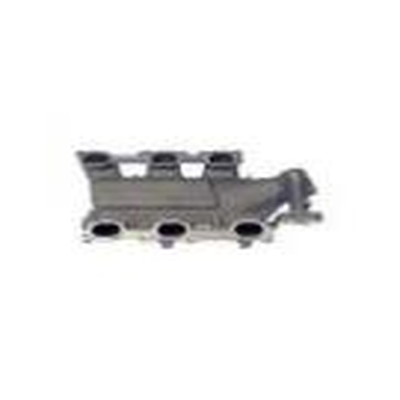
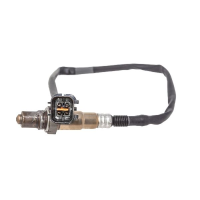
Below are the parts most often responsible for code P1096, ranked by how frequently each one is the actual culprit (per the diagnosis above). Tap any to see what we have for your vehicle.


The information in this article is provided for general reference and educational purposes only. Vehicle specifications, procedures, and part compatibility can vary by production date, trim level, and region. Always consult your vehicle's factory service manual and verify part numbers before purchasing or performing repairs. Safety-critical components such as airbags, seat belts, and braking systems should be installed by a qualified professional.
- 🧭 Diagnostic Flowchart
- 🛍️ Shop This Part
- What Does P1096 Mean?
- Can I Drive With P1096?
- Common Causes
- Symptoms
- Common Fixes & Costs
- DIY vs Professional
- Used vs. New Parts: Buying Guide
- What Happens If You Wait — Timeline
- Cost of Not Fixing It
- Diagnosis Steps
- When This Code Triggers (Freeze-Frame Conditions)
- Related Codes
- Climate & Environmental Factors
- How to Talk to a Mechanic About This Code
- Where to Take It: Dealer vs Independent vs Chain
- When to Walk Away From the Repair
- What Scan Tool You Need for This Code
- How to Clear the Code After You Fix It
- Will This Fail Emissions / State Inspection?
- Most Commonly Affected Vehicles
- Manufacturer-Specific Notes
- Real Owner Stories
- 2008 Subaru WRX STI - The Inevitable TGV Failure
- 2007 Porsche 911 (997) - The MAF Sensor Misdiagnosis
- 2013 Volkswagen GTI - The Warranty Extension Save
- 2010 BMW 335i (E90) - The Lazy O2 Sensor
- How to Prevent This Code From Triggering
- Frequently Asked Questions
- Can I just clean the Tumble Generator Valve on my Subaru?
- What happens if I ignore a P1096 code?
- Why does the P1096 code have so many different meanings?
- My mechanic replaced the MAF sensor on my Porsche, but the P1096 code came back. What now?
- Can a bad battery or alternator cause a P1096 code?
- Can a clogged catalytic converter cause a P1096 code?
- What should the voltage be on a good MAF sensor?
- What is a TGV delete and should I do it?
- Key Takeaways
- 🎟️ Get 5% Off