

P1098 on 2012-2018 Ford Focus 2.0L GDI: Unconfirmed Code and Guide to IMRC Faults (P2004, P2008)
P1098 is not a recognized trouble code for the 2012-2018 Ford Focus. If your scanner shows this code, it is almost certainly an error. The actual problem is likely with the Intake Manifold Runner Control (IMRC) system, which sets codes like P2004 or P2008. The most common fix is replacing the entire intake manifold assembly due to carbon buildup causing the internal flaps to stick.
- Do not trust a P1098 code on a 2012-2018 Ford Focus; it is almost certainly a scanner error.
- The real problem is with the Intake Manifold Runner Control (IMRC), which will set codes like P2004 or P2008.
- The most common cause of failure on this specific engine is the internal IMRC flaps sticking from carbon buildup.
- The standard repair is to replace the entire intake manifold assembly, which is a moderately difficult DIY job (3/5).
- Before replacing the manifold, perform simple checks on the vacuum lines and IMRC solenoid to rule out an easier fix.
What's Unique About the 2012-2018 Ford Focus
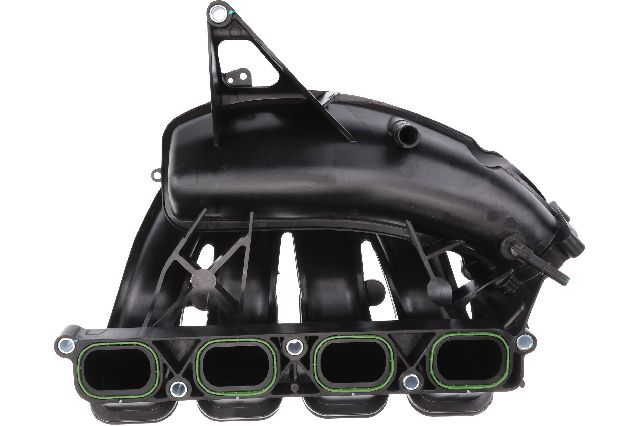
The 2012-2018 Ford Focus (Mk3) with the 2.0L GDI engine is known for issues with its IMRC system. Unlike the previous generation where a faulty control solenoid was the most common culprit, this generation's primary failure point is the intake manifold assembly itself. The internal runner flaps can become clogged with carbon deposits, a common side effect of Gasoline Direct Injection (GDI) engines, causing them to bind or stick. This mechanical failure is distinct from the electrical faults seen in other vehicles and often requires replacing the entire manifold.
Symptoms You May Notice
- Significant loss of power and torque below ~3,000 RPM, with power returning suddenly above that threshold.
- Engine feels sluggish or hesitates on acceleration.
- Rough or unstable idle.
- Check Engine Light is illuminated.
- Noticeable decrease in fuel economy by 10-15%.
- Replacing only the IMRC control solenoid when the true fault is mechanical binding of the flaps inside the intake manifold.
- Assuming a P1098 code is correct and attempting to diagnose a non-existent problem, instead of re-scanning with a better tool to find the true P20xx code.
- Replacing the intake manifold when the fault is a simple vacuum leak or a failed solenoid.
Most Likely Causes
- Intake Manifold Runner Flaps Sticking Due to Carbon Buildup 🔴 High Probability → Shop Engine Intake Manifold Gasoline Direct Injection (GDI) engines like the 2.0L Ti-VCT are susceptible to carbon accumulation on intake components because fuel is injected directly into the cylinder, meaning it doesn't wash over and clean the intake runners and valves. Over time, this buildup physically jams the plastic flaps.
How to confirm: After ruling out simpler issues, the intake manifold must be removed for visual inspection. The flaps should move freely by hand. If they are stiff, binding, or caked in carbon, this is the cause. This is the most common cause for a P2004 or P2006 code.
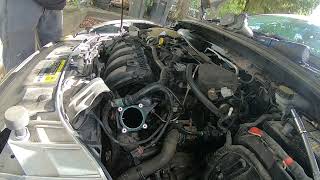
Typical fix: The most reliable and common fix is to replace the entire intake manifold assembly. 🎬 Watch: Step-by-step guide to replacing the intake manifold. While cleaning is sometimes attempted, it is labor-intensive and often doesn't provide a long-term solution.
Est. part cost: $150-$350 - Failed IMRC Control Solenoid 🟡 Medium Probability This is the most common cause of a P2008 (Circuit Open) code. The solenoid pack, which controls vacuum to the actuator, can fail electrically due to heat and vibration.
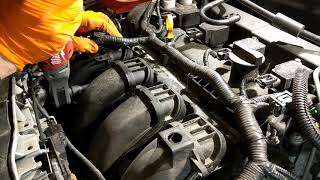
How to confirm: Test the solenoid's electrical resistance with a multimeter; a healthy one should read around 32-34 Ohms. 🎬 See how to test the IMRC solenoid with a multimeter. An infinite reading ('OL') indicates an open circuit. A popular field test is to swap the electrical connectors and corresponding vacuum hoses between the two solenoids in the pack. If the code changes from P2008 to P2009, the solenoid is confirmed bad.
Typical fix: Replace the IMRC solenoid pack/assembly. It is typically sold as a dual-solenoid unit on a single bracket.
Est. part cost: $30-$80 - Failed IMRC Vacuum Actuator ⚪ Low Probability The actuator diaphragm can tear or leak over time, preventing it from holding vacuum and moving the runner flaps.
How to confirm: Disconnect the vacuum line from the actuator and connect a hand-held vacuum pump. If the actuator fails to hold vacuum or does not move the linkage arm when vacuum is applied, it has failed.
Typical fix: Replace the IMRC actuator. On many aftermarket intake manifolds, this part is included and pre-installed.
Est. part cost: $50-$100 - Cracked or Disconnected Vacuum Lines ⚪ Low Probability
How to confirm: Visually inspect all rubber vacuum hoses running to and from the IMRC solenoid and actuator for cracks, splits, or loose connections. Spraying carb cleaner near the hoses with the engine running can help identify leaks if the engine RPM changes.
Typical fix: Replace the damaged section of vacuum hose.
Est. part cost: $5-$15
Rare But Worth Checking
- Chafed Wiring Harness (TSB 18-2062):
Diagnosis Steps
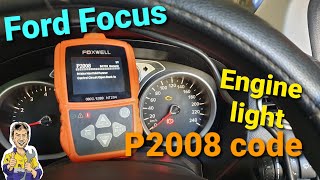
- First, confirm the code with a high-quality, Ford-specific scan tool. Do not proceed with any repairs based on a P1098 code. Expect to find a code like P2004, P2006, or P2008.
- If P2008 is present, locate the IMRC control solenoid pack near the transmission dipstick. Inspect wiring and connectors. Test the suspect solenoid's resistance with a multimeter (should be ~32-34 ohms). Perform the 'solenoid swap test' by swapping electrical plugs and vacuum lines with the adjacent solenoid. Clear codes and re-scan. If the code changes to P2009, the solenoid is faulty.
- If P2004 or P2006 is present, start by inspecting all vacuum lines connected to the IMRC system for obvious cracks, breaks, or disconnections.
- Locate the IMRC actuator on the side of the intake manifold. Connect a hand-held vacuum pump to its port. Apply vacuum and watch if the actuator arm moves the runner linkage. It should move smoothly and hold vacuum. If it doesn't, the actuator diaphragm is torn.
- If the solenoid and actuator test good, the problem is almost certainly the runner flaps sticking inside the intake manifold.
- For 2012-2014 models, inspect the engine wiring harness for chafing near the intake manifold, per TSB 18-2062, especially if multiple electrical codes are present.
- The final diagnostic step is to remove the intake manifold and physically check the movement of the flaps. They should rotate easily with no binding.
Parts You'll Likely Need
- Intake Manifold Assembly
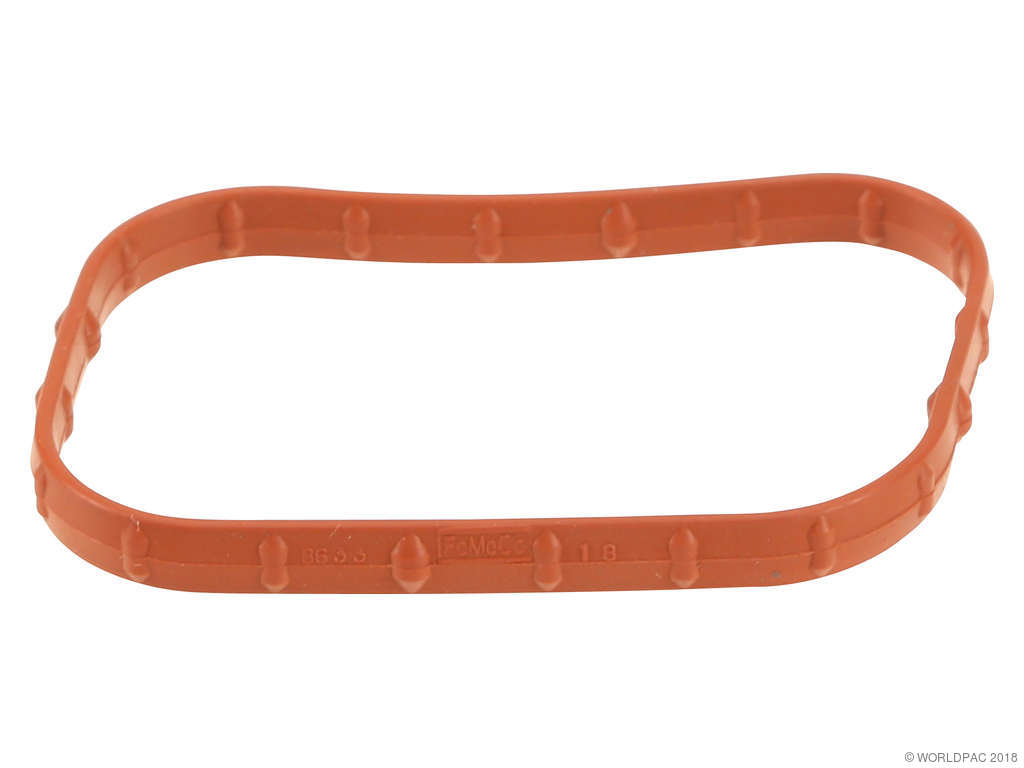
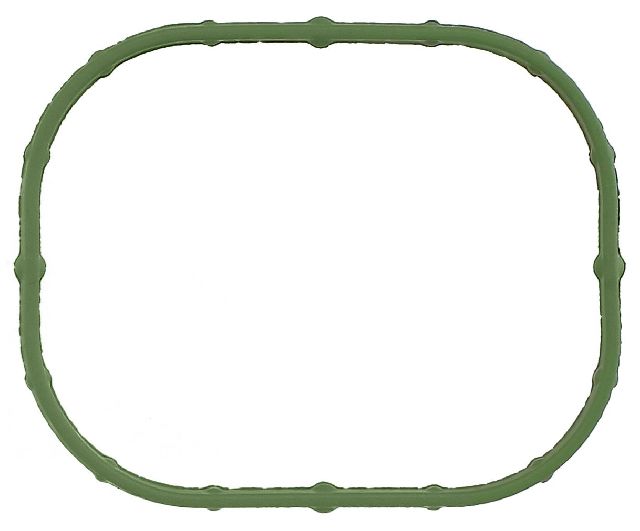
(OEM #CP9Z-9424-D)— This is the most common failure for P2004/P2006. The internal flaps bind with carbon, and the entire assembly is replaced as a unit. This part typically includes a new actuator and gaskets.
Trusted brands: Motorcraft (OEM), Dorman (615-375)
OEM price range: $250-$400
Aftermarket price range: $150-$250 - Intake Manifold Runner Control Solenoid
(OEM #3S4Z-9J559-AA)— The most common fix for a P2008 code. Though less common on this generation than the manifold itself, an electrical failure of the solenoid will prevent the system from working. Note: Part number is from the previous generation but is widely cross-referenced; verify fitment.
Trusted brands: Motorcraft, Standard Motor Products (SMP)
OEM price range: $60-$100
Aftermarket price range: $30-$50
Related Codes That Often Appear With This One
- P2004 — This is the correct Ford code for 'Intake Manifold Runner Control Stuck Open', which is the most likely mechanical failure.
- P2008 — This is the correct Ford code for 'Intake Manifold Runner Control Circuit Open', indicating an electrical failure, most often in the control solenoid.
- P2006 — This code for 'Intake Manifold Runner Control Stuck Closed' can also occur if the flaps are binding.
- P2009 — This code for 'IMRC Circuit Low' may appear after performing a 'solenoid swap test' if the original P2008 code was caused by a faulty solenoid.
Technical Service Bulletins (TSBs) & Recalls
- TSB 18-2062: 2.0L GDI - Various Drivability Concerns And/Or Illuminated MIL due to wiring harness chafing near the intake manifold.
Platform-Specific Known Issues
- TSB 18-2062 was issued for 2012-2014 Focus models for a wiring harness that could chafe against the intake manifold. This can cause an intermittent short-to-ground, resulting in a wide range of electrical DTCs (including many related to throttle and engine sensors) and drivability problems like rough running, loss of power, or no-start. While not directly citing IMRC codes, it's a critical check for any electrical issue in this area.
Mechanic-Grade Diagnostic Values
- IMRC Solenoid Electrical Resistance — expected: 32-34 Ohms. Failure: An infinite reading ('OL') indicates an open circuit and a failed solenoid.
- Engine Vacuum at Idle — expected: 15-22 in-Hg (51-74 kPa). Failure: A reading significantly lower than 15 in-Hg or an oscillating needle can indicate vacuum leaks or other engine mechanical issues.
- IMRC Solenoid Harness Voltage — expected: ~12V (Battery Voltage). Failure: No voltage at the power pin of the harness connector (with key on, engine off) indicates a blown fuse or a break in the power wire.
Scan Tool Commands That Help
- Ford IDS / High-End Bidirectional Scanner: IMRC Solenoid 'Active Test' or 'Output State Control' — Use this to command the IMRC solenoid on and off to audibly check for a 'click'. This quickly verifies if the PCM, wiring, and solenoid are capable of functioning. No click points to a hard electrical failure. This test is crucial for diagnosing a P2008 before performing manual resistance checks.
Wiring & Ground Locations
- G104 / G105 — Located on the left front and left side of the motor compartment, respectively. A main ground point is also commonly found under the air box.. A poor engine ground can cause a variety of intermittent electrical faults and incorrect sensor readings. While not a primary cause for IMRC codes, ensuring these grounds are clean and tight is a fundamental step in diagnosing any electrical issue, including a P2008.
- IMRC Solenoid Connector — On the dual solenoid pack located on the top-right side of the engine, near the transmission dipstick.. This is the primary connection to test for power, ground, and resistance for a P2008 code. The connector and its wiring are susceptible to heat damage in this location.
- Main Engine Harness Routing — The harness runs behind and around the intake manifold and throttle body.. Per TSB 18-2062, this area is a known chafe point on 2012-2014 models. Abrasion can cause shorts or opens in various circuits, including the IMRC solenoid control wire, leading to a P2008 or other codes.
Real Owner Repair Stories
- Australian Ford Forums user (2010 Ford Focus (similar Duratec engine design)) — Car ran perfectly fine after resetting a P2008 code, but the code and severe lack of power would return within a day or two.
❌ Tried (didn't work) Resetting the code provided only a temporary fix.
✅ What actually fixed it Replacing the dual IMRC solenoid pack fixed the problem permanently. The fault code cleared on its own and did not return. - Ford Owners Club forum user (Ford Focus 2.0 Petrol (Mk2)) — P2008 code and associated power loss.
❌ Tried (didn't work) Initial research pointed to many possible causes.
✅ What actually fixed it The user confirmed the fault by swapping the electrical connectors and vacuum lines between the two solenoids on the pack. This caused the fault to move, confirming one solenoid was bad. Replacing the dual solenoid assembly resolved the P2008 code. - YouTube user 'Jabo the Mechanic' (2004 Ford Focus 2.3L) — P2004 code (Intake Manifold Runner Stuck Open).
❌ Tried (didn't work) Visual inspection showed the actuator and flaps appeared to move freely.
✅ What actually fixed it Using a hand vacuum pump, the technician found no vacuum was being supplied to the actuator. Tracing the line back, he discovered a small, common crack in the 5/32" vacuum hose right at the connection nipple. Replacing the small section of hose restored vacuum and fixed the P2004 code.
OEM Part Supersession History
CP9Z-9424-B, CP9Z-9424-C→CP9Z-9424-D— Standard part revision and improvement by the manufacturer.
Heads up: The newer 'D' revision is a direct replacement for the older 'B' and 'C' versions and is the correct service part.1S7Z-9J559-BA→3S4Z-9J559-AA— Part number update for the IMRC solenoid pack.
Heads up: This part is primarily for the previous generation Focus but is widely cross-referenced and used for the 2012-2018 models as well. Always verify fitment with VIN, but it is generally considered compatible.
Model Year Variations Within This Range
- 2012-2014: These earlier models are specifically cited in TSB 18-2062 for potential wiring harness chafing against the intake manifold. While the IMRC components are the same, these years have a higher documented risk of related electrical faults stemming from this issue.
Diagnostic Flowchart
Other Known Issues on This Vehicle
Issues unrelated to this code that are worth knowing about as an owner of this generation:
- DPS6 PowerShift Automatic Transmission Failure 🔴 High — Extremely common on 2012-2016 models. Symptoms include shuddering, jerking, hesitation from a stop, and complete loss of drive. Onset can be as early as 10,000-30,000 miles. (Ref: Multiple class-action lawsuits and customer satisfaction programs (e.g., 14M01, 14M02) extended warranty on clutch and TCM, but did not solve the fundamental design flaw.)
- Faulty Canister Purge Valve (CPV) 🟠 Medium — Widespread issue affecting 2.0L GDI engines, leading to a recall. Symptoms include rough idle, stalling after refueling, and difficulty starting. (Ref: NHTSA Recall 18V-735 (Ford 18S32). The recall involves reprogramming the PCM and, if the valve is faulty, replacing it. A stuck valve could cause a vacuum in the fuel tank, deforming it.)
- Sudden Loss of Power Steering Assist 🔴 High — Less common than transmission issues, but reported frequently enough to be a known concern. Can occur at any speed, causing a 'Steering Assist Fault' message. (Ref: No specific recall, but numerous NHTSA complaints. The fix often requires replacing the entire electronic power steering rack assembly.)
- Engine Wiring Harness Chafing 🟠 Medium — Primarily affects 2012-2014 models. The harness can rub against the intake manifold, causing various electrical faults. (Ref: TSB 18-2062 provides a diagnostic and repair procedure.)
Used vs. New Parts: Buying Guide for This Vehicle
When a used part is the smart pick: A used IMRC solenoid pack is a reasonable choice if sourced from a low-mileage vehicle, as it is a simple electrical component that is easy to test and replace. A used wiring harness pigtail can also be a cost-effective repair for a damaged connector.
Donor-vehicle mileage cap: roughly under 75000 miles for the part to have meaningful remaining life.
What to inspect on the donor part:
- For a solenoid, ensure the plastic housing is not cracked and the vacuum nipples are intact.
- For a used intake manifold (NOT RECOMMENDED), you MUST be able to physically actuate the runner flap linkage by hand. If there is any binding, stiffness, or gritty feeling, the part is already failing and should be rejected.
- Check the plastic actuator linkage arm for any stress marks or cracks.
OEM-only on this vehicle (don't cheap out):
- Intake Manifold Assembly: Due to the high failure rate from internal carbon buildup and flap wear, buying a used manifold is a major gamble. Aftermarket options like Dorman have widespread reports of fitment issues, lower-quality plastic, and even measurable horsepower loss. For long-term reliability, the OEM Motorcraft part is strongly recommended.
Aftermarket brands forum-validated for this vehicle:
- Standard Motor Products (SMP) for the IMRC solenoid is a well-regarded alternative to OEM.
Brands owners have reported issues with on this vehicle:
- Dorman (for the intake manifold): Multiple owner and forum reports cite issues with the Dorman 615-375 manifold, including coolant bypass caps blowing off, the use of self-tapping screws into plastic instead of metal inserts, and a noticeable loss of performance compared to the Ford OEM part.
Real Owner Stories
Aggregated from forums and TSBs cited above. Mileages and costs reflect what owners reported in those sources.
2012-2018 Ford Focus 2.0L GDI
Symptoms: Sluggish performance below 4k RPM; the car felt underpowered until reaching higher revs.
What fixed it: The issue was confirmed to be related to the IMRC system, requiring either solenoid replacement or a new intake manifold.
Source hint: Reddit r/FordFocus discussion titled 'Code P2004?'
2004 Ford Focus ZX3 (Shared Architecture)
Symptoms: The owner went through a frustrating process of replacing solenoids to no effect while chasing a P2004 code.
What fixed it: Replacing the intake manifold itself because the internal runner flaps were the actual point of failure.
Source hint: Reddit r/FordFocus thread '2004 Ford Focus ZX3 Throwing Err code P2004...'
2012-2018 Ford Focus 2.0L GDI
Symptoms: Check engine light with code P2008 and associated drivability symptoms.
What fixed it: Replacing the IMRC solenoid pack/assembly.
Source hint: Ford Owners Club forum thread 'P2008 Fix Worked!'
Related OBD-II Codes
Frequently Asked Questions
Does TSB 18-2062 apply to my 2015 Ford Focus with a P1098 code?
My 2013 Focus is sluggish until 3,000 RPM where power suddenly returns. Is this a transmission issue?
Can I just clean the carbon buildup off the intake flaps to fix the P1098/P2004 code?
How can I tell if my IMRC solenoid is bad without buying a new one?
Is the P1098 code related to the recent Ford recall for the canister purge valve?
Helpful Videos

We Have This Part in Stock

The information in this article is provided for general reference and educational purposes only. Vehicle specifications, procedures, and part compatibility can vary by production date, trim level, and region. Always consult your vehicle's factory service manual and verify part numbers before purchasing or performing repairs. Safety-critical components such as airbags, seat belts, and braking systems should be installed by a qualified professional.
- Ford Focus:
- 🧭 Diagnostic Flowchart
- 🎬 Helpful Videos
- 🛍️ Shop This Part
- What's Unique About the 2012-2018 Ford Focus
- Symptoms You May Notice
- Most Likely Causes
- Rare But Worth Checking
- Diagnosis Steps
- Parts You'll Likely Need
- Related Codes That Often Appear With This One
- Technical Service Bulletins (TSBs) & Recalls
- Platform-Specific Known Issues
- Mechanic-Grade Diagnostic Values
- Scan Tool Commands That Help
- Wiring & Ground Locations
- Real Owner Repair Stories
- OEM Part Supersession History
- Model Year Variations Within This Range
- Other Known Issues on This Vehicle
- Used vs. New Parts: Buying Guide for This Vehicle
- Real Owner Stories
- 2012-2018 Ford Focus 2.0L GDI
- 2004 Ford Focus ZX3 (Shared Architecture)
- 2012-2018 Ford Focus 2.0L GDI
- Related OBD-II Codes
- Frequently Asked Questions
- 🎟️ Get 5% Off