

P1101 on 2013-2020 Buick Encore: Intake Airflow Fault Causes & Fixes
On a 2013-2020 Buick Encore, code P1101 is most often caused by a vacuum leak from the engine's PCV system, specifically a failed diaphragm in the valve cover or a missing check valve in the intake manifold. This is a well-documented design flaw. Replacing the valve cover and inspecting/replacing the intake manifold (or installing a fix kit) is the most common and reliable repair.
- P1101 on a Buick Encore is almost always caused by a vacuum leak, not a bad sensor.
- The most likely source of the leak is the engine's PCV system, specifically the valve cover diaphragm or the intake manifold check valve.
- Before replacing any parts, listen for a hissing noise and check for strong vacuum at the oil cap when the engine is running.
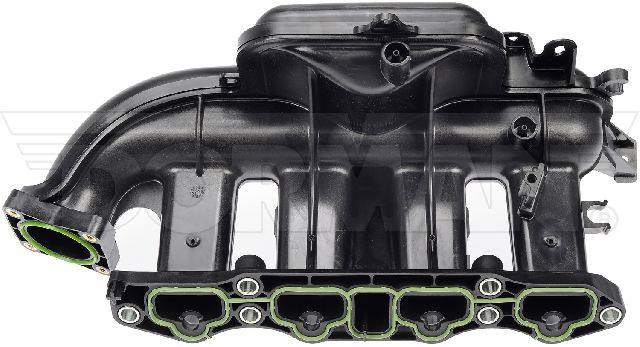
- Always inspect the intake manifold's orange check valve before replacing the valve cover. If it's missing, the intake manifold must also be replaced to prevent the new valve cover from failing.
- Check for simpler issues like a loose air intake hose at the throttle body before committing to major repairs.
What's Unique About the 2013-2020 Buick ENCORE

The 1.4L Turbo engine (LUV/LUJ/LE2) used in the Buick Encore and its platform mates has a well-documented, near-100% failure rate of its PCV (Positive Crankcase Ventilation) system, which directly causes the P1101 code. 🎬 Watch: A complete walkthrough of the P1101 diagnostic and repair. Unlike many engines, the key PCV system components are integrated. A small, orange, non-serviceable check valve inside the plastic intake manifold can degrade and get sucked into the engine. This allows high-pressure turbo boost to enter the crankcase, which then ruptures a rubber diaphragm located in the valve cover. The torn diaphragm creates a massive vacuum leak that the ECM cannot account for, triggering the P1101 code, often along with a P0171 (System Too Lean) code.
Diagnostic Flowchart

Tap your situation to follow the diagnostic path that matches what you're seeing on this vehicle.
Symptoms You May Notice
- Check Engine Light is on
- Rough or unstable idle, sometimes feeling like the car will stall
- Loud hissing, sucking, or whistling noise from the engine bay, especially at idle
- Reduced engine power and poor, hesitant acceleration
- Strong vacuum making the oil filler cap difficult to remove when the engine is running
- Poor fuel economy
- Engine may stall when coming to a stop
- Oil consumption or external oil leaks from seals (in advanced cases)
- Replacing only the Mass Airflow (MAF) sensor. Many mechanics or owners will replace the MAF sensor first, but the code often returns because the root cause is a PCV vacuum leak, not a faulty sensor.
- Replacing the oxygen (O2) sensors. The P1101 is often accompanied by a P0171 lean code, which can be caused by a bad O2 sensor. However, on this engine, the root cause is almost always a vacuum leak, not the sensor itself.
Most Likely Causes

- Failed PCV System (Valve Cover and/or Intake Manifold) 🔴 High Probability The 1.4L engine has a known design flaw where the PCV regulator diaphragm in the valve cover tears and a non-serviceable check valve in the intake manifold fails and gets ingested by the engine. This is the most common cause of P1101 on this platform.
How to confirm: With the engine running, listen for a distinct hissing sound from the top of the engine. Try to remove the oil filler cap; if a very strong vacuum holds it on, the PCV diaphragm in the valve cover has failed. Visually inspect the intake manifold's PCV port (after removing the connecting hose) for a small orange check valve; if it's missing, the manifold has failed and must be replaced or have a bypass kit installed.
Typical fix: Replace the valve cover (which contains the new PCV diaphragm). If the intake manifold check valve is missing, the intake manifold must also be replaced. Alternatively, several aftermarket kits (e.g., from CruzeKits.com) allow you to install an external check valve, bypassing the need to replace the entire manifold. It is critical to address the missing intake manifold check valve, as a bad manifold will cause the new valve cover diaphragm to rupture again quickly.
Est. part cost: $70-$450 - Vacuum Leak from Hoses or Gaskets 🟡 Medium Probability Engine bay heat can make plastic and rubber hoses brittle. A cracked charge air cooler (CAC) outlet hose at the throttle body is a known issue, specifically addressed by GM.
How to confirm: Perform a visual inspection of all intake and vacuum hoses for cracks or loose connections. A smoke test is the most effective way to pinpoint the location of a leak. TSB #18-NA-333 advises technicians to simply loosen the clamp, remove, and properly reseat the charge air cooler outlet air hose at the throttle body to fix a potential poor seal.
Typical fix: Replace the cracked hose or faulty gasket. In the case of TSB #18-NA-333, the fix is to simply reseat the hose correctly, as no parts may be required.
Est. part cost: $20-$150 - Dirty or Faulty Mass Airflow (MAF) Sensor ⚪ Low Probability → Shop Fuel Injection Air Flow Meter While less common than PCV issues, oil vapor drawn through the intake from a faulty PCV system can contaminate the MAF sensor, causing incorrect readings. However, this is usually a symptom of the PCV failure, not the root cause.
How to confirm: Remove the MAF sensor and inspect the delicate sensing wires for dirt, oil, or debris. You can try cleaning it with a dedicated MAF sensor cleaner spray. Do not touch the wires. On a scan tool, a faulty MAF may show readings that don't correlate with calculated airflow.
Typical fix: Clean the MAF sensor. If cleaning does not resolve the issue, or if the sensor fails diagnostic tests, replace the sensor. Some owners report that using non-OEM sensors can cause persistent issues.
Est. part cost: $20 (cleaner) - $150 (sensor) - Incorrect or Improperly Installed Air Cleaner Housing ⚪ Low Probability TSB #PIP5240F notes that the wrong air cleaner housing may have been installed on some vehicles, which affects airflow calculations and can trigger P1101. This can happen if the part was replaced with one from a different but similar-looking engine.
How to confirm: Inspect the air cleaner housing to ensure it is the correct part for your specific engine (LUV or LE2) and that it is seated correctly with no gaps. The TSB provides images for comparison.
Typical fix: Replace the air cleaner housing with the correct OEM part.
Est. part cost: $100-$200
Rare But Worth Checking
- Plugged PCV Orifice Causing High Crankcase Pressure: → Shop PCV Valve TSB #20-NA-047 describes a condition where a plugged PCV orifice in the camshaft cover leads to excessive positive crankcase pressure, which can trigger P1101 and also cause crankshaft oil seal leaks. This is different from the more common vacuum leak scenario and requires cleaning or replacing a small orifice (Part No. 12641875).
Diagnosis Steps
- Check for Technical Service Bulletins (TSBs) related to P1101 for your vehicle's year and engine. Key TSBs include 18-NA-333, 20-NA-047, and PIP5240F.
- Start the engine and listen for an audible hissing or whistling noise from the engine cover, which strongly indicates a ruptured PCV diaphragm in the valve cover.
- With the engine running, carefully try to remove the oil cap. If it's held on by strong vacuum ('vacuum lock'), this is a definitive confirmation of a failed PCV diaphragm.
- Remove the PCV tube from the intake manifold and shine a light inside the port. Look for the orange, cone-shaped check valve. If it is missing, the intake manifold needs to be replaced or an external check valve kit must be installed.
- Inspect the air intake tube between the air filter box and the throttle body for any cracks or loose clamps. Per TSB #18-NA-333, pay close attention to the charge air cooler hose connection at the throttle body and ensure it's fully seated.
- If using a scan tool, observe MAF (g/s) and throttle opening (%) at hot idle. With a large vacuum leak, the throttle opening will be near zero and MAF will read significantly less than the expected ~1.4 g/s.
- If no obvious leaks are found, perform a smoke test on the intake system to identify hard-to-see cracks in hoses or gaskets.
- Remove and inspect the Mass Airflow (MAF) sensor. If it appears dirty, clean it with dedicated MAF sensor cleaner and re-test. Check for oil contamination, which points back to the PCV system.
Parts You'll Likely Need
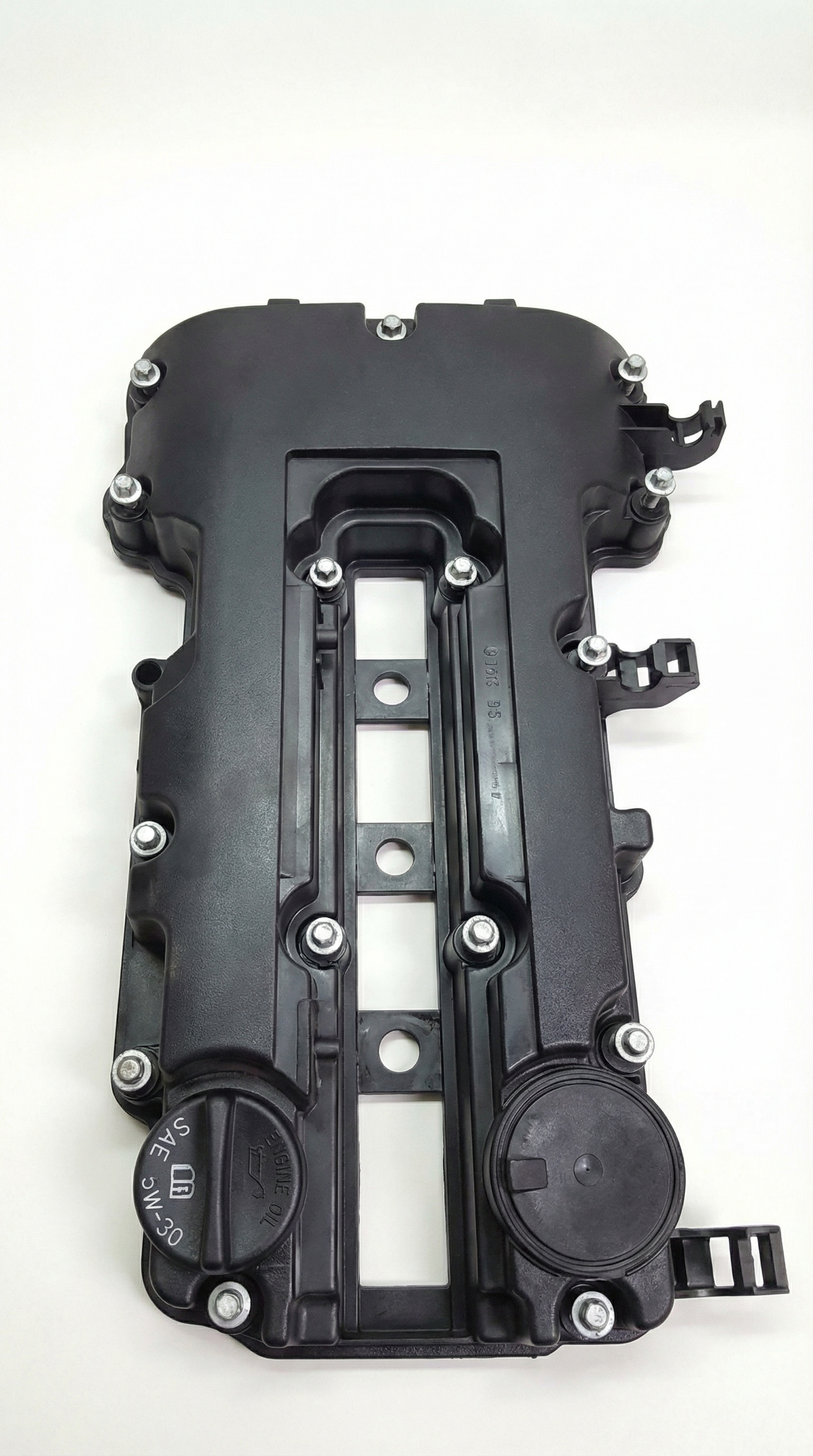
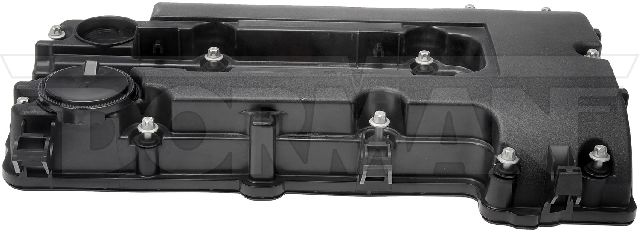
- Engine Valve Cover
(OEM #25203036 (replaces 25198874))— This is the most common failure. The part contains the integrated PCV diaphragm which is not sold separately. A tear in the diaphragm creates a large vacuum leak.
Trusted brands: ACDelco (GM Genuine), Dorman (e.g., 264-968)
OEM price range: $120-$180
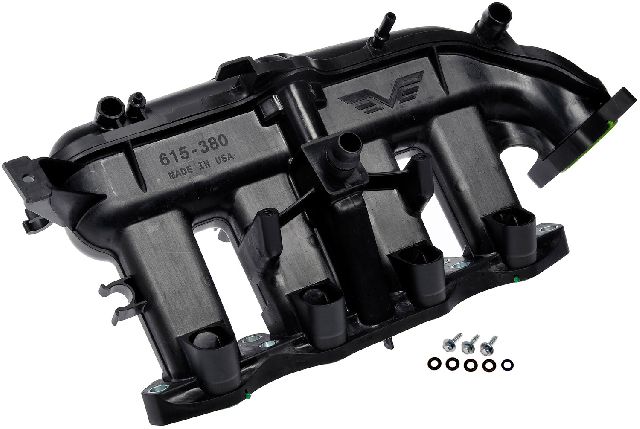
Aftermarket price range: $70-$130 - Intake Manifold
(OEM #25200449 (replaces 55573248))— Required if the internal PCV check valve is missing. A failed check valve allows unregulated boost pressure to rupture the diaphragm in the valve cover, so both parts must be addressed.
Trusted brands: ACDelco (GM Genuine)
OEM price range: $200-$250
Aftermarket price range: N/A - PCV System Fix Kit — An aftermarket alternative to replacing the entire intake manifold. These kits provide an external check valve to bypass the failed internal one. This is a popular and cost-effective repair.
Trusted brands: CruzeKits.com
OEM price range: N/A
Aftermarket price range: $80-$150 - Charge Air Cooler Outlet Hose
(OEM #42698921)— A less common but known failure point is a crack in this hose, which connects the intercooler to the throttle body, creating a vacuum/boost leak.
Trusted brands: ACDelco (GM Genuine)
OEM price range: $50-$80
Aftermarket price range: $30-$60
Related Codes That Often Appear With This One
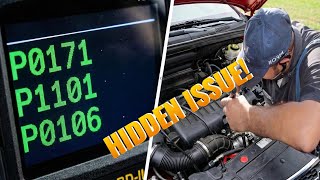
- P0171 — System Too Lean (Bank 1). This code is frequently seen with P1101 because the unmetered air from a vacuum leak creates a lean air/fuel mixture that the ECM detects via the oxygen sensors.
- P0106 — Manifold Absolute Pressure (MAP) Sensor Performance. A large vacuum leak from the PCV system causes the MAP sensor readings to be out of the expected range, triggering this code alongside P1101.
- P0300 — Random/Multiple Misfire Detected. A lean air/fuel mixture can lead to unstable combustion, causing misfires, especially at idle.
- P0299 — Turbocharger Underboost. The same vacuum leaks that cause P1101 can sometimes affect the turbo system's ability to build and hold boost pressure.
Technical Service Bulletins (TSBs) & Recalls
- TSB #20-NA-047: Addresses a plugged PCV orifice causing high crankcase pressure, oil leaks, and a P1101 code.
- TSB #18-NA-333: Points to a poorly seated charge air cooler (CAC) outlet hose at the throttle body causing a whistle and P1101. Advises reseating the hose, not replacing parts.
- TSB #PIP5240F: Warns that an incorrect air cleaner housing may be installed, causing airflow calculation errors and P1101.
Platform-Specific Known Issues
- The PCV system design on the 1.4L Turbo engine is the single most significant vehicle-specific issue. The failure of the internal intake manifold check valve directly leads to the failure of the valve cover diaphragm, creating a chain reaction that makes replacing only one component an incomplete repair.
- Aftermarket 'PCV Fix Kits' are widely available and popular in the owner community for the Chevy Cruze, Sonic, and Encore. These kits bypass the faulty internal check valve with a more robust, externally-serviceable one, providing a more permanent solution than replacing the manifold with another OEM part that is prone to the same failure.
Mechanic-Grade Diagnostic Values
- Mass Airflow (MAF) at hot idle — expected: Approximately 1.4 g/s. This should loosely mirror the engine displacement in liters.. Failure: With a significant vacuum leak (like a torn PCV diaphragm), the reading will be significantly less than 1.4 g/s, and the throttle opening percentage will be near zero.
- Long Term and Short Term Fuel Trims at idle — expected: Within +/- 10%. Failure: When P1101 is caused by a vacuum leak, fuel trims will be highly positive, often maxing out (e.g., 70%) as the ECM tries to compensate for the unmetered air.
- Mass Airflow (MAF) Sensor Voltage at Key On, Engine Off (KOEO) — expected: Near 0 volts.. Failure: A reading that is significantly above zero or fluctuating with the engine off indicates a faulty MAF sensor or wiring issue.
Hidden / Shadow Codes Worth Checking
- P1101-00: The '-00' suffix indicates the standard P1101 fault without any additional manufacturer-specific sub-faults or symptom bytes. It does not provide deeper diagnostic information. (see via Most standard OBD-II scanners)
Scan Tool Commands That Help
- Manual Procedure (No Scan Tool): Throttle Body Relearn/Idle Learn Procedure — After cleaning or replacing the throttle body, or after repairs that affect idle characteristics like replacing the valve cover or intake manifold. An un-calibrated throttle can cause rough idle or stalling. A generic procedure involves turning the ignition on (engine off) for a minute, slowly pressing the gas pedal to the floor and releasing, turning the ignition off, and then starting the engine to let it idle for several minutes.
Wiring & Ground Locations
- MAF Sensor Connector — On the air filter housing, connecting directly to the MAF sensor.. A poor connection, corroded pins, or damaged wiring at this connector can cause incorrect MAF sensor readings, directly triggering a P1101 code. The connector has a locking tab that must be secured.
- Engine Compartment Fuse Block — Located in the engine bay, typically on the driver's side.. This fuse block contains fuses and relays for critical engine components, including the ECM and potentially the MAF sensor circuit. A blown fuse could cause the MAF to lose power, leading to a P1101 code.
Real Owner Repair Stories
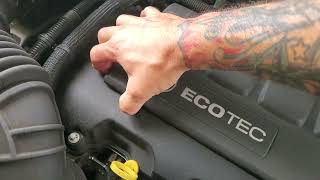
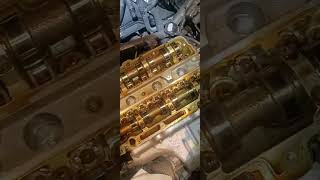
- YouTube channel 'Fixing the Infamous GM / Chevy P1101' (Buick Encore w/ 1.4L EcoTec engine) — Check Engine Light with code P1101, feeling of no turbo boost.
❌ Tried (didn't work) Replaced valve cover with new diaphragm, Installed aftermarket external PCV check valve kit (CruzeKits), Cleaned the throttle body, Replaced the MAF sensor with a new Bosch unit, Replaced O-rings on the oil cap and dipstick
✅ What actually fixed it The final root cause was a cracked intercooler hose (charge air cooler pipe). Replacing the hose (GM Part #42698921) resolved the P1101 code. - ScannerDanner Forum user (2019 Buick Encore w/ 1.4L Turbo engine) — P1101 and P0171, long term and short term fuel trims maxed out at idle (70%).
❌ Tried (didn't work) Initial diagnosis pointed towards a vacuum leak.
✅ What actually fixed it The owner confirmed the PCV check valve in the intake manifold was missing and there was strong vacuum at the valve cover. An aftermarket PCV fix kit from CruzeKits.com was installed. After finding and fixing a vacuum leak on the newly installed kit itself, the car was fixed and fuel trims returned to normal (around 18%).
"I Checked Everything" — The Actual Cause
- In one documented case, a user performed multiple common fixes including replacing the valve cover, MAF sensor, and installing a PCV bypass kit, and also checked for vacuum leaks with starting fluid without finding any. The P1101 code persisted. The ultimate cause was a crack in the plastic charge air cooler (intercooler) pipe, which may not always be obvious during a low-pressure smoke test but opens up under boost or engine movement.
OEM Part Supersession History
25198874 (Valve Cover)→25209141 (also seen as 25203036 in Pass 2).— Standard part revision by the manufacturer.55573248 (Intake Manifold)→25200449.— Part number update. A Q&A with a parts supplier suggests the updated part is intended to fix the PCV check valve failure issue.25200449 (Intake Manifold)→28289977.— Standard part revision by the manufacturer.
Model Year Variations Within This Range
- 2013-2016 (approx.): Primarily used the 1.4L LUV engine (VIN B). The PCV failure mode is well-established for this engine.
- 2016-2020 (approx.): Introduced the updated 1.4L LE2 engine (VIN M). While the LE2 was an evolution of the LUV, forum and TSB evidence suggests it suffers from the exact same PCV system design flaw (failed intake check valve and torn valve cover diaphragm) that causes code P1101. Therefore, the diagnostic and repair procedures are identical for both engines within this vehicle's year range.
Helpful Videos

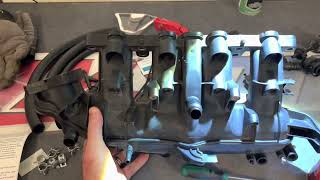
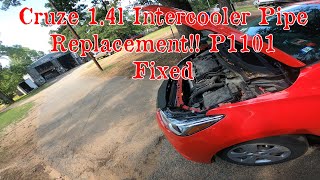
Used OEM Parts in Stock
New Aftermarket Parts Available


The information in this article is provided for general reference and educational purposes only. Vehicle specifications, procedures, and part compatibility can vary by production date, trim level, and region. Always consult your vehicle's factory service manual and verify part numbers before purchasing or performing repairs. Safety-critical components such as airbags, seat belts, and braking systems should be installed by a qualified professional.
- Buick ENCORE:
- 🧭 Diagnostic Flowchart
- 🎬 Helpful Videos
- 🛍️ Shop This Part
- What's Unique About the 2013-2020 Buick ENCORE
- Symptoms You May Notice
- Most Likely Causes
- Rare But Worth Checking
- Diagnosis Steps
- Parts You'll Likely Need
- Related Codes That Often Appear With This One
- Technical Service Bulletins (TSBs) & Recalls
- Platform-Specific Known Issues
- Mechanic-Grade Diagnostic Values
- Hidden / Shadow Codes Worth Checking
- Scan Tool Commands That Help
- Wiring & Ground Locations
- Real Owner Repair Stories
- "I Checked Everything" — The Actual Cause
- OEM Part Supersession History
- Model Year Variations Within This Range
- 🎟️ Get 5% Off