

P1101 on 2013-2022 Buick Encore 1.4L Turbo: Intake Airflow Fault Causes and Fixes
On the 1.4L Turbo Buick Encore, code P1101 is almost always caused by a vacuum leak from the integrated PCV system. The most common fix is replacing the entire valve cover, which contains a failed diaphragm, and inspecting the intake manifold for a missing check valve. This is a well-known issue with this engine and its platform mates like the Chevy Cruze, Sonic, and Trax.
- P1101 on a 1.4L Encore almost always means there is a vacuum leak, not a bad MAF sensor.
- The most likely cause is a failed PCV system, which involves a torn diaphragm in the valve cover and often a failed check valve in the intake manifold.
- A simple test is to check for strong vacuum at the oil cap when the engine is running; if it's hard to remove, the valve cover has failed.
- When replacing the valve cover, you MUST inspect the intake manifold's internal check valve. If it's missing, the manifold must be repaired or replaced to prevent the new valve cover from failing again.
- Ignoring this code can lead to more expensive repairs, such as blown crankshaft seals.
What's Unique About the 2013-2022 Buick Encore
The 1.4L LUV/LE2 turbo engine used in the Encore and its platform mates (Chevy Cruze, Sonic, Trax) has a well-documented design flaw in its Positive Crankcase Ventilation (PCV) system. A non-serviceable check valve in the intake manifold fails, which then causes a diaphragm inside the valve cover to rupture under excessive vacuum or pressure. This creates a significant vacuum leak that the ECM detects as an airflow mismatch, triggering the P1101 code. This PCV system failure is the number one cause of P1101 on this specific platform, far more common than a faulty MAF sensor.
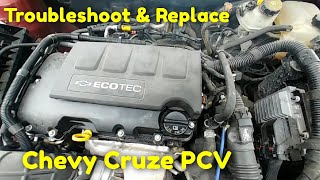
🎬 Watch: Easy diagnosis and install for common PCV faultsGeneration note: The 2013-2022 Buick Encore in North America is a single generation. The 1.4L LUV engine was used through ~2020, and the LE2 engine was introduced on later models. The classic PCV valve cover/intake manifold failure is most common on the LUV engine. The LE2 engine has a different PCV design but can still set P1101 due to a clogged PCV orifice in the camshaft cover, as noted in TSB 20-NA-047.
Symptoms You May Notice
- Check Engine Light is on
- Rough or unstable idle
- Hesitation or lack of power during acceleration
- Audible hissing, whistling, or squealing noise from the engine bay, which may stop if the oil dipstick is removed.
- Reduced fuel economy
- Engine may stall when stopped
- "Reduced Engine Power" message may appear on the dash
- Strong suction when trying to remove the oil filler cap with the engine running.
- Replacing the Mass Airflow (MAF) sensor. The P1101 code on this engine is almost always caused by a vacuum leak, not a faulty sensor. Replacing the MAF sensor without finding the leak will not fix the problem.
- Replacing only the valve cover. If the check valve inside the intake manifold has failed, the new valve cover diaphragm will rupture again in a very short time. The intake manifold must be inspected and repaired/replaced as needed.
Most Likely Causes
- Failed PCV System (Valve Cover Diaphragm and/or Intake Manifold Check Valve) 🔴 High Probability The 1.4L turbo engine has a known design flaw where a small orange check valve in the intake manifold fails and is sometimes ingested by the engine. This failure puts excessive vacuum or boost pressure on the PCV diaphragm located in the valve cover, causing it to tear. This is the most common cause of P1101.
How to confirm: With the engine running, listen for a distinct hissing or squealing sound from the top of the engine. Carefully try to remove the oil filler cap; if a very strong vacuum holds it in place, the PCV diaphragm in the valve cover has failed. Visually inspect the port on the intake manifold where the PCV tube connects. Look inside for a small, orange, circular check valve. If it is missing, the intake manifold is faulty and must be addressed to prevent repeat failure.
Typical fix: Replace the entire valve cover assembly. If the intake manifold check valve is missing, the intake manifold must also be replaced OR a third-party check valve kit (e.g., from CruzeKits.com) must be installed to prevent repeat failure of the new valve cover.
Est. part cost: $70-$450 - Cracked or Loose Intake Air/Intercooler Hose 🟡 Medium Probability → Shop Intercooler The plastic and rubber components of the intake and charge air system can become brittle and crack over time due to heat and vibration. A loose clamp at the throttle body is also a common culprit.
How to confirm: Visually inspect all intake ducting between the air filter, turbo, intercooler, and throttle body for cracks, loose clamps, or disconnections. A smoke test is the most effective way to find leaks. One owner reported a crack in the intercooler pipe (GM Part Number 42698921) as the cause.
Typical fix: Tighten any loose clamps or replace the cracked hose/duct.
Est. part cost: $50-$150 - Leaking EVAP Purge Valve ⚪ Low Probability The EVAP purge valve can fail and stick open, creating a constant vacuum leak that introduces unmetered fuel vapors into the intake manifold. This is a common issue on many GM vehicles.
How to confirm: With the engine idling, disconnect the electrical connector and the vapor line from the purge valve. If you can feel vacuum on the valve's intake port (the side connected to the manifold), it has failed and is stuck open. This can also cause the engine to run rough or stall after refueling.
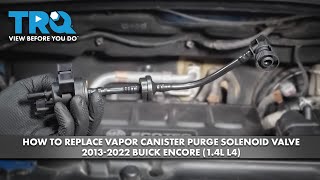
Typical fix: Replace the EVAP purge valve. 🎬 Watch: How to replace the vapor canister purge solenoid
Est. part cost: $25-$60
Rare But Worth Checking
- Incorrect or Missing Air Filter Housing Hydrocarbon Absorber: → Shop Air Cleaner Assembly A Technical Service Bulletin (PIP5240B, later superseded) was issued for 2013-2015 models where an incorrect air cleaner housing without a specific hydrocarbon absorber could cause P1101. If diagnostics don't find a leak, check that the air cleaner housing has the ID code 'ACD'.
- Dirty or Faulty Mass Airflow (MAF) Sensor: → Shop Fuel Injection Air Flow Meter While a dirty MAF sensor is a common cause for airflow codes on many vehicles, it is an uncommon cause for P1101 on this specific engine. It should only be considered after all potential vacuum leaks have been ruled out. Many owners and shops mistakenly replace the MAF sensor first, which does not fix the underlying PCV issue.
- Plugged PCV Orifice (LE2 Engine): → Shop PCV Valve On later models with the LE2 engine, TSB 20-NA-047 points to a plugged PCV orifice in the camshaft cover causing high crankcase pressure and setting code P1101. The fix involves replacing the small orifice (Part No. 12641875) and cleaning the passages.
Diagnosis Steps
- Scan the ECM for any other stored trouble codes. Codes like P0171 often accompany P1101 and confirm a lean condition caused by a vacuum leak.
- With the engine running at idle, listen for an audible hissing, whistling, or squealing noise around the valve cover.
- Carefully attempt to remove the oil filler cap while the engine is idling. If there is strong vacuum holding it down, the PCV diaphragm in the valve cover has ruptured.
- Inspect the port on the intake manifold where the PCV tube connects. Look inside for a small, orange, circular check valve. If it is missing, the intake manifold is faulty and is the root cause of the valve cover failure.
- If the PCV system seems okay, thoroughly inspect all intake hoses and ducts from the air filter box to the throttle body for any cracks, splits, or loose connections, paying close attention to the hose clamp at the throttle body.
- If no obvious leaks are found, perform a smoke test on the intake system. This involves introducing low-pressure smoke into the intake and watching where it escapes, revealing the location of any hard-to-see leaks.
- For LE2 engines, or if TSB 20-NA-047 applies, test the crankcase pressure using a manometer at the dipstick tube to check for excessive positive pressure, which indicates a blocked PCV orifice.
- As a last resort, inspect and clean the MAF sensor with a dedicated MAF sensor cleaner. Do not touch the delicate sensor elements.
Parts You'll Likely Need
- Engine Valve Cover
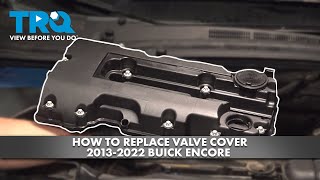
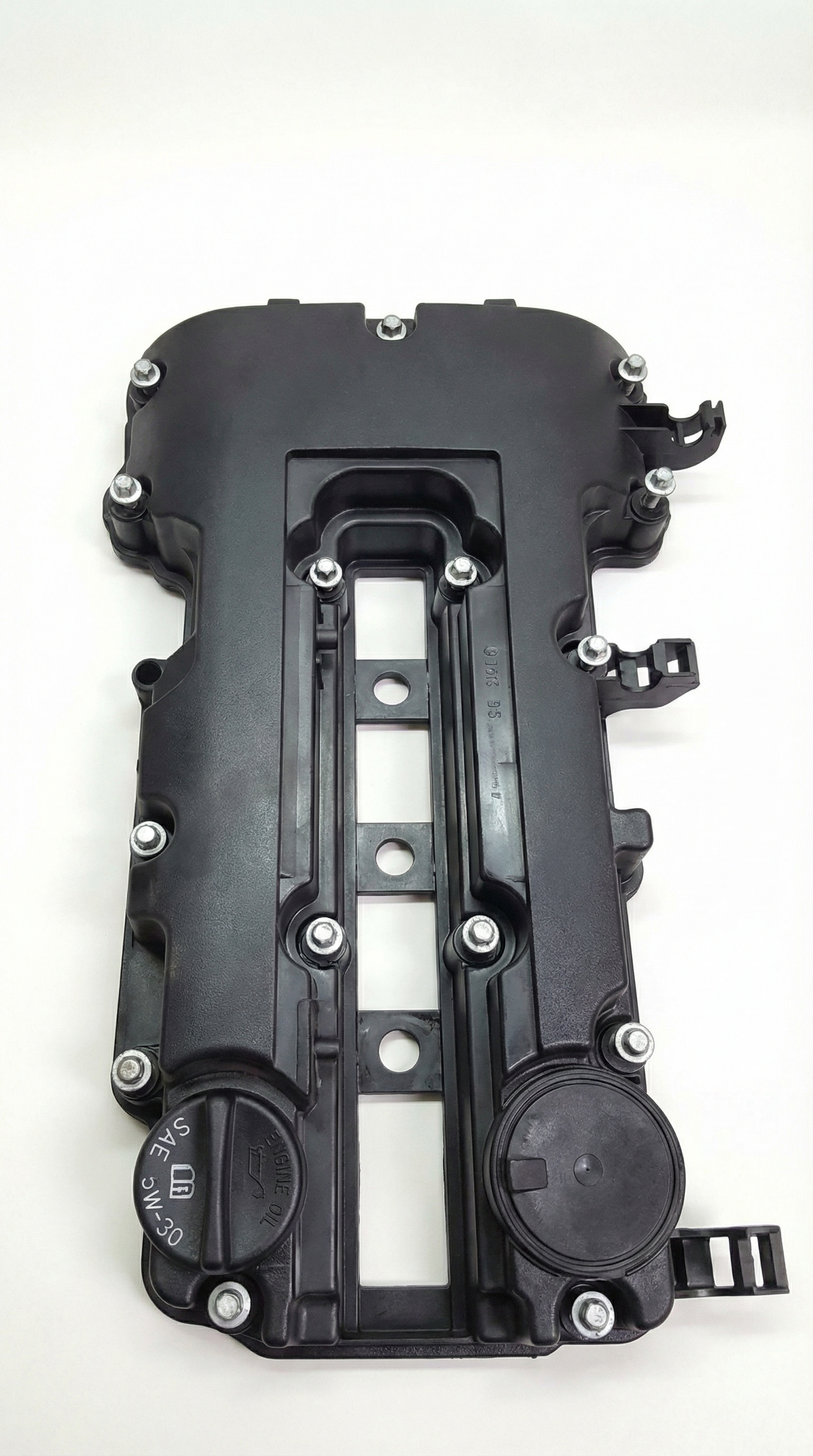
(OEM #25209141 (supersedes 25203036, 25198874, 55573746))— This is the most common failure. 🎬 See this step-by-step valve cover replacement walkthrough The part contains the non-serviceable PCV diaphragm that tears, causing the vacuum leak that triggers P1101.
Trusted brands: ACDelco (GM Genuine), Dorman (P/N: 264-968)
OEM price range: $120-$180
Aftermarket price range: $60-$110 - Intake Manifold
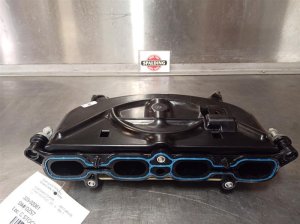
(OEM #25200449)— Needed if the internal PCV check valve has failed and is missing. Failure to replace this will cause the new valve cover to fail prematurely.
Trusted brands: ACDelco, Dorman
OEM price range: $200-$300
Aftermarket price range: $100-$180 - PCV Intake Manifold Check Valve Repair Kit — An alternative to replacing the entire intake manifold if the check valve is the only issue. This requires drilling out the old port and installing a new, more robust external check valve system.
Trusted brands: CruzeKits
OEM price range: N/A
Aftermarket price range: $75-$90
Related Codes That Often Appear With This One
- P0171 — System Too Lean (Bank 1). This code is common with P1101 because the unmetered air from the vacuum leak creates a lean air/fuel mixture.
- P0106 — Manifold Absolute Pressure (MAP) Sensor Performance. A large vacuum leak from the PCV system can cause MAP sensor readings to be outside their expected range, often setting this code simultaneously.
- P0299 — Turbocharger Underboost. A significant leak in the intake or PCV system can cause a loss of boost pressure, as the turbo cannot pressurize a leaking system effectively.
Technical Service Bulletins (TSBs) & Recalls
- 20-NA-047: Links P1101 to high crankcase pressure from a plugged PCV orifice (on LE2 engines) or high vacuum from a torn diaphragm (on LUV engines), which can lead to crankshaft seal failure and oil leaks.
- PIP5240B: Addresses P1101 on 2013-2015 models possibly being caused by an incorrect air cleaner housing.
- 18-NA-333: Notes that a poorly seated Charge Air Cooler (CAC) outlet hose at the throttle body can cause a whistling noise and P1101 on the LE2 engine.
Platform-Specific Known Issues
- A GM Technical Service Bulletin (TSB) #20-NA-047 directly links P1101 to excessive crankcase pressure or vacuum, which can cause the front and/or rear crankshaft seals
Mechanic-Grade Diagnostic Values
- Long Term Fuel Trim (LTFT) at idle — expected: Close to 0% (+/- 10%). Failure: Consistently above +25%, often maxing out at 35% or higher, indicates a significant vacuum leak the ECM is trying to correct.
- Mass Airflow (MAF) Sensor at hot idle — expected: 1.8 to 4.5 grams/second (g/s). A common rule of thumb is that g/s should approximate engine displacement in liters (e.g., ~1.4 g/s for the 1.4L).. Failure: A reading significantly lower than expected (e.g., under 1.5 g/s) points to unmetered air entering after the MAF sensor (vacuum leak). A reading that is inaccurately high can also trigger P1101 and will be accompanied by negative fuel trims.
- Crankcase Pressure (LUV Engine) — expected: -11 to -18 inches of water (inH₂O) at hot idle. This is a very slight vacuum.. Failure: Excessively negative pressure (e.g., below -30 inH₂O) indicates a ruptured valve cover diaphragm. Positive pressure indicates a blocked PCV passage or failed check valve.
- Crankcase Pressure (LE2 Engine) — expected: -1 to -5 inches of water (inH₂O) at hot idle.. Failure: Excessively positive pressure (above 0 inH₂O) points to a blocked PCV orifice in the camshaft cover.
- MAF Sensor Voltage (Key On, Engine Off) — expected: Near 0 volts.. Failure: A reading significantly above zero volts indicates a faulty MAF sensor or a wiring issue.
Hidden / Shadow Codes Worth Checking
- P1101-00: The '-00' suffix is a standard SAE symptom byte indicating no additional specific information is available. It's the generic version of the code and doesn't provide deeper insight beyond the primary P1101 definition. (see via Most standard OBD-II scanners will display this.)
Scan Tool Commands That Help
- GDS2 or other professional scan tool: Live Data Monitoring (MAF, Fuel Trims, MAP) — This is the primary diagnostic step. Comparing the MAF reading (g/s) to expected values while observing high positive fuel trims is the definitive way to confirm a vacuum leak is causing the P1101 code.
- GDS2 or other professional scan tool: Throttle/Idle Learn Reset — After cleaning or replacing the throttle body, or after major intake repairs like replacing the valve cover or intake manifold. This resets learned values and helps the ECM adapt to the new/clean components, preventing idle issues.
- Manual Procedure (No Scan Tool): Idle Relearn Procedure — After a repair that affects idle, if a scan tool is not available. A generic procedure is to turn the ignition on (engine off) for one minute, turn it off for 10 seconds, then start the engine and let it idle for several minutes to relearn idle characteristics.
Wiring & Ground Locations
- G105 — Located at the left front of the engine compartment, often behind the cooling fan relays.. This ground point serves multiple components in the engine bay. While not exclusively for the MAF, a poor connection here can introduce electrical noise or voltage drops affecting various sensors, including potentially the MAF sensor circuit. A document for a similar GM vehicle shows G101 grounding the MAF sensor, which jumpers to G106 on the frame cross rail. Verifying engine grounds is a key step when sensor readings are erratic.
- MAF Sensor Connector — On the air filter housing, connecting directly to the MAF sensor.. A poor connection, corroded pins, or damaged wiring at this connector can cause incorrect or missing MAF sensor readings, directly triggering a P1101 code. The connector has a locking tab that must be fully seated and secured.
Real Owner Repair Stories
- YouTube channel 'Fixing With Friends' (Buick Encore 1.4L Turbo (engine shared with Sonic/Cruze/Trax)) — P1101 code, lack of boost.
❌ Tried (didn't work) Replaced valve cover assembly, Installed an external PCV fix kit (CruzeKits), Cleaned the throttle body, Replaced the MAF sensor with a new Bosch unit
✅ What actually fixed it The final fix was replacing a cracked intercooler pipe (GM Part #42698921). The crack was likely small and only opening up under boost pressure, making it difficult to find with a standard smoke test at idle. - YouTube channel 'Carpenter Automotive' (2017 Buick Encore 1.4L Turbo) — Codes P015B, P0171, and P1101. Long term fuel trim at +34%, short term at +35%.
❌ Tried (didn't work) The valve cover had already been replaced a few months prior for a separate PCV failure.
✅ What actually fixed it The EVAP purge valve was stuck open, creating a significant vacuum leak. The technician noticed an audible sucking noise from the valve and that the engine would stumble when the gas cap was removed. Replacing the EVAP purge valve resolved the high fuel trims and the codes.
"I Checked Everything" — The Actual Cause
- In one documented case, a smoke test did not reveal any leaks, and multiple common parts (valve cover, MAF sensor, PCV kit) were replaced without fixing the P1101 code. The actual cause was a crack in a plastic intercooler pipe that likely only opened under boost pressure, a condition not replicated by a standard low-pressure smoke test.
OEM Part Supersession History
55573746, 25198874, 25203036→25209141— Standard part evolution and design updates for the Engine Valve Cover.N/A→12641875— This is the serviceable PCV orifice for the LE2 engine, as specified in TSB 20-NA-047. It allows for the repair of a clogged PCV system without replacing the entire camshaft cover.
Heads up: Only applies to the later LE2 engine, not the LUV engine which has the PCV system integrated into the valve cover.
Model Year Variations Within This Range
- 2013-~2020 (LUV Engine): The primary failure mode is the combination of the intake manifold's internal check valve failing, which then destroys the diaphragm in the valve cover. Diagnosis focuses on extreme vacuum at the oil cap and looking for the missing orange check valve in the intake.
- ~2020-2022 (LE2 Engine): The primary failure mode, as per TSB 20-NA-047, is a clogged PCV orifice in the camshaft cover, leading to excessive *positive* crankcase pressure. Diagnosis requires a manometer to measure pressure at the dipstick tube. The fix can be as simple as replacing a small, inexpensive orifice (PN 12641875) rather than the whole cover.
Diagnostic Flowchart
Real Owner Stories
Aggregated from forums and TSBs cited above. Mileages and costs reflect what owners reported in those sources.
Buick Encore 1.4L EcoTec
Symptoms: Check Engine Light with code P1101, seemed like the engine had no boost. The owner went down several diagnostic dead ends, including replacing the valve cover, installing a CruzeKits external PCV route, cleaning the throttle body, replacing the MAF sensor with a new Bosch unit, and replacing gaskets in the oil fill cap and dipstick.
What fixed it: Replaced a cracked intercooler hose (GM Part Number: 42698921).
Source hint: YouTube comment by J Tay187 on video 'Fixing the Infamous GM / Chevy P1101 MAF Code on my Buick Encore 1.4L'
Chevrolet Sonic 1.4L LUV
Symptoms: Vehicle triggered both P1101 and P0106 codes simultaneously due to a failure in the PCV system.
What fixed it: Diagnosed and repaired the PCV system failure.
Source hint: gouldaero.com blog post titled 'GM Ecotec 1.4L Turbo PCV Fix'
Related OBD-II Codes
Frequently Asked Questions
Does TSB 20-NA-047 apply to my Buick Encore with code P1101?
Why is there a strong suction when I try to remove the oil filler cap on my 1.4L Turbo?
I have an early model 2014 Buick Encore. Could my air cleaner housing cause P1101?
What is the orange check valve everyone mentions for the 1.4L LUV engine?
Can a loose hose cause a whistling noise and P1101 on my LE2 engine?
Do I need to replace the intake manifold if the valve cover diaphragm fails?
Helpful Videos

We Have This Part in Stock


The information in this article is provided for general reference and educational purposes only. Vehicle specifications, procedures, and part compatibility can vary by production date, trim level, and region. Always consult your vehicle's factory service manual and verify part numbers before purchasing or performing repairs. Safety-critical components such as airbags, seat belts, and braking systems should be installed by a qualified professional.
- Buick Encore:
- 🧭 Diagnostic Flowchart
- 🎬 Helpful Videos
- 🛍️ Shop This Part
- What's Unique About the 2013-2022 Buick Encore
- Symptoms You May Notice
- Most Likely Causes
- Rare But Worth Checking
- Diagnosis Steps
- Parts You'll Likely Need
- Related Codes That Often Appear With This One
- Technical Service Bulletins (TSBs) & Recalls
- Platform-Specific Known Issues
- Mechanic-Grade Diagnostic Values
- Hidden / Shadow Codes Worth Checking
- Scan Tool Commands That Help
- Wiring & Ground Locations
- Real Owner Repair Stories
- "I Checked Everything" — The Actual Cause
- OEM Part Supersession History
- Model Year Variations Within This Range
- Real Owner Stories
- Buick Encore 1.4L EcoTec
- Chevrolet Sonic 1.4L LUV
- Related OBD-II Codes
- Frequently Asked Questions
- 🎟️ Get 5% Off