

P1101 on 2017-2020 Buick Envision 2.0L Turbo: Intake Air Flow System Fault Guide
For a 2017-2020 Buick Envision with the 2.0L Turbo, code P1101 is almost always caused by a leak in the charge air cooler system. A specific GM Technical Service Bulletin (PIP5402E) points to a missing or damaged O-ring on the charge air cooler coupler as the most common culprit. This is an inexpensive part, and checking it should be your first step.
- For P1101 on a 2017-2020 Envision 2.0L, immediately suspect an air leak in the charge air cooler system.
- Check the charge air cooler coupler O-ring on the passenger side first, as per GM TSB PIP5402E. This is the most likely fix.
- Do not replace the expensive MAF sensor until you have performed a smoke test to rule out all possible air leaks.
- This issue often triggers a 'Reduced Engine Power' warning in addition to the Check Engine Light.
What's Unique About the 2017-2020 Buick Envision
The 2.0L LTG turbo engine is highly sensitive to air leaks in the pressurized intake tract between the turbocharger and the throttle body. General Motors has issued a specific, repeatedly updated Technical Service Bulletin (TSB PIP5402, with revisions up to E and beyond) that identifies a faulty O-ring seal on the charge air cooler (CAC) coupler as a known, high-probability failure point causing this exact code on the Envision and many other GM vehicles with this engine. This makes the diagnostic process much more direct than on other vehicles where P1101 might have more ambiguous causes.
Symptoms You May Notice
- Check Engine Light illuminated
- "Reduced Engine Power" message displayed on the dash
- Poor or hesitant acceleration
- Rough or unstable idle
- Decreased fuel economy
- Audible hissing, 'whooshing', or whistling noise from the engine bay, especially under acceleration
- Replacing the Mass Airflow (MAF) sensor without first checking for intake leaks. The TSB for this platform strongly suggests that an air leak is the most likely cause, making MAF replacement an expensive and often incorrect first step. Many owners and shops have replaced the MAF only to have the code return.
Most Likely Causes
- Missing or Damaged Charge Air Cooler (CAC) Coupler O-Ring Seal 🔴 High Probability → Shop Intercooler This is a well-documented failure point identified in multiple revisions of GM Technical Service Bulletin PIP5402 for the 2.0L LTG engine. The seal can become brittle, dislodged, or damaged during previous service or simply from age and pressure cycles.
How to confirm: Visually inspect the charge air cooler coupler, located on the passenger side of the charge air cooler where the air duct connects. The TSB includes a picture showing the exact location. Look for a missing, torn, or improperly seated O-ring. A smoke test of the intake system will definitively show a leak from this location. 🎬 Watch: How to find a boost pressure leak with a smoke machine.
Typical fix: Replace the O-ring seal. Ensure the coupler and duct are clean before reassembly. The OEM part number is widely cited as GM 12633399.
Est. part cost: $5-$25 - Cracked or Loose Charge Air Cooler Ducting/Hoses 🟡 Medium Probability → Shop Intercooler The plastic and rubber components of the intake system can become brittle with age and exposure to heat cycles, leading to cracks or loose connections. On some platform mates like the GMC Terrain, the main CAC outlet hose can pop off the throttle body entirely.
How to confirm: Perform a smoke test on the intake system to see if smoke escapes from any hoses, clamps, or the intercooler itself. Visually inspect all accessible intake plumbing between the turbo and the throttle body for disconnected hoses or loose clamps.
Typical fix: Replace the cracked hose or tighten the loose clamp. In some cases, the entire charge air cooler pipe may need replacement (e.g., GM Part #84498030).
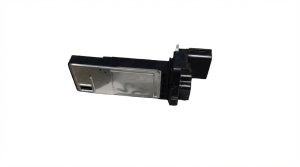
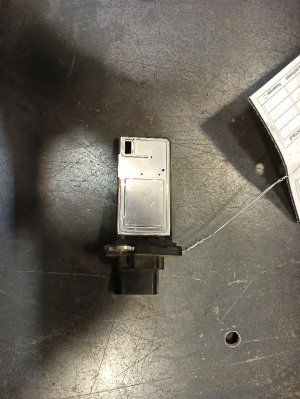
Est. part cost: $50-$250 - Dirty Mass Airflow (MAF) Sensor ⚪ Low Probability → Shop Fuel Injection Air Flow Meter While possible, this is a much less common cause for P1101 on this specific vehicle compared to charge air leaks. Oiled air filters or crankcase vapors can contaminate the sensor's delicate wires, causing inaccurate readings.
How to confirm: Remove the MAF sensor and visually inspect the small wires for dirt, oil, or debris. Do not touch the wires. A scan tool may also show MAF readings that are illogical at idle.
Typical fix: Clean the sensor using only a dedicated MAF sensor cleaner spray. If cleaning does not resolve the issue, the sensor may need replacement, but this should only be done after ruling out all air leaks.
Est. part cost: $10-$15 (cleaner)
Rare But Worth Checking
- Plugged PCV Orifice in Valve Cover: → Shop PCV Valve A separate GM TSB (20-NA-047) notes that a clogged PCV orifice can cause incorrect crankcase pressure, which may indirectly trigger a P1101 code by affecting the engine's breathing calculations. This can sometimes require replacing the entire valve cover.
- Leaking Intercooler (Charge Air Cooler): → Shop Intercooler Less common than a hose or seal leak, the intercooler itself can develop a crack or be damaged by road debris, requiring a smoke test to confirm. Oil pooling in the intercooler can also be a sign of a failing turbocharger.
- Dirty Throttle Body: → Shop Fuel Injection Throttle Body Heavy carbon buildup around the throttle plate can disrupt airflow calculations, especially at idle. The ECM may see a discrepancy between the throttle angle and the measured airflow, triggering P1101. Cleaning the throttle body is a valid diagnostic step if no leaks are found. 🎬 See how cleaning the throttle body can resolve a P1101 code.
- Improperly Seated Engine Air Filter: → Shop Air Cleaner Assembly An ill-fitting or incorrectly installed air filter can allow unmetered air to bypass the MAF sensor or create turbulence, leading to an airflow calculation error and a P1101 code.
Diagnosis Steps
- Read all stored trouble codes with an OBD-II scanner. Note any other codes that appear with P1101, as they can provide clues (e.g., P0299, P0101).
- Carefully inspect the charge air cooler coupler O-ring on the passenger side, as specified by TSB PIP5402E. This is the most likely point of failure. The TSB provides a reference image.
- If the O-ring is intact, perform a comprehensive visual inspection of the entire air intake tract from the air filter box to the throttle body. Look for obvious cracks, loose clamps, or disconnected hoses. Pay special attention to the large hose connecting to the throttle body.
- Perform a smoke test on the intake system. This is the most effective way to find small, hard-to-see leaks in the charge air cooler, hoses, and gaskets. Introduce smoke into the system before the turbocharger to test the entire pressurized path.
- If no leaks are found, remove and inspect the MAF sensor. If it appears dirty, clean it with dedicated MAF sensor cleaner and re-test.
- Inspect the engine air filter to ensure it is clean and, more importantly, properly seated in the airbox.
- As a secondary step, inspect the throttle body for heavy carbon buildup. If significant, clean it and perform an idle relearn procedure if required.
- As a final, less likely step, check for excessive crankcase pressure as outlined in TSB 20-NA-047, which could indicate a clogged PCV orifice. 🎬 Watch this visual guide to the 2.0L turbo PCV system and failures.
Parts You'll Likely Need
- Charge Air Cooler Coupler O-Ring Seal
(OEM #12633399)— This is the most common failure point identified by a GM Technical Service Bulletin (PIP5402E) for this specific code and engine.
Trusted brands: ACDelco, GM Genuine Parts
OEM price range: $10-$25
Aftermarket price range: $5-$15 - Mass Airflow Sensor Cleaner — Used for cleaning a dirty MAF sensor, which is a common diagnostic step, though not the most likely fix.
Trusted brands: CRC, Liqui Moly
OEM price range: N/A
Aftermarket price range: $10-$15
Related Codes That Often Appear With This One
- P0101 — This code for 'MAF Circuit Range/Performance' is often set with P1101 because the root cause (an air leak) makes the MAF sensor's readings seem implausible to the ECM. TSB PIP5402 explicitly covers both codes.
- P0299 — This code for 'Turbocharger Underboost' can occur if the air leak in the charge system is large enough to cause a significant loss of boost pressure.
- P0171 — This code for 'System Too Lean (Bank 1)' can be triggered because the unmetered air entering the system creates a lean air/fuel mixture that the oxygen sensors detect.
Technical Service Bulletins (TSBs) & Recalls
- PIP5402 (A, B, C, D, E): Points to a missing or damaged O-ring seal in the charge air cooler coupler on the passenger side as the cause for codes P1101 and P0101. Bulletin #PIP5402E specifically notes that technicians should look for this damaged seal when a reduced engine power message and P1101 are present.
- 20-NA-047: Mentions that a plugged PCV orifice in the valve cover can cause excessive crankcase pressure and may lead to a P1101 code.
Platform-Specific Known Issues
- The 2.0L LTG engine is subject to TSB PIP5402E (and earlier versions), which specifically calls out a faulty charge air cooler coupler O-ring as the primary cause for P1101 and/or P0101 codes. The TSB applies to a wide range of GM vehicles using this engine, confirming it's an engine-specific issue, not just an Envision issue.
- A less common but documented issue is a clogged PCV orifice in the valve cover causing excessive crankcase pressure, which can also trigger P1101 per TSB 20-NA-047.
Mechanic-Grade Diagnostic Values
- Crankcase Pressure at Hot Idle — expected: -1 to -5 inches of water. Failure: A positive pressure reading (above 0 inches of water) indicates a blockage in the PCV system, a likely cause for P1101 per TSB 20-NA-047.
- Mass Airflow (MAF) Sensor Reading at Hot Idle (Scan Tool PID) — expected: Technician Rule of Thumb 1: Approx. 2.0-4.0 g/s. A common rule is 1.7-1.9 g/s per liter of engine displacement. For the 2.0L LTG, this is 3.4-3.8 g/s. Technician Rule of Thumb 2: Approx. 2.0 g/s. Another common rule is that g/s should roughly equal engine displacement in liters.. Failure: A reading significantly higher or lower than the expected range at a steady idle can indicate a sensor issue or, more likely, an unmetered air leak.
- MAF Sensor Connector Voltage (Key On, Engine Off) — expected: Pin C (Pink wire): 10-12 Volts DC (battery voltage). Pin B (Black/White wire): Ground (continuity to chassis ground). Pin A (Yellow wire): Signal wire, voltage varies with airflow.. Failure: No voltage on the power wire or a bad ground indicates a wiring or fuse issue, not a faulty sensor.
Hidden / Shadow Codes Worth Checking
- P1101-00: The '-00' suffix indicates a standard fault type with no specific sub-fault information. It is the most common variant of the P1101 code and does not point to a different problem than the base code. (see via Visible on most standard OBD-II scan tools.)
Scan Tool Commands That Help
- GDS2 or similar professional scan tool: EVAP Purge/Seal — If a standard intake smoke test reveals no leaks, command the EVAP purge solenoid valve to the closed position. Then, re-run the smoke test. This will determine if a stuck-open EVAP valve is the source of the unmetered air, a cause that is often missed by standard procedures.
Wiring & Ground Locations
- G101 / G106 — G101 is typically on the engine block or jumpers to the frame cross rail. G106 is often a ground splice pack located in the engine compartment on the right side inner fender, behind the air cleaner assembly.. G101 is a primary ground for the Engine Control Module (ECM) and the MAF sensor. A poor connection at G101 or related ground packs like G106 can cause erratic voltage and faulty sensor readings, potentially triggering a P1101 code even if no air leak exists.
- MAF Sensor Connector — On the MAF sensor, which is located in the intake tube immediately after the air filter housing.. The specific pins are critical for diagnosis. For a typical GM 5-wire MAF: Pin A (Yellow) is the MAF Signal, Pin B (Black/White) is Chassis Ground, and Pin C (Pink) is the 12V ignition feed. Verifying power and ground here is essential before condemning the sensor.
Real Owner Repair Stories
- Reddit user on r/AskAMechanic (2016 Chevrolet Camaro 2.0L LTG Engine) — P1101 code that only appeared under heavy acceleration.
❌ Tried (didn't work) Replaced MAF sensor, Replaced MAP sensor, Cleaned throttle body
✅ What actually fixed it Following advice to check TSB PIP5402, the user inspected and found a faulty charge air cooler coupler seal. Replacing this seal resolved the issue. - YouTube Creator, 'Fixing the Infamous GM / Chevy P1101' (Buick Encore 1.4L (Similar GM architecture, different engine but relevant diagnostic path)) — Persistent P1101 code.
❌ Tried (didn't work) Replaced valve cover, Installed an external PCV valve kit
✅ What actually fixed it After multiple incorrect repairs based on common internet advice, the actual root cause was discovered to be a cracked charge air cooler (intercooler) hose. Replacing the hose provided the final fix.
"I Checked Everything" — The Actual Cause
- A common scenario reported on GM platforms is that a smoke test of the intake tract from the air filter to the throttle body shows no leaks, yet P1101 (and often P0171 Lean) persists. The actual cause can be a stuck-open EVAP canister purge solenoid. This allows unmetered air and fuel vapor to enter the intake manifold *after* the throttle body, creating a vacuum leak that a standard intake smoke test will not find. The correct procedure is to use a scan tool to command the EVAP valve shut, then re-test.
OEM Part Supersession History
PIP5417C→20-NA-047— Bulletin was updated to provide a more comprehensive diagnostic procedure for high crankcase pressure and P1101.
Heads up: This is a Technical Service Bulletin supersession, not a physical part.PIP5402→PIP5402A, B, C, D, E— Bulletin was repeatedly updated to expand the list of affected models and model years for the charge air cooler O-ring issue.
Heads up: This is a Technical Service Bulletin supersession, not a physical part.
Diagnostic Flowchart
Real Owner Stories
Aggregated from forums and TSBs cited above. Mileages and costs reflect what owners reported in those sources.
2016 Buick Encore
Symptoms: Check engine light illuminated with codes P1101 and P0101. The owner experienced immense frustration as the dealer suggested the codes were 'unfixable' by GM engineers.
What fixed it: The shop replaced the MAF and IAT sensors without success, highlighting the common misdiagnosis when the root air leak isn't found.
Source hint: Reddit r/Buick - '2016 Encore p1101 p0101'
Related OBD-II Codes
Frequently Asked Questions
Does TSB PIP5402E apply to my 2017-2020 Buick Envision 2.0L LTG?
What is the exact part number for the charge air cooler O-ring mentioned in the TSB?
My Envision has a P1101 code and I hear a hissing noise under acceleration. What does this mean?
Can a clogged PCV valve cause a P1101 on the 2.0L LTG engine?
Should I replace the MAF sensor right away if I get a P1101 code?
What other codes commonly appear alongside P1101 on this engine?
Helpful Videos

We Have This Part in Stock

The information in this article is provided for general reference and educational purposes only. Vehicle specifications, procedures, and part compatibility can vary by production date, trim level, and region. Always consult your vehicle's factory service manual and verify part numbers before purchasing or performing repairs. Safety-critical components such as airbags, seat belts, and braking systems should be installed by a qualified professional.
- Buick Envision:
- 🧭 Diagnostic Flowchart
- 🎬 Helpful Videos
- 🛍️ Shop This Part
- What's Unique About the 2017-2020 Buick Envision
- Symptoms You May Notice
- Most Likely Causes
- Rare But Worth Checking
- Diagnosis Steps
- Parts You'll Likely Need
- Related Codes That Often Appear With This One
- Technical Service Bulletins (TSBs) & Recalls
- Platform-Specific Known Issues
- Mechanic-Grade Diagnostic Values
- Hidden / Shadow Codes Worth Checking
- Scan Tool Commands That Help
- Wiring & Ground Locations
- Real Owner Repair Stories
- "I Checked Everything" — The Actual Cause
- OEM Part Supersession History
- Real Owner Stories
- 2016 Buick Encore
- Related OBD-II Codes
- Frequently Asked Questions
- 🎟️ Get 5% Off