

P1101 on 2013-2020 Chevrolet Malibu: Intake Airflow Causes and Fixes
On a 2013-2020 Chevy Malibu, code P1101 usually points to an intake air system problem. The most common fixes are cleaning the throttle body, checking for intake air leaks from cracked hoses, or addressing a clogged PCV system. In some cases, particularly on 1.5L turbo engines, it can be caused by a failing vacuum pump or crankshaft oil leaks due to high crankcase pressure.
- P1101 on a 2013-2020 Malibu indicates the engine's computer is seeing an unexpected amount of air.
- Do not immediately replace the MAF sensor. Start with simpler, more common fixes like cleaning the throttle body and inspecting for obvious air leaks.
- For 1.5L turbo engines, be aware of two major known issues: a clogged PCV orifice in the valve cover (per TSB #20-NA-047) and catastrophic vacuum pump failure.
- A hard brake pedal accompanying the check engine light is a strong indicator that the vacuum pump has failed.
- If you have tried the simple fixes and the code returns, the next step should be investigating the PCV system and crankcase pressure, which may require a professional mechanic.
What's Unique About the 2013-2020 Chevrolet MALIBU

For the 2013-2020 Malibu, especially models with the 1.5L turbo engine (RPO code LFV), P1101 is more complex than a simple MAF sensor issue. This platform is known for several specific mechanical failures that trigger this code. GM has issued Technical Service Bulletin 20-NA-047, which directly links P1101 to high crankcase pressure from a clogged PCV orifice in the camshaft cover, a condition that can also cause crankshaft oil leaks. Furthermore, owner complaints and repair videos frequently cite catastrophic failures of the engine's vacuum pump, which can send metal debris into the engine head and directly cause the P1101 code along with a hard brake pedal.
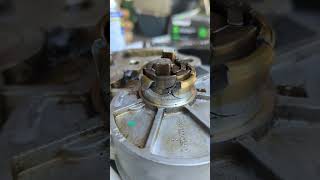
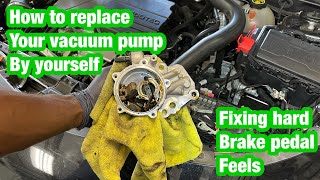
🎬 Watch: How to replace a failed vacuum pumpDiagnostic Flowchart

Tap your situation to follow the diagnostic path that matches what you're seeing on this vehicle.
Generation note: This range covers the end of the 8th generation (2013-2016) and the 9th generation (2016-2020). Issues like the failing vacuum pump and clogged PCV system are particularly noted on the 9th generation models with 1.4L (LE2) and 1.5L (LFV) turbocharged engines, which are also shared with the Chevy Cruze, Equinox, and Buick Encore.
Symptoms You May Notice

- Check Engine Light is on
- Reduced engine power or "limp mode"
- Rough or unsteady idling
- Engine stalling, especially when stopped
- Poor acceleration
- Decreased fuel economy
- Hard brake pedal (if related to vacuum pump failure)
- Hissing or whistling noise from the engine bay, indicating a vacuum leak.
- Oil leaks from front or rear crankshaft seals (linked to PCV issue)
- Replacing the MAF sensor without checking for other causes. An NHTSA complaint (ODI #11684092) noted that replacing the MAF sensor, cleaning the throttle body, and changing the air filter did not resolve the recurring P1101 code, highlighting that the root cause is often the PCV system or a vacuum leak.
Most Likely Causes

- Clogged Positive Crankcase Ventilation (PCV) Orifice 🔴 High Probability This is a well-documented issue on GM's 1.4L and 1.5L turbo engines, leading to TSB 20-NA-047. A small, non-serviceable orifice inside the camshaft cover becomes clogged with carbon, causing excessive crankcase pressure that throws off airflow calculations and can even push out crankshaft seals.
How to confirm: A mechanic can test crankcase pressure using a manometer, connecting it to the oil dipstick tube. Normal is -1 to -5 inches of water at hot idle; a positive pressure reading (above 0 inches of water) indicates a clog. Visually, the orifice in the removed camshaft cover will be blocked.
Typical fix: Per TSB 20-NA-047, the entire camshaft cover (valve cover) must be replaced to fix the integrated clogged orifice. The gaskets are also replaced. The part number for the cover has been superseded but a common replacement is GM Part #25201395.
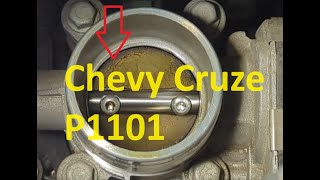
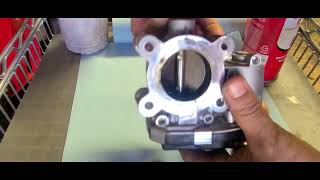
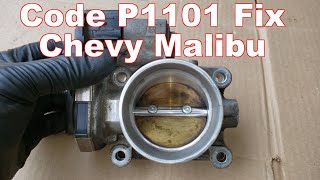
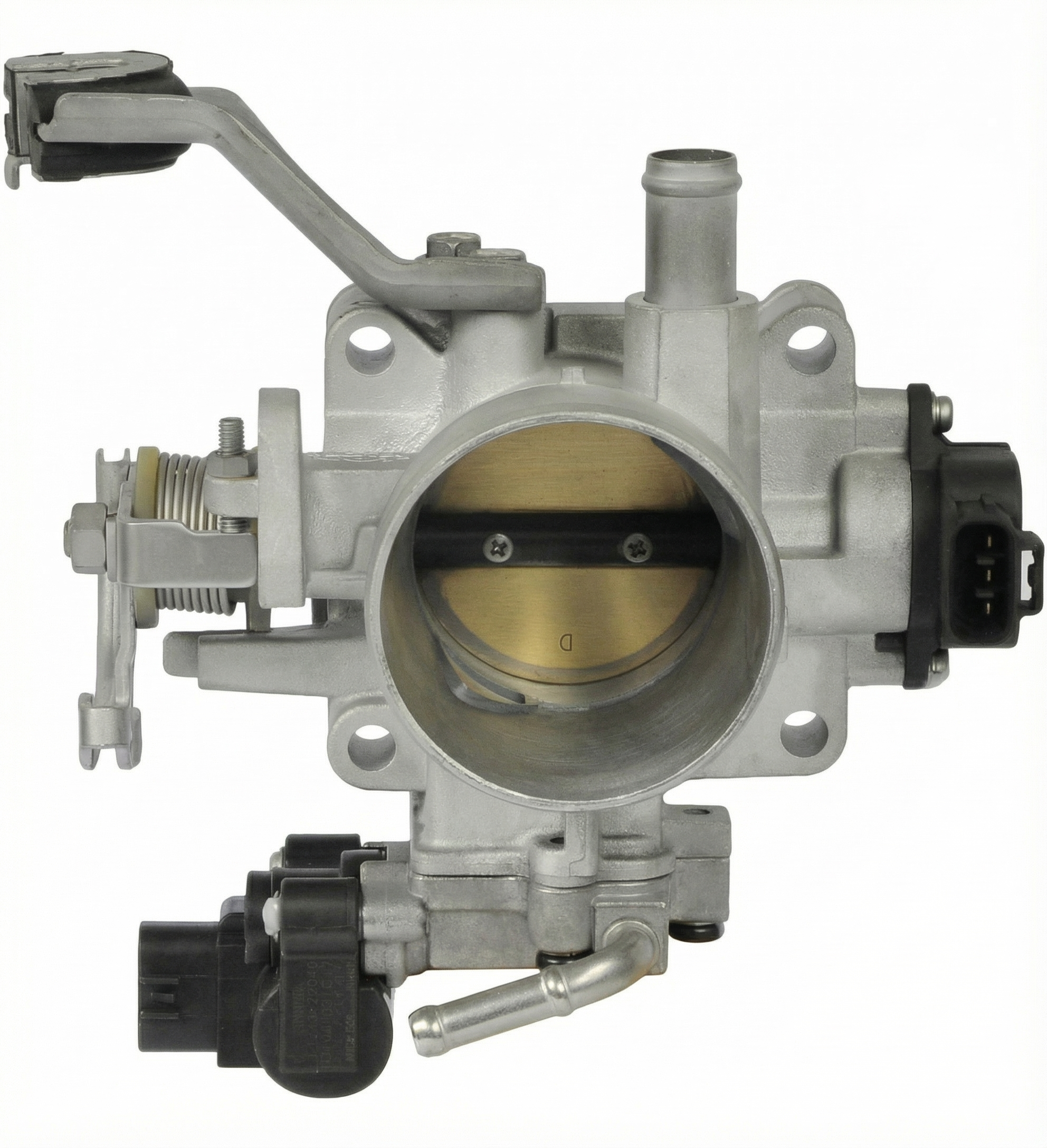
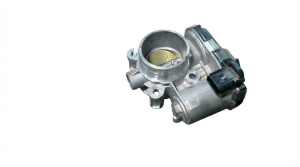
Est. part cost: $80-$250 for the camshaft cover assembly. - Dirty Throttle Body 🔴 High Probability → Shop Fuel Injection Throttle Body Carbon and oil vapor buildup around the throttle plate is common and can restrict airflow or cause the plate to stick, leading to incorrect sensor readings and triggering P1101.
How to confirm: Visually inspect the throttle body bore and plate for black, sticky buildup after removing the main intake air duct. A scan tool may also show a higher than expected throttle position at idle as the ECM tries to compensate.
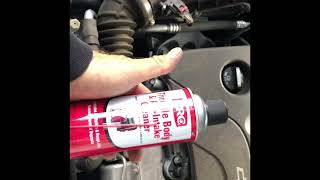
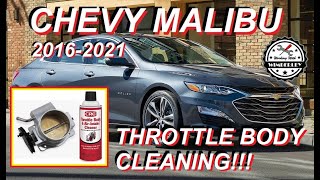
Typical fix: Clean the throttle body thoroughly with a dedicated throttle body cleaner and a soft brush or rag. A throttle relearn procedure (idling for 3 minutes on, 1 minute off, repeated twice) may be needed afterward.
Est. part cost: $5-$15 for a can of cleaner. - Intake Air Leak (Vacuum Leak) 🟡 Medium Probability Leaks can occur at various points, including cracked intake hoses, loose charge-air cooler clamps, or failed gaskets, allowing unmetered air to enter the engine. One owner complaint to the NHTSA (ODI #11701612) specifically mentioned the charge-air hose repeatedly blowing off the throttle body.
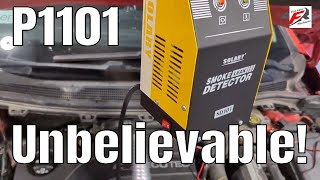
How to confirm: Perform a smoke test by introducing smoke into the intake system and watching for where it escapes. Also, visually inspect all hoses and connections between the air filter and the engine for cracks or looseness.
Typical fix: Replace the cracked hose, tighten the loose clamp, or replace the failed gasket. The charge-air cooler pipe seals are a common failure point.
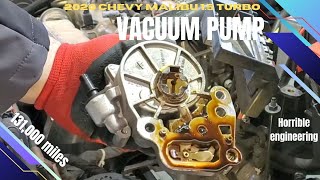
Est. part cost: $20-$150 depending on the specific hose or gasket. - Failing Engine Vacuum Pump 🟡 Medium Probability → Shop Vacuum Pump This is a significant issue reported by owners of 1.5L turbo models. The pump, which provides vacuum for the brake booster, can fail internally, sometimes catastrophically, sending metal debris into the engine head and camshaft area. One owner reported replacing it four times (NHTSA ODI #11715185). GM has also issued service bulletins related to inspecting the vacuum pump drive lugs for damage during other engine repairs.
How to confirm: A very hard brake pedal is the primary symptom. A mechanic can remove the pump (located on the end of the cylinder head) to inspect it for internal damage or seizure. If it has failed, finding and removing all metal debris from the head is critical.
Typical fix: Replace the vacuum pump. It is critical to remove all metal debris from the engine head to prevent further damage to the camshafts. The OEM part number is 12709291.
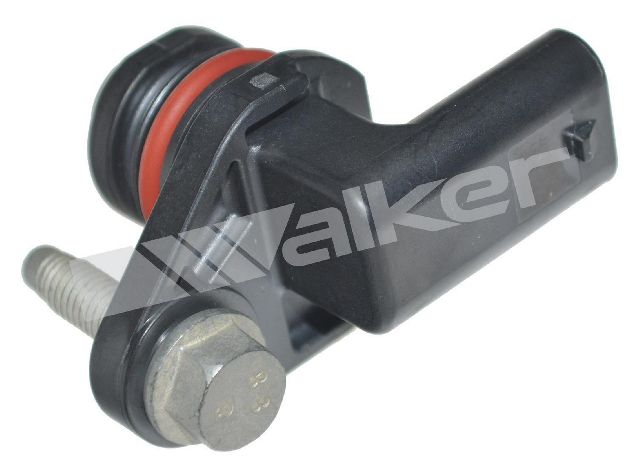
Est. part cost: $150-$300 - Dirty or Faulty Mass Air Flow (MAF) Sensor ⚪ Low Probability → Shop Fuel Injection Air Flow Meter While a common cause on many vehicles, on the Malibu it is often suspected first but may not be the root cause. Oil from over-oiled aftermarket filters or dirt from a poorly maintained standard filter can contaminate the sensor.
How to confirm: Remove the sensor and inspect the delicate wires for contamination. A scan tool can monitor live MAF data to see if readings are erratic or illogical at idle (should be approx. 3 g/s).
Typical fix: First, try cleaning the sensor with dedicated MAF sensor cleaner. If that fails, replace the sensor, preferably with an OEM part as aftermarket sensors can cause issues.
Est. part cost: $10 for cleaner, $80-$150 for a new sensor.
Rare But Worth Checking
- Crankshaft Oil Leak: → Shop Engine Crankshaft According to GM TSB #20-NA-047, a clogged PCV system can cause high crankcase pressure, forcing oil out of the front or rear crankshaft seals. While the oil leak is a symptom, it is directly linked to the same underlying cause as the P1101 code in this scenario and confirms the PCV system as the culprit.
- Loose Battery Terminal: On modern cars with sensitive electronics, a loose or corroded battery ground can cause intermittent voltage drops, leading to a variety of seemingly unrelated communication and sensor codes, including P1101.
Diagnosis Steps
- Read all fault codes stored in the ECM. Note any other codes that appear with P1101, especially P0171 or P0299.
- Inspect the engine air filter. A severely clogged filter can restrict airflow and trigger this code.
- Visually inspect the entire air intake tract from the air filter box to the throttle body. Look for cracked hoses, loose clamps (especially on charge-air cooler pipes), or disconnected tubes.
- Remove the intake duct from the throttle body and inspect it for heavy carbon buildup. Clean if necessary.
- If you have a 1.5L Turbo, check brake pedal feel. A very hard pedal points towards a failing vacuum pump.
- If no obvious leaks are found, perform a smoke test to find any hard-to-see vacuum leaks.
- If no leaks are found, test crankcase pressure with a manometer to check for a clogged PCV system, as outlined in GM TSB #20-NA-047. A reading above 0 inches of water at hot idle confirms a clog.
- As a final step, inspect and clean the MAF sensor. If cleaning doesn't help, test its wiring and consider replacement only after ruling out all other causes.
Parts You'll Likely Need
- Camshaft Cover (Valve Cover)
(OEM #25201395 (supersedes 12684683, 12668556, and others))— The PCV orifice is integrated into the cover and is not serviceable. A clog requires replacing the entire cover, which is the official fix per TSB 20-NA-047.
Trusted brands: GM Genuine Parts, ACDelco
OEM price range: $150-$250
Aftermarket price range: $80-$150 - Engine Vacuum Pump
(OEM #12709291)— A common failure point on 1.5L turbo models that directly causes a hard brake pedal and can trigger P1101. Failure can be catastrophic, contaminating the engine with metal debris.
Trusted brands: GM Genuine Parts, Dorman
OEM price range: $200-$300
Aftermarket price range: $120-$200 - Throttle Body Cleaner — Often, the code is caused by simple carbon buildup on the throttle plate, and a thorough cleaning is the only fix needed.
Trusted brands: CRC, ACDelco
OEM price range: $10-$15
Aftermarket price range: $5-$10
Related Codes That Often Appear With This One
- P0101 — Mass Air Flow (MAF) Circuit Range/Performance. This code is very similar to P1101 and often appears with it, as both relate to implausible MAF sensor readings.
- P0171 — System Too Lean. A vacuum leak from a failed PCV diaphragm or cracked hose allows unmetered air into the engine, causing a lean condition alongside the P1101 airflow code.
- P0299 — Turbocharger/Supercharger Underboost. An intake air leak after the turbo (e.g., a loose charge-air hose) can cause both an underboost condition and the P1101 airflow performance code.
- P0506 — Idle Air Control System RPM Lower Than Expected. Airflow issues from a dirty throttle body or vacuum leak can cause the engine to struggle to maintain a stable idle.
- P2122 / P2138 — Throttle/Pedal Position Sensor/Switch Circuit Low Input / Correlation. Problems with the throttle system can trigger these codes alongside P1101, as noted in NHTSA complaint ODI #11388626.
Technical Service Bulletins (TSBs) & Recalls
- 20-NA-047: Front or Rear Crankshaft Oil Leak, Malfunction Indicator Lamp (MIL) Illuminated - DTC P1101 Set. This is the primary TSB for the clogged PCV orifice issue.
- PIP5417C: The predecessor to 20-NA-047, addressing the same P1101 and oil leak issues.
- 19-NA-101: Addresses issues with a non-return check valve in the intake manifold on related GM engines, which can cause similar symptoms.
- 18-NA-171 / 19-NA-122: Relate to cracked pistons which can also cause high crankcase pressure, a condition that TSB 20-NA-047 advises technicians to rule out.
Platform-Specific Known Issues
- TSB 20-NA-047: The Clogged PCV Orifice: → Shop PCV Valve The most authoritative source for P1101 on the 1.5L (LFV) and 1.4L (LE2) engines is this GM Technical Service Bulletin. It confirms that a small PCV orifice inside the camshaft cover gets clogged. This causes crankcase pressure to build up instead of being properly vented. The ECM detects this as an airflow anomaly, setting P1101. The pressure can also become high enough to push oil past the front or rear crankshaft seals, causing significant oil leaks. The official repair is not to clean the orifice, but to replace the entire camshaft cover assembly.
- Catastrophic Vacuum Pump Failure: Multiple owner accounts and videos document a severe failure mode of the mechanical vacuum pump on the 1.5L turbo engine. The pump, driven by the camshaft, can internally disintegrate, sending metal fragments into the cylinder head. The immediate symptom is a very hard brake pedal because the brake booster loses its vacuum supply. This failure often triggers a P1101 code simultaneously. Repair requires not only replacing the pump but also meticulously cleaning all metal debris from the camshaft area to prevent devastating engine damage.
Mechanic-Grade Diagnostic Values
- Crankcase Pressure at Hot Idle (1.4L LE2, 1.5L LFV/LYX engines) — expected: -1 to -5 inches of water. Failure: Pressure is positive (above 0 inches of water), indicating a clogged PCV orifice.
- Mass Air Flow (MAF) Sensor Reading at Idle — expected: Approximately 3 g/s. Failure: Reading is significantly lower, such as 2.4-2.5 g/s, even after cleaning.
- MAF Sensor Voltage during KOER (Key On Engine Running) self-test — expected: 0.46 to 2.44 volts. Failure: Voltage is lower than 0.46 volts, which aborts the test and sets the code.
- Short Term Fuel Trim (STFT) at Idle — expected: Close to 0%. Failure: A consistently positive value (e.g., +6% or higher) indicates the ECM is adding fuel to compensate for a lean condition, suggesting a vacuum leak.
Scan Tool Commands That Help
- GDS2 / Professional Scan Tool: Throttle Sweep — Used to command the throttle plate through its full range of motion to check for binding or response issues that could contribute to airflow calculation errors.
- GDS2 / Professional Scan Tool: Throttle Body Idle Air Flow Compensation — This data parameter shows how much the ECM is compensating for airflow deviations at idle. A value of 90% or greater points directly to a throttle body issue (likely carbon buildup) requiring inspection and cleaning.
Wiring & Ground Locations
- Engine Wiring Harness at Battery Tray — On 2016-2018 Malibu models with the 1.5L (LFV) engine, the main engine wiring harness may rub on the edge of the battery tray.. This chafing can damage wires within the harness, causing a variety of DTCs, including P1101. A visual inspection of this area is warranted if multiple seemingly unrelated codes are present.
- MAF Sensor Connector — The connector plugs into the MAF sensor, located on the air intake tube after the air filter box.. The 9th generation Malibu (2016+) with the 1.5L engine uses an 8-pin connector. A poor connection, corrosion, or damaged wire at this connector can directly cause P1101.
Real Owner Repair Stories
- YouTube channel 'Fixing the Infamous' (Buick Encore with 1.4L Turbo (engine family shared with Malibu)) — Persistent P1101 check engine light.
❌ Tried (didn't work) Replaced the valve cover., Installed an external PCV fix kit (CruzeKits)., Replaced the MAF sensor.
✅ What actually fixed it The final root cause was a cracked intercooler pipe (charge air cooler hose), which was causing an unmetered air leak. Replacing the hose (GM Part #42698921) resolved the code. - YouTube channel 'Flat Rate Mechanic' (Chevrolet Malibu (year not specified, but common platform)) — P1101 code returned after other repairs.
❌ Tried (didn't work) Customer had already replaced the MAF sensor., Technician cleaned the throttle body., Technician replaced the MAP sensor.
✅ What actually fixed it The entire throttle body assembly had to be replaced to finally fix the P1101 code. This suggests an internal electronic fault with the throttle body that cleaning could not resolve.
OEM Part Supersession History
12684683, 12668556, 12655951, and others→25201395— Likely design revisions to address the clogging PCV orifice and other sealing issues.
Heads up: While listed for 2.0L and 2.5L engines in some parts catalogs, this camshaft cover is the correct service part for the 1.5L LFV engine's PCV-related P1101 issue per TSB 20-NA-047.
Model Year Variations Within This Range
- 2016: Certain 2016 models with the 2.5L Ecotec (LCV) engine may have been built with an incorrect engine-wiring harness fuse-block bracket, as per TSB #PIC6173A. While not directly linked to P1101, any wiring harness anomaly can cause unpredictable electrical issues.
Helpful Videos

Used OEM Parts in Stock
New Aftermarket Parts Available


The information in this article is provided for general reference and educational purposes only. Vehicle specifications, procedures, and part compatibility can vary by production date, trim level, and region. Always consult your vehicle's factory service manual and verify part numbers before purchasing or performing repairs. Safety-critical components such as airbags, seat belts, and braking systems should be installed by a qualified professional.
- Chevrolet MALIBU:
- 🧭 Diagnostic Flowchart
- 🎬 Helpful Videos
- 🛍️ Shop This Part
- What's Unique About the 2013-2020 Chevrolet MALIBU
- Symptoms You May Notice
- Most Likely Causes
- Rare But Worth Checking
- Diagnosis Steps
- Parts You'll Likely Need
- Related Codes That Often Appear With This One
- Technical Service Bulletins (TSBs) & Recalls
- Platform-Specific Known Issues
- Mechanic-Grade Diagnostic Values
- Scan Tool Commands That Help
- Wiring & Ground Locations
- Real Owner Repair Stories
- OEM Part Supersession History
- Model Year Variations Within This Range
- 🎟️ Get 5% Off