

P1101 on 2013-2020 Chevrolet Trax: Intake Airflow Performance Causes and Fixes
On a 2013-2020 Chevy Trax, code P1101 is almost always caused by a vacuum leak from a failed PCV diaphragm inside the valve cover. This failure is often triggered by a missing check valve in the intake manifold. The complete fix involves inspecting the intake for the check valve and replacing the valve cover assembly. Expect to pay $60-$150 for the cover.
- For a P1101 code on a Chevy Trax, suspect a failed PCV system (torn diaphragm in the valve cover) before any other component.
- A loud hissing noise at idle or strong suction at the oil fill cap are tell-tale signs of the common PCV failure.
- Do not replace the MAF sensor until you have definitively ruled out all possible vacuum leaks with a smoke test.
- When replacing the valve cover, you must verify the small check valve in the intake manifold is present to prevent a repeat failure.
What's Unique About the 2013-2020 Chevrolet TRAX

The 1.4L Turbo Ecotec engine used in the Trax (and its siblings, the Cruze, Sonic, and Encore) is known for a specific PCV (Positive Crankcase Ventilation) system failure. A rubber diaphragm integrated into the valve cover frequently tears, creating a significant vacuum leak that is a primary cause of the P1101 code. This is so common that it should be the first suspect. Critically, this diaphragm failure is often caused by an underlying issue: a small, orange check valve inside the intake manifold becomes dislodged and ingested by the engine. Without this check valve, turbo boost pressure enters the crankcase and ruptures the new PCV diaphragm, leading to a repeat failure shortly after replacing the valve cover.
🎬 Watch: A deep dive into these common PCV system failures.Diagnostic Flowchart

Tap your situation to follow the diagnostic path that matches what you're seeing on this vehicle.
Symptoms You May Notice

- Check Engine Light is on
- Rough, unstable, or surging idle
- Hesitation or reduced engine power, especially during acceleration
- A high-pitched whistling, sucking, or groaning sound from the engine bay at idle
- Poor fuel economy
- Difficulty removing the oil filler cap while the engine is running (due to excessive vacuum)
- Visible oil leaks from the front or rear crankshaft seals (a severe symptom noted in TSB 20-NA-047).
- Replacing the Mass Airflow (MAF) sensor without first checking for vacuum leaks. Many owners and shops replace the MAF sensor multiple times only to have the code return because the root cause is a PCV system leak.
- Replacing a failed valve cover without checking for the presence of the intake manifold check valve. If the check valve is missing, the new valve cover diaphragm will rupture again in a short amount of time.
Most Likely Causes

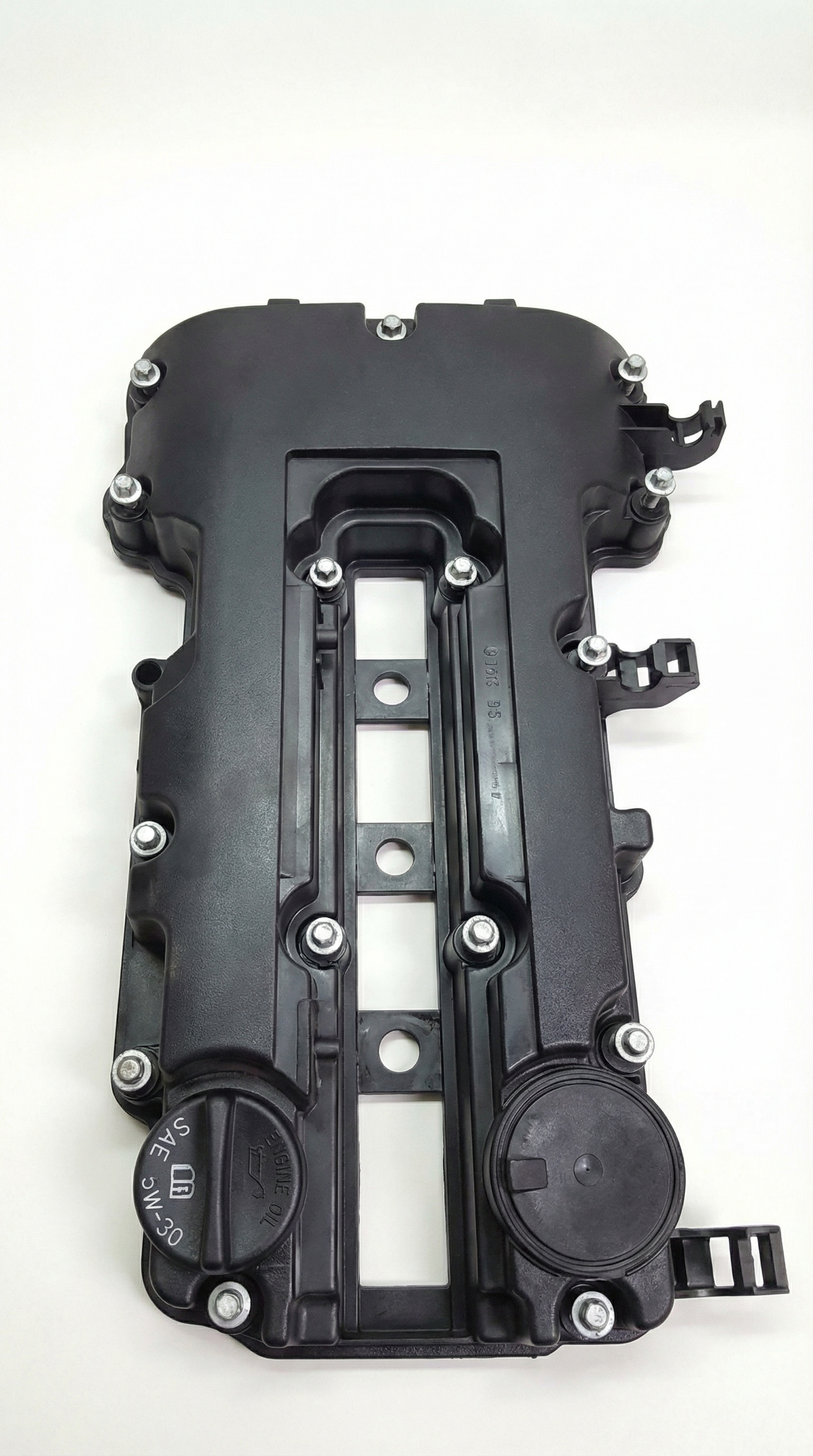
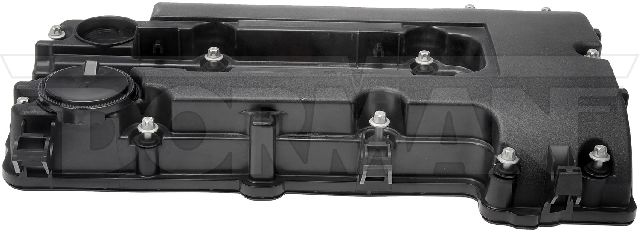
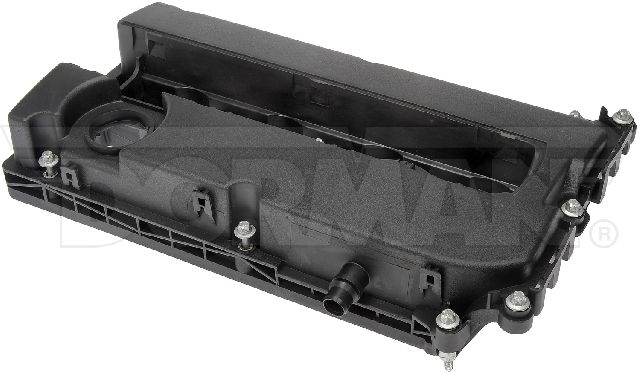
- Failed PCV Diaphragm in Valve Cover 🔴 High Probability → Shop Engine Valve Cover The rubber diaphragm inside the valve cover is a known weak point on the 1.4L Turbo engine. It becomes brittle from heat and oil vapor exposure and tears, creating a large vacuum leak.
How to confirm: With the engine running, listen for a distinct hissing noise. A definitive test is to place your finger over the small vent hole on the round PCV cap on the valve cover; if the diaphragm is torn, you will feel strong suction and the engine idle may change. A smoke test will show smoke being drawn into this orifice.
Typical fix: Replace the entire valve cover assembly. The PCV diaphragm is not sold as a separate part by GM. Always check the intake manifold check valve (see next cause) before replacing.
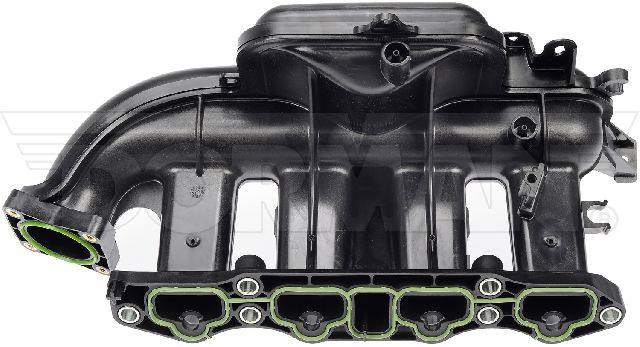
Est. part cost: $60-$150 - Missing or Damaged Intake Manifold Check Valve 🔴 High Probability → Shop Engine Intake Manifold A small, orange check valve inside the intake manifold can become brittle, break, and get sucked into the engine. When this happens, positive boost pressure from the turbo is no longer blocked from the crankcase, and it quickly destroys the PCV diaphragm in the valve cover, causing a repeat P1101 failure.
How to confirm: Remove the PCV hose from the intake manifold. Look inside the port with a flashlight. You should see a small orange 'nipple' or check valve. If the port is an empty, black hole, the valve is missing.
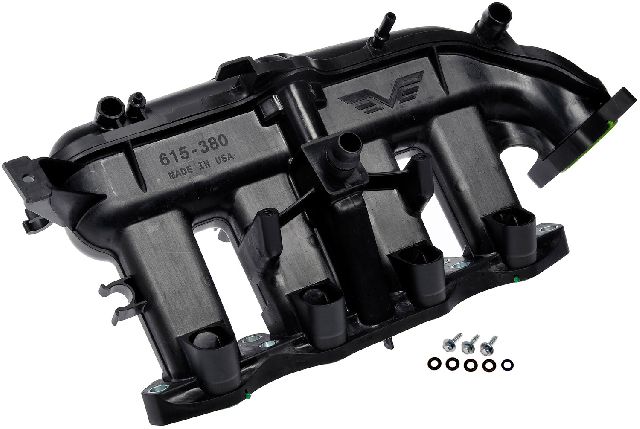
Typical fix: The official GM fix is to replace the entire intake manifold. A very popular and more robust alternative is to install an aftermarket external PCV check valve kit (e.g., from CruzeKits.com or ZZPerformance), which bypasses the faulty internal design.
Est. part cost: $150-$300 for a new manifold, or $75-$100 for an aftermarket kit. - Cracked or Loose Intake Air Duct 🟡 Medium Probability → Shop Engine Air Intake Duct The plastic and rubber components of the intake system can become brittle and crack, or clamps can loosen, allowing unmetered air to enter the engine after the MAF sensor.
How to confirm: Visually inspect all intake ducting between the air filter box and the throttle body for cracks, splits, or loose connections. A smoke test is the most effective way to find hidden leaks.
Typical fix: Replace the damaged section of the intake duct or hose.
Est. part cost: $50-$120 - Dirty or Clogged Air Filter ⚪ Low Probability → Shop Air Cleaner Assembly As per TSB #PIP5240F, an incorrect or severely clogged air filter can disrupt airflow readings enough to trigger P1101.
How to confirm: Remove and inspect the engine air filter. If it is visibly dirty, clogged with debris, or is a poor-fitting aftermarket filter, it should be replaced.
Typical fix: Replace the engine air filter with a quality OEM or equivalent part.
Est. part cost: $15-$40
Rare But Worth Checking
- Leaking Crankshaft Seals (as a Consequence): → Shop Engine Crankshaft TSB #20-NA-047 directly links P1101 to front or rear crankshaft oil leaks. This is not a cause of the code, but a severe result. The extreme vacuum from a failed PCV diaphragm pulls the crankshaft seals inward, damaging them and causing a major oil leak. The root cause is still the PCV system failure.
- Faulty EVAP Purge Valve: A purge valve stuck open can create a vacuum leak, drawing air and fuel vapors from the charcoal canister at the wrong time. This can sometimes trigger P1101 along with other codes like P0496.
- Dirty or Faulty MAF Sensor: → Shop Fuel Injection Air Flow Meter While often suspected, a faulty MAF sensor is a less common cause for P1101 on this specific engine compared to PCV system leaks. Cleaning it is a valid diagnostic step, but replacement should only be considered after all potential vacuum leaks are ruled out.
Diagnosis Steps
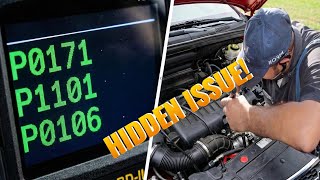
- Scan for all DTCs. Note if P0171 or P0106 are present, as this strongly points to a vacuum leak.
- With the engine idling, listen for a loud hissing or whistling sound from the top of the engine, near the round PCV cap on the valve cover.
- Perform the 'finger test': Carefully place a finger over the small vent hole on the PCV cap. If you feel strong suction, the diaphragm is torn. The engine idle may smooth out when the hole is blocked.
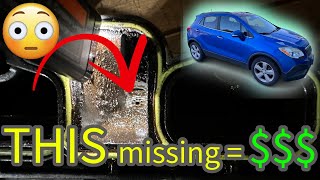
- CRITICAL STEP: Remove the PCV hose from the intake manifold and inspect the port with a flashlight. Confirm the orange check valve is present. If it is an empty black hole, this is the root cause of repeat valve cover failures and must be addressed.
- If the above tests are negative, perform a smoke test. Introduce smoke into the intake system and look for smoke escaping from the valve cover, intake gaskets, or intake hoses.
- Inspect the entire air intake tract from the air filter box to the throttle body. Look for any visible cracks, loose clamps, or disconnected hoses.
- If no vacuum leaks are found, consider cleaning the Mass Airflow (MAF) sensor using only dedicated MAF sensor cleaner. Do not touch the sensor elements.
Parts You'll Likely Need

- Valve Cover Assembly
(OEM #25198874)— This is the most frequent cause of P1101. The part contains the non-serviceable PCV diaphragm that fails, requiring replacement of the entire cover.
Trusted brands: ACDelco (OEM), Dorman (P/N: 264-968)
OEM price range: $100-$150
Aftermarket price range: $60-$100 - Intake Manifold
(OEM #55577314)— Required if the internal orange check valve is missing and you opt for the official GM repair instead of an aftermarket kit.
Trusted brands: ACDelco, GM Genuine Parts
OEM price range: $150-$300
Aftermarket price range: $100-$180 - Aftermarket PCV Fix Kit — A popular, robust alternative to replacing the intake manifold. These kits add an external, serviceable check valve to the PCV system, permanently fixing the design flaw.
Trusted brands: CruzeKits.com, ZZPerformance
OEM price range: N/A
Aftermarket price range: $75-$120
Related Codes That Often Appear With This One
- P0171 — System Too Lean (Bank 1). This code is very common with P1101 because a vacuum leak allows unmetered air into the engine, creating a lean air/fuel mixture.
- P0106 — Manifold Absolute Pressure (MAP) Sensor Performance. A large vacuum leak from the PCV system can cause erratic readings from the MAP sensor, triggering this code alongside P1101.
- P0496 — EVAP Flow During a Non-Purge Condition. This can occur if the EVAP purge valve is faulty and contributing to the vacuum leak.
Technical Service Bulletins (TSBs) & Recalls
- 20-NA-047: Front or Rear Crankshaft Oil Leak, MIL Illuminated with DTC P1101 Set.
- PIP5240F: DTC P0171 and or P1101 set, inspect for correct Air Cleaner Housing.
- Special Coverage Adjustment 14232: Extended warranty coverage for the PCV valve cover diaphragm failure on certain VINs.
Platform-Specific Known Issues
- The PCV system on the 1.4L Turbo engine is a well-documented failure point. GM issued Special Coverage Adjustment #14232 for this issue on many affected vehicles, extending the warranty for this specific repair. It is worth checking with a dealer with your VIN to see if your vehicle is covered.
- TSB #PIP5240F notes that an incorrect air cleaner housing can cause P1101 and P0171, highlighting the system's sensitivity to proper airflow.
Mechanic-Grade Diagnostic Values
- Long Term Fuel Trim (LTFT) — expected: Ideally close to 0%. Values consistently above +10% indicate a lean condition (vacuum leak).. Failure: A scan tool showing LTFT at +25% or higher strongly suggests a significant vacuum leak, which is a classic symptom of the PCV failure on this engine.
- Mass Airflow (MAF) Sensor Reading at Idle — expected: Approximately 1.8 to 4.5 grams/second (g/s) on a healthy, warm engine.. Failure: A reading significantly lower than expected (e.g., 1.0-1.5 g/s) can indicate a vacuum leak, as unmetered air is entering the engine downstream of the MAF sensor.
- MAF Sensor Voltage (Key On, Engine Off) — expected: Should be near 0 volts, as no air is flowing.. Failure: A reading significantly above 0 volts with the engine off points to a sensor or wiring fault.
Scan Tool Commands That Help
- GDS2 (GM Techline Connect): Fuel Injector Balance Test — This is an advanced step used if a misfire accompanies the P1101 code after major PCV system repairs. It can help determine if an injector was damaged or clogged during the repair process, as seen in complex diagnostic scenarios.
- GDS2 (GM Techline Connect): MAP Performance Test — The factory scan tool can run a specific diagnostic test on the MAP sensor. A 'Malfunction' result on this test, even without a separate MAP sensor code, can indicate the sensor is being affected by the erratic vacuum caused by a PCV leak.
Wiring & Ground Locations
- ECM/PCM Ground — On many GM 4-cylinder engines, the primary ECM ground is a bolt or stud on the engine block itself, often near the starter or on the side of the cylinder head. It's a collection of black wires leading to a single ring terminal.. A poor ECM ground can cause erratic behavior and incorrect readings from all engine sensors, including the MAF and MAP, potentially leading to a P1101 code without an actual vacuum leak.
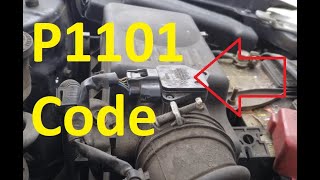
- MAF Sensor Connector — Located directly on the MAF sensor, which is situated on the air filter housing outlet duct.. The connector has 5 pin positions. Pin 1 is Yellow (Signal), Pin 2 is Black (Ground), Pin 3 is not used, Pin 4 is Orange (Ignition Voltage), and Pin 5 is Red (Battery Positive Voltage). Verifying voltage and ground at this connector is a key step in ruling out a faulty sensor or wiring.
Real Owner Repair Stories
- YouTube channel 'Fix It All' (Buick Encore with 1.4L Turbo engine (mechanically identical to Trax)) — Persistent P1101 code.
❌ Tried (didn't work) Replaced the valve cover assembly., Installed an aftermarket external PCV valve kit (CruzeKits)., Replaced the MAF sensor.
✅ What actually fixed it The final cause was a cracked plastic intercooler pipe (charge air cooler outlet hose, GM Part #42698921). A smoke test finally revealed the leak in this pipe, which was not obvious on visual inspection. - Reddit user in /r/cruze (2014 Chevy Cruze LT 1.4L with 171k miles) — Rough, surging idle at stops. Codes P0106, P1101, P0172.
❌ Tried (didn't work) Replaced Air Intake Manifold., Replaced Valve Cover + PCV assembly., Replaced ignition coils and spark plugs., Replaced the MAP sensor.
✅ What actually fixed it The user's post details a long list of replaced parts without a final resolution, highlighting a common scenario where owners throw parts at the problem without success. The excessive suction at the dipstick tube, which was resolved by replacing the intake manifold, confirms the initial diagnosis of a PCV system failure was correct, but an underlying or secondary issue likely remained.
"I Checked Everything" — The Actual Cause
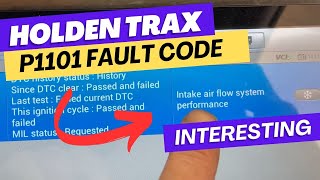
- In one documented case on a Holden Trax (the same vehicle), initial smoke tests found no leaks. However, live data showed a very low MAF reading (around 1 g/s) compared to a known-good car (4.2 g/s). A second, more thorough smoke test revealed a leak from the EVAP vent solenoid valve, which was hidden near the chassis rail. The faulty EVAP component was allowing unmetered air into the system, causing the P1101 code.
OEM Part Supersession History
25198874 (Valve Cover)→25209141— Standard part revision by the manufacturer. The new part number is the current replacement.55577314 (Intake Manifold)→25200449, 28289977— Standard part revision by the manufacturer. Multiple numbers may be in circulation for the same part.
Heads up: Part numbers 55581014 and 55577314 are often listed as compatible/interchangeable for this application.
Model Year Variations Within This Range
- 2013-2020: These models use the 1.4L LUV engine (RPO code LUV), which is a multi-port fuel injection (MPFI) turbocharged engine. This is the engine primarily affected by the well-documented PCV and intake manifold check valve issues.
- 2021-2022: For 2021, the Trax was updated with the 1.4L LE2 engine (RPO code LE2). While the same displacement, the LE2 is a more modern design with direct injection and a higher output of 155 hp. While it may share some architectural similarities, PCV-related issues may differ from the LUV engine.
Helpful Videos


Used OEM Parts in Stock
New Aftermarket Parts Available


The information in this article is provided for general reference and educational purposes only. Vehicle specifications, procedures, and part compatibility can vary by production date, trim level, and region. Always consult your vehicle's factory service manual and verify part numbers before purchasing or performing repairs. Safety-critical components such as airbags, seat belts, and braking systems should be installed by a qualified professional.
- Chevrolet TRAX:
- 🧭 Diagnostic Flowchart
- 🎬 Helpful Videos
- 🛍️ Shop This Part
- What's Unique About the 2013-2020 Chevrolet TRAX
- Symptoms You May Notice
- Most Likely Causes
- Rare But Worth Checking
- Diagnosis Steps
- Parts You'll Likely Need
- Related Codes That Often Appear With This One
- Technical Service Bulletins (TSBs) & Recalls
- Platform-Specific Known Issues
- Mechanic-Grade Diagnostic Values
- Scan Tool Commands That Help
- Wiring & Ground Locations
- Real Owner Repair Stories
- "I Checked Everything" — The Actual Cause
- OEM Part Supersession History
- Model Year Variations Within This Range
- 🎟️ Get 5% Off