

P1101 on 2021-2022 Chevrolet Trax: Intake Airflow Performance Causes and Fixes
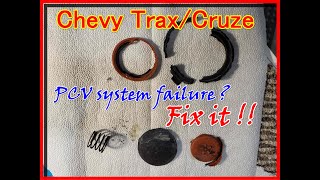
Code P1101 on a 2021-2022 Chevy Trax most often points to a problem within the Positive Crankcase Ventilation (PCV) system, such as a plugged orifice in the camshaft cover. This can cause high crankcase pressure, leading to oil leaks and setting the P1101 code. This is a well-documented issue covered by GM Technical Service Bulletin #20-NA-047.
- P1101 on a 2021-2022 Trax is most likely a PCV system issue, not a bad MAF sensor.
- Check for related TSBs; #20-NA-047 is critical as it links this code directly to a plugged PCV orifice and potential oil leaks.
- Diagnosis should start with checking the air intake system for proper fitment and then testing crankcase pressure before replacing any parts.
- Ignoring this code can lead to expensive oil leak repairs, such as replacing crankshaft seals.
What's Unique About the 2021-2022 Chevrolet TRAX
The 1.4L Turbo engine (RPO code LE2) used in the 2021-2022 Trax and its platform-mate, the Buick Encore, is highly susceptible to specific PCV system issues that directly cause the P1101 code. Unlike many vehicles where a P1101 might first suggest a bad MAF sensor, on this platform, it's frequently caused by a plugged PCV orifice inside the camshaft cover. This blockage leads to excessive positive crankcase pressure, which not only triggers the P1101 code but is also directly linked to front and rear crankshaft oil leaks, as documented in official GM service bulletin #20-NA-047.
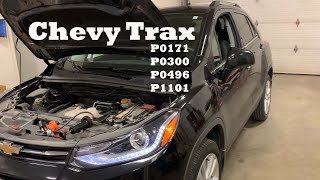
🎬 Watch: Expert breakdown of 1.4L PCV issues and diagnosis.Diagnostic Flowchart
Tap your situation to follow the diagnostic path that matches what you're seeing on this vehicle.
Symptoms You May Notice
- Check Engine Light is on
- Rough or unstable idle
- Reduced engine power and poor acceleration
- Hissing or whistling noise from the engine bay, especially at idle.
- Poor fuel economy
- Engine stalling, particularly at stoplights.
- Engine oil leaks, particularly from the front or rear crankshaft seals.
- Replacing the Mass Airflow (MAF) sensor without first diagnosing the PCV system. On this engine, PCV issues are a more frequent cause of P1101, and a new MAF sensor will not fix the underlying problem.
- Replacing the front or rear main crankshaft seals to fix an oil leak without addressing the underlying high crankcase pressure from the PCV system. The new seals will likely fail again quickly.
Most Likely Causes
- Plugged PCV Orifice in Camshaft Cover 🔴 High Probability → Shop PCV Valve This is a well-documented issue for the 1.4L LE2 engine. TSB #20-NA-047 directly links a plugged PCV orifice to high crankcase pressure, oil leaks, and the P1101 code. The bulletin was updated in January 2023 to include the 2021-2022 model years.
How to confirm: A technician can perform a crankcase pressure test using a manometer (EEST) connected to the oil dipstick tube. With the engine at hot idle, normal pressure is between -1 and -5 inches of water. A reading above 0 inches of water indicates excessive positive pressure, pointing to a blockage. Visual inspection requires removing the camshaft cover to check the small orifice.
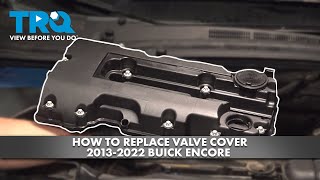
Typical fix: Remove the camshaft cover, inspect and clean the PCV passages, and replace the small PCV orifice (Part No. 12641875). The camshaft cover gaskets (Part No. 12636176) must also be replaced.
Est. part cost: $20-$50 for the orifice and gaskets. - Incorrect or Damaged Air Cleaner Housing 🟡 Medium Probability TSB #PIP5240F specifically calls out that an incorrect or improperly seated air cleaner housing can cause turbulence and incorrect MAF readings, triggering P1101. This can happen if the wrong part is installed or if the element bracket is not properly secured.
How to confirm: Inspect the air cleaner housing to ensure it is the correct part for the vehicle and that it is properly sealed and installed without any gaps or damage. For the LE2 engine, the housing should have both a Hydro Carbon Absorber (HCA) and a diffuser.
Typical fix: Reseat the air cleaner housing correctly or replace it if it's the wrong part or is damaged.
Est. part cost: $100-$200 for a new housing if needed. - Contaminated or Faulty Mass Airflow (MAF) Sensor ⚪ Low Probability → Shop Fuel Injection Air Flow Meter While a common cause on many vehicles, it is less likely to be the root cause on the Trax compared to PCV issues. Contamination from dirt or over-oiled aftermarket air filters can skew readings. Owners often replace the MAF sensor unnecessarily.
How to confirm: Remove and inspect the sensor for dirt or oil. A scan tool can monitor MAF readings in grams/second to see if they are erratic or illogical for the engine speed.
Typical fix: Clean the sensor using only dedicated MAF sensor cleaner. If cleaning doesn't work and all other causes are ruled out, replace the sensor.
Est. part cost: $15-$25 for cleaner, $80-$150 for a new sensor. - Vacuum Leak in Air Intake System ⚪ Low Probability Any unmetered air that enters the engine after the MAF sensor can trigger this code. This can include cracked intake hoses or loose clamps. One owner of a platform-mate Buick Encore found their P1101 was caused by a cracked intercooler hose.
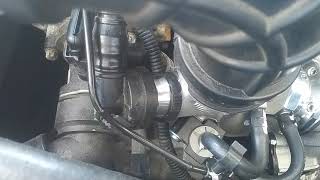
How to confirm: Perform a visual inspection of all intake ducting from the air filter to the throttle body. A smoke test is the most effective way to find hidden leaks. 🎬 See how to perform a professional boost leak test.
Typical fix: Replace the cracked hose or tighten the loose clamp.
Est. part cost: $20-$100 depending on the hose.
Rare But Worth Checking
- Faulty Engine Camshaft Cover: → Shop Engine Camshaft TSB #PIP5947C suggests that in some cases, an internal failure of the camshaft cover itself can cause excessive oil consumption and may set a P1101, requiring replacement of the entire cover assembly.
- Faulty EVAP Purge Valve: A purge valve stuck open can create a vacuum leak, sometimes triggering P1101 along with an EVAP code like P0496.
- Poorly Seated Charge Air Cooler (CAC) Outlet Hose: → Shop Intercooler TSB #18-NA-333, which applies to the platform-mate Buick Encore with the same LE2 engine, notes that a whistle noise and P1101 can be caused by a poorly installed CAC outlet hose at the throttle body. The fix is to simply reseat the hose and clamp correctly.
Diagnosis Steps
- Read all stored fault codes with an OBD-II scanner.
- Inspect the air filter and air cleaner housing. Ensure the filter is clean and the housing is properly sealed per TSB #PIP5240F.
- Visually inspect the entire air intake tract, including the Charge Air Cooler (CAC) outlet hose at the throttle body, for obvious cracks, loose hoses, or disconnected components, per TSB #18-NA-333.
- With the engine running, listen for hissing or whistling sounds that would indicate a vacuum leak.
- Perform a crankcase pressure test. Connect a manometer to the oil dipstick tube and start the engine. If the pressure at hot idle is positive (above 0 inches of water), a blocked PCV orifice is the likely cause, as per TSB #20-NA-047. Normal is -1 to -5 inches of water.
- If no PCV issue is found, remove and inspect the MAF sensor for contamination. Clean it with dedicated MAF sensor cleaner.
- If the cause is still not found, perform a smoke test to identify hard-to-see leaks in the intake or PCV system.
- If all else fails, consider a faulty camshaft cover as described in TSB #PIP5947C or a faulty MAF sensor.
Parts You'll Likely Need
- PCV Orifice
(OEM #12641875)— This small part within the camshaft cover is the most likely cause of P1101 on this engine, as it can become clogged and cause excessive crankcase pressure. This part number is specified in an early version of TSB 20-NA-047.
Trusted brands: ACDelco
OEM price range: $10-$20
Aftermarket price range: $5-$15 - Camshaft Cover Gasket
(OEM #12636176)— Must be replaced whenever the camshaft cover is removed to service the PCV orifice. This part number is specified in TSB 20-NA-047.
Trusted brands: ACDelco, Fel-Pro
OEM price range: $30-$50
Aftermarket price range: $20-$40 - Mass Airflow (MAF) Sensor — Replaced if it is found to be faulty after cleaning and after all other potential causes (especially PCV issues) have been ruled out.
Trusted brands: ACDelco, Bosch, Delphi
OEM price range: $120-$180
Aftermarket price range: $70-$120
Related Codes That Often Appear With This One
- P0171 — System Too Lean (Bank 1). This code is very common with P1101 because a vacuum leak or PCV issue allows unmetered air into the engine, creating a lean air/fuel mixture.
- P0300 — Random/Multiple Cylinder Misfire Detected. A lean condition or incorrect airflow can cause misfires. TSB #PIP5947C also notes that camshaft cover issues can cause both P1101 and P0300.
- P050D — Cold Start Rough Idle. This can be caused by the same camshaft cover issues mentioned in TSB #PIP5947C.
Technical Service Bulletins (TSBs) & Recalls
- 20-NA-047: Front or Rear Crankshaft Oil Leak, MIL Illuminated with DTC P1101 Set.
- PIP5947C: Mentions P1101 can be set due to issues requiring inspection of the engine camshaft cover.
- PIP5240F: DTC P0171 and or P1101 set, inspect for correct Air Cleaner Housing.
- 18-NA-333: Malfunction Indicator Lamp (MIL) On, Whistle Type Noise at Startup, DTC P1101 Set.
Platform-Specific Known Issues
- TSB #20-NA-047 documents that a plugged PCV orifice can cause high crankcase pressure (above 0 inches of water at idle), leading to P1101 and potentially causing front or rear crankshaft oil leaks. The fix is to replace the orifice and gaskets.
- TSB #PIP5240F notes that an incorrect or improperly installed air cleaner housing can be a specific cause for P1101 on the Trax.
- TSB #18-NA-333 points to a poorly seated Charge Air Cooler (CAC) outlet hose at the throttle body as a cause for a whistling noise and P1101 on the same LE2 engine.
Mechanic-Grade Diagnostic Values
- Crankcase Pressure at Hot Idle — expected: -1.0 to -5.0 inches of H₂O. Failure: A pressure reading at or above 0 inches of H₂O indicates a blockage in the PCV system, as per TSB #20-NA-047.
- Mass Airflow (MAF) Sensor Reading at Warm Idle — expected: 1.8 to 4.5 grams/second (g/s). Failure: A reading significantly lower than 1.8 g/s suggests unmetered air is entering the engine (vacuum leak) after the MAF sensor.
- Long-Term and Short-Term Fuel Trims (LTFT + STFT) — expected: Combined value close to 0% (typically within +/- 5%). Failure: A sustained combined value greater than +10% indicates the ECM is adding significant fuel to compensate for a lean condition (vacuum leak). A value over +25% will typically set a P0171 code.
- Throttle Position PID at Idle — expected: ~8% or more. Failure: A reading around 2% indicates the ECM is closing the throttle to compensate for a large vacuum leak, often from the PCV system.
- MAF Sensor Voltage (Key On, Engine Running Self-Test) — expected: 0.46 to 2.44 Volts. Failure: A voltage reading below 0.46V during the KOER self-test will trigger the P1101 code.
Hidden / Shadow Codes Worth Checking
- MAP Performance Test Malfunction: Some advanced scan tools may show a specific sub-test for the Manifold Absolute Pressure (MAP) sensor has failed. In one documented case, this pointed the technician to an airflow disparity issue even when other sensor readings seemed plausible. (see via GM GDS2 or equivalent professional-grade scan tool with access to engine control module sub-system tests.)
Wiring & Ground Locations
- MAF Sensor Connector — On the MAF sensor, which is located on the air filter housing outlet duct.. Verifying power, ground, and signal at this 5-pin connector is a primary step in diagnosing the MAF sensor circuit. The pinout is: Pin 1 - Yellow (Signal), Pin 2 - Black (Ground), Pin 4 - Orange (Ignition Voltage), Pin 5 - Red (Battery Positive Voltage).
- G101 — Typically located on the lower front of the engine block on the left (driver's) side.. This is a primary engine ground point that serves the Engine Control Module (ECM) and the Mass Air Flow (MAF) sensor. A poor connection at this ground can cause erratic sensor readings and trigger a P1101 code without a mechanical fault.
Real Owner Repair Stories
- Reddit user @AfrshTD in /r/AskMechanics (Chevrolet with 1.4L Turbo engine (similar PCV design)) — Persistent P1101 code.
❌ Tried (didn't work) Cleaning the MAF sensor., Performing a standard crankcase pressure test, which showed normal pressure.
✅ What actually fixed it The owner decided to inspect the PCV system despite the normal pressure test. Upon removing the camshaft cover, they found the PCV orifice was completely plugged with carbon buildup. Replacing the PCV components within the cover resolved the code.
"I Checked Everything" — The Actual Cause
- In a documented case on a Holden Trax (a rebadged Chevrolet Trax), initial smoke tests of the intake system showed no leaks. However, live scan tool data revealed a very low MAF reading (~1 g/s vs. a known-good 4.2 g/s). A second, more thorough smoke test finally revealed a hidden leak from the EVAP vent solenoid valve located near the chassis rail, which was allowing unmetered air into the system.
Model Year Variations Within This Range
- 2021-2022: No significant mechanical variations affecting this code are documented between the 2021 and 2022 model years. Both use the same 1.4L LE2 Turbo engine and are covered by the same key Technical Service Bulletins (e.g., #20-NA-047) for the P1101 code related to the PCV orifice.
Helpful Videos
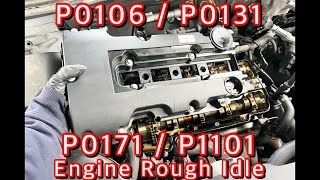
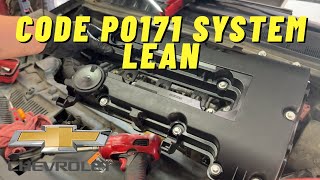
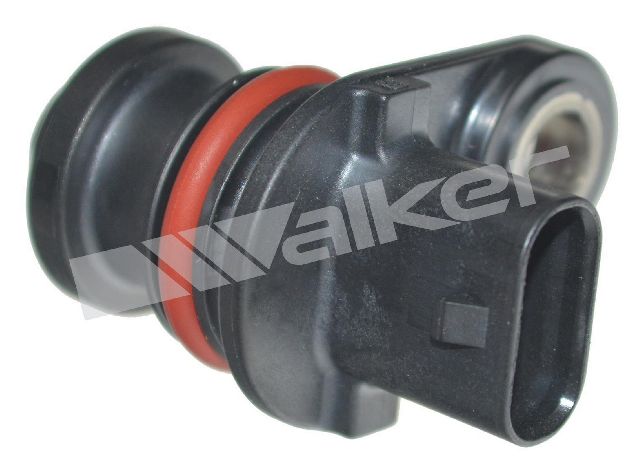
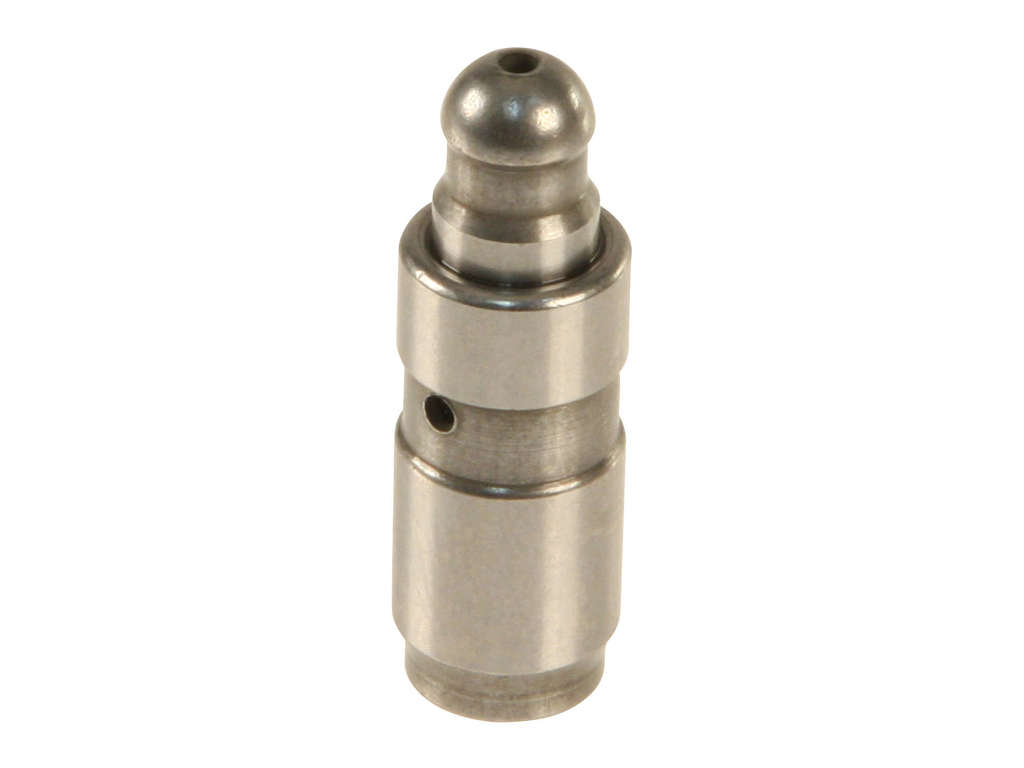
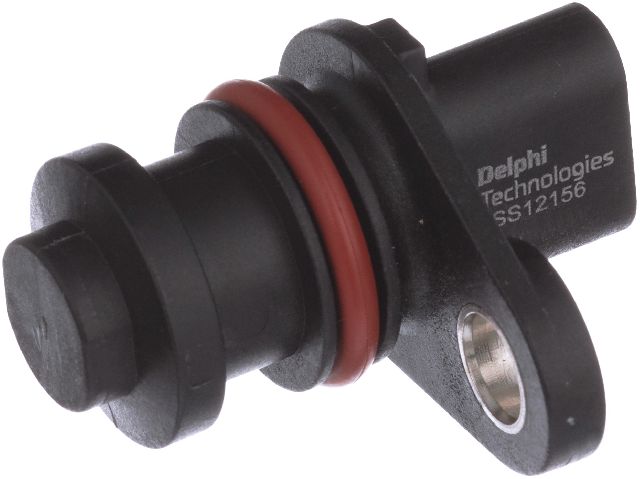
We Have This Part in Stock


The information in this article is provided for general reference and educational purposes only. Vehicle specifications, procedures, and part compatibility can vary by production date, trim level, and region. Always consult your vehicle's factory service manual and verify part numbers before purchasing or performing repairs. Safety-critical components such as airbags, seat belts, and braking systems should be installed by a qualified professional.
- Chevrolet TRAX:
- 🧭 Diagnostic Flowchart
- 🎬 Helpful Videos
- 🛍️ Shop This Part
- What's Unique About the 2021-2022 Chevrolet TRAX
- Symptoms You May Notice
- Most Likely Causes
- Rare But Worth Checking
- Diagnosis Steps
- Parts You'll Likely Need
- Related Codes That Often Appear With This One
- Technical Service Bulletins (TSBs) & Recalls
- Platform-Specific Known Issues
- Mechanic-Grade Diagnostic Values
- Hidden / Shadow Codes Worth Checking
- Wiring & Ground Locations
- Real Owner Repair Stories
- "I Checked Everything" — The Actual Cause
- Model Year Variations Within This Range
- 🎟️ Get 5% Off