

P1101 on 2011-2014 Ford Mustang 3.7L: MAF Sensor Range Fault Causes and Fixes
On a 2011-2014 Mustang 3.7L, code P1101 is most often caused by a dirty Mass Airflow (MAF) sensor. Cleaning the sensor with dedicated MAF cleaner spray is the most likely fix, costing under $15 and taking less than 30 minutes. If cleaning doesn't work, check for vacuum leaks before replacing parts.
- P1101 on your Mustang almost always points to an issue with measured airflow.
- Before buying any parts, spend $15 on a can of MAF Sensor Cleaner and clean the sensor. This is the most common fix.
- Thoroughly inspect the intake tube between the air filter box and the engine for any cracks or loose clamps, as unmetered air is the second most likely cause.
- If you have an aftermarket oiled air filter, be careful not to over-oil it, as this is a primary source of MAF sensor contamination.
- This code is often paired with P0171 and P0174 (lean codes), which strongly suggests a vacuum leak is present.
What's Unique About the 2011-2014 Ford Mustang
The 3.7L Cyclone V6 in the S197 Mustang uses a traditional MAF sensor in the intake tube, making it sensitive to contamination. Unlike turbocharged EcoBoost engines that often get this code from oil vapor contamination via the PCV system, the 3.7L is more susceptible to issues from aftermarket oiled air filters, a dirty stock air filter, or vacuum leaks in the intake system between the sensor and the throttle body. After a repair, it is crucial to perform a PCM Adaptive Memory Reset with a capable scan tool to force the computer to re-learn airflow values, as simply disconnecting the battery may not provide a permanent fix.
Symptoms You May Notice
- Check Engine Light is on
- Rough or unstable idle
- Hesitation or stumbling during acceleration
- Reduced engine power or sluggish performance
- Poor fuel economy
- Engine stalling when coming to a stop
- Replacing oxygen (O2) sensors. While lean codes like P0171/P0174 often accompany P1101, the O2 sensors are usually just reporting the problem (unmetered air), not causing it.
- Replacing the throttle body when it only needs to be cleaned.
Most Likely Causes
- Dirty or Contaminated MAF Sensor 🔴 High Probability → Shop Fuel Injection Air Flow Meter The use of aftermarket oiled air filters is common on Mustangs, and excess oil can easily contaminate the MAF sensor's delicate wire, skewing its readings. Even with a stock filter, fine dust and debris can accumulate over time and cause the same issue.
How to confirm: Visually inspect the sensor's wires inside the housing. If they appear dirty, oily, or have debris on them, they need cleaning.
Typical fix: Remove the MAF sensor and clean it carefully using only dedicated Mass Airflow Sensor cleaner spray. 🎬 Watch: How to clean the MAF sensor on your Mustang Do not touch the sensor wires. Allow it to dry completely before reinstallation.
Est. part cost: $10-$15 for a can of MAF cleaner. - Vacuum Leak 🟡 Medium Probability The intake system has several connection points (intake tube to airbox, tube to throttle body, PCV hoses) where leaks can develop as plastic and rubber components age and become brittle.
How to confirm: Visually inspect all intake ducting and vacuum hoses for cracks or loose connections. A smoke test is the most effective way to find small, hard-to-see leaks. 🎬 See how to perform a smoke test for vacuum leaks
Typical fix: Replace the cracked hose or tighten the loose clamp that is causing the leak.
Est. part cost: $10-$100 depending on the specific hose or gasket that failed. - Clogged or Dirty Engine Air Filter 🟡 Medium Probability → Shop Air Cleaner Assembly A severely restricted filter can starve the engine of air, causing the MAF sensor readings to be lower than what the PCM expects for a given engine speed, triggering the self-test fault.
How to confirm: Remove the air filter and inspect it. If it is visibly clogged with dirt, leaves, or other debris, it needs to be replaced.
Typical fix: Replace the engine air filter.
Est. part cost: $20-$50. - Faulty MAF Sensor ⚪ Low Probability → Shop Fuel Injection Air Flow Meter
How to confirm: If cleaning the sensor and confirming there are no vacuum leaks does not resolve the code, the sensor itself may have failed. A simple test is to start the engine and unplug the MAF sensor; if the engine continues to run or dies, the sensor is likely faulty. This can also be confirmed by monitoring the sensor's output (grams/sec) with an OBD-II scan tool; if readings are erratic or do not change with RPM, the sensor is likely bad.
Typical fix: Replace the Mass Airflow Sensor.
Est. part cost: $70-$200.
Rare But Worth Checking
- Dirty Throttle Body: → Shop Fuel Injection Throttle Body Carbon and oil sludge can build up around the throttle plate, restricting airflow at idle and causing the PCM to miscalculate the expected air volume. Cleaning it can sometimes resolve idle-related airflow issues.
- Damaged MAF Sensor Wiring or Connector: → Shop Fuel Injection Air Flow Meter Frayed wires or corroded pins on the MAF sensor connector can cause an intermittent or complete loss of signal, triggering the P1101 code.
- Faulty Powertrain Control Module (PCM): In very rare cases, the PCM itself can be the source of the problem, failing to correctly interpret the signals from the MAF sensor. This should only be considered after all other possibilities have been exhausted.
Diagnosis Steps
- Read all fault codes using an OBD-II scanner. Note any other codes present, such as P0171, P0174, or P0101.
- Inspect the engine air filter. Replace it if it is dirty or clogged.
- Visually inspect the entire air intake system from the airbox to the throttle body. Look for any cracks, tears, or loose clamps, paying close attention to the PCV hoses.
- Remove the MAF sensor. It is located on the intake tube just after the air filter box. Inspect the sensor elements for dirt, oil, or debris.
- Clean the MAF sensor using only dedicated MAF sensor cleaner spray. Allow it to dry completely before reinstalling. Do not touch the internal wires.
- Inspect the MAF sensor's electrical connector and wiring for any signs of damage or corrosion.
- After cleaning/repairs, clear the DTCs and perform a PCM Adaptive Memory Reset using a capable scan tool (like Ford's IDS or equivalent). This forces the PCM to relearn airflow and fuel trim values immediately. 🎬 Watch: How to clear and reset your Ford PCM memory
- If the code persists, perform a smoke test to definitively check for vacuum leaks in the intake manifold, vacuum lines, and PCV system.
- If no vacuum leaks are found and the sensor has been cleaned, monitor the MAF sensor's live data on a scan tool. The g/s reading should be low and stable at idle and increase smoothly with engine RPM. If the reading is stuck, erratic, or zero, the sensor is likely faulty and needs replacement.
Parts You'll Likely Need
- Mass Airflow Sensor Cleaner — This is the most common and least expensive first step, as a dirty sensor is the leading cause of P1101.
Trusted brands: CRC, WD-40 Specialist
Aftermarket price range: $10-$15 - Mass Airflow (MAF) Sensor
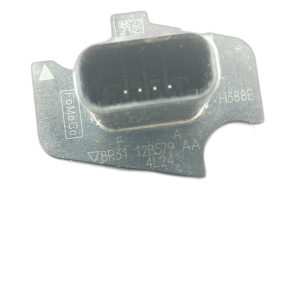
(OEM #BR3Z-12B579-A)— If cleaning the sensor and checking for vacuum leaks doesn't fix the problem, the sensor itself has likely failed.
Trusted brands: Motorcraft, Hitachi, Delphi
OEM price range: $150-$200
Aftermarket price range: $70-$140 - Engine Air Filter
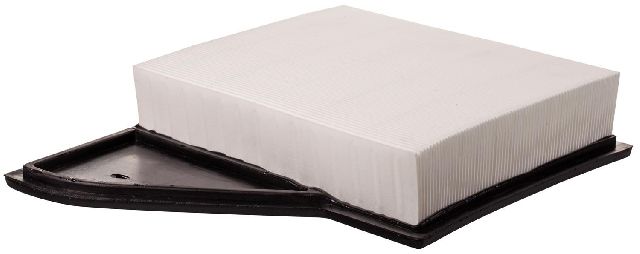
(OEM #FA-1883 (Motorcraft))— A clogged air filter can restrict airflow and is a simple, inexpensive maintenance item to rule out as a cause.
Trusted brands: Motorcraft, Wix, Fram
OEM price range: $30-$50
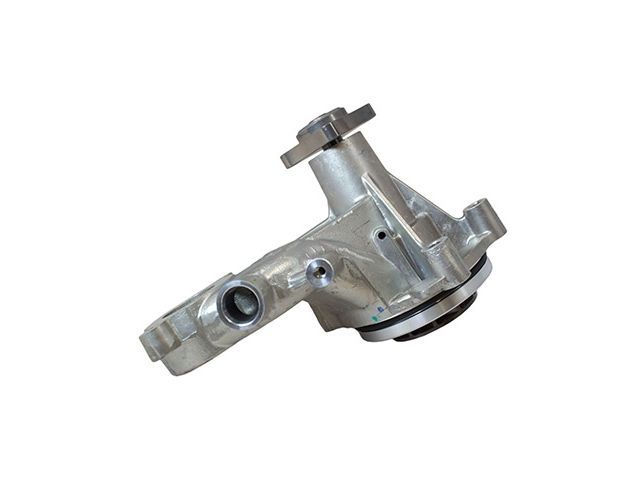
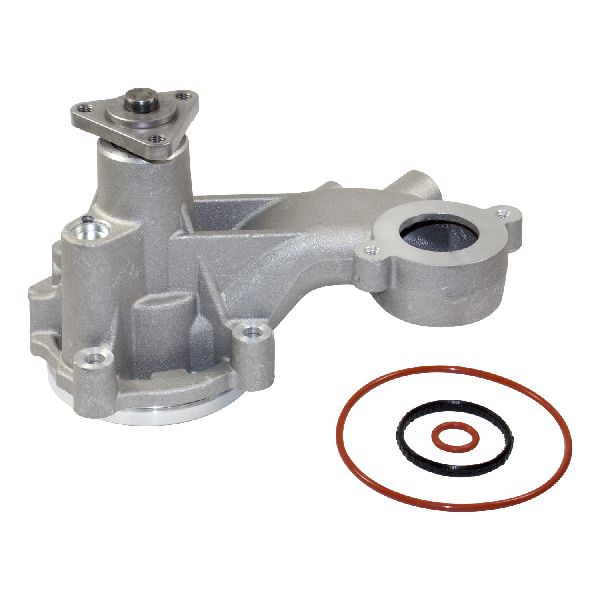
Aftermarket price range: $20-$35 - Coolant Pump Kit (Water Pump)
(OEM #BR3Z-8501-N)— This is not a cause for P1101, but is the fix for the most common major engine issue on this platform (water pump failure) as outlined in TSB 16-0074.
Trusted brands: Motorcraft
OEM price range: $120-$180
Aftermarket price range: $80-$150
Related Codes That Often Appear With This One
- P0171 — This code for 'System Too Lean (Bank 1)' often appears with P1101 because a vacuum leak after the MAF sensor is a common cause for both.
- P0174 — This code for 'System Too Lean (Bank 2)' can also appear with P1101 for the same reason as P0171, as a significant vacuum leak will affect both cylinder banks.
- P0101 — This is a generic code for 'MAF Circuit Range/Performance'. It can be set alongside the manufacturer-specific P1101 as they both relate to implausible airflow readings.
Technical Service Bulletins (TSBs) & Recalls
- TSB 16-0074: Addresses premature water pump failure due to air in the cooling system. The fix is a revised pump and a new degas hose with an integrated check valve. This is a critical preventative or repair item for any owner of this vehicle.
- TSB 12-1-17: Pertains to an engine ticking noise from the valve cover area on cold startups.
- TSB 13-6-8: Relates to 6R80 automatic transmission issues, including engaging 5th gear on startup and other electronic faults.
Platform-Specific Known Issues
- Aftermarket Cold Air Intakes: A very common trigger for P1101 on this platform is the installation of an aftermarket Cold Air Intake (CAI). If the MAF sensor is not perfectly seated and sealed in the new intake tube, or if the tube's diameter significantly changes the airflow characteristics, it can cause the sensor's readings to go out of the expected range. Re-checking all clamps and the sensor seal is a primary diagnostic step after installing a CAI.
Mechanic-Grade Diagnostic Values
- MAF Sensor Voltage during KOER Self-Test — expected: 0.46 volts to 2.44 volts. Failure: A voltage reading below 0.46 volts during the self-test will abort the test and trigger the P1101 code.
- MAF Sensor Live Data (g/s) at Idle — expected: A low, stable reading that increases smoothly with RPM. For a 3.7L engine, this is typically around 4-6 g/s at a stable warm idle.. Failure: A reading that is stuck at zero, is erratic, or does not increase when the throttle is applied points to a faulty sensor or wiring issue.
- MAF Sensor Live Data (g/s) with Key On, Engine Off (KOEO) — expected: 0 g/s. Failure: Any reading significantly above 0 g/s indicates a sensor that is electrically faulted or has a wiring issue, as no air is flowing through it.
Scan Tool Commands That Help
- Ford IDS / FORScan / Professional Scan Tool: Key-On Engine-Running (KOER) Self-Test — This is the specific self-test that the PCM runs which triggers the P1101 code if the MAF sensor's reported airflow doesn't match the expected value. Manually running this test after a repair (like cleaning the sensor) is the fastest way to verify if the fix was successful without having to complete a full drive cycle.
- Ford IDS / FORScan / Professional Scan Tool: PCM Adaptive Memory Reset — This should be performed after any repair affecting airflow, such as cleaning/replacing the MAF, fixing a vacuum leak, or replacing an air filter. It forces the PCM to immediately discard old learned fuel trim and airflow values and start a new learning process with the corrected inputs, preventing the code from returning due to old, bad data.
Wiring & Ground Locations
- G106 — On the 3.7L V6, this primary engine ground is located on the left side of the engine block.. This is a main ground point for the engine and PCM. A loose or corroded connection here can create an unstable ground reference for all engine sensors, including the MAF, leading to erratic voltage readings and fault codes like P1101 even if the sensor itself is good.
- G107 — Located on the right side of the engine compartment, on the shock tower area, often near or below the battery.. This is a primary chassis ground. A poor connection here can cause a voltage differential between the engine and the body, affecting PCM operation and sensor readings.
- MAF Sensor Connector (C128) — On the MAF sensor, located in the intake tube right after the air filter box. It is a 6-pin connector.. This is the direct connection point for the sensor. The pins must be clean and the wiring intact. Pinout is typically: Pin 1 (MAF RTN - Signal Return), Pin 2 (VPWR - Vehicle Power), Pin 3 (GND - Ground), Pin 4 (IAT - Intake Air Temp Signal), Pin 5 (MAF - MAF Signal), Pin 6 (Not Used).
Real Owner Repair Stories
- StangNet Forums (Ford Mustang (year not specified, but SN95/New Edge era with plastic MAF housing)) — Car ran terribly, backfiring through the intake, loss of power, bouncing idle. Unplugging the MAF made it run better but not perfectly.
❌ Tried (didn't work) Assuming the new MAF sensor was good.
✅ What actually fixed it The owner discovered he had overtightened the hose clamp on the inlet side of the plastic MAF housing, causing it to deform and bend inward directly in front of the sensor wires. This disrupted airflow and caused the bad readings. He physically cut away the deformed piece of plastic, smoothed the housing, and reinstalled, which solved the problem. - StangNet Forums (Ford Mustang (model year not specified)) — Check Engine Light on, poor performance.
❌ Tried (didn't work) Cleaning the MAF sensor.
✅ What actually fixed it After cleaning didn't work, a scan tool revealed codes P0157 (Mass Air Flow Low Voltage) and P0158 (Mass Air Flow High Voltage) in addition to the initial codes. This confirmed an electrical failure within the sensor itself. Replacing the MAF sensor with a new one fixed the issue.
"I Checked Everything" — The Actual Cause
- A technician could perform a smoke test and find no vacuum leaks, clean the MAF sensor, and still have the P1101 code return. The root cause could be a physically deformed MAF sensor housing from a previously overtightened hose clamp. This damage creates turbulence directly at the sensor element, corrupting the reading, but it would not show up as a leak in a smoke test.
When the Usual Fixes Don't Work
- While cleaning the MAF sensor is the most common fix, it is not a guaranteed solution. In one documented case, the problem persisted because the plastic housing of the MAF sensor itself had been physically crushed inward by an overtightened hose clamp. This created airflow turbulence that the sensor could not read correctly. The fix was not cleaning or replacing the sensor for an electrical fault, but rather repairing the physical damage to the housing. This highlights the importance of inspecting the physical integrity of the intake tract, not just looking for dirt or vacuum leaks.
OEM Part Supersession History
BR3Z-12B579-A→BR3Z-12B579-A (current)— No supersession found. This part number appears to be stable for the entire 2011-2014 model year range for the 3.7L, 5.0L, and 5.8L engines.
Model Year Variations Within This Range
- 2011-2014: There are no significant documented variations in the MAF sensor, its wiring, or the engine management system related to the P1101 code for the 3.7L V6 across this year range. The 2013-2014 models received a cosmetic facelift and interior updates, but the core powertrain components relevant to this code remained the same as the 2011-2012 models.
Diagnostic Flowchart
Other Known Issues on This Vehicle
Issues unrelated to this code that are worth knowing about as an owner of this generation:
- Premature Water Pump Failure 🔴 High — Common issue, can occur as early as 50,000-70,000 miles. Failure can lead to coolant mixing with engine oil, causing catastrophic engine damage. (Ref: TSB 16-0074 (supersedes 14-0212). This TSB addresses coolant pump leakage caused by air entering the system and involves replacing the pump and a coolant hose with a revised part kit (BR3Z-8501-N) that includes a check valve.)
- MT82 Manual Transmission Problems 🟠 Medium → Shop Transmission Assembly — Widespread complaints of difficult or notchy shifting (especially 1st to 2nd when cold), high-RPM lockout, and general lack of refinement. (Ref: TSB 12-11-1 was issued for increased shift efforts in cold temperatures. Many owners resort to aftermarket shifters and transmission fluid changes to mitigate the issue.)
- 6R80 Automatic Transmission Faults 🟡 Low → Shop Transmission Assembly — Some owners report intermittent issues like engaging 5th gear on startup, speedometer dropping to zero, or shift flares between gears. (Ref: TSB 13-6-8 addresses the startup gear engagement issue and related DTCs (P0720, P0722). TSB 11-11-11 addresses 2-3 and 4-5 shift flares.)
- Cold Start Engine Tick or Belt Squeal 🟡 Low — A ticking noise from the left-hand valve cover area for several minutes after a cold start, or a belt squeal in cold/damp weather. (Ref: TSB 12-1-17 addresses the engine tick. TSB 11-6-3 addresses the accessory drive belt squeal.)
Used vs. New Parts: Buying Guide for This Vehicle
When a used part is the smart pick: A used OEM (Motorcraft) MAF sensor can be a cost-effective option if the donor vehicle is known to be low-mileage and ran well. It is a gamble, as the part is sensitive and its history is unknown. It makes most sense when on a tight budget and the original sensor has been confirmed faulty via electrical tests, not just contamination.
Donor-vehicle mileage cap: roughly under 50000 miles for the part to have meaningful remaining life.
What to inspect on the donor part:
- Perform the 'unplug test' on the donor car if possible: if the car is running and unplugging the MAF makes the idle worse or kills the engine, the sensor is likely functional.
- Inspect the sensor elements through the housing. Avoid any unit with visible contamination, oil, or physical damage to the delicate wires.
- Ensure the plastic housing is not cracked or deformed, especially near the clamp areas.
- Check that the electrical connector pins are straight and free of corrosion.
OEM-only on this vehicle (don't cheap out):
- Mass Airflow (MAF) Sensor: While not strictly 'OEM-only', using the OEM Motorcraft sensor (BR3Z-12B579-A) is highly recommended for this vehicle to avoid calibration and performance issues that can arise with some aftermarket brands.
Aftermarket brands forum-validated for this vehicle:
- Hitachi (Often an OEM supplier)
- Delphi
Brands owners have reported issues with on this vehicle:
- Unnamed, no-brand 'white box' parts from online marketplaces should be avoided as their calibration and longevity are highly questionable.
Real Owner Stories
Aggregated from forums and TSBs cited above. Mileages and costs reflect what owners reported in those sources.
2014 Ford Mustang 3.7L V6 — 65000 miles
Symptoms: Owner acknowledged the engine as 'bulletproof' but experienced a primary failure point common to the platform.
What fixed it: Replacement of the water pump as part of preventative/repair maintenance for a known failure point.
Source hint: Reddit r/Mustang - '2014 3.7L V6 common issues'
Related OBD-II Codes
Frequently Asked Questions
I just installed a Cold Air Intake on my 2013 Mustang 3.7L and now I have a P1101 code. What should I check first?
Does TSB 16-0074 apply to my 3.7L Cyclone V6 engine?
My automatic Mustang is engaging 5th gear immediately on startup; is this related to P1101?
Can I use any cleaner to fix the MAF sensor on my Mustang?
Is there a TSB for the difficult shifting I'm experiencing in my manual 3.7L Mustang?
How can I tell if my P1101 code is caused by a dirty air filter?
Helpful Videos

Used OEM Parts in Stock
New Aftermarket Parts Available



The information in this article is provided for general reference and educational purposes only. Vehicle specifications, procedures, and part compatibility can vary by production date, trim level, and region. Always consult your vehicle's factory service manual and verify part numbers before purchasing or performing repairs. Safety-critical components such as airbags, seat belts, and braking systems should be installed by a qualified professional.
- Ford Mustang:
- 🧭 Diagnostic Flowchart
- 🎬 Helpful Videos
- 🛍️ Shop This Part
- What's Unique About the 2011-2014 Ford Mustang
- Symptoms You May Notice
- Most Likely Causes
- Rare But Worth Checking
- Diagnosis Steps
- Parts You'll Likely Need
- Related Codes That Often Appear With This One
- Technical Service Bulletins (TSBs) & Recalls
- Platform-Specific Known Issues
- Mechanic-Grade Diagnostic Values
- Scan Tool Commands That Help
- Wiring & Ground Locations
- Real Owner Repair Stories
- "I Checked Everything" — The Actual Cause
- When the Usual Fixes Don't Work
- OEM Part Supersession History
- Model Year Variations Within This Range
- Other Known Issues on This Vehicle
- Used vs. New Parts: Buying Guide for This Vehicle
- Real Owner Stories
- 2014 Ford Mustang 3.7L V6 — 65000 miles
- Related OBD-II Codes
- Frequently Asked Questions
- 🎟️ Get 5% Off