

P1101 on 2008-2014 Subaru Impreza: Neutral Switch Circuit Fault Causes and Fixes
On a 2008-2014 Subaru Impreza, code P1101 indicates a fault with the Neutral Position Switch circuit, NOT a mass airflow sensor problem. The most common fix is replacing the faulty neutral switch on the transmission, which is a relatively low-cost part. This issue is common across many Subaru models of the era.
- P1101 on a Subaru is ALWAYS a Neutral Switch Circuit fault, never a Mass Airflow Sensor issue.
- The most likely cause is a failed neutral switch located on the transmission.
- Symptoms can include a no-start condition, disabled cruise control, or, more dangerously on automatics, the ability to start the engine in gear.
- The repair is straightforward and involves replacing the switch, with a DIY difficulty of 2 out of 5.
- Verify the exact part number for your specific year, model, and transmission before ordering a replacement. 32008AA181 is a common part for manual models.
What's Unique About the 2008-2014 Subaru Impreza
The most critical thing to know is that the common definition for P1101 is wrong for all Subarus. Generic code readers and websites will almost always incorrectly define this as a MAF or airflow system performance issue. On the 2008-2014 Impreza, you must ignore this and focus exclusively on the Neutral Position Switch circuit. The switch's function differs slightly between manual transmissions (telling the ECU the car is in neutral for idle and fuel trim adjustments) and automatic transmissions (acting as a safety interlock to prevent starting in gear), but a fault in either can trigger this code. This specific definition is consistent across other Subaru models like the Forester, Legacy, and Outback from the same period. For models from 2005 onward, including this Impreza range, the ECU expects to see a ground signal from the switch when the transmission is in neutral. The 'High Input' fault means the ECU is not seeing this expected ground signal.
Generation note: This range covers two Impreza generations: the third (2008-2011, with EJ-series engines) and the fourth (2012-2014, with FB-series engines). While the meaning of the code is the same for both, the exact part number for the neutral switch may differ based on the generation, engine, and transmission type (manual vs. automatic). The issue is also prevalent in manual transmission swap projects where the wiring is not completed correctly.
Symptoms You May Notice
- Check Engine Light is on
- Vehicle may not start or is difficult to start
- On automatic transmission models, the engine may be able to turn over while in gear (a significant safety hazard)
- On manual transmission models, cruise control may not function correctly 🎬 See why a bad neutral switch kills your cruise control system.
- Intermittent or incorrect idle control (surging or stalling) 🎬 Watch: How a faulty switch causes stalling and strange idle issues.
- Inability for emissions monitors (like Catalyst and EVAP) to become 'Ready', preventing the vehicle from passing a smog check.
- Replacing the Mass Airflow (MAF) Sensor
- Cleaning the throttle body
- Searching for vacuum leaks
- Replacing the front oxygen sensor
Most Likely Causes
- Faulty Neutral Position Switch / Neutral Safety Switch 🔴 High Probability The switch is a mechanical component with electrical contacts located on the exterior of the transmission, exposing it to heat, vibration, and potential contamination from road grime and moisture over time, leading to internal wear or corrosion and eventual failure.
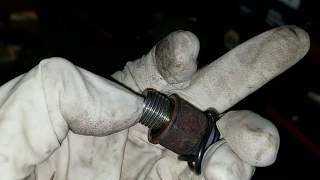
How to confirm: Use a multimeter to test the switch for continuity as you shift through the gears (or move the manual shifter in and out of neutral). The switch's output should change state from open to closed. A visual inspection for physical damage or corrosion is also recommended. A failed switch may also have its hex head rounded off during removal attempts, indicating it has seized.
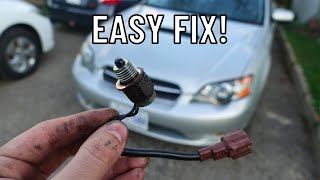
Typical fix: Replace the faulty switch on the transmission. This typically involves unplugging the connector, and unthreading the switch with a wrench. Access may require removing the air intake box.
Est. part cost: $25-$70 - Damaged Wiring or Corroded Connector 🟡 Medium Probability The wiring and connector for the switch are located underneath the vehicle, making them susceptible to road debris, moisture, and corrosion. The harness can also be damaged by heat from the exhaust or chafing against the transmission case.
How to confirm: Visually inspect the wiring harness leading to the neutral switch for any signs of breaks, chafing, or melting. Unplug the connector and check for green or white corrosion, bent pins, or water intrusion. A wiggle test on the harness while monitoring the signal with a scan tool can help identify intermittent faults.
Typical fix: Repair the damaged section of wire or clean the connector terminals with electrical contact cleaner. If corrosion is severe, the connector pigtail may need to be replaced.
Est. part cost: $5-$30
Rare But Worth Checking
- Faulty Engine Control Module (ECM): This is extremely rare. All other possibilities, especially the switch and its wiring, should be exhaustively ruled out before considering the ECM as the cause.
Diagnosis Steps
- Confirm the code with an OBD-II scanner.
- IGNORE GENERIC DEFINITIONS. Confirm that for your Subaru, P1101 refers to the 'Neutral Position Switch Circuit High Input'.
- Locate the neutral switch on the transmission. On manual models, it's a small, threaded sensor on the side of the case. On automatics, it's a larger assembly (inhibitor switch) where the shift linkage connects. 🎬 Watch: How to test and replace an automatic transmission inhibitor switch.
- Visually inspect the switch, its connector, and the wiring harness for any obvious damage, corrosion, or loose connections.
- If the visual inspection is inconclusive, test the switch's operation. For a manual transmission, unplug the switch and test for continuity across its pins when the shifter is in neutral versus in gear. The resistance should change from near zero ohms (closed) to infinite/OL (open).
- For an automatic, test continuity across the specific pins for the neutral circuit as the gear selector is moved into and out of Neutral.
- If the switch tests bad, replace it. Penetrating oil may be needed for removal if corroded. If the hex head of the switch becomes rounded, a socket may be required for removal after cutting the switch's wires.
- If the switch tests good, check for proper voltage at the connector to diagnose a wiring issue. One wire should have a reference voltage from the ECU, and the other should show ground (continuity to chassis ground) only when the transmission is in neutral.
- After repair, clear the code and perform a test drive, ensuring cruise control (if equipped) now functions and that the car starts only in Park/Neutral (for automatics).
- Check that all emissions monitors can now run and set to 'Ready'. This may require performing a specific drive cycle.
Parts You'll Likely Need
- Neutral Position Switch / Neutral Safety Switch
(OEM #32008AA181, 32008AA151, 32008AA071, 32008AA180)— This is the component that most frequently fails and directly causes the P1101 code on a Subaru. Note that the correct part number is highly specific to your vehicle's year, model, and transmission type. Part number 32008AA181 is a common replacement for many manual transmission models in this range and supersedes 32008AA180.
Trusted brands: Subaru (Genuine), Wells, Standard Motor Products, Duralast, Beck Arnley, TRQ
OEM price range: $26-$38
Aftermarket price range: $25-$65
Platform-Specific Known Issues
- Manual Transmission Swaps: → Shop Transmission Assembly This code is very common after converting a vehicle from an automatic to a manual transmission if the neutral switch is not wired into the ECU correctly. Forum users report that the wire from the switch must be run directly to the correct pin on the ECU, and the original wire from the automatic transmission controller must be cut. Splicing into the existing wire is a common mistake that will not fix the code.
- Inability to Pass Emissions Testing: A known side effect of an active P1101 code is the ECU's refusal to run the self-tests for the catalytic converter and EVAP system monitors. An owner of a 2003 Forester reported that after replacing the neutral switch to clear a similar code (P0519), the monitors were able to become ready, allowing the car to pass a smog check. The ECU requires a functioning neutral switch signal to initiate certain readiness tests.
- Incorrect Switch Type During Transmission Swap: → Shop Transmission Assembly Subaru changed the logic of the neutral position switch (NPS) around 2005. Pre-2005 models use a 'normally open' switch, while 2005+ models (including the 2008-2014 Impreza) use a 'normally closed' switch that provides a ground signal in neutral. If a pre-2005 transmission is swapped into a newer car without swapping the NPS itself to the correct type, the ECU will receive an inverted signal, triggering code P1101.
Mechanic-Grade Diagnostic Values
- Neutral Position Switch Continuity (Manual Transmission) — expected: When in Neutral: Near 0 Ω (continuity). When in any gear: Infinite or O.L. (open circuit).. Failure: Reading does not change between neutral and in-gear positions, or shows high resistance when it should be near zero.
- Neutral Position Switch Signal (at ECU or connector) — expected: For 2005+ models, the switch provides a ground path. The signal wire should show ground (near 0V) when in neutral and voltage (5V or 12V reference) when in gear.. Failure: Voltage remains high when in neutral, indicating an open circuit in the switch or wiring.
Scan Tool Commands That Help
- Subaru Select Monitor (SSM) or equivalent advanced scan tool: Current Data Display > Transmission Control System > 'N Range' or 'Inhibitor SW signal' — To confirm in real-time if the ECU is receiving the signal from the neutral switch. The status should change from 'OFF' to 'ON' when the gear selector is moved into neutral. This quickly validates the entire circuit from the switch to the ECU without manual electrical testing.
Wiring & Ground Locations
- Neutral Position Switch (NPS) Connector — On the side of the transmission case. Access often requires removing the air intake assembly.. This is the primary point for testing the switch itself and for checking voltage/ground signals from the ECU and chassis ground.
- ECU Connector Pin (Example: B84, Pin 82) — At the Engine Control Module (ECU), typically located in the passenger footwell area.. Crucial for manual transmission swaps. The wire from the new neutral switch must connect directly to the correct ECU pin, and the original wire (from the old automatic transmission controller) must be completely cut from the pin to avoid conflicting signals.
- Wiring Diagram IDs: T2, A54, B24, B25 — These are identifiers used in Subaru factory service manuals to label the neutral position switch connector.. Knowing these identifiers helps a technician quickly locate the correct connector and pins on a factory wiring diagram for accurate testing.
Real Owner Repair Stories
- LegacyGT.com forum user 'taylormac1993' ('97 Legacy (demonstrates principle applicable to later models)) — P1101 code immediately after a 5-speed manual transmission swap.
❌ Tried (didn't work) Grounding one side of the neutral switch and splicing the other wire into the existing wire at ECU pin 82.
✅ What actually fixed it Cutting the original wire at ECU pin 82 completely and connecting the new wire from the neutral switch as the sole input to that pin. The original signal from the automatic transmission computer was interfering. - YouTube user @robertcochran54 (Subaru Forester with a similar idle/readiness monitor issue (P0519)) — Inability for Catalyst and EVAP emissions monitors to become 'Ready', preventing the car from passing a smog check.
❌ Tried (didn't work) Driving in various patterns to set monitors., Replacing other parts at the dealership.
✅ What actually fixed it Replacing the faulty neutral position switch. The old switch was seized so tightly that the hex head rounded off, requiring cutting the wires to get a socket on it for removal. After replacement, the emissions monitors were able to run and the car could be smogged.
OEM Part Supersession History
32008AA180→32008AA181— Standard part revision/update by Subaru.Various (e.g., 32008AA103)→Various (e.g., 32008AA151, 32008AA180)— Change in switch logic.
Heads up: Switches for pre-2005 models are typically 'normally open' and are incompatible with 2005+ ECUs which expect a 'normally closed' switch. Using the wrong type will cause a persistent P1101 code.
Model Year Variations Within This Range
- 2008-2011 vs. 2012-2014: The base non-turbo engine changed from the 2.5L EJ253 (timing belt) in 2008-2011 models to the 2.0L FB20 (timing chain) in 2012-2014 models. While the P1101 code's cause (neutral switch) remains the same as it is transmission-dependent, the wiring harness routing and connector locations in the engine bay may vary slightly between these two engine types.
Diagnostic Flowchart
Other Known Issues on This Vehicle
Issues unrelated to this code that are worth knowing about as an owner of this generation:
- Excessive Oil Consumption (FB Series Engines) 🔴 High — Common in 2012-2014 models with the 2.0L FB20 engine. Can start early in the vehicle's life. (Ref: TSB 02-157-14R. A class-action lawsuit led to extended warranties and potential short block replacements for affected vehicles.)
- Head Gasket Failure (EJ Series Engines) 🔴 High — Primarily affects the 2.5L EJ253 engine in 2008-2011 models. Typically occurs between 100,000 and 150,000 miles, causing external oil and/or coolant leaks.
- Faulty Brake Light Switch 🟠 Medium — Widespread across many Subaru models of this era, including the Impreza. Can cause brake lights to fail, push-button start issues, and inability to shift out of Park. (Ref: Recall WUE-90)
- Failing Secondary Air Injection Pump Relay 🟠 Medium — Affects 2008-2014 turbo models (WRX/STI). The relay can stick, causing the pump to run continuously and overheat, posing a fire risk. (Ref: Recall WTM-73)
- Failing Engine Valve Springs (2012-2013 models) 🔴 High — A subset of 2012-2013 Impreza models were recalled for valve springs that could fracture, potentially causing engine malfunction or stalling. (Ref: Recall WTY-84)
Used vs. New Parts: Buying Guide for This Vehicle
When a used part is the smart pick: A used neutral switch from a reputable auto recycler is a reasonable option for this repair. The part is a simple electro-mechanical switch, is external to the transmission, and can be easily tested with a multimeter for functionality before installation.
Donor-vehicle mileage cap: roughly under 80000 miles for the part to have meaningful remaining life.
What to inspect on the donor part:
- Confirm the donor vehicle's year is 2005 or newer to ensure it's the correct 'normally closed' type switch.
- Test the switch with a multimeter. It should show continuity (near 0 ohms) when its plunger is depressed (or in the neutral position) and open circuit (infinite resistance) otherwise.
- Inspect the connector pins for any signs of corrosion (green or white powder) or water intrusion.
- Check the plastic switch body for cracks and ensure the hex head used for installation/removal is not rounded off.
Aftermarket brands forum-validated for this vehicle:
- Wells
- Standard Motor Products (SMP)
- Beck Arnley
- TRQ
Real Owner Stories
Aggregated from forums and TSBs cited above. Mileages and costs reflect what owners reported in those sources.
2015 Subaru Legacy (Manual Swap)
Symptoms: User struggled with a persistent P1101 code after performing a 5MT transmission swap.
What fixed it: Cut the original wire at ECU pin 82 and connected the new neutral switch wire directly to the ECU.
Source hint: LegacyGT.com thread titled 'P1101 code from 5mt swap'
2003 Subaru Forester
Symptoms: The vehicle was unable to pass a smog check because the emissions monitors (Catalyst and EVAP) would not become 'Ready'.
What fixed it: Replaced the neutral switch on the transmission, which allowed the ECU to initiate and complete the readiness tests.
Source hint: Vehicle-specific issues: Inability to Pass Emissions Testing
2009 Subaru Forester
Symptoms: Difficulty removing the inhibitor/neutral switch due to heavy corrosion on the transmission case.
What fixed it: Used penetrating oil to free the seized switch for replacement.
Source hint: Reddit r/howto user seeking help to remove the inhibitor/neutral switch
Related OBD-II Codes
Frequently Asked Questions
I have a 2012 Impreza with the 2.0L FB20 engine; is there a TSB for the high oil consumption I'm seeing alongside this code?
Why is my cruise control not working on my manual 2010 Impreza when P1101 is active?
Can a P1101 code on my 2008 Impreza cause me to fail a smog check even if the light is off?
I swapped a 2004 transmission into my 2009 Impreza and now have P1101. Why?
Is it true that my automatic Impreza could start while in gear because of this code?
I'm doing a manual swap on my Impreza; can I just splice the new neutral switch into the old automatic wiring?
Helpful Videos

![How to Fix P1101 Engine Code in 3 Minutes [2 DIY Methods / Only $7.47]](https://img.youtube.com/vi/AWGlibhplBc/mqdefault.jpg)

The information in this article is provided for general reference and educational purposes only. Vehicle specifications, procedures, and part compatibility can vary by production date, trim level, and region. Always consult your vehicle's factory service manual and verify part numbers before purchasing or performing repairs. Safety-critical components such as airbags, seat belts, and braking systems should be installed by a qualified professional.
- Subaru Impreza:
- 🧭 Diagnostic Flowchart
- 🎬 Helpful Videos
- What's Unique About the 2008-2014 Subaru Impreza
- Symptoms You May Notice
- Most Likely Causes
- Rare But Worth Checking
- Diagnosis Steps
- Parts You'll Likely Need
- Platform-Specific Known Issues
- Mechanic-Grade Diagnostic Values
- Scan Tool Commands That Help
- Wiring & Ground Locations
- Real Owner Repair Stories
- OEM Part Supersession History
- Model Year Variations Within This Range
- Other Known Issues on This Vehicle
- Used vs. New Parts: Buying Guide for This Vehicle
- Real Owner Stories
- 2015 Subaru Legacy (Manual Swap)
- 2003 Subaru Forester
- 2009 Subaru Forester
- Related OBD-II Codes
- Frequently Asked Questions
- 🎟️ Get 5% Off