

P1101 on 2013-2018 Toyota RAV4 2.5L: MAF Sensor and Airflow Fixes
On a 2013-2018 RAV4, code P1101 is almost always caused by a dirty Mass Airflow (MAF) sensor. Cleaning the sensor with a dedicated spray cleaner is the most common fix and costs under $15. If that fails, a new Denso OEM sensor costs around $140-$190. Checking for a poorly seated air filter is also a critical step, as this is a frequent cause of inaccurate airflow readings.
- P1101 on your RAV4 points directly to an issue with the Mass Airflow sensor's reading.
- The most likely and cheapest solution is to clean the MAF sensor with a can of dedicated cleaner.
- Always check your engine air filter; a dirty or poorly-fitted filter is a common and simple-to-fix cause.
- If cleaning doesn't work, a replacement MAF sensor is the next logical step. Using an OEM Denso part is recommended for reliability.
- This is a very DIY-friendly repair, requiring minimal tools and time.
What's Unique About the 2013-2018 Toyota RAV4
For the 2AR-FE engine in the XA40 generation RAV4, the P1101 code is a straightforward issue, typically without complex platform-specific causes. The problem is almost always rooted in the basics of the air intake system. Owners report that the issue often boils down to a contaminated MAF sensor, which is a common maintenance item on many modern fuel-injected vehicles, rather than a unique design flaw of the RAV4. The design of the air filter housing can sometimes lead to the filter being installed incorrectly, which is a known cause for this code.
Symptoms You May Notice
- Check Engine Light is on
- Reduced engine power and poor acceleration
- Rough or erratic idle
- Engine hesitation or sputtering, especially when applying throttle
- Engine stalling, particularly at idle or after starting
- Noticeable decrease in fuel economy
- Replacing the oxygen (O2) sensors. While a bad MAF sensor can affect fuel trims and sometimes trigger fuel-related codes, the P1101 code points directly to the MAF sensor's self-test, making it the primary focus. 🎬 Watch: Understanding the P1101 code and how to fix it
- Replacing the throttle body. Unless the throttle body is extremely dirty or has an electronic failure (which would likely set other codes), it is not a common cause for P1101 on this vehicle.
Most Likely Causes
- Dirty Mass Airflow (MAF) Sensor 🔴 High Probability → Shop Fuel Injection Air Flow Meter Over time, oil vapors from the PCV system and fine dust can coat the sensor's delicate sensing elements, insulating them and causing inaccurate readings. This is the most common failure point for this code.
How to confirm: Visually inspect the MAF sensor's wires. If they appear dirty or coated, cleaning is warranted. This is the easiest and cheapest first step. A technician can also monitor MAF sensor readings in g/s (grams per second) with a scan tool; abnormal readings at idle or under load confirm a problem.
Typical fix: Remove the sensor and clean it thoroughly with a dedicated MAF sensor cleaner spray. Do not use brake or carburetor cleaner, as they can damage the sensor. Allow it to air dry completely before reinstalling.
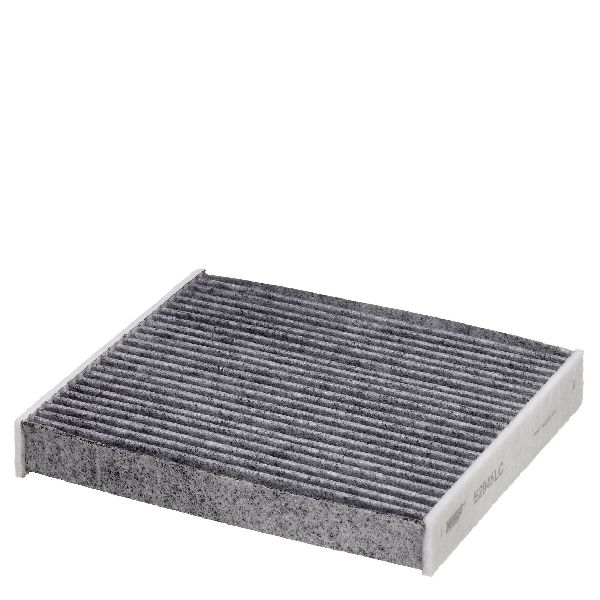
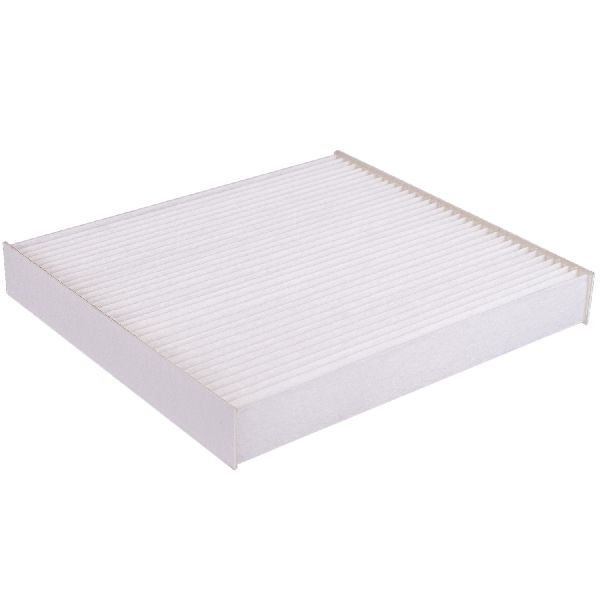
Est. part cost: $10-$15 for a can of MAF cleaner. - Dirty or Poorly Seated Engine Air Filter 🟡 Medium Probability → Shop Air Cleaner Assembly A severely clogged air filter can restrict airflow, causing the MAF sensor's reading to be lower than expected. An improperly seated or cheap aftermarket filter can let unfiltered air bypass the filter, contaminating the MAF sensor or creating turbulence that causes incorrect readings.
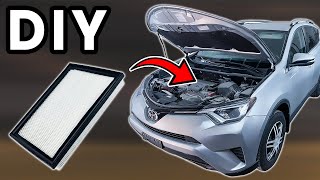
How to confirm: Inspect the engine air filter. Check if it is dirty, clogged, or if the airbox lid is not sealed correctly. Ensure the filter is seated evenly in the housing, as an uneven fit is a known issue. 🎬 See how to properly install a new engine air filter
Typical fix: Replace the engine air filter with a quality part (like Denso) and ensure the airbox is closed and sealed properly.
Est. part cost: $20-$40 - Faulty Mass Airflow (MAF) Sensor 🟡 Medium Probability → Shop Fuel Injection Air Flow Meter If cleaning the sensor does not resolve the issue, the sensor's electronics may have failed internally. This can happen due to age, heat cycles, or physical damage. Aftermarket sensors are also known to fail prematurely.
How to confirm: After cleaning the sensor and verifying the air filter is good, if the code returns, the sensor is the next likely culprit. A technician can confirm by monitoring the sensor's voltage and gram/second readings with a scan tool. With the key on and engine off, the g/s reading should be zero; if it's a high number, the sensor is bad.
Typical fix: Replace the MAF sensor. It is highly recommended to use the OEM part from Denso to avoid compatibility issues.
Est. part cost: $140-$190 for an OEM sensor. - Vacuum Leak ⚪ Low Probability Cracked or disconnected hoses in the air intake system after the MAF sensor allow 'unmetered' air into the engine. This causes a mismatch between the air the MAF sensor measures and the air the engine actually gets.
How to confirm: Visually inspect all intake hoses and vacuum lines for cracks or loose connections. A smoke test is the most effective way to find small, hard-to-see leaks. Pay close attention to the intake snorkel between the airbox and throttle body.
Typical fix: Replace the cracked hose or re-secure the loose connection.
Est. part cost: $10-$50 depending on the hose.
Rare But Worth Checking
- Damaged MAF Sensor Wiring or Connector: → Shop Fuel Injection Air Flow Meter Check for corroded pins in the connector or any visible damage to the wiring harness leading to the sensor, as this can cause an intermittent or lost signal.
- Dirty Throttle Body: → Shop Fuel Injection Throttle Body While less common on this Toyota, a throttle body heavily coated in carbon can disrupt airflow enough to contribute to a P1101 code. Cleaning it can be a useful maintenance step if other causes are ruled out.
Diagnosis Steps
- Read the code with an OBD-II scanner to confirm P1101 is present.
- Inspect the engine air filter. Replace it if it is dirty or clogged. Ensure the new filter is properly and fully seated in the airbox.
- Inspect the air intake tube between the air filter box and the throttle body for any cracks, loose clamps, or disconnected hoses.
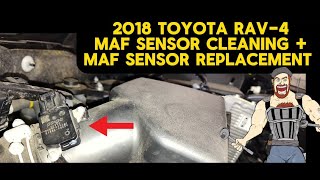
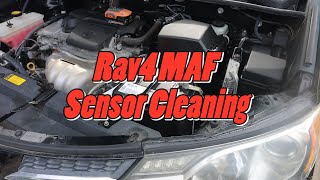
- Carefully remove the MAF sensor. It is located on the air filter box outlet tube and secured with two Phillips head screws. 🎬 Watch: Step-by-step guide to removing and cleaning your MAF sensor
- Spray the sensor's wire or film elements with a dedicated MAF sensor cleaner. Do not touch the elements. Allow it to dry completely for at least 15-20 minutes before reinstalling.
- Clear the trouble code with the scanner and perform a test drive to see if the code returns.
- If the code returns, inspect the MAF sensor's electrical connector for corrosion or loose pins.
- If available, use a scan tool to monitor the MAF sensor's g/s reading at idle (should be around 2-4 g/s for this engine) and during a snap throttle test to see if it responds correctly. With the key on but engine off, the reading should be 0 g/s.
- If all else looks good, the MAF sensor itself is likely faulty and should be replaced with an OEM Denso part.
Parts You'll Likely Need
- Mass Air Flow (MAF) Sensor
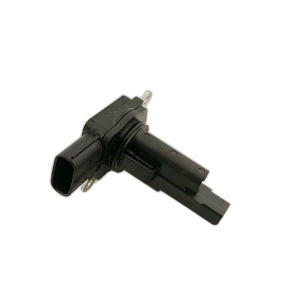
(OEM #22204-31020)— This is the sensor that fails its self-test to trigger the P1101 code. If cleaning does not fix the issue, replacement is the next step. This part number also supersedes 22204-0P010, 22204-0H010, and 22204-31010.
Trusted brands: Denso (OEM)
OEM price range: $140-$190
Aftermarket price range: $60-$120 - Engine Air Filter
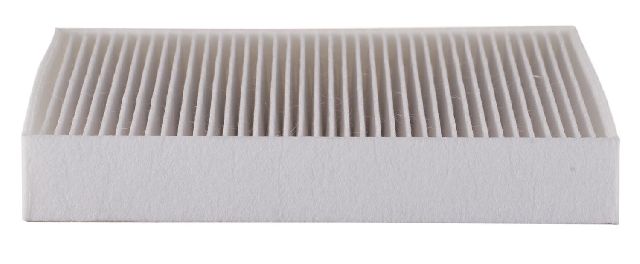
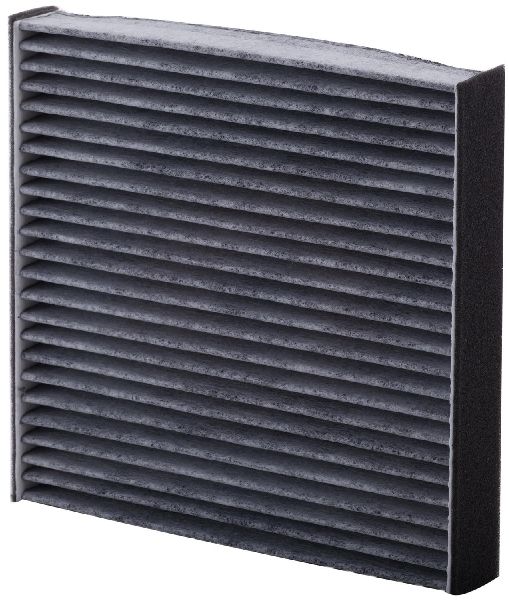
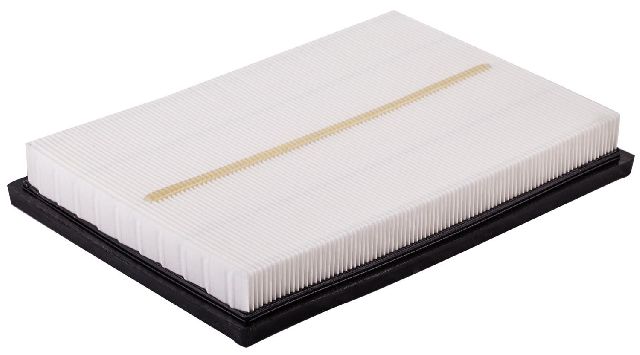
(OEM #17801-0V030)— A clogged or improperly installed air filter can restrict airflow or cause turbulence, leading to incorrect MAF readings.
Trusted brands: Denso, Wix, Fram
OEM price range: $25-$40
Aftermarket price range: $15-$25 - MAF Sensor Cleaner — This is a special solvent required for safely cleaning the delicate sensor elements. It is the first and most common fix.
Trusted brands: CRC, WD-40 Specialist
Aftermarket price range: $10-$15
Related Codes That Often Appear With This One
- P0171 — System Too Lean (Bank 1). A vacuum leak or a MAF sensor that is under-reporting air can cause the engine to run lean, triggering a P0171 code alongside the P1101.
- P0101 — Mass Air Flow (MAF) Circuit Range/Performance. This is a more general MAF performance code, and it can appear with P1101 as both relate to the sensor's readings being out of the expected range.
Mechanic-Grade Diagnostic Values
- MAF Sensor Reading (g/s) with Key On, Engine Off (KOEO) — expected: Less than 0.70 g/s after 30 seconds.. Failure: A reading significantly higher than 0.70 g/s indicates a faulty sensor that is reporting airflow when there is none.
- MAF Sensor Reading (g/s) at warm idle — expected: 1.0 to 3.0 g/s.. Failure: Readings that are consistently outside this range, or that are erratic and jump around, point to a sensor or vacuum leak issue.
- MAF Sensor Reading (g/s) at 2,500 RPM (no load) — expected: 2.0 to 6.0 g/s.. Failure: A reading that doesn't increase smoothly with RPM or falls outside this range suggests a faulty sensor or an airflow restriction.
- MAF Sensor Voltage during KOER self-test — expected: 0.46 to 2.44 volts.. Failure: A voltage reading below 0.46 volts during the self-test will trigger the P1101 code.
Scan Tool Commands That Help
- Toyota Techstream: Data List > MAF — This is the primary function for diagnosing P1101. It allows a technician to view the live airflow reading in grams per second (g/s) to verify if it matches the expected values at idle, under load, and during KOEO tests.
- Toyota Techstream: Active Test > Control the Injection Mode — If MAF readings seem plausible but fuel trim issues (like a companion P0171 code) exist, this test can help diagnose the fuel delivery system by manually altering injector behavior, helping to isolate the problem between air measurement and fuel delivery.
Wiring & Ground Locations
- MAF Sensor Connector — On the air filter housing outlet tube, connecting directly to the MAF sensor. The wiring harness is designated with an 'E' prefix in Toyota diagrams (e.g., EA1) as it is in the Engine Compartment.. This connector provides power, ground, and the signal path to the ECM. Corrosion on the pins or damage to the wires here will cause a loss of signal and trigger the code.
- Engine Ground Strap (Main) — A large ground wire typically runs from a bolt on the top of the transmission case to the vehicle's frame or chassis.. This is a primary ground for the entire engine and transmission assembly. A poor connection here can cause widespread electrical issues and erratic sensor readings, including the MAF sensor.
- Engine Harness Ground (ECU Ground) — A smaller ground wire coming from the main engine harness is typically bolted to the valve cover or the side of the cylinder head.. This ground is critical for the ECM and its sensors. A loose or corroded connection at this point can directly cause incorrect sensor readings and false trouble codes.
OEM Part Supersession History
22204-31010, 22204-0H010, 22204-0P010→22204-31020— Standard part revision and consolidation for multiple vehicle applications.
Heads up: The newer part number 22204-31020 is the correct and backward-compatible replacement for the older numbers on this vehicle.
Model Year Variations Within This Range
- 2016-2018: For the 2016 model year, the RAV4 received a mid-cycle refresh. While the 2AR-FE engine and its air intake system remained the same, Toyota added more sound insulation for a quieter cabin and reworked the suspension for a more compliant ride. For 2017 models and newer, Toyota Safety Sense (TSS) became standard equipment. These changes do not affect the diagnosis of P1101 but are key differences within the generation.
Diagnostic Flowchart
Other Known Issues on This Vehicle
Issues unrelated to this code that are worth knowing about as an owner of this generation:
- Torque Converter Shudder 🔴 High — Common on 2013-2015 models, typically felt as a vibration under light load between 25-50 mph. (Ref: T-SB-0023-15 (later revised) and Warranty Enhancement Program ZH1 were issued, but have since expired.)
- Infotainment System Glitches/Rebooting 🟠 Medium — Frequently reported on 2014-2016 models. The head unit may become unresponsive, reboot randomly, or have Bluetooth connectivity problems. (Ref: Software updates were released, but often did not fully solve the problem. T-TT-0578-19 addresses some Bluetooth concerns.)
- Power Liftgate Malfunction 🟠 Medium — Reported on models with the power liftgate option, especially in cold weather. The gate may fail to open or stop mid-operation. (Ref: T-SB-0023-16 addresses this issue for some 2014-2015 Highlander models, which use a similar system, but no specific RAV4 TSB is widely cited.)
- Water Pump Failure 🟠 Medium — Can occur around 50,000-75,000 miles. Symptoms include coolant leaks (pink residue) and overheating.
- Sticky/Jerky Automatic Shifter 🟡 Low — Some owners of 2013-2015 models report the gear shifter does not move smoothly, caused by a deformed internal slide cover. (Ref: T-SB-0145-14)
Used vs. New Parts: Buying Guide for This Vehicle
When a used part is the smart pick: A used OEM Denso MAF sensor from a reputable salvage yard is a reasonable choice for this repair, as they are generally reliable parts and significantly cheaper than a new OEM unit. Aftermarket sensors are notoriously problematic for this application.
Donor-vehicle mileage cap: roughly under 80000 miles for the part to have meaningful remaining life.
What to inspect on the donor part:
- Verify the donor vehicle's mileage is reasonably low.
- Inspect the sensor's connector pins for any signs of corrosion or damage.
- If possible, look at the donor vehicle's air filter; a clean filter suggests better maintenance and less chance of a contaminated sensor.
- Avoid sensors from vehicles that show signs of engine sludge or have been in a front-end collision that could have damaged the airbox area.
OEM-only on this vehicle (don't cheap out):
- Mass Airflow Sensor
Aftermarket brands forum-validated for this vehicle:
- Denso (This is the Original Equipment Manufacturer)
Brands owners have reported issues with on this vehicle:
- Unbranded or 'white-box' sensors from online marketplaces are frequently reported to be dead-on-arrival or fail within a short period.
Real Owner Stories
Aggregated from forums and TSBs cited above. Mileages and costs reflect what owners reported in those sources.
2015 Toyota RAV4 2.5L
Symptoms: The vehicle began to get choked out from not having enough gas and would die. While driving, it would sputter, slow to a stop, and then die. This happened particularly on warmer days.
What fixed it: Cleaning or replacing the MAF sensor was the primary discussion for resolution.
Source hint: Reddit r/AskMechanics
2013-2018 Toyota RAV4 2.5L
Symptoms: Check engine light with P1101 code; consensus on forum regarding airflow issues.
What fixed it: Cleaning the MAF sensor and throttle body, and ensuring a clean, properly seated air filter.
Source hint: RAV4World Forums
Related OBD-II Codes
Frequently Asked Questions
Can I use any cleaner to fix the MAF sensor on my 2013-2018 RAV4?
Is there a specific brand of MAF sensor recommended for the 2AR-FE engine?
My 2015 RAV4 is sputtering and dying; could this be related to the P1101 code?
Does the engine air filter brand matter for preventing P1101?
I have a 2014 RAV4 with a vibration between 25-50 mph; is that part of the P1101 issue?
Where is the MAF sensor located on the 2.5L 2AR-FE engine?
Helpful Videos
Used OEM Parts in Stock
New Aftermarket Parts Available

The information in this article is provided for general reference and educational purposes only. Vehicle specifications, procedures, and part compatibility can vary by production date, trim level, and region. Always consult your vehicle's factory service manual and verify part numbers before purchasing or performing repairs. Safety-critical components such as airbags, seat belts, and braking systems should be installed by a qualified professional.
- Toyota RAV4:
- 🧭 Diagnostic Flowchart
- 🎬 Helpful Videos
- 🛍️ Shop This Part
- What's Unique About the 2013-2018 Toyota RAV4
- Symptoms You May Notice
- Most Likely Causes
- Rare But Worth Checking
- Diagnosis Steps
- Parts You'll Likely Need
- Related Codes That Often Appear With This One
- Mechanic-Grade Diagnostic Values
- Scan Tool Commands That Help
- Wiring & Ground Locations
- OEM Part Supersession History
- Model Year Variations Within This Range
- Other Known Issues on This Vehicle
- Used vs. New Parts: Buying Guide for This Vehicle
- Real Owner Stories
- 2015 Toyota RAV4 2.5L
- 2013-2018 Toyota RAV4 2.5L
- Related OBD-II Codes
- Frequently Asked Questions
- 🎟️ Get 5% Off