

P1101 on 2001-2007 Volvo V70: MAF Sensor and Vacuum Leak Fixes
On a 2001-2007 Volvo V70, code P1101 is most often caused by a dirty Mass Airflow (MAF) sensor or a vacuum leak. Start by cleaning the MAF sensor with a dedicated cleaner (~$15). If that doesn't work, inspect for cracked vacuum hoses, especially small elbows and lines connected to the intake manifold. A failed MAF sensor is also common, but cleaning and checking for leaks should always be the first steps.
- Always start by cleaning the MAF sensor with a dedicated cleaner before considering replacement; it's the most common and cheapest fix.
- If the code returns after cleaning the MAF, your next step should be to thoroughly check for vacuum leaks, as they are very common on these aging turbocharged engines.
- If you must replace the MAF sensor, investing in an OEM Bosch unit is highly recommended to avoid issues with faulty aftermarket parts.
- A dirty air filter or a gummed-up throttle body can also contribute to this code, so check them as part of your diagnosis.
What's Unique About the 2001-2007 Volvo V70
The second-generation (P2) Volvo V70's turbocharged five-cylinder engine is sensitive to unmetered air. While the P1101 code is generic in its definition, on this platform it's frequently a straightforward issue with the Bosch MAF sensor becoming contaminated or a vacuum leak developing in one of the many hoses. Unlike some other manufacturers where this code points to complex PCV system failures requiring major parts replacement, the fix on these Volvos often starts with simple cleaning and inspection of the MAF and vacuum lines.
Symptoms You May Notice
- Check Engine Light is on
- Rough or unstable idle, sometimes fluctuating up and down
- Hesitation or stumbling during acceleration, sometimes described as feeling like driving into a strong headwind
- Reduced engine power or entering 'limp mode'
- Engine stalling, especially at idle
- Noticeable decrease in fuel economy
- A hissing noise from the engine bay, indicating a vacuum leak
- Rough transmission shifts, which may resolve after fixing the MAF/intake issue
- Replacing the MAF sensor without first attempting to clean it.
- Replacing the MAF sensor when the actual problem is a hidden vacuum leak in a hose.
- Replacing oxygen sensors when the lean condition (P0171) is actually caused by the unmetered air from the P1101 fault.
Most Likely Causes
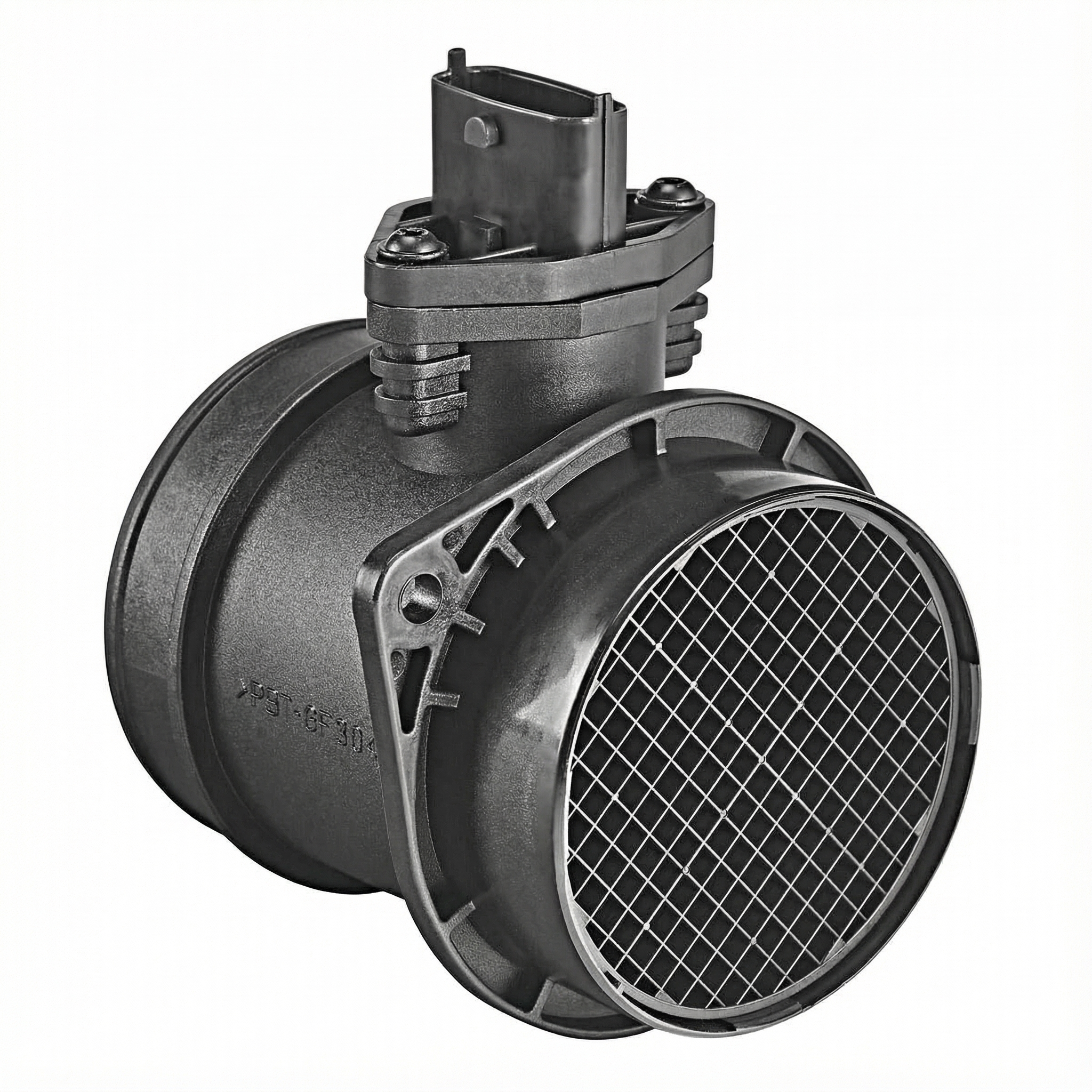
- Dirty or Contaminated Mass Airflow (MAF) Sensor 🔴 High Probability → Shop Fuel Injection Air Flow Meter Over time, oil vapor from the PCV system or fine dust that gets past the air filter can coat the sensor's delicate wire, insulating it and causing inaccurate readings. Over-oiling an aftermarket air filter is a common way to contaminate the sensor.
How to confirm: Remove the sensor from the airbox housing. Visually inspect the small wires inside for a film of dirt or oil. With a scan tool, observe the MAF reading in grams/second with the engine off (should be 0) and at idle (should be a stable low number, not an erratically high one).
Typical fix: Clean the sensor element carefully using only a dedicated Mass Airflow Sensor cleaner spray. Do not touch the wires. Let it air dry completely before reinstalling. 🎬 Watch: Step-by-step guide to cleaning your V70 MAF sensor.
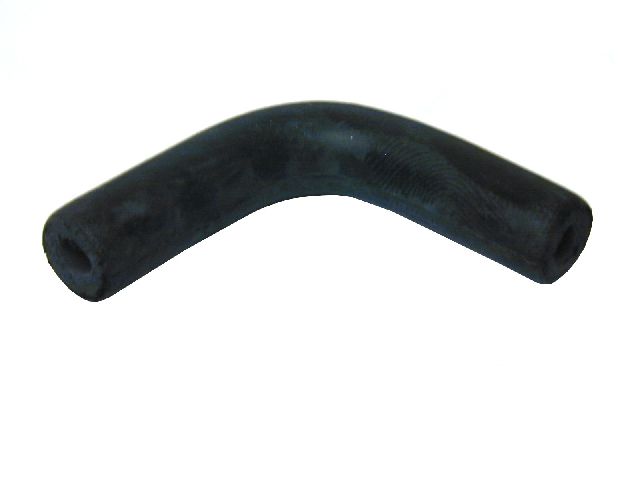
Est. part cost: $10-$20 for cleaner spray - Vacuum Leak 🔴 High Probability The complex network of vacuum hoses on these turbocharged engines can become brittle and crack with age and heat, allowing unmetered air to enter the engine after the MAF sensor. Common failure points include small elbow connectors on the intake manifold and hoses for the brake booster and EVAP system.
How to confirm: The most reliable method is to have a smoke test performed, which forces smoke into the intake system to reveal the source of any leaks. 🎬 See how to use a smoke machine to find leaks. You can also visually inspect all hoses connected to the intake manifold and listen for hissing sounds. Spraying carburetor cleaner near suspected leaks may cause a temporary change in engine idle RPM, confirming a leak.
Typical fix: Replace the cracked or leaking vacuum hose or gasket. Small sections of bulk hose can often be used for repairs.
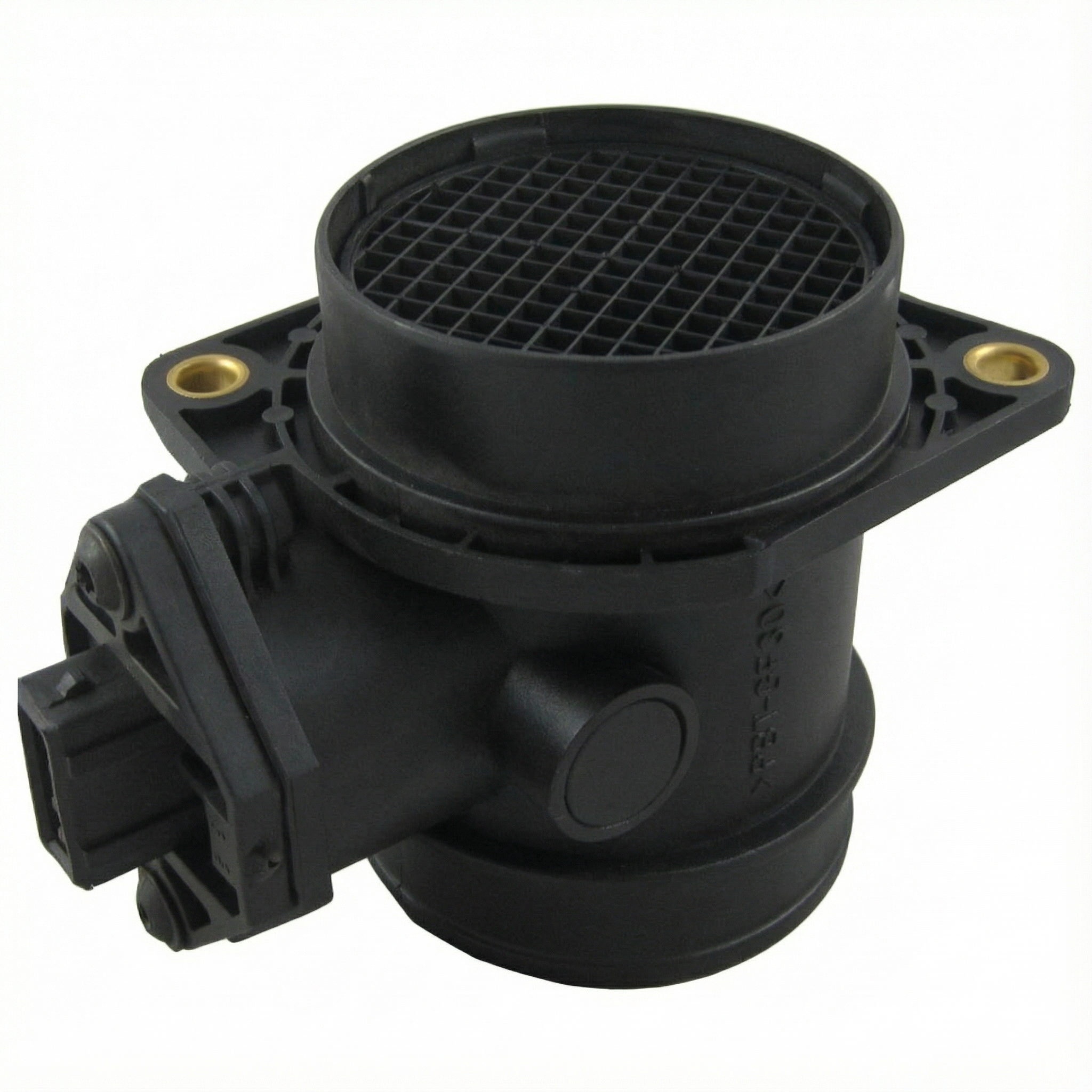
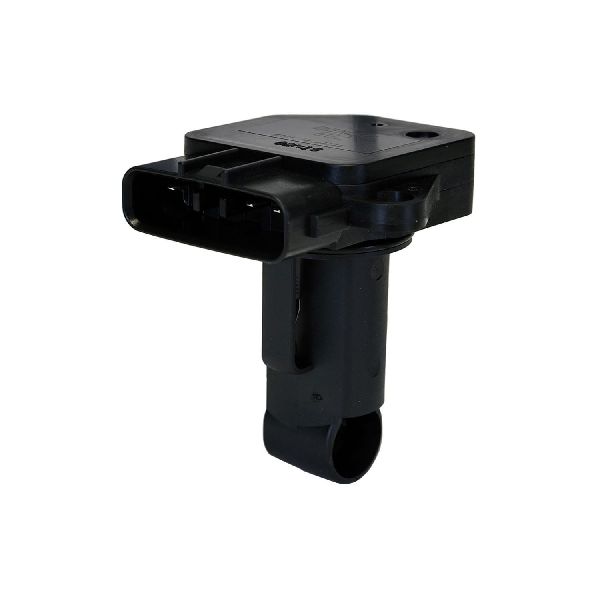
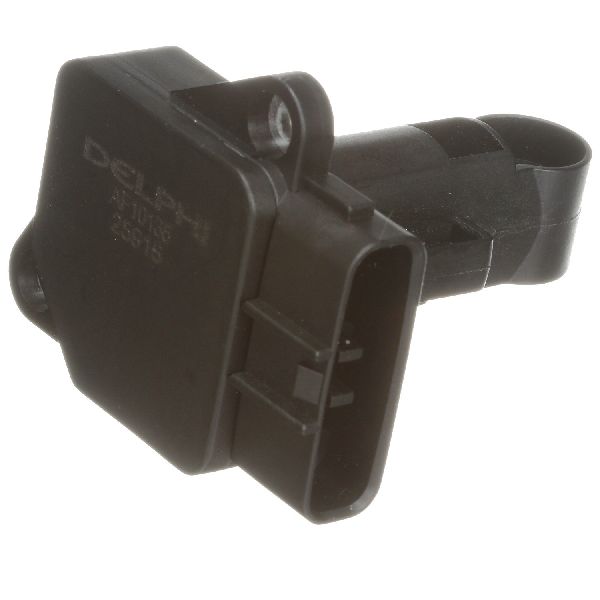
Est. part cost: $5-$50 depending on the hose - Failed Mass Airflow (MAF) Sensor 🟡 Medium Probability → Shop Fuel Injection Air Flow Meter The sensor is an electronic component that can fail with age. The OEM sensor is made by Bosch, and using cheap aftermarket replacements can sometimes lead to immediate or premature failure, or introduce different running problems.
How to confirm: If cleaning the sensor and confirming there are no vacuum leaks does not resolve the code, the sensor itself is likely faulty. A scan tool can monitor the live data from the MAF; illogical readings (e.g., high airflow at idle) or disconnecting the sensor to see if the engine runs better in its default mode can point to failure.
Typical fix: Replace the MAF sensor. It is held in by two screws and is easily accessible on top of the air filter box. It is highly recommended to use an OEM Bosch replacement.
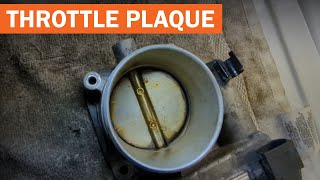
Est. part cost: $150-$250 for an OEM-quality sensor - Dirty Electronic Throttle Module (ETM) ⚪ Low Probability Carbon and oil residue can build up around the throttle plate, restricting airflow or causing the plate to stick. This is particularly an issue on 1999-2002 models with the yellow-label Magneti Marelli ETM, which was subject to a warranty extension. A dirty ETM can confuse the ECM's calculated airflow models, contributing to a P1101 code.
How to confirm: Remove the intake pipe to the throttle body and inspect for a thick ring of black carbon buildup around the throttle plate.
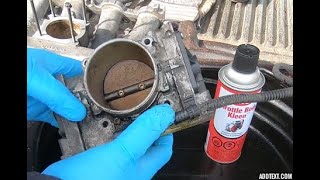
Typical fix: Clean the throttle body thoroughly with throttle body cleaner and a soft brush. A software upgrade was also released by Volvo to improve ETM performance.
Est. part cost: $10-$20 for cleaner spray
Rare But Worth Checking
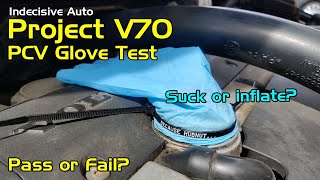
- Clogged PCV System: While less common than simple vacuum leaks, a clogged PCV oil trap or hoses can create abnormal positive crankcase pressure. This pressure can force oil past seals and unmetered air into the intake, triggering a P1101. Symptoms include a whistling noise, oil leaks, or a dipstick that pops out. A simple test is the 'glove test': place a rubber glove over the oil filler opening with the engine running. If it inflates, the PCV system is clogged. 🎬 Watch: How to perform the glove test on your Volvo.
Diagnosis Steps
- Read the code with an OBD-II scanner and confirm it is P1101. Note any other codes present, such as P0171.
- Visually inspect the entire air intake tract from the air filter to the turbo and throttle body. Ensure the air filter is clean and all clamps and hoses are secure.
- Remove the MAF sensor. It is located on the air filter housing and typically held by two Torx screws.
- Carefully clean the MAF sensor wires with a dedicated MAF sensor cleaner spray. Let it air dry completely before reinstalling. Do not touch the wires.
- Clear the codes and drive the vehicle to see if the code returns. If it does, proceed to the next step.
- Check for vacuum leaks. The most effective method is a smoke test. Alternatively, with the engine running, you can carefully listen for hissing sounds around the intake manifold and vacuum lines, paying close attention to small rubber elbows.
- If using a scan tool, monitor MAF sensor readings at idle and under load to check for plausible values. Compare these to the 'calculated airflow' PID if available.
- If no vacuum leaks are found and cleaning the MAF did not work, the MAF sensor itself is the most likely culprit and should be replaced with a quality OEM (Bosch) part.
- If the problem persists, consider cleaning the Electronic Throttle Module (ETM) and inspecting the PCV system for clogs using the 'glove test'.
Parts You'll Likely Need
- Mass Airflow (MAF) Sensor
(OEM #Bosch 0280218088 (for 2002+ 2.4L/2.5L Turbo))— This sensor is the primary cause of the P1101 code, either due to contamination or outright failure. Using the correct Bosch OEM part is critical for proper function.
Trusted brands: Bosch (OEM)
OEM price range: $150-$250
Aftermarket price range: $50-$120 (Not Recommended) - MAF Sensor Cleaner — Often, the sensor is just dirty and does not need to be replaced. This is the cheapest and easiest first step.
Trusted brands: CRC, Liqui Moly
Aftermarket price range: $10-$20 - Vacuum Hoses/Elbows — Rubber hoses become brittle and crack over time, causing vacuum leaks that are a common trigger for this code. Small elbows on the intake manifold are frequent culprits.
Trusted brands: Volvo OE, Rein
OEM price range: $20-$100 per assembly
Aftermarket price range: $5-$50 for bulk hose
Related Codes That Often Appear With This One
- P0171 — System Too Lean (Bank 1). A vacuum leak or faulty MAF sensor causes less fuel to be injected than necessary, resulting in a lean condition that is detected by the oxygen sensor.
- P0101 — Mass Air Flow (MAF) Circuit Range/Performance. This is a more direct code indicating a problem with the MAF sensor signal itself, and often appears alongside P1101.
Platform-Specific Known Issues
- Owner Experience with Aftermarket MAF: A user on howardsvolvos.com reported that after installing a cheap $60 aftermarket MAF from eBay, the car developed different sputtering problems. They strongly advise using only a genuine Bosch or Volvo-branded MAF, as Bosch is the original equipment manufacturer.
- Specific Vacuum Leak Locations: Forum discussions frequently point to a small vacuum line elbow on the end of the intake manifold, and the cluster of vacuum lines near the turbo control solenoid as primary suspects for leaks that trigger P1101.
Mechanic-Grade Diagnostic Values
- MAF Sensor Signal Voltage (Key On, Engine Off) — expected: 0.5V - 1.5V. Failure: A reading of 0V or an erratically high voltage suggests a sensor or wiring fault.
- MAF Sensor Signal Voltage (at idle, fully warm, no accessories) — expected: ~1.2V. Failure: Significantly higher or lower voltage. Voltage should increase smoothly with RPM.
- MAF Sensor Airflow Reading (at idle) — expected: 2.0 - 7.0 grams/second (g/s). Failure: Readings significantly outside this range, or readings that are much higher than the ECM's 'Calculated Airflow' PID.
- Short-Term and Long-Term Fuel Trims (at idle) — expected: As close to 0% as possible, within +/- 5%.. Failure: Highly negative fuel trims (e.g., -15% to -25%) indicate the ECM is removing fuel to compensate for a falsely high airflow reading from the MAF sensor.
- MAF Sensor Signal Voltage (at ~6,000 RPM) — expected: ~2.7V+. Failure: Voltage does not increase steadily and smoothly with engine RPM.
Hidden / Shadow Codes Worth Checking
- ECM-1101: This is the Volvo-specific Diagnostic Trouble Code (DTC) that corresponds to the generic OBD-II code P1101. It may be displayed as 'Flow meter - Signal too high/Signal too low' in Volvo's VIDA software. (see via Using a Volvo-specific diagnostic tool like VIDA/VADIS.)
Scan Tool Commands That Help
- VIDA (Volvo Diagnostic Software): Live Data Monitoring & Graphing — Use to simultaneously graph the Mass Airflow sensor reading (in g/s or kg/h), Calculated Airflow, and Fuel Trims. For P1101, you are looking for a significant, persistent deviation between the measured MAF reading and what the engine calculates it should be.
- Any OBD-II Scan Tool with Live Data: MAF Sensor Disconnect Test — If you suspect a faulty MAF is reading high and causing negative fuel trims, monitor the trims and then disconnect the MAF sensor connector. The engine will switch to a default fueling map. If the fuel trims immediately return to near 0%, it strongly indicates the MAF sensor was providing false data.
Wiring & Ground Locations
- Engine Ground Strap (Small) — Connects from the top of the engine's valve cover to the firewall/bulkhead.. This ground is critical for many sensors. Corrosion at the connection points can cause fluctuating voltages and erratic sensor data, leading to false codes like P1101.
- Engine Ground Strap (Large) — A large, braided cable that connects the transmission housing to the vehicle's frame rail/chassis.. This is the main engine/transmission ground. A loose or corroded connection here can cause a wide array of bizarre electrical issues, including sensor data problems for the ECM.
- MAF Sensor Connector Pin 2 — The second pin on the MAF sensor's electrical connector.. This pin should have battery voltage with the ignition on. A lack of voltage points to a problem with the system relay or the wiring from the fuse box, not the sensor itself.
- MAF Sensor Connector Pin 5 — The fifth pin on the MAF sensor's electrical connector.. This is the signal wire that goes to the ECM (specifically, terminal A22 on the ECM). Checking for continuity and shorts to ground on this wire can diagnose a wiring harness issue.
Real Owner Repair Stories
- Turbobricks forum user 'Janspeed' (P2 Volvo V70) — Varying idle speed, Check Engine Light, DSTC service message, cam adjuster error, weird throttle response.
❌ Tried (didn't work) Initial confusion over multiple, inconsistent errors.
✅ What actually fixed it The user discovered the small ground cable between the valve cover and the firewall was heavily corroded on the valve cover side. Cleaning the contact points and re-securing the ground cable resolved all the electronic faults permanently. - YouTube channel 'DadsGarage Diagnostic Specialist' (GM Vehicle (diagnostic principle is universal)) — P1101 code, high negative fuel trims (-22%), MAF reading higher than calculated airflow.
❌ Tried (didn't work) A visual inspection of intake ducts for leaks showed nothing.
✅ What actually fixed it The technician found a cheap, deformed aftermarket air filter that was installed incorrectly. This was disrupting the airflow across the MAF sensor, causing it to read high. Replacing it with a new, correctly-seated OEM-style air filter immediately brought the MAF readings and fuel trims back to normal.
"I Checked Everything" — The Actual Cause
- A smoke test came back clean, but the P1101 was ultimately caused by a corroded engine-to-firewall ground strap. The bad ground caused the MAF sensor to send erratic voltage signals to the ECM, which was interpreted as an airflow fault, even though no unmetered air was entering the engine.
- The intake system passed a smoke test, but the cause was found to be a deformed, poorly-fitting aftermarket air filter. The filter's bad fit caused turbulent air to flow across the MAF sensor, giving a falsely high reading that the ECM flagged as a P1101 fault. This is not a 'leak' in the traditional sense and a smoke test will not find it.
OEM Part Supersession History
Bosch 0280218088 (Volvo OE 31342362)→Bosch 0280218335 (in some catalogs)— Assumed to be a rolling update or replacement by Bosch.
Heads up: CRITICAL: Multiple owner reports state that the newer Bosch 0280218335 part, while physically fitting, causes severe running issues (sputtering, stalling) on P2 Volvos that require the original 0280218088 part. It is not a compatible replacement. Seek out New Old Stock (NOS) or a confirmed 0280218088 part.
Model Year Variations Within This Range
- 2004-2007: These later P2 models with the 2.5T engine are the primary users of the Bosch MAF sensor part number 0280218088. Earlier 2001-2003 models may use a different MAF sensor, so part number verification is critical.
- 1999-2002: While slightly outside the main range, early P2 platform cars were equipped with a Magneti Marelli Electronic Throttle Module (ETM) prone to failure, which could indirectly contribute to airflow calculation issues. This was replaced by a more reliable Bosch unit in later years.
Diagnostic Flowchart
Other Known Issues on This Vehicle
Issues unrelated to this code that are worth knowing about as an owner of this generation:
- Electronic Throttle Module (ETM) Failure 🔴 High — Very common on 1999-2002 models with the Magneti Marelli (yellow label) ETM. Less common on later models with the Bosch (white label) unit. Failure can occur from 70k miles onwards. (Ref: Volvo extended the warranty to 10 years/200,000 miles in some markets and offered software updates.)
- PCV System Clogging 🟠 Medium — A common maintenance item. The oil trap and hoses can become clogged with sludge, typically needing service every 80k-120k miles. If neglected, it can cause oil leaks and high crankcase pressure.
- AWD Angle Gear Collar Sleeve Failure 🔴 High — Common on all-wheel-drive models, particularly pre-2006. The splines on the collar connecting the transmission to the angle gear (transfer case) wear out, resulting in a loss of AWD. Failure mileage varies widely. (Ref: An updated sleeve was introduced around 2006.)
- Front Suspension Control Arm Bushing Wear 🟠 Medium — The large rubber bushings in the front lower control arms wear out over time, typically after 80k-100k miles, leading to clunking noises, poor handling, and uneven tire wear.
- Upper Strut Mount / Spring Seat Failure 🟠 Medium — The rubber spring seats at the top of the front struts collapse or crack with age, causing knocking or creaking sounds when turning or going over bumps. A very common failure point.
- Aisin AW55-50 Automatic Transmission Issues 🟠 Medium → Shop Transmission Assembly — On models equipped with this 5-speed automatic, harsh shifting, flares, or banging into gear can occur, especially when hot. These issues are often traced to a worn valve body, particularly on pre-2003 models. (Ref: A B4 servo cover update is a common fix for some shift quality issues.)
Used vs. New Parts: Buying Guide for This Vehicle
When a used part is the smart pick: For this specific P1101 repair, used parts are generally NOT recommended for the MAF sensor itself. However, used parts are a perfectly acceptable and cost-effective choice for structural intake components like the air filter housing, intake hoses (if in good, pliable condition), and vacuum line hard pipes.
Donor-vehicle mileage cap: roughly under 120000 miles for the part to have meaningful remaining life.
What to inspect on the donor part:
- For hoses: Squeeze the rubber. It should be pliable, not hard, brittle, or cracked.
- For hard parts (like airbox): Check for cracks, especially around mounting points and the MAF sensor port.
- Avoid parts from vehicles with signs of a major engine fire or heavy front-end collision.
OEM-only on this vehicle (don't cheap out):
- Mass Airflow (MAF) Sensor: This is the most critical part. Owner forums are filled with stories of cheap aftermarket sensors being dead-on-arrival or failing within months. Stick with a genuine Bosch 0280218088 sensor.
Aftermarket brands forum-validated for this vehicle:
- Rein (for vacuum hoses and some intake components)
- CRC or Liqui Moly (for MAF sensor cleaner spray)
Brands owners have reported issues with on this vehicle:
- Any unbranded or 'white-box' MAF sensor from eBay or Amazon.
- Per user reports, even the newer Bosch part number 0280218335 should be avoided as a replacement for 0280218088 on this platform.
Real Owner Stories
Aggregated from forums and TSBs cited above. Mileages and costs reflect what owners reported in those sources.
2002 Volvo V70 Turbo
Symptoms: The car developed sputtering problems after installing a $60 aftermarket MAF sensor from eBay.
What fixed it: Replacing the aftermarket unit with a genuine Bosch or Volvo-branded MAF sensor.
Cost: $60-$250
Source hint: howardsvolvos.com
2001 Volvo V70 2.4L/2.5L Turbo — ~70000 miles
Symptoms: Hesitation described as feeling like 'driving in a windy day' and entering 'limp mode'.
What fixed it: Cleaning or replacing the Magneti Marelli (yellow label) Electronic Throttle Module (ETM) and applying a Volvo software upgrade.
Source hint: volvoXC.com and matthewsvolvosite.com
Related OBD-II Codes
Frequently Asked Questions
Can I use a cheaper aftermarket MAF sensor for my V70 to save money?
Is there a specific Bosch part number I should look for when replacing the MAF on my 2002+ Turbo V70?
My 2001 V70 is hesitating; could this be the Electronic Throttle Module (ETM)?
Where are the most common places to check for vacuum leaks on the V70 Turbo?
Will cleaning the MAF sensor fix the P1101 code?
Why does my V70 feel like it's driving into a strong headwind?
Helpful Videos



Used OEM Parts in Stock
New Aftermarket Parts Available



The information in this article is provided for general reference and educational purposes only. Vehicle specifications, procedures, and part compatibility can vary by production date, trim level, and region. Always consult your vehicle's factory service manual and verify part numbers before purchasing or performing repairs. Safety-critical components such as airbags, seat belts, and braking systems should be installed by a qualified professional.
- Volvo V70:
- 🧭 Diagnostic Flowchart
- 🎬 Helpful Videos
- 🛍️ Shop This Part
- What's Unique About the 2001-2007 Volvo V70
- Symptoms You May Notice
- Most Likely Causes
- Rare But Worth Checking
- Diagnosis Steps
- Parts You'll Likely Need
- Related Codes That Often Appear With This One
- Platform-Specific Known Issues
- Mechanic-Grade Diagnostic Values
- Hidden / Shadow Codes Worth Checking
- Scan Tool Commands That Help
- Wiring & Ground Locations
- Real Owner Repair Stories
- "I Checked Everything" — The Actual Cause
- OEM Part Supersession History
- Model Year Variations Within This Range
- Other Known Issues on This Vehicle
- Used vs. New Parts: Buying Guide for This Vehicle
- Real Owner Stories
- 2002 Volvo V70 Turbo
- 2001 Volvo V70 2.4L/2.5L Turbo — ~70000 miles
- Related OBD-II Codes
- Frequently Asked Questions
- 🎟️ Get 5% Off