

P1107 on 2003-2007 Saturn Ion 2.2L: Causes and Fixes for Intermittent Low MAP Sensor Voltage
This code usually points to a faulty Manifold Absolute Pressure (MAP) sensor or, more commonly on GM vehicles, a damaged wire or poor connection at the sensor. The wires are known to break inside the insulation near the connector. Expect to pay $15-$30 for a connector pigtail or $25-$60 for a new sensor, both of which are easy DIY fixes.
- P1107 on your Saturn Ion is most likely a wiring problem, not a bad sensor. The wires tend to break inside the insulation near the connector.
- Perform a 'wiggle test' on the MAP sensor harness with the engine running. If the engine stumbles, the wiring is the fault.
- Replacing the MAP sensor connector pigtail is a common, inexpensive, and effective fix.
- Don't ignore the code, as it can lead to poor fuel economy, stalling, and potential damage to the catalytic converter.
What's Unique About the 2003-2007 Saturn Ion
The Saturn Ion uses the common GM L61 2.2L Ecotec engine, which is shared with vehicles like the Chevrolet Cobalt and HHR. For this powertrain family, the P1107 code is frequently caused by a wiring issue rather than a failed sensor. A GM Technical Service Bulletin (TSB #PIP4409F) for other models confirms that engine vibrations and heat can cause the wires near the MAP sensor's connector to fracture internally, even when the outer insulation looks undamaged. Because of this known pattern, performing a 'wiggle test' on the harness is a critical first diagnostic step before replacing any parts.
Symptoms You May Notice
- Check Engine Light is on
- Rough or erratic idle
- Engine surging, especially at idle
- Hesitation or stumbling when accelerating
- Noticeable decrease in fuel economy
- Engine stalling, sometimes when coming to a stop
- Black smoke from the exhaust if running rich
- Hard starting
- Replacing the MAP sensor when the actual problem is a broken wire in the harness a few inches away from the connector.
- Replacing the throttle body or other sensors before properly diagnosing the MAP sensor circuit.
- Assuming a vacuum leak is the primary cause without first performing electrical checks on the MAP circuit.
Most Likely Causes
- Damaged Wiring or Connector 🔴 High Probability On many GM vehicles, including those with the L61 engine, engine vibration and heat cycles cause the wires in the harness leading to the MAP sensor to become brittle and break internally, often within a few inches of the connector. This is a well-documented failure pattern.
How to confirm: With the engine idling, carefully wiggle the wiring harness leading to the MAP sensor. If the engine stumbles, stalls, or the MAP voltage reading on a scan tool fluctuates wildly, a wiring fault is present. Visually inspect the connector and wires for any signs of corrosion, chafing, or breaks, though the break may be internal and not visible.
Typical fix: Repair the broken wire(s) or replace the connector pigtail. Splicing in a new pigtail is the most common and reliable repair.
Est. part cost: $10-$25 for a new connector pigtail. - Faulty Manifold Absolute Pressure (MAP) Sensor 🟡 Medium Probability → Shop Manifold Absolute Pressure Sensor The sensor itself can fail internally from heat and vibration over its service life, leading to intermittent or incorrect voltage signals.
How to confirm: If the wiring, 5-volt reference, and ground are confirmed to be good, the sensor is the likely culprit. You can test it by back-probing the signal wire with a multimeter; voltage should be around 4.0-4.5V with the key on/engine off, and drop to 1.0-1.8V at idle. If readings are stuck low or do not change with engine vacuum, the sensor has failed.
Typical fix: Replace the MAP sensor. It is located on top of the intake manifold and held by a single bolt, making for an easy replacement.
Est. part cost: $25-$80 - Vacuum Leak ⚪ Low Probability While less likely to cause a specific circuit-low code, a significant vacuum leak (e.g., a cracked intake manifold gasket or a disconnected hose) can cause erratic MAP sensor readings that the PCM might interpret as a fault.
How to confirm: Listen for hissing sounds around the intake manifold. You can also (carefully) spray short bursts of brake cleaner or starting fluid around the intake gasket and vacuum lines with the engine running. If the engine RPM changes, you've found a leak.
Typical fix: Replace the leaking vacuum hose or intake manifold gasket.
Est. part cost: $5-$50
Rare But Worth Checking
- Faulty Powertrain Control Module (PCM): → Shop Engine Control Module (ECM) This is very rare. The PCM should only be considered after all other possibilities, including wiring, grounds, and the sensor itself, have been exhaustively tested and ruled out.
- Blocked MAP Sensor Port: → Shop Manifold Absolute Pressure Sensor Less commonly, the port on the intake manifold where the sensor sits can become clogged with carbon or oil buildup, preventing it from accurately reading pressure changes. This can be cleaned with a small pick or pipe cleaner.
Diagnosis Steps
- Connect an OBD-II scanner and verify P1107 is present. Check for any other codes and review the freeze-frame data to see engine conditions when the fault occurred.
- Remove the plastic engine cover. Locate the MAP sensor on the top, rear of the intake manifold, near the throttle body.
- Visually inspect the sensor's electrical connector and wiring for obvious signs of damage, corrosion, or loose pins. Pay close attention to the first few inches of harness connected to the sensor.
- Start the engine. While monitoring MAP sensor voltage (PID) on the scanner, gently wiggle the wiring harness leading to the sensor. If the engine stumbles or the voltage reading drops out or becomes erratic, you have a wiring problem.
- If the wiggle test shows no issue, turn the key on (engine off). Use a multimeter to back-probe the connector. Verify you have a stable 5-volt reference, a good ground (less than 100mV), and a signal wire reading of approximately 4.0-4.5 volts (at sea level).
- If power and ground are good, start the engine. The signal voltage should drop to between 1.0 and 1.8 volts at idle. If it doesn't, or if it's stuck low, the sensor is likely bad.
- If all circuit tests pass, remove the sensor and inspect its port on the intake manifold for any carbon or oil blockage.
- If the port is clear and the circuit is good, replace the MAP sensor.
Parts You'll Likely Need
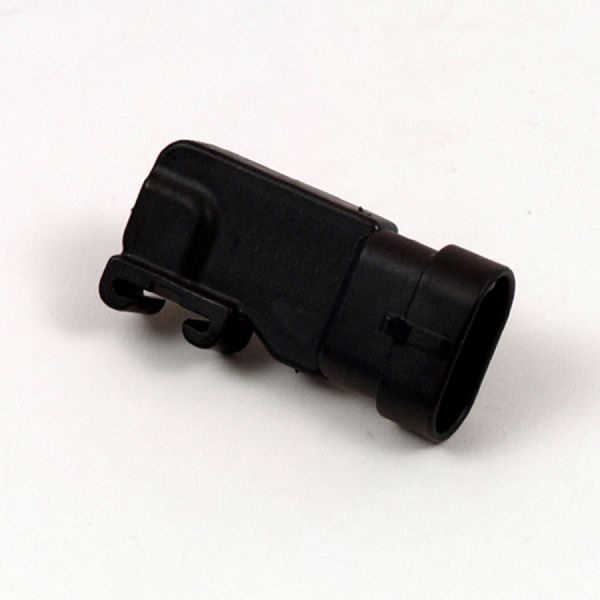
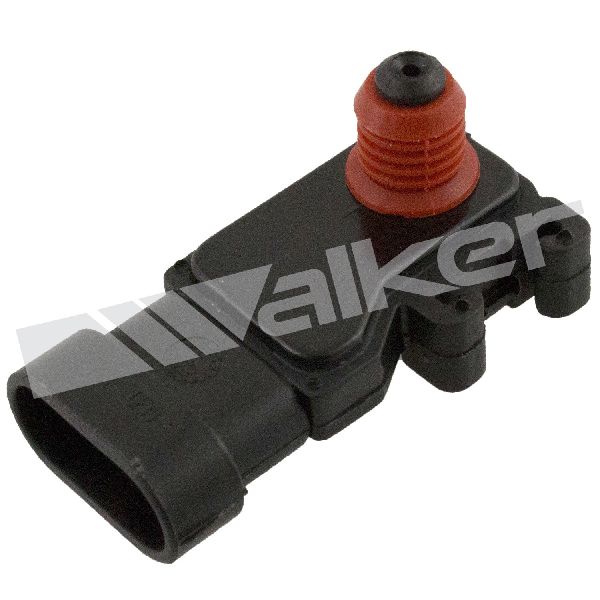
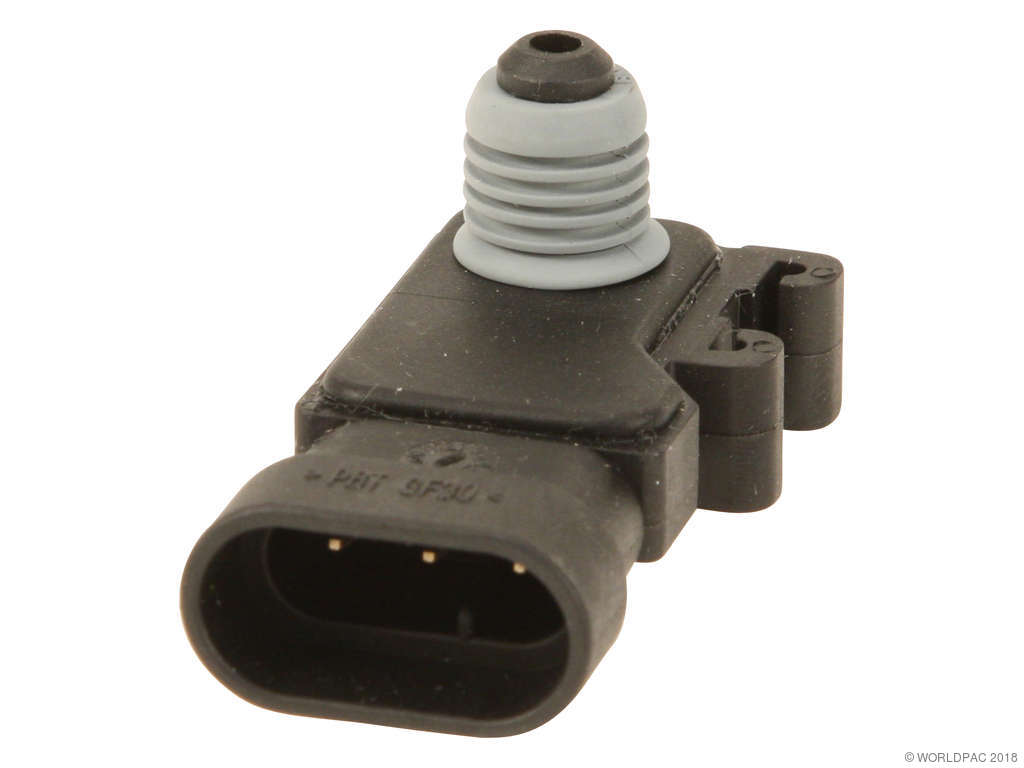
- Manifold Absolute Pressure (MAP) Sensor
(OEM #ACDelco 213-4682 (GM 12591290))— This sensor is the primary component in the fault circuit and can fail internally, causing incorrect voltage signals.
Trusted brands: ACDelco, Delphi, Bosch, NGK/NTK
OEM price range: $50-$80
Aftermarket price range: $25-$60 - MAP Sensor Connector Pigtail
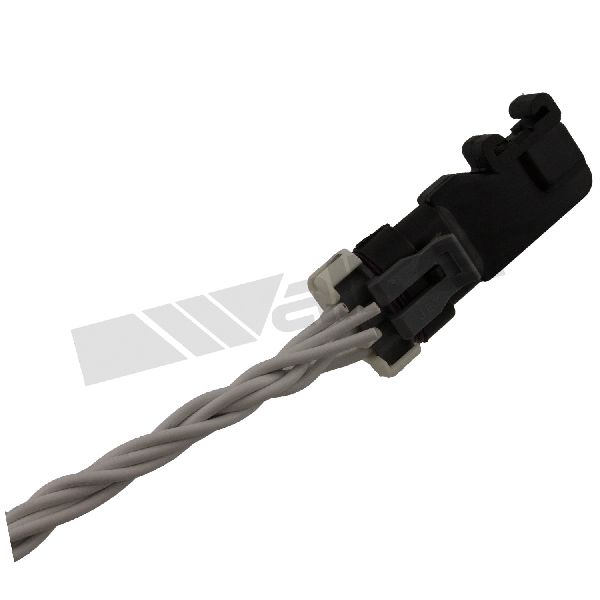
(OEM #Dorman 645-203)— If the diagnostic 'wiggle test' reveals a wiring fault, replacing the 3-wire connector pigtail is often the most reliable repair. This is a very common failure point.
Trusted brands: ACDelco, Dorman, Standard Motor Products
OEM price range: $20-$35
Aftermarket price range: $10-$25
Related Codes That Often Appear With This One
- P0106 — This code for 'MAP/Barometric Pressure Circuit Range/Performance' can be triggered because the intermittent signal drops from the P1107 fault make the sensor's output seem irrational to the PCM.
- P0107 — This is the generic code for 'MAP Circuit Low Input'. If the intermittent low voltage condition of P1107 happens frequently enough or becomes a hard fault, it will also trigger the generic constant-low code.
- P0171 or P0172 — A faulty MAP signal causes incorrect fuel calculations. This can lead to a lean (P0171) or rich (P0172) condition, which is then reported by the oxygen sensors. Always fix the MAP sensor code first.
- P0300 — An incorrect MAP signal can lead to improper fueling and timing, causing random misfires across multiple cylinders.
Technical Service Bulletins (TSBs) & Recalls
- TSB #PIP4409F: While not written specifically for the Ion, this GM bulletin addresses the exact same P1107 fault on other vehicles with similar engines. It details how the MAP sensor wires break internally near the connector due to vibration, causing an intermittent low voltage condition. It advises technicians to perform a wiggle test and replace the connector pigtail.
Mechanic-Grade Diagnostic Values
- MAP Sensor 5V Reference Wire Voltage — expected: 4.8V - 5.2V. Failure: Voltage below 4.8V or above 5.2V indicates a problem with the PCM or wiring.
- MAP Sensor Signal Wire Voltage (Key On, Engine Off) — expected: 4.0V - 4.5V (at sea level). Failure: A reading below this range, especially under 0.5V, points to a circuit issue, internal sensor fault, or major vacuum leak.
- MAP Sensor Signal Wire Voltage (Engine at Idle) — expected: 1.0V - 1.8V. Failure: Voltage that is stuck high, stuck low, or does not respond to throttle changes indicates a faulty sensor or blocked port.
- MAP Sensor Ground Wire Resistance — expected: Less than 0.5 Ohms to chassis ground. Failure: A reading of O.L. (Open Loop) or high resistance indicates a bad ground connection, which is a common cause of intermittent sensor codes.
Wiring & Ground Locations
- MAP Sensor Connector Wires (2003-2006) — At the MAP sensor connector on the intake manifold.. Knowing the wire colors is critical for accurate testing. Pin A: Gray (5V Reference). Pin B: Light Green (Signal). Pin C: Orange/Black (Low Reference/Ground). A break or short in any of these wires, especially the Light Green signal wire, will cause the P1107 code.
- G105 — On the lower left rear of the engine, near or above the starter motor.. This is a primary engine ground point. A loose or corroded connection at G105 can cause erratic behavior and low voltage faults for multiple sensors, including the MAP sensor, by creating a poor ground reference for the ECM.
- G107 (2007 model) — Located on the left rear corner of the cylinder head.. For the updated 2007 model, this is a key ground point. Similar to G105 on earlier models, a fault here can disrupt the sensor's ground reference and trigger intermittent codes.
- ECM/PCM Connectors — Located at the left side of the engine compartment.. If sensor-side tests are inconclusive, the fault may be at the Engine Control Module. Technicians must check for the same 5V reference, signal, and ground integrity by back-probing the pins at the ECM connector to rule out a wiring break between the sensor and the module.
Real Owner Repair Stories
- GM TSB #PIP4409F and forum consensus (Multiple GM vehicles with 2.2L Ecotec, including Saturn Ion, Chevy Cobalt, HHR) — Intermittent stalling, rough idle, surging, and P1107 code.
❌ Tried (didn't work) Replacing the MAP sensor
✅ What actually fixed it Performing a 'wiggle test' on the wiring harness near the MAP sensor connector confirmed an internal wire break. Splicing in a new connector pigtail (e.g., ACDelco PT2187 or Dorman 645-203) permanently resolved the issue.
OEM Part Supersession History
GM 12591290→ACDelco 213-4682— Standard part number update and transition from GM to ACDelco branding for service parts.
Heads up: This is a 1-bar sensor suitable for naturally aspirated engines. It is physically identical to other GM MAP sensors used on boosted applications (like the LS9), but it has a different operating range and will not work correctly on a supercharged or turbocharged engine.
Model Year Variations Within This Range
- 2007 only: The 2007 L61 engine received significant updates, including a new ECU shared with the 2.4L engine, a new camshaft design, and individual coil-on-plug ignition. Power increased from 140 hp to 145 hp. While the P1107 diagnosis remains focused on the MAP circuit, the ECU pinouts and some ground locations (like G107 on the cylinder head) may differ from the 2003-2006 models.
- 2003-2004: Early models (2003-2004) offered an optional, notoriously unreliable VTi Continuously Variable Transmission (CVT). While not directly related to the P1107 code, it's a critical point of inspection on these model years. The MAP sensor fault is independent of the transmission type.
Diagnostic Flowchart
Other Known Issues on This Vehicle
Issues unrelated to this code that are worth knowing about as an owner of this generation:
- Defective Ignition Switch 🔴 High — Extremely common across all model years. The switch can move out of the 'Run' position, shutting off the engine and disabling airbags. (Ref: NHTSA Recalls 14V047, 14V171. GM recall number 14113 / 14063.)
- Sudden Loss of Electric Power Steering (EPS) 🔴 High — Very common failure. The EPS motor fails, causing the steering to revert to manual mode, which requires significantly more effort, especially at low speeds. (Ref: NHTSA Recall 14V153000. GM recall number N140115.)
- Premature Timing Chain / Tensioner Wear 🔴 High — Common, especially on earlier 2003-2004 models, but can affect any high-mileage L61. A faulty tensioner design leads to chain noise ('rattle') and potential chain failure, causing catastrophic engine damage. (Ref: TSB #03-06-01-017 was issued for an updated repair procedure, though no formal recall was made for the Ion.)
- Key Can Be Removed When Not in Park/Off 🟠 Medium — Common issue that could lead to a vehicle rollaway. (Ref: NHTSA Recall, included with ignition switch campaigns.)
- Poor Quality Interior Materials 🟡 Low — Widespread owner complaint. Fabrics stain easily and plastic panels and trim pieces fit poorly or break.
Used vs. New Parts: Buying Guide for This Vehicle
When a used part is the smart pick: A used MAP sensor from a junkyard is generally not recommended due to the low cost of a new, reliable aftermarket part and the high probability of the used part having similar age-related wear. However, obtaining a section of the engine wiring harness from a donor vehicle can be a cost-effective way to get an OEM connector pigtail for repair if a new pigtail is unavailable.
Donor-vehicle mileage cap: roughly under 100000 miles for the part to have meaningful remaining life.
What to inspect on the donor part:
- For a harness section: ensure the wiring insulation is not cracked, brittle, or oil-soaked.
- Check the connector's locking tab to ensure it's intact.
- Inspect the connector pins for any signs of green or white corrosion or being bent/pushed out.
OEM-only on this vehicle (don't cheap out):
- Powertrain Control Module (PCM) - A used PCM will require dealership-level programming to the vehicle's VIN and security system, making a pre-programmed new or remanufactured unit a more reliable choice.
Aftermarket brands forum-validated for this vehicle:
- ACDelco (often the OEM supplier)
- Delphi
- Bosch
- NGK/NTK
- Standard Motor Products (SMP)
Brands owners have reported issues with on this vehicle:
- Unbranded, 'white-box' parts from online marketplaces with no warranty or brand reputation.
Real Owner Stories
Aggregated from forums and TSBs cited above. Mileages and costs reflect what owners reported in those sources.
2006 Saturn Ion 2.2L I4
Symptoms: The car was intermittently stalling and surging while at idle.
What fixed it: The forum post did not specify the final repair, but noted these are classic symptoms of a MAP sensor circuit fault, with the most likely causes being the wiring harness or the sensor itself.
Source hint: r/Saturn_Cars on Reddit
2004 Saturn Ion 2.2L I4
Symptoms: The vehicle set a P1107 code for 'MAP SENSOR CIRCUIT INTERMITTENT LOW VOLTAGE'.
What fixed it: The recommended repair based on a technical service bulletin was to perform a wiggle test on the wiring harness near the sensor. The test confirmed an intermittent open in the wiring, which was repaired by splicing in a new connector pigtail.
Source hint: TSB #PIP4409F
Related OBD-II Codes
Frequently Asked Questions
I saw TSB #PIP4409F mentioned for P1107. Does this apply to my 2003-2007 Saturn Ion?
What is the most common and reliable fix for P1107 on my 2.2L Ion?
How can I tell if it's the MAP sensor itself or just the wiring that's bad?
Where is the MAP sensor located on my 2005 Saturn Ion?
My Ion is stalling when I come to a stop and the check engine light is on. Could this be P1107?
My friend has a Chevy Cobalt with the same engine. Could it have the same P1107 problem?
Helpful Videos
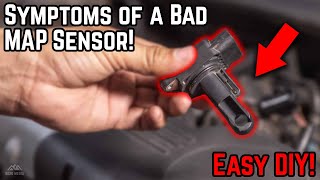
We Have This Part in Stock


The information in this article is provided for general reference and educational purposes only. Vehicle specifications, procedures, and part compatibility can vary by production date, trim level, and region. Always consult your vehicle's factory service manual and verify part numbers before purchasing or performing repairs. Safety-critical components such as airbags, seat belts, and braking systems should be installed by a qualified professional.
- Saturn Ion:
- 🧭 Diagnostic Flowchart
- 🎬 Helpful Videos
- 🛍️ Shop This Part
- What's Unique About the 2003-2007 Saturn Ion
- Symptoms You May Notice
- Most Likely Causes
- Rare But Worth Checking
- Diagnosis Steps
- Parts You'll Likely Need
- Related Codes That Often Appear With This One
- Technical Service Bulletins (TSBs) & Recalls
- Mechanic-Grade Diagnostic Values
- Wiring & Ground Locations
- Real Owner Repair Stories
- OEM Part Supersession History
- Model Year Variations Within This Range
- Other Known Issues on This Vehicle
- Used vs. New Parts: Buying Guide for This Vehicle
- Real Owner Stories
- 2006 Saturn Ion 2.2L I4
- 2004 Saturn Ion 2.2L I4
- Related OBD-II Codes
- Frequently Asked Questions
- 🎟️ Get 5% Off