

P1109 on 2015-2019 Lotus EVORA: Intake System Faults, Causes, and Fixes
On a 2015-2019 Lotus Evora, code P1109 is almost always triggered by an issue in the air intake system, frequently alongside code P0101. The most common cause is a non-approved aftermarket air filter, followed by a dirty or faulty Mass Airflow (MAF) sensor. Expect to fix this by returning to the stock air filter or replacing the MAF sensor.
- P1109 on a Lotus Evora is an intake system code, not a BARO sensor code.
- It is most often seen with code P0101.
- The most likely cause is a non-approved aftermarket air filter, as stated in a Lotus TSB. [sb_2020_01]
- Before replacing any parts, check for an aftermarket air filter and try cleaning the MAF sensor with a dedicated cleaner.
- Ensure the MAF sensor's electrical connector is clean and tight; use a zip tie for extra security.
- If replacement is necessary, the correct OEM MAF sensor is a Denso, part number 22204-31020.
What's Unique About the 2015-2019 Lotus EVORA
The Lotus Evora's engine management system, which controls a supercharged Toyota 2GR-FE V6, is highly sensitive to changes in the intake tract. A Technical Service Bulletin (TSB) issued by Lotus explicitly warns that using non-approved aftermarket air filters can cause codes P1109 and P0101. [sb_2020_01] Unlike many other cars where an aftermarket filter is a simple swap, the Evora's supercharged engine and its ECU calibration are less tolerant of modifications that alter airflow characteristics, making this a common issue for owners who have modified their cars.
Diagnostic Flowchart
Tap your situation to follow the diagnostic path that matches what you're seeing on this vehicle.
Symptoms You May Notice
- Check Engine Light illuminated
- Reduced engine performance or 'limp mode'
- Rough or unstable idle, sometimes hunting for idle speed
- Hesitation during acceleration
- Engine stalling, especially at low speeds or in traffic
- Decreased fuel economy
- Black smoke from the exhaust if the engine runs too rich
- Replacing the Barometric Pressure (BARO) sensor. Many generic code readers define P1109 as a BARO sensor fault, but this is incorrect for the Lotus Evora. The issue is almost always related to the MAF sensor and intake tract.
Most Likely Causes
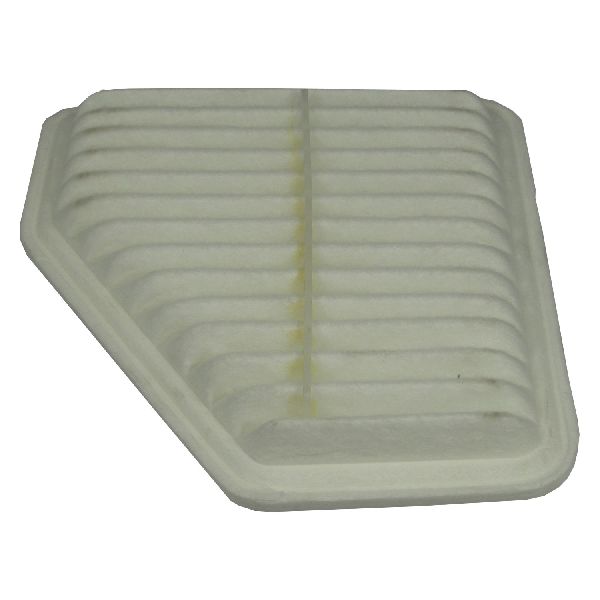
- Non-approved aftermarket air filter 🔴 High Probability → Shop Air Cleaner Assembly A Lotus TSB specifically calls this out as a primary cause. The ECU is sensitive to airflow changes from non-stock parts, especially oiled filters which can also contaminate the MAF sensor. [sb_2020_01, 5]
How to confirm: Visually inspect the airbox and air filter. If it is not a factory original part, especially if it's an oiled-gauze type (like K&N), it is the likely culprit. Owners on forums report this as the first thing to check.
Typical fix: Replace the aftermarket filter with a genuine OEM Lotus/Toyota air filter. After replacement, clear the codes and perform a drive cycle.
Est. part cost: $40-$80 - Dirty or faulty Mass Airflow (MAF) sensor 🟡 Medium Probability → Shop Fuel Injection Air Flow Meter Oiled aftermarket filters can deposit oil onto the MAF sensor element, fouling it. Even with stock filters, sensors can get dirty or fail over time, leading to incorrect airflow readings.
How to confirm: Remove the MAF sensor and inspect the small wires/elements. If they appear dirty, cleaning may help. A diagnostic scanner can also monitor MAF readings (g/s) to see if they are erratic or out of range at idle and under load.
Typical fix: First, try cleaning the sensor with a dedicated MAF sensor cleaner spray. Do not touch the sensor elements. 🎬 Watch: How to safely clean the Evora's MAF sensor If the problem persists, replace the MAF sensor. It's recommended to use a genuine Denso part (Part No. 22204-31020).
Est. part cost: $80-$200 - Loose MAF sensor electrical connector ⚪ Low Probability → Shop Fuel Injection Air Flow Meter Vibration can cause the connector to lose full contact over time, leading to intermittent signals. Forum users have specifically pointed to this as a fix.
How to confirm: Wiggle the connector and its wiring harness while the engine is idling to see if it causes a change in idle behavior or engine load readings on a scan tool. Inspect the pins for corrosion or damage. Check that the connector clicks firmly into place.
Typical fix: Clean the connector with contact cleaner and ensure it is securely seated. Some owners use a zip tie to ensure the connector remains tight as a preventative measure.
Est. part cost: $0-$5 - Vacuum leak in the intake system ⚪ Low Probability Any unmetered air entering the engine after the MAF sensor will confuse the ECU. This can happen from cracked hoses, loose clamps, or faulty gaskets, especially on a forced-induction engine.
How to confirm: Visually inspect all intake hoses and connections between the MAF sensor and the throttle body. A smoke test is the most effective way to find small leaks.
Typical fix: Tighten loose clamps or replace the leaking hose/gasket.
Est. part cost: $10-$100
Rare But Worth Checking
- Faulty Electronic Throttle Body: → Shop Fuel Injection Throttle Body
Diagnosis Steps
- Scan for all DTCs. Note if P1109 is present with P0101, which is very common and points strongly to the intake system.
- Inspect the air filter. If it is an aftermarket, especially an oiled type, this is your primary suspect. Replace with an OEM filter before proceeding. 🎬 See this DIY guide for changing your Evora's air filter [sb_2020_01]
- Inspect the air intake tube and all connections between the MAF sensor and the engine for cracks, loose clamps, or damage.
- Inspect the MAF sensor electrical connector. Ensure it is clean and tightly secured. With the engine idling, carefully wiggle the connector and harness to see if it affects engine behavior. Some owners recommend using a zip-tie to prevent it from loosening.
- Carefully remove the MAF sensor and inspect it. If dirty, clean it with a dedicated MAF sensor cleaner. Do not touch the sensor elements. Allow it to dry completely before reinstalling.
- Using a scan tool, check live data from the MAF sensor. With the key on and engine off, it should read below 0.70 g/s. At a warm idle, it should be between 2-5 g/s. At 2,500 RPM with no load, expect 8-19 g/s. Readings outside these ranges suggest a faulty sensor or wiring.
- If the filter is stock and the sensor is clean, consider a vacuum leak. A professional smoke test is the best way to confirm.
- If all other steps fail to resolve the issue, the MAF sensor itself may be faulty and require replacement. Use a genuine Denso part (22204-31020) for best results.
Parts You'll Likely Need
- Mass Airflow (MAF) Sensor
(OEM #22204-31020)— This sensor is the primary source of the data that triggers the code. It can get dirty from oiled filters or simply fail over time. A new sensor fixed the issue for several owners.
Trusted brands: Denso (OEM)
OEM price range: $150-$250
Aftermarket price range: $60-$120 - Engine Air Filter — A non-approved aftermarket filter is the most common cause cited in a manufacturer TSB. [sb_2020_01]
Trusted brands: OEM Lotus/Toyota
OEM price range: $40-$80
Aftermarket price range: $20-$50 - MAF Sensor Cleaner — A low-cost first step before replacing the sensor. Often, cleaning a dirty sensor is all that is needed.
Trusted brands: CRC, Liqui Moly
OEM price range: $15-$20
Aftermarket price range: $10-$15
Related Codes That Often Appear With This One
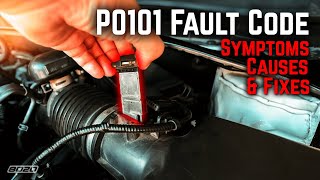
- P0101 — This code for 'MAF Sensor Range/Performance' is directly related. P1109 and P0101 are often set together because they both point to the ECU receiving illogical airflow data. A Lotus TSB confirms they are triggered together. 🎬 Watch: What the P0101 code really means and how to fix it [sb_2020_01, 5]
- P0171 — This code for 'System Too Lean' can occur if the MAF sensor is under-reporting airflow (e.g., due to a vacuum leak), causing the ECU to not inject enough fuel.
- P2173 — This code for 'High Airflow / Vacuum Leak Detected' can also appear alongside P1109 and P0101, further pointing to a discrepancy between expected and measured airflow. A Reddit user with an Evora 400 reported this combination of codes.
Technical Service Bulletins (TSBs) & Recalls
- sb_2020_01: Warns that unauthorized modifications, specifically non-approved aftermarket air filters, can result in diagnostic trouble codes P0101 and P1109. [sb_2020_01]
Platform-Specific Known Issues
- A Lotus Technical Service Bulletin (sb_2020_01) directly addresses codes P1109 and P0101, stating they can be generated by the 'fitment of non-approved after-market air filter'. [sb_2020_01]
- The MAF sensor electrical connector has been reported by owners as a point of failure; ensuring it is tightly secured with a zip tie is a common preventative fix discussed on forums.
Mechanic-Grade Diagnostic Values
- MAF Sensor Live Data (g/s) - Key On, Engine Off — expected: Less than 0.70 g/s. Failure: A value of 0.0 g/s may indicate an open in the power or signal circuit; a value significantly higher than 0.70 g/s indicates a faulty sensor.
- MAF Sensor Live Data (g/s) - Engine at Warm Idle — expected: 2.0 to 5.0 g/s. Failure: Readings consistently outside this range suggest a sensor, wiring, or vacuum leak issue.
- MAF Sensor Live Data (g/s) - Engine at 2,500 RPM (No Load) — expected: 8.0 to 19.0 g/s. Failure: A slow-to-respond or out-of-range reading indicates a failing sensor.
- MAF Sensor Signal Wire Voltage - Engine at Warm Idle — expected: 0.8 - 1.2 Volts DC. Failure: Voltage significantly below this range can indicate a sensor or wiring problem.
Scan Tool Commands That Help
- Toyota Techstream / Lotus TechCentre: Confirmation Driving Pattern — After a repair (like replacing the MAF or air filter), this specific drive cycle is used to confirm the fix and allow the ECU to verify that the fault condition is gone. It typically involves warming the engine, driving above 31 mph for 3-5 minutes, and then idling for 2 minutes, repeated multiple times.
- OBD-II Scanner / Battery Wrench: ECU Reset / MAF Relearn — After cleaning or replacing the MAF sensor, a reset is recommended. This can be done by clearing codes with a scanner or by disconnecting the negative battery terminal for at least 10 minutes to clear the ECU's learned memory. Full adaptation may take 50-100 miles of driving.
Wiring & Ground Locations
- MAF Sensor Connector/Harness — The electrical connector plugging into the MAF sensor, located on the intake tube between the airbox and the throttle body.. Owners have reported that intermittent signal loss from a poor connection at the MAF sensor plug can trigger P1109 and cause stalling. Wiggling the harness while the engine is running can help identify a fault in the connector or wiring, which may require replacement of the pigtail or securing the connection.
- Engine Bay Earth Points — Various points on the engine block and chassis where the main wiring harness is grounded.. A poor engine ground can cause erratic behavior from multiple sensors, including the MAF. As part of a deeper diagnosis for persistent electronic issues, checking, cleaning, and tightening all main engine bay ground points is a valid step.
Real Owner Repair Stories
- Reddit user 'MAUSECOP' (Lotus Evora 400) — Recurring limp mode and CEL with codes P0101, P0171, P1109, and P2173, especially in traffic or at low speeds.
❌ Tried (didn't work) Replacing the brake sensor, Cleaning the MAF sensor, Having a shop clear codes without finding an obvious issue
✅ What actually fixed it Replacing the MAF sensor with a new one AND ensuring the electrical connector was tightly secured. - The Lotus Forums user 'Ahmad B' (2016 Lotus Evora 400) — Car shuts off frequently in park or while driving; scan tool showed very high engine load at idle (30-40%).
❌ Tried (didn't work) Replacing the MAF sensor with a new one, Cleaning the MAF sensor
✅ What actually fixed it The owner discovered that wiggling the MAF sensor wiring harness caused the engine load to fluctuate instantly. The fix was to add an extra cable tie to hold the wires securely, indicating the root cause was a faulty connection or wiring at the connector, not the sensor itself.
OEM Part Supersession History
22204-31010, 22204-0H010, 22204-0P010→22204-31020— Standard part revision and consolidation by the manufacturer (Toyota/Denso).
Model Year Variations Within This Range
- 2015-2019: Within this range, Lotus introduced the Evora 400, 410, and GT models. While they have minor differences in horsepower (400 vs 416), bodywork, and interior trim, they all use the same supercharged Toyota 3.5L 2GR-FE engine platform and MAF sensor system. The diagnostic procedure and common causes for code P1109 remain consistent across these variants.
Helpful Videos

We Have This Part in Stock


The information in this article is provided for general reference and educational purposes only. Vehicle specifications, procedures, and part compatibility can vary by production date, trim level, and region. Always consult your vehicle's factory service manual and verify part numbers before purchasing or performing repairs. Safety-critical components such as airbags, seat belts, and braking systems should be installed by a qualified professional.
- Lotus EVORA:
- 🧭 Diagnostic Flowchart
- 🎬 Helpful Videos
- 🛍️ Shop This Part
- What's Unique About the 2015-2019 Lotus EVORA
- Symptoms You May Notice
- Most Likely Causes
- Rare But Worth Checking
- Diagnosis Steps
- Parts You'll Likely Need
- Related Codes That Often Appear With This One
- Technical Service Bulletins (TSBs) & Recalls
- Platform-Specific Known Issues
- Mechanic-Grade Diagnostic Values
- Scan Tool Commands That Help
- Wiring & Ground Locations
- Real Owner Repair Stories
- OEM Part Supersession History
- Model Year Variations Within This Range
- 🎟️ Get 5% Off