

P1121 on 2002-2005 Ford Explorer: TPS vs. MAF Causes and Fixes
On a 2002-2005 Ford Explorer, code P1121 is almost always caused by a faulty Throttle Position Sensor (TPS). This often causes a high idle and prevents the transmission from shifting, mimicking a major failure. Replacing the TPS is a simple, low-cost fix, typically under $60 for a quality part.
- P1121 on a 2002-2005 Explorer almost always points to a bad Throttle Position Sensor (TPS).
- The most alarming symptom—the transmission being stuck in a low gear—is a 'limp mode' and NOT a failed transmission.
- Before replacing the TPS, always perform a quick visual inspection of the PCV hoses at the back of the engine for obvious cracks, as this is the second most likely cause.
- Use a quality Motorcraft replacement TPS for the best reliability and to avoid replacing the part again soon.
- This is a DIY-friendly repair that can be done in under an hour with basic tools.
What's Unique About the 2002-2005 Ford Explorer
The 2002-2005 Ford Explorer (third generation) uses a simple, separately replaceable Throttle Position Sensor (TPS). This makes it an inexpensive and straightforward DIY repair, unlike the subsequent 2006-2010 generation, which integrated the sensor into the entire electronic throttle body assembly, requiring a much more expensive part replacement. Owners often mistake the severe 'limp mode' symptoms, particularly the transmission being stuck in first gear and a high, seemingly stuck throttle, for a catastrophic transmission failure. This is actually a PCM safety strategy caused by the faulty or inconsistent TPS signal, designed to prevent unpredictable acceleration.
Symptoms You May Notice
- Transmission will not shift out of a low gear (typically stuck in 1st or 2nd).
- High, surging, or erratic idle speed, sometimes feeling like a 'stuck throttle' around 2000 RPM.
- Hesitation or lack of power during acceleration.
- Engine stalling, sometimes after revving and letting off the gas.
- Check Engine Light is illuminated.
- Transmission Failure: The most common misdiagnosis. The symptom of being stuck in a low gear is a PCM-induced 'limp mode' to protect the drivetrain, not a mechanical failure of the transmission itself.
- Idle Air Control (IAC) Valve Failure: While a bad IAC can cause idle problems, it typically won't cause the transmission shifting issues or the specific TPS/MAF inconsistency code associated with P1121.
Most Likely Causes
- Faulty Throttle Position Sensor (TPS) 🔴 High Probability → Shop Fuel Injection Throttle Body The sensor's internal resistive contacts wear out over time, causing it to send erratic, intermittent, or incorrect voltage signals. It can also become physically 'sticky' or fail, especially in cold weather, leading to the classic high idle and no-shift condition.
How to confirm: With the key on and engine off, use a multimeter to backprobe the TPS signal wire. Voltage should be around 0.7-1.0V at closed throttle and sweep smoothly to ~4.5V at wide-open throttle. Any spikes, drops, or dead spots during the sweep indicate a bad sensor.
Typical fix: Replace the Throttle Position Sensor. It is highly recommended to use a genuine Motorcraft part (DY-967) for reliability. The mounting screws can be difficult to remove; using penetrating oil and the correct size Phillips head driver is crucial.
Est. part cost: $30-$70 - Vacuum Leak 🟡 Medium Probability Rubber and plastic vacuum hoses become brittle and crack with age and heat cycles. The PCV valve hoses and elbow connectors on the 4.0L SOHC engine are especially common failure points, allowing unmetered air to enter the intake manifold.
How to confirm: Visually inspect all vacuum lines and the air intake tube between the MAF sensor and the throttle body for cracks or loose connections. Listen for a hissing sound at idle. You can also (carefully) spray carburetor cleaner or use a smoke machine around suspected areas; a change in idle RPM or visible smoke confirms a leak.
Typical fix: Replace the cracked or leaking vacuum hose, PCV valve, or intake gasket. The PCV hose assembly is a common replacement part.
Est. part cost: $15-$50 - Damaged TPS Wiring or Connector ⚪ Low Probability The wiring harness near the engine is exposed to heat and vibration, which can lead to frayed wires or loose pins in the connector over time.
How to confirm: Visually inspect the TPS connector and its wiring for any signs of corrosion, damage, or loose pins. Wiggle the connector with the engine running to see if the idle changes or if the signal becomes erratic on a scan tool.
Typical fix: Repair the damaged section of wire or replace the TPS connector pigtail.
Est. part cost: $10-$25
Rare But Worth Checking
- Dirty or Sticking Throttle Body: → Shop Fuel Injection Throttle Body Carbon buildup can prevent the throttle plate from closing properly, causing a mismatch with what the TPS expects to see at idle. Cleaning the throttle body is good preventative maintenance.
- Faulty Mass Air Flow (MAF) Sensor: While less common than a TPS failure, a dirty or failing MAF sensor can provide incorrect airflow data, creating the conflict that triggers P1121. Cleaning it with dedicated MAF cleaner is a valid diagnostic step.
Diagnosis Steps
- Read all fault codes. Note if any lean codes (P0171/P0174) are present, which would point towards a vacuum leak.
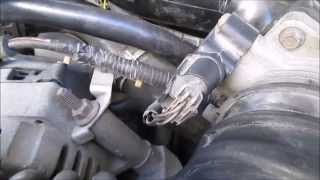
- Inspect for Vacuum Leaks: Thoroughly inspect the entire air intake system, paying close attention to the PCV valve and all associated rubber hoses and elbows for cracks, softness, or loose connections. The PCV hose assembly is a known weak point. 🎬 Watch: How to find and fix a PCV vacuum leak
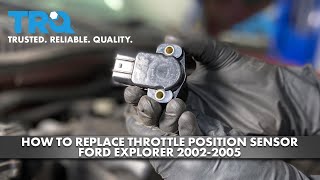
- Test the Throttle Position Sensor (TPS): With the key on and engine off, use a multimeter to backprobe the TPS signal wire. The voltage should read approximately 0.7V to 1.0V with the throttle closed. Slowly open the throttle by hand; the voltage should rise smoothly and without any dropouts to about 4.5V at wide-open throttle. Any erratic readings or jumps confirm a faulty TPS. 🎬 Watch: How to test and replace the TPS
- Inspect TPS Wiring: If the TPS tests okay, inspect its electrical connector and wiring harness for any signs of damage, corrosion, or loose pins. Wiggle the connector to check for intermittent connections.
- Clean the MAF Sensor: If no other issues are found, carefully clean the Mass Air Flow sensor wires with a dedicated MAF sensor cleaner. Do not touch the delicate wires.
- Clean the Throttle Body: If idle issues persist, clean the throttle body bore and plate with throttle body cleaner to remove any carbon buildup that could cause it to stick. 🎬 Watch: How to clean your throttle body
Parts You'll Likely Need
- Throttle Position Sensor
(OEM #DY-967)— This is the most frequent cause of code P1121. The sensor wears out internally, causing erratic signals that trigger a limp mode.
Trusted brands: Motorcraft, Delphi, NGK (NTK)
OEM price range: $40-$70
Aftermarket price range: $25-$50 - PCV Valve Hose Assembly
(OEM #1L2Z-6762-AA (or kit KB81G7))— The rubber elbows and plastic tees in the PCV system are a very common source of vacuum leaks on the 4.0L SOHC engine, which is a primary cause of this code.
Trusted brands: Motorcraft, Dorman
OEM price range: $25-$50
Aftermarket price range: $15-$30
Related Codes That Often Appear With This One
- P0171 — System Too Lean (Bank 1). This code often appears with P1121 if the root cause is a vacuum leak, as the unmetered air creates a lean fuel condition.
- P0174 — System Too Lean (Bank 2). Similar to P0171, this indicates a vacuum leak affecting both cylinder banks.
- P2135 — Throttle/Pedal Position Sensor/Switch 'A'/'B' Voltage Correlation. This code points to a disagreement between TPS circuits. Ford issued TSB 05-14-4 for some 2004-2005 Explorers with this code, recommending a new TPS and a PCM reprogram, highlighting known TPS issues on this platform.
Technical Service Bulletins (TSBs) & Recalls
- TSB 05-14-4: While for code P2135, this TSB is relevant as it addresses TPS failures on 2004-2005 models, recommending a replacement sensor kit (Part No. 3L5Z-9B989-AA) and a PCM reprogram. This highlights Ford's acknowledgement of sensor issues on this platform.
Platform-Specific Known Issues
- The 2002-2005 models feature a separately replaceable TPS, which is a distinct advantage for repair cost and simplicity over the 2006+ models.
- Ford issued TSB 05-14-4 for 2004-2005 models regarding a related TPS code (P2135), indicating a known weakness in the sensor and its calibration during this period.
Mechanic-Grade Diagnostic Values
- TPS Reference Voltage (VREF) — expected: 4.9V - 5.2V (Key On, Engine Off). Failure: Voltage below 4.9V or 0V suggests a wiring issue or a fault in the PCM's 5V reference circuit.
- TPS Signal Voltage — expected: Approx. 0.7V - 1.0V at closed throttle, sweeping smoothly to ~4.5V at wide-open throttle.. Failure: Voltage stuck below 0.5V, jumping, having dead spots, or reading high at closed throttle indicates a failed TPS.
- TPS Ground Circuit Voltage Drop — expected: Less than 0.2V (200 millivolts). Failure: Higher voltage indicates excessive resistance in the ground circuit, which can skew sensor readings.
- TPS Total Resistance (Sensor Unplugged) — expected: Greater than 4k Ohms between the power and ground pins.. Failure: Significantly lower resistance may indicate an internal short in the sensor.
Scan Tool Commands That Help
- Ford IDS (or equivalent): PCM Reprogram/Calibration Update — Required for 2004-2005 models when replacing the TPS due to code P2135, as per TSB 05-14-4. This updates the PCM's strategy for interpreting TPS signals to prevent false codes with the new sensor.
- Ford IDS (or equivalent): Clear KAM (Keep Alive Memory) — After replacing a TPS or cleaning a throttle body, clearing the KAM forces the PCM to relearn idle and throttle strategies. This can also be accomplished by disconnecting the battery for 15 minutes, but a scan tool is the preferred method.
Wiring & Ground Locations
- TPS Connector Pinout (Typical) — On the throttle position sensor itself.. Knowing the pinout is essential for testing. Pin 1: Signal Return (Ground). Pin 2: TP Signal (the wire to backprobe for voltage sweep). Pin 3: VREF (5-volt reference from PCM). Wire colors can vary by year, so testing by pin position is more reliable. The signal wire is typically the middle pin.
- G101 — Engine compartment, LH (driver's) side, front, near the radiator support or on the fender apron.. This is a primary engine and PCM ground point. A loose or corroded G101 can cause erratic sensor readings, including the TPS, leading to various codes and drivability issues.
- G104 — Engine compartment, RH (passenger's) side, rear, often on the firewall or near the battery.. Another critical engine-to-chassis ground. Poor connection here can create a floating ground, causing unpredictable behavior from engine management sensors.
- PCM Pin 46 / 91 (Signal Return) — At the Powertrain Control Module connector.. This is the dedicated sensor ground pin within the PCM. A poor connection here or a damaged wire from the TPS to this pin can cause a high-resistance ground path, leading to incorrect TPS voltage readings that the PCM misinterprets.
Real Owner Repair Stories
- Ford Truck Enthusiasts Forum user (2002 Ford Expedition 5.4L (similar platform/issue), 120,000 miles) — In cold weather (<20°F), experienced a very high hanging idle and the transmission would not shift out of first gear.
❌ Tried (didn't work) Letting the truck warm up only provided a temporary fix.
✅ What actually fixed it The owner tested the TPS and found the voltage was high at closed throttle. Upon removing the sensor, they discovered it was physically sticking internally. Replacing the TPS with a new part resolved the high idle, no-shift condition, and the P1121 code. - NHTSA ODI #10552171 — An owner of a similar Ford vehicle reported that code P1121 indicated the throttle control was stuck open, requiring them to pull to the side of the road and restart the car to continue driving.
OEM Part Supersession History
F4SZ-9B989-A→F4SZ-9B989-AA (Motorcraft DY-967)— Standard part revision and improvement over time.
Heads up: The Motorcraft DY-967 is the correct service part for this application.3L5Z-9B989-AA→N/A - This is a kit.— This part number refers to a specific kit called for in TSB 05-14-4 for 2004-2005 models, which included the sensor and instructions for the repair/reprogram procedure.
Heads up: While the sensor may be the same as a standard DY-967, this kit was specified by Ford to ensure the correct repair procedure was followed along with the required PCM reflash.
Model Year Variations Within This Range
- 2004-2005: These model years are specifically called out in TSB 05-14-4 for a related TPS code (P2135), which requires not only a new sensor but also a mandatory PCM reprogram to prevent the issue from recurring. Earlier 2002-2003 models typically do not require a reflash after TPS replacement.
Diagnostic Flowchart
Other Known Issues on This Vehicle
Issues unrelated to this code that are worth knowing about as an owner of this generation:
- Cracked Rear Liftgate Panel (Applique) 🟠 Medium — Extremely common. The plastic panel below the rear window often develops a vertical crack near the handle. It's primarily cosmetic but can allow moisture to corrode internal liftgate components. (Ref: Multiple TSBs issued (e.g., 02-25-6), but no widespread recall. A class-action lawsuit was filed over this issue.)
- 5R55W/S Automatic Transmission Failure 🔴 High — Very common, often appearing around or after 100,000 miles. Symptoms include harsh shifting, slipping between gears (especially 2-3), a flashing O/D light, and eventual loss of gears. (Ref: Common failure points include worn servo bores in the transmission case and solenoid body issues.)
- 4.0L SOHC V6 Timing Chain Cassette Failure 🔴 High — A notorious and frequent issue. Plastic timing chain guides wear out, causing a distinct 'rattle' from the front or rear of the engine, especially on cold starts. Failure to repair can lead to catastrophic engine damage. (Ref: Ford issued TSBs and updated parts for later models, but early 2002 models are particularly susceptible.)
- Cracked Plastic Thermostat Housing (4.0L SOHC V6) 🟠 Medium → Shop Integrated Thermostat Housing Assembly — A very common failure point. The two-piece plastic housing is prone to developing cracks at the seam, leading to significant coolant leaks and risk of overheating.
Used vs. New Parts: Buying Guide for This Vehicle
When a used part is the smart pick: For this specific P1121 repair, buying used parts is not recommended. The primary failure parts are a low-cost electronic sensor (TPS) and rubber hoses (PCV system), which degrade with age and heat cycles. A used part will have unknown wear and a high likelihood of failing soon after installation.
Donor-vehicle mileage cap: roughly under 10000 miles for the part to have meaningful remaining life.
What to inspect on the donor part:
- Not applicable as used parts are not advised for this repair.
OEM-only on this vehicle (don't cheap out):
- Throttle Position Sensor (TPS)
Aftermarket brands forum-validated for this vehicle:
- Motorcraft (OEM for TPS)
- Dorman (for PCV hose assemblies)
Brands owners have reported issues with on this vehicle:
- Unnamed or 'white box' store-brand TPS sensors are frequently reported on forums to fail quickly or be dead-on-arrival, causing the code to return. The cost savings are not worth the repeat labor.
Real Owner Stories
Aggregated from forums and TSBs cited above. Mileages and costs reflect what owners reported in those sources.
2001 Ford Expedition
Symptoms: The owner described a 'stuck throttle' feeling at 2000 RPM and the transmission being stuck in 1st gear.
What fixed it: Replacement of the Throttle Position Sensor (TPS), though the owner noted the factory screws were difficult to remove.
Source hint: YouTube - '2001 Ford Throttle Position Sensor (code P1121)'
2002-2005 Ford Explorer (similar Ford vehicle)
Symptoms: High idle and no-shift conditions occurring specifically in cold weather.
What fixed it: Replacing the faulty TPS, which resulted in improved idle and shifting.
Source hint: Ford Truck Enthusiasts - 'Code P1121 = sticky TPS (this time)'
2004-2005 Ford Explorer
Symptoms: TPS failure and calibration issues identified by the manufacturer.
What fixed it: Installation of a replacement sensor kit (Part No. 3L5Z-9B989-AA) and a PCM reprogram.
Source hint: TSB 05-14-4
Ford Fusion (Similar Manufacturer Issue)
Symptoms: An owner reported being unable to get to the side of the road and needing to restart the car after a diagnostic test indicated the throttle control was stuck open.
What fixed it: The owner was able to continue driving after a restart, but the P1121 code confirmed the throttle control fault.
Source hint: NHTSA ODI #10552171
Related OBD-II Codes
Frequently Asked Questions
Does TSB 05-14-4 apply to my 2004 Ford Explorer with TPS issues?
Why is my Explorer stuck in 1st or 2nd gear when the P1121 code is active?
Is the TPS on my 2003 Explorer easier to fix than on newer models?
What specific part should I use to replace the TPS on my Ford Explorer?
Could a vacuum leak on my 4.0L SOHC engine cause this code?
I'm having trouble removing the TPS screws; is this common on the Explorer?
Helpful Videos
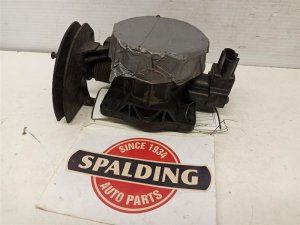
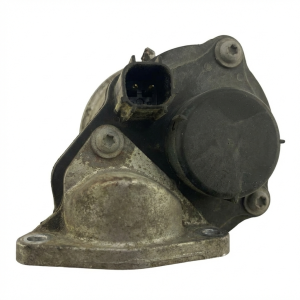
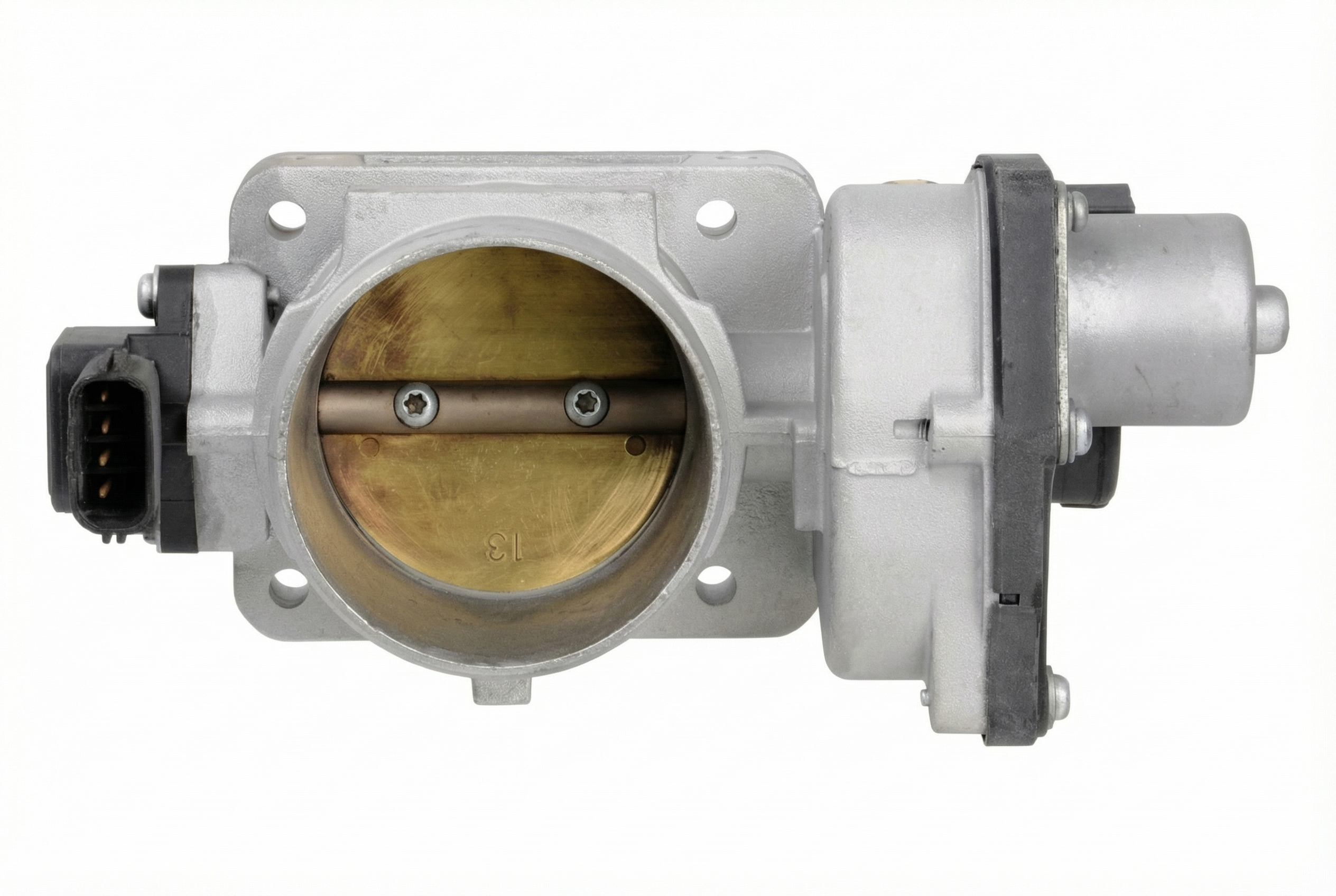
Used OEM Parts in Stock
New Aftermarket Parts Available


The information in this article is provided for general reference and educational purposes only. Vehicle specifications, procedures, and part compatibility can vary by production date, trim level, and region. Always consult your vehicle's factory service manual and verify part numbers before purchasing or performing repairs. Safety-critical components such as airbags, seat belts, and braking systems should be installed by a qualified professional.
- Ford Explorer:
- 🧭 Diagnostic Flowchart
- 🎬 Helpful Videos
- 🛍️ Shop This Part
- What's Unique About the 2002-2005 Ford Explorer
- Symptoms You May Notice
- Most Likely Causes
- Rare But Worth Checking
- Diagnosis Steps
- Parts You'll Likely Need
- Related Codes That Often Appear With This One
- Technical Service Bulletins (TSBs) & Recalls
- Platform-Specific Known Issues
- Mechanic-Grade Diagnostic Values
- Scan Tool Commands That Help
- Wiring & Ground Locations
- Real Owner Repair Stories
- OEM Part Supersession History
- Model Year Variations Within This Range
- Other Known Issues on This Vehicle
- Used vs. New Parts: Buying Guide for This Vehicle
- Real Owner Stories
- 2001 Ford Expedition
- 2002-2005 Ford Explorer (similar Ford vehicle)
- 2004-2005 Ford Explorer
- Ford Fusion (Similar Manufacturer Issue)
- Related OBD-II Codes
- Frequently Asked Questions
- 🎟️ Get 5% Off