

P1121 on 2000-2007 Ford Taurus: TPS / MAF Inconsistency Causes and Fixes
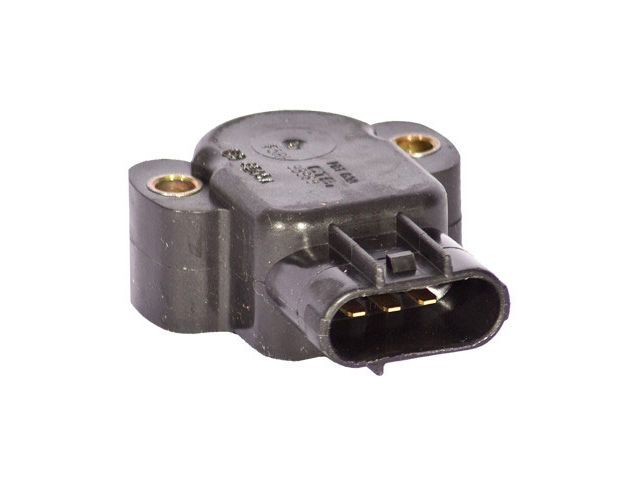
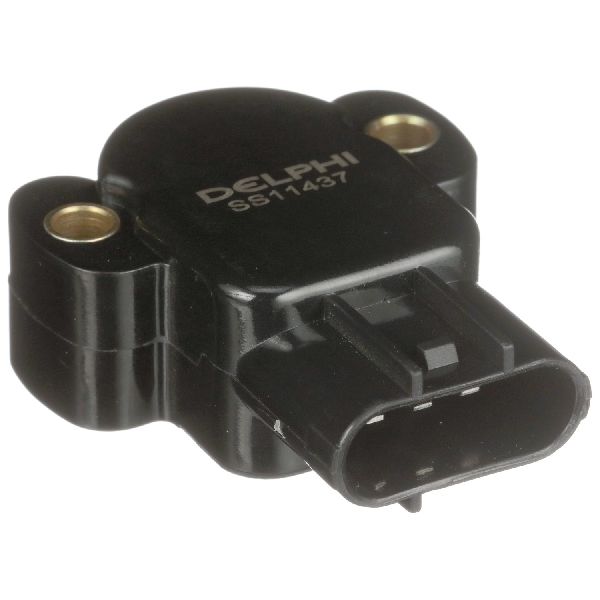
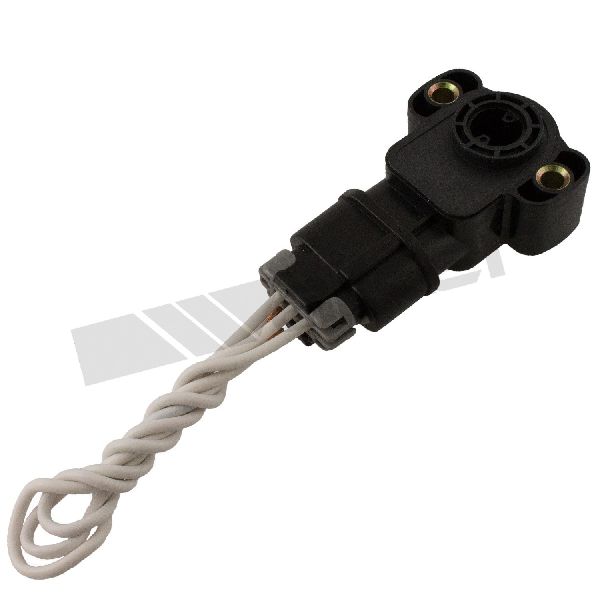
On a 2000-2007 Ford Taurus, P1121 most often means the Throttle Position Sensor (TPS) is failing, causing symptoms like a high idle, poor acceleration, and the transmission getting stuck in a low gear. However, a significant vacuum leak between the MAF sensor and the throttle body can also cause it. Expect to pay $30-$60 for a new TPS (e.g., Motorcraft DY967 or Standard Motor Products TH157) and it is a DIY-friendly repair, though the mounting screws can be difficult to remove.
- P1121 on your Taurus means the TPS and MAF sensor readings don't agree; it's not a simple electrical fault code.
- The most likely cause is a failing Throttle Position Sensor (TPS), which is an affordable and easy part to replace.
- Before replacing any parts, always inspect the air intake hose between the air filter and the throttle body for cracks, as a vacuum leak is a common secondary cause.
- Do not use the generic code definition 'Intermittent High Voltage'; it will lead you down the wrong diagnostic path for a Ford.
What's Unique About the 2000-2007 Ford Taurus
It is critical to know that Ford's definition for P1121 is not the same as for other manufacturers like Toyota or Nissan. Many generic code readers will incorrectly define P1121 as 'TP Sensor Circuit Intermittent High Voltage'. For a Ford Taurus, the correct definition points to a logic problem—a disagreement between two different sensors—rather than just a simple electrical fault in one sensor's circuit. This means diagnosis must include checking both sensors and, crucially, the air intake path between them for any unmetered air leaks.
Symptoms You May Notice
- Check Engine Light is on
- Erratic or high idle speed, sometimes over 2000 RPM
- Hesitation, stumbling, or surging during acceleration
- Transmission may not shift out of first or second gear (limp mode)
- Engine may stall at low speeds or when stopping
- Rough lurching or jerking
- Vehicle wants to accelerate on its own when in gear
- Delayed throttle response
- Replacing the Throttle Position Sensor without first checking for vacuum leaks. A significant vacuum leak can perfectly mimic the symptoms of a bad TPS for this specific code.
- Following the diagnostic procedure for the generic 'Intermittent High Voltage' definition, which focuses solely on electrical shorts instead of the comparative relationship between the TPS and MAF.
Most Likely Causes
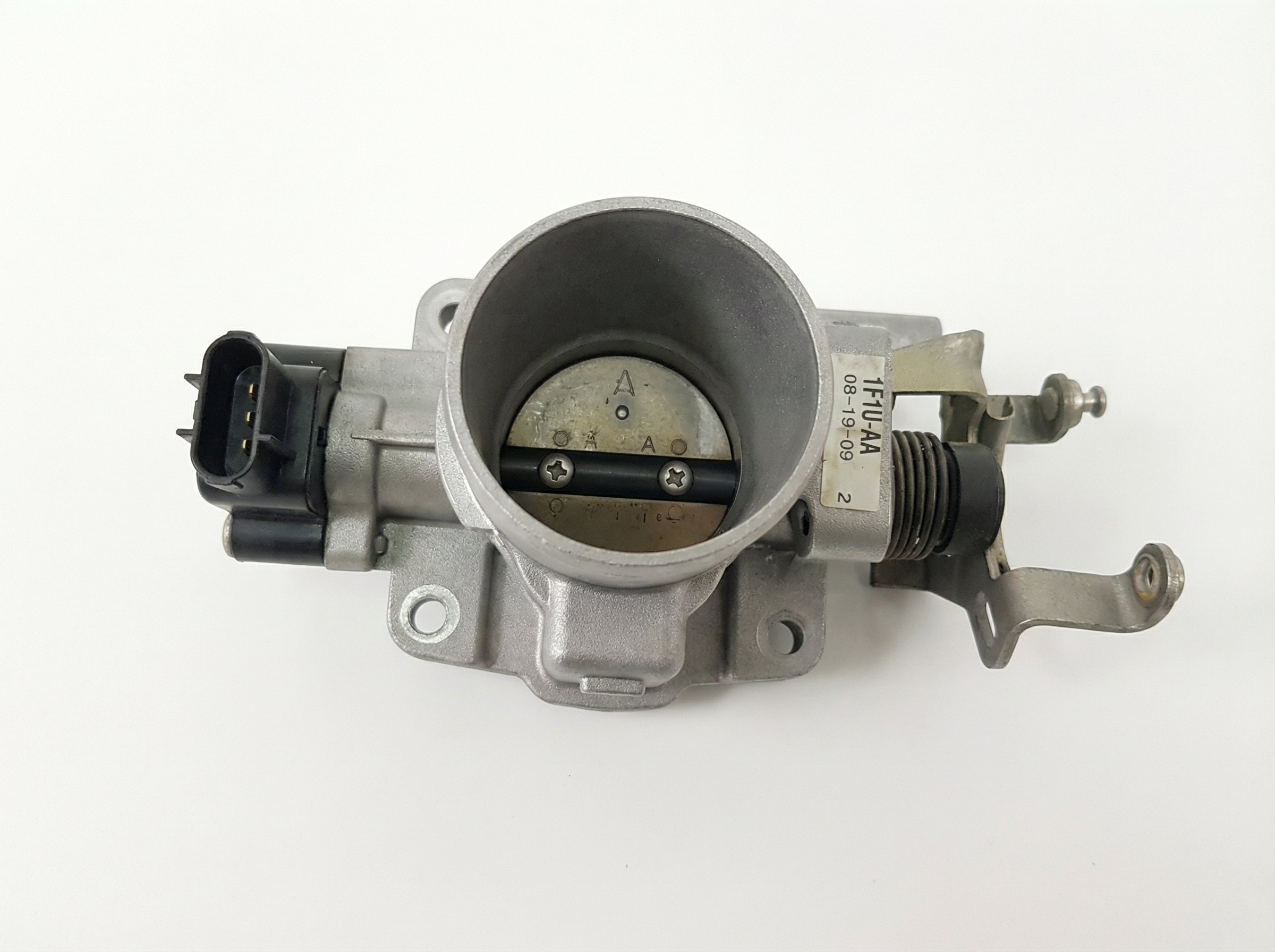
- Faulty Throttle Position Sensor (TPS) 🔴 High Probability → Shop Fuel Injection Throttle Body The TPS is a moving part with a carbon track that wears out over time, leading to erratic or incorrect voltage signals. High mileage vehicles are particularly susceptible. The sensor can also become internally sticky, especially in cold weather, causing it to report an incorrect throttle angle.
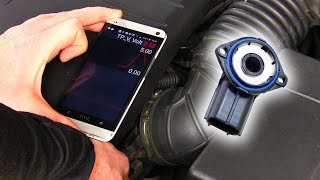
How to confirm: Use a scan tool to graph the TPS voltage with the key on, engine off. Slowly press the gas pedal. The voltage should rise smoothly from about 0.9V at idle to over 4.0V at wide-open throttle, with no sudden jumps or dropouts. 🎬 Watch: How to test your TPS using a scan tool. Wiggling the sensor's wiring harness while watching the data can also reveal intermittent faults. An owner on Ford Truck Enthusiasts forums confirmed a bad TPS by removing it and noticing it would physically stick internally and 'click' closed after a delay.
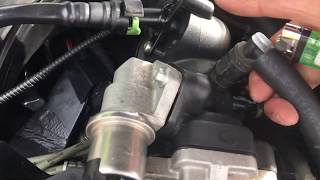
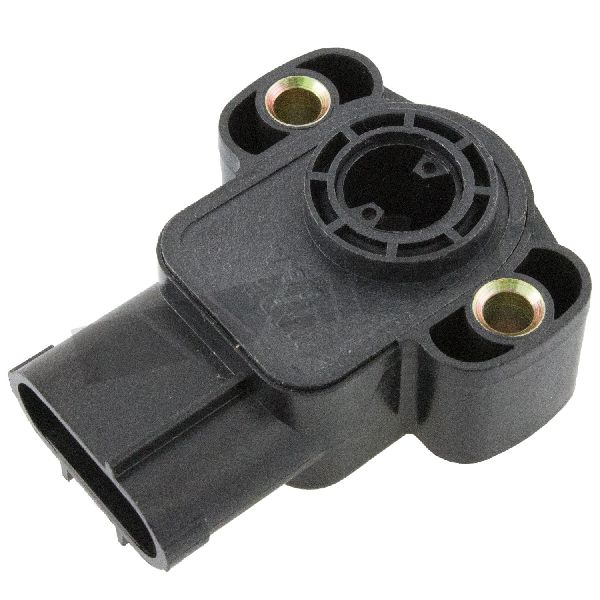
Typical fix: Replace the Throttle Position Sensor. It is mounted to the side of the throttle body with two screws, which are often Phillips head and can be difficult to remove without stripping. 🎬 See this walkthrough for replacing the TPS on a Taurus. An impact screwdriver may be helpful. After replacement, some sources recommend a relearn procedure: with the key on, slowly press the accelerator to the floor and slowly release it.
Est. part cost: $30-$60 - Vacuum Leak 🟡 Medium Probability The plastic and rubber components of the air intake system, particularly the large air intake boot and PCV hoses, can become brittle and crack with age and heat cycles, creating leaks. This allows unmetered air to enter the engine, causing the MAF sensor reading to be lower than what the PCM expects for a given throttle position.
How to confirm: Visually inspect all ducting between the MAF sensor and the throttle body for cracks or loose connections. Pay close attention to the PCV hoses and their connections. A smoke test is the most effective way to find small leaks. 🎬 See how to perform a smoke test for Taurus vacuum leaks. You can also carefully spray brake cleaner or a propane torch (unlit) around the intake area while listening for a change in engine idle speed.
Typical fix: Replace the cracked or leaking intake boot, vacuum hose, or gasket.
Est. part cost: $20-$100 - Dirty or Faulty Mass Air Flow (MAF) Sensor ⚪ Low Probability
How to confirm: Remove the MAF sensor from the intake tube and inspect the small hot wires. If they appear dirty or contaminated, clean them carefully using only dedicated MAF sensor cleaner spray. Do not touch the wires. If cleaning doesn't help, the sensor may be faulty.
Typical fix: Clean the MAF sensor. If the problem persists, replace the MAF sensor.
Est. part cost: $15 (cleaner) or $70-$150 (sensor) - Damaged Wiring or Connector ⚪ Low Probability
How to confirm: Visually inspect the wiring harnesses and connectors for the TPS and MAF sensors. Look for any signs of corrosion, chafing, or loose pins. A user on a Reddit forum traced a similar issue on a Ford van to a bad ground connection for the sensor, which caused a 'hashy' signal instead of a smooth voltage increase. Perform a 'wiggle test' on the connectors and wiring while the engine is running or while monitoring sensor data on a scan tool to see if the problem can be reproduced.
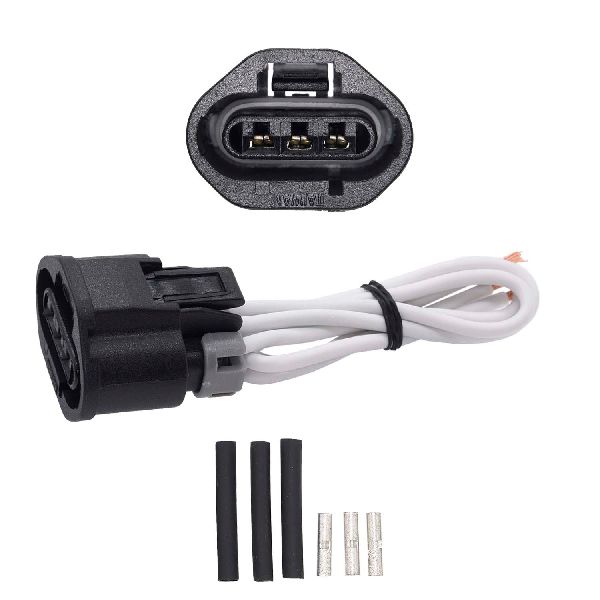
Typical fix: Repair the damaged section of wiring or replace the connector pigtail.
Est. part cost: $10-$30
Rare But Worth Checking
- Failing Alternator: A failing alternator can produce unstable voltage and electrical 'noise' that can interfere with sensitive sensor readings, sometimes triggering TPS-related codes. If you also have other seemingly unrelated electrical issues, dimming lights, or a battery warning light, have your charging system tested.
- Faulty Powertrain Control Module (PCM): In very rare cases, the PCM itself can fail. This should only be considered after all other possibilities, including sensors, wiring, and vacuum leaks, have been exhaustively ruled out. An unusual case on a Ford truck forum involved an engine swap where the PCM was not programmed for the new engine's airflow characteristics, triggering a P1121.
Diagnosis Steps
- Verify the code with an OBD-II scanner. Confirm the definition is 'TPS Inconsistent with MAF Sensor'.
- Check for any other stored codes that could provide clues (e.g., P0101, P0122).
- With the engine running, check for obvious vacuum leaks by listening for hissing sounds. Visually inspect the air intake boot between the air filter box and the throttle body for any cracks or tears. Pay special attention to PCV hoses.
- Use a scan tool that can graph live data to monitor the TPS and MAF sensors.
- With the Key On, Engine Off, slowly depress and release the accelerator pedal. Watch the TPS voltage (TP V PID) or percentage. It should move smoothly with no glitches or dropouts. A good sensor should read between approximately 0.49 and 4.65 volts.
- If the TPS signal is erratic, glitchy, or physically sticks, it is the likely cause. Replace the TPS.
- If the TPS signal is smooth, the next step is to more thoroughly check for vacuum leaks. A smoke test is the most reliable method.
- If no vacuum leaks are found, inspect and clean the MAF sensor using dedicated MAF sensor cleaner.
- If the problem persists, inspect the wiring and connectors for both the TPS and MAF sensors for any damage, corrosion, or loose pins. Check for a stable ground connection to the sensors.
Parts You'll Likely Need
- Throttle Position Sensor (TPS)
(OEM #Motorcraft DY967 (for 3.0L OHV Vulcan), Motorcraft DY1164 (for 3.0L DOHC Duratec))— This sensor's internal components wear out over time, causing the inconsistent signals that trigger code P1121.
Trusted brands: Motorcraft, Bosch, Standard Motor Products (TH157)
OEM price range: $50-$80
Aftermarket price range: $30-$60 - Air Intake Duct / Boot — This rubber/plastic tube is a common failure point for vacuum leaks due to cracking from age and heat.
Trusted brands: Motorcraft, Dorman
OEM price range: $80-$120
Aftermarket price range: $40-$70
Related Codes That Often Appear With This One
- P0122 — This code means 'TPS Circuit Low Input'. Seeing both P1121 and P0122 suggests a very erratic TPS or a complex wiring problem, as the computer is seeing signals that are both illogically inconsistent and too low.
- P0101 — This code means 'Mass Air Flow (MAF) Circuit Range/Performance'. It can appear with P1121 because the computer is seeing a direct conflict between the two sensors. If you have both codes, a vacuum leak is a strong possibility.
Platform-Specific Known Issues
- Difficult TPS Mounting Screws: The two Phillips head screws holding the TPS to the aluminum throttle body are notorious for seizing and stripping. A DIY repair video for a Ford Expedition with the same issue recommends using an impact screwdriver to break them loose.
Mechanic-Grade Diagnostic Values
- TPS Voltage (TP V PID) via Scan Tool — expected: Between 0.49V (closed throttle) and 4.65V (wide-open throttle).. Failure: Voltage that is outside this range, does not move smoothly, or has sudden spikes/drops when the pedal is slowly depressed.
- TPS Percentage (TP PID) via Scan Tool — expected: Between 9.85% (closed) and 93% (wide-open).. Failure: Readings that are stuck, jump erratically, or do not correspond to the physical throttle position.
- TPS Reference Voltage at Connector — expected: ~5.0 volts with key on, engine off.. Failure: Voltage significantly lower or higher than 5.0V, or unstable voltage, indicates a problem with the PCM or wiring, not the sensor itself.
- TPS Ground Circuit Resistance — expected: Near 0 ohms between the sensor's ground pin and the chassis or battery negative terminal.. Failure: High resistance (more than a few ohms) indicates a poor ground connection, which can cause erratic sensor readings.
Scan Tool Commands That Help
- Generic (No Scan Tool Required): PCM Keep Alive Memory (KAM) Reset and Relearn — After replacing the TPS, cleaning the throttle body, or fixing a vacuum leak to force the PCM to relearn idle and fuel trim values. An incomplete relearn can cause a high idle or stalling. A common procedure is: 1. Disconnect the negative battery terminal for at least 5 minutes. 2. Reconnect the terminal. 3. Turn the key to 'ON' (without starting) for 10 seconds, then 'OFF' for 10 seconds. 4. Start the engine without touching the accelerator pedal. 5. Let the engine idle for a full 15 minutes to warm up and relearn idle strategy. The idle may be unstable during this time. 6. Turn the engine off, then restart to check if the idle is now stable.
- Generic (No Scan Tool Required): TPS Calibration/Relearn (Alternate Method) — An alternative, quicker method some technicians use after TPS replacement. With the key in the 'ON' position (engine off), slowly press the accelerator pedal to the floor and then slowly release it. This can help the PCM recognize the new sensor's voltage range.
Wiring & Ground Locations
- Main Engine-to-Chassis Ground — A large ground strap located on the transmission case, below the brake booster.. A poor main ground can cause widespread electrical issues and unstable sensor readings across the entire engine management system.
- PCM Engine Harness Ground — A specific ground point for the PCM engine harness, often a smaller wire bolted to the chassis or engine block in the engine bay.. The TPS and MAF sensors rely on a clean ground reference provided by the PCM. A fault at this specific ground can cause a 'hashy' or noisy signal, leading to inconsistency codes like P1121.
- G102 / G103 — On or near the right rear side of the engine compartment.. These are common grounding points for various engine components and sensors. Corrosion or looseness here can affect multiple systems.
- TPS Connector Pins — At the sensor on the side of the throttle body.. Knowing the wire colors is critical for testing. Early models typically use Black (Ground), Green (Signal), and Orange (5V Reference). Later models may use Grey/Red (Ground), Grey/White (Signal), and Brown/White (5V Reference).
Real Owner Repair Stories
- Ford Truck Enthusiasts forum user 'ResJudicata' (2002 Ford Expedition 5.4L (similar engine controls) with 120,000 miles) — Very high hanging idle, transmission would not shift out of first gear, especially in cold weather below 20°F.
❌ Tried (didn't work) Letting the truck warm up only provided a temporary fix.
✅ What actually fixed it The original TPS was physically sticking internally. The owner removed it and operated it with a screwdriver, noting it would hang 1/4 to 1/3 open and then 'click' closed after a delay of one to five seconds. Replacing the TPS resolved the P1121 code, the high idle, and also resulted in smoother transmission shifting. - Reddit user in r/MechanicAdvice (Ford Van (similar sensor principles)) — P1121 code, erratic engine behavior.
❌ Tried (didn't work) Initial diagnostics focusing only on the sensor itself.
✅ What actually fixed it A bad ground connection for the sensor circuit. Instead of a smooth, rising voltage on a scan tool graph, the signal was 'hash' (e.g., WVWVWVVW). Adding a new ground wire for the sensor circuit cleaned up the signal and fixed the problem. - Ford Truck Enthusiasts forum user 'Gibby speed' (Ford F-150 with a 5.4L engine swap, using the original 4.6L PCM) — P1121 code, delayed throttle response, struggling to build RPM.
❌ Tried (didn't work) Troubleshooting individual sensors.
✅ What actually fixed it The root cause was an incorrect PCM calibration for the swapped engine. The 4.6L PCM's expected airflow values from the MAF did not match the actual airflow of the larger 5.4L engine for a given throttle position, creating the inconsistency that sets P1121. The fix required either a PCM from a 5.4L truck or a custom tune.
"I Checked Everything" — The Actual Cause
- A physically sticking Throttle Position Sensor. A smoke test for vacuum leaks would come back clean, but the sensor itself provides incorrect data because its internal mechanism is binding, often due to age or temperature. The failure is mechanical, not a leak.
- A poor sensor ground connection. A smoke test is irrelevant for this electrical issue. The sensor and wiring might have perfect continuity when tested with a multimeter with the engine off, but the weak ground creates electrical noise ('hash') in the signal when the engine is running, which a scan tool graph would show but a smoke test would never find.
When the Usual Fixes Don't Work
- While a faulty TPS is a high-probability cause, several owner-documented fixes show that replacing it should not be the first and only step. One owner of a similar Ford platform found the issue was a physically sticky sensor, a mechanical failure diagnosed by hand, not just with a multimeter. Another traced the issue to a poor sensor ground that created a 'hashy' signal, a problem only visible by graphing live data. In both cases, a simple vacuum leak check and TPS replacement would not have been the complete diagnostic path. These stories suggest that observing the *quality* of the TPS signal and the *mechanical* operation of the sensor can be more important than just checking for basic electrical continuity.
Model Year Variations Within This Range
- 2000-2007: The wire colors for the Throttle Position Sensor connector may vary. Early-production models often use Black for ground, Green for signal, and Orange for the 5V reference. Later-production models may use a different scheme, such as Grey with a Red stripe for ground and Brown with a White stripe for the 5V reference. Always verify with a multimeter instead of relying solely on color.
Diagnostic Flowchart
Other Known Issues on This Vehicle
Issues unrelated to this code that are worth knowing about as an owner of this generation:
- Automatic Transmission Failure (AX4S/AX4N/4F50N) 🔴 High — Very common, often occurring between 60,000 and 100,000 miles. Symptoms include RPM flares between shifts, harsh shifting, or sudden loss of engagement. A primary failure point is the stripped splines inside the torque converter, which stops driving the transmission's oil pump.
- Front Coil Spring Fracture 🔴 High — Common in vehicles operated in salt-belt states. The spring can corrode, fracture, and puncture the front tire, often while parked but potentially while driving. (Ref: Safety Recall 04S17 was issued for 1999-2001 models to install protective shields, but owners of later models (e.g., 2003) report the same failure.)
- Camshaft Synchronizer Failure (3.0L Vulcan OHV Engine) 🔴 High — A well-known issue on the 3.0L Vulcan engine. The synchronizer's internal bushings wear out, causing a persistent 'chirp' or 'squeak' often mistaken for a bad belt. Since the synchronizer shaft also drives the oil pump, complete failure will lead to a sudden loss of oil pressure and catastrophic engine damage.
- Engine Oil Pan Gasket Leak 🟡 Low — A common source of oil leaks on both the Vulcan and Duratec engines across this generation.
- Malfunctioning Stop Lamp Switch 🟠 Medium — Subject to a recall. A faulty switch could cause brake lights to fail to illuminate (or stay on constantly) and prevent the shifter from moving out of Park. (Ref: Yes, recall issued for this problem.)
Used vs. New Parts: Buying Guide for This Vehicle
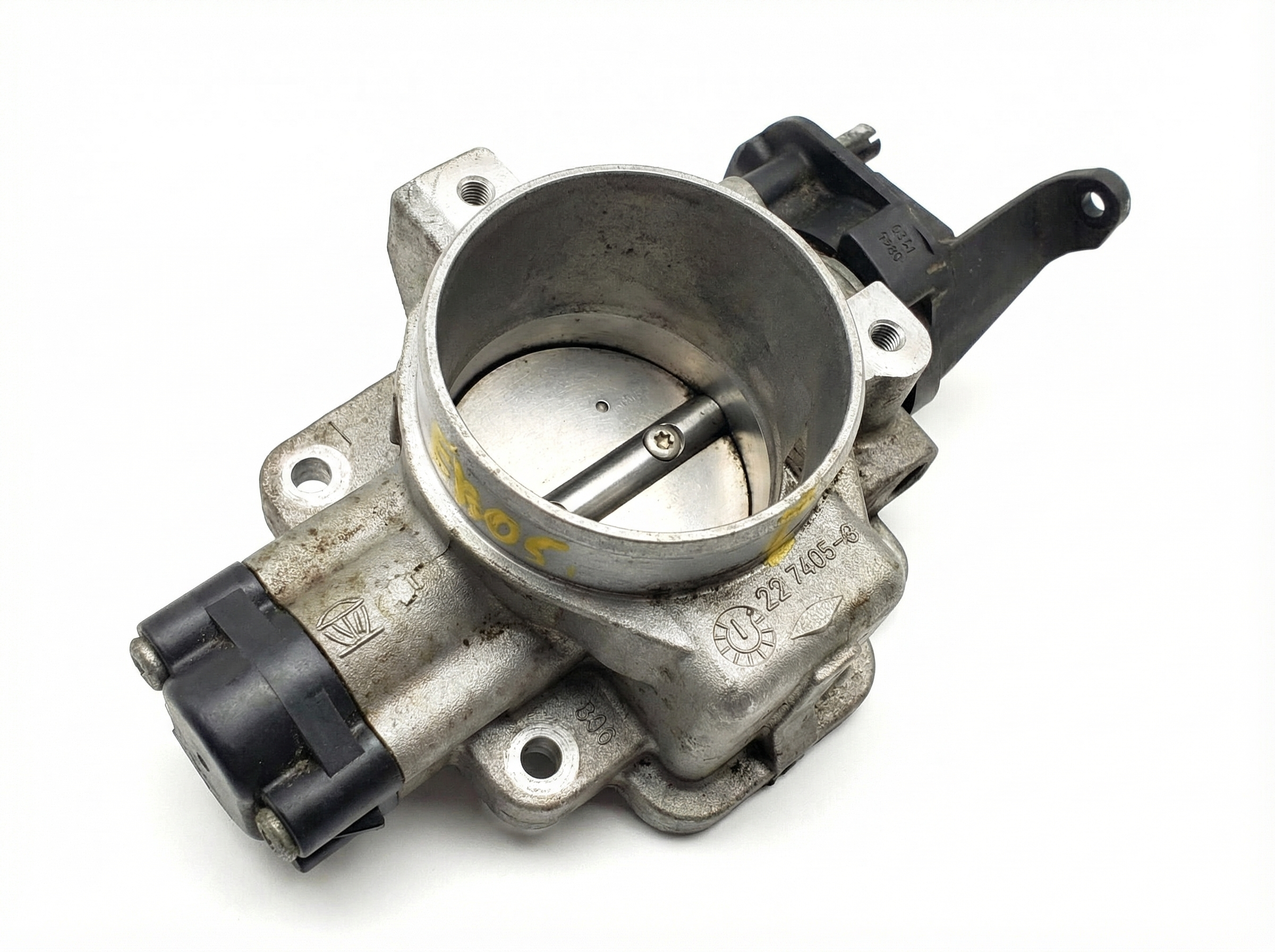
When a used part is the smart pick: For this repair, sourcing a used throttle body assembly from a junkyard can be a good value, as the metal housing itself does not fail. A used air intake duct/boot is also acceptable if it is thoroughly inspected for cracks and still pliable. However, the electronic sensors themselves (TPS, MAF, IAC) should not be sourced used.
Donor-vehicle mileage cap: roughly under 80000 miles for the part to have meaningful remaining life.
What to inspect on the donor part:
- For an intake boot, squeeze and bend it to ensure the rubber is not brittle or cracked.
- For a throttle body, check that the throttle plate moves smoothly without binding and has minimal carbon buildup.
- Check the donor vehicle's mileage on the odometer or sticker.
- Avoid parts from vehicles that show signs of sitting for years (e.g., heavy moss, extreme sun-fade), as rubber and plastic parts will be degraded.
OEM-only on this vehicle (don't cheap out):
- While not strictly OEM-only, the Powertrain Control Module (PCM) should be considered an expert-level replacement. A used PCM must be from an identical year, model, and engine and may require programming by a dealer or specialist.
Aftermarket brands forum-validated for this vehicle:
- Motorcraft (OEM)
- Bosch
- Standard Motor Products (SMP)
- NTK/NGK
Brands owners have reported issues with on this vehicle:
- Unbranded parts from online marketplaces like Amazon or eBay.
- Some forum users report negative experiences with Dorman electronic components for this era of vehicle, suggesting they may have a higher failure rate.
Real Owner Stories
Aggregated from forums and TSBs cited above. Mileages and costs reflect what owners reported in those sources.
2002 Ford Expedition
Symptoms: High, hanging idle and the transmission would not shift out of first gear, especially in cold weather. The owner also noted a transmission shudder.
What fixed it: Replacing the Throttle Position Sensor (TPS), which was found to be physically sticking internally.
Source hint: Ford Truck Enthusiasts Forums
2000 Ford Taurus — 185000 miles
Symptoms: The vehicle had a lurching issue, and after replacing the IAC and TPS, code P1121 appeared.
What fixed it: The forum post focused on diagnosis rather than a final fix, but a commenter suggested the cause could be a bad sensor ground connection, which had caused a 'hashy' signal on their own Ford van.
Source hint: Reddit r/MechanicAdvice
2001 Ford Expedition
Symptoms: The vehicle was stuck in gear and had a high idle.
What fixed it: The issue was resolved by replacing the Throttle Position Sensor (TPS).
Source hint: YouTube DIY video
1999 Mercury Sable
Symptoms: The car was accelerating on its own while in drive, requiring the driver to hold the brakes to keep it from moving.
What fixed it: The post confirms this symptom is linked to P1121, with the implied fix being diagnosis and repair of the TPS/MAF circuit, most likely the TPS itself.
Source hint: iATN (International Automotive Technicians Network)
Documented NHTSA Reports
Symptoms: An owner reported that the car experienced a situation where the throttle control was stuck open, requiring them to pull to the side of the road and restart the vehicle.
What fixed it: A diagnostic test indicated code P1121, pointing to a fault where the throttle control was stuck open (NHTSA ODI #10552171).
Related OBD-II Codes
Frequently Asked Questions
My 2002 Taurus is stuck in first gear with a P1121 code. Is my transmission failing?
I'm trying to replace the Throttle Position Sensor (TPS) on my Taurus, but the screws are completely stuck. Is this normal?
My car seems to accelerate on its own and I have code P1121. What could cause this?
After I replace the TPS on my Ford Taurus, is there a relearn procedure I need to perform?
I have a 2003 Mercury Sable with code P1121. Is the diagnostic information for the Ford Taurus applicable?
How can I test the Throttle Position Sensor on my Taurus to confirm it's bad before buying a new one?
Could a simple vacuum leak cause the P1121 code and a high idle on my Taurus?
Helpful Videos
Used OEM Parts in Stock
New Aftermarket Parts Available


The information in this article is provided for general reference and educational purposes only. Vehicle specifications, procedures, and part compatibility can vary by production date, trim level, and region. Always consult your vehicle's factory service manual and verify part numbers before purchasing or performing repairs. Safety-critical components such as airbags, seat belts, and braking systems should be installed by a qualified professional.
- Ford Taurus:
- 🧭 Diagnostic Flowchart
- 🎬 Helpful Videos
- 🛍️ Shop This Part
- What's Unique About the 2000-2007 Ford Taurus
- Symptoms You May Notice
- Most Likely Causes
- Rare But Worth Checking
- Diagnosis Steps
- Parts You'll Likely Need
- Related Codes That Often Appear With This One
- Platform-Specific Known Issues
- Mechanic-Grade Diagnostic Values
- Scan Tool Commands That Help
- Wiring & Ground Locations
- Real Owner Repair Stories
- "I Checked Everything" — The Actual Cause
- When the Usual Fixes Don't Work
- Model Year Variations Within This Range
- Other Known Issues on This Vehicle
- Used vs. New Parts: Buying Guide for This Vehicle
- Real Owner Stories
- 2002 Ford Expedition
- 2000 Ford Taurus — 185000 miles
- 2001 Ford Expedition
- 1999 Mercury Sable
- Documented NHTSA Reports
- Related OBD-II Codes
- Frequently Asked Questions
- 🎟️ Get 5% Off