

P1121 on 2010-2015 Kia Optima 2.4L: Accelerator and Throttle Body Fault Guide
On a 2011-2015 Kia Optima with the 2.4L GDI engine, code P1121 usually indicates a failing electronic throttle body, which triggers a low-power 'limp mode'. Cleaning the throttle body is a possible first step, but replacement is the most common fix, costing around $150-$250 for an aftermarket part. A throttle relearn procedure is required after replacement.
- P1121 on a 2011-2015 Kia Optima almost always points to a fault in the electronic throttle system, not the more famous engine bearing recall.
- The most common symptom is a sudden, dangerous loss of power known as 'limp mode'. Driving is not recommended.
- The most likely failed part is the entire electronic throttle body assembly. A faulty accelerator pedal sensor is the second most likely cause.
- Diagnosis requires a scan tool to watch live data from the pedal and throttle sensors to see which one is failing.
- Before replacing parts, it's worth cleaning the throttle plate of any carbon buildup, as this can sometimes resolve the issue.
What's Unique About the 2010-2015 Kia Optima
The 2011-2015 Optima uses the 2.4L Theta II GDI (Gasoline Direct Injection) engine, which is known for two distinct issues that can lead to throttle-related problems. First, GDI engines are prone to carbon buildup in the intake system, which can cause the throttle plate to stick. Second, and more commonly for this code, the electronic throttle body assembly itself is a frequent failure point, leading to limp mode and various throttle actuator codes. While this engine is famous for recalls related to internal bearing failure (typically code P1326), this throttle system fault is a separate, well-documented issue.
Generation note: The 2010-2015 range covers the end of the second generation (MG, 2010) and the entire third generation (TF, 2011-2015). The 2.4L GDI engine specified is found in the 2011-2015 models. The 2010 model used a 2.4L MPI engine. While the electronic throttle components are similar, the causes related to GDI carbon buildup are specific to the 2011-2015 models.
Symptoms You May Notice
- Sudden loss of power and entering 'limp mode' (engine RPM limited to ~2000).
- Check Engine Light illuminated.
- Electronic Stability Control (ESC) warning light may also turn on simultaneously.
- Poor, hesitant, or unresponsive acceleration.
- Rough, unstable, or high idle.
- Engine may stall, especially when coming to a stop.
- Replacing the accelerator pedal assembly when the throttle body is the actual point of failure.
- Assuming the limp mode is caused by the common P1326 knock sensor issue without first reading the stored trouble codes.
- Replacing the throttle body without performing the required relearn procedure, leading to continued idling or response issues.
Most Likely Causes
- Faulty Electronic Throttle Body Assembly 🔴 High Probability → Shop Fuel Injection Throttle Body The internal motor or the integrated Throttle Position Sensor (TPS) within the assembly is a common electronic failure point on this platform. This is a more frequent cause than carbon buildup, which can also physically jam the throttle plate.
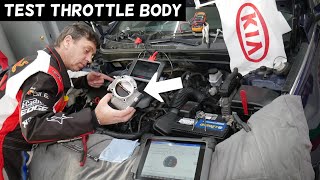
How to confirm: Use a scan tool to monitor commanded throttle position vs. actual throttle position. If the actual position doesn't match the command or the TPS voltage is erratic, the throttle body is likely faulty. Visually inspect for heavy carbon buildup. With the key on and engine off, the throttle plate should buzz and move when the accelerator is pressed.
Typical fix: First, attempt to clean the throttle body and plate with a dedicated throttle body cleaner. If this doesn't work, the entire throttle body assembly must be replaced. A throttle body relearn procedure must be performed after replacement.
Est. part cost: $100-$250 (aftermarket), $350-$500 (OEM) - Faulty Accelerator Pedal Position (APP) Sensor 🟡 Medium Probability → Shop Accelerator Pedal Assembly The APP sensor is an electronic component that can wear out over time, sending incorrect or erratic voltage signals to the ECM.
How to confirm: Use a scan tool to monitor the APP sensor's voltage (usually two separate signals, APP1 and APP2). The voltage should increase smoothly as you press the pedal, with no dropouts or spikes. The two signals should correlate with each other in a predictable pattern (e.g., one is half the voltage of the other).
Typical fix: The APP sensor is integrated with the accelerator pedal assembly and must be replaced as a single unit.
Est. part cost: $180-$400 - Wiring or Connector Issue ⚪ Low Probability
How to confirm: Visually inspect the wiring harnesses and connectors for the throttle body and accelerator pedal for any signs of damage, corrosion, or loose pins. Perform a 'wiggle test' on the harness while monitoring sensor data on a scan tool to see if the signal cuts out.
Typical fix: Repair the damaged section of wire or clean/replace the faulty connector.
Est. part cost: $5-$50
Rare But Worth Checking
- Faulty Engine Control Module (ECM):
Diagnosis Steps
- Connect an OBD-II scanner and confirm P1121 is present. Check for any other related codes (e.g., P2135, P2110, P1607).
- Use the scanner's live data function to monitor the Accelerator Pedal Position (APP) sensors 1 and 2. Press the pedal slowly from 0% to 100%. The voltage should rise smoothly with no glitches or dropouts.
- Monitor the Throttle Position Sensor (TPS) voltage. It should also move smoothly and correlate with the APP sensor input. If the APP sensor readings are smooth but the TPS reading is erratic or stuck, the throttle body is the likely culprit.
- Turn the ignition off. Inspect the electrical connectors and wiring at both the accelerator pedal and the throttle body for any visible damage, corrosion, or loose pins.
- If the sensor data is inconclusive, perform a 'wiggle test' by shaking the wiring harnesses for the APP and TPS while watching the live data for any signal interruptions.
- If the throttle body is suspected, remove the intake boot and visually inspect the throttle plate for heavy carbon buildup that could cause it to bind. Clean if necessary.
- If cleaning does not resolve the issue and the wiring is intact, replace the component (throttle body or accelerator pedal assembly) that showed erratic readings during the live data test.
- After replacing the throttle body, perform a throttle body relearn procedure. A common manual method is to turn the ignition to 'ON' (engine off) for 15 seconds, then 'OFF' for 5 seconds, and repeat this cycle 5 times. Alternatively, disconnecting the battery for 15 minutes may also reset adaptations.
Parts You'll Likely Need
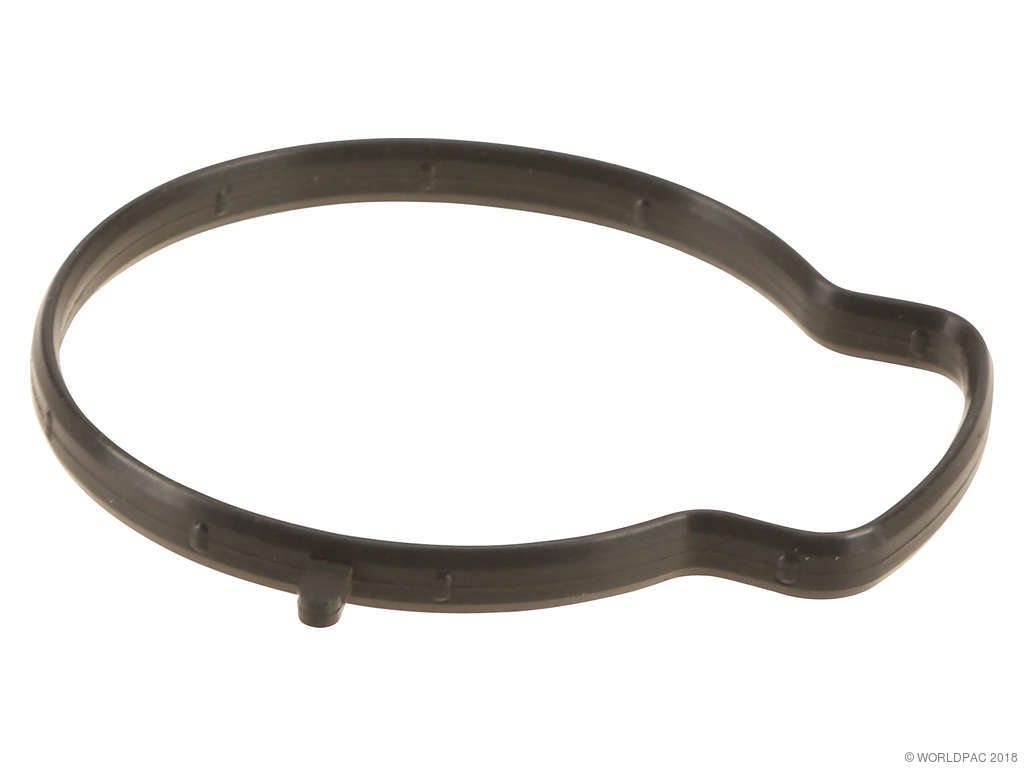
- Electronic Throttle Body Assembly
(OEM #35100-2G700)— This is the most frequent point of failure for throttle-related limp mode on the 2.4L GDI Optima. The internal electronics fail more often than the part gets stuck with carbon. Note: Part number 35100-2G710 is for the 2.0L Turbo engine and is not interchangeable.
Trusted brands: Kia (OEM), Bosch, Standard Motor Products, Cardone (Remanufactured)
OEM price range: $350-$500
Aftermarket price range: $100-$250 - Accelerator Pedal Assembly
(OEM #32700-2T210)— If diagnostic testing shows erratic signals from the pedal sensor, the entire assembly must be replaced.
Trusted brands: Kia (OEM), Standard Motor Products, Duralast
OEM price range: $300-$400
Aftermarket price range: $180-$250
Related Codes That Often Appear With This One
- P2135 — This code means 'Throttle/Pedal Position Sensor/Switch 'A'/'B' Voltage Correlation'. It specifically indicates a disagreement between the two redundant sensors in either the TPS or APP sensor assembly, strongly pointing to a failed sensor unit.
- P2110 — This code means 'Throttle Actuator Control System - Forced Limited RPM'. It often appears alongside other throttle codes and confirms the ECM has intentionally put the vehicle into limp mode as a safety response.
- P0121 / P0122 / P0123 — These are generic codes for Throttle Position Sensor performance, low input, and high input, respectively. Their presence with P1121 reinforces that the fault lies within the throttle body or its circuit.
- P1607 — This code indicates a communication failure between the ECM and the electronic throttle body, often pointing directly to a failed throttle body assembly.
Technical Service Bulletins (TSBs) & Recalls
- No Technical Service Bulletins (TSBs) were found specifically for code P1121 on this vehicle. However, Kia has issued general service bulletins for resetting the electronic throttle control adaptive values, which is a necessary step after replacement. Always check with a dealer for any available ECM software updates that might address throttle control logic before replacing hardware.
Platform-Specific Known Issues
- The Theta II 2.4L GDI engine is subject to a major recall and lifetime warranty extension for connecting rod bearing failure, which also causes limp mode but is typically associated with code P1326 and engine knocking noises. It is critical to differentiate this from a throttle system fault.
- A throttle body relearn procedure is highly recommended after replacement to ensure proper idle and throttle response. Failure to do so can mimic symptoms of a continued part failure.
Mechanic-Grade Diagnostic Values
- TPS 'A' Signal Voltage (Key On, Engine Off) — expected: 0.5V - 1.0V at closed throttle, sweeping smoothly to approx. 4.5V at wide-open throttle.. Failure: Voltage is stuck, erratic, has dead spots, or does not change with pedal movement.
- TPS Resistance (between pins 1 and 2) — expected: Approximately 0.71-1.38 kΩ at closed throttle and ~2.7 kΩ at wide open throttle.. Failure: Resistance values are outside this range or do not change smoothly as the throttle plate is moved.
- Throttle Body Connector Pin Voltage (Key On, Engine Off) — expected: Pin 1: 5V (Sensor Reference), Pin 3: Ground (~0V), Pin 5: 5V (Sensor Reference).. Failure: Missing 5V reference or a bad ground (voltage significantly above 0V) points to a wiring or ECM issue, not the throttle body itself.
- Live Data: Throttle Position Angle (Warm Engine at Idle) — expected: A stable reading of approximately 5-6 degrees.. Failure: The value is stuck, erratic, or does not match the ECM's commanded position.
Scan Tool Commands That Help
- Kia GDS (or advanced aftermarket scanner): ETC (Electronic Throttle Control) Active Test — Use this to command the throttle plate to open and close while the engine is off. If the plate does not move as commanded while observing live data, it confirms a failure in the throttle body motor or a mechanical jam.
- Kia GDS (or advanced aftermarket scanner): Reset Adaptive Values / Data Treatment — This function must be used after replacing the throttle body to clear the old learned values from the ECM. Failure to perform this reset can cause the new part to operate on incorrect parameters, leading to persistent codes like P0638/P2110 and poor performance.
Wiring & Ground Locations
- Throttle Body Connector — The 6-pin electrical connector on the electronic throttle body assembly, located where the air intake duct meets the engine's intake manifold.. This is the primary connection point for all power, ground, and signal wires for the integrated throttle position sensors and the throttle motor. A loose pin, corrosion, or wire damage here is a common cause of intermittent throttle codes.
- Engine Ground Strap — Typically a braided or heavy-gauge wire connecting the engine block or cylinder head to the vehicle's chassis/frame rail, often near the driver's side strut tower or firewall.. A poor or corroded main engine ground can cause voltage discrepancies and introduce electrical noise into sensor circuits. This can lead to the ECM receiving erratic signals from the TPS and APP sensors, potentially triggering P1121 even if the sensors themselves are good.
Real Owner Repair Stories
- Reddit user post (2011-2015 Kia/Hyundai models) — Jerky or poor shifting between gears, especially at low speeds.
❌ Tried (didn't work) Initial diagnostics did not immediately point to a calibration issue.
✅ What actually fixed it A manual throttle body relearn procedure. The steps involved warming the engine, then with the engine off, cycling the ignition key (or push-start button without brake pedal) to 'ON' for 15 seconds, then 'OFF' for 5 seconds, and repeating this cycle a total of 5 times. This reset the throttle position sensor limits.
OEM Part Supersession History
35100-2G700→35100-2G700 (current)— This part number has remained consistent for the 2.4L GDI engine in the specified model years, but multiple manufacturers (OEM and aftermarket) produce it. It is crucial to verify VIN compatibility.
Heads up: The part number 35100-2G710 is for the 2.0L Turbo engine and is not interchangeable with the 2.4L GDI part, despite looking similar.
Diagnostic Flowchart
Other Known Issues on This Vehicle
Issues unrelated to this code that are worth knowing about as an owner of this generation:
- Catastrophic Engine Failure (Rod Bearing Wear) 🔴 High — Extremely common, leading to a class-action lawsuit and multiple recalls. Can occur at any mileage, but frequently seen under 100,000 miles. (Ref: Recall SC147; NHTSA 17V224000. Kia extended the warranty and implemented a Knock Sensor Detection System (KSDS) software update to detect failure.)
- Excessive Oil Consumption 🔴 High — Widespread issue, often a precursor to the catastrophic engine failure. Many owners report adding a quart of oil every 1,000 miles or less. (Ref: Related to engine recall SC147. Kia has a specific oil consumption test procedure outlined in TSB ENG222.)
- HECU (Hydraulic Electronic Control Unit) Fire Risk 🔴 High — Common enough to trigger a massive recall. An electrical short can occur in the HECU, causing an engine compartment fire while parked or driving. (Ref: Recall SC284; NHTSA 23V652000. Owners are advised to park outside until the recall repair (fuse replacement) is performed.)
- Cracked Low-Pressure Fuel Hose 🔴 High — Common on 2013-2014 models. The hose deteriorates from engine heat, cracks, and leaks fuel, creating a fire risk. (Ref: Recall SC187; NHTSA 20V101000)
- Failing Airbag Control Unit (ACU) 🔴 High — Affects 2011-2013 models. The ACU can short circuit in a crash, preventing frontal airbags and seatbelt pretensioners from deploying. (Ref: Recall SC165; NHTSA 18V363000)
Used vs. New Parts: Buying Guide for This Vehicle
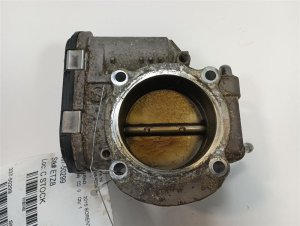
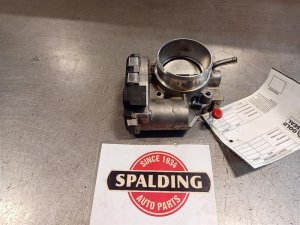
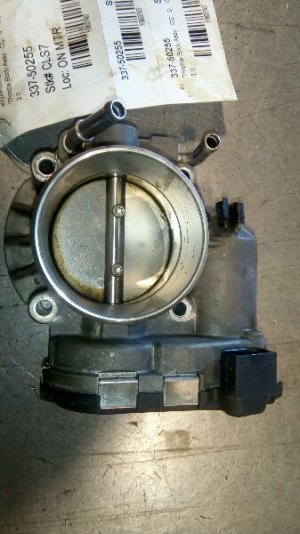
When a used part is the smart pick: A used throttle body from a reputable salvage yard can be a cost-effective option, especially if the OEM part is prohibitively expensive. Given that this is a common failure item, it's a calculated risk. It makes most sense when the budget is tight and the vehicle is older.
Donor-vehicle mileage cap: roughly under 80000 miles for the part to have meaningful remaining life.
What to inspect on the donor part:
- Look for a donor vehicle with lower mileage if possible.
- Inspect the throttle bore for excessive carbon buildup or scoring.
- Check the electrical connector pins for any signs of corrosion, bending, or moisture intrusion.
- Ensure the butterfly valve moves freely by hand without binding or sticking.
OEM-only on this vehicle (don't cheap out):
- Engine Control Module (ECM)
Aftermarket brands forum-validated for this vehicle:
- Dorman (specifically their OE FIX line, which claims improved internal seals)
- Standard Motor Products
- Bosch
Brands owners have reported issues with on this vehicle:
- No-name, unbranded parts from online marketplaces without warranties or seller history may have a higher failure rate.
Real Owner Stories
Aggregated from forums and TSBs cited above. Mileages and costs reflect what owners reported in those sources.
2012 Kia Sorento 2.4L GDI
Symptoms: Vehicle triggered P1121 and P2110 codes. The owner attempted to clean the throttle body, but the issue persisted.
What fixed it: Replacing the throttle body assembly resolved both codes after cleaning failed to work.
Source hint: Kia Forums (kia-forums.com) thread titled '2012 Sorento P1121 and P2110'
2012 Kia Optima EX 2.4L GDI
Symptoms: Owner experienced symptoms related to the P1121 code.
What fixed it: The context mentions the user experienced the issue, but the specific fix for this specific user was not detailed beyond the general platform solution of throttle body replacement.
Source hint: Optima Forums (optimaforums.com)
Related OBD-II Codes
Frequently Asked Questions
My 2012 Kia Optima is in limp mode; could this be the engine recall SC147 instead of a throttle issue?
Is there a specific TSB for P1121 on the 2010-2015 Kia Optima?
Can I just clean the throttle body (part 35100-2G700) to fix P1121?
Why did my ESC (Electronic Stability Control) light come on at the same time as the P1121 code?
How do I perform the throttle body relearn on my Optima without a scan tool?
Does the 2011-2014 Hyundai Sonata share this P1121 throttle body issue?
Helpful Videos
Used OEM Parts in Stock
New Aftermarket Parts Available


The information in this article is provided for general reference and educational purposes only. Vehicle specifications, procedures, and part compatibility can vary by production date, trim level, and region. Always consult your vehicle's factory service manual and verify part numbers before purchasing or performing repairs. Safety-critical components such as airbags, seat belts, and braking systems should be installed by a qualified professional.
- Kia Optima:
- 🧭 Diagnostic Flowchart
- 🎬 Helpful Videos
- 🛍️ Shop This Part
- What's Unique About the 2010-2015 Kia Optima
- Symptoms You May Notice
- Most Likely Causes
- Rare But Worth Checking
- Diagnosis Steps
- Parts You'll Likely Need
- Related Codes That Often Appear With This One
- Technical Service Bulletins (TSBs) & Recalls
- Platform-Specific Known Issues
- Mechanic-Grade Diagnostic Values
- Scan Tool Commands That Help
- Wiring & Ground Locations
- Real Owner Repair Stories
- OEM Part Supersession History
- Other Known Issues on This Vehicle
- Used vs. New Parts: Buying Guide for This Vehicle
- Real Owner Stories
- 2012 Kia Sorento 2.4L GDI
- 2012 Kia Optima EX 2.4L GDI
- Related OBD-II Codes
- Frequently Asked Questions
- 🎟️ Get 5% Off