

P1123 on 1995-2011 Hyundai Accent: Decoding Rich Fuel Trim and Sensor Faults
On a 1995-2006 Hyundai Accent, P1123 almost always indicates the engine is running too rich. The most common cause is a faulty Mass Air Flow (MAF) sensor, which costs about $60-$150 for an aftermarket part. For 2007-2011 models, the cause may differ as they use a MAP sensor. While some databases list P1123 as a Throttle Position Sensor (TPS) fault, for this specific vehicle, this is a common misdiagnosis.
- For a 1995-2011 Hyundai Accent, treat P1123 as a 'System Too Rich' code, not a TPS code.
- On 1995-2006 models, the most likely cause is a bad Mass Air Flow (MAF) sensor. A simple diagnostic test is to unplug it and see if the engine runs better.
- On 2007-2011 models, the car has a MAP sensor, not a MAF. Diagnosis should focus on the O2 sensor, fuel pressure, and potential vacuum leaks.
- Do not replace the Throttle Position Sensor (TPS) for this code on an Accent; it is a common misdiagnosis based on generic information.
- Driving with this code can lead to poor fuel economy and eventual damage to the catalytic converter.
What's Unique About the 1995-2011 Hyundai Accent
The main challenge with P1123 on the Accent is the conflicting information. While generic tools may point you to the Throttle Position Sensor, experienced owners and even Hyundai technicians on forums consistently diagnose it as a rich fuel condition. Furthermore, the cause differs by generation: early Accents (approx. 1995-2006) use a Mass Air Flow (MAF) sensor which is a primary suspect, while later models (approx. 2007-2011) use a Manifold Absolute Pressure (MAP) sensor, changing the diagnostic path.
Generation note: This range covers three Accent generations: the first (X3, 1995-1999), second (LC, 2000-2006), and third (MC, 2006-2011). The most significant difference is that the first two generations use a Mass Air Flow (MAF) sensor, which is a very common cause of P1123. The third generation (specifically 2006-2011 MC models) uses a Manifold Absolute Pressure (MAP) sensor, so a faulty MAF is not a possible cause on those models. The diagnostic approach for 2007-2011 models should focus more on O2 sensors, fuel pressure, and potential vacuum leaks.
Symptoms You May Notice
- Check Engine Light illuminated.
- Hesitation or bogging during acceleration, particularly on take-off.
- Rough or unstable idle, sometimes dropping low enough to stall, especially when coming to a stop.
- Noticeably worse fuel economy.
- Black smoke coming from the tailpipe, which may stain the ground below the exhaust tip.
- Strong smell of raw gasoline from the exhaust.
- Replacing the Throttle Position Sensor (TPS). Many owners are misled by generic code definitions and replace the TPS, which does not fix a fuel mixture problem.
- Replacing the EVAP Purge Control Solenoid. One owner on a forum replaced this part based on a guess, but the P1123 code returned, indicating it was not the root cause.
Most Likely Causes
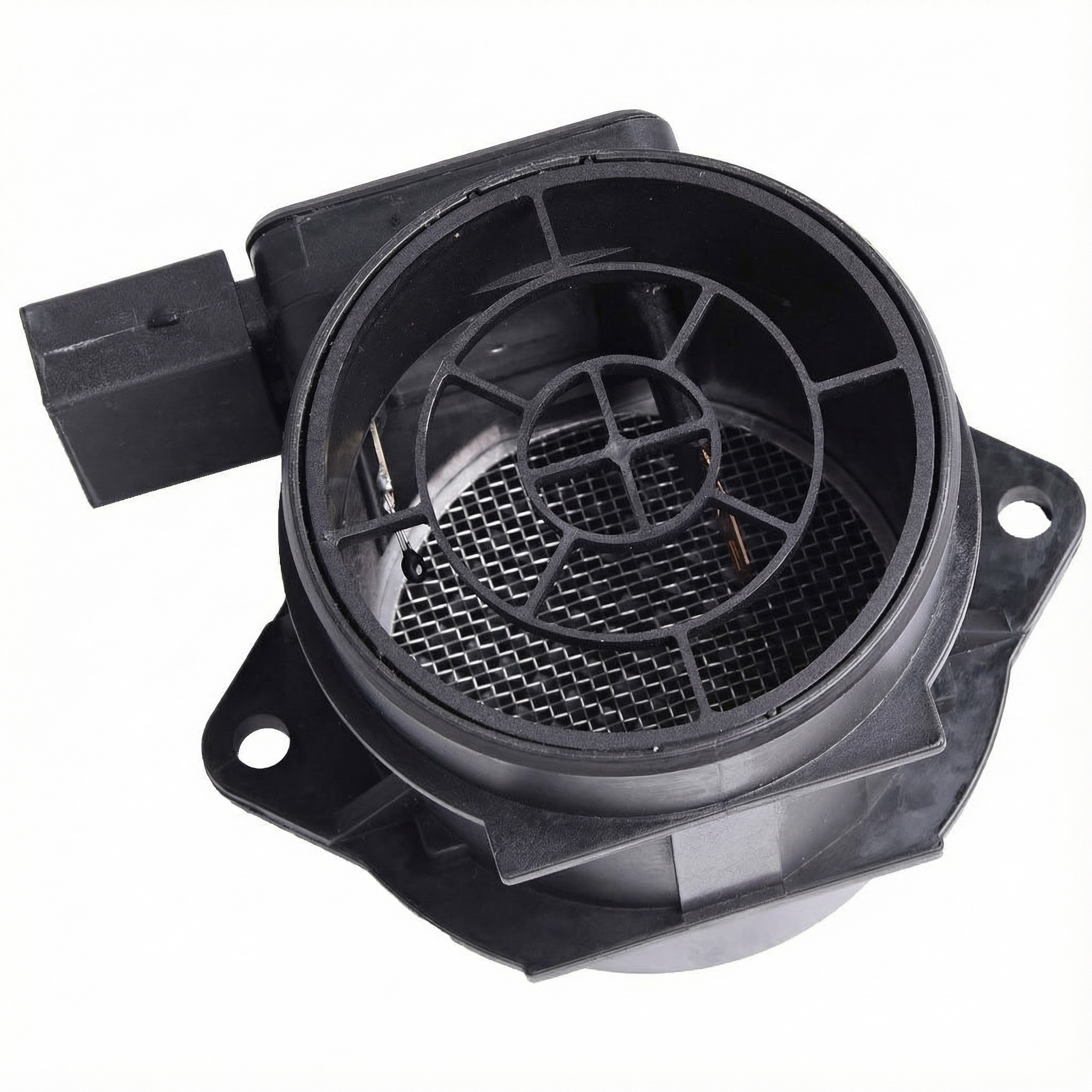
- Faulty Mass Air Flow (MAF) Sensor (1995-2006 models) 🔴 High Probability → Shop Fuel Injection Air Flow Meter The MAF sensor on early Accents is a common failure point that directly causes a rich condition when it underreports airflow to the ECU. The ECU then injects more fuel than necessary based on the incorrect low-air reading.
How to confirm: Unplug the MAF sensor with the engine off, then start the engine. If the idle smoothes out and drivability improves, the MAF is very likely bad. You can also check live data on a scan tool; at idle, a 1.5L/1.6L engine should show around 1.5-2.5 g/s. A significantly different reading indicates a problem. One owner on a forum noted that replacing an aftermarket MAF with a genuine Hyundai one was necessary to finally resolve the code.
Typical fix: Replace the MAF sensor. Cleaning with a dedicated MAF sensor cleaner is sometimes possible but often a temporary fix. Using an OEM/Hyundai-branded part is highly recommended over aftermarket alternatives to avoid persistent issues.
Est. part cost: $60-$150 - Faulty Front Oxygen (O2) Sensor 🟡 Medium Probability → Shop Oxygen Sensor A lazy or failing upstream O2 sensor (Bank 1, Sensor 1) can send incorrect voltage signals, tricking the ECU into thinking the engine is running lean, which causes it to add excess fuel.
How to confirm: Use a scan tool to watch the live data from the upstream (Bank 1 Sensor 1) O2 sensor. It should fluctuate rapidly between approximately 0.1V and 0.9V. If it is stuck high (e.g., above 0.8V) or responds very slowly, it is likely faulty.
Typical fix: Replace the upstream O2 sensor. An O2 sensor socket is required for removal.
Est. part cost: $50-$120 - High Fuel Pressure 🟡 Medium Probability A faulty fuel pressure regulator can get stuck closed, causing system pressure to rise. This forces too much fuel through the injectors for a given opening time.
How to confirm: Connect a fuel pressure gauge to the fuel rail; note that a special adapter is often required for Hyundai vehicles. A Hyundai technician noted the pressure should be around 49.8 PSI. If it's significantly higher, the regulator is the likely cause. On some models, you can pull the vacuum line off the regulator; if raw fuel is present in the line or you smell gas, the regulator's internal diaphragm has failed and is leaking fuel directly into the intake.
Typical fix: Replace the fuel pressure regulator. On some Accent models, the regulator is part of the in-tank fuel pump assembly.
Est. part cost: $40-$100 - Leaking Fuel Injector(s) ⚪ Low Probability → Shop Fuel Injector
How to confirm: After the car has been sitting, pull the spark plugs and check if any are wet with fuel or unusually black and sooty compared to the others. You can also test the internal resistance of each injector with a multimeter; they should all be very close to each other. For example, some 1.5L/1.6L injectors have a spec of around 12.8 ohms. A significant deviation indicates a bad injector coil.
Typical fix: Replace the leaking fuel injector(s).
Est. part cost: $50-$150 per injector
Rare But Worth Checking
- Exhaust leak before the O2 sensor: → Shop Oxygen Sensor A cracked exhaust manifold or a bad gasket can let oxygen into the exhaust stream. This makes the O2 sensor report a false lean condition, causing the ECU to over-fuel the engine. A user on a Hyundai forum mentioned their P1123 was accompanied by a broken header bolt, suggesting an exhaust leak.
- Faulty Engine Control Unit (ECU): In very rare cases, a fault within the ECU itself can cause fuel trim issues. This should only be considered after all other possibilities have been exhausted. One documented case showed a bad signal ground from the ECM affecting both the MAF and O2 sensors.
- Clogged Air Intake or Dirty Air Filter: A severely clogged air filter or an obstruction in the intake snorkel can restrict airflow, creating a naturally rich condition that the ECU may struggle to compensate for, eventually triggering P1123. This is a simple but sometimes overlooked check.
Diagnosis Steps
- Verify the code with an OBD-II scanner. Note any other codes present and check the freeze frame data to see the engine conditions when the code was set.
- Check long-term fuel trim (LTFT) values in live data. A value of -15% or more negative confirms a significant rich condition that the ECU is trying to correct.
- (1995-2006 Models) Perform a quick test on the MAF sensor. With the engine off, disconnect the MAF electrical connector. Start the engine. If the idle stabilizes and hesitation improves, the MAF sensor is the most likely culprit.
- Inspect the air intake system from the air filter to the throttle body for any obstructions or blockages. Ensure the air filter is clean.
- Inspect for exhaust leaks. Listen for ticking noises near the exhaust manifold, especially when the engine is cold. Look for black soot trails around manifold gaskets or flex pipes.
- Watch the upstream O2 sensor voltage on your scan tool. It should switch rapidly between ~0.1V and ~0.9V. If it's stuck high or slow to respond, it may be faulty.
- Test the fuel pressure using a fuel pressure gauge (a special adapter may be needed). For an Accent, pressure should be near 49-50 PSI. If it's too high, suspect the fuel pressure regulator.
- Inspect the fuel pressure regulator's vacuum hose (if equipped and accessible) for the presence of raw fuel, which indicates a ruptured diaphragm.
- If all else fails, consider the possibility of leaking fuel injectors by inspecting the spark plugs for wetness or heavy soot. In very rare cases, a faulty ECU could be the cause.
Parts You'll Likely Need
- Mass Air Flow (MAF) Sensor (for 1995-2006 models)
(OEM #28164-22601)— This is the most common failure part for P1123 on early Accents, directly causing a rich fuel condition when it fails. Forum users strongly recommend using a genuine Hyundai part to avoid compatibility issues.
Trusted brands: Hyundai (OEM), Bosch, Delphi
OEM price range: $200-$280
Aftermarket price range: $60-$150 - Upstream Oxygen Sensor
(OEM #39210-22610 (example for 2000-2006 models, verify by VIN))— A faulty O2 sensor is the second most likely cause, as it provides the primary feedback to the ECU for fuel mixture control.
Trusted brands: Denso, NGK/NTK, Bosch
OEM price range: $120-$180
Aftermarket price range: $50-$120 - Fuel Pressure Regulator
(OEM #35301-22600 (example for some models, verify by VIN))— Failure of this part can cause excessive fuel pressure, directly leading to a rich condition.
Trusted brands: Standard Motor Products, Delphi, Hyundai (OEM)
OEM price range: $80-$150
Aftermarket price range: $40-$100
Related Codes That Often Appear With This One
- P0172 — P0172 is the generic SAE code for 'System Too Rich (Bank 1)'. P1123 is Hyundai's manufacturer-specific, and often more sensitive, version of the same fault.
Technical Service Bulletins (TSBs) & Recalls
- While no TSB was found specifically for P1123, Hyundai did issue a service campaign (TXXC) for 2008-2011 Accents to apply rust-proofing materials to the underbody, which could be relevant for owners inspecting their exhaust and fuel systems for leaks in salt-belt regions.
Platform-Specific Known Issues
- ECU Reset After Repair: After replacing a component like the MAF or O2 sensor, it is good practice to reset the ECU's learned fuel trims. This can be done by disconnecting the negative battery terminal for about 30 minutes. This forces the ECU to relearn the fuel strategy with the new, functioning part, which can resolve lingering performance issues.
- Aftermarket MAF Sensor Incompatibility: → Shop Fuel Injection Air Flow Meter A user on hyundai-forums.com reported that their P1123 issue persisted after installing an aftermarket MAF sensor. The problem was only resolved after they replaced it with a genuine Hyundai OEM part. This suggests the Accent's ECU can be sensitive to the specific calibration of the MAF sensor.
Mechanic-Grade Diagnostic Values
- MAF Sensor - Integrated Air Temperature Sensor (IATS) Resistance — expected: 2350-2540 Ohms at 20°C (68°F), 1110-1190 Ohms at 40°C (104°F). Failure: Readings significantly outside these ranges indicate a faulty IATS component within the MAF sensor assembly.
- MAF Sensor - Harness Connector Voltage (Key On, Engine Off) — expected: Pin 2 to Ground: Battery Voltage. Pin 5 to Ground: ~5V.. Failure: No voltage or incorrect voltage points to a wiring issue or a problem with the ECU's power supply to the sensor.
- Fuel Injector Internal Resistance (1.5L/1.6L, 1999-2005) — expected: ~12.8 Ohms at room temperature.. Failure: A reading that is significantly higher (open circuit) or lower (shorted) indicates a failed injector coil.
- Fuel Injector Internal Resistance (1.6L, 2006-2010) — expected: ~15.2 Ohms. Failure: A significant deviation from this value suggests a faulty injector.
Wiring & Ground Locations
- Engine Harness Chafe Point — Under the master cylinder, there is a transmission bracket that the engine wiring harness is attached to.. A user reported that the harness can rub through on the edge of this bracket, causing shorts. While their issue was a blown fuse, a short affecting sensor ground or signal wires for the MAF or O2 sensors could potentially cause the erratic readings that lead to a P1123 code.
- Engine Ground Strap — A braided strap connecting the engine block or transmission to the vehicle's chassis/frame, often near a motor mount or the starter.. A corroded or broken main engine ground strap can cause a host of electrical problems, including incorrect sensor readings. The ECU and its sensors rely on a stable ground reference; a poor ground can create voltage offsets that trick the ECU into making incorrect fuel adjustments.
- Ignition Coil Harness Path — On some 1.6L DOHC engines, the wiring harness for the ignition coils rests directly on top of the valve cover, close to the spark plug tubes.. Vibrations can cause these wires to chafe against the valve cover or spark plug tubes. While this typically causes a misfire code, a short-to-ground in this harness could potentially disrupt the electrical system enough to affect sensor readings elsewhere, although it's an indirect and less likely cause.
Real Owner Repair Stories
- Hyundai-Forums user (2001 Hyundai Accent) — P1123 code for rich fuel trim.
❌ Tried (didn't work) Replaced EVAP solenoid
✅ What actually fixed it The user later posted that the problem was ultimately resolved by replacing the Mass Air Flow (MAF) sensor. - Hyundai-Forums user (Unknown Year Hyundai Accent) — Pesky P1123 code that kept returning.
❌ Tried (didn't work) Replaced MAF sensor, Replaced O2 sensor, Replaced Throttle Position Sensor (TPS), Cleaned throttle body, Replaced purge valve, Replaced charcoal canister, Replaced filler neck
✅ What actually fixed it The user suspected the fuel pressure regulator was the final remaining possibility after replacing numerous other parts, though no final confirmation was posted. This story highlights a case where the most common fixes (MAF/O2) did not solve the problem.
OEM Part Supersession History
28164-22601→28164-22610— Standard part revision or change in manufacturer.
Heads up: Both parts are generally interchangeable for the 2000-2006 Accent models, but it is always best to verify fitment with a VIN.28164-22051 / 28164-22060→28164-22601— Part update for the LC generation Accent starting in 1999/2000.
Heads up: The earlier part numbers may not be compatible with later models. The -22601 part is the correct one for the 2000-2006 Accent.
Model Year Variations Within This Range
- 2000-2003: The second generation (LC) was introduced for the 2000 model year with a 92-hp 1.5-liter four-cylinder engine. A 1.6-liter DOHC engine with 105 hp became available starting in 2001. While both use a MAF sensor, diagnostic values or part numbers for related components like injectors could differ slightly.
- 2003-2006: A facelift occurred for the 2003 model year with revised styling. A 1.5-liter turbodiesel engine option was also introduced in some markets, which would have a completely different diagnostic procedure. The primary gasoline engine remained the 1.6L DOHC.
- 2006-2011: The third generation (MC) was introduced. These models switched from a Mass Air Flow (MAF) sensor to a Manifold Absolute Pressure (MAP) sensor. Therefore, a faulty MAF sensor is not a possible cause for P1123 on these later models, and diagnosis must focus on other inputs like the O2 sensor, fuel pressure, and MAP sensor itself.
Diagnostic Flowchart
Other Known Issues on This Vehicle
Issues unrelated to this code that are worth knowing about as an owner of this generation:
- Automatic Transmission Failure/Harsh Shifting 🔴 High — Common on high-mileage vehicles, particularly second-generation (LC) models. Issues include harsh 1-2 shifts, slipping, or complete failure.
- Underbody and Suspension Coil Rust 🟠 Medium — Highly common in regions that use road salt. Rust forms on suspension components, especially coil springs, and the underbody. A service campaign was issued for 2008-2011 models to apply extra rust-proofing. (Ref: Hyundai Service Campaign TXXC)
- Ignition Coil Failure 🟠 Medium — Reported across multiple generations, leading to engine misfires, rough idling, and poor performance. Often, when one coil fails, others are likely to fail soon after.
- Paint and Body Issues 🟡 Low — Owners report issues with paint peeling and premature rust on body panels, such as around the trunk lid and wheel wells, even in non-salt-belt areas.
- Crankshaft Position Sensor Failure 🔴 High — A known issue on earlier models that can cause intermittent stalling or a no-start condition, often when the engine is warm.
- Premature Clutch Wear 🟠 Medium — Some owners of manual transmission models have reported needing to replace the clutch at unusually low mileage.
Used vs. New Parts: Buying Guide for This Vehicle
When a used part is the smart pick: For this repair, used parts are generally not recommended for the primary electronic sensors. However, a used fuel rail with the regulator and injectors attached, sourced from a low-mileage, documented donor vehicle, could be a cost-effective option if you suspect a fuel pressure or injector issue and want to replace the assembly.
Donor-vehicle mileage cap: roughly under 80000 miles for the part to have meaningful remaining life.
What to inspect on the donor part:
- Check for a clean donor car with no signs of engine fire, flood, or major front-end damage.
- If possible, get the VIN to verify the donor's engine and year to ensure compatibility.
- For a fuel assembly, ensure there is no rust on the rail and that the injector connectors are not cracked or brittle.
OEM-only on this vehicle (don't cheap out):
- Mass Air Flow (MAF) Sensor: Many forum users report that cheap aftermarket MAF sensors are poorly calibrated and either don't fix the code or fail quickly. Sticking with a genuine Hyundai/OEM (like Bosch) or a top-tier aftermarket brand is critical for this part.
Aftermarket brands forum-validated for this vehicle:
- O2 Sensors: Denso, NGK/NTK, Bosch.
- MAF Sensors: Bosch, Delphi, NTK.
- Fuel Pressure Regulator: Standard Motor Products, Delphi.
Brands owners have reported issues with on this vehicle:
- Unbranded, 'white-box' MAF sensors from online marketplaces are frequently cited as problematic by forum users.
Real Owner Stories
Aggregated from forums and TSBs cited above. Mileages and costs reflect what owners reported in those sources.
Hyundai Accent (model year not specified)
Symptoms: Persistent P1123 code even after replacing the MAF, O2 sensor, and TPS.
What fixed it: The problem was only resolved after replacing the aftermarket MAF sensor with a genuine Hyundai OEM part.
Source hint: hyundai-forums.com: Thread 'P1123 code with freeze frame data, help needed' (2014)
Hyundai Accent (model year not specified)
Symptoms: Check Engine Light with code P1123.
What fixed it: Replacing the MAF sensor fixed the issue.
Source hint: hyundai-forums.com: Thread 'Trouble code P1123' (2005)
1996 Hyundai Accent
Symptoms: Hesitation and stalling along with the P1123 code.
What fixed it: The owner suspected a faulty O2 sensor, but the final resolution was not detailed in the source.
Source hint: hyundai-forums.com: Thread 'Accent '96 - hesitation & P1123' (2009)
Related OBD-II Codes
Frequently Asked Questions
I replaced the MAF sensor on my Accent with an aftermarket part but the P1123 code came back. What's wrong?
How can I quickly test the MAF sensor on my 1995-2006 Accent without a scan tool?
What is the correct fuel pressure for a Hyundai Accent with code P1123?
What should the upstream O2 sensor voltage look like on a scan tool for my Accent?
After replacing a part like the O2 sensor or MAF sensor, is there anything else I should do?
Is there a specific TSB or recall from Hyundai for code P1123?
We Have This Part in Stock

The information in this article is provided for general reference and educational purposes only. Vehicle specifications, procedures, and part compatibility can vary by production date, trim level, and region. Always consult your vehicle's factory service manual and verify part numbers before purchasing or performing repairs. Safety-critical components such as airbags, seat belts, and braking systems should be installed by a qualified professional.
- Hyundai Accent:
- 🧭 Diagnostic Flowchart
- 🛍️ Shop This Part
- What's Unique About the 1995-2011 Hyundai Accent
- Symptoms You May Notice
- Most Likely Causes
- Rare But Worth Checking
- Diagnosis Steps
- Parts You'll Likely Need
- Related Codes That Often Appear With This One
- Technical Service Bulletins (TSBs) & Recalls
- Platform-Specific Known Issues
- Mechanic-Grade Diagnostic Values
- Wiring & Ground Locations
- Real Owner Repair Stories
- OEM Part Supersession History
- Model Year Variations Within This Range
- Other Known Issues on This Vehicle
- Used vs. New Parts: Buying Guide for This Vehicle
- Real Owner Stories
- Hyundai Accent (model year not specified)
- Hyundai Accent (model year not specified)
- 1996 Hyundai Accent
- Related OBD-II Codes
- Frequently Asked Questions
- 🎟️ Get 5% Off