

P1128 on 2004-2008 Acura TL: MAP Sensor Signal Low Causes and Fixes
On a 2004-2008 Acura TL, code P1128 almost always means the Manifold Absolute Pressure (MAP) sensor has failed. It's an easy, 15-minute DIY replacement located on top of the engine. Expect to pay $40-$80 for an OEM-quality Denso sensor, which is the original equipment manufacturer.
- For a 2004-2008 Acura TL, P1128 means the MAP sensor is sending a lower-than-expected signal.
- The most likely cause is a failed MAP sensor, which is a simple and inexpensive DIY replacement.
- Before replacing the sensor, perform a quick visual check of vacuum hoses for obvious cracks or leaks.
- Use a Denso or NGK/NTK branded aftermarket sensor for OEM quality without the dealer price. The OEM part number is 37830-PGK-A01.
- After replacing the sensor, let the car idle for about 10-15 minutes to perform an idle relearn.
What's Unique About the 2004-2008 Acura TL
Unlike many other manufacturers like Chrysler, Dodge, and Jeep who use P1128 to indicate "Closed Loop Fueling Not Achieved", Honda and Acura reserve it specifically for the MAP sensor circuit. On the third-generation Acura TL (2004-2008), this code is a very common and straightforward indicator of a failed MAP sensor. The J-series V6 engine in the TL is generally very reliable, but these sensors are a known wear item that can fail with age, leading to drivability problems.
Symptoms You May Notice
- Check Engine Light is on
- Rough or erratic idle
- Hesitation or stumbling during acceleration
- Noticeable decrease in fuel economy
- Black smoke from the tailpipe under certain conditions
- Engine may feel sluggish or down on power
- Engine stalling
- Failed emissions test.
- Replacing oxygen (O2) sensors. On many other car brands, P1128 is related to fuel mixture, but on an Acura, it points directly to the MAP sensor circuit.
- Replacing the throttle body. While a dirty throttle body or faulty Idle Air Control Valve can cause idle issues, it does not typically set a P1128 code on its own.
Most Likely Causes
- Faulty Manifold Absolute Pressure (MAP) Sensor 🔴 High Probability → Shop Manifold Absolute Pressure Sensor The MAP sensor is a common failure point on many vehicles as they age. The internal electronics degrade over time, causing incorrect voltage readings. On the 3G TL, this is the most frequent culprit for P1128.
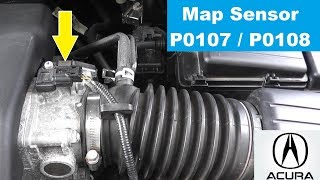
How to confirm: With the engine off and ignition on, use a scan tool to check the MAP sensor reading. It should be close to atmospheric pressure (approx. 29.9 inHg or 101 kPa at sea level). With the engine idling, the reading should drop significantly to around 9-12 inHg. A faulty sensor will often read an abnormally low, fixed value that doesn't change with engine RPM. You can also test the sensor's output voltage with a multimeter; it should vary with engine vacuum. 🎬 Watch: How to test and replace your TL's MAP sensor
Typical fix: Replace the MAP sensor and its O-ring. Perform an idle relearn procedure afterward. This is a 15-minute job for most DIYers.
Est. part cost: $40-$120 - Vacuum Leak 🟡 Medium Probability Rubber vacuum hoses become brittle and crack with age and exposure to engine heat. Common leak points include the PCV hose, brake booster hose, and intake manifold gaskets.
How to confirm: Visually inspect all vacuum hoses connected to the intake manifold for cracks, splits, or loose connections. Listen for a hissing or whistling sound at idle. A smoke test is the most effective way to find small, hard-to-see leaks. You can also spray carburetor cleaner around suspected leak areas with the engine running; a change in engine RPM indicates a leak.
Typical fix: Replace the cracked or leaking vacuum hose or gasket.
Est. part cost: $5-$30 - Wiring or Connector Issue ⚪ Low Probability
How to confirm: Inspect the MAP sensor's three-wire electrical connector for corrosion, bent pins, or a loose fit. Check the wiring harness leading to the sensor for any signs of damage, fraying, or breaks from heat or vibration. A 'wiggle test' on the harness while the engine is running can help identify intermittent connections.
Typical fix: Clean the connector terminals with electrical contact cleaner or repair the damaged section of the wiring harness. In some cases, a new connector pigtail may be needed.
Est. part cost: $5-$50
Rare But Worth Checking
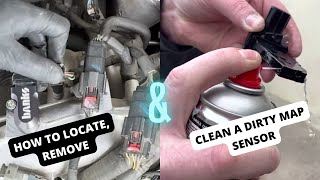
- Clogged Intake Manifold Port: The small port in the intake manifold where the MAP sensor sits can become clogged with carbon buildup, preventing it from reading the manifold pressure accurately. This is less common but worth checking if a new sensor doesn't fix the issue. The port can be cleaned out with a small pick or pipe cleaner. 🎬 Watch: How to locate and clean a dirty MAP sensor
- Faulty Powertrain Control Module (PCM): This is extremely rare. The PCM itself can fail, but all other possibilities, including wiring and sensor function, should be exhaustively tested before considering PCM replacement.
Diagnosis Steps
- Verify the code with an OBD-II scanner. Confirm if P0107 is also present.
- With the ignition on and engine off, check the MAP sensor reading on a scan tool. It should read close to barometric pressure for your altitude.
- Start the engine and observe the live MAP data at idle. The reading should drop significantly. If the reading is stuck low or doesn't change, the sensor is highly suspect.
- Visually inspect all vacuum lines connected to the intake manifold for obvious cracks, disconnections, or brittleness. Pay close attention to the PCV hose.
- Inspect the MAP sensor electrical connector and wiring for any visible damage, corrosion, or loose pins. Use a multimeter to confirm 5V reference and good ground at the connector.
- If the sensor signal is still suspect and wiring looks good, remove the sensor (one screw) and check if the port in the intake manifold is clogged with carbon.
- If no issues are found, the MAP sensor itself is the most likely culprit. Replace it with a new OEM or Denso sensor and a new O-ring.
- After replacement, clear the codes and perform an idle relearn procedure by letting the car idle until the radiator fans cycle twice.
Parts You'll Likely Need
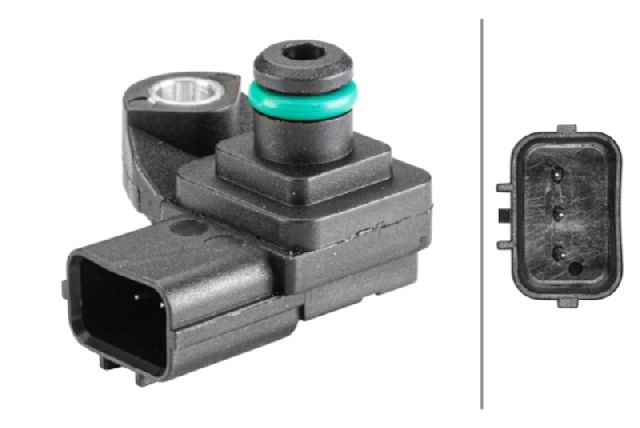
- Manifold Absolute Pressure (MAP) Sensor
(OEM #37830-PGK-A01)— This is the primary cause of code P1128 on this vehicle. The original sensor fails over time.
Trusted brands: Acura (Genuine OEM), Denso (OEM Manufacturer), NGK/NTK, Standard Motor Products (SMP)
OEM price range: $90-$130
Aftermarket price range: $40-$80
Related Codes That Often Appear With This One
- P0107 — This is the generic SAE code for 'MAP/Barometric Pressure Circuit Low Input'. P1128 is Acura's more specific version, and they often appear together, pointing to the same faulty sensor.
- P1129 — This code means 'MAP Sensor Signal Higher Than Expected'. Seeing it alongside P1128 can indicate an intermittent sensor or wiring problem where the signal is fluctuating wildly between being too high and too low.
Platform-Specific Known Issues
- The MAP sensor is extremely easy to access on the 3.2L and 3.5L J-series engines, located directly on top of the throttle body or intake manifold, held by a single Phillips head screw. 🎬 See this walkthrough for replacing the sensor on J-series engines
- An idle relearn procedure is recommended after replacement to allow the ECU to calibrate to the new sensor. This can be done by letting the car idle for about 10-15 minutes from a cold start until the cooling fans cycle on and off twice.
- Owners overwhelmingly recommend using the Denso-branded sensor, as it is the original equipment manufacturer, providing OEM quality at a lower price than the Acura-branded part.
Mechanic-Grade Diagnostic Values
- MAP Sensor Signal Voltage (Key On, Engine Off) — expected: ~3.1V at sea level (should correspond to barometric pressure). Failure: Voltage is 0.23V or less for at least two seconds. For P1128 specifically, a reading below 1.6V or 54.1 kPa may trigger the code.
- MAP Sensor Reference Voltage — expected: ~5.0V. Failure: No voltage or significantly lower voltage indicates a wiring issue or a problem with the PCM.
- MAP Sensor Signal Voltage (Engine Idling) — expected: Should drop to 1.0V - 2.0V. Failure: Voltage does not change from the KOEO reading, or is stuck low, indicating a failed sensor or a major vacuum leak.
- Scan Tool Live Data (Key On, Engine Off) — expected: ~100-101 kPa at sea level. Failure: Reading is very low (e.g., below 3 kPa) or does not match ambient air pressure.
Scan Tool Commands That Help
- Honda Diagnostic System (HDS): DTCs Menu > MAP Sensor Data List — To view the live MAP sensor voltage and pressure readings as seen by the ECU. This is the factory-level method for confirming the sensor's output against specifications.
- Honda Diagnostic System (HDS) or equivalent professional scan tool: Idle Relearn / ECM Reset — After replacing the MAP sensor, this function clears the old learned values and forces the ECU to recalibrate to the new sensor's readings for a stable idle.
Wiring & Ground Locations
- MAP Sensor Connector Pinout — On the MAP sensor, located on top of the throttle body.. Knowing the pinout is essential for testing power, ground, and signal wires with a multimeter. According to service manuals, for the 3G TL: Pin 1 (YEL/RED) is 5V power from the ECU, Pin 2 (GRN/RED) is ground, and Pin 3 (GRN/WHT) is the signal wire back to the ECU.
- G101 — On the left side of the engine (driver's side), typically on or near the thermostat housing or transmission bell housing.. G101 is a primary ground distribution point for many engine sensors, including the MAP sensor ground circuit. A loose or corroded G101 can cause erratic readings and trigger codes like P1128 for multiple sensors simultaneously.
Real Owner Repair Stories
- Acurazine user (2004 Acura TL Base) — Check Engine Light, VSA, and /!\ light came on simultaneously, with hesitant acceleration and sputtering. After a restart, only the CEL remained on.
❌ Tried (didn't work) Initially, the owner was worried about a major failure due to multiple warning lights.
✅ What actually fixed it A mechanic scanned the car and found code P2195 (related to an O2 sensor). However, the symptoms described (hesitation, sputtering) are also classic for a MAP sensor failure. In many forum threads for P1128, the fix is a direct replacement of the MAP sensor, which resolves the drivability issues immediately.
OEM Part Supersession History
37830-PNC-003→37830-PGK-A01— Part consolidation and potential minor revisions by Honda/Acura over the years. Both part numbers are frequently listed for the 2004-2008 TL.
Heads up: While 37830-PGK-A01 is the most commonly cited number for the 3G TL, 37830-PNC-003 is also used and cross-references. It is critical to distinguish these from the 2nd Gen TL sensor (e.g., 37830-PAA-S00) and the 4th Gen TL sensor (e.g., 37830-RNA-A01), which are not compatible.
Model Year Variations Within This Range
- 2007-2008: The 2007-2008 Acura TL Type-S features a 3.5L V6, compared to the 3.2L V6 in the base model. However, both engines use the same MAP sensor (37830-PGK-A01) and share the same diagnostic procedure for P1128.
Diagnostic Flowchart
Other Known Issues on This Vehicle
Issues unrelated to this code that are worth knowing about as an owner of this generation:
- Automatic Transmission Failure (5-Speed) 🔴 High — Very common, especially on 2004-2006 models. Issues include shuddering, rough shifts, slipping, and complete failure, often before 100,000 miles. (Ref: While no large-scale recall was issued for the transmission itself, numerous internal service bulletins exist. A preventative measure cited by owners is frequent (every 15-20k miles) drain-and-fills of Honda DW-1 ATF and replacing the 3rd and 4th gear pressure switches.)
- Cracked Dashboard 🟡 Low — Extremely common across all 2004-2008 models. Cracks typically start around the passenger airbag area and spread across the dash, regardless of sun exposure. (Ref: No recall or TSB was issued. Acura has generally denied warranty claims, calling it 'wear and tear'. The only fixes are a costly full dash replacement or using a plastic dash cover overlay.)
- Leaking Power Steering Hose 🔴 High — Common enough to warrant a safety recall. The hose deteriorates from engine heat, leaking fluid onto the hot catalytic converter, creating a fire risk. (Ref: Yes, NHTSA campaign 08V091000 (Acura recall Q73). Acura recalled 2004-2008 models to replace the hose with a heat-resistant design.)
- Worn Lower Control Arm (Compliance) Bushings 🟠 Medium — A very common wear item, often failing prematurely between 30,000-60,000 miles. Causes clunking noises from the front suspension, uneven tire wear, and poor handling. (Ref: No recall, but it is a widely documented failure. The soft rubber bushings tear easily. Replacement requires pressing the old ones out and new ones in.)
- Hands-Free Link (Bluetooth) Module Failure 🟡 Low — Common failure where the module gets stuck in a 'booting up' loop, which can cause a parasitic battery drain, killing the battery overnight. (Ref: No recall. The common fix is to simply unplug the module, which is located in the overhead console, though this disables Bluetooth functionality.)
Used vs. New Parts: Buying Guide for This Vehicle
When a used part is the smart pick: Never. A MAP sensor is a sensitive electronic component with a finite lifespan. The cost savings of a used part are minimal compared to the risk of it failing soon after installation, leading to repeated diagnostic effort and labor.
What to inspect on the donor part:
- Not applicable as used parts are not recommended.
OEM-only on this vehicle (don't cheap out):
- While not strictly 'OEM-only', using a sensor from the original equipment manufacturer (Denso) or a top-tier aftermarket brand is highly recommended. Avoid generic, unbranded parts.
Aftermarket brands forum-validated for this vehicle:
- Denso (Original Equipment Manufacturer)
- NGK / NTK
- Standard Motor Products (SMP)
Brands owners have reported issues with on this vehicle:
- Unnamed or 'white-box' brands from online marketplaces, which are known to have high failure rates and inaccurate readings right out of the box.
Real Owner Stories
Aggregated from forums and TSBs cited above. Mileages and costs reflect what owners reported in those sources.
2004-2008 Acura TL 3.2L/3.5L
Symptoms: Check Engine Light with code P1128.
What fixed it: The issue was resolved by replacing the MAP sensor.
Source hint: Acurazine.com - Numerous threads corroborate that P1128 is almost always solved by replacing the MAP sensor. Owners frequently cite this as a 'rite of passage' for 3G TL ownership.
Acura TL
Symptoms: Experiencing acceleration problems and a Check Engine Light.
What fixed it: Owner was advised that the primary step for a code like P1128 is to check the MAP sensor and its wiring.
Source hint: Reddit r/AcuraTL - A user experiencing acceleration problems was advised to check the MAP sensor and its wiring as a primary step for codes like P1128.
Related OBD-II Codes
Frequently Asked Questions
What is the best replacement MAP sensor for my 2006 Acura TL to fix code P1128?
How difficult is it to replace the MAP sensor on a 3G Acura TL?
I replaced the MAP sensor on my TL, but the idle is still rough. What did I miss?
Could a vacuum leak cause the P1128 code on my 2005 Acura TL instead of the sensor?
My 2007 Honda Accord V6 has this code. Is the diagnosis the same as for the Acura TL?
Besides the sensor and vacuum leaks, what's another possible cause for P1128?
Helpful Videos
We Have This Part in Stock


The information in this article is provided for general reference and educational purposes only. Vehicle specifications, procedures, and part compatibility can vary by production date, trim level, and region. Always consult your vehicle's factory service manual and verify part numbers before purchasing or performing repairs. Safety-critical components such as airbags, seat belts, and braking systems should be installed by a qualified professional.
- Acura TL:
- 🧭 Diagnostic Flowchart
- 🎬 Helpful Videos
- 🛍️ Shop This Part
- What's Unique About the 2004-2008 Acura TL
- Symptoms You May Notice
- Most Likely Causes
- Rare But Worth Checking
- Diagnosis Steps
- Parts You'll Likely Need
- Related Codes That Often Appear With This One
- Platform-Specific Known Issues
- Mechanic-Grade Diagnostic Values
- Scan Tool Commands That Help
- Wiring & Ground Locations
- Real Owner Repair Stories
- OEM Part Supersession History
- Model Year Variations Within This Range
- Other Known Issues on This Vehicle
- Used vs. New Parts: Buying Guide for This Vehicle
- Real Owner Stories
- 2004-2008 Acura TL 3.2L/3.5L
- Acura TL
- Related OBD-II Codes
- Frequently Asked Questions
- 🎟️ Get 5% Off