

OBD-II Code P1130: Air-Fuel Mixture Problem
What P1130 means, why it triggers, and how to fix it
- P1130 indicates an air-fuel mixture issue on Bank 1, but the exact definition varies by manufacturer—meaning an O2 sensor on a Toyota but a Swirl Control Valve on a Nissan.
- Check live fuel trims and clean the MAF sensor before replacing the O2 sensor, as vacuum leaks and dirty sensors cause over 40% of P1130 codes.
- Driving with an active P1130 code drops fuel economy by 10-15% and destroys your catalytic converter within 3 to 6 months, turning a $200 repair into a $2,500+ nightmare.
- When replacing the upstream Bank 1 sensor, always use the exact OEM brand (like Denso for Toyota or Subaru) to prevent the code from returning immediately.
What Does P1130 Mean?
P1130 is a manufacturer-specific code indicating the engine computer (ECU) detects an incorrect air-fuel mixture on Bank 1. The upstream oxygen (or Air/Fuel ratio) sensor is either reporting values outside the expected range or failing to switch between rich and lean conditions fast enough. Because it is manufacturer-specific, the exact failing component varies by brand.
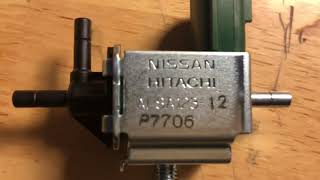
Technical definition: The official SAE definition for P1130 varies by manufacturer. Common definitions include 'Lack Of HO2S11 Switch - Adaptive Fuel At Limit' (Ford) or 'Air/Fuel Ratio Sensor Circuit Range/Performance Malfunction' (Toyota/Lexus). For GM, it is 'HO2S Circuit Low Variance Bank 1 Sensor 1'. For early 2000s Nissans, it uniquely points to a 'Swirl Control Valve Control Solenoid Valve' issue. In all cases, the Powertrain Control Module (PCM) cannot maintain the proper 14.7:1 air-fuel ratio on Bank 1.
Can I Drive With P1130?
Yes, But With Caution. You can drive the vehicle, but do not ignore it. Driving with P1130 causes a 10-15% drop in fuel economy and forces the engine to run rich. Within 3 to 6 months, this excess fuel melts the catalytic converter, turning a $200 sensor replacement into a $2,500+ repair.
Common Causes
- Faulty Bank 1 Upstream Oxygen Sensor (or A/F Sensor) (Very Common) — The sensor measuring exhaust oxygen degrades, gets contaminated by coolant or oil, or fails entirely, sending flatlined or inaccurate data to the computer.
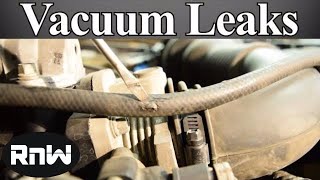
- Vacuum Leak (Including PCV System) (Common) — Cracked vacuum hoses, a stuck-open PCV valve, or failing intake manifold gaskets allow unmetered air into the engine, forcing a lean condition that the ECU cannot correct.
- Dirty or Faulty Mass Airflow (MAF) Sensor (Common) — A contaminated MAF sensor under-reports the amount of air entering the engine, causing the computer to inject too little fuel and trigger a lean-biased P1130 code.
- Exhaust Leak (Upstream of Sensor) (Common) — A cracked exhaust manifold or leaking gasket before the O2 sensor draws in outside oxygen. The sensor reads this as a lean condition, forcing the computer to dump excess fuel.
- Incorrect Fuel Pressure (Less Common) — A failing fuel pump, clogged filter, or bad pressure regulator delivers incorrect fuel volumes, directly skewing the air-fuel mixture.
- Clogged or Leaking Fuel Injectors (Less Common) — A clogged injector starves the cylinder (lean), while a leaking injector floods it (rich). Both scenarios push the air-fuel ratio past the ECU's adaptive limits.
- Damaged Wiring or Connectors (Less Common) — Melted wiring, corroded connector pins, or a blown heater circuit fuse interrupts the signal between the O2 sensor and the ECU.
- Degraded Catalytic Converter (Rare) — A partially clogged catalytic converter creates excessive backpressure, altering exhaust flow and confusing the upstream oxygen sensors.
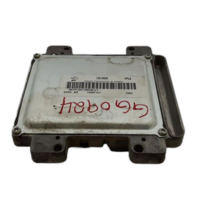
- Faulty Powertrain Control Module (PCM) (Rare) — The engine computer itself fails due to internal short circuits or corrupted software. Consider this only after exhaustively ruling out all physical components.
Symptoms
- Check Engine Light is On — The ECU illuminates the MIL immediately upon detecting the air-fuel imbalance.
- Worse Gas Mileage — Fuel efficiency drops by 10-15% because the computer defaults to a rich, fuel-heavy mixture to protect the engine.
- Rough Idle or Engine Hesitation — The engine stumbles, shakes at idle, or hesitates when accelerating from a stop.
- Poor Acceleration — The vehicle feels sluggish and lacks passing power at highway speeds.
- Black Smoke from Exhaust — Visible black soot exits the tailpipe, confirming a severely rich running condition.
- Engine Stalling — In severe cases, the engine stalls when coming to a stop or idling in gear.
- Failed Emissions Test (also visible on scanner) — The incorrect air-fuel ratio spikes hydrocarbon and carbon monoxide emissions, causing an automatic failure.
Diagnostic Flowchart
Tap your situation to follow the diagnostic path that matches what you're seeing on this code.
Common Fixes & Costs
- Replace Bank 1 Upstream Oxygen (A/F) Sensor — Parts: $75-$350, Labor: $100-$250, ~1.2 hr book time (Intermediate)
- Repair a Vacuum Leak (e.g., replace hose or intake boot) — Parts: $10-$150, Labor: $120-$400, ~2 hr book time (DIY)
- Clean or Replace Mass Airflow (MAF) Sensor — Parts: $15-$300, Labor: $50-$150, ~0.7 hr book time (DIY)
- Replace Fuel Pressure Regulator — Parts: $50-$250, Labor: $100-$300, ~1.8 hr book time (Intermediate)
- Replace Engine Control Module (ECM/PCM) — Parts: $600-$900, Labor: $200-$300, ~1.5 hr book time (Professional)
Used vs. New Parts: Buying Guide
When a used part is worth it: Never buy used electronic sensors (O2, MAF). Only consider a used OEM catalytic converter from a low-mileage (<80,000 miles) donor vehicle if your car is over 10 years old.
Donor-vehicle mileage cap: roughly under 80000 miles for the part to have meaningful remaining life.
Donor quality checklist:
- Verify the donor vehicle's mileage.
- Avoid parts from rust-belt states due to flange corrosion.
- Match the part number exactly; emissions packages vary by year.
- Never buy a used catalytic converter that has been cut out (red flag for theft).
Decision logic:
- If The failed part is an electronic sensor (O2, MAF). → Always buy new from an OEM supplier (e.g., Denso, Bosch). Used sensors fail prematurely.
- If The failed part is a catalytic converter and the vehicle is over 10 years old. → A low-mileage used OEM converter offers better longevity than a cheap aftermarket unit.
- If The vehicle is newer and holds significant value. → Buy a new OEM or high-quality aftermarket catalytic converter.
Warranty tradeoff: Used parts carry a 30-90 day warranty covering only the part. New OEM parts carry a 1-year/12,000-mile warranty.
Worst-case if a used part fails: $500-$1500 if a used catalytic converter fails, requiring repeat labor and a second replacement part.
What Happens If You Wait — Timeline
- 0-1 month: Check Engine Light illuminates. The ECU runs on a default, richer fuel map. You experience a subtle drop in fuel economy but no major drivability issues. (MPG impact: 3-8%% · Added cost: $0-$50 in wasted fuel)
- 1-3 months: Symptoms escalate to rough idle and hesitation. The rich fuel mixture causes the catalytic converter to operate at dangerously high temperatures. (MPG impact: 10-15%% · Added cost: $50-$150 in wasted fuel)
- 3-6 months: The catalytic converter's internal ceramic substrate begins melting from constant overheating. You smell rotten eggs from the exhaust and notice significant power loss. (MPG impact: 15-20%% · Added cost: $1,200-$2,500 (catalytic converter requires replacement))
- 6+ months: The catalytic converter completely melts, creating a severe exhaust blockage. The engine stalls frequently and becomes undrivable due to excessive backpressure. (MPG impact: 25%+% · Added cost: $2,500-$5,000+ (catalytic converter replacement plus potential engine repairs))
Cost of Not Fixing It
- 0-1 Month: Noticeable drop in fuel economy (5-15%) and engine hesitation. (Added cost: $20-$60 per month in extra fuel costs.)
- 1-6 Months: The rich air-fuel mixture overheats the catalytic converter, permanently melting its internal substrate. (Added cost: $1,200-$3,500 for catalytic converter replacement.)
- 6+ Months: Severe catalytic converter failure causes a major exhaust blockage, leading to engine stalling and internal damage from backpressure. (Added cost: $3,000-$7,000+ for exhaust and engine repairs.)
Diagnosis Steps
- Read Codes and Analyze Freeze Frame Data
Use an OBD-II scanner to confirm P1130 and check for related codes (e.g., P0171, P1135). Review the Freeze Frame data to identify the exact RPM, speed, and engine load when the code triggered.
Tools: OBD-II Scanner (Beginner) - Analyze Live Data & Fuel Trims (Pro Tip)
Watch Short-Term (STFT) and Long-Term Fuel Trims (LTFT) for Bank 1. High positive trims (>+10%) at idle that drop at higher RPMs confirm a vacuum leak. High positive trims at all RPMs indicate a bad MAF sensor or weak fuel pump. Highly negative trims (<-10%) confirm a rich condition like a leaking injector.
Tools: OBD-II Scanner with Live Data (Advanced) - Perform a Thorough Visual Inspection
Inspect all vacuum hoses, PCV lines, and the intake air boot for cracks. Check the wiring harness and connector for the Bank 1 upstream oxygen sensor for melting or corrosion.
Tools: Flashlight, Inspection Mirror (Beginner) - Check for Vacuum and Exhaust Leaks
Use a smoke machine to pump low-pressure smoke into the intake manifold; smoke escaping pinpoints vacuum leaks. Inspect the exhaust manifold and downpipe for black soot trails indicating an exhaust leak before the O2 sensor.
Tools: Smoke Machine (Intermediate) - Test the Mass Airflow (MAF) Sensor
Check MAF live data. At idle, the grams per second (g/s) should roughly match the engine's displacement in liters (e.g., 3.0L = ~3.0 g/s). If readings are low, remove the sensor and clean the delicate wires with dedicated MAF cleaner.
Tools: Screwdriver/Ratchet Set, MAF Sensor Cleaner (Intermediate) - Test the Oxygen Sensor Circuit and Heater
Use a multimeter to verify 5V reference voltage and ground at the sensor connector. Test the sensor's internal heater circuit resistance (typically 0.8-1.4 ohms for Toyota A/F sensors). An open circuit (OL) means the sensor is dead.
Tools: Multimeter, Vehicle Service Manual (Advanced) - Test Fuel Pressure
Connect a fuel pressure gauge to the fuel rail test port. Verify pressure matches manufacturer specs (e.g., 44-50 PSI for a 2005 Camry). Low pressure confirms a fuel delivery issue; high pressure confirms a bad regulator.
Tools: Fuel Pressure Gauge (Intermediate) - Analyze Sensor Waveform with Oscilloscope
A healthy traditional O2 sensor switches rapidly between ~0.1V and ~0.9V at 0.5-2 Hz. A wideband A/F sensor holds a steady voltage (e.g., ~3.3V) at idle. A flatlined or lazy waveform confirms the sensor must be replaced.
Tools: Automotive Oscilloscope (Professional)
When This Code Triggers (Freeze-Frame Conditions)
- Engine Coolant Temp: 180-210°F (Engine at full operating temperature.)
- RPM: 1500-2500 RPM (Triggered during steady cruise, not at idle.)
- Engine Load: 20-50% (Light to moderate load, consistent with steady-speed driving.)
- Vehicle Speed: 40-65 mph (Constant speed, typically on a highway or main road.)
Related Codes
- P0171 — Means 'System Too Lean (Bank 1)'. P1130 indicates the sensor isn't switching, while P0171 indicates the result is a lean mixture. Having both confirms a vacuum leak or bad MAF sensor.
- P1131 — On Fords, this means the sensor is stuck lean. P1130 means it isn't switching at all. Diagnosis is identical.
- P1132 — On Fords, this means the sensor is stuck rich. Look for leaking fuel injectors or a faulty fuel pressure regulator.
- P1135 — On Toyotas, this indicates a failed heater circuit inside the A/F sensor. A cold sensor triggers P1130. Replacing the sensor fixes both codes.
Climate & Environmental Factors
- Cold Weather: Cold weather shrinks brittle plastic and rubber hoses, exposing vacuum leaks. It also slows O2 sensor warm-up, triggering heater circuit faults.
- High Humidity / Salty Air: Road salt and high humidity accelerate corrosion on the oxygen sensor's electrical connector, causing intermittent signal drops.
- High Altitude: Thinner air pushes the ECU's adaptive fuel limits. A borderline lazy O2 sensor or dirty MAF will trigger P1130 faster at high altitudes.
How to Talk to a Mechanic About This Code
Say this: "I have a P1130 code and need a diagnostic. I want to rule out a vacuum leak or a MAF sensor issue before replacing the O2 sensor. Can you check fuel trims and perform a smoke test?"
This proves you understand P1130 has multiple causes. It directs the technician toward a logical diagnostic process rather than blindly replacing the sensor.
Avoid saying:
- 'My check engine light is on, can you just fix it?' (Invites unnecessary repairs.)
- 'I think I need a new oxygen sensor.' (Don't suggest a specific repair; ask for a diagnosis.)
- 'Just do whatever you think is best.' (Gives up control over the repair cost.)
Questions to ask before authorizing the repair:
- Can you show me the fuel trim data that led to your diagnosis?
- If you suspect a vacuum leak, did you confirm its location with a smoke test?
- If the oxygen sensor needs replacing, are you using an OEM part like Denso?
- What is your warranty on this specific repair?
Where to Take It: Dealer vs Independent vs Chain
- Dealer:
Best for: Vehicles under powertrain or emissions warranty., Complex, manufacturer-specific quirks (e.g., Porsche AOS failure, Nissan swirl control valve)., If an independent shop failed to fix the issue.
Downsides: Labor rates are 50-100% higher than independent shops., May recommend expensive wholesale repairs instead of targeted part replacements. (Typical cost: +50% vs. baseline) - Independent Shop:
Best fit for most vehicles. A good independent shop effectively traces the root cause of P1130, offering the best value.
Best for: Out-of-warranty vehicles., Diagnosing common causes like vacuum leaks, MAF issues, and O2 sensor failures., Getting the best balance of expertise and value.
Downsides: Diagnostic skill varies widely. Vet shops based on reviews and ASE certifications., May lack specialized tools for brand-new models. (Typical cost: +0% vs. baseline) - Chain Shop:
Avoid for initial diagnosis. Acceptable only for a straightforward O2 sensor replacement if you are certain that is the problem.
Best for: Simple part replacements if the diagnosis is already certain., Basic maintenance like oil changes.
Downsides: Technicians often lack in-depth diagnostic experience., Business model pressures upselling unnecessary services. (Typical cost: -10% vs. baseline)
When to Walk Away From the Repair
If the total estimated repair cost exceeds 40-50% of your car's private-party value, consider selling or trading it in.
- Car worth $4000, fix is $2000: Borderline. This repair costs 50% of the car's value. Get a second opinion before authorizing.
- Car worth $12000, fix is $1800: Fix it. The repair is only 15% of the car's value.
- Car worth $2500, fix is $1500: Walk away. The repair is 60% of the car's value. It is not economically sensible.
What Scan Tool You Need for This Code
Minimum: A scanner that reads and graphs live O2 sensor data and accesses freeze-frame data.
A $20 code reader only shows the P1130 code. It cannot show the live fuel trims needed to determine if the cause is the sensor, a vacuum leak, or a fuel issue.
Budget: BlueDriver Pro (~$90) — Connects to your smartphone via Bluetooth to graph live data for O2 sensors and fuel trims. It provides Mode 6 data, which is enough to distinguish between a bad sensor and a lean condition.
Mid-range: Foxwell NT510 Elite (~$180) — Offers manufacturer-specific diagnostics and bidirectional controls, allowing you to actively test components like solenoids (critical for Nissan's P1130) or fuel pumps.
Professional: Autel MaxiCOM MK808 (~$500-700) — Offers full bidirectional control, advanced data graphing, and access to all OEM-level diagnostic functions. Essential for diagnosing difficult intermittent issues or confirming a faulty PCM.
How to Clear the Code After You Fix It
- Use an OBD-II scan tool to erase the trouble codes.
- Perform a complete drive cycle to allow the ECU to run its self-tests.
Drive cycle (~30 minutes): Cold start and idle for 3 minutes. Drive in stop-and-go traffic for 15 minutes. Drive at a steady highway speed (55-60 mph) for 10 minutes. Allow the vehicle to cool down.
Readiness monitors affected: Oxygen (O2) Sensor Monitor, Catalyst (CAT) Monitor, Oxygen Sensor Heater Monitor
Before emissions retest: drive at least 50 miles to fully set monitors.
Watch out for:
- Taking the car for an emissions test immediately after clearing the code results in an automatic 'Not Ready' failure.
- The code returns within two drive cycles if the root cause (like a hidden vacuum leak) was not fixed.
Will This Fail Emissions / State Inspection?
Yes — this code typically fails an OBD-II emissions inspection.
- California: An active P1130 is an automatic failure. If recently cleared, the vehicle fails because O2 and Catalyst monitors are 'Not Ready'. You must complete a 50-100 mile drive cycle before re-testing.
- New York: The NYS DMV inspection includes an OBD-II scan. P1130 results in immediate failure.
- Texas: In the 17 emissions-testing counties, an illuminated check engine light for P1130 causes an automatic failure.
Most Commonly Affected Vehicles
- Toyota Camry, 4Runner, RAV4, Tacoma (1998-2015) — Extremely common. Points directly to a failed Bank 1 Air/Fuel Ratio sensor. Using a non-Denso sensor fails to fix the issue.
- Ford Explorer, Ranger, F-150 (1998-2008) — Usually caused by vacuum leaks from deteriorated PCV hoses or intake manifold gaskets. TSB 03-16-1 addresses related fuel trim issues.
- Lexus ES300, RX300 (1998-2012) — Shares Toyota's powertrain and the common failure of the Bank 1 Air/Fuel Ratio sensor. Diagnosis is identical.
- Porsche Boxster (986), 911 (996) (1997-2005) — Triggered by a failing Air-Oil Separator (AOS) creating a massive vacuum leak, or a faulty MAF sensor. Porsche issued TSB 1/00 2445 for MAF updates.
- Nissan Pathfinder, Maxima, QX4 (2001-2004) — Uniquely points to the Swirl Control Valve Solenoid, NOT the O2 sensor. Test the solenoid with a vacuum pump.
- Subaru WRX, Impreza, Forester (2002-2009) — Indicates a failed front Air/Fuel ratio sensor. Using non-Denso sensors causes immediate code returns.
- BMW 3-Series (E46), 5-Series (E39) (1999-2006) — Relates to 'HO2S Control Limit', pointing to vacuum leaks from cracked upper and lower intake boots. A smoke test is mandatory.
- Hyundai Elantra, Santa Fe (2001-2010) — Indicates a fault in the Bank 1 oxygen sensor circuit. Check wiring integrity carefully due to engine bay heat.
Manufacturer-Specific Notes
- Toyota / Lexus: Defines P1130 as an 'Air/Fuel Ratio Sensor Circuit' problem. These use advanced wideband sensors. The fix is almost always replacing the sensor with an OEM Denso unit.
- Ford: Defines P1130 as 'Lack of HO2S Switch'. The sensor isn't switching between rich and lean, frequently caused by a vacuum leak from intake gaskets or PCV hoses.
- Nissan: On early 2000s V6 models, P1130 is a 'Swirl Control Valve Control Solenoid Valve' issue. This is not an oxygen sensor problem.
- Porsche: A common cause is a failed Air-Oil Separator (AOS) creating an internal vacuum leak. This must be fixed immediately to prevent pulling oil into the intake.
- General Motors (GM): Points to 'HO2S Circuit Low Variance', meaning the signal isn't changing enough. Often due to a contaminated sensor or an exhaust leak near the manifold.
Real Owner Stories
2002 Toyota Tacoma V6 at 130K miles
Check Engine Light came on with code P1130. The truck stuttered when accelerating hard.
What they tried:
- Replaced the downstream O2 sensor.
- Cleaned the MAF sensor.
Outcome: The owner misdiagnosed the sensor location. P1130 on this Toyota refers to the upstream Air/Fuel Ratio sensor (Bank 1, Sensor 1), not the downstream sensor. Replacing the correct A/F sensor fixed the truck.
Lesson: Always confirm sensor locations. On Toyotas, 'Sensor 1' is an A/F sensor located before the catalytic converter. Replacing the downstream sensor is a common, expensive mistake.
2001 Porsche Boxster S at 69K miles
Car ran great, but the Check Engine Light illuminated with codes P1128 and P1130.
What they tried:
- Cleaned the MAF sensor, but the code returned.
- Considered replacing O2 sensors.
Outcome: The owner replaced the Bosch MAF sensor, resolving both codes. On Porsche 986 models, a failing MAF or a vacuum leak from a bad Air-Oil Separator (AOS) are the primary culprits, not the O2 sensors.
Lesson: On Porsche 986/996 models, test for a bad AOS by checking if the oil filler cap is hard to remove at idle. If vacuum is normal, replace the MAF before touching the O2 sensors.
2003 Nissan Pathfinder 3.5L
After replacing valve covers, the engine ran rough and would not rev over 2500 RPM. Code P1130 appeared.
What they tried:
- Replaced the Swirl Control Valve Solenoid.
Outcome: The owner found a cracked vacuum hose connecting the airbox to the Swirl Control Valve. Splicing the hose resolved the issue.
Lesson: On early 2000s Nissan V6s, P1130 points to the Swirl Control Valve, not an O2 sensor. Always check for dislodged or cracked vacuum lines after performing major engine work.
2001 Toyota 4Runner
Check Engine Light on for P1130. Replaced both the upstream A/F sensor and the downstream O2 sensor with Denso parts.
What they tried:
- Cleared the code with a scanner, but the light returned immediately after a short drive.
Outcome: The repair was correct, but the ECU required a full drive cycle (30 miles of mixed driving) to reset its readiness monitors. The light eventually stayed off.
Lesson: After a repair, the vehicle's computer must complete a full self-diagnostic 'drive cycle'. If the light returns immediately, ensure you actually cleared the permanent codes with a scanner.
How to Prevent This Code From Triggering
- Clean the Mass Airflow (MAF) Sensor (Every 30,000 miles or with air filter change) — Oil vapor and dust coat the MAF's sensing wire, causing it to under-report airflow. Cleaning restores accurate readings and prevents lean-biased fuel trim codes.
- Replace engine air filter on schedule (Every 15,000 miles) — A clogged filter restricts airflow and allows contaminants to bypass the filter, fouling the MAF sensor and accelerating its failure.
- Proactively replace upstream O2/A-F sensors (Every 100,000 miles) — Oxygen sensors degrade and slow down over time. A lazy sensor forces the catalytic converter to work harder, leading to overheating and premature failure.
- Inspect vacuum hoses periodically (Annually) — Rubber hoses become brittle with heat cycles. Spotting cracks early in PCV and intake boot hoses prevents the lean conditions that trigger P1130.
Frequently Asked Questions
What is Bank 1?
On a V-shaped engine, Bank 1 is the side containing cylinder #1. On an inline 4-cylinder engine, there is only one bank (Bank 1).
What is the difference between an Oxygen Sensor and an Air/Fuel Ratio Sensor?
An Air/Fuel (A/F) sensor is a faster, more precise wideband oxygen sensor used by Toyota and Subaru. It generates a variable voltage signal rather than switching between two fixed voltages. They are not interchangeable.
What are fuel trims and what should they be?
Fuel trims are the percentage of fuel the ECU adds or subtracts to maintain a perfect air-fuel ratio. Ideally, they sit near 0%. Values above +10% indicate a lean condition, while values below -10% indicate a rich condition.
What is a common misdiagnosis for P1130?
Immediately replacing the oxygen sensor without checking for vacuum leaks, exhaust leaks, or a dirty MAF sensor. Always test live data before replacing parts.
I replaced my O2 sensor and the code came back. What now?
Common reasons include using a cheap aftermarket sensor instead of the OEM part, or failing to fix the actual root cause like a vacuum leak. Wiring issues or a blown heater circuit fuse also trigger repeat codes. Always diagnose with live data before replacing parts.
How much does it cost to diagnose a P1130 code?
Shops charge a diagnostic fee equal to one hour of labor, typically ranging from $120 to $200 depending on location.
Can a bad catalytic converter cause a P1130 code?
Yes, a clogged converter alters exhaust backpressure, confusing the upstream oxygen sensor. However, it usually triggers a P0420 code first.
Is it safe to clear the code and see if it comes back?
Yes. If a temporary glitch set the code, it will stay off. If the problem is real, the Check Engine Light returns within a few drive cycles.
Key Takeaways
- P1130 indicates an air-fuel mixture issue on Bank 1, but the exact definition varies by manufacturer—meaning an O2 sensor on a Toyota but a Swirl Control Valve on a Nissan.
- Check live fuel trims and clean the MAF sensor before replacing the O2 sensor, as vacuum leaks and dirty sensors cause over 40% of P1130 codes.
- Driving with an active P1130 code drops fuel economy by 10-15% and destroys your catalytic converter within 3 to 6 months, turning a $200 repair into a $2,500+ nightmare.
- When replacing the upstream Bank 1 sensor, always use the exact OEM brand (like Denso for Toyota or Subaru) to prevent the code from returning immediately.
Helpful Videos


Shop the Parts Behind P1130
Below are the parts most often responsible for code P1130, ranked by how frequently each one is the actual culprit (per the diagnosis above). Tap any to see what we have for your vehicle.



The information in this article is provided for general reference and educational purposes only. Vehicle specifications, procedures, and part compatibility can vary by production date, trim level, and region. Always consult your vehicle's factory service manual and verify part numbers before purchasing or performing repairs. Safety-critical components such as airbags, seat belts, and braking systems should be installed by a qualified professional.
- 🧭 Diagnostic Flowchart
- 🎬 Helpful Videos
- 🛍️ Shop This Part
- What Does P1130 Mean?
- Can I Drive With P1130?
- Common Causes
- Symptoms
- Common Fixes & Costs
- Used vs. New Parts: Buying Guide
- What Happens If You Wait — Timeline
- Cost of Not Fixing It
- Diagnosis Steps
- When This Code Triggers (Freeze-Frame Conditions)
- Related Codes
- Climate & Environmental Factors
- How to Talk to a Mechanic About This Code
- Where to Take It: Dealer vs Independent vs Chain
- When to Walk Away From the Repair
- What Scan Tool You Need for This Code
- How to Clear the Code After You Fix It
- Will This Fail Emissions / State Inspection?
- Most Commonly Affected Vehicles
- Manufacturer-Specific Notes
- Real Owner Stories
- 2002 Toyota Tacoma V6 at 130K miles
- 2001 Porsche Boxster S at 69K miles
- 2003 Nissan Pathfinder 3.5L
- 2001 Toyota 4Runner
- How to Prevent This Code From Triggering
- Frequently Asked Questions
- What is Bank 1?
- What is the difference between an Oxygen Sensor and an Air/Fuel Ratio Sensor?
- What are fuel trims and what should they be?
- What is a common misdiagnosis for P1130?
- I replaced my O2 sensor and the code came back. What now?
- How much does it cost to diagnose a P1130 code?
- Can a bad catalytic converter cause a P1130 code?
- Is it safe to clear the code and see if it comes back?
- Key Takeaways
- 🎟️ Get 5% Off