

OBD-II Code P1159: Engine Air-Fuel Mixture Problem
What P1159 means, why it triggers, and how to fix it
What Does P1159 Mean?
P1159 is a manufacturer-specific code indicating your car's Engine Control Unit (ECU) detects a problem with the air-fuel ratio. The ECU must make fuel adjustments beyond its normal operating parameters to keep the engine running. While the exact definition varies by brand, it universally points to a fault in the fuel delivery, air intake, or exhaust monitoring systems.
Technical definition: The formal definition for P1159 is manufacturer-specific. Common definitions include: Fuel Trim Adaptation Additive High (BMW), HO2S Cross Counts Bank 2 Sensor 2 (General Motors), Variable Intake Motor Malfunction (Hyundai/Kia), Fuel Stepper Motor Malfunction (Ford), Air/Fuel Ratio Sensor Low Voltage (Honda), and MAF Sensor Implausible Ratio (Volkswagen/Audi).
Can I Drive With P1159?
Yes, But With Caution. You can drive for a short period, but continued driving risks severe damage. Driving with a steady light for more than 50-100 miles risks destroying the catalytic converter due to an overly rich or lean fuel mixture. A blinking light indicates a severe misfire that melts the converter in minutes. Replacing a catalytic converter costs $800 to $2,500, turning a minor issue into a major expense.
Common Causes
- Vacuum Leaks (Very Common) — This is the most frequent cause across many brands. Brittle, cracked, or disconnected rubber hoses in the PCV or CCV system allow unmetered air into the engine, creating a lean condition the ECU cannot correct.
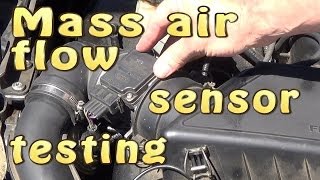
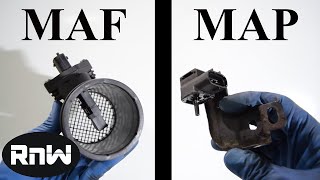
- Faulty Mass Airflow (MAF) Sensor (Common) — A dirty or failing MAF sensor sends incorrect airflow data to the ECU, leading to improper fuel calculations. This frequently triggers P1159 on VW and Audi models.
- Failing Oxygen (O2) or Air/Fuel (A/F) Sensor (Common) — A slow, contaminated, or failed sensor sends bad data, forcing the ECU to make incorrect fuel adjustments. This is the primary cause on Honda and Toyota vehicles.
- Exhaust Leaks (Common) — Cracks in the exhaust manifold or a blown gasket before the O2 sensor suck in outside air. This tricks the sensor into reading a false lean condition, causing the ECU to dump excess fuel into the engine.
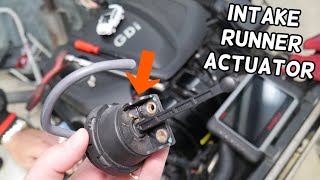
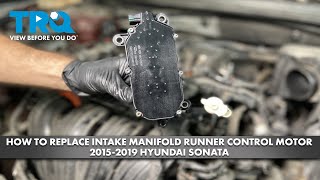
- Faulty Intake Manifold Runner Control (IMRC) Actuator (Common) — On Hyundai and Kia models, this code points directly to a broken variable intake system actuator motor or stripped plastic linkage gears, disrupting airflow.
- Leaking Intake Manifold Gaskets (Less Common) — Deteriorated gaskets sealing the intake manifold to the cylinder head create a significant vacuum leak affecting all cylinders, causing fuel trims to max out.
- Clogged or Leaking Fuel Injectors (Less Common) — A dirty injector starves the engine of fuel, while a stuck-open injector floods it. Either scenario forces drastic long-term fuel trim adjustments.
- Low Fuel Pressure (Rare) — A failing fuel pump or clogged fuel filter starves the engine, creating a lean condition that forces the ECU to compensate beyond its limits.
- Faulty BMW DISA Valve (Rare) — On BMWs, a broken flap or leaking seal on the DISA (Differentiated Air Intake) valve creates a massive vacuum leak, triggering fuel trim codes.
Symptoms
- Check Engine Light is On — The ECU detects a fault and stores the P1159 code, illuminating the Malfunction Indicator Lamp (MIL).
- Rough or Unstable Idle — The engine shakes, surges, or has fluctuating RPMs at a stop due to the inconsistent air-fuel mixture.
- Poor Fuel Economy — The vehicle consumes more fuel than normal as the ECU incorrectly adjusts the mixture, often running too rich.
- Hesitation or Lack of Power — The car feels sluggish, bogs down, or jerks during acceleration, especially at lower RPMs.
- Engine Stalling — With large vacuum leaks, the engine stalls when coming to a stop or idling.
- Rotten Egg Smell from Exhaust — A persistently rich fuel mixture overwhelms the catalytic converter, causing a distinct sulfur smell from the tailpipe.
- High Fuel Trim Values (scan-tool only — no driver-felt sign) — Scan tools show Long Term Fuel Trim (LTFT) values exceeding +/- 10%, indicating significant ECU corrections.
Diagnostic Flowchart
Tap your situation to follow the diagnostic path that matches what you're seeing on this code.
Common Fixes & Costs
- Replace Leaking Vacuum Hoses — Parts: $10-$80, Labor: $100-$300, ~1.5 hr book time (DIY)
- Replace Mass Airflow (MAF) Sensor
— Parts: $100-$300, Labor: $50-$150, ~0.8 hr book time
(Intermediate)
Volkswagen/Audi 2.8L V6: OEM (Alt: {"brand": "Bosch", "pn": "0280218017", "price": "$150-$200"}) - Replace Air/Fuel (O2) Sensor
— Parts: $100-$250, Labor: $100-$300, ~1.2 hr book time
(Intermediate)
Honda Civic (2001-2005 1.7L): OEM (Alt: {"brand": "Denso (OEM Supplier)", "pn": "234-9005", "price": "$100-$150"}, {"brand": "NGK/NTK", "pn": "24426", "price": "$110-$160"}) - Replace Hyundai/Kia VIS Actuator Motor
— Parts: $80-$200, Labor: $150-$350, ~2 hr book time
(Intermediate)
Hyundai XG350 (2002-2005): OEM (Alt: {"brand": "Dorman", "pn": "600-931", "price": "$80-$130"}) - Replace BMW CCV System / Oil Separator
— Parts: $70-$300, Labor: $500-$1500, ~5.5 hr book time
(Professional)
BMW 3-Series E46 (M54 Engine): OEM (Alt: {"brand": "Rein / Febi-Bilstein", "pn": "11617533400S1 (Cold Climate Kit)", "price": "$150-$250"}, {"brand": "Uro Parts / Hamburg Tech", "pn": "11617501566KT", "price": "$90-$150"}) - Replace Intake Manifold Gasket — Parts: $30-$100, Labor: $300-$600, ~4.5 hr book time (Professional)
DIY vs Professional
- Replace Leaking Vacuum Hoses 🟢 Beginner
Tools: Pliers, screwdriver set, hose pick. - Replace Mass Airflow (MAF) Sensor 🟢 Beginner
Tools: Screwdriver or Torx bit set (often security Torx T20/T25), electrical contact cleaner. - Replace Air/Fuel (O2) Sensor 🟢 Beginner
Tools: O2 sensor socket (22mm or 7/8"), breaker bar, penetrating oil, torque wrench, anti-seize compound. - Replace Hyundai/Kia VIS Actuator Motor 🟢 Beginner
Tools: Socket set, screwdrivers, mirror, magnet. - Replace BMW CCV System 🟢 Beginner
Tools: Extensive socket set with extensions and swivels, Torx set, picks, pliers, torque wrench.
Used vs. New Parts: Buying Guide
When a used part is worth it: Buy new for electronic sensors (MAF, O2) as performance degrades with age. Buy used for mechanical parts like an intake manifold or Hyundai VIS actuator from a low-mileage donor vehicle.
Donor-vehicle mileage cap: roughly under 80000 miles for the part to have meaningful remaining life.
Donor quality checklist:
- Verify the donor vehicle was not scrapped due to engine or emissions failure.
- Avoid plastic or rubber parts from older vehicles as they will be brittle.
- Match the part number exactly to avoid incompatibility.
Decision logic:
- If The part is an electronic sensor (O2, MAF). → Buy new. Used sensors have an unknown history and cause repeat failures.
- If The part is a complex mechanical assembly and the vehicle is over 150K miles. → A used part from a low-mileage donor saves costs, but carries the risk of a shorter lifespan.
- If The part has a known wear-out failure mode (BMW CCV hoses, Hyundai VIS gears). → Buy new aftermarket or OEM parts, as used parts are near the end of their service life.
Warranty tradeoff: Used parts include a 30-90 day warranty covering only the part. New aftermarket parts offer 1-year to lifetime warranties. OEM parts provide the best guarantee at the highest cost.
Worst-case if a used part fails: 400-1500. If a used part fails, you pay for the part again plus full labor costs.
What Happens If You Wait — Timeline
- 0-2 weeks: Code sets and MIL illuminates. Often no noticeable symptoms other than the light. (MPG impact: 0-5%% · Added cost: $0)
- 2 weeks - 3 months: Fuel economy drops noticeably. A rough idle appears on cold starts. The vehicle fails emissions tests. (MPG impact: 5-15%% · Added cost: $50-200 in wasted fuel)
- 3-8 months: The persistent rich or lean condition overheats the catalytic converter, degrading its internal ceramic substrate. Hesitation and power loss increase. (MPG impact: 10-20%% · Added cost: $800 - $2,500 (catalytic converter replacement required))
- 8+ months: Total catalytic converter meltdown causes a severe exhaust blockage. The engine stalls frequently or fails to start. (MPG impact: 20-50%+% · Added cost: $1,500 - $3,500+)
Cost of Not Fixing It
- 0-1 month: Noticeable 5-15% drop in fuel economy and rough engine performance. Guaranteed emissions test failure. (Added cost: 50-150)
- 1-6 months: A persistent rich or lean condition overheats the catalytic converter, causing its internal structure to melt. (Added cost: 1200-2800)
- 6+ months: Catastrophic catalytic converter failure, O2 sensor contamination, and potential engine damage from long-term improper combustion. (Added cost: 1500-3500+)
Diagnosis Steps
- Verify Code Definition and Check TSBs
Check for Technical Service Bulletins (TSBs) for your specific vehicle. Use a scan tool to confirm the manufacturer's exact definition of P1159. This is critical: a P1159 on a BMW (fuel trim) requires a completely different diagnosis than on a Hyundai (intake motor).
Tools: OBD-II Scanner, TSB Database Access (Beginner) - Perform a Thorough Visual Inspection
Inspect the engine bay for disconnected, cracked, or mushy vacuum hoses, especially around the PCV/CCV system and intake manifold. Check for loose sensor connectors and black soot trails near the exhaust manifold, indicating an exhaust leak.
Tools: Flashlight, Inspection Mirror (Beginner) - Analyze Live Fuel Trim Data
Observe live data on a scan tool, focusing on Short Term Fuel Trim (STFT) and Long Term Fuel Trim (LTFT). High positive values (> +10%) indicate the ECU is adding fuel to correct a lean condition (likely a vacuum leak). High negative values suggest a rich condition.
Tools: OBD-II Scanner (Beginner) - Perform an Automotive Smoke Test
This is the most effective method for finding hidden air leaks. A smoke machine fills the intake and crankcase system with low-pressure smoke. Smoke escaping from gaskets, seals, or hoses pinpoints the exact source of unmetered air.
Tools: Automotive Smoke Machine (Intermediate) - Test MAF and A/F Sensor Voltage
Check the voltage readings from the MAF and O2/A-F sensors using a multimeter or scan tool. Compare these to manufacturer specifications. For example, Toyota/Honda A/F sensors show a bias voltage of 3.0-3.3V with the key on, engine off.
Tools: Multimeter, Advanced Scan Tool (Advanced) - Check Fuel Pressure and Injector Balance
Connect a fuel pressure gauge to the fuel rail. With the key on and engine off, pressure should be 40-60 PSI for most port-injected vehicles. Low pressure indicates a weak pump or clogged filter. Use a scan tool to perform an injector balance test.
Tools: Fuel Pressure Gauge, Advanced Scan Tool (Advanced) - [PRO TIP] Perform Fuel Trim Reset and Relearn
After repairing a vacuum leak or fuel issue, clearing codes is not enough. Use an advanced scan tool to reset learned fuel trim adaptations, forcing the ECU to start fresh. Perform the manufacturer-specified drive cycle to ensure trims adapt correctly.
Tools: Advanced Scan Tool (Intermediate) - [PRO TIP] Scope Test the A/F Sensor Circuit
For A/F sensors, voltage readings are misleading. Use a lab scope to monitor the sensor's current. The current must react quickly when you create a rich condition (adding propane) or lean condition (creating a vacuum leak). A lazy waveform indicates a bad sensor.
Tools: Lab Scope with Low-Amps Probe (Professional) - [ADVANCED] Test VW/Audi MAF Sensor Reading
For VW/Audi vehicles, view the MAF sensor reading (g/s) at idle with a warm engine. A healthy reading is approximately 80% of the engine's displacement in liters (e.g., a 2.8L engine reads 2.2-3.5 g/s). Readings outside this range point to a faulty MAF or large air leak.
Tools: Advanced Scan Tool (Advanced) - [ADVANCED] Test Ford Fuel Stepper Motor
For Fords, disconnect the stepper motor with the key off. Measure resistance between the coil pins. A typical reading is 10-200 ohms. Infinite resistance confirms a failed motor. Verify 10-14V is present at the power pin with the key on.
Tools: Multimeter, Service Manual (Advanced) - [ADVANCED] Test Honda A/F Sensor Heater Circuit
For Hondas, test the A/F sensor's internal heater. Disconnect the sensor and probe the two same-colored wires (usually black) with a multimeter set to ohms. Good resistance is 10-40 ohms. Infinite resistance confirms a failed heater, requiring sensor replacement.
Tools: Multimeter (Advanced)
When This Code Triggers (Freeze-Frame Conditions)
- Engine Coolant Temp: 180-200°F (82-93°C) (The engine has reached full operating temperature and is in closed-loop fuel control.)
- RPM: 1500-2500 RPM (The vehicle is cruising steadily or under light acceleration, not idling or at full throttle.)
- Engine Load: 20-60% (The engine operates under a moderate, stable load typical of highway cruising.)
- Vehicle Speed: 35-55 mph (56-88 km/h) (The code sets during steady-state driving when the ECU evaluates long-term fuel trim adjustments.)
Related Codes
- P0171 — Often appears with P1159 because a vacuum leak causes both. If P1159 is a fuel trim code (BMW), they report the same fault. If P1159 is a mechanical code (Hyundai), that failed part causes the P0171 lean condition.
- P0174 — The Bank 2 equivalent of P0171. Seeing P0171, P0174, and P1159 together strongly suggests a massive vacuum leak affecting the entire engine.
- P1161 — On BMWs, this is the companion code to P1159 for the opposite engine bank. They appear together and point to a single, large unmetered air leak affecting both banks equally.
- P0420 — A long-term air-fuel imbalance triggers this catalyst efficiency code by overheating the converter. Fix P1159 first; if P0420 returns, the catalytic converter requires replacement.
Climate & Environmental Factors
- Cold Weather: Cold temperatures harden rubber and plastic components, exposing or worsening vacuum leaks. On BMWs, condensation within the CCV system freezes, blocking the system and causing catastrophic seal failure.
- High Altitude: Lower air density at high altitudes exposes pre-existing weaknesses in fuel or air metering systems. An engine running slightly lean at sea level exceeds its trim limits at 8,000 feet, triggering the code.
- High Humidity: High humidity slightly alters air charge density and affects sensitive or aging MAF sensors, acting as a minor contributor in borderline cases.
How to Talk to a Mechanic About This Code
Say this: "I have a P1159 check engine light code. I know this is a manufacturer-specific code, so please confirm the exact definition for my [Make, Model, Year] and focus the diagnosis on the most common causes for that specific fault, not just generic air-fuel issues."
This signals you are an informed consumer, preventing the shop from guessing or immediately suggesting a costly, generic fix like an O2 sensor.
Avoid saying:
- 'Just fix whatever's wrong'
- 'My check engine light is on, can you look at it?' (too vague, invites upsells)
- 'I think it's the oxygen sensor' (don't diagnose for them)
Questions to ask before authorizing the repair:
- What is the specific definition of P1159 for my car, and what tests confirmed that diagnosis?
- If you suspect a vacuum leak, did you perform a smoke test to pinpoint it?
- Can you provide a written estimate with a full breakdown of parts and labor costs?
- What is the warranty on the parts and labor?
Where to Take It: Dealer vs Independent vs Chain
- Dealer:
A safe but expensive choice. Best for German brands with complex P1159 definitions if you are not price-sensitive.
Best for: Vehicles under powertrain or emissions warranty., Complex, brand-specific electronic issues requiring manufacturer software.
Downsides: Significantly higher labor rates., Defaults to replacing entire assemblies instead of smaller components. (Typical cost: +50% vs. baseline) - Independent Shop:
Best fit for most owners. Experienced independent technicians diagnose vehicle-specific P1159 issues efficiently without dealer overhead.
Best for: Out-of-warranty vehicles where cost is a factor., Common P1159 causes like vacuum leaks, sensor replacements, or known mechanical failures., Shops specializing in your car's brand.
Downsides: Diagnostic skill varies; vetting the shop's reputation is crucial. (Typical cost: +0% vs. baseline) - Chain Shop:
AVOID for diagnosing P1159. The risk of misdiagnosis and unnecessary parts replacement is very high.
Best for: Simple, routine maintenance like oil changes.
Downsides: Technicians lack specialized knowledge for manufacturer-specific codes., High pressure to upsell common parts like O2 sensors without proper diagnosis. (Typical cost: -10% vs. baseline)
When to Walk Away From the Repair
If the estimated repair cost exceeds 40-50% of the car's private-party value, consider selling or trading it in.
- Car worth $4000, fix is $2000: Borderline. The repair costs 50% of the car's value. Get a second opinion before authorizing.
- Car worth $12000, fix is $1800: Fix it. The repair is only 15% of the car's value.
- Car worth $2500, fix is $1500: Walk away. The repair is 60% of the car's value.
What Scan Tool You Need for This Code
Minimum: A scanner that reads manufacturer-specific trouble codes and displays live Short-Term (STFT) and Long-Term (LTFT) fuel trims.
A $20 basic code reader only shows 'P1159' without the manufacturer's definition or live fuel data, leading to guesswork and wasted money.
Budget: BlueDriver Pro OBD2 Scanner (~$99) — Connects to your smartphone to read manufacturer-specific codes and graph live fuel trim data, sufficient for diagnosing vacuum leaks.
Mid-range: Foxwell NT510 Elite (~$180) — Provides dealer-level diagnostics for a specific brand, including bidirectional control to command parts like a Hyundai VIS actuator.
Professional: Autel MaxiCOM MK808S (~$369) — Offers full bidirectional control, extensive live data graphing, and performs fuel trim resets required after a repair.
Rent vs buy: AutoZone loaner scanners are often basic code readers lacking live data functions. Buy a budget pick if you plan to do your own repairs, as it costs less than a shop's diagnostic fee.
How to Clear the Code After You Fix It
- Reconnect the battery if disconnected.
- Use an OBD-II scan tool to clear the diagnostic trouble codes and reset fuel trims to baseline.
- Perform a complete drive cycle to allow the ECU to run self-tests and confirm the fix.
Drive cycle (~30 minutes): A generic drive cycle includes a cold start, 2-5 minutes of idling, 10-15 minutes of mixed city/highway driving including steady-state cruising at 55 mph, and several accelerations and decelerations.
Before emissions retest: drive at least 100 miles to fully set monitors.
Watch out for:
- Disconnecting the battery clears the light but resets all readiness monitors to 'Not Ready', causing an automatic emissions failure.
- The code returns immediately if the underlying mechanical or electrical fault remains unfixed.
- Failing to drive long enough under correct conditions leaves monitors 'Not Ready'.
Will This Fail Emissions / State Inspection?
Yes — this code typically fails an OBD-II emissions inspection.
- California: An active P1159 code is an automatic failure. All OBD readiness monitors must be 'Ready'. Expect to drive 50-100 miles after a repair before re-testing.
- New York: An illuminated Check Engine Light for code P1159 results in an automatic test failure.
- Texas: An illuminated Check Engine Light is an automatic failure. After clearing the code, you can only have one monitor 'Not Ready' to pass.
Most Commonly Affected Vehicles
- BMW 3-Series (E46) (1998-2006) — Extremely prone to vacuum leaks from deteriorating CCV system hoses, triggering fuel trim codes P1159 and P1161.
- BMW X5 (E53) (1999-2006) — The M62 V8 engine develops leaks in the rear oil separator cover and vent hoses, leading to unmetered air and P1159/P1161.
- Hyundai XG300 / XG350 / Azera (2001-2006) — P1159 points to a Variable Intake System (VIS) actuator motor failure. Plastic gears inside the actuator strip, or the linkage arm breaks.
- Kia Sedona / Amanti (2002-2006) — Shares the 3.5L V6 with Hyundai. P1159 indicates an IMRC or VIS actuator problem, often accompanied by a buzzing noise upon shutdown.
- Honda Civic, Accord (2001-2005) — P1159 means 'Air/Fuel Ratio Sensor 1 Low Voltage'. This points to a failing primary A/F sensor or a cracked exhaust manifold letting air hit the sensor.
- Volkswagen / Audi Various with V6/V8 engines (1998-2008) — P1159 means 'MAF Sensor Implausible Ratio', pointing to a faulty MAF sensor or a major vacuum leak from a torn intake boot.
- Chevrolet / GM Various models with 3.8L V6 (Series II) (2000-2008) — GM defines this as an issue with the downstream oxygen sensor's cross-counts, caused by an exhaust leak, failing sensor, or degrading catalytic converter.
- Ford Taurus, Windstar (1995-2005) — Indicates a malfunction of a 'Fuel Stepper Motor' in the idle air control system. Diagnosis involves checking coil resistance.
Manufacturer-Specific Notes
- BMW: Defines P1159 as 'Fuel Trim Adaptation Additive Bank 1 High'. It is almost always caused by a vacuum leak from the crankcase ventilation (CCV) hoses or oil separator.
- Hyundai / Kia: Defines P1159 as a 'Variable Intake Motor Malfunction'. The problem is the actuator motor or stripped plastic linkage, not a fuel or sensor issue.
- General Motors (Chevrolet, GMC, Cadillac): Defines P1159 as 'HO2S Cross Counts Bank 2 Sensor 2'. The computer sees the downstream O2 sensor switching too often due to an exhaust leak or failing catalytic converter.
- Ford: Defines P1159 as a 'Fuel Stepper Motor Malfunction', related to the idle air control (IAC) system or its wiring.
- Honda / Acura: Defines P1159 as 'Air/Fuel Ratio Sensor 1 Low Voltage'. Inspect the exhaust manifold for cracks before replacing the primary A/F sensor.
- Volkswagen / Audi: Defines P1159 as 'MAF sensor implausible ratio'. This strongly suggests a faulty MAF sensor or a massive air leak between the MAF and throttle body.
- Toyota: Defines P1159 as 'A/F Sensor Circuit Slow Response'. The downstream oxygen sensor responds too slowly due to age, contamination, or a heater circuit fault.
Real Owner Stories
2002 BMW 318i (E46) with P1159/P1161
Check Engine Light appeared after a highway drive with a slightly rough, surging idle.
What they tried:
- Replaced spark plugs, ignition coils, MAF sensor, and both pre-cat oxygen sensors. The light returned every 100-500 km.
Outcome: The root cause was a vacuum leak from brittle crankcase ventilation (CCV) system hoses. Replacing the CCV system restored normal fuel trims and cleared the code permanently.
Lesson: For BMW fuel trim codes, always test for vacuum leaks from the CCV system using a smoke test before replacing expensive sensors.
2004 Hyundai XG350 with P1159
Check Engine Light on, accompanied by hesitation on acceleration and a clicking noise from the engine bay after shutdown.
What they tried:
- Initial diagnosis mistakenly focused on fuel sensors.
- A specialist correctly identified the code as 'Variable Intake System (VIS) Actuator Malfunction'.
Outcome: Replaced the VIS actuator motor (Dorman P/N 600-931) because the internal plastic gears had stripped. This restored proper intake runner function.
Lesson: Without checking the exact manufacturer definition, technicians waste time on the wrong diagnostic path. Low-end torque loss is a key clue for this specific failure.
2003 Honda Civic with P1159
Check Engine Light illuminated for 'Air/Fuel Ratio Sensor 1 Low Voltage'. No major driveability issues noticed.
What they tried:
- Replaced the primary A/F sensor. The code returned within a week.
- A visual inspection revealed a hairline crack in the exhaust manifold.
Outcome: The cracked manifold allowed outside air into the exhaust stream, tricking the new A/F sensor into sending a false lean signal. Replacing the exhaust manifold fixed the issue.
Lesson: Even when a code points directly to a sensor, mechanical faults like exhaust leaks corrupt the sensor's reading. Always inspect the surrounding environment.
How to Prevent This Code From Triggering
- Use Top-Tier rated gasoline at every fill-up. (Every fill-up) — Top-Tier fuels contain higher detergent concentrations, preventing carbon deposits from clogging fuel injectors and causing fuel imbalances.
- Replace engine air filter at recommended intervals. (Per vehicle's maintenance schedule (typically 15k-30k miles)) — A clogged filter restricts airflow, causing a rich condition and increasing the risk of debris damaging the MAF sensor.
- Clean the Mass Airflow (MAF) sensor. (Every time the air filter is changed.) — Oil vapor and dust coat the MAF sensor wire, causing inaccurate airflow readings. Cleaning it prevents false codes.
- Proactively replace upstream Air/Fuel or Oxygen sensors. (Every 100,000 miles.) — O2 sensors become slow with age, providing delayed feedback that forces inaccurate fuel adjustments and stresses the catalytic converter.
- Periodically inspect vacuum hoses for brittleness or softness. (Annually, especially on vehicles over 10 years old.) — Engine heat degrades rubber hoses. Catching a cracking hose early prevents P1159 codes and driveability issues.
Frequently Asked Questions
Can a bad gas cap cause a P1159 code?
No, this is a common misconception. A loose gas cap triggers an EVAP code like P0442 or P0455. It does not cause a P1159 code, which relates to the air-fuel mixture rather than fuel vapor containment.
I replaced the O2 sensor, but P1159 came back. What's next?
This is a classic case of replacing the messenger instead of fixing the problem. The O2 sensor was likely reporting the air-fuel imbalance correctly. The next crucial step is performing a smoke test to find the underlying unmetered air leak.
What's the difference between a P1159 on a BMW vs. a Hyundai?
This code highlights the critical importance of manufacturer-specific definitions. On a BMW, P1159 indicates a vacuum leak, while on a Hyundai, it points to a mechanical failure in the variable intake manifold. Diagnosing one like the other leads to replacing the wrong parts.
What does 'Bank 1' or 'Bank 2' mean?
On engines with a 'V' shape, the cylinders are split into two banks. 'Bank 1' is the side containing cylinder #1, and 'Bank 2' is the opposite side. Inline engines only have one bank, so they only trigger Bank 1 codes.
Is it expensive to fix a P1159 code?
A simple vacuum hose fix costs under $200, while replacing a sensor runs $400 to $550. However, ignoring the problem until it destroys the catalytic converter pushes the repair bill over $2,500. Complex jobs like a BMW CCV system replacement also exceed $1,500 at specialty shops.
Will clearing the code make it go away?
No. Clearing the code only turns off the check engine light temporarily. The ECU re-runs its diagnostic tests and illuminates the light again as soon as it detects the underlying fault.
My mechanic can't find the vacuum leak. What should I suggest?
Insist on an automotive smoke test. Spraying starter fluid or using a visual inspection misses small or intermittent leaks. A smoke machine fills the entire intake system with visible vapor, reliably pinpointing hard-to-find leaks from gaskets, seals, and hidden hoses.
What is the difference between an O2 sensor and an A/F sensor?
A traditional narrowband O2 sensor switches between 0.1V and 0.9V to tell the ECU if the mixture is rich or lean. A wideband A/F sensor provides a variable current signal, allowing the ECU to know exactly how rich or lean the mixture is for finer control. These two sensor types are not interchangeable.
Helpful Videos
![CCV Valve & Hoses Replacement! [BMW E46 330ci]](https://img.youtube.com/vi/-cjhrmuIBog/mqdefault.jpg)


Shop the Parts Behind P1159
Below are the parts most often responsible for code P1159, ranked by how frequently each one is the actual culprit (per the diagnosis above). Tap any to see what we have for your vehicle.



The information in this article is provided for general reference and educational purposes only. Vehicle specifications, procedures, and part compatibility can vary by production date, trim level, and region. Always consult your vehicle's factory service manual and verify part numbers before purchasing or performing repairs. Safety-critical components such as airbags, seat belts, and braking systems should be installed by a qualified professional.
- 🧭 Diagnostic Flowchart
- 🎬 Helpful Videos
- 🛍️ Shop This Part
- What Does P1159 Mean?
- Can I Drive With P1159?
- Common Causes
- Symptoms
- Common Fixes & Costs
- DIY vs Professional
- Used vs. New Parts: Buying Guide
- What Happens If You Wait — Timeline
- Cost of Not Fixing It
- Diagnosis Steps
- When This Code Triggers (Freeze-Frame Conditions)
- Related Codes
- Climate & Environmental Factors
- How to Talk to a Mechanic About This Code
- Where to Take It: Dealer vs Independent vs Chain
- When to Walk Away From the Repair
- What Scan Tool You Need for This Code
- How to Clear the Code After You Fix It
- Will This Fail Emissions / State Inspection?
- Most Commonly Affected Vehicles
- Manufacturer-Specific Notes
- Real Owner Stories
- 2002 BMW 318i (E46) with P1159/P1161
- 2004 Hyundai XG350 with P1159
- 2003 Honda Civic with P1159
- How to Prevent This Code From Triggering
- Frequently Asked Questions
- Can a bad gas cap cause a P1159 code?
- I replaced the O2 sensor, but P1159 came back. What's next?
- What's the difference between a P1159 on a BMW vs. a Hyundai?
- What does 'Bank 1' or 'Bank 2' mean?
- Is it expensive to fix a P1159 code?
- Will clearing the code make it go away?
- My mechanic can't find the vacuum leak. What should I suggest?
- What is the difference between an O2 sensor and an A/F sensor?
- 🎟️ Get 5% Off