

OBD-II Code P1185: A Manufacturer-Specific Deep Dive
The Ultimate Guide to Diagnosing and Fixing P1185 for All Major Vehicle Brands
- Code P1185 has completely different meanings across brands, requiring manufacturer-specific diagnosis rather than generic OBD-II troubleshooting.
- On Hyundai and Kia vehicles, P1185 indicates excessive fuel rail pressure, most often fixed by replacing a faulty $50-$160 fuel rail pressure sensor.
- For Chrysler, Dodge, Jeep, and Fiat, P1185 flags a MAP/BARO sensor mismatch, which is typically resolved by a $150-$350 dealer PCM software update, not fuel system repairs.
- On BMW and Jaguar models, P1185 specifically points to a failed oxygen sensor heater circuit, requiring a $100-$300 upstream O2 sensor replacement.
- Driving with a fuel-related P1185 code causes rich running conditions that destroy a catalytic converter within 1 to 6 months, adding up to $2,500 in repair costs.
What Does P1185 Mean?
P1185 is a manufacturer-specific code with widely different meanings. On Hyundai and Kia vehicles, it means the engine control module (ECM) detects fuel rail pressure is significantly higher than the commanded target. The computer constantly adjusts fuel pressure based on engine speed and load, setting this code when pressure stays too high for a specified period. Conversely, on brands like Chrysler, Jeep, and Ford, this code is completely unrelated to fuel pressure.
Technical definition: The formal definition varies significantly by manufacturer. For Hyundai/Kia, it is 'Fuel Pressure Monitoring - Maximum Pressure Exceeded'. For Chrysler/Jeep/Dodge/Fiat, it is 'General Pressure Sensor Correlation'. For Ford, it is 'Fuel Temperature Sensor High' or, as an ABS code C1185, 'ABS Power Relay Output Circuit Failure'. For GM, it is 'Engine Oil Temperature Circuit'. For BMW and Jaguar, it indicates 'O2 Sensor Heater Control Circuit' failure.
Can I Drive With P1185?
Yes, But With Caution. You can drive short distances, but it is highly discouraged. The engine will often stall in traffic, enter a reduced-power 'limp mode' with poor acceleration, or struggle to start, posing significant safety risks. Continuing to drive with a high fuel pressure condition causes expensive damage to fuel injectors or the high-pressure pump. If the code stems from a sensor fault leading to a rich fuel mixture, it overheats and destroys the catalytic converter over time, adding a potential $800-$2500 to the final repair cost.
Common Causes
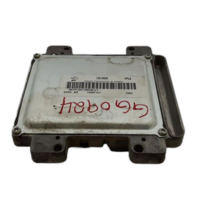
- Outdated PCM/ECM Software (FCA Vehicles) (Very Common) — On many Jeep, Dodge, Chrysler, and Fiat vehicles, the single most common cause is outdated Powertrain Control Module (PCM) software with overly sensitive logic for monitoring pressure sensors. A dealer reflash is the required fix.
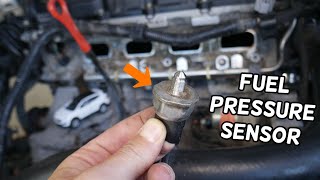
- Faulty Fuel Rail Pressure Sensor (Hyundai/Kia) (Very Common) — This sensor tells the computer the exact pressure in the fuel rail. When it fails, it sends a false high-pressure signal, making it the most frequent cause for this code on applicable Hyundai and Kia vehicles. 🎬 See how to locate and replace the fuel rail pressure sensor.
- Faulty Manifold Absolute Pressure (MAP) Sensor (FCA) (Common) — On Chrysler/Jeep/Dodge/Fiat vehicles, after a software update is ruled out, a faulty MAP sensor is the next most likely hardware failure causing the P1185 correlation code.
- Faulty Fuel Pressure Regulator (Hyundai/Kia) (Common) — This part opens to release excess pressure back to the fuel tank. If it gets stuck closed or its control circuit fails, pressure builds up and triggers the code.
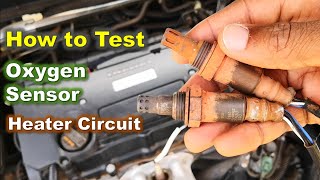
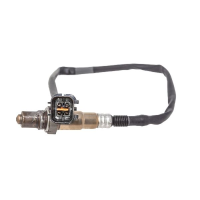
- Failed O2 Sensor Heater Element (BMW/Jaguar) (Common) — On many BMW and Jaguar models, this code points to an open circuit in an oxygen sensor's internal heater. The heater brings the sensor to operating temperature quickly; when it fails, the entire O2 sensor must be replaced.
- Clogged Fuel Filter or Return Line (Less Common) — A blockage in the fuel filter or the fuel return line prevents excess fuel from flowing back to the tank, causing pressure to spike in the rail and triggering the code on fuel-pressure-related variants.
- Failing High-Pressure Fuel Pump (Less Common) — While a failing pump usually causes low pressure, it sometimes fails in a way that produces excessive or erratic pressure, triggering this code on direct-injection vehicles.
- Wiring or Connector Issue (Rare) — A short circuit to voltage, corrosion, or a poor ground in the wiring to the Fuel Rail Pressure Sensor, MAP sensor, or O2 Sensor Heater causes an incorrect high voltage reading, tricking the computer.
- Damaged ECU/PCM Circuit Board (Very Rare) — In rare cases, particularly after water intrusion, the Engine Control Unit (ECU) itself is the cause. Corrosion damages internal traces on the circuit board, leading to incorrect sensor readings. For FCA vehicles, the internal barometric (BARO) sensor fails, causing a correlation mismatch.
Symptoms
- Check Engine Light On — The Malfunction Indicator Lamp (MIL) illuminates on your dashboard.
- Engine Stalling — The engine shuts off unexpectedly while driving or at idle, as the computer cuts fuel to prevent damage from excessive pressure.
- Reduced Engine Power / Limp Mode — You will notice poor acceleration or a feeling that the car is struggling, as the computer limits engine performance in a 'fail-safe' mode to prevent damage.
- Rough Idle — The engine runs unevenly, shakes, or misfires when the car is stopped.
- Hard Starting or No Start — The vehicle takes longer than usual to start or does not start at all due to incorrect fuel pressure or a critical sensor failure at startup.
- Increased Fuel Consumption — If the system runs rich due to a false pressure or oxygen sensor reading, you will notice a decrease in fuel economy.
- Black Smoke from Exhaust — On fuel-related versions of the code, a stuck-closed fuel pressure regulator causes an extremely rich condition, resulting in black smoke from the tailpipe.
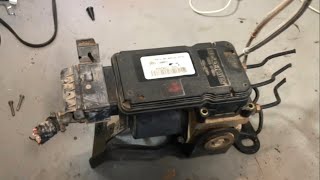
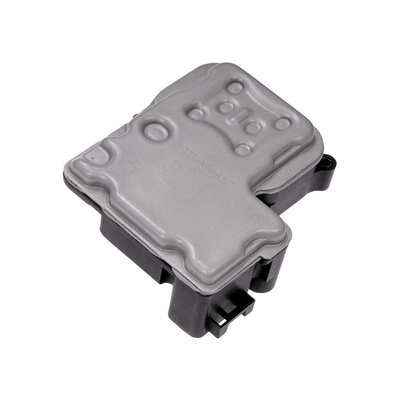
- ABS Light On (Ford specific) — On some Ford trucks, a C1185 code illuminates the ABS light, not the Check Engine Light, indicating a fault in the ABS module's power relay circuit. 🎬 Watch this walkthrough for replacing a faulty Ford ABS module.
Diagnostic Flowchart
Tap your situation to follow the diagnostic path that matches what you're seeing on this code.
Common Fixes & Costs
- Reflash Powertrain Control Module (PCM) — Parts: $0, Labor: $150-$350 (dealer diagnosis and programming fee), ~1.2 hr book time (Professional)
- Replace Fuel Rail Pressure Sensor — Parts: $50-$160, Labor: $75-$270, ~1 hr book time (Intermediate)
- Replace Manifold Absolute Pressure (MAP) Sensor — Parts: $30-$120, Labor: $150-$350 (often high due to difficult access), ~1.8 hr book time (Intermediate)
- Replace Fuel Pressure Regulator — Parts: $50-$200, Labor: $100-$300, ~1.5 hr book time (Intermediate)
- Replace Oxygen (O2) Sensor — Parts: $80-$250, Labor: $100-$300, ~1.5 hr book time (Intermediate)
- Replace High-Pressure Fuel Pump — Parts: $300-$1200+, Labor: $250-$500, ~3 hr book time (Professional)
- Repair/Replace ABS Control Module (Ford C1185) — Parts: $50-$800 (DIY repair vs. remanufactured unit), Labor: $150-$250, ~2 hr book time (Professional)
DIY vs Professional
- Reflash Powertrain Control Module (PCM) 🟢 Beginner
Tools: Proprietary dealership scan tool (e.g., wiTECH for FCA) with active subscription. - Replace Fuel Rail Pressure Sensor 🟢 Beginner
Tools: Basic socket set, torque wrench, rags, safety glasses. Sometimes requires special fuel line disconnect tools. - Replace Manifold Absolute Pressure (MAP) Sensor 🟢 Beginner
Tools: Basic socket set, possibly extensions and swivel sockets. - Replace Oxygen (O2) Sensor 🟢 Beginner
Tools: O2 sensor socket set, ratchet, penetrating oil, anti-seize lubricant. - Replace High-Pressure Fuel Pump 🟢 Beginner
Tools: Extensive set of professional mechanic's tools, specific fuel line tools, torque wrenches, and service manual.
Used vs. New Parts: Buying Guide
When a used part is worth it: For common fixes like MAP, O2, or Fuel Pressure sensors, buying used rarely makes sense. These are electronic wear items, and the savings are minimal compared to the risk of premature failure and paying for labor a second time.
Donor-vehicle mileage cap: roughly under 60000 miles for the part to have meaningful remaining life.
Donor quality checklist:
- Verify the exact OEM part number matches; superseded numbers are often incompatible.
- For electronic sensors, avoid parts from high-mileage vehicles or those from regions with extreme weather.
- Ensure the part comes with a warranty of at least 90 days.
Decision logic:
- If Part is an electronic sensor (MAP, O2, Fuel Pressure) and new part is < $200 → Buy a new OEM or high-quality aftermarket part. The reliability and longer warranty are worth the cost.
- If Part is a major mechanical assembly (e.g., ABS Module) and budget is a primary concern → A used part from a low-mileage, accident-damaged vehicle is a viable option, but verify the warranty.
- If Part has a known wear-out failure mode (e.g., O2 sensor, fuel pump) → Strongly favor buying new to ensure maximum lifespan.
Warranty tradeoff: Used parts typically offer a 30-90 day part-only warranty. New aftermarket parts often come with a 1-year to limited lifetime warranty. New OEM parts usually carry a 12-month warranty.
Worst-case if a used part fails: $200-$500 if a used sensor fails after the warranty period, requiring a new part plus repeat labor costs.
What Happens If You Wait — Timeline
- 0-1 month: Code sets and MIL illuminates. On FCA vehicles, there may be no symptoms. On Hyundai/Kia, a slight rough idle or hesitation begins. (MPG impact: 0-5%% · Added cost: $0)
- 1-3 months: Symptoms become more consistent. FCA vehicles show reduced power or poor acceleration. Hyundai/Kia vehicles experience stalling at idle or hard starting as the ECU cuts fuel to prevent damage from high pressure spikes. (MPG impact: 5-15%% · Added cost: $50-$150 in wasted fuel)
- 3-6 months: On fuel-related variants (Hyundai/Kia), the persistent high-pressure/rich condition begins to overheat the catalytic converter. The substrate cracks or melts, reducing its efficiency. (MPG impact: 10-20%% · Added cost: $800-$2,500 (Catalytic converter replacement is now likely required in addition to the original repair))
- 6+ months: Catastrophic failure becomes likely. The catalytic converter becomes completely clogged, causing severe backpressure that leads to engine damage. Sustained high fuel pressure causes fuel injector seals to fail or damages the injectors themselves. The vehicle becomes undrivable. (MPG impact: 20-35%+% · Added cost: $1,500-$4,000+ (Original repair + catalytic converter + potential fuel injector replacement))
Cost of Not Fixing It
- 0-1 month: Noticeable drop in fuel economy (5-15%), potential for engine stalling or entering 'limp mode,' and a failed emissions test. (Added cost: $20-$60 in wasted fuel per month.)
- 1-6 months: On fuel-related versions, a persistent rich condition overheats and destroys the catalytic converter, a critical and expensive emissions component. (Added cost: $800-$2,500)
- 6+ months: Sustained high fuel pressure causes premature failure of fuel injectors. Continued operation in limp mode causes excessive carbon buildup and strain on other engine components. (Added cost: $400-$1,500+)
Diagnosis Steps
- Read All Trouble Codes & Check TSBs
Use an OBD-II scanner to confirm P1185 is present and check for any other related codes. Crucially, check for any manufacturer Technical Service Bulletins (TSBs) for your vehicle's make, model, and year. For FCA brands, this is the most important step, as the fix is almost always a known software update.
Tools: OBD-II Scanner, Access to TSB database (Beginner) - Analyze Live Sensor Data (Pro Tip)
Use an advanced scan tool to view live data. For FCA correlation codes, compare 'MAP Sensor' and 'BARO Sensor' readings with the Key On, Engine Off (KOEO). They should be nearly identical. For a Hyundai/Kia fuel code, observe 'Fuel Rail Pressure' at warm idle; it should be around 270 bar while the 'Rail Pressure Regulator Duty' is 15-17%. A reading stuck at maximum pressure points directly to a sensor or wiring fault.
Tools: Advanced OBD-II Scanner (Intermediate) - Inspect Sensor Wiring and Connectors
Depending on the code's meaning for your car, visually inspect the wiring harness and connector for the relevant sensor (Fuel Rail Pressure, MAP, O2, etc.). Look for obvious signs of damage, corrosion, melted insulation, or loose connections. Pay close attention to grounds.
Tools: Flashlight (Beginner) - Test the Sensor Circuit with a Multimeter
Disconnect the suspect sensor and turn the ignition on (engine off). Use a multimeter to test the connector harness. You should find a 5-volt reference wire (or 12V for some heaters) and a wire with good continuity to ground (less than 1 ohm). The remaining wire is the signal. This confirms the PCM is providing power and ground.
Tools: Multimeter (Intermediate) - Advanced Diagnosis: FCA MAP/BARO Correlation Values
With a scan tool and Key On, Engine Off (KOEO), the MAP and BARO sensor values must be within 1.0 inHg (0.5 PSI) of each other. Using a multimeter, probe the MAP sensor signal wire. At KOEO, it should read ~4.5-5.0V at sea level. At warm idle, it should drop to 1.0-2.0V. A reading outside these ranges points to a faulty sensor or wiring.
Tools: Advanced OBD-II Scanner, Multimeter (Advanced) - Advanced Diagnosis: Hyundai/Kia Fuel Pressure Values
The code triggers when pressure exceeds the target by a set amount (e.g., >200 bar) or surpasses a hard limit (e.g., 1480 bar). On a scan tool at warm idle, pressure should be stable around 270 bar (approx. 3916 PSI). The sensor's signal voltage should be under 1.7V at idle and rise toward 4.5V under load. If the pressure reading is stuck high or doesn't respond to engine load, suspect the sensor, regulator, or a line blockage.
Tools: Advanced OBD-II Scanner (Advanced) - Perform a Sensor Resistance Test
For components like O2 sensor heaters or fuel temperature sensors, test the part directly. With the sensor disconnected, use a multimeter to measure the resistance between the two heater circuit pins (for an O2 sensor) or the sensor pins (for a temp sensor). Compare this reading to the manufacturer's specification. An 'OL' (Open Loop) or infinite resistance reading indicates a failed component.
Tools: Multimeter, OEM Service Manual (Intermediate) - Check the Fuel Filter and Return Line (Fuel-related codes)
If sensor and regulator tests are inconclusive on a Hyundai/Kia, inspect the fuel filter for clogs. Also, check the fuel return line for any kinks or blockages that prevent fuel from returning to the tank, causing a pressure buildup.
Tools: Basic hand tools, Flashlight (Intermediate) - Perform a 'Wiggle Test' for Intermittent Faults
If you suspect a loose connection or frayed wire, have a helper monitor the live sensor data on the scan tool while you gently wiggle the wiring harness and connector for the suspect sensor. If the data reading jumps or cuts out, you have found the location of the intermittent fault.
Tools: Advanced OBD-II Scanner (Advanced) - Test the High-Pressure Fuel Pump (Fuel-related codes)
This involves specific manufacturer procedures and specialized gauges to test if the pump operates correctly or produces too much pressure. Stop DIY diagnosis here and take the vehicle to a professional shop.
Tools: Fuel pressure gauge set, manufacturer service data (Professional)
When This Code Triggers (Freeze-Frame Conditions)
- Engine Coolant Temp: 170-205°F (77-96°C) (The engine is fully warmed up and operating in closed-loop fuel control.)
- RPM: 700-800 (Idle) or 1500-2500 (Cruise) (The code sets at idle or during steady-state cruising when the ECU actively monitors sensor correlations or fuel pressure stability.)
- Engine Load: 20-50% (Occurs under light to moderate engine load, rarely during heavy acceleration.)
- Vehicle Speed: 0 mph (KOEO) or 40-60 mph (For FCA vehicles, the key check happens with Key On, Engine Off (KOEO). For fuel-related codes, it triggers during steady highway driving.)
Related Codes
- P0088 — This is the generic, non-manufacturer-specific version of 'Fuel Rail/System Pressure - Too High'. If you see P1185 on a Hyundai/Kia, the diagnostic procedure for P0088 is identical.
- P1186 — This is a companion code on some Hyundai/Kia models for 'Fuel Pressure Monitoring - Minimum Pressure Exceeded'. Seeing P1185 and P1186 together strongly suggests an erratic component like the fuel pressure regulator or an intermittent pump, as the pressure is fluctuating both too high and too low.
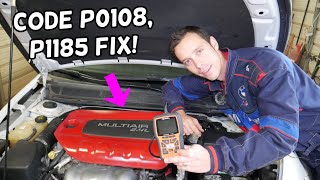
- P0108 — On Chrysler/Jeep/Dodge vehicles, this code for 'Manifold Absolute Pressure/Barometric Pressure Circuit High' often appears alongside P1185. Seeing both together reinforces the diagnosis of a faulty MAP sensor or a related software issue.
- P0106 / P0107 — Also seen on FCA vehicles with P1185, these codes for 'MAP/Barometric Pressure Circuit Range/Performance' (P0106) and 'Circuit Low' (P0107) further point towards a fault in the MAP sensor system rather than a fuel issue.
Climate & Environmental Factors
- High Altitude: For FCA vehicles (Jeep, Chrysler, Dodge), P1185 is a MAP/BARO correlation code. At high altitude, the barometric pressure is naturally lower. Flawed PCM software logic fails to account for the significant pressure difference from sea level, falsely triggering the code.
- Cold Weather: For BMW and Jaguar, where P1185 indicates an O2 sensor heater fault, cold starts expose a failing heater element. The heater's job is to bring the sensor to its ~600°F operating temperature quickly. In cold ambient temperatures, a weak heater fails to do this within the PCM's expected time limit, triggering the fault code.
- High Humidity / Road Salt: In humid climates or regions where road salt is used in winter, moisture penetrates wiring harness connectors that are not perfectly sealed. This causes corrosion on the pins for the MAP, Fuel Pressure, or O2 sensors, leading to high resistance or intermittent short circuits that generate false high-voltage signals and trigger P1185. FCA issued a TSB (08-061-16) related to improperly sealed wires causing this issue.
How to Talk to a Mechanic About This Code
Say this: "{'fca': "I have a P1185 code on my [Jeep/Dodge/Chrysler]. I'd like to schedule a diagnostic, but please first check my VIN for open TSBs related to a PCM software update for this code before replacing any parts.", 'hyundai_kia': "I'm getting a P1185 code on my [Hyundai/Kia] and experiencing [symptom, e.g., stalling]. I'd like a diagnostic to determine if the cause is the fuel rail pressure sensor or the pressure regulator.", 'bmw_jaguar': 'My [BMW/Jaguar] has a P1185 code. I believe this relates to an O2 sensor heater circuit. Can you please diagnose the upstream O2 sensor and its wiring?'}"
This manufacturer-specific language shows you've done your research. For FCA, it directs the shop to the most common fix (a software update) and prevents them from misdiagnosing it as a fuel problem. For others, it focuses the technician on the most likely components, saving diagnostic time and money.
Avoid saying:
- 'Just fix whatever's wrong'
- 'My check engine light is on, can you look at it?' (too vague, invites upsell)
- 'The internet said it's a fuel pump' (Don't propose a specific fix, ask for a specific diagnosis)
Questions to ask before authorizing the repair:
- For a Jeep/Dodge/Chrysler: Did you confirm a PCM update is not available or did not fix the issue?
- For a Hyundai/Kia: How did you determine it was the sensor versus the regulator? Can I see the live data readings?
- Can you show me the old part that was replaced?
- What is the warranty on this specific repair, including both parts and labor?
Where to Take It: Dealer vs Independent vs Chain
- Dealer:
Required for FCA software updates. Recommended for in-warranty vehicles or complex European car diagnostics. Otherwise, a qualified independent shop is a better value.
Best for: FCA (Jeep, Dodge, Chrysler) vehicles where a PCM software update is the most likely fix., Vehicles still under a powertrain or emissions warranty., Complex diagnostics on German brands (BMW, Jaguar).
Downsides: Higher labor rates, typically 1.5-2x more than independent shops., May be less willing to perform component-level repairs (e.g., repairing an ABS module solder joint on a Ford). (Typical cost: +50% vs. baseline) - Independent Shop:
Best value for most hardware replacements associated with P1185 (sensors, regulators). Not suitable for the common FCA software fix.
Best for: Out-of-warranty Hyundai, Kia, BMW, or Ford repairs., Replacing known bad parts like a MAP sensor (FCA), fuel pressure sensor (Hyundai), or O2 sensor (BMW).
Downsides: Cannot perform manufacturer-specific PCM software updates., Quality varies, so it's important to find a shop with ASE-certified technicians and good reviews. (Typical cost: +0% vs. baseline) - Chain Shop:
High risk. Avoid for initial diagnosis of P1185 due to its multiple manufacturer-specific meanings. Only use if you have already diagnosed the specific part failure.
Best for: Simple, clear-cut part replacements like an easily accessible O2 sensor or MAP sensor.
Downsides: Technician skill varies dramatically., High pressure to upsell services; may misdiagnose a complex, manufacturer-specific code like P1185. (Typical cost: -10% vs. baseline)
When to Walk Away From the Repair
If the estimated repair cost exceeds 50% of the car's private-party value, you should seriously consider selling or trading in the vehicle instead of repairing it.
- Car worth $4000, fix is $2200: Walk away. A $2,200 repair on a $4,000 car is over the 50% threshold. The money is better put toward a replacement vehicle.
- Car worth $12000, fix is $1500: Fix it. The repair cost is only 12.5% of the vehicle's value, which is well below the threshold.
- Car worth $3000, fix is $350: Fix it. A $350 software update or sensor replacement is a small investment to restore the function of a $3,000 car.
What Scan Tool You Need for This Code
Minimum: A scanner that reads manufacturer-specific codes and displays live sensor data. A basic code reader that only gives the 'P-code' is not enough.
A basic reader will just say 'P1185'. It won't tell you if it's a fuel, MAP sensor, or O2 heater issue. To diagnose this code, you MUST see live data like 'Fuel Rail Pressure' (Hyundai), or compare 'MAP vs BARO' readings (Jeep).
Budget: BlueDriver Pro (~$100) — Connects to your phone via Bluetooth. It reads manufacturer-specific definitions for P1185 and, crucially, graphs live data streams for the relevant sensors, which is essential for diagnosis.
Mid-range: Foxwell NT510 Elite / iCarsoft CR Pro (~$180) — These handheld units offer deeper manufacturer-specific diagnostics. For FCA vehicles, they read both MAP and BARO PIDs. For Hyundai/Kia, they access fuel system tests. Some offer limited bidirectional controls.
Professional: Autel MaxiCOM MK808S / Launch X431 series (~$450-900) — Offers full bidirectional control, allowing you to command components like the fuel pressure regulator to test its function. Provides comprehensive access to all manufacturer-specific data and reset procedures needed for any variant of P1185.
Rent vs buy: For a one-time diagnosis, use the AutoZone 'Loan-A-Tool' program. You pay a deposit for a scanner, which is fully refunded when you return the tool within 90 days, making it a free rental. Buy a scanner only if you plan to perform your own diagnostics regularly.
How to Clear the Code After You Fix It
- Use a quality OBD-II scan tool to erase the diagnostic trouble codes.
- Reconnect the battery if it was disconnected for the repair.
- Perform a complete drive cycle to allow the vehicle's readiness monitors to run their self-tests.
Drive cycle (~30 minutes): A general drive cycle includes: a cold start (engine temp below 122°F/50°C), 2-3 minutes of idling, 10-15 minutes of mixed city/highway driving (including steady speeds around 55 mph and periods of coasting), followed by returning to idle. The fuel tank should be between 1/4 and 3/4 full.
Readiness monitors affected: Catalyst Monitor, O2 Sensor Monitor, O2 Sensor Heater Monitor
Before emissions retest: drive at least 50 miles to fully set monitors.
Watch out for:
- Simply clearing the code with a scanner does not fix the underlying problem; the code will likely return.
- Disconnecting the battery erases all readiness monitors, requiring a full drive cycle before an emissions test can be passed.
- Driving only on the highway at a constant speed is often not enough to set all the necessary monitors; varied driving is required.
Will This Fail Emissions / State Inspection?
Yes — this code typically fails an OBD-II emissions inspection.
- California: An illuminated Check Engine Light is an automatic failure. After repair, a full drive cycle is needed to set readiness monitors. CARB regulations require all monitors to be 'Ready' for a vehicle to pass.
- New York: An illuminated 'Check Engine' light results in an automatic failure of the NYS inspection. For vehicles 2001 and newer, only one readiness monitor is allowed to be 'Not Ready' to pass.
- Texas: In the 17 counties that require emissions testing, an illuminated Check Engine Light is an automatic failure. After clearing the code, you must drive 50-100 miles to reset the readiness monitors before a re-test.
Most Commonly Affected Vehicles
- Jeep Cherokee / Renegade (2014-2017) — On these vehicles with the 2.4L engine, P1185 means 'General Pressure Sensor Correlation' and is most often caused by outdated computer software. See TSBs #18-014-17 and #18-061-16 before replacing the MAP sensor.
- Chrysler / Dodge 200 / Dart (2015-2016) — Like their Jeep cousins with the 2.4L engine, this code is a known software glitch. TSBs #18-023-16 and #18-051-16 specifically address this code with a PCM reflash.
- Hyundai Santa Fe (2006-2012) — Particularly common on the 2.2L CRDi diesel and 3.3L V6 gasoline engines where it points to a high-pressure fuel system fault. The rail pressure sensor part number is often 31400-4A700 for diesel models.
- Hyundai Tucson (2005-2009) — Frequently seen on diesel models, indicating fuel pressure has exceeded the maximum limit. Later models (2019+) see a repair cost of $360-$480 for a sensor replacement.
- Hyundai Accent (2012-2017) — On diesel engine models, this code sets when the rail pressure is significantly higher than the target pressure, often by more than 200 bar.
- Kia Sorento (2006-2012) — Shares the same CRDi diesel engine platform as the Hyundai Santa Fe and experiences the same high-pressure fuel faults pointing to the regulator or rail sensor.
- Ford F-150 / Super Duty (1997-2004) — On these trucks, the code is often C1185 (an ABS code, not a P-code) for 'ABS Power Relay Output Circuit Failure', frequently caused by a bad solder joint inside the ABS control module that is repairable.
- BMW Various Models (3-Series, 5-Series, X3, X5) (2006-2013) — For many BMWs, P1185 indicates 'O2 Sensor Heater Control Circuit', pointing to a failed heater element in an upstream (pre-catalyst) oxygen sensor, requiring sensor replacement.
Manufacturer-Specific Notes
- Chrysler / Dodge / Jeep / Fiat: For these brands, P1185 means 'General Pressure Sensor Correlation', indicating a mismatch between the Manifold Absolute Pressure (MAP) and Barometric (BARO) sensors. The BARO sensor is often located inside the PCM itself. The most common cause is outdated software. Check for TSBs like #18-051-16 (Chrysler 200), #18-061-16 (Jeep Renegade), and #08-010-16 (Fiat 500X) before replacing any parts. Note: While these TSBs identify a free software fix under warranty, owners of older, out-of-warranty vehicles will likely have to pay a dealer labor fee for the reflash.
- Ford / Lincoln / Mercury: On many Ford vehicles, P1185 means 'Fuel Temperature Sensor High'. This points to a problem with the sensor that measures the temperature of the fuel, which is often integrated into the fuel pump assembly inside the fuel tank. Separately, an ABS code C1185 on older trucks points to an ABS power relay circuit failure. No specific recalls or extended warranties are active for these issues.
- Jaguar / Land Rover: On some models, P1185 means 'O2 Sensor Heater Circuit Open'. This indicates the internal heater for an upstream oxygen sensor has failed, which is needed to get the sensor to operating temperature quickly. The fix is to replace the faulty oxygen sensor.
- General Motors (GM / Chevrolet): For GM, this code relates to the 'Engine Oil Temperature Circuit', indicating a problem with the sensor that measures oil temperature, its wiring, or the PCM. This is a less common definition but should be considered if no other information is available.
Real Owner Stories
2016 Jeep Cherokee 2.4L with P1185
Check Engine Light came on. Owner took it to a general mechanic who read the code P1185 and, based on a generic definition, assumed it was a fuel pressure issue.
What they tried:
- Mechanic recommended replacing the fuel pump, which would have been an expensive and incorrect repair.
Outcome: Owner researched the code for their specific vehicle and found it meant 'General Pressure Sensor Correlation'. The most common causes were a bad MAP sensor or a software update. The owner had the MAP sensor replaced, which resolved the code.
Lesson: For FCA vehicles (Jeep, Dodge, Chrysler), P1185 is NOT a fuel code. Always check for TSBs regarding a PCM software update first, as this is the most common fix. If software is current, the MAP sensor is the next likely cause, not the fuel pump.
2015 Dodge Dart 2.4L with P1185 and P0108
Engine light illuminated with no noticeable driving symptoms. A scan revealed codes P1185 and P0108 (MAP Circuit High).
What they tried:
- Based on forum research and videos, the owner identified the MAP sensor as the probable cause, since a software update was less likely to be the sole issue when a hard 'Circuit High' code was also present.
Outcome: The owner replaced the MAP sensor. The repair fixed the issue and both codes were cleared.
Lesson: When P1185 appears on an FCA vehicle alongside a specific MAP sensor circuit code like P0108, it strengthens the diagnosis of a hardware failure. While a software update should still be considered, the MAP sensor itself becomes a primary suspect.
Hyundai Diesel (Accent/Santa Fe) with P1185
Car experienced stalling and hard starting, with the Check Engine Light on. Code P1185 'Fuel Pressure Monitoring - Maximum Pressure Exceeded' was stored.
What they tried:
- Initial diagnosis focused on the fuel rail pressure sensor, as it's a common failure point. The sensor was replaced, but the code returned.
Outcome: Further diagnosis revealed the fuel pressure regulator was stuck or its control circuit was open. On some Hyundai models, this triggers the pressure to rise to a maximum of over 1480 bar, causing the ECU to cut fuel and stall the engine. Replacing the faulty regulator ultimately fixed the problem.
Lesson: On Hyundai/Kia vehicles, if replacing the fuel rail pressure sensor doesn't fix P1185, the next step is to test the fuel pressure regulator. A stuck regulator causes the exact symptoms of excessive pressure that the code describes.
How to Prevent This Code From Triggering
- Use high-quality, top-tier gasoline and fuel system cleaner additives. (Every fill-up (fuel), every 5,000-10,000 miles (cleaner).) — For fuel-pressure variants (Hyundai/Kia), quality fuel with detergents helps prevent deposit buildup on injectors and contamination in the fuel pressure regulator and sensor, which causes sticking or false readings.
- Replace engine air filter at recommended intervals. (Per manufacturer schedule (typically 15,000-30,000 miles).) — A clean air filter ensures the engine isn't running rich, which reduces carbon buildup. This protects O2 sensors (BMW/Jaguar) from contamination and prevents excess soot from fouling MAP sensors (FCA).
- Periodically clean the MAP sensor. (Every 30,000 miles or during a tune-up.) — For FCA vehicles, oil vapor and carbon from the PCV system coats the MAP sensor, causing slow or inaccurate readings that lead to a correlation fault. Cleaning with a dedicated electronic parts or MAF sensor cleaner restores its function and prevents the code.
- Replace upstream O2 sensors as a maintenance item. (Every 100,000 miles.) — For all cars, but especially BMW/Jaguar where P1185 is an O2 heater code, O2 sensors age and their internal heaters fail. Proactively replacing them around 100,000 miles prevents heater circuit faults and ensures the engine maintains proper fuel control, protecting the catalytic converter.
- Check for PCM software updates during routine dealer service. (Whenever visiting a dealership for other maintenance.) — For FCA vehicles, the most common cause of P1185 is a software bug. Asking the service advisor to check for outstanding TSBs related to the PCM is a free or low-cost way to prevent this and other software-related codes from appearing.
Frequently Asked Questions
What does P1185 mean on my Jeep or Dodge?
On a Jeep, Dodge, Chrysler, or Fiat, P1185 does NOT mean there is a fuel problem. It means there is a disagreement between the MAP sensor and the BARO sensor. The most common fix is a software update performed by a dealership.
What is 'General Pressure Sensor Correlation'?
For FCA vehicles, P1185 means the Powertrain Control Module (PCM) detects a mismatch between the Manifold Absolute Pressure (MAP) and internal Barometric Pressure (BARO) sensors at startup. They should read within 1.0 inHg of each other. If they differ significantly, the code sets.
What are the most common misdiagnosis mistakes for P1185?
The biggest mistake is assuming P1185 is always a fuel code. On a Chrysler, Jeep, or Dodge, mechanics needlessly replace the fuel pump or fuel pressure sensor when the actual problem is a software bug or a faulty MAP sensor. Always check for TSBs first for these brands.
I replaced the fuel pressure sensor on my Hyundai, but the code came back. What now?
If a new sensor doesn't fix the issue, the problem lies elsewhere in the system. The next logical steps are testing the fuel pressure regulator for proper function and inspecting the fuel filter and return lines for blockages.
What does it mean if I have P1185 and P1186 at the same time?
On a Hyundai or Kia, getting both P1185 (pressure too high) and P1186 (pressure too low) simultaneously strongly indicates an unstable fuel delivery problem. It suggests a failing fuel pressure regulator, an intermittent high-pressure pump, or a restriction in the fuel lines rather than a simple sensor failure.
Can a bad O2 sensor cause code P1185?
Yes, on certain manufacturers like BMW and Jaguar, P1185 specifically points to a failure in the O2 sensor's internal heater circuit. The fix is replacing the faulty O2 sensor.
What causes black smoke with a P1185 code?
Black smoke from the exhaust indicates a very rich fuel mixture. On vehicles where P1185 is a fuel pressure code (like Hyundai/Kia), this is caused by a stuck-closed fuel pressure regulator forcing dangerously high pressure into the injectors.
Is it expensive to fix code P1185?
It depends entirely on the cause and your vehicle. A Jeep/Dodge software update costs one to two hours of dealer labor ($150-$350), while a Hyundai/Kia fuel rail sensor replacement costs $150-$350. A more serious issue like a high-pressure fuel pump replacement exceeds $1,200.
Can a bad gas cap cause a P1185 code?
No. A bad or loose gas cap typically causes codes related to the EVAP system, like P0455 or P0457. It will not cause a fuel pressure, sensor correlation, or heater circuit code like P1185.
Key Takeaways
- Code P1185 has completely different meanings across brands, requiring manufacturer-specific diagnosis rather than generic OBD-II troubleshooting.
- On Hyundai and Kia vehicles, P1185 indicates excessive fuel rail pressure, most often fixed by replacing a faulty $50-$160 fuel rail pressure sensor.
- For Chrysler, Dodge, Jeep, and Fiat, P1185 flags a MAP/BARO sensor mismatch, which is typically resolved by a $150-$350 dealer PCM software update, not fuel system repairs.
- On BMW and Jaguar models, P1185 specifically points to a failed oxygen sensor heater circuit, requiring a $100-$300 upstream O2 sensor replacement.
- Driving with a fuel-related P1185 code causes rich running conditions that destroy a catalytic converter within 1 to 6 months, adding up to $2,500 in repair costs.
Helpful Videos
Shop the Parts Behind P1185
Below are the parts most often responsible for code P1185, ranked by how frequently each one is the actual culprit (per the diagnosis above). Tap any to see what we have for your vehicle.




The information in this article is provided for general reference and educational purposes only. Vehicle specifications, procedures, and part compatibility can vary by production date, trim level, and region. Always consult your vehicle's factory service manual and verify part numbers before purchasing or performing repairs. Safety-critical components such as airbags, seat belts, and braking systems should be installed by a qualified professional.
- 🧭 Diagnostic Flowchart
- 🎬 Helpful Videos
- 🛍️ Shop This Part
- What Does P1185 Mean?
- Can I Drive With P1185?
- Common Causes
- Symptoms
- Common Fixes & Costs
- DIY vs Professional
- Used vs. New Parts: Buying Guide
- What Happens If You Wait — Timeline
- Cost of Not Fixing It
- Diagnosis Steps
- When This Code Triggers (Freeze-Frame Conditions)
- Related Codes
- Climate & Environmental Factors
- How to Talk to a Mechanic About This Code
- Where to Take It: Dealer vs Independent vs Chain
- When to Walk Away From the Repair
- What Scan Tool You Need for This Code
- How to Clear the Code After You Fix It
- Will This Fail Emissions / State Inspection?
- Most Commonly Affected Vehicles
- Manufacturer-Specific Notes
- Real Owner Stories
- 2016 Jeep Cherokee 2.4L with P1185
- 2015 Dodge Dart 2.4L with P1185 and P0108
- Hyundai Diesel (Accent/Santa Fe) with P1185
- How to Prevent This Code From Triggering
- Frequently Asked Questions
- What does P1185 mean on my Jeep or Dodge?
- What is 'General Pressure Sensor Correlation'?
- What are the most common misdiagnosis mistakes for P1185?
- I replaced the fuel pressure sensor on my Hyundai, but the code came back. What now?
- What does it mean if I have P1185 and P1186 at the same time?
- Can a bad O2 sensor cause code P1185?
- What causes black smoke with a P1185 code?
- Is it expensive to fix code P1185?
- Can a bad gas cap cause a P1185 code?
- Key Takeaways
- 🎟️ Get 5% Off