

P1185 on 2015-2017 Chrysler 200 2.4L: General Pressure Sensor Correlation Fixes
On a 2015-2017 Chrysler 200 with the 2.4L engine, P1185 is almost always caused by outdated software in the Powertrain Control Module (PCM). The primary fix is a software update from a Chrysler dealer. If the software is current, the Manifold Absolute Pressure (MAP) sensor is the next likely culprit.
- For P1185 on a 2015-2017 Chrysler 200, your first step should always be to check with a dealer for a PCM software update.
- Do not replace any parts, especially the MAP sensor, until you have confirmed the vehicle's software is current.
- This code is related to air pressure sensor correlation (MAP vs. BARO), not the fuel system as some generic code readers might suggest.
- If a software update doesn't fix it, the MAP sensor is the most likely failed component.
What's Unique About the 2015-2017 Chrysler 200
For the Chrysler 200 with the 2.4L MultiAir engine, this code is a well-documented software issue. Chrysler has released several Technical Service Bulletins (TSBs) to correct the PCM's sensitivity and logic for comparing the MAP and BARO sensors. Unlike on other manufacturers where P1185 can point to fuel temperature or oxygen sensors, on this specific Chrysler, it is strictly an air pressure correlation fault that often requires a dealer-level reflash before any parts are replaced.
Symptoms You May Notice
- Check Engine Light (MIL) illuminated
- Rough or unstable idle
- Poor acceleration or hesitation
- Reduced fuel economy
- Vehicle may stall in some cases
- Vehicle may enter 'limp mode' with reduced power
- Replacing the MAP sensor without first checking for a required PCM software update. This is the most common mistake and often results in the code returning.
- Confusing the code with a fuel pressure issue. Generic code definitions for P1185 on other brands relate to fuel systems, but on Chrysler, it is strictly related to air pressure sensors (MAP/BARO).
Most Likely Causes
- Outdated Powertrain Control Module (PCM) Software 🔴 High Probability → Shop Engine Control Module (ECM) Chrysler released multiple TSBs (e.g., 18-051-16, 18-023-16) specifically to address this code with a software update, indicating the original logic was too sensitive. The updates refine the sensor correlation logic.
How to confirm: A Chrysler dealership or a qualified shop with a wiTECH scan tool must check the vehicle's current software calibration ID against the latest available version for the VIN.
Typical fix: Reprogramming (flashing) the PCM with the latest manufacturer software. This is typically a dealer-only procedure.
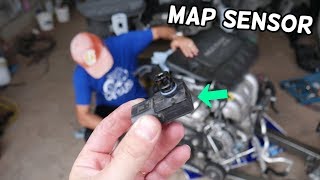
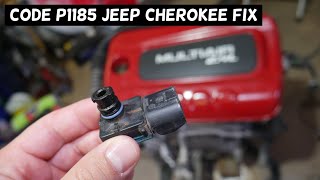
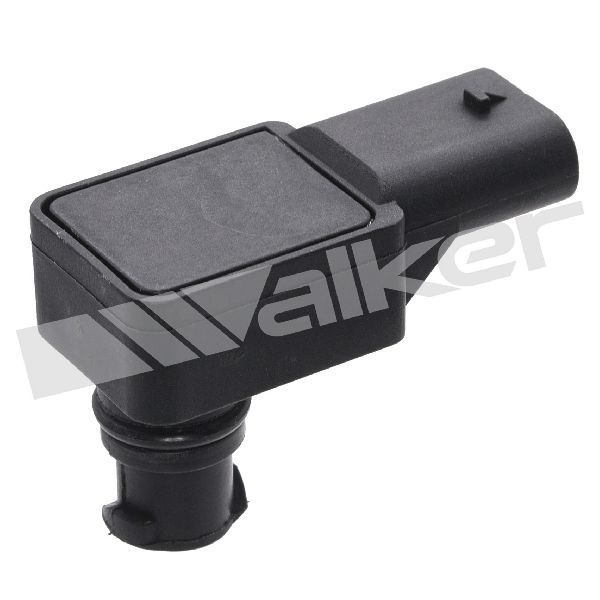
Est. part cost: $0 (if under warranty) - $350 - Faulty Manifold Absolute Pressure (MAP) Sensor 🟡 Medium Probability → Shop Manifold Absolute Pressure Sensor After a software update, a failing MAP sensor is the next most common cause. The sensor can fail from age, heat, and vibration, providing inaccurate readings to the PCM. It is located on the rear of the intake manifold, close to the firewall.
How to confirm: With a scan tool, compare the MAP sensor reading to the BARO reading with the Key On, Engine Off. They should be nearly identical. If the MAP reading is stuck high or low, it's likely faulty. A visual inspection of the sensor and its connector for damage is also recommended.
Typical fix: Replace the MAP sensor. It is located on the intake manifold and is typically a straightforward replacement, often taking less than 10 minutes.
Est. part cost: $30-$80
Rare But Worth Checking
- Wiring or Connector Issue at MAP Sensor: → Shop Manifold Absolute Pressure Sensor Damage to the wiring harness or a loose/corroded connector for the MAP sensor can cause intermittent or incorrect signals, triggering the code. This should be inspected before replacing the sensor. A poor engine-to-chassis ground can also cause incorrect voltage readings for multiple sensors, including the MAP.
- Faulty Powertrain Control Module (PCM): → Shop Engine Control Module (ECM) This is extremely rare. The internal BARO sensor could fail, or the PCM itself could have a processing fault. This should only be considered after software, the MAP sensor, and wiring have been ruled out.
Diagnosis Steps
- Check for Technical Service Bulletins (TSBs). Contact a Chrysler dealer with your VIN to see if any software updates, like TSB 18-051-16 or 18-023-16, apply to your vehicle.
- If a TSB is available, have the PCM reprogrammed. This is the most likely fix.
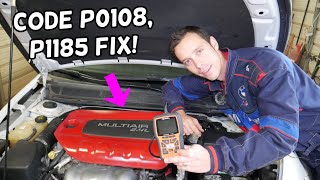
- If the software is up to date, use a scan tool to observe 🎬 Watch: Diagnostic walkthrough for code P1185 the MAP and BARO sensor readings with the Key On, Engine Off (KOEO).
- Compare the readings. They should be within 1.0 inHg (or about 3.4 kPa) of each other. If there is a significant difference, the MAP sensor is suspect.
- Inspect the MAP sensor connector and wiring for any signs of damage, corrosion, or loose connections. Ensure the harness is not damaged or routed near moving parts like the serpentine belt.
- If the wiring is intact and the readings are incorrect, replace the MAP sensor.
- Clear the codes and perform a test drive to ensure the code does not return.
Parts You'll Likely Need
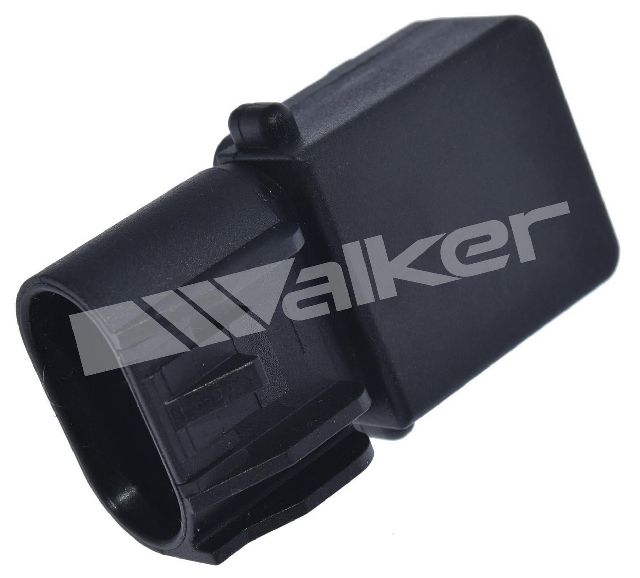
- Manifold Absolute Pressure (MAP) Sensor
(OEM #68199324AA (or superseded part number))— If a PCM software update does not resolve the issue, the MAP sensor itself is the most common hardware failure causing the incorrect pressure readings.
Trusted brands: Mopar, Bosch, NTK, Standard Motor Products (AS321), Delphi (PS10238)
OEM price range: $60-$90
Aftermarket price range: $25-$80
Related Codes That Often Appear With This One
- P0108 — MAP/Barometric Pressure Circuit High Input. This code can be triggered by the same faulty MAP sensor reading that causes the P1185 correlation fault. It often appears alongside P1185.
- P0107 — MAP/Barometric Pressure Circuit Low Input. Similar to P0108, a failing MAP sensor can also send a low signal, causing a correlation fault with the BARO sensor.
- P0106 — MAP/Barometric Pressure Circuit Range/Performance. This code is directly related as P1185 is triggered by a failed correlation check between the MAP and BARO sensors.
- P050D — Cold Start Rough Idle. This is a symptom that can be caused by the same software issue that triggers P1185, as noted in TSB 18-023-16.
- P0101 — Mass Air Flow Sensor "A" Circuit Performance. According to Bulletin #1805116, this code may set in the PCM memory alongside P1185.
- P0133 — O2 Sensor 1/1 Slow Response. This code is identified in Bulletin #18-023-16 as another DTC that may be present when P1185 is triggered.
Technical Service Bulletins (TSBs) & Recalls
- 18-051-16 REV. B: Addresses P1185 on 2016 models via a PCM software update.
- 18-023-16 REV. C: Mentions P1185 as one of several codes resolved by a PCM software update to improve performance on 2015 models. This TSB also addresses other codes like P050D (Cold Start Rough Idle) and P0456 (Evap System Small Leak).
- Bulletin #18-051-16 REV. A: Notes that technicians may find P1185 (General Pressure Sensor Correlation) set in the PCM memory along with P0101 and P0335.
- Bulletin #1805116: Confirms that P1185 is addressed by a software update that also resolves P106C (Cylinder 4 Oil Supply Solenoid Valve Switch Off Time Out Of Range) and U1424.
Platform-Specific Known Issues
- Owner Experience: MAP Sensor Replacement Solves P1185 and P0108: → Shop Manifold Absolute Pressure Sensor An owner of a 2015 Dodge Dart (platform mate) with the 2.4L engine experienced both P1185 and P0108 codes. Based on research, the owner identified the MAP sensor as the likely cause, especially since a hard 'Circuit High' code was present. Replacing the MAP sensor successfully cleared both codes.
- Improved Vehicle Acceleration: According to Bulletin #18-023-16, the software update that resolves P1185 also provides improved vehicle acceleration for certain vehicles.
Mechanic-Grade Diagnostic Values
- MAP Sensor 5V Reference Voltage — expected: Approximately 5.0 Volts. Failure: A reading of 0V or significantly less than 5V points to a wiring issue or a problem with the PCM's 5V reference circuit.
- MAP Sensor Ground Circuit — expected: Less than 0.1 Volts (100 millivolts). Failure: Voltage higher than 0.1V indicates a poor ground connection, which can skew sensor readings.
- MAP Sensor Signal Voltage (Key On, Engine Off) — expected: 4.5 - 5.0 Volts. Failure: The voltage should be high and correspond to the BARO sensor reading. A significantly lower voltage suggests a faulty sensor or wiring.
- MAP Sensor Signal Voltage (Engine Running at Idle) — expected: 1.0 - 2.0 Volts. Failure: Voltage that remains high (near the 4.5V KOEO reading) confirms the sensor is not reading engine vacuum and has likely failed.
Scan Tool Commands That Help
- wiTECH or equivalent professional scanner: Live Data Graphing & Wiggle Test — To diagnose an intermittent fault, graph the MAP sensor voltage while physically wiggling the sensor connector and wiring harness. Any sharp drops or spikes in the voltage graph during the wiggle test point to a wiring or connector issue.
Wiring & Ground Locations
- MAP Sensor Connector — On the MAP sensor, located on the rear of the intake manifold, close to the firewall.. This is the primary connection point. A loose connection, corrosion, or damaged wires will directly cause a fault. Typical wire colors are Pink (Signal), Green (Ground), and Yellow (5V Supply).
- Engine to Chassis Ground Strap — Located under the front driver's side of the vehicle, connecting the frame rail to the engine/transmission area.. A poor or corroded main ground can cause erratic voltage readings for multiple sensors, including the MAP sensor, leading to correlation faults.
OEM Part Supersession History
5033310AC→5149091AA, then 68199324AA, then 68199324AB— Standard part evolution and updates by the manufacturer.
Heads up: The latest part number, 68199324AB, is the correct service replacement for all previous versions on this vehicle.
Model Year Variations Within This Range
- 2015 vs 2016: Different Technical Service Bulletins were issued for the P1185 software fix. TSB 18-023-16 applies to 2015 models, while TSB 18-051-16 applies to 2016 models, indicating slight variations in the required PCM software.
Diagnostic Flowchart
Other Known Issues on This Vehicle
Issues unrelated to this code that are worth knowing about as an owner of this generation:
- Harsh Shifting / Failure of ZF 9-Speed Transmission 🔴 High — Very common, especially in 2015 models. Can occur at any mileage. (Ref: Multiple TSBs (e.g., 21-013-16) for software updates and a recall (R08) for potential rollaway risk.)
- Excessive Oil Consumption (2.4L Tigershark Engine) 🔴 High — Widespread issue affecting 2015-2016 models. Owners report adding a quart of oil every 1,000 miles. This was the subject of a class-action lawsuit. (Ref: Subject of class-action lawsuit Wood v. FCA US LLC.)
- Engine Stalling / Shutting Off While Driving 🔴 High — Common complaint, particularly for the 2015 model year. Can be related to low oil levels from the consumption issue or transmission wiring harness defects.
- Random Deployment of Active Head Restraints (AHR) 🟠 Medium — Reported across multiple model years due to a potential defect in the restraint mechanism. (Ref: Subject of a class-action lawsuit.)
Used vs. New Parts: Buying Guide for This Vehicle
When a used part is the smart pick: A used MAP sensor from a low-mileage donor vehicle is a reasonable choice. The part is not a high-wear item, and failure is typically electronic rather than mechanical. Given the low cost of a new aftermarket part, the savings may be minimal.
Donor-vehicle mileage cap: roughly under 75000 miles for the part to have meaningful remaining life.
What to inspect on the donor part:
- Ensure the donor vehicle was not in a front-end collision.
- Inspect the plastic housing of the sensor for cracks or heat damage.
- Check the electrical connector pins for any signs of corrosion or being bent.
- Verify the O-ring is present and not flattened or cracked.
OEM-only on this vehicle (don't cheap out):
- Powertrain Control Module (PCM) - A used PCM will be VIN-locked to the donor vehicle and cannot be easily reprogrammed, making it an unsuitable replacement.
Aftermarket brands forum-validated for this vehicle:
- Delphi
- Standard Motor Products (SMP)
- Walker Products
- Bosch
- NTK
Brands owners have reported issues with on this vehicle:
- No-name, unbranded sensors from online marketplaces should be avoided due to inconsistent quality control, which can lead to inaccurate readings and the code returning.
Real Owner Stories
Aggregated from forums and TSBs cited above. Mileages and costs reflect what owners reported in those sources.
2015 Dodge Dart 2.4L MultiAir
Symptoms: Check Engine Light on with codes P0108 and P1185.
What fixed it: Replacing the Manifold Absolute Pressure (MAP) sensor.
Source hint: owner_reports: Electrical Car Repair LIVE
2015 Dodge 2.4L MultiAir
Symptoms: Check Engine Light on with code P1185; narrator noted it can be mistaken for a fuel system problem.
What fixed it: Replaced a faulty MAP sensor.
Source hint: owner_reports: HOW TO FIX CODE P1185 DODGE JEEP CHRYSLER FIAT ALFA ROEMO LANCIA
2015 Dodge Dart 2.4L MultiAir
Symptoms: Experienced both P1185 and P0108 codes; identified a hard 'Circuit High' code was present.
What fixed it: Replacing the MAP sensor successfully cleared both codes.
Source hint: vehicle_specific_issues: Owner Experience: MAP Sensor Replacement Solves P1185 and P0108
Related OBD-II Codes
Frequently Asked Questions
My 2016 Chrysler 200 is throwing code P1185; is there a specific software update for this?
I have a 2015 Chrysler 200 with P1185 and a rough idle. Could this be related to other codes?
Where is the MAP sensor located on the 2.4L MultiAir engine if I need to inspect it?
Can I check if my MAP sensor is bad without a professional scan tool?
Is P1185 always a hardware failure on the Tigershark 2.4L engine?
Could my Chrysler 200's stalling and oil consumption issues be related to P1185?
Helpful Videos
We Have This Part in Stock


The information in this article is provided for general reference and educational purposes only. Vehicle specifications, procedures, and part compatibility can vary by production date, trim level, and region. Always consult your vehicle's factory service manual and verify part numbers before purchasing or performing repairs. Safety-critical components such as airbags, seat belts, and braking systems should be installed by a qualified professional.
- Chrysler 200:
- 🧭 Diagnostic Flowchart
- 🎬 Helpful Videos
- 🛍️ Shop This Part
- What's Unique About the 2015-2017 Chrysler 200
- Symptoms You May Notice
- Most Likely Causes
- Rare But Worth Checking
- Diagnosis Steps
- Parts You'll Likely Need
- Related Codes That Often Appear With This One
- Technical Service Bulletins (TSBs) & Recalls
- Platform-Specific Known Issues
- Mechanic-Grade Diagnostic Values
- Scan Tool Commands That Help
- Wiring & Ground Locations
- OEM Part Supersession History
- Model Year Variations Within This Range
- Other Known Issues on This Vehicle
- Used vs. New Parts: Buying Guide for This Vehicle
- Real Owner Stories
- 2015 Dodge Dart 2.4L MultiAir
- 2015 Dodge 2.4L MultiAir
- 2015 Dodge Dart 2.4L MultiAir
- Related OBD-II Codes
- Frequently Asked Questions
- 🎟️ Get 5% Off