

P1185 on 2012-2018 Ford Focus 2.0L EcoBoost: Fuel Temperature Sensor Fault Causes and Fixes
This code means the fuel temperature sensor is reporting a fault, usually an open circuit. On this Focus, the temperature sensor is integrated into one of the fuel pressure sensors. The most common fix is to replace the low-pressure fuel sensor located on the fuel line leading to the high-pressure pump. Expect to pay $40-$90 for the part.
- P1185 points to a fault in the fuel temperature sensor circuit, not necessarily high fuel temperature.
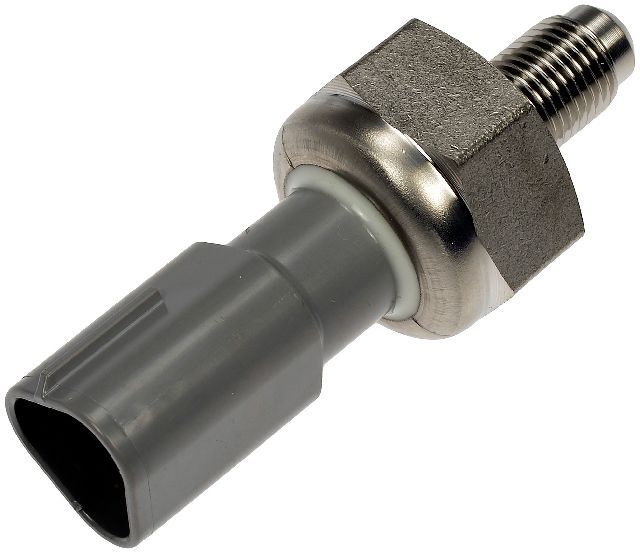
- On the 2.0L EcoBoost, this sensor is built into the low-pressure fuel sensor (Motorcraft CM5229).
- The most common fix is replacing the low-pressure fuel sensor, a straightforward DIY job.
- Always check for wiring harness damage, especially on 2012-2014 models, per TSB 18-2062.
- Do not confuse symptoms with the very common canister purge valve failure (Recall 18S32).
What's Unique About the 2012-2018 Ford Focus
The 2.0L EcoBoost is a Gasoline Direct Injection (GDI) engine, which has both a low-pressure and a high-pressure fuel system. Unlike older cars with a standalone fuel temperature sensor, the Ford Focus integrates this function into a fuel pressure sensor. For code P1185, the fault is almost always with the low-pressure sensor, which monitors the fuel coming from the in-tank pump before it reaches the engine-mounted high-pressure fuel pump (HPFP). Therefore, fixing a P1185 code requires replacing the entire low-pressure sensor assembly.
Symptoms You May Notice
- Check Engine Light illuminated
- Difficulty starting the engine, may require longer cranking
- Engine stalling, especially at idle or after refueling
- Rough idle
- Sluggish acceleration and loss of power
- Decreased fuel economy
- Hesitation or stumbling during acceleration
- Replacing the fuel pump. While the fuel temperature sensor can be in the fuel pump assembly on other vehicles, on this Focus it is integrated with a pressure sensor on the engine.
- Confusing the issue with the canister purge valve. A faulty purge valve is a very common issue on this Focus (Recall 18S32) and can cause stalling, rough idle, and difficulty starting after refueling, but it typically sets different codes (e.g., P1450, P0456).
Most Likely Causes
- Faulty Low-Pressure Fuel Sensor 🔴 High Probability → Shop Fuel Pressure Sensor The temperature sensor is integrated into the pressure sensor, and this combined unit is a common point of failure. The 'High' circuit code often points to an internal open in the sensor's thermistor.
How to confirm: Using a scan tool, monitor the live data for the fuel temperature parameter (PID). An abnormally high or fixed reading (like -40°F or 285°F, which are default values for a fault) points to a sensor or circuit issue. The sensor is located on the low-pressure fuel line on the side of the engine, before the high-pressure fuel pump. A visual inspection may not show any faults.
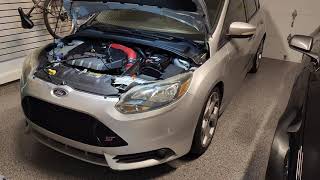
Typical fix: Replace the low-pressure fuel sensor. 🎬 Watch this step-by-step fuel pressure sensor replacement guide. This requires relieving fuel pressure and using two wrenches (one to hold the line, one for the sensor) to prevent damage to the fuel line. Ensure the engine is cool before attempting replacement due to the proximity of the hot catalytic converter.
Est. part cost: $40-$90 - Damaged Wiring or Connector 🟡 Medium Probability Ford issued TSB 18-2062 for some 2012-2014 Focus models regarding engine harness chafing, which could lead to various sensor circuit faults, including this one. The harness can rub against engine components, causing wires to break or short.
How to confirm: Visually inspect the wiring harness and connector for the low-pressure fuel pressure/temperature sensor. Check for corrosion, bent pins, or frayed wires. Pay close attention to areas where the harness is routed near sharp edges or hot components. Use a multimeter to check for continuity and proper voltage between the PCM and the sensor connector.
Typical fix: Repair the damaged section of the wiring harness or replace the connector pigtail. If chafing is found, reroute the harness and apply protective material like Coroplast tape or split loom tubing as recommended by Ford's TSB.
Est. part cost: $15-$50 - Faulty High-Pressure Fuel Rail Sensor ⚪ Low Probability
How to confirm: This sensor is located on the high-pressure fuel rail on top of the engine. While it also measures pressure, it is not typically the source for a P1185 temperature code. Diagnosis is similar to the low-pressure sensor: check live data and wiring. If the low-pressure sensor and its circuit are confirmed to be good, this is a very distant possibility.
Typical fix: Replace the high-pressure fuel rail sensor.
Est. part cost: $50-$120
Rare But Worth Checking
- Powertrain Control Module (PCM) Fault: → Shop Engine Control Module (ECM) This is extremely rare. All other possibilities, especially sensor and wiring issues, must be exhaustively ruled out before considering a PCM replacement. A PCM fault would likely be accompanied by multiple other unrelated error codes.
Diagnosis Steps
- Connect an OBD-II scanner and confirm P1185 is the active code. Check for any other fuel-related codes like P018C or P019x.
- Access the live data stream on the scanner. Monitor the 'Fuel Temperature' and 'Low Side Fuel Pressure' PIDs.
- Look for an obviously incorrect fuel temperature reading. A value that is stuck at an extreme high or low (e.g., -40°F/°C or a very high temp) indicates a circuit fault, most often an internal failure of the sensor.
- Locate the low-pressure fuel sensor on the fuel line leading to the high-pressure pump. It's on the driver's side of the engine. Visually inspect its connector and wiring for any signs of damage, corrosion, or looseness.
- If the wiring looks good, the sensor itself is the most likely culprit. Relieve the fuel system pressure by pulling the fuel pump relay and running the engine until it stalls.
- Before removal, place a rag under the sensor to catch any spilled fuel and ensure the engine is cool.
- Replace the low-pressure fuel sensor. Use a flare nut wrench or open-end wrench (typically 13mm) on the fuel line fitting to hold it steady while using another wrench to loosen the sensor. This prevents twisting and damaging the fuel line.
- After installation, reconnect the battery, reinstall the fuel pump relay, and cycle the key a few times to build pressure. Check for any fuel leaks around the new sensor.
- Clear the trouble codes and perform a test drive to ensure the code does not return.
Parts You'll Likely Need
- Low-Pressure Fuel Sensor
(OEM #CM5229 (Motorcraft Service P/N), BU5A-9C044-B (Ford Engineering P/N), 3F2Z9G756AC)— This is the most common failure point for code P1185 on this platform, as it contains the integrated fuel temperature sensor.
Trusted brands: Motorcraft, Bosch, Standard Motor Products, NTK
OEM price range: $70-$100
Aftermarket price range: $40-$80
Related Codes That Often Appear With This One
- P0190-P0194 — These codes relate to the fuel rail pressure sensor circuit. Since the temperature sensor is integrated, a failure can sometimes trigger pressure-related codes as well.
- P0087 — This code indicates fuel rail pressure is too low. A faulty sensor providing incorrect temperature and pressure data can cause the PCM to misdiagnose the health of the fuel system.
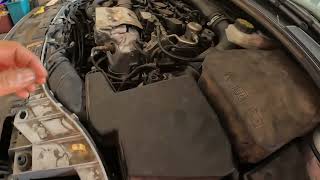
- P018C — This code relates to the 'Fuel Pressure Sensor B Circuit Low'. Some owners report this code appearing alongside or instead of P1185, pointing to the same low-pressure sensor failure. 🎬 See how to diagnose and fix the P018C code.
Technical Service Bulletins (TSBs) & Recalls
- TSB 18-2062: Notes that some 2012-2014 Focus models may exhibit rough running, no-start, or loss of power due to a chafed engine wiring harness, which could potentially affect the fuel temperature sensor circuit.
- TSB 16-0062: Precursor to the 18S32 recall, this TSB addressed inaccurate fuel gauge readings and various DTCs (including P1450) caused by a faulty canister purge valve on 2012-2015 models.
Platform-Specific Known Issues
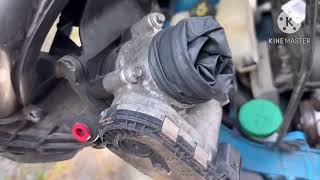
- Recall 18S32 (NHTSA ID 18V735): 🎬 Watch how to replace the canister purge valve. This recall addresses a faulty canister purge valve that can stick open, causing a vacuum in the fuel tank. This can lead to stalling, an inaccurate fuel gauge, and eventual fuel tank deformation. While it sets different codes (P1450, P0456, etc.), the symptoms can sometimes be confused with fuel pressure sensor issues.
- TSB 18-2062: Pertains to 2012-2014 models and addresses potential chafing of the main engine wiring harness. This can cause a variety of DTCs and drivability problems, including faults in sensor circuits.
Mechanic-Grade Diagnostic Values
- Low Side Fuel Pressure PID (Live Data) — expected: Approximately 50-75 PSI with engine running. Value should respond to changes in engine RPM.. Failure: A reading of 0 PSI, or a value that is stuck and unresponsive, indicates a failed sensor or circuit issue.
- Fuel Temperature Sensor PID (Live Data) — expected: A plausible temperature reading that slowly changes with engine temperature. Should be close to ambient temperature on a cold start.. Failure: A reading stuck at a default value, such as -40°F/°C or an extreme high like 285°F, indicates an open or short in the circuit, most commonly an internal sensor failure.
- Sensor Connector Voltage (KOEO) — expected: With the connector unplugged and Key On, Engine Off, one pin should have a 5-volt reference from the PCM, and another pin should have good continuity to ground (less than 1 ohm).. Failure: Absence of the 5V reference or a high resistance to ground points to a wiring or PCM issue, not a sensor failure.
Hidden / Shadow Codes Worth Checking
- Mode 6 Data (Misfire Monitor): While not a DTC, Mode 6 provides raw data from the PCM's self-tests. For symptoms like rough idle or hesitation, a technician can view misfire counts per cylinder for the current and last 10 drive cycles. This can reveal an underlying issue before it's severe enough to set a P030x misfire code. For example, Test ID $A2 through $AB often correspond to misfire data for cylinders 1-10 on Ford vehicles. (see via Requires a scan tool capable of displaying Mode 6 data, such as Ford's IDS, FORScan, or other professional-grade scanners.)
Scan Tool Commands That Help
- Ford IDS or FORScan: Datalogger with PID monitoring — Used to monitor 'FRP_L_ACT' (Low Pressure Fuel Actual) and 'FLT' (Fuel Line Temperature) PIDs simultaneously to confirm the sensor's failure. A reading of 0 PSI for pressure or -40°F for temperature with the engine running confirms a fault.
- Ford IDS: Output State Control / Active Commands — A technician can command the low-pressure fuel pump (in the tank) to run at a specific duty cycle while observing the low-side pressure PID. If the pump runs but the pressure reading doesn't change from its failed state (e.g., 0 PSI), it further isolates the fault to the sensor or its immediate wiring, ruling out the pump itself.
Wiring & Ground Locations
- G103 — Located on the left rear of the engine block/cylinder head area.. This is a primary engine ground point. A loose or corroded G103 can cause erratic readings or failures for multiple engine sensors, including the fuel pressure/temperature sensor, which relies on a clean ground reference.
- Low-Pressure Fuel Sensor Connector — On the low-pressure fuel line, driver's side of the engine, before the high-pressure fuel pump.. This 3-pin connector is a common point for inspection. The pins are for the 5V reference, signal return to the PCM, and ground. Verifying voltage and ground here is a critical step to differentiate a sensor failure from a wiring problem.
Real Owner Repair Stories
- YouTube channel 'Advanced Level Diagnostics' (2013 Ford Fusion 2.0L EcoBoost (similar engine and fuel system)) — Check Engine Light with code P018C (Fuel Pressure Sensor B Circuit Low). Car ran fine.
❌ Tried (didn't work) Initial diagnosis was needed to differentiate between high and low pressure sensor faults.
✅ What actually fixed it Using a scan tool, the technician observed the 'low side fuel pressure' PID was reading 0 PSI while the engine was running. Replacing the low-pressure fuel sensor (Sensor 'B') restored the correct pressure reading on the scan tool and cleared the code. - Ford F150 Forum user 'derfderf' (Ford Escape 2.0L EcoBoost (similar fuel system design)) — Check Engine Light with code P0087 (Fuel Rail/System Pressure - Too Low), engine stumbling, stalling, and no-start conditions.
❌ Tried (didn't work) Initial confusion about whether the high-pressure fuel pump (HPFP) or its sensor was at fault.
✅ What actually fixed it The user determined that a faulty low-pressure fuel sensor was sending a bogus low reading (freeze frame showed ~50 PSI) to the PCM. This caused the PCM to incorrectly command the fuel system, leading to a rich condition and stalling. Replacing the low-pressure fuel sensor was the confirmed fix for the P0087 and drivability issues.
OEM Part Supersession History
CM5229 / 3F2Z9G756AC / BU5A-9C044-B→BU5Z-9F972-B (or similar revisions)— Part revision and standardization across EcoBoost platforms.
Heads up: While multiple part numbers exist, the physical design with scalloped edges on the wrench flats is a key identifier for the correct sensor type for many EcoBoost applications. Always verify fitment using the vehicle's VIN, as connectors or threads could differ on seemingly identical parts.
Diagnostic Flowchart
Other Known Issues on This Vehicle
Issues unrelated to this code that are worth knowing about as an owner of this generation:
- PowerShift (DPS6) Automatic Transmission Failure 🔴 High — Extremely common on 2012-2016 models with the automatic transmission. Issues include shuddering, hesitation, slipping, and complete failure of clutch packs or the Transmission Control Module (TCM). (Ref: Multiple class-action lawsuits and warranty extensions (e.g., 14M01, 14M02) were issued.)
- Sticking Canister Purge Valve (CPV) 🔴 High — Very common across all 2012-2018 2.0L models. Leads to stalling (especially after refueling), rough idle, inaccurate fuel gauge, and potential fuel tank deformation. (Ref: Ford Safety Recall 18S32 / NHTSA 18V735.)
- Failed Passenger-Side Engine Mount 🟠 Medium — Common failure item. The hydraulic mount collapses, causing excessive engine vibration to be felt in the cabin and steering wheel, especially at idle. (Ref: No recall, but a widely documented failure.)
- Power Steering Failure 🔴 High — More common on earlier 2012-2014 models. Can result in a sudden loss of power steering assist, making the vehicle difficult to steer. (Ref: Multiple TSBs (e.g., SSM 46210) and investigations, but no universal recall.)
- Engine Wiring Harness Chafing 🟠 Medium — Primarily affects 2012-2014 models. The harness can rub through, causing various electrical faults, sensor errors, and drivability issues. (Ref: TSB 18-2062.)
Used vs. New Parts: Buying Guide for This Vehicle
When a used part is the smart pick: For this specific repair, buying a used electronic sensor from a junkyard is not recommended. The part is relatively inexpensive new, and the risk of a used sensor failing shortly after installation is high, negating the small cost savings.
What to inspect on the donor part:
- Not applicable as used purchase is not advised.
OEM-only on this vehicle (don't cheap out):
- While not strictly 'OEM-only', it is highly recommended to use either the Ford/Motorcraft part or a direct OE-supplier part like Bosch to ensure reliability and correct calibration. This is not a part where saving money on an unknown brand is wise.
Aftermarket brands forum-validated for this vehicle:
- Motorcraft (OEM)
- Bosch (often the OE supplier)
- Standard Motor Products (SMP)
- NTK
Brands owners have reported issues with on this vehicle:
- Generic, no-name brands from online marketplaces are a significant gamble and have a high rate of premature failure or incorrect readings out of the box.
Real Owner Stories
Aggregated from forums and TSBs cited above. Mileages and costs reflect what owners reported in those sources.
2012-2018 Ford Focus 2.0L EcoBoost
Symptoms: Stalling, rough idle, and hesitation; symptoms were similar to fuel pressure sensor issues.
What fixed it: Replacement of the canister purge valve under Recall 18S32.
Source hint: Reddit r/FordFocus & r/MechanicAdvice
2012-2014 Ford Focus
Symptoms: Rough running, no-start, or loss of power.
What fixed it: Repairing the damaged section of the wiring harness and applying protective material like Coroplast tape or split loom tubing.
Source hint: TSB 18-2062
MK3 Ford Focus — 22000 miles
Symptoms: Excessive engine vibrations at idle.
What fixed it: Replacing all engine mounts.
Source hint: Ford Focus Club / Ford Owners Club
Related OBD-II Codes
Frequently Asked Questions
Does TSB 18-2062 apply to my 2013 Ford Focus regarding the P1185 code?
Could the stalling I'm experiencing after refueling be related to Recall 18S32 instead of the fuel sensor?
Where is the low-pressure fuel sensor located on the 2.0L EcoBoost engine?
Why does the P1185 code often show a reading of -40°F on my scan tool?
Do I need special tools to replace the fuel sensor on my Focus?
Is there a specific TSB for the canister purge valve issue on 2012-2015 models?
Helpful Videos



We Have This Part in Stock


The information in this article is provided for general reference and educational purposes only. Vehicle specifications, procedures, and part compatibility can vary by production date, trim level, and region. Always consult your vehicle's factory service manual and verify part numbers before purchasing or performing repairs. Safety-critical components such as airbags, seat belts, and braking systems should be installed by a qualified professional.
- Ford Focus:
- 🧭 Diagnostic Flowchart
- 🎬 Helpful Videos
- 🛍️ Shop This Part
- What's Unique About the 2012-2018 Ford Focus
- Symptoms You May Notice
- Most Likely Causes
- Rare But Worth Checking
- Diagnosis Steps
- Parts You'll Likely Need
- Related Codes That Often Appear With This One
- Technical Service Bulletins (TSBs) & Recalls
- Platform-Specific Known Issues
- Mechanic-Grade Diagnostic Values
- Hidden / Shadow Codes Worth Checking
- Scan Tool Commands That Help
- Wiring & Ground Locations
- Real Owner Repair Stories
- OEM Part Supersession History
- Other Known Issues on This Vehicle
- Used vs. New Parts: Buying Guide for This Vehicle
- Real Owner Stories
- 2012-2018 Ford Focus 2.0L EcoBoost
- 2012-2014 Ford Focus
- MK3 Ford Focus — 22000 miles
- Related OBD-II Codes
- Frequently Asked Questions
- 🎟️ Get 5% Off