

P1185 on 2010-2019 Ford Taurus 3.5L: Fuel Temperature Sensor High Causes and Fixes
On a 2010-2019 Ford Taurus, code P1185 indicates a high voltage signal from the Fuel Temperature Sensor. This sensor is part of the in-tank fuel pump assembly, so the most common fix is replacing the entire fuel pump module, which can cost between $300 and $600 for the part. Before replacement, the wiring and the Fuel Pump Driver Module (FPDM) should be checked.
- P1185 on your Taurus specifically points to a problem with the fuel temperature sensor circuit, not fuel pressure or volume.
- The most common cause is a failure of the sensor itself, which is built into the fuel pump assembly inside the gas tank.
- Before buying an expensive new fuel pump, always check the wiring and connector leading to the fuel tank for damage or corrosion. Also, consider inspecting the Fuel Pump Driver Module (FPDM).
- A scan tool that can read live data is the best diagnostic tool to confirm the fault by checking the fuel temperature reading.
- This repair requires working with the fuel system and dropping the fuel tank or accessing it from under the rear seat, which can be a difficult and hazardous DIY job.
- Ensure you purchase the correct fuel pump assembly for your specific drivetrain (FWD, AWD, or SHO), as the part numbers differ.
What's Unique About the 2010-2019 Ford Taurus
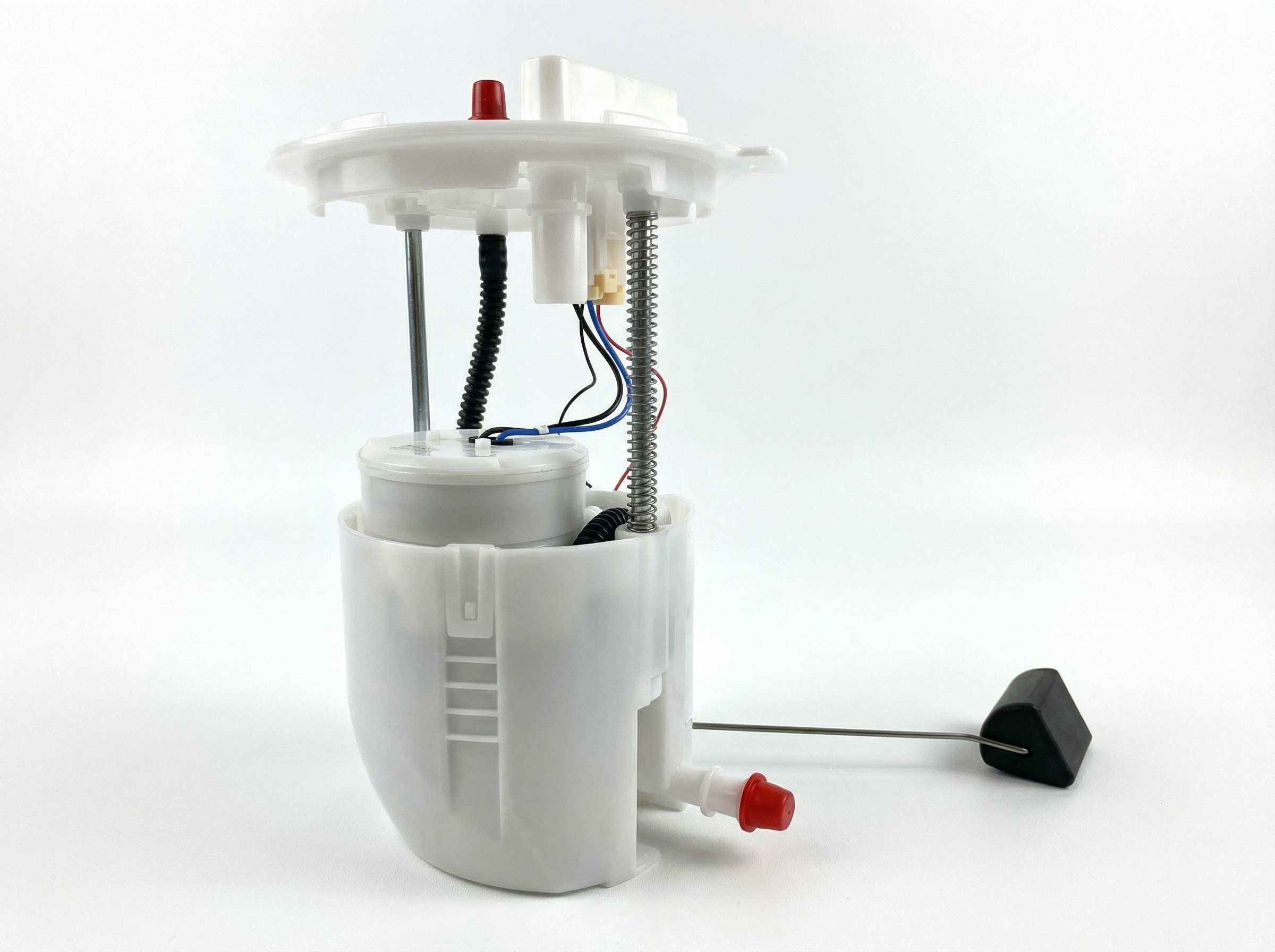
For the sixth-generation Ford Taurus, the Fuel Temperature Sensor (FTS) is not available as a separate part. It is integrated directly into the main fuel pump and sender assembly located in the fuel tank. This means that a confirmed sensor failure requires replacing the entire fuel pump module, making the repair more involved and costly than a simple, externally accessible sensor replacement. Different part numbers are used for FWD, AWD, and SHO (EcoBoost) models, with a significant split between the 2010-2012 and 2013-2019 model years due to a vehicle facelift.
Symptoms You May Notice
- Check Engine Light is on
- Reduced fuel economy
- Engine may hesitate or stumble during acceleration
- Rough idle
- Replacing only the fuel filter. While a clogged fuel filter can cause fuel delivery problems, it will not cause a P1185 circuit code.
- Replacing the fuel rail pressure sensor. This sensor measures pressure, not temperature, and will set different trouble codes (typically P0190-P0194).
Most Likely Causes
- Faulty Fuel Temperature Sensor (Internal to Fuel Pump) 🔴 High Probability The sensor is integrated into the fuel pump assembly, a common design for this era. The entire module is submerged in fuel and subject to wear over time, with the sensor being a potential point of failure.
How to confirm: Using a scan tool, observe the live data for the Fuel Temperature Sensor (FTS). If the reading is abnormally low (e.g., -40°F or showing a maximum out-of-range value) even when the engine is cold, it strongly suggests a sensor or circuit fault. If the wiring checks out, the sensor within the pump module is condemned.
Typical fix: Replace the entire fuel pump and sender assembly in the fuel tank.
Est. part cost: $300-$600 - Wiring Harness or Connector Issue 🟡 Medium Probability The wiring runs from the PCM to the top of the fuel tank. The connector at the fuel tank is exposed to some degree of dirt and moisture, and wires can chafe or break over the vehicle's life, causing an open circuit which results in a 'high' signal fault.
How to confirm: Visually inspect the wiring harness and connector at the top of the fuel pump module for corrosion, damage, or loose pins. Test the signal wire between the PCM and the fuel pump connector for continuity. An open circuit (infinite resistance) will cause a P1185 code.
Typical fix: Repair the damaged section of the wiring harness or replace the faulty connector pigtail.
Est. part cost: $20-$100
Rare But Worth Checking
- Faulty Fuel Pump Driver Module (FPDM): → Shop Fuel Pump This module controls the voltage to the fuel pump. A fault within the FPDM can sometimes cause erratic signals or codes related to the fuel pump assembly. On some models, it is located behind the rear seat back. 🎬 See how to test and replace the FPDM It's worth inspecting before replacing the entire pump.
- Powertrain Control Module (PCM) Fault: → Shop Engine Control Module (ECM) This is very rare. Before condemning the PCM, all other possibilities, including the sensor, FPDM, and the entire wiring circuit, must be exhaustively tested and ruled out. A PCM fault can cause it to misread a perfectly good sensor signal.
Diagnosis Steps
- Connect an OBD-II scanner and confirm P1185 is the active code. Note any other codes present.
- Access the live data stream on the scanner and view the parameter for 'Fuel Temperature' or 'FTS'.
- If the temperature reading is extremely low and fixed (e.g., -40°F/-40°C), it confirms an open circuit or sensor fault, which triggers the 'High' code. Compare it to the Intake Air Temp (IAT) and Engine Coolant Temp (ECT) on a cold engine; they should be similar.
- Gain access to the top of the fuel tank, usually under the rear seat cushion.
- Disconnect the electrical connector to the fuel pump module. Inspect the connector and pins for any signs of corrosion, moisture, or damage.
- If the connector looks good, use a wiring diagram to identify the fuel temperature sensor signal wire and ground wire.
- With the key on, check the signal wire for voltage. It should be approximately 5 volts, as the open circuit at the sensor is causing the PCM to see its own reference voltage. Check the ground wire for good continuity to chassis ground (less than 1 ohm).
- Inspect the Fuel Pump Driver Module (FPDM), often located behind the rear seatback, for any signs of damage or corrosion. Check ground G302 at the base of the left 'C' pillar.
- If the wiring harness and FPDM test good and show no open circuits, the fault is internal to the fuel pump module.
- The definitive fix at this point is to replace the entire fuel pump and sender assembly, ensuring you use the correct part for your vehicle's model year range (2010-2012 vs 2013-2019) and drivetrain (FWD vs. AWD).
Parts You'll Likely Need
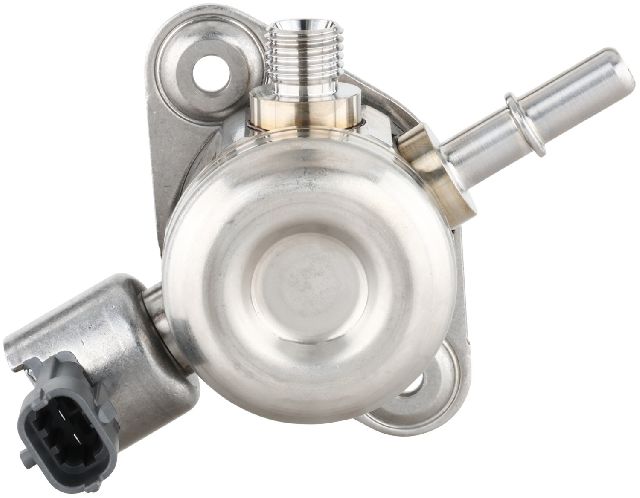
- Fuel Pump and Sender Assembly
(OEM #Motorcraft PFS-1032 (FWD, non-turbo), PFS-1031 (AWD, non-turbo), or PFS-1024 (3.5L EcoBoost/SHO). Verify with VIN.)— The Fuel Temperature Sensor is integrated into this assembly. A failure of the sensor requires replacing the entire unit.
Trusted brands: Motorcraft, Bosch, Delphi, Spectra Premium
OEM price range: $450-$600
Aftermarket price range: $300-$450
Related Codes That Often Appear With This One
- P1186 — This code is for 'Fuel Temperature Sensor Low'. Seeing it intermittently with P1185 could point to a loose connection or a failing sensor causing erratic readings.
Platform-Specific Known Issues
- Fuel Pump Driver Module (FPDM) Failure: → Shop Fuel Pump While P1185 points to the temperature sensor, the FPDM is a known failure point in the fuel system on this platform that can cause various fuel-related codes and no-start conditions. It's worth checking the module and its connections during diagnosis. On the platform-mate Lincoln MKS, this module is accessible by crawling into the trunk, which may be easier than removing the rear seat. 🎬 Watch: Diagnose a Taurus crank-no-start FPDM issue
Mechanic-Grade Diagnostic Values
- Fuel Temperature Sensor (FTS) Live Data (Cold Engine) — expected: Should be very close to the Intake Air Temperature (IAT) and Engine Coolant Temperature (ECT) readings before the engine has been started.. Failure: A reading of -40°F or -40°C, or a value that does not match other temperature sensors, indicates a fault.
- FTS Signal Wire Voltage (KOEO, Connector Disconnected) — expected: Approximately 5.0 Volts.. Failure: This is the PCM's reference voltage. Seeing the full 5V confirms the wiring from the PCM is intact, but because the sensor is disconnected (simulating an open circuit), it proves the circuit is open, which is what causes the P1185 'High' code.
- FTS Sensor Resistance — expected: The sensor is an NTC thermistor, so resistance decreases as temperature increases. A typical value might be 2,000-3,000 Ohms at room temperature (~70°F/20°C).. Failure: An infinite resistance reading (open circuit) confirms the sensor has failed and is the direct cause of P1185.
- FPDM Ground Circuit Integrity — expected: Less than 1.0 Ohm of resistance between the ground wire at the FPDM connector and a clean chassis ground point.. Failure: High resistance indicates a poor ground at a point like G302, which can cause erratic fuel system behavior.
Wiring & Ground Locations
- G302 — Located at the base of the left (driver's side) 'C' pillar.. This is a primary ground point for several rear components, including the Fuel Pump Driver Module (FPDM). A corroded or loose G302 can cause intermittent power issues to the FPDM, leading to various fuel system codes and no-start conditions.
- Main Engine Ground Strap — On the transmission case, below the brake booster.. While not specific to the FTS circuit, a poor main engine-to-chassis ground can cause a host of bizarre, hard-to-diagnose electrical issues across the vehicle, including incorrect sensor readings due to floating grounds. Verifying this connection is a master tech-level preliminary check.
- Fuse #65 (Under-hood Fuse Box) — In the main fuse box in the engine compartment, next to the battery.. This 30A fuse provides power to the fuel pump relay and fuel injectors. While a failure here would likely cause a no-start condition rather than just a P1185, it's a key part of the overall fuel delivery circuit to be aware of.
Real Owner Repair Stories
- YouTube video '2013 Ford Taurus Fuel pump driver module testing and replacement' (2013 Ford Taurus) — Crank but no start, no trouble codes stored.
❌ Tried (didn't work) Initial diagnosis did not immediately point to the module.
✅ What actually fixed it The Fuel Pump Driver Module (FPDM) was diagnosed as faulty. It had power going in but no power coming out to the pump. Replacing the FPDM, located behind the rear passenger seat, resolved the no-start condition. - YouTube video '2013-2019 Ford Taurus 3.5l crank no start/ Fuel Pump Driver Module' (2013 Ford Taurus 3.5L) — Crank but no start. A code was present that pointed to the fuel pump or FPDM.
❌ Tried (didn't work) The owner was advised not to immediately replace the in-tank fuel pump due to the cost and labor.
✅ What actually fixed it The owner replaced the Fuel Pump Driver Module (FPDM) located behind the passenger rear seat. The vehicle started immediately after the new module was installed.
OEM Part Supersession History
AG1Z-9H307-B, AG1Z-9H307-C, PFS-536→PFS-591— Part consolidation and revision by manufacturer.
Heads up: PFS-591 is for 2010-2012 FWD models only.
Model Year Variations Within This Range
- 2010-2012 vs. 2013-2019: The Ford Taurus received a significant facelift for the 2013 model year, which included powertrain and component updates. The standard 3.5L V6 engine gained Twin Independent Variable Camshaft Timing (Ti-VCT), boosting power from 263 hp to 288 hp. Crucially for this repair, the fuel pump assemblies are different between these two generations. * 2010-2012: Use Motorcraft PFS-591 (FWD) or PFS-535 (AWD). * 2013-2019: Use Motorcraft PFS-1032 (FWD) or PFS-1031 (AWD). Using the wrong part will result in fitment or electrical incompatibility.
Diagnostic Flowchart
Other Known Issues on This Vehicle
Issues unrelated to this code that are worth knowing about as an owner of this generation:
- Internal Water Pump Failure 🔴 High — Commonly occurs between 80,000 and 150,000 miles. The pump is driven by the timing chain, and failure can cause coolant to mix with engine oil, leading to catastrophic engine damage. Repair is extremely labor-intensive, often costing $2,000-$4,000. (Ref: No recall, but the subject of a class-action lawsuit due to the design.)
- Power Transfer Unit (PTU) Failure (AWD Models) 🔴 High — The PTU (transfer case) fluid is often cooked by adjacent exhaust components, leading to breakdown and gear failure, typically between 60,000-100,000 miles if not serviced. Ford marketed the fluid as 'lifetime,' but there is no drain plug, discouraging service. Independent shops and owner forums strongly recommend a fluid change every 20,000-30,000 miles to prevent failure.
- Electronic Throttle Body (ETB) Failure 🟠 Medium — A widespread problem where the ETB fails electronically, causing the vehicle to abruptly enter 'limp mode' with a wrench light, resulting in a sudden and dangerous loss of power. Can occur at various mileages. (Ref: Previously covered under Ford Customer Satisfaction Program 13N03, which has since expired. The only fix is to replace the entire throttle body assembly.)
Used vs. New Parts: Buying Guide for This Vehicle
When a used part is the smart pick: For this repair, a used part is almost never recommended. The fuel pump is a critical wear item located inside the fuel tank, requiring significant labor to access and replace. The risk of a premature failure from a used part with unknown history outweighs the small cost savings.
Donor-vehicle mileage cap: roughly under 50000 miles for the part to have meaningful remaining life.
What to inspect on the donor part:
- If a used part must be considered, source it from a vehicle with the lowest possible mileage.
- Ensure the donor vehicle was not in a major collision that could have shocked the fuel pump assembly.
- Inspect the electrical connector on the used unit for any signs of corrosion, melting, or pin damage before purchase.
OEM-only on this vehicle (don't cheap out):
- Fuel Pump and Sender Assembly
Aftermarket brands forum-validated for this vehicle:
- Motorcraft (OEM - Highest Recommendation)
- Delphi (Often cited as the OEM supplier and a reliable alternative)
Brands owners have reported issues with on this vehicle:
- Spectra Premium (Forum reports are mixed; some have success, others report early failures)
- Airtex (Some forum users report high failure rates)
Real Owner Stories
Aggregated from forums and TSBs cited above. Mileages and costs reflect what owners reported in those sources.
2014 Ford Taurus SHO 3.5L V6
Symptoms: Engine started to knock due to a fuel system module failure.
What fixed it: Replacement of the Fuel Pump Driver Module (FPDM).
Source hint: YouTube - FoMoCoBro: 'My 2014 Ford Taurus SHO Broke AGAIN!!! Faulty Fuel Pump Driver Module Caused My Engine To Knock!'
2013 Lincoln MKS 3.7L/3.5L V6
Symptoms: Vehicle cranks but won't start.
What fixed it: Replacement of the fuel control module (accessible through the trunk).
Source hint: YouTube - '2013 Lincoln MKS fuel control module replacement Cranks but won't start quick fix!'
Related OBD-II Codes
Frequently Asked Questions
Can I just replace the Fuel Temperature Sensor on my 2010-2019 Ford Taurus to fix P1185?
Where is the Fuel Pump Driver Module (FPDM) located on the Taurus and its platform-mate, the Lincoln MKS?
Is there a specific ground I should check for fuel system codes on this platform?
Which aftermarket fuel pump brands should I avoid for my Taurus 3.5L?
Does the P1185 code require different parts depending on my Taurus's model year?
Is there a recall for the internal water pump or PTU issues mentioned in the context?
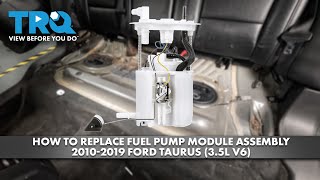
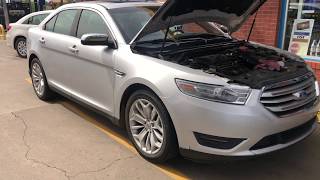
Helpful Videos


Used OEM Parts in Stock
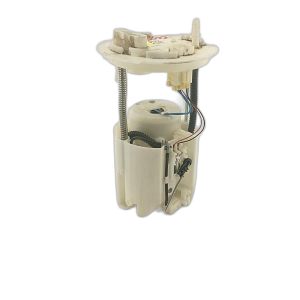
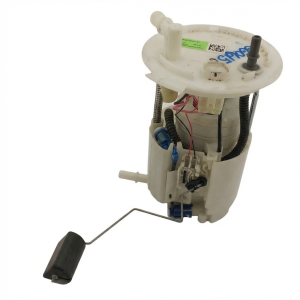
New Aftermarket Parts Available



The information in this article is provided for general reference and educational purposes only. Vehicle specifications, procedures, and part compatibility can vary by production date, trim level, and region. Always consult your vehicle's factory service manual and verify part numbers before purchasing or performing repairs. Safety-critical components such as airbags, seat belts, and braking systems should be installed by a qualified professional.
- Ford Taurus:
- 🧭 Diagnostic Flowchart
- 🎬 Helpful Videos
- 🛍️ Shop This Part
- What's Unique About the 2010-2019 Ford Taurus
- Symptoms You May Notice
- Most Likely Causes
- Rare But Worth Checking
- Diagnosis Steps
- Parts You'll Likely Need
- Related Codes That Often Appear With This One
- Platform-Specific Known Issues
- Mechanic-Grade Diagnostic Values
- Wiring & Ground Locations
- Real Owner Repair Stories
- OEM Part Supersession History
- Model Year Variations Within This Range
- Other Known Issues on This Vehicle
- Used vs. New Parts: Buying Guide for This Vehicle
- Real Owner Stories
- 2014 Ford Taurus SHO 3.5L V6
- 2013 Lincoln MKS 3.7L/3.5L V6
- Related OBD-II Codes
- Frequently Asked Questions
- 🎟️ Get 5% Off