

P1185 on 2014-2018 GMC Sierra 1500: Engine Oil Temperature Circuit Fault Explained
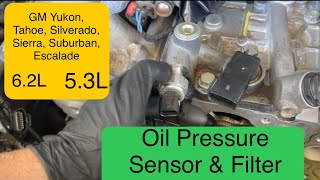
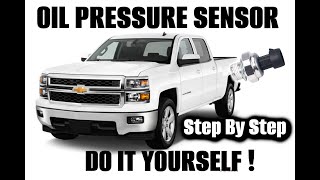
This code indicates a problem with the engine oil temperature sensor circuit. On these trucks, the oil temperature and oil pressure sensors are a single combined unit (Part #12685371). The most likely fix is replacing this sensor, which is difficult to access as it is located on the rear of the engine block, underneath the intake manifold. Repairing the wiring harness is the second most common solution.
- P1185 on a 2014-2018 Sierra specifically points to a fault in the Engine Oil Temperature sensor circuit.
- On the L83 and L86 V8 engines, the oil temperature sensor is integrated with the oil pressure sensor into one part (GM Part #12685371).
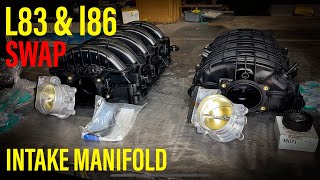
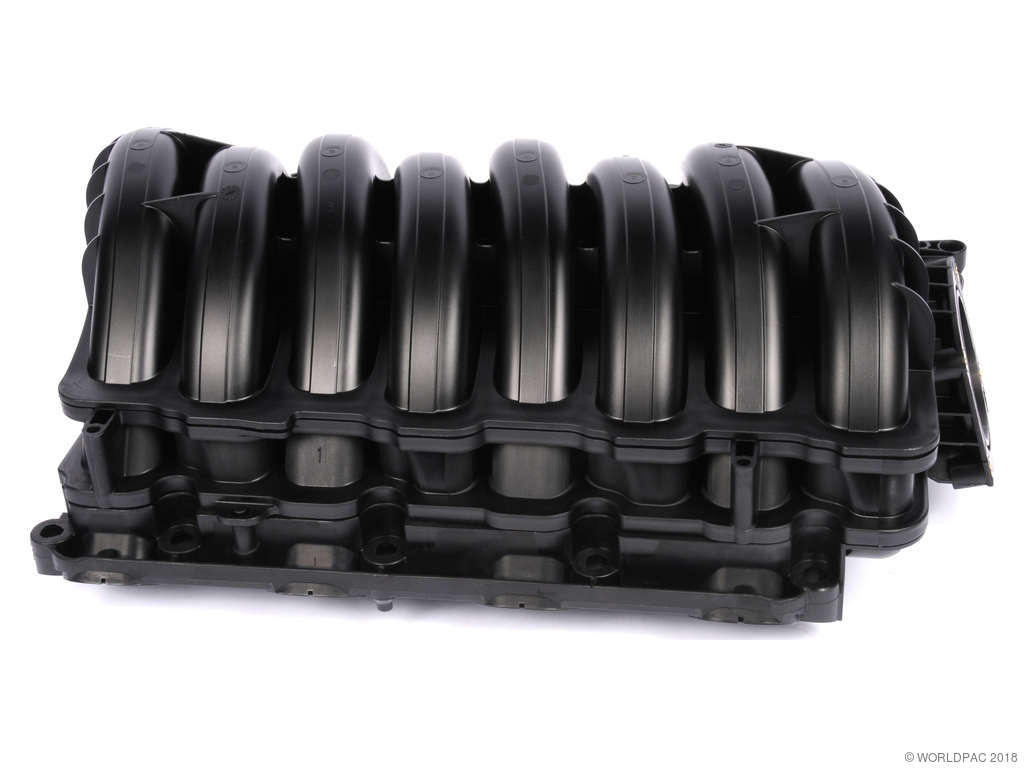
- The sensor is located under the intake manifold, making replacement a labor-intensive job that requires new intake gaskets.
- Diagnosis involves checking the sensor's wiring and connector for damage before committing to the labor of replacing the sensor itself.
What's Unique About the 2014-2018 GMC Sierra 1500
A key feature of the Gen V L83 and L86 engines is that the engine oil temperature sensor is not a standalone part. It is integrated into a single unit with the engine oil pressure sensor. This means a fault in the temperature circuit requires replacing the entire oil pressure and temperature sensor assembly. While oil pressure sensor failures are very common on these trucks, leading to codes like P0521 or P0523, the P1185 temperature circuit code appears to be much less frequent. The sensor's location at the back of the engine, under the intake manifold, makes replacement a significant labor effort.
Symptoms You May Notice
- Check Engine Light is illuminated.
- Oil temperature gauge on the dashboard (if equipped) may read incorrectly, be stuck at a certain value (e.g., -40°F), or show no reading at all.
- Potentially rough idle or hesitation, as the ECM may use default values for fuel and timing calculations. GM has noted that on direct-injection engines, some cold-start roughness is considered normal.
- Possible issues with automatic transmission shifting, as some transmission logic relies on accurate engine temperature data.
- Active Fuel Management (AFM) system may be disabled, as it relies on oil temperature as one of its operating parameters.
- Replacing only the oil pressure sensor, not realizing the temperature sensor is part of the same unit.
- Confusing the Engine Oil Temperature (EOT) sensor with the Engine Coolant Temperature (ECT) sensor. They are separate sensors with different locations and functions.
- Replacing the sensor without first thoroughly checking the wiring harness for damage, leading to the code returning.
Most Likely Causes
- Failed Engine Oil Pressure and Temperature Sensor 🔴 High Probability The combined pressure/temperature sensor is a known failure point on these engines, though usually for the pressure reading. The temperature-sensing thermistor within the unit can also fail due to age, extreme heat cycles, and internal oil contamination.
How to confirm: After verifying the wiring is intact, this is the most likely component failure. With a scan tool, observe the Engine Oil Temperature reading. If it is illogical (e.g., -40°F on a hot engine or stuck at one value), the sensor is likely bad. The sensor's resistance can also be tested, but this requires removing it, at which point replacement is recommended regardless.
Typical fix: Replace the Engine Oil Pressure and Temperature Sensor assembly. This requires removing the intake manifold to gain access to the sensor located on the back of the engine block.
Est. part cost: $45-$90 - Wiring Harness or Connector Issue 🟡 Medium Probability The sensor is located in a high-heat area at the rear of the engine, which can make wiring and connectors brittle over time. Oil leaks from the valve cover or the sensor itself can contaminate the connector, leading to a poor connection. Rodents are also known to chew on wiring in this area.
How to confirm: Visually inspect the wiring harness and connector leading to the sensor for any signs of damage, chafing, melting, or oil saturation. Use a multimeter to check for the correct reference voltage (typically 5V) and ground at the connector. Wiggle the harness while monitoring the sensor reading on a scan tool to see if the value fluctuates, indicating an intermittent connection.
Typical fix: Repair the damaged section of the wiring harness or clean/replace the connector pigtail.
Est. part cost: $15-$50
Rare But Worth Checking
- Faulty Engine Control Module (ECM): → Shop Engine Control Module (ECM) This is very rare. Before condemning the ECM, all other possibilities, including the sensor and its entire circuit, must be exhaustively tested and ruled out.
Diagnosis Steps
- Connect an OBD-II scanner and confirm P1185 is the active code. Note any other codes present.
- Using the scanner's live data function, view the Engine Oil Temperature (EOT) parameter. Note the reading with the engine cold and observe if it changes as the engine warms up.
- A reading that is stuck at an extreme high or low (e.g., -40°F or 250°F+) or does not change with engine temperature points towards a circuit or sensor fault.
- Locate the sensor. It is at the very back of the engine, below the intake manifold, near the firewall. Access is difficult. 🎬 Watch: Locate the sensor behind the engine
- Perform a visual inspection of the sensor's electrical connector and nearby wiring. Look for loose connections, oil contamination, melted plastic, or damaged wires.
- If the wiring looks good, disconnect the connector and use a multimeter to test the circuit. With the ignition on, check for a 5-volt reference signal and a good ground on the appropriate pins in the harness-side connector.
- If the reference voltage and ground are present, the sensor itself is the most likely culprit.
- If reference or ground is missing, the wiring harness has an open or short circuit that must be traced back towards the ECM.
Parts You'll Likely Need
- Engine Oil Pressure and Temperature Sensor
(OEM #12685371)— This single unit provides both oil pressure and oil temperature readings to the ECM. The internal thermistor for temperature can fail, causing the P1185 code.
Trusted brands: ACDelco, GM Genuine Parts
OEM price range: $60-$90
Aftermarket price range: $45-$70 - Intake Manifold Gaskets
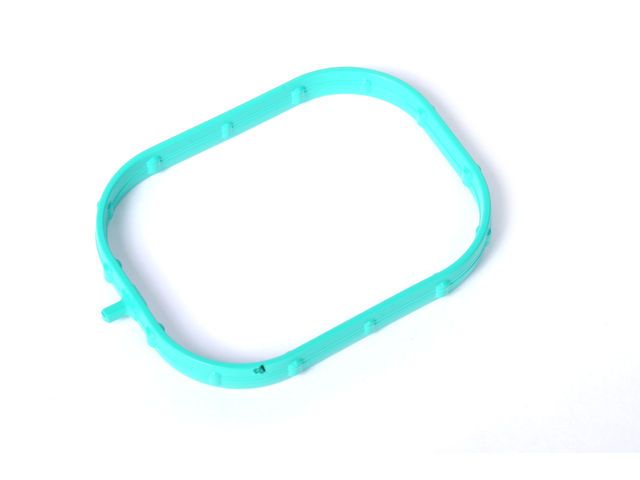
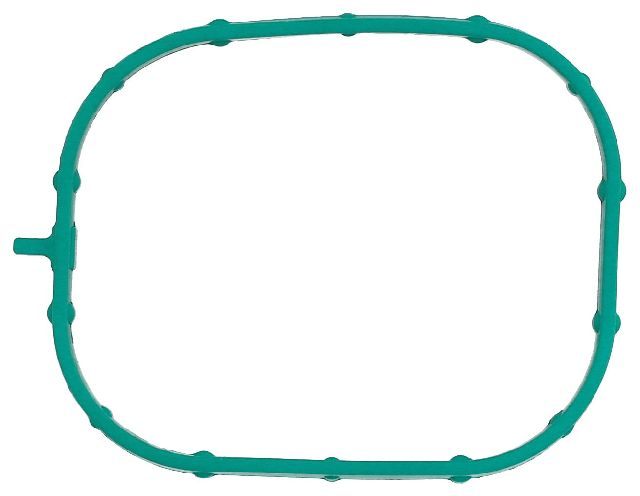
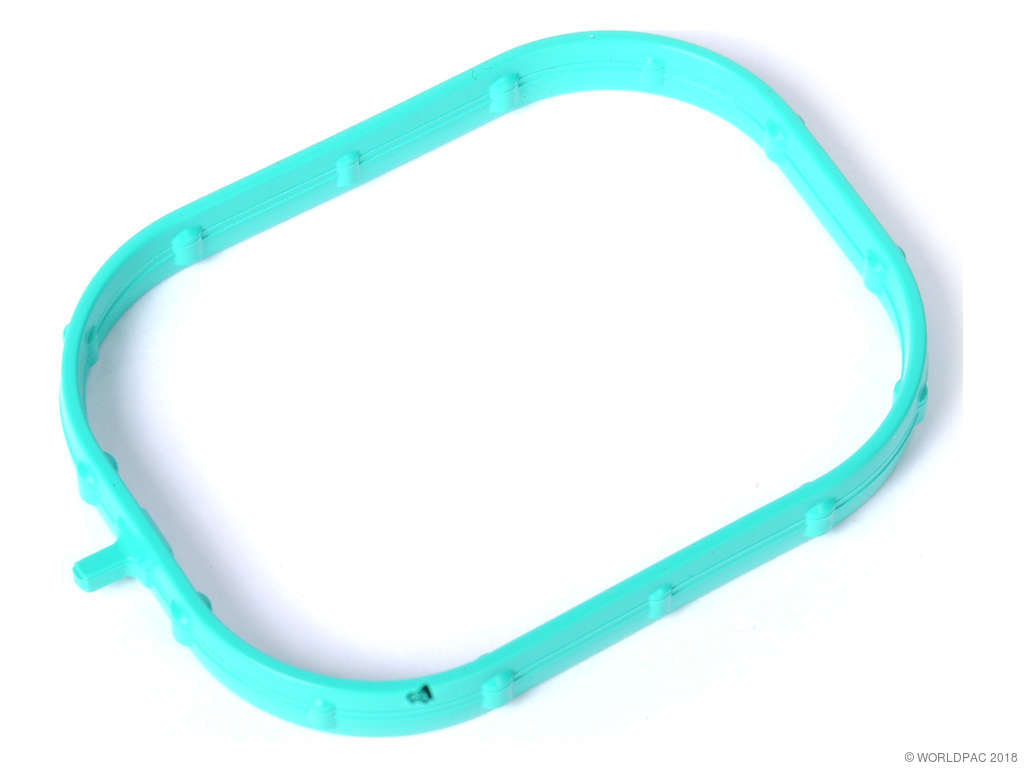
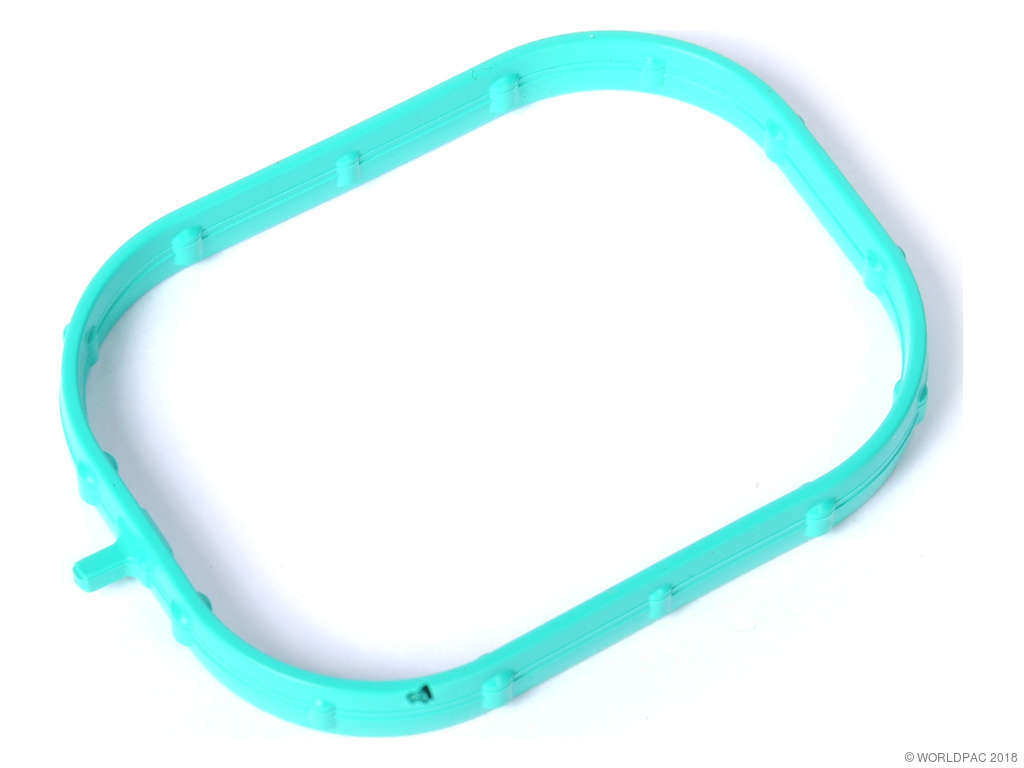
(OEM #12626354 (Set of 8))— The intake manifold must be removed to access the oil pressure/temperature sensor. The gaskets are one-time use and must be replaced to prevent vacuum leaks.
Trusted brands: Fel-Pro, ACDelco
OEM price range: $40-$60
Aftermarket price range: $20-$40
Related Codes That Often Appear With This One
- P0520-P0523 — These codes relate to the oil pressure sensor circuit. Since the temperature and pressure sensors are in the same component, a failure of the unit or its connector could potentially trigger faults for both circuits simultaneously.
Platform-Specific Known Issues
- The primary vehicle-specific issue is the difficult location of the sensor. It is positioned on the top-rear of the engine block, underneath the intake manifold and close to the firewall. This makes what would be a simple sensor swap on many other vehicles a much more labor-intensive job, requiring the removal of the entire intake manifold assembly.
Mechanic-Grade Diagnostic Values
- Engine Oil Temperature Sensor Resistance (at sensor pins) — expected: Approximately 2,200 - 3,000 Ω at 20°C (68°F) and 250 - 350 Ω at 80°C (176°F). Resistance should decrease smoothly as temperature increases.. Failure: An open circuit (infinite resistance) or a short (near zero resistance) at any temperature. Readings that do not change as the engine warms up also indicate a failed sensor.
- Sensor Connector Voltage (harness side, key on, engine off) — expected: One pin should have a steady 5-volt reference from the ECM. Another pin should have a good ground (less than 0.1 volts). The signal wire voltage will vary based on temperature if the sensor is connected.. Failure: Absence of the 5V reference or a poor ground indicates a wiring or ECM issue, not a sensor failure.
Wiring & Ground Locations
- Engine Block to Firewall Ground Strap — Typically located near the brake booster, connecting the engine block to the vehicle's firewall.. A corroded or loose main engine ground can create a floating ground reference for various sensors, including the EOT. This can cause erratic voltage readings and trigger false sensor circuit codes.
- Battery to Chassis/Frame Ground — The main ground cable from the negative battery terminal connects to the chassis, often on the passenger side frame rail or inner fender.. This is the primary ground for the entire electrical system. Corrosion here can cause widespread, difficult-to-diagnose electrical issues, including sensor faults.
OEM Part Supersession History
12685371→No supersession found. The part number remains current.— N/A
Diagnostic Flowchart
Other Known Issues on This Vehicle
Issues unrelated to this code that are worth knowing about as an owner of this generation:
- AFM/DFM Lifter Failure 🔴 High — Widespread issue, can occur at various mileages but more common after 60,000 miles. Affects both 5.3L and 6.2L engines. (Ref: Multiple TSBs exist addressing misfires and valvetrain noise related to this system.)
- 8-Speed (8L90) Transmission Shudder/Hard Shift 🟠 Medium — Very common on 2015-2018 models equipped with the 8-speed automatic. Often described as driving over rumble strips. (Ref: TSB 18-NA-355 recommends a specific fluid flush with Mobil 1 Synthetic LV ATF HP (Blue Label) as the primary fix.)
- A/C Condenser Leak 🟠 Medium — Common failure where the condenser cracks at its welds, causing a loss of refrigerant. (Ref: Special Coverage Adjustment 17336 was issued for some SUVs on the platform, but the issue is also widely reported on the trucks.)
- Carbon Buildup on Intake Valves 🟡 Low — A known side-effect of all direct-injection engines. Can cause performance issues over 100,000 miles.
- High-Pressure Fuel Pump Failure 🟠 Medium → Shop Fuel Pump — The direct injection high-pressure fuel pump can fail, leading to stalling or no-start conditions.
Used vs. New Parts: Buying Guide for This Vehicle
When a used part is the smart pick: For this repair, a used part is almost never a smart choice. The labor to access the sensor is significant (2.5-4.0 hours), making the risk of a premature failure of a used sensor financially unwise. The only exception might be sourcing a used connector pigtail if the original is damaged.
Donor-vehicle mileage cap: roughly under 40000 miles for the part to have meaningful remaining life.
What to inspect on the donor part:
- For a connector pigtail: ensure the plastic is not brittle or cracked.
- Check for any signs of corrosion or oil contamination on the connector pins.
- Ensure there is at least 6 inches of wire to allow for a proper splice.
OEM-only on this vehicle (don't cheap out):
- Engine Oil Pressure and Temperature Sensor (Part #12685371)
Aftermarket brands forum-validated for this vehicle:
- ACDelco (is the OEM supplier)
- GM Genuine Parts
Brands owners have reported issues with on this vehicle:
- Unnamed or 'white-box' brands from online marketplaces. Forum discussions frequently report that cheaper aftermarket oil pressure sensors for GM trucks have a high failure rate, providing inaccurate readings or failing shortly after installation. Given the high labor cost, an OEM part is the recommended choice.
Real Owner Stories
Aggregated from forums and TSBs cited above. Mileages and costs reflect what owners reported in those sources.
2014-2018 GMC Sierra 1500 L83 5.3L V8
Symptoms: Technical discussion regarding the 4-pin combination oil pressure and oil temp sensor (PN 12685371) and the difficulty of obtaining accurate calibration data for the unit.
What fixed it: Replacement of the combined oil pressure and temperature sensor assembly.
Source hint: HP Academy Forum - 'GM sensor 12685371 (4 pin combination oil pressure and oil temp)'
Related OBD-II Codes
Frequently Asked Questions
Why is my 2015 GMC Sierra 1500 shifting strangely and showing a P1185 code?
Can a P1185 code affect the Active Fuel Management (AFM) on my 5.3L L83 engine?
I see my oil temperature is stuck at -40°F on my dashboard. Is this related to P1185?
What specific part number do I need to fix the oil temperature sensor on my 2017 Sierra 6.2L?
Is there a TSB for the transmission 'rumble strip' feeling I'm having alongside this code?
Why is the labor cost so high for a simple temperature sensor on the L83 V8?
Helpful Videos
We Have This Part in Stock


The information in this article is provided for general reference and educational purposes only. Vehicle specifications, procedures, and part compatibility can vary by production date, trim level, and region. Always consult your vehicle's factory service manual and verify part numbers before purchasing or performing repairs. Safety-critical components such as airbags, seat belts, and braking systems should be installed by a qualified professional.
- GMC Sierra 1500:
- 🧭 Diagnostic Flowchart
- 🎬 Helpful Videos
- 🛍️ Shop This Part
- What's Unique About the 2014-2018 GMC Sierra 1500
- Symptoms You May Notice
- Most Likely Causes
- Rare But Worth Checking
- Diagnosis Steps
- Parts You'll Likely Need
- Related Codes That Often Appear With This One
- Platform-Specific Known Issues
- Mechanic-Grade Diagnostic Values
- Wiring & Ground Locations
- OEM Part Supersession History
- Other Known Issues on This Vehicle
- Used vs. New Parts: Buying Guide for This Vehicle
- Real Owner Stories
- 2014-2018 GMC Sierra 1500 L83 5.3L V8
- Related OBD-II Codes
- Frequently Asked Questions
- 🎟️ Get 5% Off