

OBD-II Code P1191: Comprehensive Diagnostic & Repair Guide
What P1191 means, its multiple definitions, and how to fix it for good
- Verify your exact vehicle definition first; P1191 means 'Fuel Pressure Malfunction' on GM, but 'Key Line Voltage' on Ford and 'Pre-Catalyst Fuel Trim' on BMW.
- On GM trucks with a P1191 or P0191 code, inspect the frame-mounted Fuel Pump Control Module (FPCM) for corrosion before spending $800+ on a new fuel pump.
- For Vauxhall/Opel Z22YH engines experiencing limp mode and hesitation, the High-Pressure Fuel Pump (HPFP) is the culprit in over 80% of cases, requiring a $500-$1200 replacement.
- Never drive with an active P1191 code; the resulting lean fuel condition overheats and destroys the catalytic converter within 1 to 6 months, adding a $900 to $2,500 repair bill.
What Does P1191 Mean?
P1191 is a manufacturer-specific code, meaning its definition changes depending on your vehicle. It most commonly points to a malfunction in the fuel pressure system, but indicates entirely different problems on certain makes. The Engine Control Unit (ECU) sets this code when it detects a sensor reading or critical voltage outside the expected range for current operating conditions.
Technical definition: The official SAE/ISO definition for P1191 varies by manufacturer. For General Motors (Vauxhall/Opel), it means "Fuel Pressure System Malfunction." For Hyundai and Kia, it translates to "Electronic Throttle System Limp Home Valve On." For BMWs, it is "Pre-catalyst Fuel Trim System, Bank 2." For older Fords, it means "Key Line Voltage," indicating an ignition or anti-theft electrical issue.
Can I Drive With P1191?
No — Do Not Drive. Driving with code P1191 is not recommended. Depending on the cause, you risk sudden engine stalling, significant power loss, or a no-start condition that leaves you stranded. Continuing to drive causes unburnt fuel to damage the catalytic converter, a repair costing between $900 and $2,500. If you experience stalling, pull over safely and tow the vehicle.
Common Causes
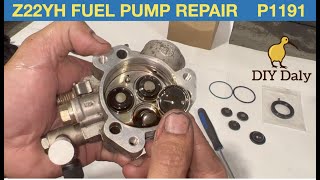
- Defective High-Pressure Fuel Pump (HPFP) (Very Common) — Frequent in direct injection engines like the Vauxhall/Opel Z22YH. 🎬 Watch this walkthrough on repairing the Z22YH high-pressure fuel pump. The pump fails to generate required pressure, causing immediate performance issues and stalling.
- Faulty Fuel Pump Control Module (FPCM) (Very Common) — Extremely common on GM trucks. The frame-mounted FPCM suffers from moisture and road salt corrosion, causing intermittent or total loss of fuel pressure.
- Faulty Fuel Pressure Regulator (Common) — Controls fuel pressure in the rail; mechanical failure causes pressure to spike or drop drastically, triggering the code.
- Defective Fuel Pressure Sensor (Common) — Fails electronically or becomes clogged with debris, sending incorrect voltage signals to the ECU even when mechanical pressure is normal.
- Clogged Fuel Filter (Common) — A restricted filter starves the fuel pumps, causing low pressure and triggering the P1191 code.
- Failing Low-Pressure Fuel Pump (Less Common) — The in-tank lift pump becomes weak and cannot provide enough volume for the high-pressure pump under load.
- Faulty Key Fob or Immobilizer System (Ford) (Rare) — Triggers the 'Key Line Voltage' definition due to a weak key fob battery, bad transponder antenna ring, or faulty immobilizer module.
- Intake Air or Vacuum Leaks (Rare) — Unmetered air leaks after the MAF sensor throw off fuel trims, triggering fuel system performance codes on BMW and Chevrolet.
Symptoms
- Check Engine Light On — The Malfunction Indicator Lamp (MIL) illuminates immediately upon detecting the fault.
- Engine Stalling — The engine stalls unexpectedly while driving under load or coming to a stop.
- Reduced Engine Power / Limp Mode — The vehicle feels sluggish, accelerates poorly, and refuses to rev past 3,000 RPM as the ECU enters self-protection mode.
- Hard Starting or No Start — The vehicle takes longer to start due to low initial fuel pressure, or fails to start entirely.
- Rough Idling — The engine runs unevenly, shakes, or vibrates when stopped.
- Increased Fuel Consumption — Incorrect fuel pressure readings force the ECU to inject excess fuel, destroying fuel economy.
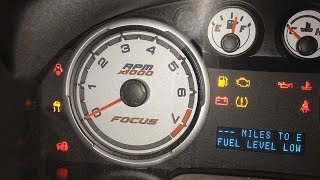
- Security/Immobilizer Light On — On Fords with the 'Key Line Voltage' definition, a flashing anti-theft light accompanies a no-crank condition. 🎬 See how to fix a blinking theft light and no-start.
Diagnostic Flowchart
Tap your situation to follow the diagnostic path that matches what you're seeing on this code.
Common Fixes & Costs
- Replace High-Pressure Fuel Pump — Parts: $300-$1200, Labor: $250-$600, ~2.5 hr book time (Professional)
- Replace Fuel Pump Control Module (FPCM) — Parts: $80-$250, Labor: $100-$200, ~1.5 hr book time (Intermediate)
- Replace Fuel Pressure Regulator — Parts: $100-$350, Labor: $100-$250, ~1.5 hr book time (Intermediate)
- Replace Fuel Rail Pressure Sensor — Parts: $50-$200, Labor: $100-$300, ~1.2 hr book time (Intermediate)
- Replace Fuel Filter — Parts: $20-$120, Labor: $60-$180, ~1 hr book time (DIY)
- Replace Pre-Catalyst Oxygen Sensor (BMW) — Parts: $90-$180, Labor: $100-$200, ~1.5 hr book time (Intermediate)
Used vs. New Parts: Buying Guide
When a used part is worth it: For electronic modules like a Fuel Pump Control Module (FPCM), a used part from a low-mileage vehicle in a dry climate is a cost-effective option. For high-wear mechanical parts like a High-Pressure Fuel Pump (HPFP), buying used is highly risky and not recommended.
Donor-vehicle mileage cap: roughly under 60000 miles for the part to have meaningful remaining life.
Donor quality checklist:
- Verify the donor vehicle's VIN to ensure it wasn't scrapped for a related failure.
- For FPCMs, avoid parts from 'rust belt' states due to high risk of corrosion.
- Match the OEM part number exactly; superseded parts have different programming or fitment.
Decision logic:
- If Part is a high-wear mechanical item like an HPFP → Buy new OEM or a high-quality aftermarket replacement. The risk of premature failure on a used unit is too high.
- If Part is an electronic module (FPCM) and the vehicle is high-mileage (>120k) → A used part from a low-mileage donor is a reasonable gamble to save money, but accept the risk of a shorter lifespan.
- If The cost of labor to replace the part is more than the part itself → Favor a new part with a longer warranty to avoid paying for the same labor twice if a used part fails.
Warranty tradeoff: Used parts from a salvage yard typically offer a 30-90 day warranty. New aftermarket parts carry a 1-year to limited lifetime warranty. New OEM parts offer a 12-month/12,000-mile warranty.
Worst-case if a used part fails: $400-$800 if a used part fails after the warranty period, representing the cost of repeat labor and purchasing another part.
What Happens If You Wait — Timeline
- 0-1 month: Intermittent Check Engine Light. Slight hesitation when accelerating hard or climbing hills. No other major symptoms. (MPG impact: 0-5%% · Added cost: $0-$30 in wasted fuel.)
- 1-3 months: Check Engine Light is on constantly. Noticeable drop in fuel economy. Engine sputters at highway speeds or stalls when coming to a stop. Hard starting becomes frequent. (MPG impact: 5-15%% · Added cost: $50-$150 in wasted fuel. The lean/rich condition begins to stress the catalytic converter.)
- 3-6 months: Vehicle is consistently in 'limp mode' with severely reduced power. Stalling is common and predictable. A persistent lean condition overheats the catalytic converter, causing its internal substrate to melt. (MPG impact: 15-25%% · Added cost: $900-$2,500. The catalytic converter is damaged beyond repair and requires replacement.)
- 6+ months: Catastrophic failure. A severe and prolonged lean condition causes detonation, leading to extreme combustion chamber temperatures. This burns holes in pistons, damages valves, and scores cylinder walls. (MPG impact: N/A (Vehicle likely undrivable)% · Added cost: $3,500-$10,000+. The initial fuel system problem requires an engine rebuild or replacement.)
Cost of Not Fixing It
- 0-1 month: Reduced fuel economy (5-15% drop), poor performance, and intermittent stalling, creating an unsafe driving condition. (Added cost: $20-$60 in wasted fuel per month.)
- 1-6 months: A persistent lean or rich condition caused by incorrect fuel pressure overheats and destroys the catalytic converter. (Added cost: $900-$2,500 for catalytic converter replacement.)
- 6+ months: Catastrophic engine damage. A severe lean condition causes detonation, burning holes in pistons or damaging valves. (Added cost: $3,500-$10,000+ for major engine repair or replacement.)
Diagnosis Steps
- Retrieve All Stored Fault Codes
Use an OBD-II scanner to read all codes. Note the specific definition for your vehicle. Related codes like P0087 (Pressure Too Low) or P0171 (Lean) provide critical clues.
Tools: OBD-II Scanner (Beginner) - Perform a Thorough Visual Inspection
Inspect wiring and connectors for the fuel pressure sensor, regulator, and Fuel Pump Control Module. On GM trucks, check the frame-mounted FPCM near the spare tire for heavy white or green corrosion.
Tools: Flashlight, Mirror (Beginner) - Monitor High-Side Fuel Pressure via Live Data
Use an advanced scanner to view live data from the high-pressure fuel rail sensor. Compare the ECU's 'desired' fuel pressure with the 'actual' pressure at idle and 3000 RPM. A large discrepancy confirms a high-pressure side failure.
Tools: Advanced OBD-II Scanner (Intermediate) - Check Low-Side Fuel Pressure
Connect a mechanical fuel pressure gauge to the low-pressure service port. Pressure must remain stable and within manufacturer specifications (typically 50-100 PSI for GM) with the key on and engine off.
Tools: Fuel Pressure Gauge (Intermediate) - Test the Fuel Pressure Sensor Circuit
With the key on and engine off, unplug the sensor and use a multimeter to verify a 5V reference voltage and solid ground. Reconnect and back-probe the signal wire; voltage must change smoothly with pressure.
Tools: Multimeter, Service Manual (Advanced) - Execute GM Z22YH Specific Diagnostic Test
For Vauxhall/Opel Z22YH engines, confirm low-side pressure is above 50 PSI. Check high-rail pressure at idle; if it fails to build past 87 PSI, the HPFP is bad. If pressure is okay, disconnect the regulator's electrical connector and rev to 3000 RPM. If sensor voltage exceeds 1.2V, the regulator is defective.
Tools: Advanced OBD-II Scanner, Fuel Pressure Gauge (Professional) - Test GM Truck FPCM Power and Signals
On GM trucks, use a multimeter at the FPCM connector. Verify 12V+ at the main power feed (Pin 32) and ignition voltage wire (Pin 15). Check for the 12V+ command signal from the ECM (Pin 13). Presence of all voltages with no pump operation confirms a failed FPCM.
Tools: Multimeter or 12V Test Light, Vehicle-specific Pinout Diagram (Advanced) - Perform a Smoke Test
If P1191 is accompanied by P0171/P0174, introduce smoke into the intake system to locate vacuum leaks from the intake boot, gaskets, or intercooler piping.
Tools: Smoke Machine (Advanced)
When This Code Triggers (Freeze-Frame Conditions)
- Engine Coolant Temp: 175-210°F (Engine at full operating temperature.)
- RPM: 1500-3000 RPM (Code sets during steady cruise or light acceleration, when a discrepancy between desired and actual fuel pressure becomes apparent.)
- Engine Load: 25-60% (The fault occurs under moderate load, not at idle or full throttle.)
- Vehicle Speed: 35-65 mph (Highway or suburban driving speeds where the engine is under a consistent load.)
Related Codes
- P0087 — Fuel Rail/System Pressure - Too Low. Confirms low pressure. P1191 often sets before pressure drops enough to trigger P0087.
- P0191 — Fuel Rail Pressure Sensor Circuit Range/Performance. The generic equivalent to the most common P1191 definition; they follow the identical diagnostic path.
- P0171 / P0174 — System Too Lean. A direct symptom of low fuel pressure. P1191 flags the pressure fault (cause), while P0171 flags the resulting lean mixture (effect).
Climate & Environmental Factors
- Road Salt / High Humidity: Primary cause of failure for the frame-mounted Fuel Pump Control Module (FPCM) on GM trucks. Salt spray corrodes the housing and connector, causing total failure.
- Cold Weather: Exposes weak in-tank fuel pumps or failing HPFPs that struggle to build adequate pressure in cold, dense fuel.
How to Talk to a Mechanic About This Code
Say this: "I have a P1191 code on my [Insert Year/Make/Model]. I know this is a manufacturer-specific code, so the first step I require is a diagnosis to confirm the exact definition for my vehicle. Please call me with the specific definition and the diagnostic data before replacing any parts."
This signals you're an informed customer. It prevents a shop from guessing or defaulting to a common-but-incorrect fix. It sets the expectation that you require evidence-based diagnosis before authorizing a repair.
Avoid saying:
- 'My check engine light is on, can you just fix it?'
- 'I think it's the fuel pump, can you give me a price to replace it?'
- 'Just do whatever you think is best.'
Questions to ask before authorizing the repair:
- You've confirmed the P1191 definition for my car is [Fuel Pressure/Throttle/etc.]. What specific test results confirm that the [Fuel Pump/Throttle Body/Sensor] is the point of failure?
- For a fuel pressure issue: What were the 'desired' vs 'actual' fuel pressure readings from the scan tool under load?
- For a GM truck: Did you visually inspect the Fuel Pump Control Module (FPCM) on the frame for corrosion?
- For a Kia/Hyundai: Did you check for carbon buildup in the throttle body?
- For a BMW: Can you show me the live fuel trim data for both banks to confirm the imbalance?
- Will you provide the old part for my inspection?
- What is the warranty on this specific repair, covering both parts and labor?
Where to Take It: Dealer vs Independent vs Chain
- Dealer:
Best for: Vehicles under warranty (powertrain or emissions)., Complex manufacturer-specific issues like Ford's 'Key Line Voltage' or BMW's fuel trim/software faults., When a potential ECU software update is required.
Downsides: Highest labor rates, often 1.5x to 2x more than independent shops., Recommends replacing an entire assembly (e.g., fuel pump module) when only a smaller component has failed. (Typical cost: +50% vs. baseline) - Independent Shop:
Best choice for most P1191 scenarios, especially common fuel system faults on domestic or older import vehicles. Ensure the shop has experience with your specific brand.
Best for: Out-of-warranty vehicles, especially for common fuel-pressure related P1191 faults (e.g., GM vehicles)., Building a long-term relationship with a technician who knows your vehicle's history., Cost-effective diagnosis and repair.
Downsides: Quality and expertise vary greatly; vetting the shop's reputation and certifications (like ASE) is crucial., Lacks the very latest specialized tools or software for brand-new models or complex electronic issues. (Typical cost: +0% vs. baseline) - Chain Shop:
AVOID for initial diagnosis. The risk of an incorrect and expensive repair is high. Only use if you have already correctly diagnosed the problem as a simple part they can replace.
Best for: Simple, pre-diagnosed parts replacement like a fuel filter or battery.
Downsides: High risk of misdiagnosis due to the code's complexity and variability., Technician skill is inconsistent; business model pressures employees to upsell services., Lacks the deep, brand-specific knowledge needed for non-standard P1191 definitions (Ford, Kia, BMW). (Typical cost: -10% vs. baseline)
When to Walk Away From the Repair
If the estimated repair cost exceeds 50% of the car's private-party value, seriously consider selling or trading in the vehicle instead of repairing it.
- Car worth $5000, fix is $450: Fix it. This is a relatively low-cost repair (e.g., a sensor, FPCM, or throttle body cleaning) and is well below the 50% threshold.
- Car worth $4000, fix is $1800: Walk away. The repair cost (typical for a high-pressure fuel pump) is 45% of the car's value. Unless the car is in otherwise perfect condition, this money is better put toward a replacement vehicle.
- Car worth $15000, fix is $1800: Fix it. The repair is only 12% of the vehicle's value. This is a financially sound repair.
What Scan Tool You Need for This Code
Minimum: A scanner that reads manufacturer-specific trouble codes and displays live data streams (e.g., fuel pressure, O2 sensor voltage, fuel trims).
A basic $20 code reader only shows 'P1191' without the critical manufacturer definition, making it useless for this code. It also cannot display the live sensor data required to determine if a pump or sensor has failed.
Budget: Bluetooth Dongle (e.g., OBDeleven) with a paid app subscription (~$50-100) — Pairs with your smartphone. A paid add-on or pro plan unlocks manufacturer-specific code definitions and live data graphing, essential for diagnosing P1191.
Mid-range: Foxwell NT510 Elite (~$180) — Provides OE-level diagnostics, reads specific codes, shows live data, and offers bi-directional control to test components like fuel pumps directly. The ideal level for a serious DIYer.
Professional: Autel MaxiCOM MK808S (~$400-500) — A full-featured diagnostic tablet. Offers wide vehicle coverage, powerful bi-directional controls, all-system scanning, and detailed live data graphing. Overkill for a single job but a great investment for extensive repairs.
Rent vs buy: For a one-time fix, auto parts stores offer loaner tools. Verify their scanner reads manufacturer-specific codes and live data. If you do your own maintenance regularly, buying a mid-range scanner saves hundreds in diagnostic fees over time.
How to Clear the Code After You Fix It
- Use an OBD-II scan tool to clear all fault codes.
- Perform a complete drive cycle to allow readiness monitors to run.
- Re-scan for any pending or active codes to confirm the fix.
Drive cycle (~30 minutes): A generic drive cycle includes: a cold start (vehicle sat for 8+ hours), 2-3 minutes of idling, 10-15 minutes of mixed city/suburban driving including several full stops, followed by 5-10 minutes of steady highway driving at 55-60 mph.
Readiness monitors affected: Fuel System Monitor, Catalyst Monitor, O2 Sensor Monitor
Before emissions retest: drive at least 100 miles to fully set monitors.
Watch out for:
- Clearing codes with a scanner resets readiness monitors to 'Not Ready', causing an automatic emissions test failure.
- The code returns immediately if the underlying mechanical or electrical fault has not been properly repaired.
Will This Fail Emissions / State Inspection?
Yes — this code typically fails an OBD-II emissions inspection.
- California: An active Check Engine Light results in an automatic smog check failure. All readiness monitors must be set to 'Ready' to pass; clearing the code just before the test results in a failure.
- New York: The NYS vehicle inspection includes an OBD-II scan. A P1191 code and illuminated Check Engine Light causes an automatic failure.
- Texas: In counties requiring emissions testing, an illuminated Check Engine Light is an automatic failure.
Most Commonly Affected Vehicles
- Vauxhall/Opel Vectra, Zafira, Signum, Astra (2002-2013) — Z22YH 2.2L direct injection engines are notorious for P1191, almost always caused by the high-pressure fuel pump or regulator.
- Chevrolet/GMC Silverado, Sierra, Express (1998-2014) — P0191/P1191 is frequently caused by a corroded Fuel Pump Control Module (FPCM) on the frame rail, a much cheaper fix than the fuel pump.
- Kia/Hyundai Sorento, Sportage, Sonata, Elantra (2004-2016) — P1191 points to a fault with the Electronic Throttle System (ETS) 'Limp Home Valve', caused by carbon buildup or wiring issues, not fuel pressure.
- BMW Various (e.g., 330i, X5) (2001-2006) — Defined as 'Pre-catalyst Fuel Trim System, Bank 2', pointing to an air/fuel mixture issue caused by a failing pre-cat O2 sensor or vacuum leak.
- Ford Focus, Fiesta, Mondeo, Escort (1995-2010) — Defined as 'Key Line Voltage', an electrical fault in the anti-theft/immobilizer system requiring key, battery, and immobilizer diagnosis.
Manufacturer-Specific Notes
- General Motors (Vauxhall/Opel): On Z22YH engines, a failing pump causes a no-start, while a failing regulator allows the car to run in limp mode.
- Chevrolet/GM (Trucks): Always inspect the Fuel Pump Control Module (FPCM) on the frame near the spare tire before condemning the fuel pump. GM has issued multiple recalls for this exact corrosion issue.
- Ford: If a Ford has P1191 with no-start and security light symptoms, ignore fuel pressure testing and diagnose the PATS immobilizer system.
- Hyundai/Kia: If defined as 'ETS Limp Home Valve On', the problem is the throttle body. Clean carbon buildup in the throttle bore before replacing parts.
Real Owner Stories
2005 Vauxhall Zafira 2.2L (Z22YH) at 110K miles - The Classic HPFP Failure
Car went into 'limp mode' with the spanner light on. Hard hesitation when accelerating uphill. RAC patrol read code P1191-52.
What they tried:
- Replaced fuel filter - made the car run very lumpy and rough.
- Replaced fuel pressure regulator - code returned.
- Replaced fuel pressure sensor - engine ran smoother, but code still returned intermittently.
Outcome: Replaced the high-pressure fuel pump (HPFP). This resolved the issue. The owner noted that if the full code is P1191-52, it points directly to the pump.
Lesson: On a Z22YH engine, don't waste money on sensors and regulators if you have limp mode and hesitation under load. The issue is almost always the HPFP.
2012 Chevy Silverado 1500 - Misdiagnosis Averted, FPCM was the Culprit
Check engine light on with codes P0191 and P069E. Truck was running poorly.
What they tried:
- Mechanic initially quoted a fuel pump replacement for over $800.
- Owner researched and found the Fuel Pump Control Module (FPCM) is a common failure point due to corrosion.
- Dropped the spare tire to access the FPCM on the frame rail and found it heavily corroded.
Outcome: Replaced the FPCM for $150. This cleared both codes and fixed the running issues. The owner saved over $650 by diagnosing the common, cheaper failure point first.
Lesson: On GM trucks, if you have P0191 or P1191, especially with P069E, ALWAYS inspect the FPCM on the frame rail for corrosion before condemning the expensive in-tank fuel pump.
2008 Kia Sorento - Not a Fuel Problem at All
Car suddenly went into limp mode, unable to accelerate past 2000 RPM. Check engine light was on with code P1191.
What they tried:
- Initially assumed it was a fuel pump or sensor issue based on the code number.
- A forum search revealed that for this specific Kia model, P1191 means 'Electronic Throttle System Limp Home Valve On'.
Outcome: The owner removed the throttle body and found it heavily caked with carbon, preventing the valve from moving freely. A thorough cleaning completely resolved the issue.
Lesson: You MUST know the specific definition of P1191 for your vehicle. On many Kias and Hyundais, it points to the throttle body, not the fuel system.
2002 Ford Focus - The Confusing 'Key Line Voltage' Fault
Car would not crank or start. A flashing 'key' or 'lock' symbol was visible on the dashboard. A basic code reader showed P1191.
What they tried:
- Owner was confused, as web searches for P1191 pointed to fuel pressure problems, but the car had no fuel-related symptoms.
- After finding a Ford-specific code list, they learned P1191 meant 'Key Line Voltage' for their car.
Outcome: The problem was a faulty PATS (Passive Anti-Theft System) transponder ring around the ignition barrel. After replacement, the car recognized the key and started normally.
Lesson: If the symptoms don't match the common definition, you have the wrong definition. For older Fords, a no-crank/no-start with a security light and P1191 means you diagnose the anti-theft system.
How to Prevent This Code From Triggering
- Use TOP TIER™ certified gasoline (Every fill-up) — TOP TIER™ gas contains a higher concentration of detergents that prevent and clean deposits from fuel injectors and intake valves, maintaining proper spray patterns.
- Perform regular oil changes with OEM-spec oil (Per manufacturer's schedule (e.g., 5,000-7,500 miles)) — On direct injection engines, the high-pressure fuel pump (HPFP) is mechanically driven by the camshaft. Clean oil prevents wear on the camshaft lobes and pump follower, a primary cause of HPFP failure.
- Replace the fuel filter at recommended intervals (Every 30,000-60,000 miles) — A clean fuel filter ensures the fuel pumps receive an adequate supply of clean fuel. A clogged filter starves the pumps, causing them to wear out prematurely.
- Apply dielectric grease to the FPCM (GM Trucks) (Once, or whenever accessed) — Applying waterproof dielectric grease to the connector pins and a rubberized undercoating to the module case protects it from road salt and moisture, preventing a common P1191 cause.
- Avoid running the fuel tank to empty (Daily habit) — Fuel in the tank cools the in-tank electric fuel pump. Frequently running the tank very low causes the pump to overheat, shortening its life.
Frequently Asked Questions
Can I drive my car with a P1191 code?
It is strongly advised not to. You risk the engine stalling in a dangerous situation. Continuing to drive with a fuel pressure issue destroys your catalytic converter, leading to an additional repair cost of $900 to $2,500.
How much does it cost to fix a P1191 code?
Costs vary dramatically based on the root cause. A simple fuel filter replacement costs under $200, while replacing a high-pressure fuel pump on a direct-injection engine easily exceeds $1,200. Professional diagnosis typically runs $90 to $150.
What's the difference between P1191 and P0191?
P0191 is a generic OBD-II code for 'Fuel Rail Pressure Sensor Circuit Range/Performance'. P1191 is a manufacturer-specific code. On GM vehicles, P1191 means the same thing as P0191, but on BMW, Ford, or Kia, P1191 has a completely different meaning.
What are common misdiagnosis mistakes with P1191?
The biggest mistake is ignoring the manufacturer-specific definition, like replacing a Ford fuel pump when the code actually indicates a 'Key Line Voltage' anti-theft issue. Another common pitfall on GM trucks is replacing the expensive in-tank fuel pump when a corroded $150 Fuel Pump Control Module is the real culprit.
Can a bad O2 sensor cause P1191?
Yes, on certain vehicles like BMW where P1191 is defined as 'Pre-catalyst Fuel Trim System'. A faulty oxygen sensor provides bad data about the air/fuel mixture, which the ECU interprets as a fuel system problem.
What does 'Key Line Voltage' mean for a P1191 code?
This definition, primarily used by Ford, indicates a problem in the electrical circuit related to key recognition and the anti-theft system (PATS). The ECU detects an out-of-range voltage on the key-on signal line, preventing the car from starting.
Will a fuel additive fix a P1191 problem?
No, fuel additives cannot repair the mechanical failures, broken wires, or corroded control modules that trigger this code. They also will not solve throttle control or key voltage issues.
Is it hard to fix P1191 myself?
Difficulty ranges from a beginner-friendly fuel filter replacement to a professional-only high-pressure fuel pump installation. High-pressure fuel systems operate at over 2,000 PSI, making DIY pump replacement a severe fire and injury hazard.
Key Takeaways
- Verify your exact vehicle definition first; P1191 means 'Fuel Pressure Malfunction' on GM, but 'Key Line Voltage' on Ford and 'Pre-Catalyst Fuel Trim' on BMW.
- On GM trucks with a P1191 or P0191 code, inspect the frame-mounted Fuel Pump Control Module (FPCM) for corrosion before spending $800+ on a new fuel pump.
- For Vauxhall/Opel Z22YH engines experiencing limp mode and hesitation, the High-Pressure Fuel Pump (HPFP) is the culprit in over 80% of cases, requiring a $500-$1200 replacement.
- Never drive with an active P1191 code; the resulting lean fuel condition overheats and destroys the catalytic converter within 1 to 6 months, adding a $900 to $2,500 repair bill.
Helpful Videos
Shop the Parts Behind P1191
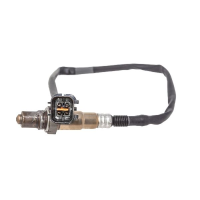
Below are the parts most often responsible for code P1191, ranked by how frequently each one is the actual culprit (per the diagnosis above). Tap any to see what we have for your vehicle.



The information in this article is provided for general reference and educational purposes only. Vehicle specifications, procedures, and part compatibility can vary by production date, trim level, and region. Always consult your vehicle's factory service manual and verify part numbers before purchasing or performing repairs. Safety-critical components such as airbags, seat belts, and braking systems should be installed by a qualified professional.
- 🧭 Diagnostic Flowchart
- 🎬 Helpful Videos
- 🛍️ Shop This Part
- What Does P1191 Mean?
- Can I Drive With P1191?
- Common Causes
- Symptoms
- Common Fixes & Costs
- Used vs. New Parts: Buying Guide
- What Happens If You Wait — Timeline
- Cost of Not Fixing It
- Diagnosis Steps
- When This Code Triggers (Freeze-Frame Conditions)
- Related Codes
- Climate & Environmental Factors
- How to Talk to a Mechanic About This Code
- Where to Take It: Dealer vs Independent vs Chain
- When to Walk Away From the Repair
- What Scan Tool You Need for This Code
- How to Clear the Code After You Fix It
- Will This Fail Emissions / State Inspection?
- Most Commonly Affected Vehicles
- Manufacturer-Specific Notes
- Real Owner Stories
- 2005 Vauxhall Zafira 2.2L (Z22YH) at 110K miles - The Classic HPFP Failure
- 2012 Chevy Silverado 1500 - Misdiagnosis Averted, FPCM was the Culprit
- 2008 Kia Sorento - Not a Fuel Problem at All
- 2002 Ford Focus - The Confusing 'Key Line Voltage' Fault
- How to Prevent This Code From Triggering
- Frequently Asked Questions
- Can I drive my car with a P1191 code?
- How much does it cost to fix a P1191 code?
- What's the difference between P1191 and P0191?
- What are common misdiagnosis mistakes with P1191?
- Can a bad O2 sensor cause P1191?
- What does 'Key Line Voltage' mean for a P1191 code?
- Will a fuel additive fix a P1191 problem?
- Is it hard to fix P1191 myself?
- Key Takeaways
- 🎟️ Get 5% Off