

OBD-II Code P1197: Manufacturer-Specific Fault Guide
What P1197 means, why it triggers, and how to fix it on different vehicles
- Search your specific make and model before diagnosing P1197, as this manufacturer-specific code means entirely different things for an Audi versus a Ford.
- On Audi and VW vehicles, P1197 almost always indicates a failed Bank 2 Sensor 1 oxygen sensor heater or a blown 15A engine bay fuse.
- For Ford models, P1197 means 'Key Off Voltage Low,' requiring a battery health test and a parasitic draw test to find drains exceeding 50 milliamps.
- On BMWs, check the differential pressure sensor at the back of the intake manifold; it is frequently left disconnected after replacing a starter or valve cover gasket.
What Does P1197 Mean?
P1197 is a manufacturer-specific code, meaning its definition changes entirely based on your car's make. On Audi and Volkswagen models, it points to a failed oxygen (O2) sensor heater. On Ford vehicles, it indicates low battery voltage when the key is off. On BMW models, it relates to an intake manifold pressure sensor. On Nissan, it points to the fuel level sensor, and on Dodge/Chrysler, it flags a slow-responding downstream O2 sensor.
Technical definition: Because P1197 is a manufacturer-specific 'P1xxx' code, there is no single SAE/ISO definition. Common definitions include 'O2 Sensor Heater Circuit (Bank 2-Sensor 1) Electrical Malfunction' (Audi/VW), 'Key Off Voltage Low' (Ford), 'Differential Pressure Sensor Intake Manifold High Input' (BMW), 'O2 (B1 S2) Circuit Insufficient Activity' (Dodge/Chrysler), and 'Low Input From Fuel Level Sensor' (Nissan).
Can I Drive With P1197?
Yes, But With Caution. You can drive with this code, but you must diagnose it quickly. If the code is for an O2 sensor heater (Audi/VW), you will experience poor fuel economy and higher emissions immediately. Ignoring it destroys the catalytic converter, a repair costing between $1,000 and $4,000. If the code relates to a pressure sensor (BMW), the vehicle enters a limited power 'limp mode,' which is unsafe in traffic. For a 'Key Off Voltage Low' code (Ford), the vehicle will eventually fail to start.
Common Causes
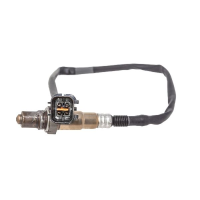
- Failed Oxygen (O2) Sensor (Very Common) — The most frequent cause on Audi, VW, and Dodge vehicles. The internal heating element that warms the sensor to operating temperature burns out over time, or the sensor becomes contaminated and slow to respond.
- Weak or Discharged Battery (Common) — On Ford vehicles, this code triggers when the battery's voltage drops below 12.4V while the car is parked. This indicates an old battery that no longer holds a full charge.
- Blown Fuse (Common) — For Audi/VW O2 sensor heater faults, a blown 15A fuse in the engine bay fuse box is a frequent and overlooked cause. Always check the fuse box before replacing the sensor.
- Damaged Wiring or Connectors (Common) — Wiring is easily damaged by heat, road debris, or oil leaks. On Audi/VW engines, oil dripping from a leaky valve cover gasket saturates the O2 sensor connector, shorting the circuit.
- Faulty Differential Pressure Sensor (Common) — On BMW models, the sensor measuring intake manifold pressure fails or is accidentally left unplugged during a starter or valve cover replacement.
- Parasitic Battery Drain (Less Common) — A component, such as an aftermarket accessory or a faulty module, continues drawing power after the key is turned off, draining the battery and triggering Ford's 'Key Off Voltage Low' code.
- Faulty Fuel Pump Control Module (FPCM) (Less Common) — On Chevrolet and GM trucks, the FPCM located above the spare tire corrodes and fails, causing a crank-no-start condition often misdiagnosed as a bad fuel pump.
- Exhaust Leak (Rare) — On Dodge/Chrysler vehicles, an exhaust leak upstream of the O2 sensor introduces extra air into the exhaust stream, skewing readings and triggering a 'slow response' code.
- Faulty Accelerator Pedal Position (APP) Sensor (Rare) — On certain Ford models, the ECU receives incorrect data about gas pedal position, forcing the vehicle into limp mode with severely reduced power.
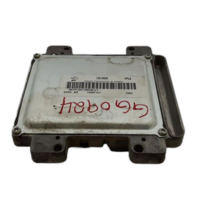
- Faulty Powertrain Control Module (PCM) (Rare) — The engine computer itself fails. Consider this only after thoroughly testing and ruling out all sensors, wiring, and fuses.
Symptoms
- Check Engine Light is On — The Malfunction Indicator Lamp (MIL) illuminates on the dashboard.
- Poor Fuel Economy — O2 sensor or intake pressure sensor faults force the engine to run an inefficient air-fuel mixture, dropping fuel economy by 10-15%.
- Difficulty Starting or No-Start Condition — Ford's 'Key Off Voltage Low' indicates a weak battery, leading directly to a no-start. A failed GM FPCM also prevents the engine from starting.
- Rough Idle and Limp Mode — Intake pressure or accelerator pedal sensor faults cause rough idling, hesitation, stalling, or force the vehicle into a low-power 'limp mode'.
- Failed Emissions Test — A faulty O2 sensor heater prevents the emissions system from running its self-tests, resulting in an automatic emissions inspection failure.
- Inaccurate Fuel Gauge — On Nissan vehicles, a fuel level sensor fault causes the fuel gauge to read incorrectly, risking running out of gas.
Diagnostic Flowchart
Tap your situation to follow the diagnostic path that matches what you're seeing on this code.
Common Fixes & Costs
- Replace Blown Fuse — Parts: $1-$10, Labor: $0-$50, ~0.1 hr book time (DIY)
- Replace Battery — Parts: $175-$250, Labor: $50-$100, ~0.5 hr book time (DIY)
- Replace Oxygen (O2) Sensor — Parts: $60-$220, Labor: $100-$250, ~1.2 hr book time (Intermediate)
- Replace Intake Manifold Pressure Sensor — Parts: $50-$120, Labor: $100-$200, ~1.0 hr book time (Intermediate)
- Replace Fuel Pump Control Module (FPCM) — Parts: $70-$160, Labor: $75-$150, ~0.8 hr book time (Intermediate)
- Repair Damaged Wiring — Parts: $10-$50, Labor: $150-$400, ~2.0 hr book time (Professional)
Used vs. New Parts: Buying Guide
When a used part is worth it: Buy new for electronic wear items like O2 sensors or pressure sensors. A used Fuel Pump Control Module (FPCM) from a low-mileage donor vehicle is a cost-effective option.
Donor-vehicle mileage cap: roughly under 60000 miles for the part to have meaningful remaining life.
Donor quality checklist:
- Verify the donor vehicle's mileage and ensure it was not scrapped for an electrical fire.
- Match the module part number exactly to ensure software compatibility.
- Purchase from a supplier offering at least a 30-day warranty.
Decision logic:
- If The part is a sensor (O2, pressure, APP) → Buy new. Used sensors fail quickly, doubling your labor costs.
- If The part is an electronic module (FPCM) on a 10+ year old vehicle → A tested used part from a reputable source saves significant money.
- If A new OEM part is prohibitively expensive → Buy a new premium aftermarket part (e.g., Bosch, Dorman) before considering used.
Warranty tradeoff: Used parts carry a 30-90 day warranty. New aftermarket parts offer 1-year to lifetime warranties. OEM parts carry a 12-month warranty.
Worst-case if a used part fails: $200-$500 if a used part fails, requiring repeat labor and a second replacement part.
What Happens If You Wait — Timeline
- 0-1 month: Check Engine Light illuminates for an O2 sensor heater fault. The engine stays in 'open loop' longer on cold starts. (MPG impact: 0-5%% · Added cost: $0-$25 in wasted fuel)
- 1-4 months: The faulty O2 sensor forces the engine to run rich. Unburnt fuel enters the exhaust system, raising the catalytic converter's temperature. (MPG impact: 5-15%% · Added cost: $50-$150 in wasted fuel.)
- 4-8 months: Sustained high temperatures crack or melt the catalytic converter's internal ceramic substrate. You smell rotten eggs from the exhaust. (MPG impact: 10-20%% · Added cost: $1,200-$2,500 for catalytic converter replacement.)
- 8+ months: The catalytic converter clogs completely. Exhaust flow is restricted, causing severe power loss, stalling, and a no-start condition. (MPG impact: >20%% · Added cost: $1,500-$3,000+ for catalytic converter and secondary exhaust damage.)
Cost of Not Fixing It
- 0-1 month: Reduced fuel economy by 5-15%. For a Ford 'Key Off Voltage Low' code, you risk a no-start condition in cold weather. (Added cost: $20-$60 in wasted fuel.)
- 1-6 months: For O2 sensor faults, raw fuel enters the exhaust, overheating and destroying the catalytic converter. For battery faults, low voltage damages the alternator and starter. (Added cost: $1,000-$3,000 for catalytic converter replacement.)
- 6+ months: Severe catalytic converter failure restricts exhaust flow, causing stalling and internal engine damage. The vehicle becomes undrivable. (Added cost: $3,000+)
Diagnosis Steps
- Identify Your Vehicle's Code Definition
Search the specific meaning of P1197 for your vehicle's make, model, and year (e.g., 'P1197 Ford F-150'). You cannot diagnose a P1xxx code without the manufacturer's exact definition.
Tools: Internet access (Beginner) - Check Fuses
Consult your owner's manual to locate the engine bay fuse box. Check the fuse related to the O2 sensors or engine control module. Replacing a blown 15A fuse is the fastest fix for Audi/VW heater circuit faults.
Tools: Owner's manual, fuse puller or needle-nose pliers (Beginner) - Visual Inspection
Locate the relevant component (O2 sensor, battery, intake pressure sensor). Inspect wiring and connectors for melting, corrosion, or fluid contamination. On Audis, check for oil leaking from the valve cover directly onto the O2 sensor connector.
Tools: Flashlight (Beginner) - Test Battery Voltage (Ford)
For a 'Key Off Voltage Low' code, test the battery. With the car off, a healthy battery reads between 12.4 and 12.8 volts. A reading below 12.4V requires charging and re-testing, or immediate replacement.
Tools: Multimeter (Intermediate) - Test O2 Sensor Heater Resistance (Audi/VW)
Unplug the O2 sensor and set a multimeter to 200Ω. Measure resistance between the two heater circuit pins (usually the two same-colored wires). A good sensor reads 2.5 to 30 Ohms. Infinite resistance or zero ohms confirms the internal heater is destroyed.
Tools: Multimeter (Intermediate) - Test Heater Circuit Voltage (Audi/VW)
With the O2 sensor unplugged and ignition on (engine off), check for voltage at the heater power pin on the vehicle's harness connector. It must equal battery voltage (~12V). No voltage indicates a blown fuse, bad relay, or broken wire.
Tools: Multimeter (Advanced) - Scan Live Data (Dodge/BMW)
Use a scan tool to monitor live data. For Dodge 'slow response' codes, the downstream O2 sensor (B1S2) should hold steady between 0.7V and 0.8V, reacting slowly to throttle snaps. For BMW pressure sensors, the pressure reading must change smoothly as you rev the engine.
Tools: OBD-II scanner with live data capability (Advanced) - Perform a Parasitic Draw Test (Ford)
If the battery is good but P1197 persists, disconnect the negative battery terminal and connect a multimeter (10A scale) in series. After all modules 'sleep' (up to 40 minutes), the draw must drop below 50 milliamps. Higher readings require pulling fuses to isolate the drain.
Tools: Multimeter with 10A DC setting (Advanced) - Test O2 Heater Circuit Control (Advanced)
If the sensor and fuse are good, back-probe the heater control wire (ground side) at the sensor connector. With the engine running cold, the PCM must provide a ground, visible as a fluctuating voltage on a multimeter. No ground signal indicates a wiring break or faulty PCM.
Tools: Multimeter, back-probe pins, wiring diagram (Professional)
When This Code Triggers (Freeze-Frame Conditions)
- Engine Coolant Temp: 170-210°F (77-99°C) (Fully warmed up. O2 sensor and catalyst monitors require the engine to reach normal operating temperature to run.)
- Vehicle Speed: 30-55 mph (48-88 km/h) (Steady highway cruise. The test for a slow-responding Dodge O2 sensor specifically runs at a steady speed.)
- Engine RPM: 1500-2500 RPM (Light to moderate load, steady throttle. This condition is required for most emissions monitor self-tests.)
- Fuel System Status: Closed Loop (The engine is actively using O2 sensor feedback to control the air-fuel mixture, a prerequisite for testing the sensors.)
- Key Status (for Ford): OFF (The 'Key Off Voltage Low' code sets specifically when the control module detects low battery voltage after the vehicle is parked.)
Related Codes
- P1196 — Appears alongside P1197 on Audi/VW to indicate a heater circuit fault on Bank 1 Sensor 1. Seeing both codes simultaneously strongly points to a blown shared fuse rather than two simultaneously failed sensors.
- P1198 — Logged alongside P1197 for fuel pressure sensor circuit issues on Hyundai and Kia models, helping pinpoint the exact failure within the fuel system.
- P0135 — The generic code for 'O2 Sensor Heater Circuit Malfunction (Bank 1, Sensor 1)'. P1197 on Audi/VW specifies Bank 2. If both appear, check the shared power supply.
- P0562 — A generic code for 'System Voltage Low'. P0562 triggers while the engine is running (alternator issue), whereas Ford's P1197 triggers when the car is off (battery or parasitic drain issue).
Climate & Environmental Factors
- Cold Weather: Cold weather slashes battery performance, triggering the Ford 'Key Off Voltage Low' code. At 0°F (-18°C), a battery loses 60% of its strength, causing a marginal battery to fail the key-off voltage test.
- Humidity / Moisture: Road salt and moisture accelerate corrosion on exposed components like the GM Fuel Pump Control Module (FPCM). It also corrodes O2 sensor connectors, causing high resistance that triggers P1197.
How to Talk to a Mechanic About This Code
Say this: "I have a P1197 code on my [Year, Make, Model]. I know this is a manufacturer-specific code. For my vehicle, it means [mention specific definition, e.g., 'O2 sensor heater fault' or 'key-off voltage low']. I'd like to schedule a diagnostic appointment to confirm the cause. Please start by [mention a specific first step, e.g., 'checking the fuse and wiring for the O2 sensor' or 'testing the battery and for a parasitic draw']."
This signals you are an informed consumer. It directs their initial diagnostic steps, prevents a broad 'shotgun' approach, and establishes that you expect an evidence-based diagnosis.
Avoid saying:
- 'My check engine light is on, can you just fix it?'
- 'I think I need a new O2 sensor, can you give me a price?'
- 'Just do whatever you think is necessary.'
Questions to ask before authorizing the repair:
- Can you show me the test results confirming this part failed (e.g., the resistance reading or voltage measurement)?
- Have you ruled out simpler causes like a blown fuse, a wiring issue, or a disconnected sensor?
- What is the warranty on the replacement part and the labor?
- Will you provide an itemized invoice showing parts and labor separately?
Where to Take It: Dealer vs Independent vs Chain
- Dealer:
Best for: Vehicles under powertrain or emissions warranty., Complex electrical quirks on German brands (Audi, BMW)., Repairs requiring manufacturer-specific software updates.
Downsides: Labor rates are 1.5-2x higher than independent shops., Dealers default to replacing entire assemblies rather than repairing small components. (Typical cost: +50% vs. baseline) - Independent Shop:
Best overall fit. An independent shop specializing in your vehicle's brand (e.g., a German auto specialist) is ideal. For domestic issues like a Ford battery, general independent shops offer the best value.
Best for: Out-of-warranty vehicles where cost is a major factor., Common, well-documented problems (Ford battery issues, GM FPCM failure)., Building a long-term relationship with a mechanic.
Downsides: Quality varies widely; vetting through reviews and ASE certifications is mandatory., May lack specialized diagnostic tools for the newest models. (Typical cost: +0% vs. baseline) - Chain Shop:
Acceptable ONLY for a straightforward battery replacement (Ford). AVOID for any diagnostic work or sensor replacement related to P1197.
Best for: Simple jobs like a battery replacement for a Ford P1197 code., Tire and brake services.
Downsides: High pressure to upsell unnecessary services., Technicians lack the skills for in-depth electrical diagnosis beyond reading a code., High risk of misdiagnosis for complex sensor faults. (Typical cost: -10% vs. baseline)
When to Walk Away From the Repair
If the estimated repair cost exceeds 40-50% of the car's private-party value, seriously consider selling or trading in the vehicle.
- Car worth $4000, fix is $350: Fix it. A $350 O2 sensor or battery replacement makes economic sense.
- Car worth $5000, fix is $2500: Walk away. A $2,500 catalytic converter replacement is 50% of the car's value and a poor investment.
- Car worth $2500, fix is $1500: Walk away. The repair cost is 60% of the car's value. It's time to sell or scrap the vehicle.
What Scan Tool You Need for This Code
Minimum: A code reader that reads manufacturer-specific ('P1') codes and displays live data streams (O2 sensor voltage, battery voltage).
A basic $20 scanner gives you the 'P1197' code but won't provide the manufacturer definition or show the live sensor data required to confirm the problem.
Budget: BlueDriver Pro Scan Tool (~$100) — Connects to your smartphone via Bluetooth. It reads manufacturer-specific codes and graphs live data for O2 sensors, distinguishing between a bad sensor and a wiring problem.
Mid-range: Foxwell NT510 Elite / Autel MaxiCOM MK808 (~$150-500) — These handheld scanners perform Battery Management System (BMS) resets (critical for Ford) and access specific data PIDs for BMW pressure sensors.
Professional: Autel MaxiCOM MK906BT / Topdon Phoenix Lite 2 (~$600-1200) — Professional-grade tablets offering full bidirectional control to command modules and comprehensive data graphing. Overkill for a single code, but invaluable for serious DIYers.
Rent vs buy: Auto parts stores loan basic scanners for free. This is perfect for a one-time code read. However, loaner tools lack live data and manufacturer definitions, making a budget scanner like BlueDriver a better investment for P1197 diagnosis.
How to Clear the Code After You Fix It
- Reconnect the battery if it was disconnected for the repair.
- Use an OBD-II scan tool to formally clear the diagnostic trouble codes.
- Perform a complete OBD-II drive cycle to allow readiness monitors to run.
Drive cycle (~30 minutes): A standard drive cycle includes a cold start, a 3-minute idle, 15 minutes of mixed city/highway driving (cruising between 45-60 mph), and at least one coast-down without touching the brakes. Allow the vehicle to cool down completely afterward.
Readiness monitors affected: Oxygen (O2) Sensor Monitor, O2 Sensor Heater Monitor, Catalyst Monitor
Before emissions retest: drive at least 100 miles to fully set monitors.
Watch out for:
- Disconnecting the battery clears the code but resets all readiness monitors to 'Not Ready', causing an automatic emissions test failure.
- The code returns immediately if the underlying mechanical or electrical fault is not repaired.
- The catalyst monitor requires multiple drive cycles to complete successfully.
Will This Fail Emissions / State Inspection?
Yes — this code typically fails an OBD-II emissions inspection.
- California: An active P1197 code causes an automatic smog check failure. Clearing the code right before the test results in a 'Not Ready' status and a failure.
- New York: The NYS DMV inspection includes an OBD-II scan. An illuminated Check Engine Light for P1197 is an automatic failure.
- Texas: In emissions-testing counties (Harris, Dallas, Travis), an active P1197 code fails the inspection.
Most Commonly Affected Vehicles
- Audi S4, S5, A6, Q5, Q7 (2010-2012) — Prone to P1197 as an O2 sensor heater circuit fault for Bank 2, Sensor 1. Audi issued TSB #2033767/1 for this issue on 3.0L and 3.2L engines.
- BMW 328i, 5-Series (E90/E60) (2006-2013) — Points to a failed or disconnected differential pressure sensor on the intake manifold (Part #13628617097). Frequently occurs after replacing a starter or valve cover gasket.
- Chevrolet Silverado, Suburban, Tahoe (2007-2013) — Indicates a faulty Fuel Pump Control Module (FPCM) mounted above the spare tire, causing a crank-no-start condition.
- Ford F-150, Focus, Escape (2011-2019) — Defines 'Key Off Voltage Low,' caused by a failing battery or parasitic drain. Requires a Battery Management System (BMS) reset after battery replacement.
- Dodge / Chrysler Grand Caravan, Ram 1500 (2001-2010) — Defines 'O2 (B1 S2) Insufficient Activity'. Often caused by an old downstream sensor, high-resistance wiring, or an exhaust leak skewing the readings.
- Hyundai / Kia Sonata, Santa Fe, Optima (2011-2015) — Relates to the differential pressure sensor or fuel rail pressure issues on GDI engines. Often appears alongside P1196.
- Nissan Titan, Armada, Patrol (2004-2015) — Indicates 'Low Input From Fuel Level Sensor,' resulting in an inaccurate fuel gauge and potential stalling from running out of gas.
- Subaru Forester, Outback (Diesel) (2008-2014) — Relates to the failure of the Diesel Particulate Filter (DPF) pressure sensor. Misdiagnosis leads to unnecessary and expensive DPF replacements.
Manufacturer-Specific Notes
- Audi / Volkswagen: P1197 almost exclusively means a Bank 2, Sensor 1 O2 sensor heater failure. Oil leaks from the valve cover frequently drip onto the sensor's wiring, destroying it. TSB #2033767/1 confirms this is a known issue.
- Ford: This code monitors battery voltage when the car is off. It directly indicates a weak battery or a parasitic draw, not an alternator problem. Modern Fords require a Battery Management System (BMS) reset after installing a new battery.
- BMW: The code frequently appears immediately after replacing a starter or valve cover gasket. Mechanics often forget to plug the differential pressure sensor back into the rear of the intake manifold.
- Dodge / Chrysler: The code flags a 'slow' downstream O2 sensor. Before replacing the sensor, check for exhaust leaks; a cracked manifold lets oxygen in, tricking the computer into thinking the sensor is failing.
- Chevrolet / GM: On trucks, the Fuel Pump Control Module (FPCM) above the spare tire rots from road salt. Test this module before dropping the fuel tank to replace a suspected bad fuel pump.
Real Owner Stories
2011 Audi S4 (B8) with 85K miles - O2 Heater Fault
Check Engine Light illuminated with code P1197 for Bank 2, Sensor 1 heater circuit.
What they tried:
- Replaced the O2 sensor with a Bosch unit for $90.
- The code returned the next day.
- Inspected the engine bay and found the valve cover gasket leaking oil directly onto the O2 sensor connector.
Outcome: Replaced the valve cover gasket and cleaned the oil-soaked connector with electrical contact cleaner. The P1197 code cleared permanently.
Lesson: On Audi/VW, always inspect for oil leaks from the valve cover before replacing an O2 sensor. Fixing the leak is mandatory for a permanent repair.
2008 BMW 328i (E90) with 110K miles - Misfires after DIY repair
After replacing the valve cover gasket, the engine ran rough and threw P1197 (Differential Pressure Sensor).
What they tried:
- Suspected a vacuum leak or faulty ignition coils.
- Swapped coils and spark plugs, but the misfire remained.
- Checked connections at the back of the intake manifold.
Outcome: Discovered the electrical connector for the differential pressure sensor was not fully seated. Plugging it in securely cleared all codes.
Lesson: If P1197 appears on a BMW after an intake manifold repair, immediately re-check all rear sensor connections before buying parts.
2013 Ford F-150 with 70K miles - 'Key Off Voltage Low'
Received a 'Low Battery' dash warning and P1197 code after the truck sat overnight.
What they tried:
- Replaced the original battery with a new AGM battery.
- The warning returned two days later.
- Researched the Battery Management System (BMS) reset procedure.
Outcome: Performed the manual BMS reset (flashing high beams and pressing the brake pedal). The system recognized the new battery, and the code stopped.
Lesson: Modern Fords require a BMS reset after installing a new battery. Without it, the alternator undercharges the new battery, triggering persistent low voltage codes.
2005 Dodge Grand Caravan with 185K miles - 'O2 Sensor Slow Response'
Check Engine Light showed P1197 (O2 Sensor Slow Response).
What they tried:
- Replaced the upstream O2 sensor twice with different brands.
- The code returned both times.
- Used a mechanic's stethoscope to check the exhaust manifold.
Outcome: Found a hairline crack in the exhaust manifold. The leak allowed oxygen into the exhaust, tricking the sensor. Replacing the manifold fixed the root cause.
Lesson: For Dodge/Chrysler 'slow response' codes, an exhaust leak is the true culprit. Check for leaks before assuming the sensor failed.
How to Prevent This Code From Triggering
- Replace upstream O2 sensors as a maintenance item (Every 100,000 miles) — O2 sensors become 'lazy' with age, reducing fuel economy by 10-15% and straining the catalytic converter long before a code sets.
- Fix engine oil leaks promptly (As soon as detected) — Leaking valve cover gaskets drip oil directly onto O2 sensor wiring, saturating the connector and destroying the heater circuit.
- Perform regular battery health checks (Annually, especially before winter) — A marginal battery triggers Ford's 'Key Off Voltage Low' code. Testing identifies a weak battery before it leaves you stranded in cold weather.
- Use Top-Tier certified gasoline (Every fill-up) — Top-Tier gasoline contains detergent additives that prevent carbon deposits, ensuring complete combustion and preventing rich conditions that foul O2 sensors.
Frequently Asked Questions
Can I fix P1197 myself?
Replacing a battery, a fuse, or a bolt-on FPCM is a straightforward DIY job. Replacing an O2 sensor requires specific sockets and penetrating oil, making it an intermediate task. Diagnosing wiring issues or parasitic drains requires a multimeter and is best left to professionals.
My BMW got a P1197 code right after a repair. What happened?
During jobs that require removing the intake manifold (like a starter replacement), the differential pressure sensor is often forgotten or broken. Re-inspect the electrical connections at the back of the intake manifold.
Could an exhaust leak cause a P1197 code?
Yes. On Dodge and Chrysler vehicles, P1197 means 'O2 Sensor Slow Response'. A leak in the exhaust manifold lets outside oxygen in, skewing the sensor's readings and triggering the code even if the sensor is perfectly fine.
Why does my Nissan run out of gas when the gauge isn't empty?
On Nissan vehicles, P1197 points directly to a fault in the fuel level sensor circuit. The faulty sensor sends incorrect data to the dashboard, making your fuel gauge unreliable.
What does Bank 2, Sensor 1 mean?
'Bank 2' is the side of the engine that does NOT contain cylinder #1. 'Sensor 1' is the upstream oxygen sensor located before the catalytic converter.
Why does the P1197 definition change so much?
Codes starting with 'P0' are generic and identical across all cars. Codes starting with 'P1' are manufacturer-specific, allowing automakers to assign custom definitions for their unique systems.
Will clearing the code make it go away?
Clearing the code turns off the check engine light temporarily. The code returns as soon as the engine computer runs its self-test and detects the underlying fault is still present.
How much does it cost to fix P1197?
A simple fuse replacement costs under $10. Replacing a battery costs $225-$350. Replacing an O2 sensor at a shop ranges from $160 to $470 depending on labor rates.
What is a parasitic draw?
A parasitic draw is an electrical load that continues running after the vehicle is turned off, draining the battery. This is the primary cause for Ford's 'Key Off Voltage Low' P1197 code.
Key Takeaways
- Search your specific make and model before diagnosing P1197, as this manufacturer-specific code means entirely different things for an Audi versus a Ford.
- On Audi and VW vehicles, P1197 almost always indicates a failed Bank 2 Sensor 1 oxygen sensor heater or a blown 15A engine bay fuse.
- For Ford models, P1197 means 'Key Off Voltage Low,' requiring a battery health test and a parasitic draw test to find drains exceeding 50 milliamps.
- On BMWs, check the differential pressure sensor at the back of the intake manifold; it is frequently left disconnected after replacing a starter or valve cover gasket.
Shop the Parts Behind P1197
Below are the parts most often responsible for code P1197, ranked by how frequently each one is the actual culprit (per the diagnosis above). Tap any to see what we have for your vehicle.





The information in this article is provided for general reference and educational purposes only. Vehicle specifications, procedures, and part compatibility can vary by production date, trim level, and region. Always consult your vehicle's factory service manual and verify part numbers before purchasing or performing repairs. Safety-critical components such as airbags, seat belts, and braking systems should be installed by a qualified professional.
- 🧭 Diagnostic Flowchart
- 🛍️ Shop This Part
- What Does P1197 Mean?
- Can I Drive With P1197?
- Common Causes
- Symptoms
- Common Fixes & Costs
- Used vs. New Parts: Buying Guide
- What Happens If You Wait — Timeline
- Cost of Not Fixing It
- Diagnosis Steps
- When This Code Triggers (Freeze-Frame Conditions)
- Related Codes
- Climate & Environmental Factors
- How to Talk to a Mechanic About This Code
- Where to Take It: Dealer vs Independent vs Chain
- When to Walk Away From the Repair
- What Scan Tool You Need for This Code
- How to Clear the Code After You Fix It
- Will This Fail Emissions / State Inspection?
- Most Commonly Affected Vehicles
- Manufacturer-Specific Notes
- Real Owner Stories
- 2011 Audi S4 (B8) with 85K miles - O2 Heater Fault
- 2008 BMW 328i (E90) with 110K miles - Misfires after DIY repair
- 2013 Ford F-150 with 70K miles - 'Key Off Voltage Low'
- 2005 Dodge Grand Caravan with 185K miles - 'O2 Sensor Slow Response'
- How to Prevent This Code From Triggering
- Frequently Asked Questions
- Can I fix P1197 myself?
- My BMW got a P1197 code right after a repair. What happened?
- Could an exhaust leak cause a P1197 code?
- Why does my Nissan run out of gas when the gauge isn't empty?
- What does Bank 2, Sensor 1 mean?
- Why does the P1197 definition change so much?
- Will clearing the code make it go away?
- How much does it cost to fix P1197?
- What is a parasitic draw?
- Key Takeaways
- 🎟️ Get 5% Off