

P1197 on 2010-2012 Audi S5: O2 Sensor Heater Circuit Malfunction (Bank 2 Sensor 1)
This code indicates a problem with the heater circuit in the upstream oxygen sensor on the driver's side (Bank 2). The most common fix is replacing the sensor itself, which costs between $70-$200 for the part. Before replacing, inspect the wiring for oil contamination from a leaking valve cover gasket, a very common issue on these engines that can saturate the sensor's connector and cause the failure.
- P1197 means the heater for the driver's side, pre-catalyst O2 sensor has failed.
- The most likely fix is replacing the O2 sensor, but you MUST check for a valve cover oil leak first.
- Failing to fix an oil leak will likely cause the new sensor to fail again.
- The 4.2L V8 (Coupé) and 3.0L V6 (Cabriolet) use different part numbers for the sensor, so verify fitment before buying.
- This repair is DIY-friendly for those with the right tools (especially an O2 sensor socket), but access can be tight.
What's Unique About the 2010-2012 Audi S5
The 2010-2012 Audi S5 is unique because it was offered with two different engines: the 4.2L V8 FSI in the Coupé and the supercharged 3.0L V6 TFSI in the Cabriolet. While the P1197 code applies to both, a very common underlying cause of this code on both engines is an oil leak from the valve cover gasket. Oil drips down onto the oxygen sensor's wiring harness and connector, which is located directly below, saturating it and causing the heater circuit to short out or fail. This means a simple sensor replacement might not be a permanent fix if the oil leak is not also addressed. The manufacturer issued a Technical Service Bulletin (TSB #01139020337671) for a "Repair Authorization" related to P1197 and other heater circuit faults, indicating it's a known and tracked pattern.
Diagnostic Flowchart
Tap your situation to follow the diagnostic path that matches what you're seeing on this vehicle.
Symptoms You May Notice
- Check Engine Light (MIL) is on
- Decreased fuel economy
- Potentially rough or irregular idle
- Failure to pass an emissions test
- Slight hesitation during acceleration
- Noticeable smell of gasoline from the exhaust if the mixture is running rich
- Replacing the wrong oxygen sensor (e.g., the post-catalyst Sensor 2, or the sensor on Bank 1). Bank 2 is the driver's side on a LHD vehicle.
- Replacing the oxygen sensor without fixing the valve cover gasket oil leak, leading to a repeat failure within a few months.
- Using a 'universal' oxygen sensor that requires splicing wires. These can be unreliable and lead to incorrect readings or premature failure.
Most Likely Causes
- Failed Bank 2, Sensor 1 Oxygen Sensor 🔴 High Probability → Shop Oxygen Sensor The internal heating element can burn out over time. More frequently, the sensor or its wiring is damaged by leaking oil from the valve cover gasket, a common problem on both the 4.2L V8 and 3.0L V6 engines. The oil wicks into the connector and down the wiring, causing a short or open circuit.
How to confirm: Visually inspect the sensor and its connector for oil saturation. Disconnect the sensor and measure the resistance between the two heater pins (usually the two same-colored wires, e.g., white). A good sensor will have a low resistance, typically between 2-30 Ohms. An open circuit (infinite resistance) or very high resistance confirms a failed heater element. A more specific value for a cold sensor is 2.5 to 10.0 Ω.
Typical fix: Replace the Bank 2, Sensor 1 oxygen sensor. If an oil leak is present, the valve cover gasket must also be replaced to prevent repeat failure. It is also critical to clean the oil from the harness-side connector with electrical contact cleaner.
Est. part cost: $70-$200 - Damaged Wiring or Connector 🟡 Medium Probability As mentioned, oil leaks are a primary cause of wiring damage. The harness is also routed near hot exhaust components and can become brittle, chafed, or melted over time. The connector itself can also fail internally.
How to confirm: Visually inspect the wiring harness from the sensor to the ECM for breaks, chafing, or melted sections. Check the connector pins for corrosion, oil contamination, or being backed out. Use a multimeter to check for continuity on the heater circuit wires from the ECM to the sensor connector.
Typical fix: Repair the damaged section of the wire or clean/replace the connector. Ensure the wiring is properly secured away from hot exhaust components and the source of any oil leaks.
Est. part cost: $10-$50 - Blown Fuse ⚪ Low Probability A short circuit in the heater element or its wiring can cause the corresponding fuse to blow as a protective measure.
How to confirm: Locate the fuse boxes (in the dashboard side panels and potentially the plenum chamber under the hood) and check the fuse responsible for the O2 sensor heaters. Refer to the owner's manual or a wiring diagram for the exact location, as it can vary. An AudiWorld forum user with similar codes noted checking fuses in the driver's side panel and a maxi fuse under the steering column.
Typical fix: Replace the blown fuse. If the fuse blows again immediately, a persistent short circuit is present and must be diagnosed before replacing the fuse again.
Est. part cost: $1-$5
Rare But Worth Checking
- Faulty Engine Control Module (ECM): → Shop Engine Control Module (ECM) This is very rare. The ECM's internal driver for the heater circuit can fail. All other possibilities, especially the sensor, wiring, and fuses, should be exhaustively checked before considering the ECM as the cause. This would typically require professional diagnosis.
Diagnosis Steps
- Read the fault codes with an OBD-II scanner to confirm P1197 is present.
- Identify Bank 2 (driver's side for LHD) and locate Sensor 1 (the upstream sensor before the catalytic converter, often accessible from the top of the engine bay).
- Thoroughly inspect the sensor's wiring and connector for any signs of oil saturation, melting, or physical damage. A common failure is an oil leak from the valve cover gasket dripping onto the sensor harness.
- If no damage is visible, check the fuse for the oxygen sensor heater circuit. Fuse boxes are typically located in the driver's and passenger's side dash panels and under the hood in the plenum chamber.
- If the fuse is good, disconnect the O2 sensor. Use a multimeter to measure the resistance across the two heater pins on the sensor side of the connector (typically the two wires of the same color). A good sensor will have a low resistance (specifically 2.5-10.0 Ohms at 20°C/68°F). An infinite or very high reading indicates a failed heater element.
- With the key in the 'On' position (engine off), use a multimeter to check for battery voltage (approx. 12V) at the heater power pin on the vehicle's harness connector. Check the other heater wire for ground.
- If voltage and ground are present at the harness and the sensor's heater resistance is out of spec, replace the oxygen sensor.
- If an oil leak was found in step 3, it is crucial to replace the valve cover gasket to prevent the new sensor from failing prematurely. Thoroughly clean the harness connector with electrical contact cleaner before installing the new sensor.
- After repairs, clear the fault codes and perform a drive cycle, including a cold start, to ensure the issue is resolved and the Check Engine Light does not return.
Parts You'll Likely Need
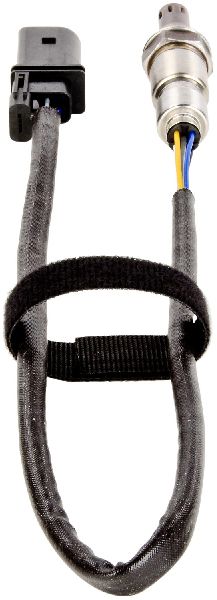
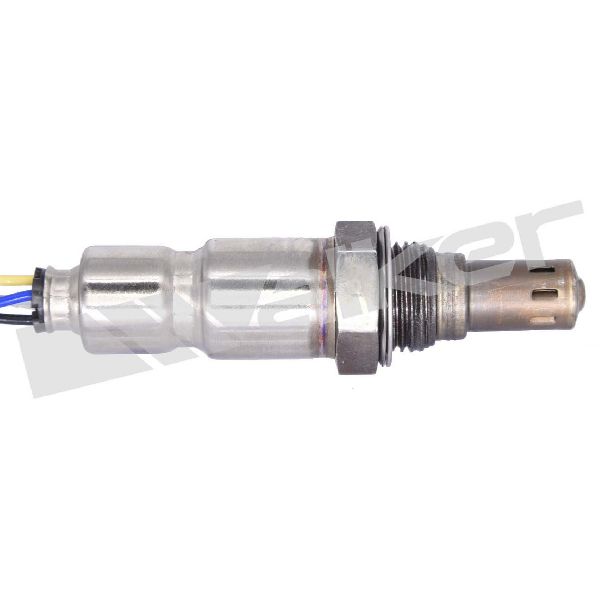
- Oxygen Sensor (Bank 2, Sensor 1)
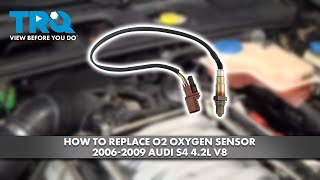
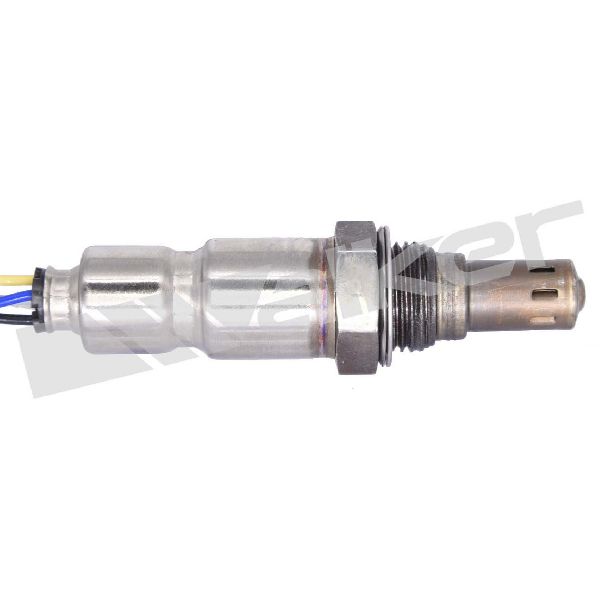
(OEM #059906262Q)— This is the upstream sensor for the 4.2L V8 engine. 🎬 See this walkthrough for replacing the O2 sensor on the V8. The internal heater element fails, often due to external contamination or age. This is the most direct fix for the code.
Trusted brands: Bosch (P/N: 17351), NGK, Denso
OEM price range: $160-$220
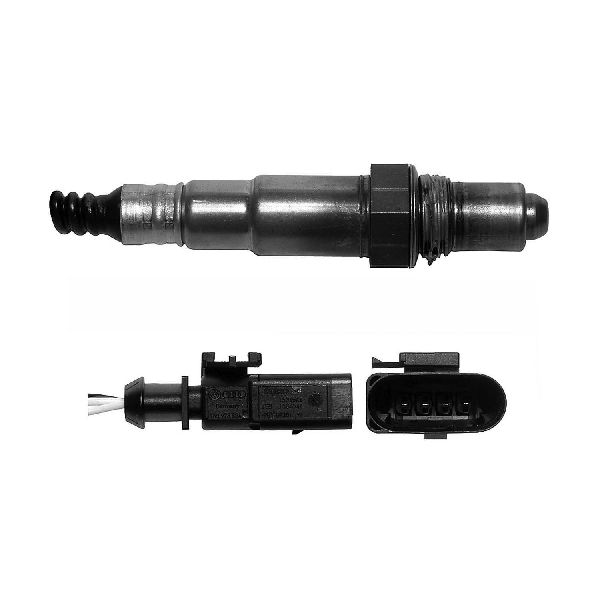
Aftermarket price range: $80-$150 - Oxygen Sensor (Bank 2, Sensor 1)
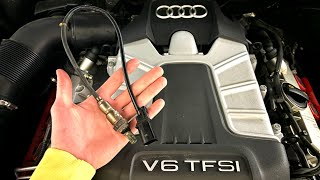
(OEM #06E906265AJ / 4L0906262K)— This is the upstream sensor for the 3.0L V6 TFSI engine. 🎬 Watch: Step-by-step upstream O2 sensor replacement for the 3.0T engine. The internal heater element fails. Note that multiple part numbers exist; always verify with VIN.
Trusted brands: Bosch, NGK
OEM price range: $170-$230
Aftermarket price range: $70-$160 - Valve Cover Gasket Kit (Driver's Side)
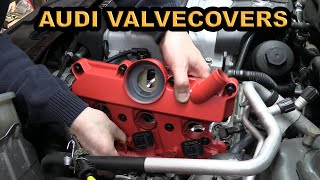
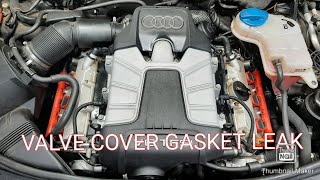
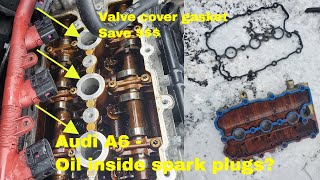
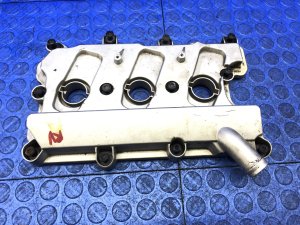
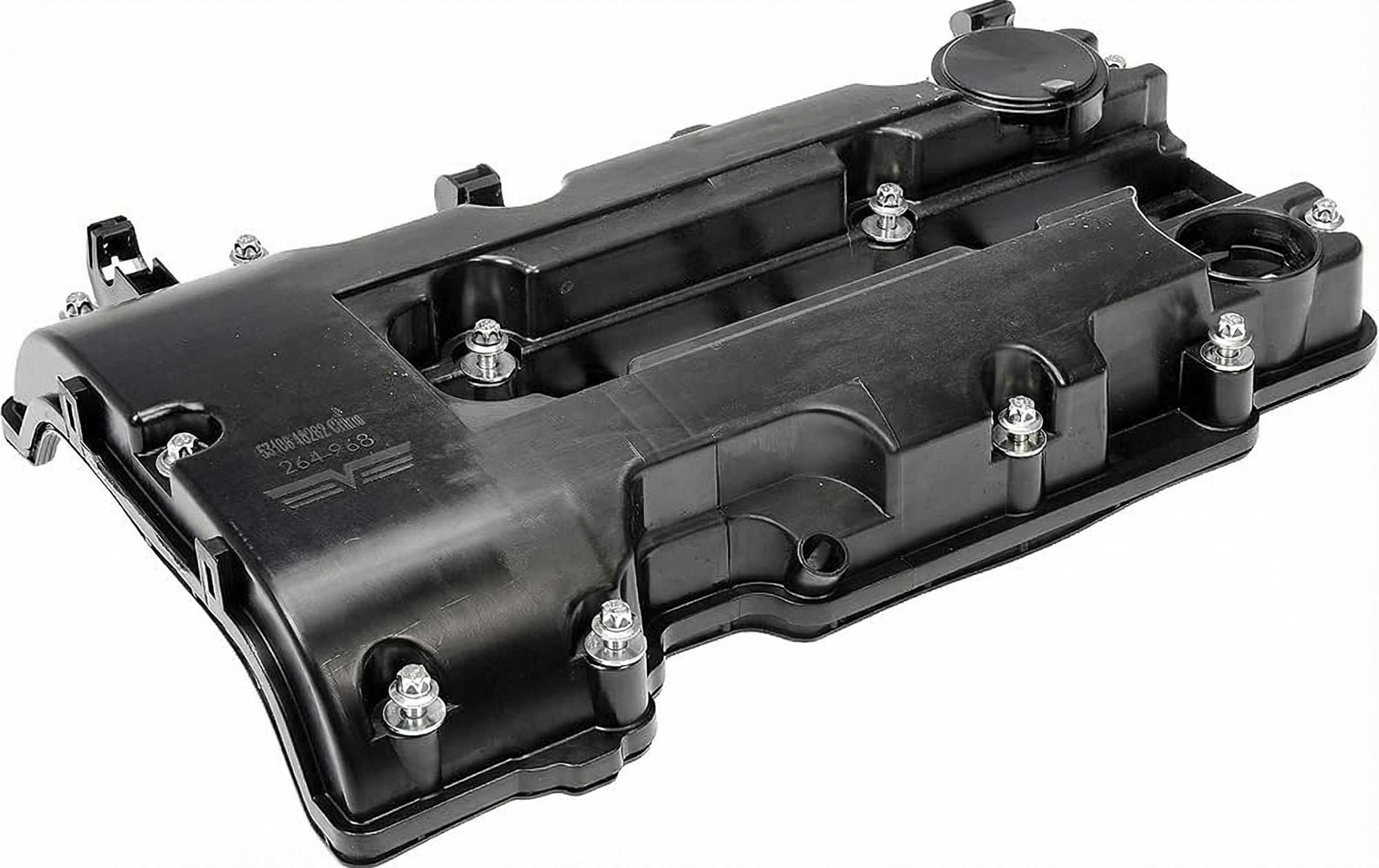
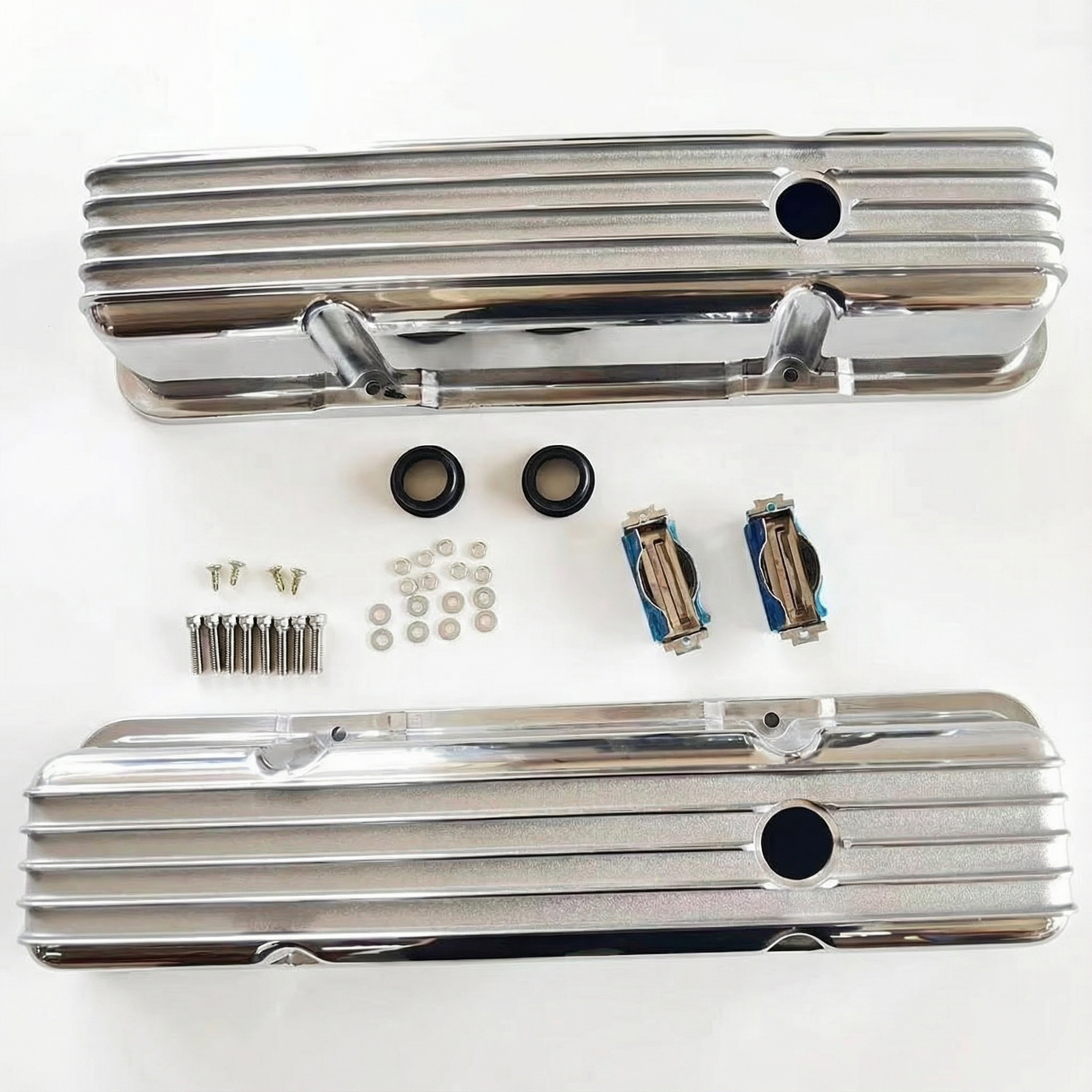
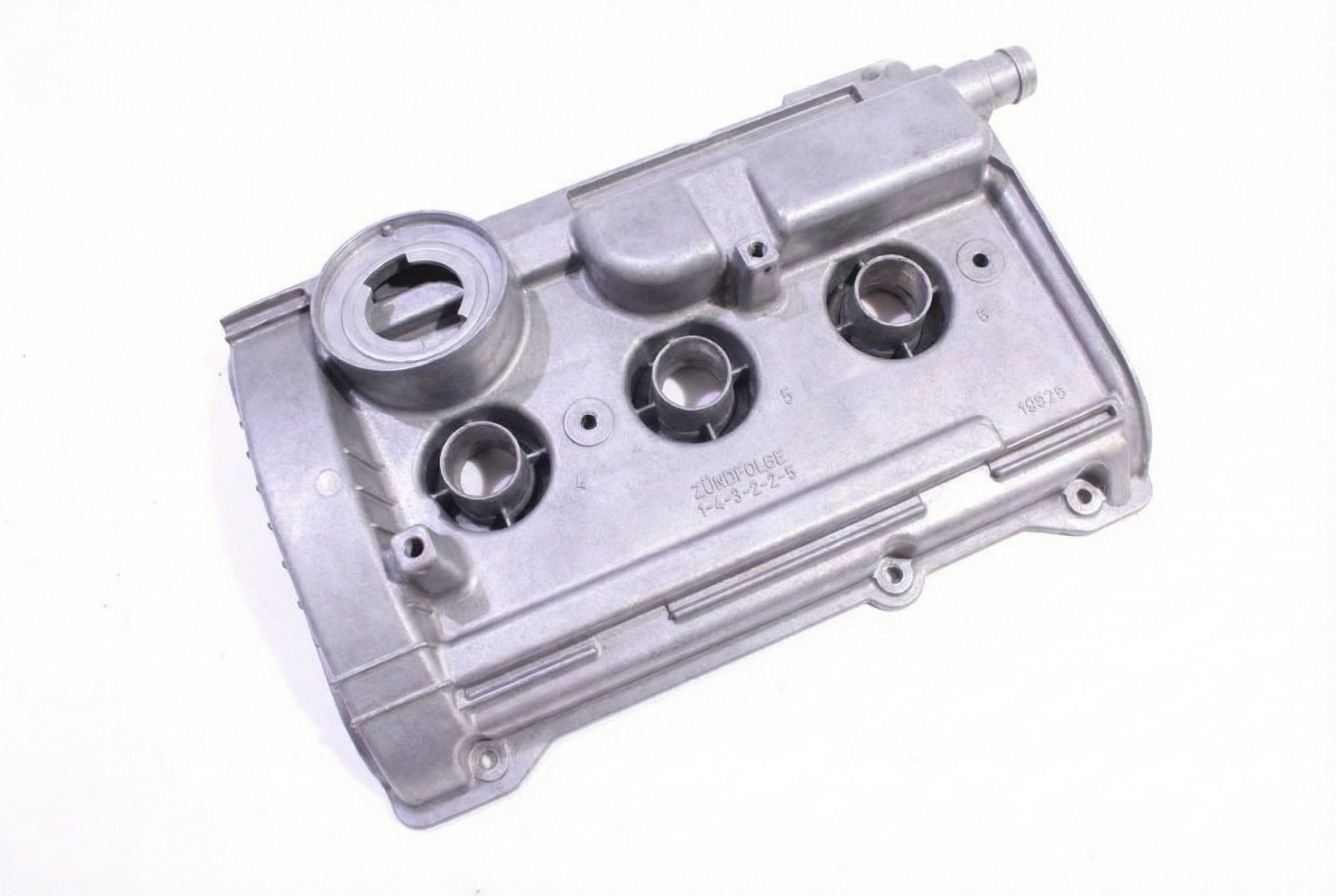
(OEM #079103483T (for 4.2L V8))— A leaking valve cover gasket is a frequent root cause, dripping oil onto the O2 sensor and causing it to fail. This should be replaced if any oil leak is present. 🎬 Watch: How to replace the valve cover gaskets on a 3.0T. An Audi Master Technician on Reddit confirms this is a common failure point across many Audi models.
OEM price range: $50-$80
Aftermarket price range: $25-$50
Related Codes That Often Appear With This One
- P1196 — This is the identical heater circuit fault code but for Bank 1, Sensor 1 (passenger side). It can appear if there is a shared power/fuse issue, or if both sensors fail around the same time, which is common if oil leaks are present on both valve covers.
- P0155 — This is the generic SAE version of the P1197 code (O2 Sensor Heater Circuit Malfunction Bank 2, Sensor 1). It may appear alongside the manufacturer-specific P1197 code.
- P0154 — Generic code for 'O2 Sensor Circuit No Activity Detected (Bank 2 Sensor 1)'. This can occur if the heater fails, as the sensor cannot reach operating temperature to begin sending a signal.
- Codes for misfires or lean/rich conditions (e.g., P2179) — If the O2 sensor is not heating up correctly, it provides inaccurate data to the ECM. This can cause the ECM to make improper fuel adjustments, leading to misfires or fuel trim codes.
Technical Service Bulletins (TSBs) & Recalls
- 01139020337671: MIL on (DTC P1196/P1197/P0135, heater circuit fault lambda sensor) - Repair Authorization
Platform-Specific Known Issues
- A known Technical Service Bulletin (TSB #01139020337671) was issued for a "Repair Authorization" on the 3.0L engine to address P1197 and related heater circuit faults, confirming it is a recognized issue by the manufacturer.
- Valve cover gasket oil leaks are a very common problem that directly leads to the failure of the Bank 2 Sensor 1 O2 sensor due to its location below the gasket. This is a well-documented issue in owner forums.
- On the 3.0T engine, access to the Bank 2 sensor requires removing the coolant expansion tank for better access.
Mechanic-Grade Diagnostic Values
- O2 Sensor Heater Resistance (cold) — expected: 2.5 to 10.0 Ohms (at approx. 20°C). Failure: Open circuit (infinite resistance) or a reading significantly outside the specified range.
- O2 Sensor Heater Power Supply (harness side) — expected: Battery Voltage (approx. 11-14V) with ignition on, engine off.. Failure: No voltage indicates a problem with the fuse, relay, or wiring from the power source.
- VCDS Live Data - O2 Sensor Heater Resistance — expected: The ECU reports a resistance value, which may differ from a direct multimeter reading but should not be excessively high (e.g., 235 Ohms indicates a likely fault).. Failure: An extremely high or out-of-range resistance value reported by the ECU.
Scan Tool Commands That Help
- VCDS (VAG-COM): Engine Measuring Value Blocks (MVB) Group 030-049 — To monitor the live status and performance of the O2 sensor heaters and catalytic converter function. This allows a technician to see what the ECU is seeing in real-time, such as heater duty cycle or resistance, to confirm a fault without relying solely on the trouble code.
- VCDS (VAG-COM): Engine II - Measuring Value Block (MVB) Group 031, Field 4 — Specifically for the V10 engine (related architecture), this block shows the raw signal voltage for Bank 2 Sensor 1 (G108), which can help diagnose if the sensor is sending any signal at all. While for a V10, similar blocks exist for the V8 and V6 and can be used to diagnose a 'no activity' fault that may accompany P1197.
Wiring & Ground Locations
- Heater Circuit Pins (4.2L V8) — On the 6-pin sensor connector for the V8, the heater circuit is typically on Pins 3 and 4.. These are the specific pins a technician must probe with a multimeter to measure the heater's resistance on the sensor side and check for voltage/ground on the harness side.
- Engine Ground Connection (12) — In the engine compartment, on the left side.. A poor main engine ground can cause a variety of electrical issues, including incorrect sensor readings and heater circuit faults. This is a primary ground point to check for corrosion or looseness if multiple electrical faults are present.
- Ground Connection on left front long member (671, 672) — On the left side frame rail in the engine bay.. These are chassis ground points. The O2 sensor heater circuit relies on a solid ground path back to the battery. Corrosion or a loose connection at these points can create high resistance, leading to heater malfunction codes.
- ECM Connector T94 (4.2L V8) — The 94-pin connector at the Engine Control Module (ECM), located in the plenum chamber.. For a definitive wiring check, a technician can test for continuity from the O2 sensor harness connector all the way back to the corresponding pin at the ECM connector (e.g., terminal 73 for the heater circuit on some models) to rule out a break in the harness.
Real Owner Repair Stories
- AudiWorld Forums user 'jcrampton' (Unknown Audi model, but experiencing P1196, P1197, and P0134 simultaneously.) — Check Engine Light with heater circuit malfunction codes for both Bank 1 and Bank 2, plus a 'no activity' code for Bank 1.
❌ Tried (didn't work) Replaced both pre-cat O2 sensors with universal Bosch sensors. Checked the fuse in the driver's side panel. Replaced a blown maxi fuse under the steering column. The codes returned.
✅ What actually fixed it The user did not post a final resolution, but other users immediately questioned the use of 'universal fit' sensors, suggesting they are a common cause of persistent issues. The advice was to scan live data with VAG-COM to see what the new sensors were actually reporting, implying the sensors themselves were the likely problem. - YouTube channel 'Gannon Voegtline' (Audi S4 3.0T (B8 generation, same engine as S5 Cabriolet)) — Check Engine Light for upstream O2 sensor.
❌ Tried (didn't work) The video directly proceeds to the fix, assuming prior diagnosis.
✅ What actually fixed it The upstream O2 sensor was completely soaked in oil that had leaked from the valve cover gasket. The fix was replacing the sensor and addressing the oil leak. The video highlights the difficulty in accessing the connector, which is tucked behind the engine against the firewall.
When the Usual Fixes Don't Work
- In one documented case involving both P1196 and P1197, the owner replaced both upstream O2 sensors and multiple fuses, yet the codes returned. This strongly suggests that while sensor failure is the most common cause, it is not the only one. In such instances, a persistent wiring issue (like a short to ground) or a problem with the shared power supply/relay for the heater circuit should be suspected, especially when both bank's sensors fail simultaneously.
OEM Part Supersession History
6e906265r→06E906265AJ— Part number update or revision by the manufacturer.
Heads up: 06E906265AJ is the correct replacement for the 3.0T V6 engine in the S5 Cabriolet for the 2010-2012 model years.
Helpful Videos

Used OEM Parts in Stock
New Aftermarket Parts Available


The information in this article is provided for general reference and educational purposes only. Vehicle specifications, procedures, and part compatibility can vary by production date, trim level, and region. Always consult your vehicle's factory service manual and verify part numbers before purchasing or performing repairs. Safety-critical components such as airbags, seat belts, and braking systems should be installed by a qualified professional.
- Audi S5:
- 🧭 Diagnostic Flowchart
- 🎬 Helpful Videos
- 🛍️ Shop This Part
- What's Unique About the 2010-2012 Audi S5
- Symptoms You May Notice
- Most Likely Causes
- Rare But Worth Checking
- Diagnosis Steps
- Parts You'll Likely Need
- Related Codes That Often Appear With This One
- Technical Service Bulletins (TSBs) & Recalls
- Platform-Specific Known Issues
- Mechanic-Grade Diagnostic Values
- Scan Tool Commands That Help
- Wiring & Ground Locations
- Real Owner Repair Stories
- When the Usual Fixes Don't Work
- OEM Part Supersession History
- 🎟️ Get 5% Off