

OBD-II Code P1228: Varies by Manufacturer (Fuel, Air, & Control Fault)
What P1228 means, why it triggers, and how to fix it
- Code P1228 is manufacturer-specific; always look up the exact definition for your make and model before buying parts.
- On Toyota diesel engines, P1228 almost always indicates a failed Suction Control Valve (SCV), a $250-$450 repair, rather than a catastrophic fuel pump failure.
- For 2020-2022 Ford Mustang GT500s, this code confirms a failed supercharger one-way clutch requiring drive assembly replacement (TSB #SSM 50578).
- On Chrysler and GM vehicles, P1228 points to an intermittent electrical fault in the #3 fuel injector circuit; perform a wiring harness wiggle test before replacing the injector.
- Never ignore P1228; driving with a fuel system fault dumps unburnt fuel into the exhaust, destroying a $1,500+ catalytic converter within months.
What Does P1228 Mean?
P1228 is a manufacturer-specific code with drastically different meanings depending on the brand. On Toyota diesels, it flags a failing Suction Control Valve (SCV). On Ford GT500s, it indicates a shattered supercharger clutch. For Chrysler and GM, it points to an electrical short in the #3 fuel injector circuit. Always pair this code with your specific vehicle make to determine the exact system failure.
Technical definition: Varies by manufacturer. Common definitions include 'Injection Pump Fuel Metering Control A Range/Performance' (Toyota), 'Wastegate Failed Open' (Ford/BMW), 'Injector Circuit Cylinder 3 Intermittent' (Chrysler/GM), or 'Accelerator Pedal Position Sensor 2 Circuit High Input' (Nissan).
Can I Drive With P1228?
Yes, But With Caution. You can drive short distances, but expect severe power loss, stalling, and limp mode. Driving with a fuel-related fault dumps unburnt fuel into the exhaust, destroying the catalytic converter and adding $1,200-$2,500 to your repair bill. Tow the vehicle if it stalls in traffic.
Common Causes
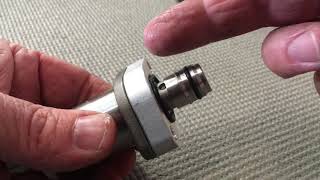
- Faulty Suction Control Valve (SCV) (Very Common) — On Toyota diesel vehicles (Hilux, Land Cruiser), a faulty SCV is the primary cause. This valve regulates fuel entering the high-pressure pump; its failure disrupts fuel pressure, causing stalling. Toyota offers an upgraded 'long' valve (Part #04226-0L020) to fix this design flaw. 🎬 Watch: Understanding how the Toyota SCV fails and how to fix it.
- Failed Fuel Injector or Circuit (Common) — For Chrysler, Chevrolet, and Kia, this code points to an electrical issue with a specific fuel injector (usually cylinder 3) or its wiring harness. This manifests as an open, short, or intermittent connection. 🎬 See how to diagnose a fuel injector circuit malfunction step-by-step.
- Failed Supercharger One-Way Clutch (Common) — On 2020-2022 Ford Mustang GT500s, a failed one-way clutch in the supercharger drive assembly prevents the supercharger from making boost. This is a documented defect covered by Ford TSBs. 🎬 Watch: A breakdown of the GT500 supercharger recall and common issues.
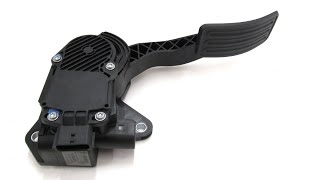
- Faulty Accelerator Pedal Position (APP) Sensor (Common) — On Nissan models, P1228 indicates a circuit fault (high input) for the APP sensor. The sensor sends incorrect throttle position data to the computer, triggering limp mode.
- Faulty Mass Air Flow (MAF) Sensor or Vacuum Leak (Common) — For Volkswagen and Audi models, a faulty MAF sensor provides incorrect airflow readings to the ECU. Unmetered air entering through cracked intake boots or vacuum lines also triggers this fault.
- Damaged Wiring Harness or Connectors (Less Common) — Frayed wires, loose pins, or corroded connectors in the circuit related to the suspected part (injector, SCV, APP, MAF) cause intermittent voltage drops that set the code.
- Faulty High-Pressure Fuel Pump (Rare) — A failing high-pressure fuel pump triggers this code when it cannot provide requested pressure. On Toyotas, always test the SCV first before replacing the expensive pump assembly.
Symptoms
- Significant Loss of Power & Limp Mode — The engine lacks power, refuses to accelerate, and restricts RPMs to a low limit (e.g., 1500 RPM) to prevent damage.
- Rough Idle or Misfiring — The engine shakes violently when stopped, often accompanied by a specific cylinder misfire code (e.g., P0303).
- Check Engine Light is On — The Malfunction Indicator Lamp (MIL) illuminates immediately upon detecting the fault.
- Hard Starting — The engine cranks excessively before starting due to a lack of fuel pressure or erratic sensor readings.
- Engine Stalling or Sputtering — The engine cuts out unexpectedly while driving or idling. This is the hallmark symptom of SCV failure on Toyota diesels.
- Poor Fuel Economy & Raw Fuel Smell (also visible on scanner) — A malfunctioning injector or MAF sensor creates a rich air/fuel mixture, burning excess fuel and producing a strong gasoline odor.
Diagnostic Flowchart
Tap your situation to follow the diagnostic path that matches what you're seeing on this code.
Common Fixes & Costs
- Replace Suction Control Valve (SCV) — Parts: $150-$250, Labor: $100-$200, ~1.5 hr book time (Intermediate)
- Replace Fuel Injector — Parts: $50-$150 per injector, Labor: $150-$300 per injector, ~1.5 hr book time (Intermediate)
- Replace Supercharger Drive Assembly — Parts: $400-$600, Labor: $800-$1200, ~8 hr book time (Professional)
- Replace Accelerator Pedal Position (APP) Sensor — Parts: $150-$300, Labor: $50-$100, ~0.5 hr book time (Beginner)
- Clean or Replace Mass Air Flow (MAF) Sensor — Parts: $15-$200, Labor: $25-$100, ~0.5 hr book time (Beginner)
- Repair Wiring Harness — Parts: $20-$100, Labor: $200-$600, ~4 hr book time (Professional)
DIY vs Professional
- Replace Accelerator Pedal Position (APP) Sensor 🟢 Beginner
Tools: Socket set, screwdriver - Clean or Replace Mass Air Flow (MAF) Sensor 🟢 Beginner
Tools: Screwdriver, dedicated MAF sensor cleaner spray - Replace Suction Control Valve (SCV) 🟢 Beginner
Tools: Socket set, torque wrench, clean rags - Replace Fuel Injector 🟢 Beginner
Tools: Socket set, torque wrench, fuel line disconnect tools, seal installation kit - Repair Wiring Harness 🟢 Beginner
Tools: Multimeter, wire strippers, soldering iron, heat shrink tubing, circuit diagrams - Replace Supercharger Drive Assembly 🟢 Beginner
Tools: Extensive mechanics tool set, torque wrenches, belt tensioner tool, Ford workshop manual
Used vs. New Parts: Buying Guide
When a used part is worth it: Used OEM parts are acceptable for simple electronic sensors (APP, MAF) on vehicles over 100,000 miles, offering savings over new OEM prices.
Donor-vehicle mileage cap: roughly under 80000 miles for the part to have meaningful remaining life.
Donor quality checklist:
- Verify the exact part number match.
- Source parts from dry climates to avoid corroded connector pins.
- Never buy 'used' fuel injectors; only buy 'remanufactured' injectors that have been cleaned and flow-tested.
Decision logic:
- If The part is a simple electronic sensor (APP, MAF) and the vehicle is old. → Buy a warrantied used OEM part.
- If The part is a critical wear item (fuel injector, high-pressure pump, SCV). → Buy new OEM or high-quality remanufactured parts.
- If The part is for a high-performance application (GT500 Supercharger Clutch). → Buy the new, updated OEM part to ensure you get the latest design revision.
Warranty tradeoff: Used parts carry 30-90 day warranties. New aftermarket parts offer 1-year warranties. New OEM parts carry 12-month/12,000-mile warranties.
Worst-case if a used part fails: $300-$1000 if a used part fails, forcing you to pay labor costs twice.
What Happens If You Wait — Timeline
- 0-2 weeks: Intermittent Check Engine Light with no noticeable symptoms. Fault occurs under specific highway conditions and disappears. (MPG impact: 0-2%% · Added cost: $0)
- 2 weeks - 3 months: Fault becomes consistent. Rough idle, hesitation, and occasional stalling appear. Fuel economy drops noticeably. (MPG impact: 5-10%% · Added cost: $50-$150 in wasted fuel)
- 3-8 months: Unburnt fuel ignites in the exhaust, overheating and melting the catalytic converter substrate. Stalling becomes dangerous. (MPG impact: 10-20%% · Added cost: $1,200 - $2,800 for catalytic converter replacement.)
- 8+ months: Catalytic converter clogs completely, preventing the engine from running. A severely leaking injector hydro-locks a cylinder, bending a connecting rod. (MPG impact: 20-50% (or undrivable)% · Added cost: $3,000 - $8,000+ for engine replacement.)
Cost of Not Fixing It
- 0-1 month: Dangerous stalling in traffic, severe hesitation, and a 5-15% drop in fuel economy. (Added cost: $50 in wasted fuel.)
- 1-6 months: Unburnt fuel from a leaking injector or misfire dumps into the exhaust, overheating and melting the catalytic converter substrate. (Added cost: $1,200 - $2,800 for catalytic converter replacement.)
- 6+ months: Prolonged rich conditions wash oil from cylinder walls, causing accelerated piston ring wear. A severely leaking injector hydro-locks the engine, bending connecting rods. (Added cost: $3,000 - $8,000+ for catastrophic engine replacement.)
Diagnosis Steps
- Identify Your Vehicle's Specific Definition
Search 'P1228' alongside your car's make, model, and year. You cannot diagnose this code without knowing which system (fuel, air, or supercharger) your specific manufacturer links it to.
Tools: Internet access (Beginner) - Scan for Companion DTCs and Freeze Frame Data
Check for specific injector circuit codes (P0201-P0208), misfires (P0300-P0308), or low fuel pressure (P0087). Freeze frame data reveals the exact engine load, RPM, and temperature when the fault occurred.
Tools: OBD-II Scanner (Beginner) - Monitor Live Data with a Scan Tool
For Toyotas, graph 'Target Common Rail Pressure' vs. 'Actual Fuel Press'. A difference greater than +/- 4,000 kPa confirms a bad SCV. For Nissans, watch APP sensor voltage PIDs for dropouts while pressing the pedal.
Tools: Advanced OBD-II Scanner (Intermediate) - Perform a 'Wiggle Test' for Intermittent Faults
With the engine running, gently wiggle the wiring harness and connectors related to the suspect component (e.g., cylinder 3 injector on a Chrysler). If the engine stumbles, you have located the electrical short or open.
Tools: Gloves, Advanced OBD-II Scanner (Intermediate) - Test Component Electrical Resistance
Disconnect the suspect component (SCV or Injector) and measure resistance across its pins. A Toyota SCV must read 2.6-3.15 Ohms. A Chrysler high-impedance injector must read 12-16 Ohms. Replace the part if readings fall outside these specs.
Tools: Multimeter, Service manual (Advanced) - Perform a Mechanical Check (Ford GT500)
Remove the supercharger belt and rotate the supercharger drive pulley by hand. If the pulley spins freely in both directions, the one-way clutch has shattered.
Tools: Basic hand tools (Intermediate) - Analyze Sensor/Actuator Waveforms
Back-probe the signal wire on the suspected component with an oscilloscope. A healthy fuel injector shows a clean square wave pattern. Erratic waveforms indicate a failing PCM driver or severe wiring damage.
Tools: Oscilloscope (Advanced)
When This Code Triggers (Freeze-Frame Conditions)
- Engine Coolant Temp: 180-200°F (82-93°C) (Triggers when the engine is fully warmed up and operating in closed-loop fuel control.)
- RPM: 1500-2500 RPM (Occurs under steady-state cruising or light acceleration, rarely during hard acceleration.)
- Engine Load: 20-50% (Sets under moderate engine load when the ECU expects a predictable response from the fuel or air management system.)
- Vehicle Speed: 35-60 mph (Consistent with highway or suburban driving speeds.)
Related Codes
- P0087 — Means 'Fuel Rail Pressure Too Low.' If actual pressure is stable but low, suspect a weak pump (P0087). If pressure fluctuates wildly around the target, suspect the SCV (P1228).
- P030X (e.g., P0303) — Indicates a specific cylinder misfire. Swap the misfiring cylinder's injector to another cylinder. If the misfire follows the injector, the injector is bad. If it stays, the wiring is bad (P1228).
- P020X (e.g., P0203) — A hard fault code for an open injector circuit. P1228 is often the 'intermittent' version of this code, making it harder to track down without a wiring wiggle test.
- 30FF (BMW Specific) — The BMW-specific code for 'Turbocharger charge-air pressure too low.' Always accompanies P1228 on BMWs and requires pressure testing the intake system.
- P2138 — Indicates a correlation problem between APP Sensor 1 and Sensor 2 on Nissans. Confirms the entire accelerator pedal assembly requires replacement.
Climate & Environmental Factors
- Cold Weather: Extremely cold temperatures cause diesel fuel waxing, restricting flow and mimicking SCV failure symptoms on Toyotas.
- High Humidity: Moisture accelerates corrosion on wiring harness connectors, causing the high-resistance electrical shorts that trigger P1228 on Chrysler/GM vehicles.
- High Altitude: Lower air density forces turbochargers and superchargers to spin faster to hit target boost, exposing weaknesses in wastegates or supercharger clutches.
How to Talk to a Mechanic About This Code
Say this: "I have a P1228 code on my [Make/Model/Year]. Based on my research, this specific code for my vehicle points to a problem with the [Suction Control Valve / Cylinder 3 injector circuit / Supercharger Clutch]. I need a diagnostic appointment to confirm this specific component failure."
This proves you are an informed customer. It directs the technician straight to the most probable cause, preventing them from quoting an expensive, unnecessary repair like a complete fuel pump replacement.
Avoid saying:
- 'Just fix whatever's wrong'
- 'My check engine light is on, can you look at it?'
- 'Replace the fuel pump, the internet said so'
Questions to ask before authorizing the repair:
- For a Toyota: Did you graph the target vs. actual fuel pressure to confirm the SCV is faulty?
- For a Chrysler/GM: Did you perform a wiggle test on the injector harness to rule out a wiring short?
- For a Ford GT500: Have you confirmed the supercharger one-way clutch failed per TSB #SSM 50578?
- Can you provide a detailed breakdown of parts versus diagnostic labor?
Where to Take It: Dealer vs Independent vs Chain
- Dealer:
The best choice for highly specific, documented issues like the Ford GT500 supercharger clutch or vehicles under warranty.
Best for: Vehicles under warranty (e.g., 2021 Ford GT500)., Manufacturer-specific issues covered by Technical Service Bulletins (TSBs)., Complex electronic faults requiring OEM software.
Downsides: Labor rates are 50-100% higher than independent shops., Dealers often replace entire assemblies (fuel pumps) rather than individual components (SCVs). (Typical cost: +50% vs. baseline) - Independent Shop:
The ideal choice for most P1228 scenarios. An independent specialist provides the best balance of diagnostic skill and fair pricing.
Best for: Out-of-warranty vehicles., Common P1228 variants (Toyota SCV failure, Chrysler injector fault)., Shops specializing in your specific make (e.g., Toyota specialists).
Downsides: Diagnostic expertise varies; vet shops based on ASE certifications., May lack access to the latest dealership TSBs. (Typical cost: +0% vs. baseline) - Chain Shop:
AVOID. The vehicle-specific nature of P1228 guarantees misdiagnosis at a general chain repair shop.
Best for: Routine maintenance like oil changes or brake pads.
Downsides: Technicians lack advanced diagnostic training., High pressure to upsell unnecessary services., Incapable of diagnosing manufacturer-specific codes accurately. (Typical cost: -10% vs. baseline)
When to Walk Away From the Repair
If the estimated repair cost exceeds 50% of the car's private-party market value, replace the vehicle instead of repairing it.
- Car worth $4000, fix is $2100: Walk away. The repair cost exceeds 50% of the car's value. Put that money toward a more reliable vehicle.
- Car worth $12000, fix is $450: Fix it. This repair is well below the 50% threshold and keeps a valuable car running.
- Car worth $3000, fix is $1800: Walk away. The repair cost is a massive portion of the vehicle's value, and other age-related failures are imminent.
What Scan Tool You Need for This Code
Minimum: A scanner that reads manufacturer-specific codes and graphs live sensor data. A basic $20 code reader is useless for P1228.
You cannot diagnose P1228 without live data. You must graph target vs. actual fuel pressure (Toyota), watch pedal sensor voltages (Nissan), or view live misfire counters (Chrysler).
Budget: BlueDriver Pro (~$100) — Connects to your smartphone to read OEM codes, view freeze frame data, and graph live data streams—the absolute minimum required for this diagnosis.
Mid-range: Foxwell NT510 Elite (~$150) — Offers bidirectional controls, allowing you to actively command fuel pumps or injectors to test their function without turning the engine on.
Professional: Autel MaxiCOM MK808Z (~$400) — Provides OEM-level access to all modules, full bidirectional control, and advanced service functions like injector coding.
Rent vs buy: AutoZone loans basic scanners for free (with a refundable deposit). However, if you plan to diagnose P1228 yourself, buying a BlueDriver Pro is mandatory for the live data features.
How to Clear the Code After You Fix It
- Reconnect the battery if disconnected during repair.
- Use an OBD-II scan tool to clear P1228 and any companion codes.
- Perform a complete drive cycle to allow the ECU to run its self-tests.
Drive cycle (~30 minutes): A standard drive cycle requires a cold start (sitting 8+ hours), 3 minutes of idling, 15 minutes of mixed city/highway driving at steady speeds, and several stop-and-go periods.
Readiness monitors affected: Catalyst Monitor, Evaporative System Monitor, Oxygen (O2) Sensor Monitor, Fuel System Monitor
Before emissions retest: drive at least 100 miles to fully set monitors.
Watch out for:
- Disconnecting the battery clears the code but resets all emissions monitors to 'Not Ready', causing an automatic emissions test failure.
- The code returns immediately if an intermittent electrical short was not fully repaired.
- Replacing an accelerator pedal sensor requires a specific idle relearn procedure via a scan tool.
Will This Fail Emissions / State Inspection?
Yes — this code typically fails an OBD-II emissions inspection.
- California: P1228 causes an automatic smog check failure. You must complete a full drive cycle to set all readiness monitors to 'Ready' before re-testing.
- New York: An active P1228 code and illuminated Check Engine Light results in an automatic NYS DMV inspection failure.
- Texas: Vehicles in emissions-testing counties fail the OBD-II portion of the annual safety inspection with this code.
Most Commonly Affected Vehicles
- Ford Mustang Shelby GT500 (2020-2022) — A known defect with the supercharger drive assembly one-way clutch directly causes P1228. Addressed by TSBs #SSM 50578 and #SSM 52542. Fix requires updated part KR3Z-6J022-C.
- Toyota Hilux, Land Cruiser, Avensis (Diesel) (2005-2015) — Prone to Suction Control Valve (SCV) failure. Dealers often quote $1,700+ for a full pump assembly, but the SCV can be replaced independently for under $300.
- Chrysler/Dodge/Jeep Town & Country, Grand Caravan (3.6L Pentastar) (2011-2016) — Indicates an intermittent electrical fault in the #3 fuel injector circuit. Inspect the wiring harness for chafing near the valve covers.
- Chevrolet/GM Various Models (2007-2014) — Points to an 'Injector Circuit Cylinder 3 Intermittent' fault, requiring electrical diagnosis of the harness and injector coil.
- Nissan Micra, Almera, X-Trail, Infiniti M (2004-2013) — Defined as 'Accelerator Pedal Position (APP) Sensor 2 Circuit High Input.' Tied to a massive 2013 safety recall for faulty electronic throttle pedals.
- Volkswagen/Audi Various Models (2006-2014) — Indicates a Mass Airflow (MAF) Sensor Circuit fault or a short in the #4 injector circuit, depending on the exact engine code.
- BMW 335i, 135i (N54/N55 Engines) (2007-2013) — Means 'boost pressure is continuously lower than desired.' Indicates a turbocharger wastegate failure, a cracked charge pipe, or a faulty pressure sensor.
- Ford (Roush Supercharged) F-150, Mustang (2015-2023) — On aftermarket Roush kits, P1228 means 'Wastegate Failed Open,' indicating a lack of boost pressure due to a vacuum line leak or bypass actuator failure.
Manufacturer-Specific Notes
- Toyota: The issue is almost always the Suction Control Valve (SCV), not the main fuel pump. Misdiagnosing this as a bad fuel pump is a common $1,500 mistake.
- Ford: On a 2020-2022 Mustang GT500, P1228 points directly to a shattered supercharger clutch covered by TSB #SSM 50578. Do not waste time diagnosing fuel systems.
- Chrysler / Dodge / Jeep / GM: The code specifically targets the #3 fuel injector circuit and is defined as 'intermittent.' A physical wiggle test on the wiring harness is mandatory.
- Nissan: P1228 has nothing to do with fuel delivery on Nissans; it points directly to the Accelerator Pedal Position (APP) sensor, which was subject to a massive global recall.
Real Owner Stories
2021 Ford Mustang GT500 at 8K miles
Owner experienced a sudden 'Powertrain Malfunction' warning with a complete loss of supercharger boost.
What they tried:
- Took the vehicle to a Ford dealership.
Outcome: The dealer diagnosed a failed one-way clutch in the supercharger drive assembly per Ford TSB #SSM 50578. The drive assembly was replaced under warranty with updated part KR3Z-6J022-C, resolving the issue.
Lesson: On a 2020-2022 GT500, P1228 is a known defect. Do not waste time on diagnostics; the supercharger one-way clutch has failed.
2008 Toyota Hilux (1KD-FTV Diesel) at 180K km
The vehicle stalled intermittently at idle and hesitated severely when accelerating.
What they tried:
- Replaced the diesel fuel filter, which did not help.
- A mechanic quoted $2,000 to replace the high-pressure fuel pump.
- The owner used a scan tool to observe actual fuel rail pressure fluctuating wildly (±4,000 kPa) from the target pressure.
Outcome: The owner purchased a new Denso SCV kit for $250 and installed it in an hour. The stalling stopped, and fuel pressure readings stabilized.
Lesson: Always diagnose the SCV before condemning the expensive high-pressure pump on Toyota diesels. Graphing target vs. actual fuel pressure is mandatory.
2012 Chrysler Town & Country at 110K miles
Check Engine Light illuminated with P1228 and P0303 (Cylinder 3 Misfire). The van stumbled on light acceleration.
What they tried:
- Swapped the cylinder 3 spark plug and ignition coil with cylinder 1. The P0303 code remained.
- Swapped the cylinder 3 fuel injector with cylinder 1.
- The codes returned as P1228 and P0301 (Cylinder 1 Misfire). The misfire followed the injector.
Outcome: The owner replaced the faulty fuel injector for $150. The misfire and P1228 code vanished.
Lesson: Swapping the injector to another cylinder is a definitive, zero-cost diagnostic step to confirm a bad injector before buying parts.
2009 BMW 335i (N54 Engine) at 124K miles
The car threw a 30FF 'underboost' code (BMW's P1228 equivalent) and had a noticeable wastegate rattle sound.
What they tried:
- Replaced all vacuum lines and tested boost solenoids.
- Pressure tested the intake system; no leaks found.
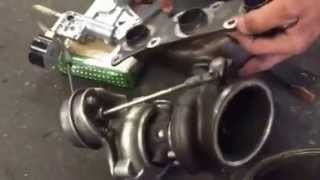
- Physical inspection revealed the wastegate actuator arm had excessive play and could not seal.
Outcome: Diagnosed as worn-out turbocharger wastegates, requiring a multi-thousand-dollar turbocharger replacement.
Lesson: A low boost code on a BMW requires a systematic approach. Check cheap vacuum lines and charge pipes before assuming the turbos are dead.
How to Prevent This Code From Triggering
- Use Top-Tier Certified Fuel (Every fill-up) — High detergent levels prevent carbon deposits on fuel injectors, maintaining spray patterns and preventing lean conditions.
- Replace Diesel Fuel Filter (Every 10,000-15,000 miles) — A clean filter defends the Suction Control Valve and high-pressure pump against dirt and water contamination.
- Inspect Wiring Harnesses (Every 30,000 miles) — Prevents the intermittent electrical shorts common in Chrysler/GM vehicles by catching chafed wires early.
- Use PEA-Based Fuel System Cleaner (Every 5,000-10,000 miles) — Removes stubborn deposits from injectors, restoring performance and preventing clogs.
Frequently Asked Questions
Can I fix P1228 myself?
It depends on your vehicle's specific definition. Cleaning a MAF sensor or replacing an accelerator pedal are beginner-friendly tasks. Replacing a fuel injector or supercharger drive assembly requires advanced tools and should be left to professionals.
What is the most common misdiagnosis for P1228?
On Toyota diesels, mechanics frequently replace the entire $1,500 high-pressure fuel pump when only the $200 Suction Control Valve (SCV) failed. Across all makes, replacing expensive injectors without checking for damaged wiring is a common error.
The fault is intermittent and goes away on its own. What should I do?
Intermittent faults stem from poor electrical connections. With the engine running, perform a 'wiggle test' by gently shaking the wiring harness for the suspected component to see if you can trigger the engine to stumble.
Why does the code definition change so much between cars?
Codes starting with 'P1' are manufacturer-specific, unlike universal 'P0' codes. Automakers assign P1228 to entirely different systems based on their proprietary engineering.
My mechanic replaced the fuel pump but the P1228 code came back. What now?
The underlying cause was misdiagnosed. On a Toyota, the SCV is likely the true culprit. On other vehicles, a persistent wiring short or a faulty ECU driver was ignored.
How do I know if the problem is the injector or the wiring?
Swap the suspected faulty injector with one from a healthy cylinder. If the misfire code moves to the new cylinder, the injector is bad. If the code stays on the original cylinder, the wiring is damaged.
What happens if I ignore a P1228 code?
You risk dangerous stalling in traffic. Furthermore, driving with a fuel system fault dumps unburnt fuel into the exhaust, destroying your catalytic converter and adding thousands to your repair bill.
Key Takeaways
- Code P1228 is manufacturer-specific; always look up the exact definition for your make and model before buying parts.
- On Toyota diesel engines, P1228 almost always indicates a failed Suction Control Valve (SCV), a $250-$450 repair, rather than a catastrophic fuel pump failure.
- For 2020-2022 Ford Mustang GT500s, this code confirms a failed supercharger one-way clutch requiring drive assembly replacement (TSB #SSM 50578).
- On Chrysler and GM vehicles, P1228 points to an intermittent electrical fault in the #3 fuel injector circuit; perform a wiring harness wiggle test before replacing the injector.
- Never ignore P1228; driving with a fuel system fault dumps unburnt fuel into the exhaust, destroying a $1,500+ catalytic converter within months.
Helpful Videos


Shop the Parts Behind P1228
Below are the parts most often responsible for code P1228, ranked by how frequently each one is the actual culprit (per the diagnosis above). Tap any to see what we have for your vehicle.



The information in this article is provided for general reference and educational purposes only. Vehicle specifications, procedures, and part compatibility can vary by production date, trim level, and region. Always consult your vehicle's factory service manual and verify part numbers before purchasing or performing repairs. Safety-critical components such as airbags, seat belts, and braking systems should be installed by a qualified professional.
- 🧭 Diagnostic Flowchart
- 🎬 Helpful Videos
- 🛍️ Shop This Part
- What Does P1228 Mean?
- Can I Drive With P1228?
- Common Causes
- Symptoms
- Common Fixes & Costs
- DIY vs Professional
- Used vs. New Parts: Buying Guide
- What Happens If You Wait — Timeline
- Cost of Not Fixing It
- Diagnosis Steps
- When This Code Triggers (Freeze-Frame Conditions)
- Related Codes
- Climate & Environmental Factors
- How to Talk to a Mechanic About This Code
- Where to Take It: Dealer vs Independent vs Chain
- When to Walk Away From the Repair
- What Scan Tool You Need for This Code
- How to Clear the Code After You Fix It
- Will This Fail Emissions / State Inspection?
- Most Commonly Affected Vehicles
- Manufacturer-Specific Notes
- Real Owner Stories
- 2021 Ford Mustang GT500 at 8K miles
- 2008 Toyota Hilux (1KD-FTV Diesel) at 180K km
- 2012 Chrysler Town & Country at 110K miles
- 2009 BMW 335i (N54 Engine) at 124K miles
- How to Prevent This Code From Triggering
- Frequently Asked Questions
- Can I fix P1228 myself?
- What is the most common misdiagnosis for P1228?
- The fault is intermittent and goes away on its own. What should I do?
- Why does the code definition change so much between cars?
- My mechanic replaced the fuel pump but the P1228 code came back. What now?
- How do I know if the problem is the injector or the wiring?
- What happens if I ignore a P1228 code?
- Key Takeaways
- 🎟️ Get 5% Off