

OBD-II Code P1239: A Manufacturer-Specific Fault Guide
What P1239 means, why it triggers, and how to fix it on Ford, Jeep, VW, Nissan, and more
- Verify your vehicle's specific P1239 definition before buying parts, as this code means 'Fuel Pump Module Failure' on a Ford but 'Oil Temp Too Low' on a Jeep.
- For 2004-2008 Ford F-150s, inspect the Fuel Pump Driver Module above the spare tire; replacing a corroded module with a $70 aftermarket kit fixes 90% of these codes.
- For 2014-2017 Jeep and Chrysler vehicles, do not replace the oil temperature sensor; a $150 dealer PCM software update is the required fix per TSB 18-031-14.
- Stop driving immediately if you have a Volkswagen with P1239; the resulting cylinder 3 misfire destroys catalytic converters, turning a $150 injector repair into a $1,500 replacement.
What Does P1239 Mean?
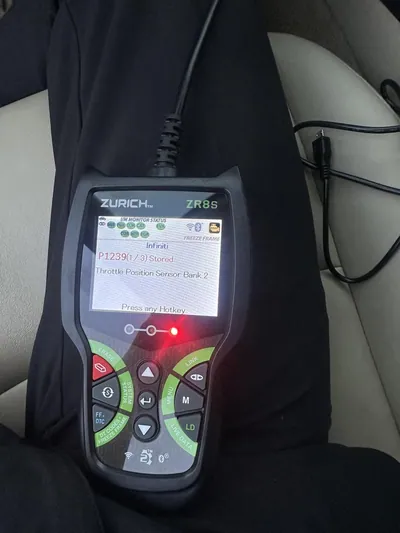
P1239 is a manufacturer-specific code with drastically different definitions. For Ford, it indicates a Fuel Pump Driver Module (FPDM) failure. For Chrysler/Jeep, it means 'Engine Oil Temperature Too Low,' usually a software glitch. For Volkswagen/Audi, it flags an open circuit in the cylinder 3 fuel injector. For Nissan, it points to a throttle control system fault.
Technical definition: The SAE/ISO definition varies by manufacturer. Ford: 'Fuel Pump Driver Module Offline' or 'Speed Fuel Pump Positive Feed Fault.' Chrysler/Jeep: 'Engine Oil Temperature Too Low.' VW/Audi: 'Injector Circuit Open - Cylinder 3' (VAG 17647). Mercedes-Benz: 'Positive control deviation during boost pressure control is too high.' Mini: 'MAP sensor 2 - signal too low at engine stop.'
Can I Drive With P1239?
Yes, But With Caution. Driving carries significant risks depending on the manufacturer. On a Ford, expect sudden engine stalls in traffic. On a Nissan, the vehicle enters 'limp mode' with drastically reduced power. On a Volkswagen, driving with a misfire destroys the catalytic converter, a $1,500+ repair. On a Jeep, driving is safe, but the active Check Engine Light masks new problems.
Common Causes

- Corroded Fuel Pump Driver Module (FPDM) - Ford (Very Common) — On 2004-2008 Ford trucks, the FPDM is mounted directly to the steel frame. Moisture and road salt cause severe galvanic corrosion, cracking the aluminum housing and shorting the internal circuit board.
- Outdated Powertrain Control Module (PCM) Software - Jeep/Chrysler (Very Common) — On 2014-2017 Jeep and Chrysler vehicles, this code is a software glitch. The PCM's logic for monitoring oil temperature is too sensitive in cold weather. A dealer software update (TSB 18-031-14) is the required fix.
- Failed Fuel Injector or Circuit - VW/Audi (Common) — This code specifically flags an open circuit for the cylinder 3 fuel injector. It is caused by a broken wire in the harness near the connector or an internal failure of the injector coil.
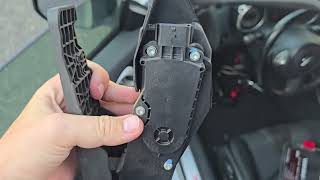
- Faulty Throttle Position Sensor (TPS) or Pedal - Nissan/Infiniti (Common) — P1239 indicates a throttle control system fault. It is typically caused by a failing sensor on the accelerator pedal assembly 🎬 Watch: Fixing the Nissan accelerator pedal sensor for code P1239. or a dirty electronic throttle body, triggering limp mode.
- Damaged Wiring or Electrical Connector (Common) — Road debris, heat, or oil leaks damage wiring harnesses for the FPDM (Ford), fuel injector (VW), or throttle sensors (Nissan), causing open or shorted circuits.
- Tripped Inertia Fuel Shutoff Switch - Ford (Less Common) — This safety device cuts power to the fuel pump in a collision. A sharp jolt from a pothole or a faulty switch trips it, causing a no-start condition that mimics FPDM failure.
- Blown Fuel Pump or Injector Fuse (Less Common) — A short circuit in the FPDM, fuel pump, or a fuel injector blows the dedicated fuse, cutting all power to the respective system.
- Stuck-Open Thermostat - Jeep/Chrysler (Rare) — If the thermostat is stuck open, the engine coolant and oil fail to reach operating temperature quickly. This triggers the 'Engine Oil Temperature Too Low' code.
- Failing Fuel Pump (Rare) — A failing fuel pump draws excessive electrical current, overheating and damaging the FPDM. While the module is the common failure point, the pump itself is sometimes the root cause.
Symptoms

- Engine cranks but will not start — The most common symptom for a Ford with a failed FPDM. The engine turns over but lacks fuel delivery to fire up.
- Engine stalls unexpectedly — The vehicle starts and runs, then suddenly dies while driving or idling. This occurs when the FPDM overheats (Ford) or the throttle control system faults (Nissan).
- Engine running rough or misfiring — On a Volkswagen, the engine runs rough because cylinder 3 receives no fuel. On a Jeep, a severe misfire is sometimes a related symptom fixed by the PCM software update.
- Loss of power and hesitation — The engine sputters or surges during acceleration due to inconsistent FPDM voltage (Ford), a faulty injector (VW), or a failing throttle sensor (Nissan).
- Check Engine Light is on — The engine computer detects the fault and illuminates the Malfunction Indicator Lamp (MIL) across all makes.
- Electronic Throttle Control (ETC) warning light is on — On Dodge, Chrysler, and Nissan vehicles, a throttle system fault illuminates a lightning bolt symbol alongside the Check Engine Light.
Diagnostic Flowchart
Tap your situation to follow the diagnostic path that matches what you're seeing on this code.
Common Fixes & Costs
- Replace the Fuel Pump Driver Module (FPDM) — Parts: $60-$120, Labor: $100-$200, ~1.0 hr book time (DIY)
- Perform a PCM Software Update (Jeep/Chrysler) — Parts: $0, Labor: $150-$250, ~1.0 hr book time (Professional)
- Replace Fuel Injector (VW) — Parts: $60-$150, Labor: $150-$250, ~1.5 hr book time (Intermediate)
- Repair Wiring or Connector — Parts: $10-$50, Labor: $100-$250, ~1.5 hr book time (Intermediate)
- Replace Accelerator Pedal Assembly (Nissan) — Parts: $100-$250, Labor: $50-$100, ~0.5 hr book time (DIY)
- Replace the Fuel Pump Assembly — Parts: $250-$500, Labor: $400-$700, ~3.0 hr book time (Professional)
Used vs. New Parts: Buying Guide
When a used part is worth it: Buying a used Ford FPDM is not recommended. The part fails due to environmental corrosion, so a junkyard part has a limited lifespan. The minimal savings do not justify the risk of repeated failure.
Donor-vehicle mileage cap: roughly under 20000 miles for the part to have meaningful remaining life.
Donor quality checklist:
- Avoid parts from the 'Rust Belt' or high-humidity areas.
- Visually inspect for any signs of corrosion on the aluminum housing or pins.
- Match the part number exactly.
Decision logic:
- If The part is a Ford Fuel Pump Driver Module (FPDM) → Buy a new aftermarket (e.g., Dorman OE FIX) or OEM part. New parts include mandatory spacers to prevent repeat corrosion.
- If Vehicle is > 150K miles AND budget is extremely tight → A used part is a gamble; expect it to fail sooner rather than later.
- If The part is an electronic module with a known environmental failure mode → Always favor a new part with an updated design over a used original-design part.
Warranty tradeoff: Salvage yard parts have a 30-90 day warranty. New aftermarket parts carry a 1-year to lifetime warranty. OEM parts provide peace of mind but cost the most.
Worst-case if a used part fails: $200-$400 (Towing fee plus the cost of a new part when the used one fails)
What Happens If You Wait — Timeline
- 0-1 month: Ford: Intermittent hesitation or bucking. VW: Engine runs slightly rough at idle. Jeep: Check Engine Light on, no other symptoms. (MPG impact: 0-5%% · Added cost: $0)
- 1-3 months: Ford: Stalling becomes frequent, causing a 'crank, no-start'. VW: Misfire on cylinder 3 is constant, with a flashing CEL and power loss. Jeep: No change. (MPG impact: 5-15% (Ford/VW)% · Added cost: $50-$150 in wasted fuel.)
- 3-6 months: Ford: Vehicle is unreliable and leaves you stranded. VW: The catalytic converter substrate melts from unburnt fuel saturation. Jeep: New engine problems go unnoticed. (MPG impact: 15-25% (Ford/VW)% · Added cost: Ford: $100-$300 (Towing). VW: $1200-$2800 (Catalytic converter replacement required).)
- 6+ months: Ford: Complete failure of the FPDM. VW: Catalytic converter is completely clogged, causing extreme backpressure and burnt exhaust valves. (MPG impact: >25%% · Added cost: VW: $3000+ (Engine damage on top of catalytic converter replacement).)
Cost of Not Fixing It
- Immediate: For Ford: Sudden engine stall in traffic creates a major safety hazard. The vehicle will not restart, leaving you stranded. (Added cost: $100-$300 (Towing))
- 0-1 month: For VW: Driving with a constant misfire dumps unburnt fuel into the exhaust, quickly overheating and destroying the catalytic converter. (Added cost: $1200-$2800)
- Ongoing: For Jeep: The Check Engine Light remains on, preventing you from being alerted to new, potentially serious engine problems. (Added cost: Negligible (until a new problem causes damage))
Diagnosis Steps
- Identify the Code's Meaning for Your Vehicle
Confirm what P1239 means for your specific make and model. A P1239 on a Ford requires a completely different diagnostic path than on a Jeep or Volkswagen.
Tools: OBD-II Scanner (Beginner) - Check for TSBs and Software Updates (Jeep/Chrysler)
For Jeep, Dodge, and Chrysler vehicles, search for Technical Service Bulletins (TSBs) related to P1239. TSB 18-031-14 confirms this is a software issue requiring a dealer PCM update, not a parts replacement.
Tools: Internet access, VIN (Beginner) - Inspect the FPDM for Corrosion (Ford)
Safely raise the rear of the vehicle and locate the Fuel Pump Driver Module above the spare tire. Inspect the aluminum housing for heavy white corrosion, cracks, or a separated casing.
Tools: Jack and jack stands, flashlight (Intermediate) - Test Injector Resistance (VW/Audi) [PRO TIP]
Disconnect the cylinder 3 fuel injector. Set a multimeter to Ohms (Ω) and measure across the two injector pins. The reading must be 12.0 to 15.0 Ohms. An infinite reading (OL) confirms the injector coil has failed.
Tools: Multimeter (Advanced) - Bypass the FPDM to Test the Fuel Pump (Ford) [PRO TIP]
Use jumper wires to bypass the FPDM, sending power directly to the fuel pump. If the pump turns on when bypassed, the FPDM is faulty. If the pump does not run, the fuel pump has failed.
Tools: Jumper wires, wiring diagram (Advanced) - Monitor Live Data (Jeep/Nissan)
For Jeep, graph Engine Oil Temperature (EOT) and Engine Coolant Temperature (ECT) during warm-up; EOT should rise smoothly. For Nissan, monitor accelerator pedal position sensors (APP1 and APP2) for smooth voltage changes as you press the pedal.
Tools: OBD-II Scanner with live data capability (Intermediate) - Check the Inertia Fuel Shutoff Switch (Ford)
Locate the inertia switch in the passenger-side kick panel or trunk. Ensure the red button on top is fully pressed down. If it popped up, press it to reset the fuel pump circuit.
Tools: None (Beginner) - Test Fuel Pressure (Ford)
Connect a fuel pressure gauge to the Schrader valve on the fuel rail. For a 2004-2008 F-150, pressure must be 28-45 PSI with the engine running. Low or erratic pressure points to the FPDM or fuel pump.
Tools: Fuel pressure gauge (Advanced) - Test FPDM Circuit Voltages (Ford)
Check the FPDM connector with the key on. Pin 5 needs 10-12 volts. Pin 3 needs good ground continuity. Pin 6 (PCM command) should read approximately 50% duty cycle while cranking. Incorrect readings indicate a wiring fault.
Tools: Multimeter with Duty Cycle, wiring diagram, back-probe pins (Advanced) - Test EOT Sensor Resistance (Jeep)
If a Jeep EOT sensor is suspected after ruling out software, measure its resistance. It should read 2,000-3,000 Ohms at 68°F, dropping to 200-300 Ohms at 194°F. Infinite or near-zero resistance confirms a failed sensor.
Tools: Multimeter (Advanced) - Test T-MAP Sensor Voltage (Mini)
Back-probe the signal wire at the T-MAP sensor. With ignition on/engine off, it should read 4.5-5.0 volts. At idle, it drops to 1.0-2.0 volts. A stuck voltage indicates a faulty sensor or major vacuum leak.
Tools: Multimeter, back-probe pins (Advanced)
When This Code Triggers (Freeze-Frame Conditions)
- Engine Coolant Temp: Varies (Jeep: >70°F, Ford: Any) (On a Jeep, the code sets when oil fails to warm up after coolant reaches operating temperature. On a Ford, the FPDM fails at any temperature.)
- RPM: Any (Often idle or cruise) (Ford failures happen at any RPM, causing stalls during cruise. VW injector faults are constant, causing rough idle and misfires under load.)
- Engine Run Time: > 3 minutes (For Jeep, the fault condition (oil temp not rising) must be present for several minutes. Ford and VW faults trigger almost instantly.)
- Vehicle Speed: Any (0 - 65 mph) (The fault occurs stationary (no-start, rough idle) or driving (stalling, hesitation). Freeze frame captures the exact speed at failure.)
Related Codes
- P1233 — A similar Ford code for 'Fuel Pump Driver Module Offline.' It is triggered by the exact same FPDM corrosion failure as P1239. The diagnostic procedure is identical.
- P0191 — Means 'Fuel Rail Pressure Sensor Circuit Range/Performance.' A failing FPDM (Ford) causes erratic fuel pressure, triggering P0191. Diagnose and fix the FPDM first.
- P0298 — Means 'Engine Oil Temperature Too High' on a Jeep. Seeing P1239 ('Too Low') and P0298 ('Too High') simultaneously proves a PCM software glitch. Both are resolved by the same PCM update.
- P0300, P0335, P2610 — On Jeeps, TSBs for the P1239 software fix list these codes (Multiple Misfire, Crank Sensor, PCM Timer) as being resolved by the same PCM reflash.
Climate & Environmental Factors

- Road Salt / High Humidity (Rust Belt): The primary accelerator for P1239 on Ford vehicles. Road salt and moisture get trapped between the FPDM's aluminum body and the steel frame, causing severe galvanic corrosion that destroys the internal electronics.
- Cold Weather: The main trigger for P1239 on Jeep and Chrysler vehicles. The faulty PCM software expects the engine oil to warm up faster than it actually does in cold ambient temperatures, falsely setting the 'Engine Oil Temperature Too Low' code.
How to Talk to a Mechanic About This Code
Say this: "For Ford: 'I have a P1239 and suspect the Fuel Pump Driver Module is corroded. Can you visually inspect it?' For Jeep/Chrysler: 'I have a P1239. Can you check if my PCM needs the TSB software update before replacing parts?' For VW: 'I have a P1239, indicating an open circuit on the cylinder 3 injector. Can you test the injector and wiring?'"
Vehicle-aware language directs the technician to the most likely cause, preventing them from wasting time and money on common misdiagnoses, like replacing a good oil temperature sensor on a Jeep.
Avoid saying:
- 'My check engine light is on, can you just fix it?'
- 'I'm not sure what's wrong, just do whatever you think is best.'
- 'A friend said it might be the spark plugs.'
Questions to ask before authorizing the repair:
- For a Jeep: Can you confirm my vehicle is not eligible for a TSB software update before replacing hardware?
- For a Ford: Can you show me the corroded Fuel Pump Driver Module?
- For a VW: What was the resistance reading on the cylinder 3 injector, and did you inspect the connector for broken wires?
- Will you provide me with a detailed, itemized estimate in writing before any work begins?
- What is the warranty on the parts and labor for this specific repair?
Where to Take It: Dealer vs Independent vs Chain
- Dealer:
The best and often only choice for the Jeep/Chrysler software-related P1239. For Ford and VW, a dealer is a safe but expensive option.
Best for: Jeep/Chrysler/Dodge vehicles with a P1239, as the fix is a dealer-only software update (PCM reflash)., Vehicles still under a powertrain or emissions warranty.
Downsides: Significantly higher labor rates, often 1.5x to 2x more than an independent shop., May recommend replacing an entire assembly when only one component failed. (Typical cost: +50% vs. baseline) - Independent Shop:
The best choice for Ford and VW repairs due to lower cost. For Jeep/Chrysler, confirm if the shop can perform manufacturer software updates.
Best for: Out-of-warranty Ford vehicles needing a Fuel Pump Driver Module replacement., Out-of-warranty VW/Audi vehicles needing an injector or wiring repair.
Downsides: May lack the specific wiTECH tool to perform the PCM software update on Jeep/Chrysler vehicles. (Typical cost: +0% vs. baseline) - Chain Shop:
AVOID. The complexity and vehicle-specific nature of P1239 make a misdiagnosis highly likely.
Best for: Simple, unrelated maintenance like oil changes or tire rotations.
Downsides: Technicians are often less experienced and pressured to upsell unnecessary parts., Very unlikely to correctly diagnose a manufacturer-specific code with multiple meanings., Will not have the tools for a Jeep/Chrysler PCM reflash. (Typical cost: -10% vs. baseline)
When to Walk Away From the Repair
If the estimated repair cost exceeds 40-50% of your car's private-party value, pause and consider your options.
- Car worth $4500, fix is $250: Fix it. A common Ford FPDM or VW injector repair is well below the threshold and restores full function.
- Car worth $3000, fix is $1800: Walk away. If a VW P1239 was ignored and now needs a new catalytic converter, the repair cost is a huge percentage of the car's value.
- Car worth $15000, fix is $150: Fix it. A Jeep software update is a low-cost repair that resolves the issue.
What Scan Tool You Need for This Code
Minimum: A scanner that reads/clears codes and displays live sensor data.
A $20 code reader only gives the 'P1239' number. It cannot show the live Engine Oil Temperature data needed for Jeep, or the Accelerator Pedal Position data for Nissan. Without live data, you are guessing.
Budget: BlueDriver Pro (~$100) — Connects to your smartphone via Bluetooth to display and graph live sensor data, essential for diagnosing the Jeep and Nissan variants of this code.
Mid-range: Foxwell NT510 Elite (~$180) — Offers brand-specific software to read manufacturer codes accurately and provides bidirectional controls to test components like fuel pumps (Ford).
Professional: Autel MaxiCOM MK808S (~$450) — Provides full-system diagnostics, extensive live data, and comprehensive bidirectional control to command specific modules, speeding up diagnosis on any affected vehicle.
Rent vs buy: For a one-time fix, auto parts stores offer free tool loaner programs. If you do regular maintenance, buying a tool like the BlueDriver Pro is a worthwhile investment.
How to Clear the Code After You Fix It
- Use an OBD-II scan tool to clear the P1239 code.
- Perform a complete OBD-II drive cycle to allow readiness monitors to run.
Drive cycle (~30 minutes): A generic drive cycle includes a cold start (engine off for 8+ hours), a few minutes of idling, 10-15 minutes of mixed city driving, and 10-15 minutes of steady highway driving between 50-65 mph.
Readiness monitors affected: Catalyst monitor, Evaporative System (EVAP) monitor, Oxygen (O2) Sensor monitor
Before emissions retest: drive at least 100 miles to fully set monitors.
Watch out for:
- Clearing the code resets all readiness monitors to 'Not Ready', causing an automatic emissions test failure.
- The code returns immediately if the underlying issue (bad FPDM, faulty wiring, outdated software) is not fixed.
Will This Fail Emissions / State Inspection?
Yes — this code typically fails an OBD-II emissions inspection.
- California: An illuminated Check Engine Light is an automatic failure. After repair, a drive cycle must set the readiness monitors before a retest. Only the EVAP monitor is permitted to be 'incomplete'.
- New York: An illuminated Malfunction Indicator Lamp (MIL) due to P1239 results in an automatic inspection failure.
- Texas: An active P1239 code causes the vehicle to fail the OBD inspection. The vehicle cannot be registered until repaired and monitors are reset.
Most Commonly Affected Vehicles
- Ford F-150 (2004-2008) — Extremely common failure due to the FPDM's mounting location on the frame, leading to severe galvanic corrosion. Aftermarket kits include spacers to prevent recurrence.
- Ford Expedition / Lincoln Navigator (2005-2008) — Shares a similar design and FPDM placement as the F-150, making it prone to the same corrosion-related failures.
- Jeep Cherokee / Wrangler / Grand Cherokee (2014-2017) — Prone to a P1239 code for 'Engine Oil Temperature Too Low' caused by a PCM software glitch. The fix is a dealer-performed software update as per TSB 18-031-14.
- Volkswagen Passat, Jetta, Polo, Caddy (1999-2010) — P1239 means 'Injector Circuit Open - Cylinder 3'. It is commonly caused by a broken wire at the injector's connector or a failed injector coil.
- Nissan / Infiniti 350Z / G35 / 370Z / G37 / FX35 (2007-2015) — Indicates a fault with the 'Electric Throttle Control Actuator,' frequently traced to a failing sensor on the accelerator pedal assembly or a dirty throttle body.
- Dodge / Chrysler Durango, Journey, 200, 300 (2011-2017) — Vehicles with the 3.6L Pentastar engine set P1239 for 'Engine Oil Temperature Too Low' due to PCM software logic. A software update is the required fix.
- Mini Cooper (R53) (2002-2006) — On supercharged models, P1239 means 'MAP sensor 2 - signal too low at engine stop.' This points to a vacuum leak or a faulty T-MAP sensor on the intake manifold.
Manufacturer-Specific Notes

- Ford / Lincoln: The definition is 'Fuel Pump Driver Module Offline.' Failure is almost always caused by corrosion from the module's placement on the steel frame. Replacement kits include spacers to lift the new module off the frame.
- Jeep / Dodge / Chrysler: P1239 means 'Engine Oil Temperature Too Low.' This is a software glitch in the PCM, especially in cold weather. The fix is a software update (reflash) from a dealer, not a sensor replacement.
- Volkswagen / Audi: P1239 means 'Cyl. 3 - Fuel Inj. Circ. Open Circ.' (VAG code 17647). This points directly to an electrical fault in the fuel injector circuit for the third cylinder.
- Nissan / Infiniti: P1239 means 'Electric Throttle Control Actuator,' pointing to a problem with the electronic throttle body or the accelerator pedal position sensor.
- Mercedes-Benz: Indicates 'The positive control deviation during boost pressure control is too high,' relating to a turbocharger boost leak or faulty wastegate control.
- Mitsubishi: Defined as 'Engine RPM Plausibility.' The ECU compares engine speed from two calculations; a mismatch sets this code, often pointing to a failing crankshaft position sensor.
Real Owner Stories
2005 Ford F-150 with 193K miles experiences a crank/no-start.
The truck cranked but would not start, or stalled intermittently. The owner initially suspected a bad fuel pump.
What they tried:
- Visual inspection of the Fuel Pump Driver Module (FPDM) above the spare tire.
Outcome: The FPDM housing was severely corroded and cracked. Replacing it with a Dorman aftermarket unit containing spacers resolved the no-start and stalling issues.
Lesson: On Ford trucks, always inspect the FPDM for corrosion before assuming the fuel pump failed. A new module with spacers is a permanent fix.
2014 Jeep Cherokee with 75K miles gets a P1239 in cold weather.
The Check Engine Light came on during a cold morning with code P1239 for 'Engine Oil Temperature Too Low'.
What they tried:
- A mechanic replaced the engine oil temperature sensor.
- The P1239 code returned within a week during another cold start.
Outcome: The owner visited a Jeep dealership. The dealer confirmed outdated software and performed a PCM reflash per TSB 18-031-14. The code did not return.
Lesson: For a P1239 on a modern Jeep/Chrysler, the cause is almost always a software glitch. Do not replace sensors. Ask a dealer to apply PCM software updates first.
2012 VW Jetta 2.0L with 110K miles has a rough idle and misfire.
The engine ran very rough with a flashing Check Engine Light. Codes P1239 ('Injector Circuit Open - Cylinder 3') and P0303 (Cylinder 3 Misfire) were present.
What they tried:
- Replaced the spark plug for cylinder 3.
- Swapped the ignition coil from cylinder 3 to cylinder 2.
- Tested the resistance of the cylinder 3 fuel injector.
Outcome: The fuel injector showed an open circuit (infinite resistance). Replacing the injector resolved the misfire and P1239.
Lesson: On a VW, P1239 points directly to an electrical issue with the cylinder 3 injector. Use a multimeter to test resistance (12-15 Ohms) to confirm failure before replacing.
2010 Nissan 370Z intermittently enters 'limp mode'.
While driving, the car suddenly lost power, the slip light illuminated, and the engine would not rev past 1500 RPM. Codes P1239 and P1233 were present.
What they tried:
- Cleaned the mass airflow sensors and throttle bodies.
- Replaced both throttle bodies.
- Replaced the accelerator pedal assembly.
Outcome: After replacing multiple parts, the owner found a loose ground connection on the engine bell housing. Cleaning and tightening the ground resolved the limp mode.
Lesson: For Nissan throttle codes like P1239, thoroughly inspect all related wiring harnesses and ground connections before replacing expensive parts.
How to Prevent This Code From Triggering
- Proactively replace or protect the Ford FPDM (Once, especially if living in the Rust Belt.) — The original design guarantees corrosion failure. Replacing it with an aftermarket kit that includes spacers is a permanent fix.
- Perform regular throttle body cleaning (Nissan/Infiniti) (Every 30,000-40,000 miles.) — Carbon buildup on the throttle plate restricts airflow and causes sticking, confusing the throttle control system. Cleaning prevents limp mode or stalling.
- Use a fuel system cleaner with PEA detergents (VW/Audi) (Every 5,000 miles (oil change interval).) — Polyetheramine (PEA) removes carbon deposits from injector tips. While it won't prevent electrical failure, it maintains injector health.
- Ask dealer to check for PCM updates during service (Jeep/Chrysler) (Anytime the vehicle is at a dealership.) — Since the P1239 issue is software-based, getting the updated software prevents the code. Dealers often check for updates during routine service.
Frequently Asked Questions
I have a Jeep with code P1239. A mechanic replaced my oil temperature sensor, but the light came back. What's wrong?
On Jeeps, P1239 is almost always a PCM software glitch, not a bad sensor. Mechanics unfamiliar with TSB 18-031-14 often replace the oil temperature sensor unnecessarily. Have a dealership check for software updates first.
My Volkswagen has a P1239 code. Is it safe to drive?
No. This code means cylinder 3 is not getting fuel, causing a severe misfire. Driving dumps unburnt fuel into the exhaust, which destroys the catalytic converter and turns a $150 fix into a $1,500+ repair.
Where is the P1239 sensor located?
This depends entirely on your vehicle. On a 2004-2008 Ford F-150, the FPDM is above the spare tire. On a 2014-2017 Jeep 3.6L, the oil temperature sensor is on the oil cooler housing under the intake manifold.
How do you test a Fuel Pump Driver Module (FPDM) on a Ford?
The fastest test is bypassing it. Use jumper wires to connect the incoming power/ground directly to the outgoing fuel pump wires at the FPDM connector. If the pump runs with the key on, the module is bad.
Can a bad oil filter housing cause P1239 on a Jeep?
Yes, indirectly. The Engine Oil Temperature sensor is part of the oil filter housing, which is notorious for cracking and leaking. Oil intrusion fouls the sensor connector, triggering the code.
Why did my new Fuel Pump Driver Module come with little rubber spacers?
The original aluminum module failed because mounting it directly to the steel frame caused galvanic corrosion. The rubber spacers create an air gap. This prevents moisture trapping and stops future corrosion.
Is the Fuel Pump Driver Module the same as the fuel pump relay?
No, they are different. A relay is a simple on/off switch providing main power. The FPDM is a computer module that varies the fuel pump's speed to precisely control fuel pressure.
Key Takeaways
- Verify your vehicle's specific P1239 definition before buying parts, as this code means 'Fuel Pump Module Failure' on a Ford but 'Oil Temp Too Low' on a Jeep.
- For 2004-2008 Ford F-150s, inspect the Fuel Pump Driver Module above the spare tire; replacing a corroded module with a $70 aftermarket kit fixes 90% of these codes.
- For 2014-2017 Jeep and Chrysler vehicles, do not replace the oil temperature sensor; a $150 dealer PCM software update is the required fix per TSB 18-031-14.
- Stop driving immediately if you have a Volkswagen with P1239; the resulting cylinder 3 misfire destroys catalytic converters, turning a $150 injector repair into a $1,500 replacement.
Helpful Videos


Shop the Parts Behind P1239
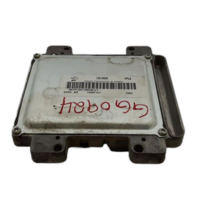
Below are the parts most often responsible for code P1239, ranked by how frequently each one is the actual culprit (per the diagnosis above). Tap any to see what we have for your vehicle.





The information in this article is provided for general reference and educational purposes only. Vehicle specifications, procedures, and part compatibility can vary by production date, trim level, and region. Always consult your vehicle's factory service manual and verify part numbers before purchasing or performing repairs. Safety-critical components such as airbags, seat belts, and braking systems should be installed by a qualified professional.
- 🧭 Diagnostic Flowchart
- 🎬 Helpful Videos
- 🛍️ Shop This Part
- What Does P1239 Mean?
- Can I Drive With P1239?
- Common Causes
- Symptoms
- Common Fixes & Costs
- Used vs. New Parts: Buying Guide
- What Happens If You Wait — Timeline
- Cost of Not Fixing It
- Diagnosis Steps
- When This Code Triggers (Freeze-Frame Conditions)
- Related Codes
- Climate & Environmental Factors
- How to Talk to a Mechanic About This Code
- Where to Take It: Dealer vs Independent vs Chain
- When to Walk Away From the Repair
- What Scan Tool You Need for This Code
- How to Clear the Code After You Fix It
- Will This Fail Emissions / State Inspection?
- Most Commonly Affected Vehicles
- Manufacturer-Specific Notes
- Real Owner Stories
- 2005 Ford F-150 with 193K miles experiences a crank/no-start.
- 2014 Jeep Cherokee with 75K miles gets a P1239 in cold weather.
- 2012 VW Jetta 2.0L with 110K miles has a rough idle and misfire.
- 2010 Nissan 370Z intermittently enters 'limp mode'.
- How to Prevent This Code From Triggering
- Frequently Asked Questions
- I have a Jeep with code P1239. A mechanic replaced my oil temperature sensor, but the light came back. What's wrong?
- My Volkswagen has a P1239 code. Is it safe to drive?
- Where is the P1239 sensor located?
- How do you test a Fuel Pump Driver Module (FPDM) on a Ford?
- Can a bad oil filter housing cause P1239 on a Jeep?
- Why did my new Fuel Pump Driver Module come with little rubber spacers?
- Is the Fuel Pump Driver Module the same as the fuel pump relay?
- Key Takeaways
- 🎟️ Get 5% Off