

OBD-II Code P1241: Comprehensive Guide to Low Sensor/Injection Pressure
What P1241 means, why it triggers, and how to fix it on Ford, Jaguar, Mitsubishi, and more.
- P1241 requires manufacturer-specific diagnosis: it flags low injection pressure on Ford Power Strokes, low sensor voltage on Jaguars, and torque monitoring faults on Mitsubishis.
- On Ford 6.0L Power Stroke diesels, P1241 indicates a high-pressure oil system failure—requiring at least 500 PSI to start the engine—rather than a traditional fuel delivery issue.
- Check the cheapest fixes first: verify the engine oil is full on Ford diesels and confirm the 12V battery resting voltage is above 12.4V on Jaguars before replacing any sensors.
- Never replace a $1,000+ High-Pressure Oil Pump (HPOP) without first performing a 150-PSI air leak test to rule out $50 failed O-rings on standpipes or dummy plugs.
What Does P1241 Mean?
P1241 is a manufacturer-specific code with entirely different definitions depending on your vehicle. On Ford Power Stroke diesel trucks, it points to low injection control pressure, meaning the high-pressure oil system cannot build enough pressure to fire the fuel injectors. For Jaguar and Mazda, it means the engine computer (PCM) detects low voltage from a critical sensor power supply circuit. For Mitsubishi or Hyundai, it indicates a 'Torque Monitoring' fault, where the engine's actual power output does not match the driver's accelerator pedal request.
Technical definition: Because P1241 is manufacturer-specific, its formal definition varies significantly: - **Ford**: Injector Control Pressure Too Low / Sensor Power Supply Low Input. - **Mazda/Jaguar/Kia**: Sensor Power Supply Low Input. - **Mitsubishi/Hyundai**: Torque Monitoring. - **GM/Chevrolet**: Fuel Injector 7 Circuit Malfunction. - **MINI**: Manifold Absolute Pressure (MAP) Sensor Too Low. - **Volkswagen/Audi**: Cylinder 5 Fuel Injector Circuit Open. - **BMW**: Manifold Absolute Pressure (MAP) sensor 2 - signal too low at full load.
Can I Drive With P1241?
Yes, But With Caution. You can drive, but expect poor engine performance including rough idling, stalling, and weak acceleration. The vehicle often enters 'limp mode,' limiting speed to 20-40 mph. Diagnose the issue immediately. Driving over 50 miles risks severe damage, such as straining a Ford Power Stroke's high-pressure oil pump or destroying a catalytic converter from a lean fuel condition, resulting in $800-$2,500 repair bills.
Common Causes
- Low or Dirty Engine Oil (Ford Power Stroke) (Very Common) — The HEUI injection system uses high-pressure engine oil to fire the fuel injectors. Low oil causes the High-Pressure Oil Pump (HPOP) to ingest air, preventing it from building the 500+ PSI of injection control pressure (ICP) required to start the engine. Dirty oil clogs fine passages in the system.
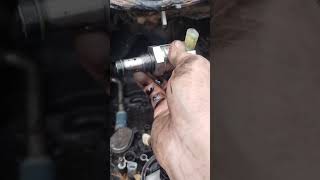
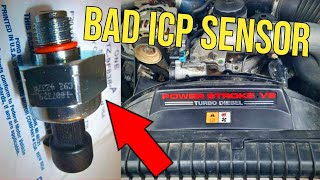
- Failed Injection Control Pressure (ICP) Sensor (Common) — This sensor reports high-pressure rail oil pressure to the PCM. It fails by sending an inaccurately low reading, or oil leaks through the sensor into the electrical connector, causing a short. Unplugging the sensor forces the PCM to use a default value; if the engine starts, the sensor is bad. 🎬 See how to detect a failing ICP sensor yourself.
- Failed Injection Pressure Regulator (IPR) Valve (Common) — The IPR valve is a solenoid on the HPOP that regulates pressure. It fails electronically, its internal seals wear out, or its small filter screen clogs with debris, causing it to stick open and bleed off pressure.
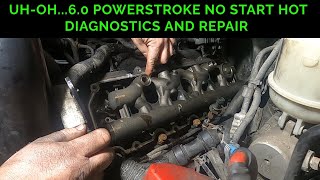
- High-Pressure Oil System Leaks (Ford Power Stroke) (Common) — Degraded O-rings on standpipes, dummy plugs, or injector nipples cause a classic 'hot no-start'. 🎬 Watch: Diagnostic tips for a Power Stroke that won't start hot. When the engine is hot, the oil thins and leaks past these seals, preventing the system from building enough pressure to restart.
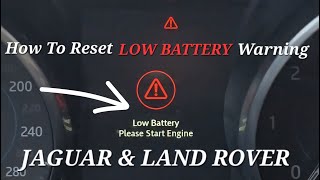
- Weak or Failing 12V Battery (Jaguar/Mazda) (Common) — On Jaguar and Mazda models, P1241 for 'Sensor Power Supply Low Input' is frequently triggered by a failing battery. System voltage below 12.0V causes erratic behavior in multiple sensors sharing the power circuit. 🎬 Watch: How to diagnose battery and voltage issues on a Jaguar.
- Faulty Mass Airflow (MAF) Sensor (Mitsubishi) (Common) — For 'Torque Monitoring' faults, a dirty or failed MAF sensor sends incorrect airflow data to the ECU. This creates a mismatch between expected and actual torque, triggering the code.
- Wiring Harness or Connector Issues (Less Common) — Wires for the ICP, IPR, or MAF sensors chafe, melt, or corrode. The ICP pigtail on 6.0L Power Strokes, located on top of the hot engine, is a frequent failure point.
- Faulty Throttle Body (Jaguar/Honda) (Less Common) — A malfunctioning electronic throttle body disrupts the sensor power supply circuit or causes torque-related faults due to internal electronic failures or a dirty throttle plate.
- High-Pressure Oil Pump (HPOP) Failure (Rare) — The HPOP rarely fails compared to the sensors and seals that support it, especially on 2005+ 6.0L engines. Always rule out leaks and a faulty IPR valve before condemning the expensive pump.
Symptoms
- Engine is hard to start or won't start — On Power Stroke engines, the engine cranks but fails to fire because it lacks the 500 PSI of injection pressure required to start.
- Stalls when hot, won't restart until cool — The hallmark sign of a high-pressure oil leak on a 6.0L Power Stroke. As oil thins with heat, it leaks past failing O-rings, dropping pressure and stalling the engine.
- Vehicle enters 'Limp Mode' — The computer severely limits engine power and vehicle speed (typically 20-40 mph) to protect internal components.
- Poor acceleration and rough idling — The vehicle feels sluggish, shakes at idle, or shuts off unexpectedly due to inconsistent fuel pressure or incorrect airflow data.
- Check Engine Light is on — The Malfunction Indicator Lamp (MIL) illuminates immediately upon detecting the fault.
- Reduced fuel economy — Inefficient fuel delivery causes the engine to burn excess fuel to achieve the requested power output.
Diagnostic Flowchart
Tap your situation to follow the diagnostic path that matches what you're seeing on this code.
Common Fixes & Costs
- Change Engine Oil and Filter — Parts: $70-$150, Labor: $40-$80, ~0.5 hr book time (DIY)
- Replace Injection Control Pressure (ICP) Sensor
— Parts: $100-$180, Labor: $100-$250, ~2.5 hr book time
(DIY)
Ford F-250/F-350 (2003-early 2004): OEM 3C3Z-9F838-EA (Alt: International: 1845274C92)
Ford F-250/F-350 (late 2004.5-2007): OEM 4C3Z-9F838-A (Alt: Motorcraft: CM5126) - Replace Injection Pressure Regulator (IPR) Valve
— Parts: $200-$350, Labor: $200-$400, ~2.0 hr book time
(Intermediate)
Ford F-250/F-350 (2003-2007): OEM PU7Z-9C968-A (Alt: International: 1846057C1) - Repair High-Pressure Oil Leak (Standpipes/Dummy Plugs) — Parts: $100-$250, Labor: $400-$800, ~6.5 hr book time (Professional)
- Replace Mass Airflow (MAF) Sensor (Mitsubishi)
— Parts: $150-$350, Labor: $50-$75, ~0.5 hr book time
(DIY)
Mitsubishi Lancer Evolution: OEM MR578399 (Alt: Bosch: 0280218340) - Replace Throttle Body (Jaguar)
— Parts: $400-$650, Labor: $100-$200, ~1.2 hr book time
(Intermediate)
Jaguar X-Type (2002-2005): OEM XR845053 (Alt: Genuine: 650-08050072)
DIY vs Professional
- Replace ICP Sensor (2004.5-2007 Ford 6.0L) 🟢 Beginner
Tools: 24mm wrench or deep socket, ratchet, extension. - Replace ICP Sensor (2003-2004 Ford 6.0L) 🟢 Beginner
Tools: Socket set, extensions, special crow's foot socket. - Replace IPR Valve (Ford 6.0L) 🟢 Beginner
Tools: Special IPR socket, long extensions, wobble adapter. - Replace MAF Sensor (Mitsubishi/General) 🟢 Beginner
Tools: Screwdriver or small socket set. - Repair High-Pressure Oil Leaks (Standpipes/Dummy Plugs) 🟢 Beginner
Tools: Torque wrench, air compressor, HPOP air test adapter kit.
Used vs. New Parts: Buying Guide
When a used part is worth it: Buying used ICP sensors or IPR valves is highly discouraged. These are high-wear components, and the labor to replace them is significant. Only consider used for hard parts like a throttle body housing.
Donor-vehicle mileage cap: roughly under 20000 miles for the part to have meaningful remaining life.
Donor quality checklist:
- Verify the exact part number matches. Superseded parts may not function correctly.
- Avoid parts from vehicles scrapped for engine failure.
Decision logic:
- If The part is an electronic sensor (ICP) or solenoid (IPR) → Buy new from a reputable OEM (Motorcraft). The savings on a used part are not worth the risk of repeat labor.
- If The part is a complex assembly like a throttle body or HPOP → A professionally remanufactured unit with a warranty is viable, but a new OEM part is safest.
Warranty tradeoff: Salvage yard parts offer 30-90 day warranties. Aftermarket new parts offer 1-year warranties. OEM new parts carry 1-2 year warranties.
Worst-case if a used part fails: $500-$1,500 if a used sensor fails, requiring you to pay for labor a second time.
What Happens If You Wait — Timeline
- 0-2 weeks: Check Engine Light illuminates. On a Power Stroke, crank times increase slightly when cold. On a Mitsubishi, slight hesitation occurs. (MPG impact: 0-5%% · Added cost: $0-$50 in wasted fuel)
- 2 weeks - 3 months: Power Stroke 'hot no-start' appears intermittently, requiring a 30-minute cool-down. Mitsubishi/Jaguar limp mode triggers under hard acceleration. (MPG impact: 5-15%% · Added cost: $100-$300 (Towing and wasted fuel))
- 3-6 months: Power Stroke 'hot no-start' becomes daily, severely straining the starter, batteries, and FICM. On other makes, persistent lean/rich conditions begin damaging the catalytic converter. (MPG impact: 15-25%% · Added cost: $500-$1,500 (Damage to FICM, starter, or early catalytic converter wear))
- 6+ months: Major component failure. The Ford HPOP dies from strain, resulting in a permanent no-start. On other makes, the catalytic converter is destroyed. (MPG impact: 25%+% · Added cost: $1,500-$3,500 (HPOP, FICM, or catalytic converter replacement))
Cost of Not Fixing It
- Immediate: Severe drivability issues, including stalling in traffic, no-start conditions, and entering 'limp mode' with drastically reduced speed. (Added cost: $100-$200 (Towing fees))
- 1-6 months (Ford Power Stroke): Running with low injection pressure forces long crank times, destroying the High-Pressure Oil Pump (HPOP), starter, and Fuel Injection Control Module (FICM). (Added cost: $1,000-$3,000)
- 1-6 months (Mitsubishi/Jaguar): Incorrect air-fuel mixtures overheat and destroy the catalytic converter, a costly emissions component. (Added cost: $1,200-$2,800)
Diagnosis Steps
- Check Engine Oil Level and Condition (Ford Power Stroke)
Verify the engine oil is at the full mark on the dipstick. Low oil is the most common cause of a no-start condition on HEUI systems. Ensure the oil is clean and the correct viscosity.
Tools: Clean Rag (Beginner) - Scan for Codes and Check Battery Voltage
Read all stored codes. On Jaguar/Mazda, P1241 is often accompanied by other sensor voltage codes. Test the 12V battery; a resting voltage below 12.4V indicates a weak battery causing the fault.
Tools: OBD-II Scanner, Multimeter (Beginner) - Perform the ICP Sensor Unplug Test (Ford Power Stroke)
If the engine won't start, turn the key off, unplug the ICP sensor connector, and try starting again. If it starts, the ICP sensor is faulty. The PCM defaults to ~750 PSI when unplugged. Do not leave it unplugged.
Tools: None (Beginner) - Inspect Sensor Wiring and Connectors
Visually inspect harnesses for the ICP, IPR, or MAF sensors. On a 6.0L Power Stroke, check inside the ICP connector for oil contamination—a guaranteed sign of a failed sensor.
Tools: Flashlight (Beginner) - Monitor Live Data with a Scan Tool (Ford Power Stroke)
Monitor Key On, Engine Off (KOEO) and cranking PIDs. You need: FICM Sync = 1, FICM Main Power > 45V, and ICP Pressure > 500 PSI to start. If ICP stays below 500 PSI but IPR Duty Cycle commands 85% (maximum), you have a high-pressure oil leak or bad HPOP.
Tools: Advanced OBD-II Scan Tool (Intermediate) - Perform a High-Pressure Oil System Leak Test (Ford)
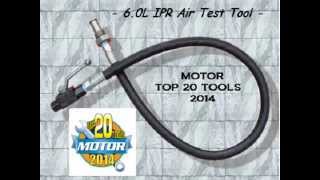
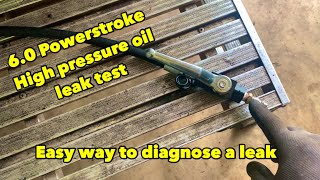
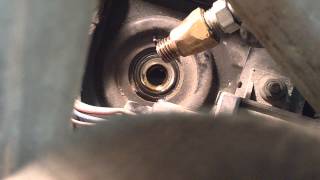
The definitive test for a 'hot no-start'. Remove the IPR valve and apply 150 PSI of compressed air into the system via an adapter. Listen for air leaks under the valve covers to pinpoint failed standpipe, dummy plug, or injector O-rings. Take the vehicle to a diesel specialist if you lack these tools.
Tools: Air Compressor, HPOP Air Test Adapters (Advanced) - Advanced: Test the IPR Valve Solenoid (Ford)
Disconnect the IPR valve. Measure resistance across the two pins on the solenoid. A healthy IPR coil reads between 5.0 and 15.0 ohms. Infinite resistance (open) or near zero (short) means the solenoid failed.
Tools: Multimeter (Advanced) - Advanced: Test the ICP Sensor Circuit (Ford)
Back-probe the ICP sensor connector (key on, engine off). Verify a 5-volt reference, a good ground, and a signal wire reading ~0.20-0.25 volts. While cranking, signal voltage must rise to at least 0.8 volts.
Tools: Multimeter, Back-probe kit (Advanced) - Advanced: Test the FICM Voltage (Ford 6.0L)
Remove the FICM access cover. Measure voltage at the test point (key on). It should be 47-49 volts. During cranking, voltage must not drop below 45 volts. A lower reading indicates a failing FICM power supply.
Tools: Multimeter, #20 Torx driver (Advanced)
When This Code Triggers (Freeze-Frame Conditions)
- Engine Coolant Temp: 140-210°F (Engine is at operating temperature. The 'hot no-start' issue is a primary trigger.)
- RPM: 0-800 (cranking/idle) or 1500-2500 (under load) (Sets during a 'crank-no-start' if pressure stays below 500 PSI, or during acceleration if pressure drops under load.)
- Engine Load: 25-75% (Triggers when the driver requests power, demanding high-pressure oil that a leak or weak pump cannot supply.)
- ICP Desired vs. Actual: Large Discrepancy (The core fault on a Power Stroke. The PCM commands 1,800 PSI, but the ICP sensor reports 900 PSI, triggering the code.)
Related Codes
- P2285 — Ford specific: 'ICP Sensor Circuit Low'. Points directly to an electrical problem with the ICP sensor or wiring, rather than a mechanical pressure issue.
- P2623 — Ford specific: 'Injector Control Pressure Regulator Circuit'. Points to an electrical fault in the IPR valve's circuit.
- P0087 — Generic: 'Fuel Rail Pressure Too Low'. On a Power Stroke, P1241 points to the oil system, while P0087 confirms the resulting lack of fuel pressure.
- P1240 — Jaguar/Mazda specific: 'Sensor Power Supply Malfunction'. Indicates a general fault in the sensor power supply circuit, usually a weak battery.
Climate & Environmental Factors
- Hot Climate / High Engine Temperature: High temperatures thin engine oil. Thinner oil leaks past weak O-rings on standpipes or dummy plugs, causing a total loss of injection control pressure and a 'hot no-start'.
- Cold Climate / Cold Starts: Cold weather thickens oil, making it harder for a weak HPOP to build 500 PSI. It also exposes failing FICM power supplies, which drop below 45V during cold cranks and prevent injectors from firing.
How to Talk to a Mechanic About This Code
Say this: "For a Ford Power Stroke: 'I have a P1241 code with a crank-no-start (or hot-no-start) condition. I need a diagnostic that monitors live data for ICP pressure, IPR duty cycle, and FICM voltage. Please do not quote a High-Pressure Oil Pump replacement unless a system air test rules out leaks.' For a Jaguar/Mazda: 'I have a P1241 for sensor power supply. Please perform a comprehensive battery and charging system load test before diagnosing sensors.' For a Mitsubishi/Hyundai: 'I have a P1241 for torque monitoring. Please check the MAF sensor readings and inspect for vacuum leaks.'"
This directs the technician to perform a logical diagnostic process and prevents them from jumping to the most expensive conclusion (like a failed HPOP on a Ford).
Avoid saying:
- 'My check engine light is on, can you just fix it?'
- 'I read online it's probably the HPOP, just replace that.'
- 'Do whatever you think is best.'
Questions to ask before authorizing the repair:
- For Ford: What were the specific ICP, IPR, and FICM voltage readings when you reproduced the fault?
- For Ford: If you recommend an HPOP, can you show me the results of the air leak test that ruled out standpipes and dummy plugs?
- For Jaguar: What was the battery's resting voltage and load test reading?
- Will you use OEM/Motorcraft parts or aftermarket? Can you explain the warranty difference?
- Can I have the old parts back?
Where to Take It: Dealer vs Independent vs Chain
- Dealer:
Acceptable for Jaguar, but for a Ford Power Stroke, a diesel specialist is a better and more cost-effective choice.
Best for: Complex electrical diagnostics on brands like Jaguar., Vehicles under an extended warranty.
Downsides: Highest labor rates, often 1.5-2x an independent shop., May lack familiarity with common failure patterns on older 6.0L Power Strokes compared to a specialist. (Typical cost: +50% vs. baseline) - Independent Shop:
The best choice. For a P1241 on a 6.0L Power Stroke, a dedicated diesel repair shop is mandatory. For a Mitsubishi, a competent general repair shop is sufficient.
Best for: Out-of-warranty vehicles where cost is a factor., Finding a dedicated diesel shop or European car expert.
Downsides: Quality varies wildly. You must vet the shop's reputation with your specific engine. (Typical cost: +0% vs. baseline) - Chain Shop:
AVOID for a Ford Power Stroke P1241. They are not equipped for it.
Best for: Simple, high-volume jobs like tires, brakes, and oil changes.
Downsides: Technicians lack specialized tools and training for complex diagnostics like a Power Stroke's high-pressure oil system. (Typical cost: -10% vs. baseline)
When to Walk Away From the Repair
If the estimated repair cost for a major P1241 fault (like a Ford HPOP system failure) exceeds 40-50% of the vehicle's current private-party value, seriously consider selling the vehicle as-is.
- Car worth $12000, fix is $1500: Fix it. This repair (e.g., replacing standpipes and dummy plugs on a 6.0L) is well below the threshold and adds value.
- Car worth $9000, fix is $4000: Walk away. A $4,000 repair bill for a failed HPOP and FICM approaches 45% of the truck's value. It's a significant gamble.
- Car worth $4500, fix is $600: Fix it. A $600 repair for an ICP sensor or a new battery is a reasonable expense to keep a lower-value vehicle operational.
What Scan Tool You Need for This Code
Minimum: For a Ford Power Stroke, you need a scanner that reads manufacturer-specific PIDs. A basic code reader is insufficient. You must monitor live data for 'ICP Pressure,' 'IPR Duty %,' and 'FICM Voltage.'
A $20 reader only shows the P1241 code, giving no information about *why* the pressure is low. Without live data, diagnosis is pure guesswork.
Budget: FORScan with OBDLink EX/MX+ Adapter (~$60) — The gold standard for DIY Ford diagnostics. Gives dealer-level access to read all necessary PIDs, run self-tests, and monitor the high-pressure oil system in real-time.
Mid-range: BlueDriver Pro (~$120) — Connects to your smartphone and offers enhanced diagnostics for Ford, allowing you to view live data for key PIDs like ICP and FICM voltage.
Professional: Autel MaxiCOM MK808BT (~$550) — Provides full bidirectional control, allowing you to command components like the IPR valve to test functionality. Essential for professional-level work.
Rent vs buy: For a P1241 on a Power Stroke, rental scanners from auto parts stores are insufficient. You must buy a capable scanner (like FORScan) or take the vehicle to a qualified shop.
How to Clear the Code After You Fix It
- Use an OBD-II scan tool to clear all diagnostic trouble codes (DTCs).
- Ensure the fuel tank is between 15% and 85% full to allow the EVAP monitor to run.
- Perform a complete drive cycle to set all readiness monitors to 'Ready'.
Drive cycle (~30 minutes): A typical drive cycle requires a cold start (engine off for 8+ hours), 40 seconds of idling, followed by mixed driving including steady highway speeds (55 mph for 3-5 minutes) and gentle accelerations.
Readiness monitors affected: Comprehensive Component Monitor (CCM), EGR System, Catalyst, EVAP System
Before emissions retest: drive at least 50 miles to fully set monitors.
Watch out for:
- Disconnecting the battery clears the code but resets all readiness monitors to 'Not Ready', guaranteeing an emissions failure.
- The code returns immediately if the mechanical or electrical fault is not repaired.
- Failing to meet specific drive cycle criteria prevents monitors from running, leaving a P1000 code.
Will This Fail Emissions / State Inspection?
Yes — this code typically fails an OBD-II emissions inspection.
- California: An illuminated Check Engine Light is an automatic failure. You must complete a drive cycle to set readiness monitors before passing.
- New York: An active P1241 causes an automatic failure. For 2001+ vehicles, only one readiness monitor is allowed to be 'Not Ready'.
- Texas: In emissions-testing counties, an illuminated Check Engine Light results in an immediate failure.
Most Commonly Affected Vehicles
- Ford F-250/F-350 Super Duty (2003-2007) — Extremely common on 6.0L Power Strokes. 2003-early 2004 models have the ICP sensor under the turbo; 2004.5-2007 models have it on the passenger valve cover.
- Ford Excursion (2003-2005) — Shares the 6.0L engine. 2003 models suffer HPOP failures, while later models suffer standpipe and dummy plug leaks.
- Ford E-Series Vans (2004-2010) — Repairs are significantly more difficult and costly due to extremely limited access in the van's engine doghouse.
- Jaguar X-Type, S-Type, XF (2002-2008) — Code means 'Sensor Power Supply Low Input'. Check for a weak 12V battery or failing throttle body before replacing sensors.
- Mitsubishi Lancer, Lancer Evolution, Outlander (2008-2015) — Code means 'Torque Monitoring'. Triggered by a failing Mass Airflow (MAF) sensor.
- Volkswagen Jetta, Golf, Passat (5-cylinder models) (2005-2013) — Points to an 'Open Circuit' for the cylinder 5 fuel injector, indicating a bad injector or wiring fault.
- Honda Accord, Civic, CR-V (2005-2012) — Defined as 'Throttle Valve Control Motor Circuit 1 Malfunction,' pointing to the electronic throttle body.
- Hyundai Elantra, Sonata (2011-2016) — Indicates a 'Torque Monitoring' mismatch, often related to the throttle position sensor or MAF sensor.
Manufacturer-Specific Notes
- Ford: On 6.0L Power Strokes, a 'hot no-start' is the classic symptom of a high-pressure oil leak. As oil heats and thins, it leaks past failing seals, preventing the system from building the 500 PSI needed to restart.
- Jaguar: P1241 is frequently caused by a weak 12-volt battery, not a faulty sensor. Ensure the battery is fully charged and load-tested before replacing parts.
- Mitsubishi: The ECU compares the accelerator pedal request to the actual engine output measured by the MAF sensor. A dirty MAF is the most common cause of this 'Torque Monitoring' fault.
Real Owner Stories
2005 Ford F-250 6.0L with a 'Hot No-Start'
A truck with 75,000 miles cranked but wouldn't fire after reaching operating temperature. The owner had already replaced the STC fitting, dummy plugs, standpipes, and ICP sensor.
What they tried:
- Replaced multiple common failure parts as preventative maintenance.
- Disassembled the top end of the engine to perform a 150-PSI air leak test.
Outcome: The owner discovered a tiny, failed O-ring on the top of one fuel injector. This seal allowed high-pressure oil to leak when hot and thin. Replacing the injector O-ring kit resolved the no-start.
Lesson: Even if major components are new, a $10 seal causes a total failure. A high-pressure oil system air test is mandatory to pinpoint leaks before replacing expensive parts.
2002 Ford 7.3L Power Stroke Stalling on Highway
A 7.3L stalled on the highway. After towing, it started fine, but stalled again 20 minutes later and wouldn't restart until cool.
What they tried:
- Unplugged the ICP sensor, which made no difference to the hot no-start condition.
- Diagnosed an electrical issue with the IPR valve that only manifested under heat.
Outcome: Replacing the Injection Pressure Regulator (IPR) valve fixed the truck. A failing IPR solenoid stops working when hot, causing a stall, and works again once cool.
Lesson: If the classic 'unplug the ICP sensor' test fails, the IPR valve is the next logical suspect for heat-related stalling.
2009 Mitsubishi Lancer GTS with Limp Mode
The car entered limp mode with a P1241 (Torque Limit Exceeded) code. It had no power and an erratic idle.
What they tried:
- Verified all other systems and vacuum lines were intact.
- Replaced the Mass Airflow (MAF) sensor based on forum advice.
Outcome: Replacing the MAF sensor completely fixed the limp mode, check engine light, and erratic idle.
Lesson: On Mitsubishi vehicles, P1241 directly relates to the MAF sensor providing incorrect data. Cleaning or replacing the MAF is the definitive fix.
Jaguar X-Type with 'Sensor Power Supply Low Input'
A Jaguar owner experienced a P1241 code accompanied by seemingly unrelated electrical gremlins.
What they tried:
- Avoided replacing individual sensors.
- Load-tested the 12V battery and charging system.
Outcome: The root cause was a weak battery with a resting voltage below 12.4V. Jaguars are highly sensitive to system voltage, triggering false sensor codes when voltage drops.
Lesson: For a P1241 code on a Jaguar, always load-test the battery and verify the alternator before replacing sensors. It is the cheapest and most common fix.
How to Prevent This Code From Triggering
- Use correct specification engine oil and change it regularly (Ford Power Stroke) (Every 5,000 - 7,500 miles) — The HEUI system uses engine oil as hydraulic fluid. Clean, correct-viscosity oil prevents HPOP wear and stops sludge from clogging the IPR valve screen.
- Use only OEM or high-quality aftermarket sensors (ICP, IPR) (When replacement is needed) — Cheap aftermarket ICP and IPR sensors have a near 100% failure rate on Power Strokes. Using Motorcraft parts prevents repeat failures and double labor costs.
- Monitor FICM voltage during cold starts (Ford 6.0L) (Periodically, especially in winter) — A failing FICM drops below 45V during a cold crank. Catching this early prevents the injectors from failing and leaves you stranded.
- Regularly test the 12V battery and charging system (Jaguar) (Every 6 months) — Jaguars are extremely sensitive to low voltage. A weak battery is the primary cause of the P1241 code, and testing prevents unnecessary sensor replacements.
- Clean the Mass Airflow (MAF) sensor (Mitsubishi/Hyundai) (Every 15,000-20,000 miles) — A dirty MAF causes incorrect airflow readings, triggering limp mode. Cleaning it removes contaminants and restores accurate torque calculations.
Frequently Asked Questions
Can I fix P1241 myself?
Topping off engine oil or replacing an accessible ICP sensor on a 2005+ Ford 6.0L are straightforward DIY tasks. However, replacing a High-Pressure Oil Pump (HPOP) or tracking down internal oil leaks requires specialized tools and is best left to a diesel professional. For Mitsubishi or Jaguar, replacing a MAF sensor or battery is an easy DIY fix.
What is the most common fix for P1241 on a 6.0L Power Stroke?
The most common fixes are topping off or changing the engine oil, replacing the Injection Control Pressure (ICP) sensor and its pigtail connector, and replacing the Injection Pressure Regulator (IPR) valve.
What is a common misdiagnosis for P1241?
A frequent and costly misdiagnosis on Ford Power Strokes is replacing the High-Pressure Oil Pump (HPOP) when the true cause is a cheap O-ring leak or a faulty sensor. Always perform a 150-PSI air leak test before condemning the HPOP.
My truck runs fine when cold but stalls when it warms up. Is this P1241?
Yes, this is the hallmark 'hot no-start' symptom of a high-pressure oil leak in a 6.0L Power Stroke engine, which triggers P1241. The leak worsens as the oil thins out with heat, causing a total loss of injection pressure.
Why does engine oil level affect a fuel pressure code?
Ford's HEUI system uses high-pressure engine oil (up to 3,500 PSI) as hydraulic fluid to pressurize the fuel inside each injector. If the engine oil is low, the system ingests air and cannot create adequate fuel pressure, triggering the code.
I replaced the sensor but the code came back. What now?
First, verify you used an OEM/Motorcraft sensor, as cheap aftermarket sensors fail immediately on 6.0L engines. Next, inspect the wiring harness and connector for shorts or oil contamination. Finally, perform an air leak test to confirm you don't have a mechanical pressure loss.
What is the first thing to check for a P1241 code?
For a Ford Power Stroke, check the engine oil level on the dipstick immediately. For a Jaguar or Mazda, test the 12V battery's resting voltage to ensure it is above 12.4V. For a Mitsubishi, inspect and clean the Mass Airflow (MAF) sensor.
Will clearing the code make it go away?
No, clearing the code only turns off the check engine light temporarily. The Powertrain Control Module (PCM) will re-run its diagnostics immediately. If the underlying mechanical or electrical fault remains, the code and light will return on the next drive cycle.
Key Takeaways
- P1241 requires manufacturer-specific diagnosis: it flags low injection pressure on Ford Power Strokes, low sensor voltage on Jaguars, and torque monitoring faults on Mitsubishis.
- On Ford 6.0L Power Stroke diesels, P1241 indicates a high-pressure oil system failure—requiring at least 500 PSI to start the engine—rather than a traditional fuel delivery issue.
- Check the cheapest fixes first: verify the engine oil is full on Ford diesels and confirm the 12V battery resting voltage is above 12.4V on Jaguars before replacing any sensors.
- Never replace a $1,000+ High-Pressure Oil Pump (HPOP) without first performing a 150-PSI air leak test to rule out $50 failed O-rings on standpipes or dummy plugs.
Helpful Videos
Shop the Parts Behind P1241
Below are the parts most often responsible for code P1241, ranked by how frequently each one is the actual culprit (per the diagnosis above). Tap any to see what we have for your vehicle.



The information in this article is provided for general reference and educational purposes only. Vehicle specifications, procedures, and part compatibility can vary by production date, trim level, and region. Always consult your vehicle's factory service manual and verify part numbers before purchasing or performing repairs. Safety-critical components such as airbags, seat belts, and braking systems should be installed by a qualified professional.
- 🧭 Diagnostic Flowchart
- 🎬 Helpful Videos
- 🛍️ Shop This Part
- What Does P1241 Mean?
- Can I Drive With P1241?
- Common Causes
- Symptoms
- Common Fixes & Costs
- DIY vs Professional
- Used vs. New Parts: Buying Guide
- What Happens If You Wait — Timeline
- Cost of Not Fixing It
- Diagnosis Steps
- When This Code Triggers (Freeze-Frame Conditions)
- Related Codes
- Climate & Environmental Factors
- How to Talk to a Mechanic About This Code
- Where to Take It: Dealer vs Independent vs Chain
- When to Walk Away From the Repair
- What Scan Tool You Need for This Code
- How to Clear the Code After You Fix It
- Will This Fail Emissions / State Inspection?
- Most Commonly Affected Vehicles
- Manufacturer-Specific Notes
- Real Owner Stories
- 2005 Ford F-250 6.0L with a 'Hot No-Start'
- 2002 Ford 7.3L Power Stroke Stalling on Highway
- 2009 Mitsubishi Lancer GTS with Limp Mode
- Jaguar X-Type with 'Sensor Power Supply Low Input'
- How to Prevent This Code From Triggering
- Frequently Asked Questions
- Can I fix P1241 myself?
- What is the most common fix for P1241 on a 6.0L Power Stroke?
- What is a common misdiagnosis for P1241?
- My truck runs fine when cold but stalls when it warms up. Is this P1241?
- Why does engine oil level affect a fuel pressure code?
- I replaced the sensor but the code came back. What now?
- What is the first thing to check for a P1241 code?
- Will clearing the code make it go away?
- Key Takeaways
- 🎟️ Get 5% Off