

P1247 on 2015-2018 Ford Transit: Turbo Boost Pressure Low Causes and Fixes
On a 2015-2018 Ford Transit, code P1247 is most often caused by water leaking into the air filter housing, which saturates the air filter and chokes the engine. The fix involves installing an updated water deflector shield and a new air filter, as outlined in Ford's Technical Service Bulletin 19-2091. This issue is so common that checking for a wet air filter should always be the first step.
- For a 2015-2018 Ford Transit, P1247 almost always points to a water-saturated engine air filter.
- Before replacing any expensive parts like sensors or the turbo, your first and most important check is to inspect the air filter for moisture.
- The permanent fix is to install the updated water-management hardware detailed in Ford TSB 19-2091.
- This code is often accompanied by a long list of other codes related to air/fuel mixture and airflow, all stemming from the same air restriction problem.
What's Unique About the 2015-2018 Ford TRANSIT

For the 2015-2018 Ford Transit, this code is uniquely and strongly associated with a specific design flaw. Water can leak from the cowl area at the base of the windshield directly into the engine's air intake system. This can saturate the air filter with water or even cause it to freeze in cold weather, severely restricting airflow and preventing the turbo from building boost. Forum users have noted the design of the cowl drain channel can be overwhelmed in heavy rain or if the van is parked on an incline, causing water to spill over directly onto the air filter box. Ford acknowledged this widespread issue and released a technical service bulletin (TSB 19-2091) with a specific hardware fix.
Diagnostic Flowchart

Tap your situation to follow the diagnostic path that matches what you're seeing on this vehicle.
Symptoms You May Notice
- Significant loss of engine power and sluggish acceleration
- Check Engine Light (Malfunction Indicator Lamp) is on
- Vehicle enters 'limp mode', especially after heavy rain or a car wash.
- Difficulty starting the engine, or engine cuts out and won't restart.
- Engine misfires or runs rough
- Noticeable decrease in fuel economy. 🎬 Watch: A mechanic diagnoses low power and engine light issues.
- Replacing the turbocharger without first checking for a wet air filter or boost leaks.
- Replacing the MAP sensor when the underlying issue is a massive air restriction (wet filter) or a boost leak.
- Assuming the issue is electronic when it is a physical water leak.
Most Likely Causes

- Water Intrusion into Air Intake System 🔴 High Probability A known design issue allows water to drip from the cowl panel directly onto the air filter housing. Ford issued TSB 19-2091 to address this specific problem on vehicles built on or before July 24, 2018.
How to confirm: Open the air filter box and inspect the air filter element. Look for signs of moisture, water saturation, ice, or a collapsed/deformed filter. The filter may be visibly soggy or have disintegrated.
Typical fix: Install the updated water management hardware specified in TSB 19-2091, which includes a new water deflector, seals, and a revised air cleaner cover. Replace the saturated air filter. The TSB repair is only covered for free if the vehicle is still within its New Vehicle Limited Warranty period.
Est. part cost: $150-$250 - Leaking Charge Air Cooler (Intercooler) or Hoses 🟡 Medium Probability
How to confirm: Visually inspect all intake hoses and clamps between the turbo and the engine for cracks, loose connections, or holes. A professional smoke test is the most effective method to pressurize the system and reveal hard-to-see leaks.
Typical fix: Tighten loose clamps or replace the damaged hose or intercooler.
Est. part cost: $20-$500 - Faulty Turbocharger Wastegate or Control Solenoid ⚪ Low Probability → Shop Turbocharger
How to confirm: Use a capable scan tool to command the wastegate control solenoid on and off while monitoring its operation. A vacuum pump can be used to test the wastegate actuator's ability to hold a vacuum. Check for physical damage, such as a split vacuum pipe to the wastegate actuator, as reported by owners.
Typical fix: Replace the faulty wastegate control solenoid, repair the damaged vacuum line, or replace the turbocharger assembly if the wastegate is integral and not serviceable.
Est. part cost: $10-$250 - Failed Manifold Absolute Pressure (MAP) Sensor ⚪ Low Probability → Shop Manifold Absolute Pressure Sensor
How to confirm: With the key on and engine off, use a scan tool to check if the MAP sensor reading matches the Barometric Pressure (BARO) sensor reading. If they differ significantly, the MAP sensor is likely faulty. A flatlined reading on live data also points to a failed sensor.
Typical fix: Replace the MAP sensor.
Est. part cost: $40-$100
Rare But Worth Checking
- Clogged Catalytic Converter or Exhaust Restriction: If the engine can't exhale properly, the turbo can't spool up effectively. This can cause a lack of power and may trigger a low boost code. Leaking exhaust up-pipes on diesel models are a known cause of low boost.
- Worn or Damaged Turbocharger: → Shop Turbocharger While not the most common cause, internal wear or damage to the turbocharger's turbine or compressor wheels can prevent it from building sufficient boost. This is usually a last resort after all leaks and sensor issues have been ruled out.
Diagnosis Steps
- Check for Technical Service Bulletins (TSBs). TSB 19-2091 is the primary document for this issue on this vehicle.
- Inspect the Engine Air Filter. This is the most critical first step. Open the airbox and check for any signs of water, ice, or a damp, deformed filter element.
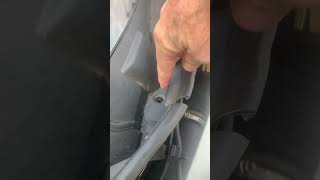
- If the filter is wet, replace it and install the updated water management hardware as described in TSB 19-2091 to prevent recurrence. This is the most likely fix. 🎬 Watch: Step-by-step guide to fixing a wet engine air filter.
- If the filter is dry, proceed with standard low-boost diagnostics.
- Inspect all intake and charge air piping. Check for cracked hoses, loose clamps, or damage to the intercooler.
- Perform a boost pressure system smoke test to identify any leaks that are not visually apparent.
- Check MAP sensor data. Using a scan tool, verify the MAP sensor reads correctly with the key on, engine off, and that its readings respond logically as boost builds.
- Test the turbocharger wastegate control solenoid and actuator. Check for physical integrity of vacuum lines and use a scan tool to command the solenoid to verify operation.
Parts You'll Likely Need
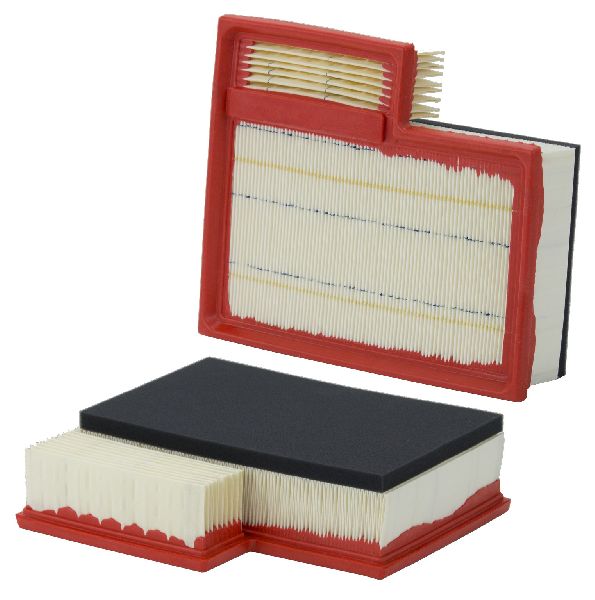
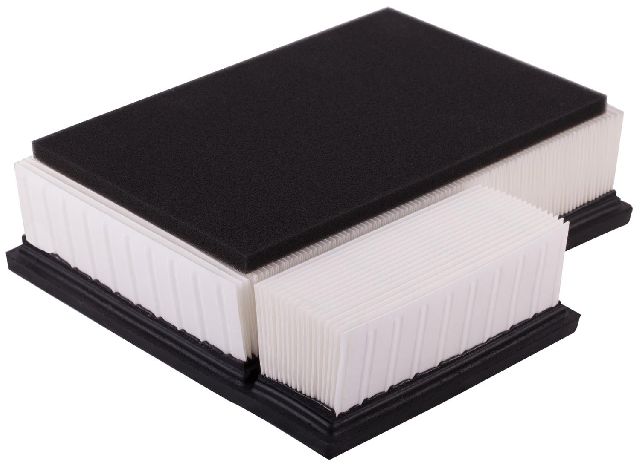
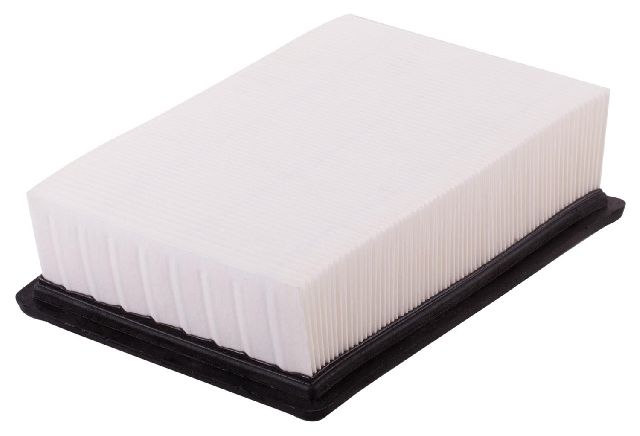
- Engine Air Filter
(OEM #CK4Z-9601-A)— This is the first part to become saturated by water, causing the air restriction that triggers P1247. It must be replaced if wet.
Trusted brands: Motorcraft
OEM price range: $25-$40
Aftermarket price range: $15-$30 - Cowl Water Deflector
(OEM #CK4Z-6102408-AA)— This is the primary part in the TSB kit designed to redirect water away from the air intake, fixing the root cause of the problem.
Trusted brands: Ford
OEM price range: $30-$50 - Engine Air Cleaner Cover (2016-2018 3.7L)
(OEM #JK4Z-9661-A)— The TSB calls for replacing the air cleaner cover with a revised design as part of the water intrusion fix for this specific engine.
Trusted brands: Ford
OEM price range: $80-$150 - Engine Air Cleaner Cover (2015-2018 3.2L & 2015 3.7L)
(OEM #JK4Z-9661-B)— The TSB calls for replacing the air cleaner cover with a revised design as part of the water intrusion fix for these specific engines.
Trusted brands: Ford
OEM price range: $80-$150 - Engine Air Cleaner Cover (2016-2018 3.5L EcoBoost)
(OEM #JK4Z-9661-D)— The TSB calls for replacing the air cleaner cover with a revised design as part of the water intrusion fix for this specific engine.
Trusted brands: Ford
OEM price range: $80-$150 - TSB Ancillary Parts
(OEM #Varies)— TSB 19-2091 also calls for a Mastic Patch (4L3Z-18203A16-AA), Leaf Screen Foam Seal (CK4Z-61021A46-A), Wiper Arm Grommet (CK4Z-17C582-A), and Silicone Sealant (TA-30) to complete the water leak repair.
Trusted brands: Ford, Motorcraft
OEM price range: $30-$60
Related Codes That Often Appear With This One
- P00BD — Mass or Volume Air Flow 'A' Circuit Range/Performance - Air Flow Too High. This is one of the primary codes listed alongside P1247 in TSB 19-2091, caused by the same water intrusion issue affecting sensor readings.
- P0171, P0172, P0174, P0175 — System Too Lean/Rich codes. A saturated air filter drastically changes the air-fuel ratio, causing the PCM to register these faults.
- P2195, P2196, P2197, P2198 — O2 Sensor Signal Stuck Lean/Rich. These are direct consequences of the severe air-fuel mixture imbalance caused by the air restriction.
Technical Service Bulletins (TSBs) & Recalls
- TSB 19-2091: Supersedes previous bulletins (18-2321, 17-0014) and details the issue of water entry into the engine compartment causing various DTCs, including P1247. It provides the definitive repair p
Platform-Specific Known Issues
- TSB 19-2091 documents that 2015-2018 Transit models built on or before July 24, 2018, are prone to water entering the engine compartment and saturating the air filter, which causes P1247 and other drivability DTCs.
- Owners on fordtransitforum.com report that the issue is common after heavy rain or even just parking the van on an angle that allows the cowl drain to overflow onto the airbox.
Mechanic-Grade Diagnostic Values
- MAP Sensor Voltage (Key On, Engine Off) — expected: Should have a 5-volt reference from the PCM. The return signal voltage should correspond to atmospheric pressure (approx. 14.7 PSI at sea level).. Failure: No 5V reference, or a signal voltage that doesn't match the BARO sensor reading at KOEO.
- Turbocharger Wastegate Control Solenoid Resistance — expected: Typically 10-30 Ω (Ohms).. Failure: Resistance reading is significantly outside the expected range, or shows an open or short circuit.
- Manifold Gauge Pressure (Boost) at Wide Open Throttle — expected: On a stock 7.3L Powerstroke (for reference), MGP should be around 17-18 PSI. EcoBoost values will vary but should match the 'Desired Boost Pressure' PID on a scan tool.. Failure: Actual boost pressure (MGP) is significantly lower than desired boost pressure during a spirited drive.
Scan Tool Commands That Help
- Ford IDS (Integrated Diagnostic System): Data Logger: Monitor PIDs like 'Actual Boost Pressure' vs 'Desired Boost Pressure'. — To confirm in real-time if the turbo is failing to meet the PCM's boost request during a test drive.
- Ford IDS (Integrated Diagnostic System): Power Balance Test — While not directly for boost, this can help identify if a rough running condition or misfire (which can accompany P1247) is contributing to the lack of power.
- FORScan: Monitor PIDs: MGP (Manifold Gauge Pressure), ICP (Injection Control Pressure), IPR% (Injection Pressure Regulator %) — FORScan is a powerful aftermarket tool that allows monitoring of Ford-specific PIDs to diagnose if the low boost is a cause or an effect of other system faults.
- High-End Scan Tools (e.g., iCarsoft CR MAX): Boost Control Activation / Solenoid Tests — To manually cycle the wastegate control solenoid through its duty cycle (0-100%) and listen for clicks or watch for a corresponding change in boost pressure, confirming or denying solenoid functionality.
Wiring & Ground Locations
- G100 — Left rear corner of the engine compartment on a 2016 Transit Connect (location is likely similar on the full-size Transit).. A poor engine ground can cause erratic behavior and incorrect readings from various sensors managed by the PCM, including those in the turbocharger control system. Verifying this ground is clean and tight is a crucial step in diagnosing any electronic fault.
Real Owner Repair Stories
- Ford Transit USA Forum user (2016 Ford Transit 3.5L EcoBoost) — Check engine light on, code P1247, vehicle in limp mode with reduced power.
❌ Tried (didn't work) Initial diagnosis pointed to a bad turbo.
✅ What actually fixed it The owner found the air filter was completely saturated with water. After replacing the air filter, the van ran perfectly. The owner then performed the TSB 19-2091 fix themselves by ordering the cowl shield and other parts to prevent the water intrusion from happening again.
OEM Part Supersession History
Unknown→JK4Z-9661-D— This is the revised air cleaner cover specified in TSB 19-2091 for the 3.5L EcoBoost to help prevent water intrusion.
Heads up: This is part of a specific kit for the TSB fix; must be used with the other specified parts for the repair to be effective.
Model Year Variations Within This Range
- 2015-2018 (built on or before July 24, 2018): These vehicles were built without the updated cowl and airbox components designed to prevent water intrusion, making them highly susceptible to the wet air filter issue that causes P1247, as documented in TSB 19-2091.
- 2015-2018 (engine specific): TSB 19-2091 specifies different part numbers for the revised Engine Air Cleaner Cover depending on the engine and year: JK4Z-9661-A (2016-2018 3.7L), JK4Z-9661-B (2015-2018 3.2L & 2015 3.7L), and JK4Z-9661-D (2016-2018 3.5L EcoBoost).
Helpful Videos

We Have This Part in Stock


The information in this article is provided for general reference and educational purposes only. Vehicle specifications, procedures, and part compatibility can vary by production date, trim level, and region. Always consult your vehicle's factory service manual and verify part numbers before purchasing or performing repairs. Safety-critical components such as airbags, seat belts, and braking systems should be installed by a qualified professional.
- Ford TRANSIT:
- 🧭 Diagnostic Flowchart
- 🎬 Helpful Videos
- 🛍️ Shop This Part
- What's Unique About the 2015-2018 Ford TRANSIT
- Symptoms You May Notice
- Most Likely Causes
- Rare But Worth Checking
- Diagnosis Steps
- Parts You'll Likely Need
- Related Codes That Often Appear With This One
- Technical Service Bulletins (TSBs) & Recalls
- Platform-Specific Known Issues
- Mechanic-Grade Diagnostic Values
- Scan Tool Commands That Help
- Wiring & Ground Locations
- Real Owner Repair Stories
- OEM Part Supersession History
- Model Year Variations Within This Range
- 🎟️ Get 5% Off