

P1247 on 2014-2016 Ram ProMaster 3.0L EcoDiesel: Low Boost Causes and Fixes
For a 2014-2016 ProMaster 3.0L, code P1247 almost always means there is a leak in a charge air cooler (CAC) hose or the boost pressure (MAP) sensor is clogged with soot. Before replacing parts, check with a dealer for crucial PCM software updates per TSBs 18-038-15 REV. B and 18-018-15 REV B, which address faulty underboost logic. Check for split rubber intake hoses first; this is a common, inexpensive fix.
- Do not immediately assume the turbo has failed. The actual cause is most likely a much cheaper and simpler fix.
- Your first two checks should be a visual inspection of all charge air hoses for splits and removing the MAP sensor to clean it of soot.
- A pressurized smoke test is the best way to confirm a boost leak if you cannot find one visually.
- This code will put the van into a low-power 'limp mode', so while drivable, it should be addressed promptly for safety and to prevent further damage to emissions components.
What's Unique About the 2014-2016 Ram ProMaster
The 3.0L I4 EcoDiesel in the ProMaster is an engine designed by Iveco (model F1C), not to be confused with the 3.0L V6 EcoDiesel from VM Motori used in the Ram 1500 and Jeep Grand Cherokee. This Iveco engine is known for producing a significant amount of soot, which is a key factor for this code. Unlike many other vehicles where a low boost code often points to a failed turbo, on the ProMaster it is much more likely to be a secondary issue caused by a boost leak, a soot-clogged sensor, or a malfunctioning EGR system, all of which are common on this platform. Furthermore, FCA released software updates (TSBs) to correct overly sensitive fault logic that could trigger this code without a mechanical fault.
Symptoms You May Notice
- Severe loss of engine power and acceleration
- Vehicle enters 'limp mode', sometimes limiting speed to 40 mph or less
- Check Engine Light is illuminated
- Service Electric Throttle Control' message may appear on the dash
- Audible hissing, roaring, or whistling sound from the engine bay during acceleration, indicating a boost leak
- Poor fuel economy
- Excessive black smoke from the exhaust under load
- Replacing the turbocharger without first checking for TSBs, performing a smoke test for boost leaks, or checking the MAP sensor. This is an expensive mistake, as the turbo itself is often not the root cause.
Most Likely Causes
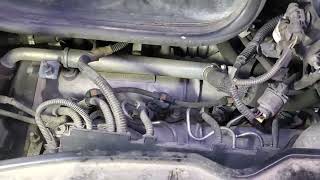
- Leaking or Damaged Charge Air Cooler (CAC) Hoses 🔴 High Probability The rubber hoses are exposed to high pressure and temperature fluctuations, causing them to degrade, split, or crack over time. Oily residue from the crankcase ventilation system can also soften the rubber. The outlet hose is a particularly common failure point.
How to confirm: Visually inspect all hoses between the turbo, intercooler, and intake manifold for cracks, splits, or loose clamps. Oily residue and dirt collected on a hose is a strong indicator of a leak. A smoke test is the most definitive way to find hidden leaks.
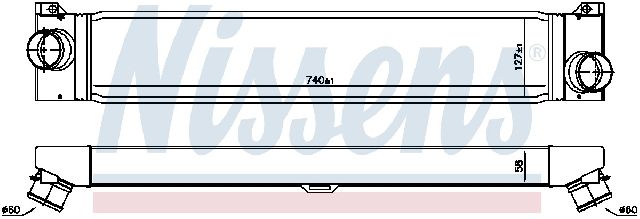
Typical fix: Replace the damaged hose. It is often recommended to replace the set, as others may be degraded. The red hose at the turbo outlet is a common failure point.
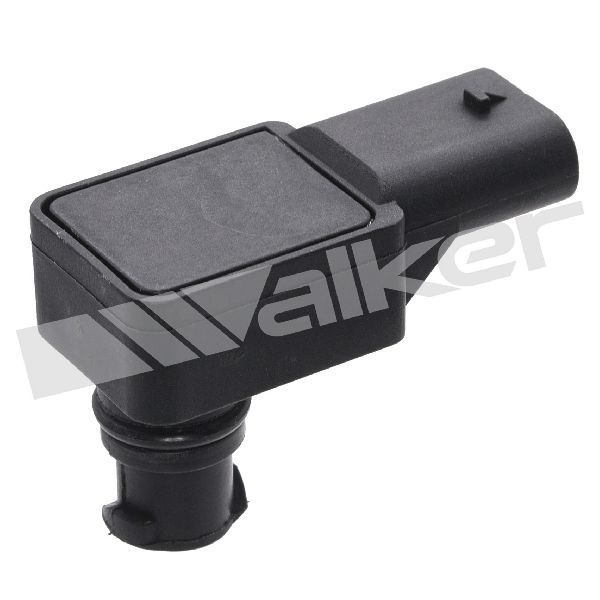
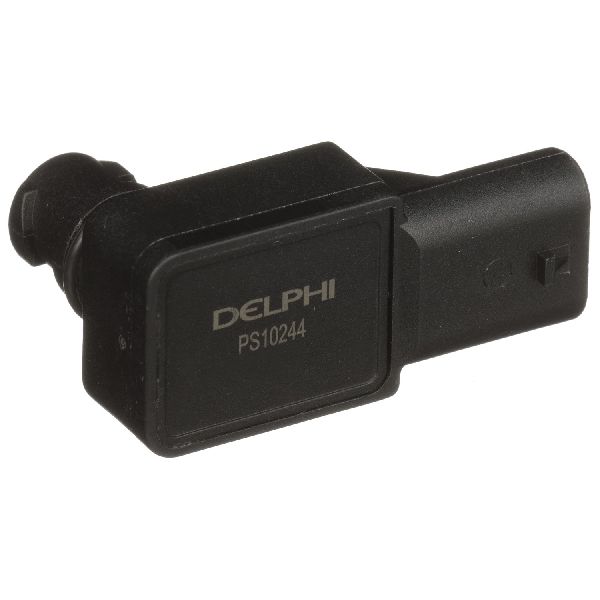
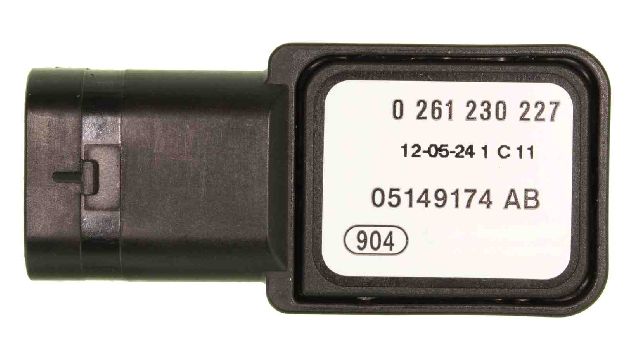
Est. part cost: $50-$250 for a single hose or a full aftermarket kit. - Clogged Boost Pressure (MAP) Sensor 🔴 High Probability The Iveco F1C engine produces significant soot, which can completely block the sensor's port, preventing it from accurately reading boost pressure.
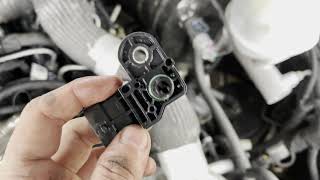
How to confirm: Remove the MAP sensor from the intake manifold. Visually inspect its tip for a heavy buildup of black carbon soot. The port should be clear.
Typical fix: Carefully clean the sensor's port using a dedicated MAP sensor or electronics cleaner and a small pick. If cleaning does not resolve the issue or the sensor is damaged, it must be replaced.
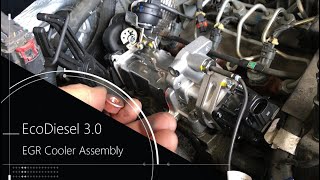
Est. part cost: $40-$100 for a new sensor. - Sticking or Clogged EGR System (Valve or Cooler) 🟡 Medium Probability Heavy soot production can cause the EGR valve to become caked with carbon and stick open or closed. A clogged EGR cooler can also restrict overall engine breathing, leading to underboost symptoms.
How to confirm: Check for other EGR-related trouble codes (e.g., P0401, P0402). Use a scan tool to command the EGR valve open and closed while monitoring engine performance. Physical removal and inspection for carbon buildup is often necessary for both the valve and cooler.
Typical fix: Remove and clean the EGR valve and associated passages. If the valve is mechanically stuck or electrically failed, it requires replacement. The EGR cooler often requires replacement as cleaning is difficult.
Est. part cost: $150-$400 for a new EGR valve, $350-$800 for an EGR cooler. - Faulty ECM Software Calibration 🟡 Medium Probability The original factory software was overly sensitive and could erroneously trigger underboost codes. FCA released TSBs to address this specific issue.
How to confirm: Contact a Ram dealer with your vehicle's VIN to determine if TSB #18-038-15 REV. B (for 2015 models) or #18-018-15 REV B (for 2014 models) applies and has not been performed.
Typical fix: A dealer must reprogram or 'flash' the Powertrain Control Module (PCM) with the updated software. This should be a primary diagnostic step.
Est. part cost: $0-$200, depending on dealer and warranty status.
Rare But Worth Checking
- Faulty Turbocharger Actuator or Sticking VGT Vanes: → Shop Turbocharger The electronic actuator can fail, or the internal variable geometry vanes can get stuck with soot. This is less common than leaks but more common than a complete turbo failure. Check for related codes like P226C.
- Cracked Exhaust Manifold or Turbo Outlet Pipe: A leak in the exhaust system before the turbo turbine will prevent it from spooling up effectively. This can manifest as a ticking noise when the engine is cold. An Iveco forum noted the cast iron bend after the turbo is a known weak point.
- Failed Turbocharger: → Shop Turbocharger Complete mechanical failure (e.g., seized bearings, damaged turbine wheels) is possible but should only be considered after all other potential causes like software updates, leaks, and sensor issues have been thoroughly ruled out.
Diagnosis Steps
- Contact a Ram dealer with your VIN to check if TSB #18-038-15 REV. B or #18-018-15 REV B are open for your vehicle. A PCM software update may be the required fix.
- Read all fault codes from the ECM to check for any accompanying EGR or other sensor codes.
- Perform a thorough visual inspection of the entire charge air system. Look for obvious splits in rubber hoses (especially the red one at the turbo outlet), loose clamps, and oily residue indicating a leak.
- Remove the MAP (boost pressure) sensor from the intake manifold. Inspect for heavy soot buildup and clean it with sensor-safe cleaner. 🎬 See how to properly clean your EcoDiesel MAP sensor
- If no obvious leaks are found, perform a pressurized smoke test on the charge air cooler system to identify hairline cracks or hidden leaks in hoses or the intercooler itself.
- Using a capable scan tool, monitor desired boost vs. actual boost pressure during a test drive (under load). A large, consistent difference confirms the underboost condition.
- Inspect the vacuum lines going to the turbocharger actuator for any cracks or disconnections and test the actuator itself.
- If EGR codes are present, inspect and clean/replace the EGR valve and cooler.
- If all else fails, inspect the turbocharger for shaft play, vane movement (if accessible), and signs of oil leaks or physical damage.
Parts You'll Likely Need
- Charge Air Cooler Hose (CAC Hose)
(OEM #52014841AC (replaces 52014841AA, 52014841AB))— This is the most frequent cause of P1247. The rubber hoses are prone to splitting and causing a boost leak.
Trusted brands: Mopar, Mishimoto, Gates
OEM price range: $100-$200
Aftermarket price range: $50-$150 - Boost Pressure Sensor (MAP Sensor)
(OEM #68371847AB)— It is very common for this sensor to get clogged with soot on the 3.0L Iveco engine, leading to false low-boost readings.
Trusted brands: Bosch, Mopar, Standard Motor Products
OEM price range: $80-$120
Aftermarket price range: $40-$80 - EGR Cooler
(OEM #68224977AA)— A soot-clogged EGR cooler is a common point of failure on this engine that restricts overall airflow, often leading to underboost codes like P1247/P0299.
Trusted brands: Mopar, Dorman OE FIX
OEM price range: $600-$800
Aftermarket price range: $350-$550
Related Codes That Often Appear With This One
- P0299 — P0299 is the generic SAE code for 'Turbocharger Underboost Condition'. It has the same meaning and causes as the manufacturer-specific P1247 and is often used interchangeably in repair literature.
- P0401 / P0402 — These codes indicate 'EGR Flow Insufficient' or 'EGR Flow Excessive'. A malfunctioning EGR system is a common cause of incorrect intake manifold pressure, which can trigger P1247. These codes are often addressed together with P0299 in the same TSBs.
- P226C — Stands for 'Turbocharger Boost Control Slow Response' and often points to a sticking VGT mechanism or a failing turbo actuator, which are direct causes of underboost. This code is also mentioned in TSB 18-038-15 REV. B.
Technical Service Bulletins (TSBs) & Recalls
- TSB #18-038-15 REV. B: For 2015
- TSB #18-018-15 REV B: For 2014
Platform-Specific Known Issues
- The Iveco F1C 3.0L engine is widely known for heavy soot production that clogs the MAP sensor and EGR valve, making these primary suspects for any boost-related code.
- A PCM software update is a common requirement to fix overly sensitive diagnostic logic that triggers P1247/P0299 incorrectly.
Mechanic-Grade Diagnostic Values
- Desired vs. Actual Boost Pressure — expected: Actual boost should closely follow desired boost under load.. Failure: The code may set if actual boost is 4 psi or more below the desired level for over 5 seconds.
- Charge Air System Pressure Test — expected: The system should hold pressure with minimal to no loss over several minutes.. Failure: A hissing sound or a rapid drop in pressure indicates a leak. A pressure of 20 PSI is a common test pressure for DIY setups.
- MAP Sensor Voltage (Key On, Engine Off) — expected: Voltage should correspond to atmospheric pressure (approx. 4.6V at sea level).. Failure: A voltage that is illogically low or high suggests a sensor or wiring fault.
Scan Tool Commands That Help
- wiTECH, AlfaOBD, TopScan: VGT Actuator Test / Boost Actuator Test — To command the variable geometry turbo actuator through its full range of motion. This verifies if the actuator is physically working, stuck, or if its internal position sensor is faulty. It's a key step before condemning the turbocharger itself.
- wiTECH (FCA Dealer Tool): Air Filter Restriction Test — This is a factory function specifically created to address the high frequency of P0299/P1247 codes caused by incorrect or overly restrictive aftermarket air filters on Ram diesel engines.
- wiTECH or other capable scan tool: Turbocharger Vane Actuator Position Learning / VGT Calibration — This is a mandatory procedure after replacing the electronic turbocharger actuator. It calibrates the new part's start and end positions so the ECM knows its precise range of motion. Skipping this step will cause the code to return immediately.
- wiTECH (FCA Dealer Tool): PCM Flash / Reprogramming — Used to install updated software as specified by TSBs #18-038-15 REV. B or #18-018-15 REV B. This should be one of the first diagnostic steps to rule out a known software logic issue.
Wiring & Ground Locations
- Primary Engine Ground Strap — A braided strap connecting a bolt on the side of the transmission case to a bolt on the top of the driver's side transmission mount. It can be seen by removing the driver's side headlight.. A poor engine ground can cause inconsistent or incorrect voltage readings from all engine sensors, including the MAP sensor and turbo actuator, leading to false codes and erratic performance. A simple test is to connect a jumper cable from the engine block to the chassis ground and see if symptoms change.
- Engine Harness Chafe Points — General areas to inspect are on top of the engine and along the frame rails where the harness can rub against sharp edges.. Damage to the wiring for the MAP sensor, turbo actuator, or other related components can cause shorts or open circuits, directly triggering P1247 or related codes.
Real Owner Repair Stories
- YouTube channel 'Roadside Rescue' (Dodge Ram ProMaster with P0299 (functionally identical to P1247)) — Check engine light on with underboost code P0299.
❌ Tried (didn't work) The initial diagnosis went straight to a visual inspection.
✅ What actually fixed it A visual inspection revealed a split in the charge air cooler (CAC) hose. The mechanic noted oily residue on the hose, which is a tell-tale sign of a boost leak. Replacing the split hose resolved the code.
"I Checked Everything" — The Actual Cause
- No specific stories were found where a smoke test was clean and the cause was a hidden leak. In most documented cases for this vehicle, if a smoke test is clean, the root cause is not a leak. The next most common causes are a soot-clogged MAP sensor, a required PCM software update (TSB), or a faulty EGR system, none of which would be found with a smoke test.
OEM Part Supersession History
52014841AA, 52014841AB→52014841AC— Standard part revision and improvement by the manufacturer to address failures.
Heads up: The new part number (52014841AC) is a direct replacement for the older versions.68224977AA→N/A— This is the current part number for the EGR Cooler assembly.
Heads up: When ordering this part, it's important to note that the Mopar assembly includes the EGR valve itself.
Model Year Variations Within This Range
- 2014 vs 2015: The Technical Service Bulletins for the faulty PCM logic are year-specific. TSB #18-018-15 REV B applies to 2014 models, while TSB #18-038-15 REV. B is for 2015 models. Always verify the correct TSB with a dealer using the VIN.
- 2014-2017: The 3.0L I4 EcoDiesel engine was available in the Ram ProMaster from model years 2014 through 2017 in North America, although the prompt specifies up to 2016. The causes and fixes are generally applicable to the 2017 model as well.
Diagnostic Flowchart
Other Known Issues on This Vehicle
Issues unrelated to this code that are worth knowing about as an owner of this generation:
- EGR Cooler Failure 🔴 High — Very common. Can occur at various mileages, often due to internal cracking from thermal stress or clogging from excessive soot. This was subject to a recall on the related V6 EcoDiesel engine. (Ref: Recall VB1 / NHTSA 19V-757 (for V6 EcoDiesel, but highlights the shared weakness))
- Oil Cooler Failure 🔴 High — Common on 2014-2016 models, especially those under heavy load. The cooler can fail internally, causing oil and coolant to mix, which requires a full flush of the cooling system. (Ref: Subject of a class-action lawsuit and extended warranty for some models.)
- M40MTA Automated Manual Transmission Failure 🟠 Medium — The diesel ProMaster used a unique automated manual transmission that is known for issues like unexpectedly shifting to neutral, no-move conditions, and premature wear of internal components like shift forks.
- Timing Chain Wear 🟡 Low — While the F1C's timing chain is generally durable, it is not a lifetime part. Wear can become apparent between 150,000-250,000 miles (250,000-400,000 km), signaled by a rattling noise on startup. Replacement is a complex job.
Used vs. New Parts: Buying Guide for This Vehicle
When a used part is the smart pick: For this repair, used parts are generally not recommended for sensors, hoses, or electronic actuators due to the high failure rate of the original parts. A used part may have very little life left. The only potential exception is for a structural component like the intercooler itself if it passes a pressure test, or a wiring harness pigtail for a connector repair.
Donor-vehicle mileage cap: roughly under 60000 miles for the part to have meaningful remaining life.
What to inspect on the donor part:
- For hoses: Squeeze the rubber to check for softness or brittleness; inspect inside for heavy oil saturation.
- For intercoolers: Check for bent fins, signs of impact, and oily residue seeping from the core.
- For wiring: Ensure connectors are free of corrosion (green crust) and that wires are not brittle or frayed.
OEM-only on this vehicle (don't cheap out):
- Boost Pressure (MAP) Sensor: Aftermarket sensors can have different response curves, potentially causing persistent issues. Using an OEM or OES (Bosch) part is highly recommended.
- Turbocharger Actuator: This is a calibrated electronic part. A used or cheap aftermarket version is very likely to fail calibration or have a short lifespan.
Aftermarket brands forum-validated for this vehicle:
- CAC Hoses: Mishimoto, Gates
- EGR Cooler: Dorman OE FIX
Brands owners have reported issues with on this vehicle:
- No-name, unbranded electronic sensors (e.g., MAP sensor) from online marketplaces should be avoided as they are a common source of misdiagnosis and repeat repairs.
Real Owner Stories
Aggregated from forums and TSBs cited above. Mileages and costs reflect what owners reported in those sources.
2014-2016 Ram ProMaster 3.0L EcoDiesel
Symptoms: Vehicle had an underboost code (P0299/P1247) and there was oily residue visible in the engine bay.
What fixed it: A mechanic found a split charge air hose, which was the source of the boost leak.
Source hint: YouTube - 'Dodge Ram Promaster code p0299 quick diag' by 'Fixing cars and stuff'
2014-2016 Ram ProMaster 3.0L EcoDiesel
Symptoms: Check engine light and severe loss of power, with the van going into 'limp mode'.
What fixed it: The MAP sensor was removed and found to be completely blocked with a heavy buildup of black carbon soot. Cleaning the sensor restored its function and cleared the code.
Source hint: promasterforum.com & Reddit
2014-2015 Ram ProMaster 3.0L EcoDiesel
Symptoms: The check engine light for underboost came on, but no physical leaks could be found.
What fixed it: A dealer referenced a TSB and performed a PCM software update ('flash') which resolved the issue by recalibrating the sensor thresholds.
Source hint: promasterforum.com & Reddit
Related OBD-II Codes
Frequently Asked Questions
My 2015 ProMaster has a P1247 code. Is there a software update or recall for this?
What's the very first thing I should check for a P1247 on my 3.0L EcoDiesel ProMaster?
I've heard about a specific 'red hose' failing on these vans. Is that related to code P1247?
My MAP sensor was completely clogged with soot. Can I just clean it or do I need to replace it?
I have a 'Service Electric Throttle Control' message along with the P1247 code. Is my throttle body bad?
Could a bad EGR valve cause this turbo underboost code?
Helpful Videos
We Have This Part in Stock


The information in this article is provided for general reference and educational purposes only. Vehicle specifications, procedures, and part compatibility can vary by production date, trim level, and region. Always consult your vehicle's factory service manual and verify part numbers before purchasing or performing repairs. Safety-critical components such as airbags, seat belts, and braking systems should be installed by a qualified professional.
- Ram ProMaster:
- 🧭 Diagnostic Flowchart
- 🎬 Helpful Videos
- 🛍️ Shop This Part
- What's Unique About the 2014-2016 Ram ProMaster
- Symptoms You May Notice
- Most Likely Causes
- Rare But Worth Checking
- Diagnosis Steps
- Parts You'll Likely Need
- Related Codes That Often Appear With This One
- Technical Service Bulletins (TSBs) & Recalls
- Platform-Specific Known Issues
- Mechanic-Grade Diagnostic Values
- Scan Tool Commands That Help
- Wiring & Ground Locations
- Real Owner Repair Stories
- "I Checked Everything" — The Actual Cause
- OEM Part Supersession History
- Model Year Variations Within This Range
- Other Known Issues on This Vehicle
- Used vs. New Parts: Buying Guide for This Vehicle
- Real Owner Stories
- 2014-2016 Ram ProMaster 3.0L EcoDiesel
- 2014-2016 Ram ProMaster 3.0L EcoDiesel
- 2014-2015 Ram ProMaster 3.0L EcoDiesel
- Related OBD-II Codes
- Frequently Asked Questions
- 🎟️ Get 5% Off