

OBD-II Code P1266: Cylinder #6 Injector Circuit Short
The Ultimate Guide to Diagnosing and Fixing P1266
- P1266 on a Ford Powerstroke indicates a critical electrical short in the cylinder #6 injector circuit, shutting down fuel delivery to that cylinder.
- Test circuit resistance at the 42-pin connector before buying parts; a reading under 1.0 ohm confirms a dead short, while 2.0-5.0 ohms is normal.
- The most frequent cause on 7.3L engines is a loose or brittle Under Valve Cover Harness (UVCH), which costs $60-$120 in parts to replace.
- Do not drive with an active P1266 code; the short circuit causes the Injector Driver Module (IDM) to overheat, turning a $100 wiring fix into an $800 module replacement.
What Does P1266 Mean?
Code P1266 means the Powertrain Control Module (PCM) detected a critical electrical short in the #6 fuel injector circuit. This code is famously associated with Ford Powerstroke diesel engines. The computer signals that the high-voltage command (typically 115V) from the Injector Driver Module (IDM) is shorting to ground or the low-side wire before operating the injector, completely preventing fuel delivery to cylinder #6.
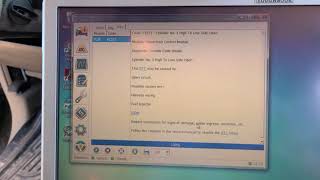
Technical definition: The SAE definition for P1266 on Ford Powerstroke vehicles is "Cylinder #6 High To Low Side Short". This indicates the Injector Driver Module (IDM) detected the high-voltage supply wire and the low-side control (ground) wire for the #6 injector circuit are electrically shorted together. On the 7.3L Powerstroke, cylinder #6 is the third cylinder from the front on the driver's side.
Can I Drive With P1266?
No — Do Not Drive. Do not drive the vehicle. Expect a severe engine misfire, poor power, and terrible fuel economy. When the #6 injector circuit shorts, the Injector Driver Module (IDM) shuts down the entire bank of injectors to protect itself, causing sudden engine stalling. This is a major safety risk at highway speeds. Continuing to drive overheats the IDM's internal driver, turning a $100 wiring issue into an $800 IDM replacement.
Common Causes
- Bad Under Valve Cover Harness (UVCH) & Loose Connector (Very Common) — On 7.3L Powerstrokes, the wiring harness under the valve cover is the primary failure point. The plastic connectors become brittle from hot oil and break, or the main connector clip loses tension and vibrates loose. Wire insulation also degrades, causing direct shorts at the valve cover gasket pass-through.
- Failed #6 Fuel Injector Solenoid (Very Common) — The electromagnetic coil (solenoid) on top of the fuel injector shorts out internally due to age, heat, and vibration. This creates a direct path to ground for the high-voltage signal.
- Chafed Engine Wiring Harness (Common) — The main harness running from the IDM to the valve covers rubs against sharp engine components. Common chafe points include the driver's side valve cover edge, alternator bracket, and intake manifold, wearing through insulation and causing a short to ground.
- Faulty Injector Driver Module (IDM) (Common) — The IDM fails due to water intrusion through the case vent, causing circuit board corrosion. Internal driver circuits also burn out permanently when forced to repeatedly power a shorted external wire or injector.
- Degraded 42-Pin Connector (Less Common) — The large 42-pin main engine harness connector over the driver's side valve cover dries out. The factory dielectric grease flakes off, creating conductive debris that causes intermittent shorts between pins.
- Low FICM Voltage (6.0L Powerstroke) (Uncommon) — On 6.0L engines, a failing Fuel Injection Control Module (FICM) outputting below 45V triggers false injector circuit codes, including P1266, even if the injector and wiring are perfectly sound.
- DEF Contamination (6.7L Powerstroke) (Uncommon) — On 6.7L engines, Diesel Exhaust Fluid (DEF) contaminating the fuel system creates white, crystalline deposits that cause internal injector short circuits (Ford TSB 11-10-10).
Symptoms
- Engine Stalls or Dies Under Load — The truck suddenly shuts off as if the key were turned. The IDM detects a dangerous current draw from the short and shuts down the entire injector bank to protect its circuitry.
- Rough Engine Idle and Severe Misfire — The engine shakes, bucks, and runs unevenly because cylinder #6 is completely dead. The misfire is constant and severe.
- Significant Loss of Power — With one of eight cylinders offline, the vehicle feels extremely sluggish and struggles to accelerate or pull heavy loads.
- Hard Starting or No Start Condition — The engine is difficult to start or only cranks without firing. A severe short forces the IDM to prevent the engine from starting entirely.
- Audible Knocking or 'Choppy' Sound — A dead cylinder causes an audible knocking or a distinct 'choppy' exhaust note due to the imbalance in engine operation.
- Check Engine Light is On (also visible on scanner) — The PCM illuminates the Check Engine Light immediately upon detecting the electrical fault.
Diagnostic Flowchart
Tap your situation to follow the diagnostic path that matches what you're seeing on this code.
Common Fixes & Costs
- Replace the Under Valve Cover Harness (UVCH) and Gasket — Parts: $60-$120, Labor: $250-$400, ~2.5 hr book time (Intermediate)
- Replace the #6 Fuel Injector — Parts: $200-$350, Labor: $300-$500, ~3.5 hr book time (Professional)
- Replace the Injector Driver Module (IDM) — Parts: $250-$450, Labor: $75-$150, ~0.8 hr book time (Intermediate)
- Repair the Engine Wiring Harness — Parts: $20-$50, Labor: $150-$600, ~2.0 hr book time (Professional)
- Clean and Secure the 42-Pin Connector — Parts: $10, Labor: $50-$100, ~0.5 hr book time (Beginner)
DIY vs Professional
- Replace the Under Valve Cover Harness (UVCH) 🟢 Beginner
Tools: Basic socket set, torque wrench, screwdrivers. - Replace the #6 Fuel Injector 🟢 Beginner
Tools: Torque wrench, injector puller, bore cleaning brushes, special sockets. - Replace the Injector Driver Module (IDM) 🟢 Beginner
Tools: Basic socket set. - Repair the Engine Wiring Harness 🟢 Beginner
Tools: Multimeter, wire strippers, soldering iron, heat shrink tubing, replacement wire. - Clean and Secure the 42-Pin Connector 🟢 Beginner
Tools: Socket for connector bolt, electrical contact cleaner, small brushes, dielectric grease.
Used vs. New Parts: Buying Guide
When a used part is worth it: For a high-mileage truck on a tight budget, a used injector or IDM from a reputable seller with a warranty is viable. Never buy a used Under Valve Cover Harness (UVCH), as it will be just as brittle as the original.
Donor-vehicle mileage cap: roughly under 100000 miles for the part to have meaningful remaining life.
Donor quality checklist:
- For injectors, verify they were pulled from a running engine without codes.
- For an IDM, reject units with any signs of water intrusion or corrosion on the case or pins.
- Match part numbers exactly.
Decision logic:
- If The part is an Under Valve Cover Harness (UVCH) → Always buy new from a quality brand (e.g., Motorcraft, Alliant Power). The risk of repeat failure is too high.
- If The part is a fuel injector and budget is the primary concern → Buy a quality remanufactured injector. Avoid the cheapest options, as poor quality causes immediate repeat failures.
- If The part is an Injector Driver Module (IDM) → Favor a remanufactured unit or a repair service for your original module. Junkyard IDMs have unknown histories and fail quickly.
Warranty tradeoff: Used parts offer 30-90 day warranties. Quality remanufactured or new aftermarket parts offer 1-year to lifetime warranties, justifying the higher cost.
Worst-case if a used part fails: $400-800 if a used injector or IDM fails shortly after installation, requiring double labor and parts costs.
What Happens If You Wait — Timeline
- Immediate (First 0-50 miles): Check Engine Light illuminates with code P1266. Engine runs with a severe, constant misfire. A dramatic loss of power and bucking/shaking is noticeable. The vehicle stalls unexpectedly. (MPG impact: 15-30%% · Added cost: $0-20 in wasted fuel.)
- Short-Term (50-500 miles): Driving with the constant short circuit places extreme thermal stress on the specific driver for cylinder #6 inside the Injector Driver Module (IDM). The component begins to overheat. (MPG impact: 15-30%% · Added cost: $50-100 in wasted fuel, plus increasing risk to the IDM.)
- Medium-Term (Several weeks to 2 months): The internal driver for the #6 injector circuit inside the IDM burns out permanently. Even if the external short is fixed, the IDM cannot fire the #6 injector. (MPG impact: 15-30%% · Added cost: $250-$450 to replace the failed IDM.)
- Long-Term / Catastrophic: A complete failure of the IDM occurs, leading to a no-start condition and leaving the vehicle stranded. A $100 wiring harness issue becomes a major repair requiring towing. (MPG impact: 100%% · Added cost: $600-$1000+)
Cost of Not Fixing It
- Immediate: Severe misfire, poor fuel economy, and significant loss of power. The vehicle stalls unpredictably, posing a major safety risk. (Added cost: Negligible, besides increased fuel consumption.)
- Weeks to Months: Continued operation with a shorted injector circuit overheats and burns out the driver for cylinder #6 inside the Injector Driver Module (IDM). (Added cost: $250-$450)
- Long-Term: A completely failed IDM results in a no-start condition, leaving you stranded and requiring a tow. (Added cost: $600-$1000+)
Diagnosis Steps
- Test Injector Circuit Resistance at the 42-Pin Connector
Disconnect the main 42-pin connector near the driver's side valve cover. Using a multimeter set to Ohms, measure resistance between the high-side and low-side pins for the #6 injector. A healthy circuit reads 2.0 to 5.0 ohms. A reading under 1.0 ohm confirms a dead short. Check resistance from each pin to chassis ground; it must read infinite (OL).
Tools: Multimeter, Wiring Diagram, Back Probes (Intermediate) - Confirm Cylinder Location and Perform "Buzz Test"
On a 7.3L, cylinder #6 is the third one back on the driver's side. Use an advanced OBD-II scanner to command an injector "buzz test." Listen as the IDM cycles each injector. A weak or silent buzz from cylinder #6 confirms the electrical fault is isolated to that specific circuit.
Tools: Advanced OBD-II Scanner (Beginner) - Inspect the Under Valve Cover Harness (UVCH)
Remove the driver's side valve cover. Unplug the UVCH from the #6 injector and the main gasket pass-through connector. Inspect the connectors for burnt pins, loose terminals, and broken plastic locking tabs. This is the most frequent failure point.
Tools: Socket Set, Screwdriver (Intermediate) - Test the Injector Solenoid Directly
With the valve cover off, measure the resistance of the #6 injector solenoid directly on its two terminals. A good 7.3L injector solenoid reads between 2.8 and 3.6 ohms. A reading under 2.0 ohms confirms the solenoid shorted internally and requires replacement.
Tools: Multimeter (Intermediate) - Inspect the External Wiring Harness for Chafing
Visually inspect the engine wiring harness from the IDM (driver's side fender) to the driver's side valve cover. Look closely at areas where the harness rubs against the valve cover edge, alternator, or intake manifold for worn-through conduit and exposed copper.
Tools: Flashlight, Inspection Mirror (Beginner) - Isolate the IDM vs. Wiring/Injector
Unplug the UVCH from injector #6 and a known good injector (like #4). Use jumper wires to connect the #6 harness connector to the #4 injector, and the #4 harness connector to the #6 injector. Rerun the buzz test. If the code changes to P1264, the problem is in the wiring harness or IDM. If the code stays P1266, the #6 injector is the confirmed failure.
Tools: Jumper Wires, Advanced OBD-II Scanner (Advanced) - Check for a Shorted IDM
The IDM occasionally shorts internally, sending voltage to its metal case. With the key on, use a multimeter to check for AC or DC voltage between the IDM case and the battery negative terminal. Any voltage reading confirms the IDM is faulty and dangerous.
Tools: Multimeter (Advanced) - Check FICM Voltage (6.0L Powerstroke Only)
Using a scan tool or multimeter, check the FICM output voltage. The reading must remain above 45 volts during Key-On-Engine-Off (KOEO), cranking, and running. If voltage drops below 45V at any point, the FICM is failing and triggering false injector codes.
Tools: Advanced OBD-II Scanner or Multimeter (Advanced) - Analyze Injector Current Waveform
Use a low-amp current clamp and an oscilloscope on the #6 injector's control wire. A P1266 short shows an almost vertical line as current spikes uncontrollably high until the IDM's protection kicks in, lacking the normal 'peak and hold' waveform.
Tools: Oscilloscope, Low-Amp Current Clamp (Professional)
When This Code Triggers (Freeze-Frame Conditions)
- Engine Coolant Temp: 180-205°F (The fault frequently appears once the engine is fully warmed up, as heat expands materials and exposes marginal shorts in coils or wires.)
- Engine RPM: 1500-2500 RPM (The code sets during steady-state cruising or light acceleration, not necessarily at idle.)
- Engine Load: 30-60% (Moderate engine load places consistent demand on the injection system, making it easier for the IDM to detect excessive current draw.)
- Vehicle Speed: 45-65 mph (These conditions correspond to highway driving, where a sudden stall from the IDM protecting itself poses a significant safety risk.)
Related Codes
- P1316 — Means "Injector Driver Module (IDM) Codes Detected." It almost always appears with P1266 on Powerstrokes. It is the PCM telling you to use a capable scanner to read the specific fault stored in the IDM.
- P1261-P1268 (excluding P1266) — Identical to P1266 but point to other cylinders. Seeing multiple codes from this series strongly suggests a bank-wide problem, such as a loose UVCH connector or a failing IDM.
- P1276 — Means "Cylinder #6 High to Low Side Open." It is the opposite fault of P1266. A short (P1266) shows abnormally low resistance, while an open (P1276) shows infinite resistance (OL), indicating a broken wire.
- P0306 — The generic OBD-II code for "Cylinder 6 Misfire Detected." P1266 is the specific manufacturer code identifying the electrical short as the root cause of the misfire.
Climate & Environmental Factors
- Hot Climate / High Engine Temperature: Heat expands materials and increases electrical resistance. A component with marginal damage, like an injector solenoid coil, functions when cold but shorts out once it reaches operating temperature.
- Cold Climate: Cold temperatures contract materials, causing loose connections in the UVCH or 42-pin connector to separate and create an open circuit. This causes rough running that improves as the engine warms up.
- High Humidity / Water Exposure: High humidity allows moisture to seep into aging wire insulation and unsealed connectors, leading to corrosion and short circuits. Water intrusion into the IDM case vent is a primary cause of module failure.
How to Talk to a Mechanic About This Code
Say this: "I have a Ford Powerstroke with a P1266 code. I suspect an electrical issue in the cylinder 6 injector circuit, possibly the UVCH or the injector itself. Please start with a resistance test at the 42-pin connector to isolate the short before recommending part replacement."
This signals you understand the common failure points. It directs the technician toward efficient diagnosis and prevents them from immediately quoting an expensive injector replacement.
Avoid saying:
- 'My truck is shaking, can you fix it?'
- 'The check engine light is on, just do whatever it takes.'
- 'I think I need a new injector.'
Questions to ask before authorizing the repair:
- What were the ohm readings for the #6 injector circuit at the 42-pin connector and at the injector itself?
- Did you find any burnt pins or damage on the Under Valve Cover Harness (UVCH)?
- If the external harness is chafed, can you show me the location of the damage?
- What is the warranty on the parts and labor for this repair?
Where to Take It: Dealer vs Independent vs Chain
- Dealer:
A safe but very expensive option for an out-of-warranty truck. They have the right tools but you pay a premium for them.
Best for: Vehicles still under powertrain warranty., Complex diagnostics on newer (6.7L) Powerstroke engines., When you want a guaranteed OEM parts and repair process.
Downsides: Highest labor rates, typically 1.5-2x more than independent shops., May recommend replacing more parts than necessary (e.g., all injectors on a bank). (Typical cost: +75% vs. baseline) - Independent Shop:
Best fit. A reputable independent diesel specialist has fixed this exact problem hundreds of times and is the most efficient choice.
Best for: Out-of-warranty 7.3L Powerstroke trucks., Shops that specialize in diesel or Ford trucks., Cost-conscious owners who want experienced technicians.
Downsides: Quality varies greatly. A general auto shop lacks the specific knowledge for this engine., Must vet the shop's reputation and ensure they have experience with Powerstroke engines. (Typical cost: +0% vs. baseline) - Chain Shop:
AVOID. This is not a job for a generalist chain shop. Their diagnostic process is unequipped for Powerstroke-specific issues.
Best for: Basic services like oil changes, tires, and brakes.
Downsides: Technicians lack the specialized diagnostic tools and experience for complex diesel engine faults., High pressure to upsell services; risk of misdiagnosis is extremely high. (Typical cost: -10% vs. baseline)
When to Walk Away From the Repair
If the estimated repair cost exceeds 50% of the truck's private-party value, pause and evaluate. However, the high desirability of the 7.3L Powerstroke engine often makes repairs worthwhile even when approaching this threshold.
- Car worth $12000, fix is $1200: Fix it. This is a standard repair cost and well below the threshold for a desirable truck.
- Car worth $8000, fix is $2500: Borderline, but likely worth fixing. A comprehensive repair that includes an injector, UVCH, and IDM is a significant investment, but adds considerable value back to a 7.3L truck.
- Car worth $5000, fix is $3000: Consider walking away or selling as-is. The repair cost is a massive percentage of the truck's value. Selling it as a 'mechanic's special' is a better financial decision.
What Scan Tool You Need for This Code
Minimum: A tool that reads manufacturer-specific codes from the Ford Injector Driver Module (IDM) and performs a 'Key On, Engine Off' (KOEO) Injector Electrical Self-Test (buzz test).
A generic $20 code reader only shows P0306 (Cylinder 6 Misfire) and P1316 (IDM Codes Detected). It cannot pull the specific P1266 code from the IDM or command the essential 'buzz test' needed to confirm the electrical fault.
Budget: FORScan Lite App with compatible OBD-II Adapter (e.g., OBDLink EX) (~$50) — The preferred DIY option. FORScan reads IDM codes, runs the injector buzz test, and monitors live data like injector pulse width and FICM voltage.
Mid-range: Foxwell NT510 Elite with Ford Software (~$180) — A capable handheld unit providing full Ford-specific diagnostics, including reading P1266 from the IDM and performing the injector buzz test without a laptop.
Professional: Autel MaxiCOM MK808S (~$500) — Professional-grade tool with full bidirectional control. Offers fast access to all Ford-specific tests, live data graphing, and comprehensive diagnostic functions.
How to Clear the Code After You Fix It
- Reconnect the battery if it was disconnected.
- Use an OBD-II scan tool to formally clear the Diagnostic Trouble Codes (DTCs) from the PCM and IDM.
- Perform a complete OBD-II drive cycle to allow the vehicle's readiness monitors to run.
Drive cycle (~30 minutes): Cold start the engine and idle for 3 minutes. Drive in stop-and-go traffic with steady accelerations. Drive for 10 minutes at a steady highway speed (55-60 mph). Safely coast down to 20 mph without braking, then stop. Idle for 2 minutes.
Readiness monitors affected: Comprehensive Component Monitor, Misfire Monitor
Before emissions retest: drive at least 100 miles to fully set monitors.
Watch out for:
- Clearing the code with a scanner does not reset readiness monitors; you must complete the drive cycle before an emissions test.
- If the underlying short circuit is not fixed, the code returns immediately upon engine warmup.
- Disconnecting the battery erases all readiness monitors and adaptive memory.
Will This Fail Emissions / State Inspection?
Yes — this code typically fails an OBD-II emissions inspection.
- California: An active Check Engine Light for P1266 is an automatic failure. A full drive cycle must be completed to set readiness monitors before a re-test.
- New York: Any fault code that illuminates the Check Engine Light, including P1266, results in an immediate failure of the OBD-II scan.
- Texas: In emissions-testing counties, an active P1266 code causes the vehicle to fail the OBD-II portion of the inspection.
Most Commonly Affected Vehicles
- Ford F-250/F-350 Super Duty (1999-2003) — Extremely common on trucks with the 7.3L Powerstroke diesel engine due to the known failure points of the UVCH and its connectors.
- Ford Excursion (2000-2003) — Shares the same 7.3L Powerstroke engine, IDM, and wiring harness design as the Super Duty trucks.
- Ford F-450/F-550 Super Duty (1999-2003) — These chassis cab trucks used the identical 7.3L Powerstroke powertrain and suffer from the same UVCH and wiring issues.
- Ford E-Series Vans (E-350/E-450) (1999-2003) — The 7.3L Powerstroke in these vans is prone to P1266, though accessing the engine components is more challenging due to the tight engine bay.
- Ford F-Series Super Duty (2011-2016) — Appears on the 6.7L Powerstroke, indicating a short in the #6 injector circuit. TSB 11-10-10 notes DEF contamination causes these shorts.
- BMW 335i, 535i (N54 Engine) (2007-2010) — Cylinder 6 injector failure is common. Being the last injector on the fuel rail, it runs hotter, degrading its internal components and leading to electrical faults.
- Volkswagen/Audi Various models with TDI PD engines (2004-2006) — P1266 indicates an 'Implausible Signal' from the unit injector on cylinder 3. This is often caused by a worn camshaft lobe failing to actuate the injector pump.
Manufacturer-Specific Notes
- Ford: This code is overwhelmingly specific to Ford Powerstroke engines. The fault is almost always located in the injector, the Under Valve Cover Harness (UVCH), the external harness, or the Injector Driver Module (IDM).
- Toyota: On many Toyota vehicles, P1266 means "Supply Pump Pressure Malfunction." This triggers when actual fuel rail pressure is significantly lower than target pressure, often due to a clogged filter.
- Volkswagen/Audi: For VW/Audi TDI PD engines, P1266 points to an "Implausible Signal" from the unit injector on cylinder 3, often caused by a worn camshaft lobe.
- General Motors (GM): On certain GM vehicles, P1266 is a network code indicating a "Class 2 Communication Malfunction" between computer modules, unrelated to fuel injectors.
Real Owner Stories
2002 Ford F-250 7.3L at 240K miles - The Classic UVCH Failure
Truck suddenly started running extremely rough, bucking, and stalling after hitting a bump. Check Engine Light came on with codes P1266 and P1316.
What they tried:
- Performed a buzz test, which was silent for cylinders 2, 4, 6, and 8.
- Checked the UVCH connector before buying parts.
Outcome: Found the main UVCH connector had vibrated completely loose under the driver's side valve cover. Pushed it back in securely, performed the '$0.50 mod' by wedging a shim to hold the clip tight, and cleared the codes. The truck ran perfectly.
Lesson: If you get multiple injector codes on one bank, especially after a jolt, check the main UVCH connector under the valve cover first.
2000 Ford Excursion 7.3L at 195K miles - Misdiagnosis Leads to Wasted Money
Engine developed a dead miss on cylinder #6 (P1266). The owner immediately bought a remanufactured injector for $250.
What they tried:
- Replaced the #6 fuel injector.
- Started the truck, and the P1266 code came back instantly.
Outcome: The owner removed the valve cover again and tested the UVCH. Found the plastic connector going to the #6 injector had melted pins from a poor connection. Replacing the $75 UVCH fixed the problem. The original injector was fine.
Lesson: Never buy parts before diagnosing. Always test circuit resistance from the 42-pin connector and inspect the UVCH before spending hundreds on an injector.
1999 Ford F-350 7.3L at 310K miles - The Hidden Wiring Rub
Owner experienced an intermittent P1266 code. The truck ran fine for weeks, then suddenly misfired and stalled, usually after driving in the rain.
What they tried:
- Replaced the UVCH and performed the '$0.50 mod'.
- Swapped the #6 injector with the #8 injector.
- Replaced the IDM with a known-good unit.
Outcome: The owner meticulously inspected the main engine harness and found a spot where it rubbed through against the edge of the driver's side valve cover. The exposed wires for the #6 injector shorted to ground when wet. Repairing the wires permanently solved the issue.
Lesson: If the injector and UVCH test good, thoroughly inspect the entire external wiring loom for chafe points near metal brackets and cover edges.
How to Prevent This Code From Triggering
- Perform the '$0.50 Mod' or Install Upgraded Retainers (Once, whenever the valve covers are off.) — The factory UVCH connector clip weakens over time. Shimming the clip with a ground-down quarter ensures the plug stays seated, preventing a primary cause of injector fault codes.
- Inspect and Secure Wiring Harnesses (Every 30,000 miles or during major service.) — The main engine harness chafes against valve cover edges and alternator brackets. Securing the loom with zip ties away from sharp metal edges prevents costly short circuits.
- Seal or Protect the Injector Driver Module (IDM) (Once.) — The stock IDM has a case vent that allows water entry, leading to corrosion. Applying a bead of silicone sealant around the case seam and vent prevents moisture failure.
- Keep Engine Bay Clean and Dry (Ongoing.) — Avoid pressure washing directly over the IDM (driver's side fender) or the 42-pin connector. Water intrusion is a leading cause of electrical shorts in these aging harnesses.
Frequently Asked Questions
What is the 'quarter mod' for a P1266 code?
The 'quarter mod' is a DIY fix for the 7.3L Powerstroke's Under Valve Cover Harness (UVCH). The factory locking tab weakens over time, allowing the plug to vibrate loose and trigger injector codes. Wedging a ground-down quarter under the tab forces it to stay locked, ensuring a secure connection.
My truck has a P1266 but only runs rough when it's hot. Why?
This is a classic symptom of an electrical component failing under heat. As the engine warms up, metal expands and electrical resistance increases. A failing injector solenoid or damaged wire insulation shorts out only when it reaches operating temperature.
My truck has a P1266 but only runs rough when it's cold. What gives?
Cold temperatures cause metal to contract, opening up marginal connections in the UVCH or 42-pin connector. It also indicates water intrusion causing a short when damp, which evaporates as the engine heats up. On a 6.0L, this points to low FICM voltage during cold starts.
What is the most common misdiagnosis for P1266?
The most common mistake is replacing the #6 fuel injector without testing the wiring. Mechanics often spend hundreds on a new injector only to find the problem was a $75 UVCH or a chafed wire. Always test circuit resistance from the 42-pin connector before buying parts.
Can a bad battery or alternator cause a P1266 code?
Unstable voltage wreaks havoc on vehicle electronics. On a 6.0L Powerstroke, weak batteries damage the FICM, triggering false injector codes. Ensure your charging system and batteries are healthy before diagnosing complex electronic faults.
I have P1266 along with other injector codes like P1262 and P1264. What does that mean?
Seeing multiple injector codes for the same bank (e.g., Cylinders 2, 4, 6, 8) indicates a shared failure point. The most likely causes are a loose main UVCH connector for that bank, a 42-pin connector issue, or a failing IDM losing power to that side.
What is the difference between P1266 (Short) and P1276 (Open)?
They are opposite faults for the same circuit. P1266 (Short) means the wires are touching or grounded, causing excessive current flow and forcing the IDM to shut down the bank. P1276 (Open) means a broken wire or unplugged connector, resulting in zero current flow and a single dead cylinder.
Key Takeaways
- P1266 on a Ford Powerstroke indicates a critical electrical short in the cylinder #6 injector circuit, shutting down fuel delivery to that cylinder.
- Test circuit resistance at the 42-pin connector before buying parts; a reading under 1.0 ohm confirms a dead short, while 2.0-5.0 ohms is normal.
- The most frequent cause on 7.3L engines is a loose or brittle Under Valve Cover Harness (UVCH), which costs $60-$120 in parts to replace.
- Do not drive with an active P1266 code; the short circuit causes the Injector Driver Module (IDM) to overheat, turning a $100 wiring fix into an $800 module replacement.
Helpful Videos
Shop the Parts Behind P1266
Below are the parts most often responsible for code P1266, ranked by how frequently each one is the actual culprit (per the diagnosis above). Tap any to see what we have for your vehicle.



The information in this article is provided for general reference and educational purposes only. Vehicle specifications, procedures, and part compatibility can vary by production date, trim level, and region. Always consult your vehicle's factory service manual and verify part numbers before purchasing or performing repairs. Safety-critical components such as airbags, seat belts, and braking systems should be installed by a qualified professional.
- 🧭 Diagnostic Flowchart
- 🎬 Helpful Videos
- 🛍️ Shop This Part
- What Does P1266 Mean?
- Can I Drive With P1266?
- Common Causes
- Symptoms
- Common Fixes & Costs
- DIY vs Professional
- Used vs. New Parts: Buying Guide
- What Happens If You Wait — Timeline
- Cost of Not Fixing It
- Diagnosis Steps
- When This Code Triggers (Freeze-Frame Conditions)
- Related Codes
- Climate & Environmental Factors
- How to Talk to a Mechanic About This Code
- Where to Take It: Dealer vs Independent vs Chain
- When to Walk Away From the Repair
- What Scan Tool You Need for This Code
- How to Clear the Code After You Fix It
- Will This Fail Emissions / State Inspection?
- Most Commonly Affected Vehicles
- Manufacturer-Specific Notes
- Real Owner Stories
- 2002 Ford F-250 7.3L at 240K miles - The Classic UVCH Failure
- 2000 Ford Excursion 7.3L at 195K miles - Misdiagnosis Leads to Wasted Money
- 1999 Ford F-350 7.3L at 310K miles - The Hidden Wiring Rub
- How to Prevent This Code From Triggering
- Frequently Asked Questions
- What is the 'quarter mod' for a P1266 code?
- My truck has a P1266 but only runs rough when it's hot. Why?
- My truck has a P1266 but only runs rough when it's cold. What gives?
- What is the most common misdiagnosis for P1266?
- Can a bad battery or alternator cause a P1266 code?
- I have P1266 along with other injector codes like P1262 and P1264. What does that mean?
- What is the difference between P1266 (Short) and P1276 (Open)?
- Key Takeaways
- 🎟️ Get 5% Off