

OBD-II Code P1269: Authorization Not Received
What P1269 means, why it triggers, and how to fix it
- Identify your vehicle's specific P1269 definition before diagnosing, as it means an Injector Driver Module failure on a Ford 7.3L but a VTEC oil pressure issue on a Honda.
- Check your engine oil level immediately if you drive a 2001-2009 Honda or Acura, as low oil is the number one cause of this VTEC-related code.
- Inspect the under-valve-cover wiring harness on Ford 7.3L and VW 1.9L TDI engines before spending $300+ on new fuel injectors, as brittle wiring frequently causes this code.
- Stop driving immediately if you smell fuel in your diesel engine oil, as a stuck-open injector will cause catastrophic engine failure costing upwards of $4,500.
What Does P1269 Mean?
P1269 is a manufacturer-specific code with vastly different definitions. On Ford 7.3L diesels, the Injector Driver Module (IDM) detected a fault and shut down an injector to prevent engine damage. On Honda vehicles, it indicates a VTEC oil pressure system malfunction. On Volkswagen or Audi diesels, it points to a specific fuel injector or wiring failure.
Technical definition: The SAE/ISO definition is 'Immobilizer Code Not Programmed,' but manufacturers rarely use this. Ford defines it as 'Injector Driver Module (IDM) Detected Fault, Engine Disabled.' Volkswagen/Audi uses 'PD Unit Injector: Cylinder 4 (N243): Implausible Signal.' Honda treats it as a variant of P1259, indicating a 'VTEC System Malfunction.'
Can I Drive With P1269?
No — Do Not Drive. Driving is strongly discouraged. For diesel engines (Ford/VW/GM), a stuck-open injector causes 'cylinder wash' that destroys the engine, requiring a $4,500+ rebuild. Excess fuel also melts the catalytic converter or DPF, adding $800-$2,500 to the repair. For Honda vehicles, the engine enters 'limp mode' with severely limited power, making highway driving unsafe.
Common Causes
- Injector Driver Module (IDM) Failure (Ford 7.3L Powerstroke) (Very Common) — The most frequent cause for P1269 on Ford 7.3L diesels. The IDM provides high voltage to fire the injectors. It fails due to water intrusion through the case vent, age, heat, and vibration.
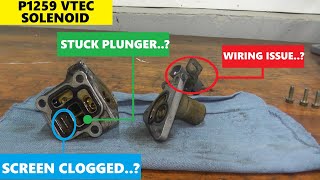
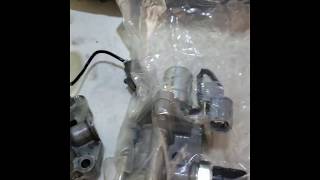
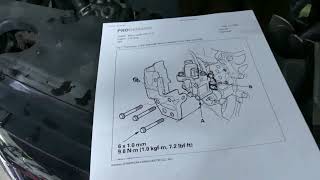
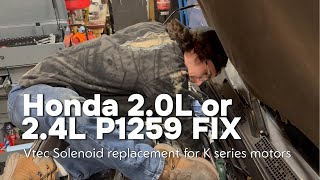
- Low or Dirty Engine Oil (Honda) (Very Common) — On Honda engines, P1269 is a VTEC system malfunction. The VTEC system uses oil pressure to change valve timing. Low oil levels or sludgy oil clog passages in the VTEC solenoid, preventing adequate pressure. 🎬 See how to test and replace a faulty VTEC solenoid valve.
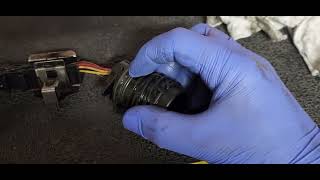
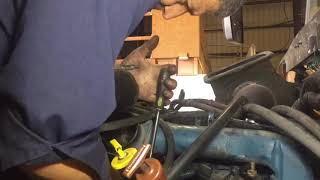
- Wiring Harness Damage (Under Valve Cover) (Common) — The wiring between the control module and fuel injectors frequently fails. On Ford 7.3L and VW TDI engines, the wiring harness inside the valve cover becomes brittle and cracks from heat and oil exposure, causing electrical shorts. 🎬 Watch this walkthrough on replacing a damaged under-valve-cover injector harness.
- Faulty Fuel Injector (Common) — On VW/Audi TDI engines, this code points directly to a bad fuel injector in cylinder 4. On Ford Powerstroke engines, a single failing injector triggers the code. On Nissan YD-series diesels, it indicates the cylinder #2 injector is stuck open.
- Failed IDM or FICM Power Relay (Less Common) — A high-current relay powers the IDM (Ford) or FICM (GM). If this relay fails, the module loses power, preventing injectors from firing and setting P1269.
- Worn Camshaft Lobes (VW TDI PD) (Less Common) — Volkswagen's Pumpe Düse (PD) TDI injectors actuate mechanically via camshaft lobes. A worn lobe for cylinder 4 fails to actuate the injector properly, triggering an implausible signal.
- Immobilizer/Key Programming Issue (Rare) — On certain Ford and Mercedes-Benz models, this code means the anti-theft system rejects the key. This results in a no-start condition, usually accompanied by code P1260.
Symptoms
- Engine runs rough, misfires, or shakes — The engine shakes, hesitates, or runs on fewer cylinders under load. This is the primary symptom when the computer disables an injector.
- Significant loss of power — The vehicle feels sluggish with poor acceleration because an injector is disabled or the engine is stuck in 'limp mode' (Honda).
- Engine stalls or won't start — The engine shuts off while driving or refuses to start. A no-start is guaranteed if the immobilizer triggers or the IDM/FICM completely fails.
- Fuel smell in engine oil — A strong diesel or gasoline smell in the engine oil indicates a stuck-open injector washing fuel past the piston rings. The oil level on the dipstick will rise.
- Poor fuel economy — A stuck-open injector or disabled cylinder causes a dramatic 15-30% drop in MPG.
- Check Engine Light is on — The powertrain control module illuminates the Malfunction Indicator Lamp (MIL) immediately upon detecting the fault.
Diagnostic Flowchart
Tap your situation to follow the diagnostic path that matches what you're seeing on this code.
Common Fixes & Costs
- Replace or Repair Injector Driver Module (IDM) — Parts: $250-$450, Labor: $75-$150, ~0.8 hr book time (DIY)
- Replace VTEC Solenoid Assembly (Honda) — Parts: $150-$250, Labor: $75-$150, ~0.8 hr book time (DIY)
- Replace Under-Valve-Cover (UVC) Wiring Harness — Parts: $50-$120 per side, Labor: $150-$300 per side, ~2.5 hr book time (Intermediate)
- Replace Fuel Injector(s) — Parts: $300-$700 per injector, Labor: $400-$600 per bank, ~4.5 hr book time (Professional)
- Repair or Reprogram Immobilizer System — Parts: $0-$200, Labor: $100-$300, ~1.5 hr book time (Professional)
DIY vs Professional
- Replace Injector Driver Module (IDM) (Ford 7.3L) — Beginner: Yes
Tools: Basic socket set (8mm, 10mm sockets) - Replace VTEC Solenoid Assembly (Honda) — Beginner: Yes
Tools: 10mm socket, torque wrench, oil and filter - Replace Under-Valve-Cover (UVC) Harness (Ford/VW) — Beginner: No
Tools: Socket set, torque wrench, new valve cover gaskets - Replace Fuel Injector (Diesel) — Beginner: No
Tools: Torque wrenches, specialized injector pullers, fuel line disconnect tools - Immobilizer System Repair — Beginner: No
Tools: Dealer-level diagnostic scan tool with security access
Used vs. New Parts: Buying Guide
When a used part is worth it: For electronic modules like a Ford IDM or Honda VTEC solenoid, a used OEM part from a reputable recycler offers great value. Avoid used fuel injectors entirely; buy new OEM or high-quality remanufactured units.
Donor-vehicle mileage cap: roughly under 100000 miles for the part to have meaningful remaining life.
Donor quality checklist:
- Verify the part number matches exactly.
- Choose electronic donors from dry climates to avoid corrosion.
- Demand a 30-90 day warranty.
- Ensure remanufactured injectors use new OEM nozzles and are balanced as a set.
Decision logic:
- If The part is a fuel injector → Buy new OEM or high-quality remanufactured. The risk of engine damage from a poor-quality used injector is too high.
- If The part is an external electronic module (IDM, VTEC solenoid) → Buy a used OEM part. It is more reliable and cost-effective than a cheap aftermarket part.
- If The part is internal wiring (UVC harness) → Buy new. The labor to access the part is too high to risk installing an old, heat-cycled harness.
Warranty tradeoff: Used parts carry a 30-90 day parts-only warranty. New aftermarket parts offer 1-year warranties. New OEM parts carry a 1-2 year warranty, often including labor if dealer-installed.
Worst-case if a used part fails: $500-1500 if a used injector fails, requiring repeat labor and a new replacement part.
What Happens If You Wait — Timeline
- 0-1 week: Code appears, MIL is on. A single diesel injector disables, causing rough idle. On Hondas, VTEC fails to engage above 3,500 RPM. (MPG impact: 5-10%% · Added cost: $0)
- 1 week - 2 months (if injector is stuck open): A stuck-open injector washes oil from the cylinder wall and dilutes engine oil with fuel. You will smell fuel in the oil. (MPG impact: 15-30%% · Added cost: $50-150 in wasted fuel)
- 2-4 months (if injector is stuck open): Raw fuel superheats the DPF or catalytic converter, melting the internal substrate. Piston rings begin to score. (MPG impact: 20-40%% · Added cost: $800 - $2,800 (for DPF/catalyst replacement))
- 4+ months (if injector is stuck open): Catastrophic engine failure. Severe cylinder scoring causes complete loss of compression. The engine seizes or hydrolocks. (MPG impact: N/A (vehicle is undrivable)% · Added cost: $4,000 - $8,000+ (for engine rebuild or replacement))
Cost of Not Fixing It
- Immediate to 1 month: Significant drop in fuel economy (15-30%), rough idle, stalling, and poor performance. Vehicle enters a low-power 'limp mode'. (Added cost: $50-$150 in wasted fuel.)
- 1 to 6 months: Raw fuel washes into the exhaust, superheating and melting the internal structure of the catalytic converter or Diesel Particulate Filter (DPF). (Added cost: $800 - $2,800 for catalytic converter or DPF replacement.)
- 6+ months: Catastrophic engine damage from 'cylinder wash'. Excess fuel strips lubricating oil from the cylinder wall, causing piston ring scoring, loss of compression, and a hydrolocked engine. (Added cost: $4,000 - $8,000+ for a complete engine rebuild or replacement.)
Diagnosis Steps
- Identify Your Vehicle's Specific Definition
Confirm what P1269 means for your specific year, make, and model. Search 'P1269 [Year] [Make] [Model]' to clarify if you are diagnosing an injector, VTEC, or immobilizer issue.
Tools: Smartphone or Computer (Beginner) - Check Engine Oil Level and Condition (Honda First)
For Honda or Acura vehicles, check the oil dipstick immediately. Low or dirty oil is the primary cause of VTEC-related codes. Top off low oil, clear the codes, and re-test. Change sludgy oil.
Tools: Paper towel or rag (Beginner) - Check for Related Trouble Codes
Scan for companion codes. On a Ford 7.3L, P1316 or P1298 point to the IDM. On a GM Duramax, U0105 indicates FICM communication loss. On a Honda, P1259 is the parent VTEC code.
Tools: OBD-II Scanner (Beginner) - Inspect Under-Valve-Cover (UVC) Wiring (Ford & VW)
Remove the valve cover(s). On a Ford 7.3L, inspect the gasket and integrated connectors for burnt pins. On a VW TDI, check the injector wiring harness for brittle, cracked insulation causing shorts.
Tools: Socket set, torque wrench, new valve cover gasket(s) (Advanced) - Perform an Injector Buzz Test (Ford 7.3L)
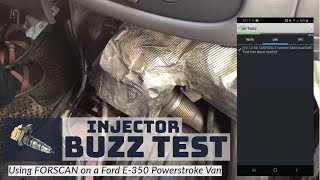
Command an 'Injector Buzz Test' using a bi-directional scanner. A healthy system produces loud, distinct buzzing from each injector. A silent or weak injector confirms a fault in the IDM, wiring, or injector coil.
Tools: Advanced OBD-II Scanner with bi-directional control (Intermediate) - Advanced IDM/Injector Electrical Test (Ford 7.3L)
Disconnect the 42-pin connector at the IDM. Test resistance between the power and ground pins for each injector. A healthy circuit reads 2.8 to 3.6 Ohms. 'OL' indicates a broken wire; near zero indicates a short.
Tools: Multimeter, vehicle-specific pinout diagram (Advanced) - VTEC Solenoid Electrical & Mechanical Check (Honda)
Disconnect the VTEC solenoid. Measure coil resistance (should be 14-30 Ohms). Remove the three bolts holding the assembly and inspect the mesh filter screens for sludge. Clogged screens prevent oil flow.
Tools: Multimeter, 10mm socket (Intermediate) - FICM Voltage Output Test (Chevy/GMC Duramax)
With key on, engine off, measure voltage at the FICM test points. A healthy FICM outputs 48-50 volts. If voltage drops below 45V during cranking, the internal power supply has failed.
Tools: Multimeter, back-probe pins (Advanced) - VW TDI Injector Resistance Check
Measure resistance across the two terminals directly on the VW PD injector. A healthy solenoid reads 0.5 to 1.5 Ohms. Readings outside this range indicate a failed injector coil.
Tools: Multimeter (Advanced) - Honda VTEC Oil Pressure Test
Test oil pressure at the VTEC pressure switch port. VTEC engagement requires minimum oil pressure (typically 57 psi at 3,000 RPM). Low pressure indicates an oil pump or internal engine issue.
Tools: Oil pressure gauge with adapter (Advanced)
When This Code Triggers (Freeze-Frame Conditions)
- Engine Coolant Temp: 180-210°F (82-99°C) (The fault typically triggers once the engine reaches full operating temperature.)
- Engine RPM: 1500-3000 RPM (Triggers during steady-state cruise or moderate acceleration when the system is under load or VTEC engages.)
- Engine Load: 30-70% (The code rarely sets at idle; it appears when the engine is actively working.)
- Vehicle Speed: 30-65 mph (50-105 kph) (Corresponds with cruising speeds where the ECU reliably detects circuit or performance anomalies.)
Related Codes
- P1316 — On a Ford 7.3L, P1316 means 'IDM Codes Detected'. It confirms the IDM stored specific fault codes. If you have P1269 and P1316, the problem is definitively in the high-voltage injector system.
- P1298 — A specific Ford code for 'Injector Driver Module Failure.' If P1298 appears with P1269, the IDM is unequivocally the culprit.
- P1260 — Means 'Theft Detected – Vehicle Immobilized.' If P1269 appears with P1260, ignore the fuel system. The PCM disabled the injectors because it rejected the key.
- P0269 — A generic code for 'Cylinder 3 Contribution/Balance Fault.' P0269 means cylinder #3 produces less power. P1269 means the module detected an electrical fault and completely disabled the injector.
- U0105 — On GM Duramax trucks, this means 'Lost Communication With FICM'. It strongly indicates the FICM failed or lost power/ground.
Climate & Environmental Factors
- Cold Weather: Cold temperatures exacerbate FICM/IDM failures. Modules work harder to fire injectors through thick, cold oil. Weak internal power supplies fail under this load, causing a 'cranks but won't start when cold' symptom.
- High Humidity / Water: Moisture destroys the Ford 7.3L IDM. The case vent draws in moisture during heat cycles, corroding the internal circuit board. Driving through deep water causes immediate module failure.
- Heat and Vibration: Engine bay heat destroys Under-Valve-Cover (UVC) wiring harnesses on Ford and VW diesels. Constant heat cycles make wire insulation brittle, causing cracks and electrical shorts.
How to Talk to a Mechanic About This Code
Say this: "My vehicle has a P1269 code. For a Ford 7.3L, please start with an injector buzz test and check for code P1316. For a VW TDI, please inspect the under-valve-cover harness for cylinder 4 before quoting an injector. For a Honda, my oil level is correct, so please test the VTEC solenoid assembly."
This directs the technician to the most common, vehicle-specific failure points first. It prevents them from immediately quoting an expensive fuel injector when the true cause is a cheaper wiring harness or module.
Avoid saying:
- 'Just fix whatever's wrong'
- 'My check engine light is on, can you look at it?'
- 'Whatever you recommend'
Questions to ask before authorizing the repair:
- For Ford 7.3L: Did the injector buzz test fail, and for which cylinders? What were the Ohm readings at the IDM connector?
- For GM Duramax: What was the FICM voltage with the key on, and what did it drop to during cranking?
- For VW TDI: Did you find any cracks or brittle insulation on the injector harness inside the valve cover?
- For Honda: Was the VTEC solenoid screen clogged with sludge? What was the resistance of the solenoid coil?
- Can you provide a written estimate separating parts and labor costs?
- What is the warranty on this specific repair?
Where to Take It: Dealer vs Independent vs Chain
- Dealer:
Best for: Vehicles still under powertrain warranty, Immobilizer-related faults requiring proprietary software, Complex electronic issues on newer vehicles
Downsides: Highest labor rates, Tendency to replace entire assemblies instead of smaller failed components (Typical cost: +50% vs. baseline) - Independent Shop:
Best overall fit. For Ford, GM, or VW diesels, seek an independent shop specializing in diesel trucks. For a Honda, a well-regarded general independent shop is excellent.
Best for: Out-of-warranty vehicles, Common repairs on specific vehicle types (e.g., Honda VTEC solenoid), Finding a specialist for a particular engine (e.g., Powerstroke, TDI)
Downsides: Quality and expertise vary widely; requires research (Typical cost: +0% vs. baseline) - Chain Shop:
AVOID. The diagnosis is too nuanced and vehicle-specific. The risk of misdiagnosis (e.g., quoting injectors for a wiring problem) is extremely high.
Best for: Simple, routine maintenance like oil changes or tire rotations
Downsides: Technicians lack specialized training for complex, manufacturer-specific codes like P1269, High pressure to upsell leads to misdiagnosis (Typical cost: -10% vs. baseline)
When to Walk Away From the Repair
If a single estimated repair cost exceeds 50% of the car's private-party value, seriously consider selling or trading in the vehicle.
- Car worth $8000, fix is $1200: Fix it. The repair cost for a new IDM and wiring on a Ford 7.3L is well below the 50% threshold.
- Car worth $3500, fix is $2500: Borderline. A 2004 VW Jetta TDI needing a new injector and camshaft repair approaches its total value. Get a second opinion.
- Car worth $9000, fix is $8000: Walk away. If a stuck injector caused catastrophic engine damage requiring a rebuild, the cost is too high relative to the vehicle's value.
What Scan Tool You Need for This Code
Minimum: A scanner with manufacturer-specific diagnostics and bi-directional control (active test) capability.
A basic $20 code reader only shows 'P1269', which is useless since the code means different things for Ford, VW, and Honda. You need a tool that reads manufacturer-specific definitions and performs critical tests like an 'Injector Buzz Test' (Ford) or reads live FICM voltage (GM).
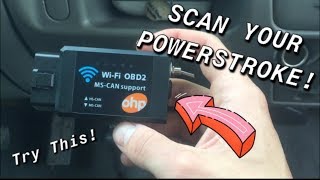
Budget: FORScan with Vgate vLinker FS Adapter (Ford) (~$60) — The gold standard for Ford DIY diagnostics. A $50 adapter plus a $12/year software license provides full dealer-level diagnostics, including the essential 'Injector Buzz Test'.
Mid-range: XTool A30M or Thinkdiag2 (~$150) — These Bluetooth scanners offer full system diagnostics and bi-directional controls for most makes, including running injector tests on Ford/GM and actuating the VTEC solenoid on a Honda.
Professional: Autel MaxiCOM MK808 / MK808S (~$450-600) — A professional tablet scanner offering comprehensive diagnostics, bi-directional control, and data graphing. It easily performs any test needed for a P1269 diagnosis on any affected vehicle.
Rent vs buy: Rent a basic scanner from AutoZone to confirm the code for free. However, to properly diagnose P1269, you must buy a capable scanner with bi-directional controls, as free loaner tools lack this functionality.
How to Clear the Code After You Fix It
- Fix the underlying mechanical or electrical problem.
- Use an OBD-II scan tool to erase the Diagnostic Trouble Codes (DTCs).
- Perform a complete drive cycle to allow readiness monitors to run.
Drive cycle (~20 minutes): Cold start the engine. Idle for 3 minutes. Drive at a steady 55 mph for 10 minutes. Perform 5 minutes of stop-and-go city driving. Allow the vehicle to cool down completely.
Readiness monitors affected: Misfire Monitor, Fuel System Monitor, Catalyst Monitor
Before emissions retest: drive at least 50 miles to fully set monitors.
Watch out for:
- Clearing the code without fixing the root cause guarantees the code returns immediately.
- Disconnecting the battery fails to clear codes or reset readiness monitors on modern vehicles.
- Testing with less than 1/4 tank of fuel prevents the EVAP monitor from running.
Will This Fail Emissions / State Inspection?
Yes — this code typically fails an OBD-II emissions inspection.
- California: An active P1269 code is an automatic failure. You must complete a full drive cycle to set all readiness monitors before re-testing.
- New York: A Check Engine Light on with code P1269 results in an immediate OBD-II inspection failure.
- Texas: In the 17 counties requiring emissions testing, an active P1269 causes an automatic OBD failure.
Most Commonly Affected Vehicles
- Ford F-250/F-350 Super Duty (1999-2003) — The 7.3L Powerstroke diesel is highly prone to IDM failure due to water intrusion in the fender-mounted module.
- Ford Excursion (2000-2003) — Uses the exact same 7.3L Powerstroke engine and IDM system as the Super Duty trucks.
- Volkswagen Jetta, Golf, Passat (1999-2006) — Models with the 1.9L TDI 'PD' engine set P1269 for an implausible signal from injector #4, usually caused by brittle internal wiring.
- Chevrolet / GMC Silverado / Sierra 2500/3500 (2001-2005) — LB7 and LLY Duramax diesels trigger P1269 when the Fuel Injector Control Module (FICM) power supply fails.
- Honda Accord, CR-V, Element, Civic (2001-2009) — P1269 relates to the P1259 VTEC code, pointing to a VTEC system malfunction caused by low oil pressure or a faulty solenoid.
- Nissan Navara (D40), Pathfinder (2005-2015) — On the 2.5L YD25DDTi diesel engine, P1269 specifically indicates the #2 fuel injector is stuck open.
- Ford Focus (2008-2011) — Triggered by the immobilizer system due to failing solder joints in the instrument cluster.
Manufacturer-Specific Notes
- Ford: The 7.3L Powerstroke IDM is notoriously susceptible to water intrusion. Sealing the case vent with silicone after replacement prevents future failures.
- Volkswagen/Audi: On TDI 'PD' engines, P1269 specifically points to cylinder #4. The cause is almost always the under-valve-cover wiring harness degrading from heat and oil.
- Honda: P1269 is a VTEC system malfunction, not an injector code. The most common cause is low engine oil. Always check the dipstick before replacing parts.
- Chevrolet/GMC: On 2001-2005 Duramax engines, the FICM internal power supply fails, causing low voltage to the injectors and triggering P1269 alongside U0105.
Real Owner Stories
2002 Ford F-250 7.3L at 210K miles - The Misdiagnosis
Truck ran extremely rough and blew smoke. A local shop diagnosed a bad Under Valve Cover (UVC) harness on the passenger side.
What they tried:
- Owner replaced injectors and the UVC harness with new parts.
- The shop replaced the new UVC harness again, but the entire passenger side bank of injectors remained dead.
- A buzz test confirmed the entire passenger side was silent.
Outcome: The owner replaced the Injector Driver Module (IDM). The symptoms (entire bank failing at once) pointed to the power module, not individual components.
Lesson: When an entire bank of injectors stops working simultaneously, the fault lies with the IDM/FICM or its main connector, not multiple individual parts failing at once.
2005 Honda Accord at 145K miles - The Easy Fix
Check Engine Light illuminated with code P1259 (parent code for P1269). The engine hesitated when accelerating past 3,500 RPM.
What they tried:
- Owner verified the engine oil level was full and clean.
- Owner purchased a new OEM VTEC solenoid assembly.
Outcome: Replacing the VTEC solenoid assembly completely resolved the hesitation and cleared the code.
Lesson: For Honda VTEC codes, if the oil level is correct, the VTEC solenoid assembly is the next most likely failure point and an easy DIY fix.
2004 VW Jetta TDI (PD Engine) - The Wiring Issue
Car threw code P1269 for 'PD Unit Injector: Cylinder 4: Implausible Signal'. The engine ran rough with reduced power.
What they tried:
- Owner suspected a failed $700 injector.
- Owner removed the valve cover to inspect the injector wiring harness first.
Outcome: The plastic insulation on the internal wiring harness was brittle and cracked, causing a short. Replacing the $70 harness (Part # 038971600) fixed the issue.
Lesson: On VW TDI PD engines, always inspect the under-valve-cover injector harness for heat damage before replacing the #4 injector.
How to Prevent This Code From Triggering
- Perform regular oil and filter changes with high-quality oil. (Every 5,000-7,500 miles.) — Prevents sludge from clogging Honda VTEC solenoid screens and ensures proper lubrication for high-pressure diesel components.
- Seal the Ford 7.3L IDM case vent. (Once, upon IDM replacement.) — Applying RTV silicone over the vent hole prevents moisture from wicking in and corroding the circuit board.
- Use high-quality diesel fuel and a lubricity additive. (Every fill-up.) — Detergents prevent nozzle deposits, and lubricity additives protect tight-tolerance internal injector parts from premature wear.
- Load test vehicle batteries annually. (Once per year, before winter.) — Weak batteries force the IDM/FICM to work harder to convert 12V to 48V, leading to overheating and premature module failure.
- Avoid excessive idling. (Daily habit.) — Extended idling causes incomplete combustion, building soot on injector tips that disrupts the spray pattern.
Frequently Asked Questions
Can I just clear the P1269 code and keep driving?
You can clear the code, but it will return immediately. This code indicates a hard fault detected by the computer. The affected component remains disabled until you fix the underlying issue.
Why is P1269 so common on the Ford 7.3L Powerstroke?
The IDM mounts on the driver's side inner fender, exposing it to heat and moisture. A vent on the case allows moisture to seep in over time. This corrodes the internal circuit board and causes the module to fail.
What is the most common misdiagnosis for P1269?
Mechanics frequently replace expensive fuel injectors when the actual problem is the $70 Under Valve Cover (UVC) wiring harness. The harness sits in hot oil, causing its insulation to become brittle and crack. These cracks create intermittent shorts that perfectly mimic a failing injector.
What is 'cylinder wash' and why is it dangerous?
Cylinder wash happens when a stuck-open fuel injector continuously sprays raw fuel into the cylinder. This fuel washes essential lubricating oil off the cylinder walls, causing direct metal-on-metal contact. The resulting rapid wear destroys piston rings and can ruin the entire engine.
What is an 'Injector Buzz Test'?
An Injector Buzz Test is a diagnostic function that commands the IDM to rapidly cycle all injectors on and off. A technician listens to the loud buzzing sound from each injector to verify electronic response. A silent or weak buzz instantly isolates a faulty injector or wiring circuit.
On my Honda, the code is P1269 but everyone talks about P1259. What's the difference?
P1269 is a manufacturer-specific variation of the common P1259 VTEC System Malfunction code. Treat them as the exact same issue during diagnosis. Always start by checking your engine oil level and condition, as low oil pressure triggers both codes.
Is it hard to replace the Injector Driver Module (IDM) myself?
Replacing the IDM on a Ford 7.3L is a simple 45-minute DIY job requiring basic hand tools. The module bolts to the inner fender and connects with a single wiring harness. No special dealer programming is required after installation.
Key Takeaways
- Identify your vehicle's specific P1269 definition before diagnosing, as it means an Injector Driver Module failure on a Ford 7.3L but a VTEC oil pressure issue on a Honda.
- Check your engine oil level immediately if you drive a 2001-2009 Honda or Acura, as low oil is the number one cause of this VTEC-related code.
- Inspect the under-valve-cover wiring harness on Ford 7.3L and VW 1.9L TDI engines before spending $300+ on new fuel injectors, as brittle wiring frequently causes this code.
- Stop driving immediately if you smell fuel in your diesel engine oil, as a stuck-open injector will cause catastrophic engine failure costing upwards of $4,500.
Helpful Videos


Shop the Parts Behind P1269
Below are the parts most often responsible for code P1269, ranked by how frequently each one is the actual culprit (per the diagnosis above). Tap any to see what we have for your vehicle.


The information in this article is provided for general reference and educational purposes only. Vehicle specifications, procedures, and part compatibility can vary by production date, trim level, and region. Always consult your vehicle's factory service manual and verify part numbers before purchasing or performing repairs. Safety-critical components such as airbags, seat belts, and braking systems should be installed by a qualified professional.
- 🧭 Diagnostic Flowchart
- 🎬 Helpful Videos
- 🛍️ Shop This Part
- What Does P1269 Mean?
- Can I Drive With P1269?
- Common Causes
- Symptoms
- Common Fixes & Costs
- DIY vs Professional
- Used vs. New Parts: Buying Guide
- What Happens If You Wait — Timeline
- Cost of Not Fixing It
- Diagnosis Steps
- When This Code Triggers (Freeze-Frame Conditions)
- Related Codes
- Climate & Environmental Factors
- How to Talk to a Mechanic About This Code
- Where to Take It: Dealer vs Independent vs Chain
- When to Walk Away From the Repair
- What Scan Tool You Need for This Code
- How to Clear the Code After You Fix It
- Will This Fail Emissions / State Inspection?
- Most Commonly Affected Vehicles
- Manufacturer-Specific Notes
- Real Owner Stories
- 2002 Ford F-250 7.3L at 210K miles - The Misdiagnosis
- 2005 Honda Accord at 145K miles - The Easy Fix
- 2004 VW Jetta TDI (PD Engine) - The Wiring Issue
- How to Prevent This Code From Triggering
- Frequently Asked Questions
- Can I just clear the P1269 code and keep driving?
- Why is P1269 so common on the Ford 7.3L Powerstroke?
- What is the most common misdiagnosis for P1269?
- What is 'cylinder wash' and why is it dangerous?
- What is an 'Injector Buzz Test'?
- On my Honda, the code is P1269 but everyone talks about P1259. What's the difference?
- Is it hard to replace the Injector Driver Module (IDM) myself?
- Key Takeaways
- 🎟️ Get 5% Off