

OBD-II Code P1279: A Comprehensive Guide for Diagnosis and Repair
What P1279 means, why it triggers, and how to fix it for good. The ultimate resource to outrank all others.
- Code P1279 indicates a slow-responding Bank 1 Air/Fuel Ratio Sensor, a failure most common on 2002-2011 Nissan and Infiniti vehicles.
- Verify your vehicle's specific P1279 definition, as it means 'Starter Control Circuit Open' on Dodges and 'VTEC System Malfunction' on 1998-2003 Hondas.
- Before replacing the $250 A/F sensor, verify fuel pressure holds at 51 PSI and total fuel trims remain below 15% to rule out hidden vacuum or exhaust leaks.
- Fix P1279 within 300 miles to prevent unburned fuel from melting the catalytic converter, which escalates a $300 sensor replacement into a $2,000 exhaust repair.
What Does P1279 Mean?

P1279 indicates the Engine Control Module (ECM) detects a slow response time from the primary air/fuel ratio (wideband oxygen) sensor. Located in the exhaust system before the catalytic converter, this sensor measures precise oxygen levels so the ECM can adjust the fuel mixture. When the sensor ages or degrades, its reaction time slows, preventing it from keeping up with engine demands and triggering the code.
Technical definition: For Nissan and Infiniti vehicles, the official definition is "Air Fuel Ratio Sensor 1 Circuit Slow Response". The ECM continuously monitors the sensor's signal cycling time against a specified limit based on engine speed, load, and temperature. If the response time exceeds this calculated limit, the ECM stores code P1279.
Can I Drive With P1279?
Yes, But With Caution. You can drive with this code, but do not exceed a week or 300 miles. A faulty sensor causes a poor air-fuel mixture, reducing fuel economy and engine performance. The biggest risk is destroying the catalytic converter with unburned fuel, a repair costing $1,500 to $3,000. Addressing P1279 promptly prevents these catastrophic exhaust failures.
Common Causes

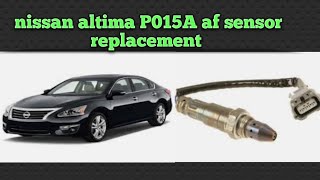
- Failing Air/Fuel Ratio (A/F) Sensor 🎬 Watch: How to replace the A/F sensor on a Nissan Altima (Very Common) — Over thousands of heat cycles, the sensor's internal components degrade and become contaminated by exhaust byproducts, causing a sluggish and delayed signal.
- Exhaust System Leak (Common) — A crack or failed gasket in the exhaust manifold or downpipe draws outside oxygen into the exhaust stream. This skews readings, making the ECM perceive a lean condition and flagging the sensor's response as abnormal.
- Intake Air (Vacuum) Leak 🎬 See this guide on how to find a vacuum leak (Less Common) — A cracked vacuum hose, faulty intake manifold gasket, or loose oil filler cap allows unmetered air into the engine. The resulting constant lean state is sometimes misinterpreted by the ECM as a sensor performance issue.
- Low Fuel Pressure or Failing Fuel Pump 🎬 Watch: A DIY guide to checking your fuel pressure (Less Common) — Insufficient fuel delivery from a weak fuel pump, clogged filter, or malfunctioning injector creates a lean condition. On models like the 2004-2006 Nissan Sentra, intermittent fuel pressure drops cause severe hesitation and trigger P1279, even with a healthy A/F sensor.
- Clogged Catalytic Converter (Less Common) — A partially blocked catalytic converter increases exhaust backpressure. This alters the operating environment of the upstream A/F sensor, impeding its response time and triggering P1279 before a P0420 catalyst code appears.
- Dirty or Failing Mass Airflow (MAF) Sensor (Rare) — A contaminated MAF sensor under-reports incoming air volume. The ECM calculates an incorrect fuel injection amount, leading to a lean or rich condition misdiagnosed as an A/F sensor fault.
- Damaged Wiring or Connectors (Rare) — Exposed to extreme heat and road debris, the A/F sensor's wiring harness becomes brittle or melts. Corroded connectors cause high-resistance signals that mimic a slow sensor.
- Failing Powertrain Control Module (PCM) (Very Rare) — The internal driver circuit interpreting the A/F sensor's signal fails. This is the absolute last consideration after rigorously testing all other possibilities.
Symptoms

- Check Engine Light is On — The light illuminates immediately when the ECM logs the P1279 fault.
- Decreased Gas Mileage — A slow sensor disrupts precise fuel control, forcing a richer mixture and a 5-15% drop in fuel economy.
- Poor Engine Performance / Hesitation — The vehicle feels sluggish, hesitates during acceleration, or lacks power under heavy load. Some drivers report a severe lack of acceleration.
- Rough Idle or Stalling — An unstable air-fuel mixture prevents the engine from maintaining a smooth idle, causing sputtering or stalling.
- Rotten Egg Smell from Exhaust — This distinct sulfur smell indicates unburned fuel is entering the exhaust and overheating the catalytic converter.
Diagnostic Flowchart
Tap your situation to follow the diagnostic path that matches what you're seeing on this code.
Common Fixes & Costs
- Replace the Air/Fuel Ratio Sensor (Bank 1, Sensor 1) — Parts: $150-$350, Labor: $100-$200, ~1.2 hr book time (DIY)
- Repair Exhaust Leak — Parts: $20-$100, Labor: $150-$500, ~2.5 hr book time (Intermediate)
- Replace Mass Airflow (MAF) Sensor — Parts: $150-$300, Labor: $50-$100, ~0.5 hr book time (DIY)
- Replace Fuel Pump Assembly — Parts: $200-$500, Labor: $200-$450, ~1.5 hr book time (Intermediate)
- Replace Fuel Injector(s) — Parts: $150-$400, Labor: $200-$600, ~3.5 hr book time (Professional)
- Replace Powertrain Control Module (PCM) — Parts: $800-$1,500, Labor: $150-$300, ~1.5 hr book time (Professional)
DIY vs Professional
- Replace Air/Fuel Ratio Sensor — Beginner: Yes, for accessible sensors. Bank 1 (rear) on a V6 Murano is extremely difficult.
Tools: Jack and stands, penetrating oil, 22mm oxygen sensor socket, modified 22mm wrench. - Replace Fuel Pump — Beginner: No. This is an intermediate to advanced task.
Tools: Socket set, fuel line disconnect tools, brass punch or lock ring tool, fire extinguisher. - Replace Mass Airflow (MAF) Sensor — Beginner: Yes. This is one of the easiest sensor replacements.
Tools: Screwdriver or small socket set. - Repair Exhaust Leak — Beginner: Replacing a simple flange gasket is beginner-friendly. Replacing a cracked manifold requires a professional.
Tools: Socket set, penetrating oil, new gasket, torque wrench.
Used vs. New Parts: Buying Guide
When a used part is worth it: Buying a used Air/Fuel Ratio sensor is never recommended. They are high-wear items, and the labor to install them negates any cost savings.
Donor-vehicle mileage cap: roughly under 40000 miles for the part to have meaningful remaining life.
Donor quality checklist:
- Only consider used OEM sensors (Denso, NTK) from a reputable seller.
- Avoid sensors from rust-belt states due to corrosion.
- Never buy cheap, no-name used sensors from online marketplaces.
Decision logic:
- If The part is an Air/Fuel Ratio Sensor. → Buy a new, high-quality aftermarket (Denso, NTK) or OEM sensor. The risk of premature failure is too high.
Warranty tradeoff: Used sensors carry a 30-day warranty at best. New OEM-brand sensors offer 1-year to lifetime warranties.
Worst-case if a used part fails: $150-$300 for repeat labor and a replacement sensor.
What Happens If You Wait — Timeline
- 0-2 weeks: Check Engine Light is on. No other symptoms are noticeable to the driver. (MPG impact: 0-5%% · Added cost: $0)
- 2 weeks - 3 months: Fuel economy drops. The driver perceives slight hesitation during acceleration or a rougher idle. The incorrect air-fuel mixture stresses the catalytic converter. (MPG impact: 5-10%% · Added cost: $20-$80 in wasted fuel)
- 3-8 months: The catalytic converter's internal substrate begins to melt from the sustained rich fuel mixture. A 'rotten egg' smell is present after hard acceleration. (MPG impact: 10-15%% · Added cost: $1,500+ (Catalytic converter damage is permanent))
- 8+ months: The catalytic converter becomes clogged, creating extreme exhaust backpressure. This causes severe power loss, stalling, and potential engine damage. (MPG impact: 15-25%+% · Added cost: $2,000-$4,000+ (Includes catalytic converter and possible engine repairs))
Cost of Not Fixing It

- 0-1 month: A noticeable 5-15% drop in fuel economy and sluggish engine performance. (Added cost: $20-$60 in wasted fuel)
- 1-6 months: The incorrect air-fuel mixture causes unburned fuel to enter the exhaust, superheating and melting the catalytic converter. (Added cost: $1,200-$2,800 for catalytic converter replacement.)
- 6+ months: Complete catalytic converter blockage creates extreme exhaust backpressure, leading to burnt exhaust valves or piston ring failure. (Added cost: $3,000-$7,000+ for catalytic converter and engine repairs.)
Diagnosis Steps

- Scan for All Trouble Codes & Review Freeze Frame Data
Use an OBD-II scanner to confirm P1279 is active. Check for companion codes like P0171 (Lean), P0420 (Catalyst), or P1283 (Bank 2 Sensor). Review freeze frame data to identify engine conditions when the code set.
Tools: OBD-II Scanner (Beginner) - Analyze Live Fuel Trim Data (Pro Tip)
Monitor Short-Term Fuel Trim (STFT) and Long-Term Fuel Trim (LTFT) at idle and 2,500 RPM. On Nissans, this PID is often called 'Alpha'. Values greater than +10% indicate the ECM is adding fuel to correct a lean condition. Consistently high positive trims prove the problem is a vacuum leak, exhaust leak, or fuel delivery issue, not the A/F sensor.
Tools: OBD-II Scanner with Live Data (Intermediate) - Graph the A/F Sensor Voltage (Pro Tip)
Graph the A/F sensor's signal. On Nissan/Infiniti, ~3.3V is stoichiometric (14.7:1). A healthy sensor's voltage fluctuates rapidly. Snap the throttle; the voltage must respond instantly. A delayed, lazy response with rounded peaks confirms the sensor is faulty.
Tools: Graphing Scanner or Oscilloscope (Advanced) - Visually Inspect the Intake and Exhaust Systems
Inspect for exhaust leaks before the A/F sensor; look for black soot trails or cracks on the manifold and listen for a ticking sound. Inspect the air intake system for cracked hoses, loose clamps, or damaged gaskets causing a vacuum leak.
Tools: Flashlight, Mechanic's Mirror (Beginner) - Test for Intake and Vacuum Leaks
Spray short bursts of brake cleaner or unlit propane around intake manifold gaskets, vacuum lines, and the throttle body base while idling. A change in engine RPM or fuel trim values pinpoints the leak.
Tools: Brake Cleaner or Propane Torch (unlit), OBD-II Scanner (Intermediate) - Check Fuel Pressure (Quantitative)
Connect a fuel pressure gauge to the fuel rail. For Nissan/Infiniti VQ35DE engines, pressure must be approximately 51 PSI at idle. With the engine off, pressure must not drop below 30 PSI within 30 minutes. Low pressure points to a weak pump; rapid drops indicate a leaking injector.
Tools: Fuel Pressure Gauge (Intermediate) - Test Sensor Heater Circuit Resistance (Quantitative)
Disconnect the cold sensor and measure resistance between the two heater pins (often the same-colored wires). For a 2002-2003 Nissan Altima 2.5L, the spec is 2.3 - 4.3 Ω at room temperature. Infinite resistance ('OL') indicates a failed heater element requiring sensor replacement.
Tools: Multimeter, Vehicle Service Manual (Advanced) - Test Sensor Heater Circuit Power and Ground
With the key on and engine off, check for battery voltage at one heater power wire and a good ground on the other. Lack of power or ground points to a wiring or ECM issue, not the sensor.
Tools: Multimeter or Test Light, Vehicle Service Manual (Advanced) - Perform Manufacturer-Specific DTC Confirmation (Nissan/Infiniti)
Using a CONSULT-II/III scanner, warm the engine, hold RPMs between 3,500-4,000 for one minute, idle, and run the support test to confirm the fault is currently active before replacing parts.
Tools: Nissan CONSULT Scanner or equivalent (Professional)
When This Code Triggers (Freeze-Frame Conditions)
- Engine Coolant Temp: 180-200°F (The engine must be fully warmed up for the ECU to run the sensor response time diagnostic.)
- RPM: 1500-4000 (The code sets during steady-state cruising or after high-RPM (3,500-4,000) operation followed by a return to idle.)
- Engine Load: 20-60% (This corresponds to light to moderate acceleration or steady cruising, not heavy load or full-throttle.)
- Vehicle Speed: 35-60 mph (The test runs during steady highway or city driving, avoiding stop-and-go traffic.)
Related Codes
- P0171 — System Too Lean (Bank 1) - An intake leak, exhaust leak, or fuel delivery issue causes a lean condition that triggers P1279.
- P1278 — Air Fuel Ratio Sensor 1 Circuit - A companion code on Nissan models indicating a specific circuit fault.
- P0420 — Catalyst System Efficiency Below Threshold (Bank 1) - The expensive consequence of ignoring P1279.
- P1283 — Air Fuel Ratio Sensor 2 Circuit Slow Response - The identical code for the opposite engine bank (Bank 2).
Climate & Environmental Factors
- Cold Climates: In extreme cold, the A/F sensor's internal heater struggles to reach operating temperature (1200°F) quickly. The ECU interprets this delay as a 'slow response' and triggers P1279, even if the sensor functions normally once warm.
- Road Salt / Corrosion: Road salt seizes the A/F sensor into the exhaust manifold and corrodes electrical connector pins, causing intermittent signals or outright failure.
- High Altitude: Less oxygen at high altitude amplifies borderline issues like minor vacuum leaks or weak fuel pressure, contributing to fuel-mixture codes.
How to Talk to a Mechanic About This Code
Say this: "I have a check engine light and my scanner shows code P1279. Can you analyze the live data for fuel trims and graph the Bank 1 A/F sensor's response before checking for other issues?"
This directs the mechanic to the most likely diagnostic path and requests specific, data-driven tests instead of just replacing parts.
Avoid saying:
- 'Just fix whatever's wrong'
- 'My check engine light is on, can you look at it?'
- 'I think I need a new oxygen sensor.'
Questions to ask before authorizing the repair:
- What were the long-term and short-term fuel trim readings at idle and 2500 RPM?
- Did you graph the A/F sensor's voltage? Can you show me the graph?
- Have you ruled out vacuum leaks, exhaust leaks, and checked fuel pressure?
- What is the warranty on the parts and labor?
Where to Take It: Dealer vs Independent vs Chain
- Dealer:
Recommended only if the vehicle is under warranty or if a specific TSB requires dealer-specific tools.
Best for: Vehicles under powertrain or emissions warranty., Complex manufacturer-specific quirks requiring a CONSULT scanner.
Downsides: Significantly higher labor and diagnostic rates., Quicker to replace parts rather than perform in-depth diagnostics on out-of-warranty cars. (Typical cost: +40% vs. baseline) - Independent Shop:
Best fit. An experienced independent technician has the necessary diagnostic tools to accurately diagnose P1279 without the high dealer cost.
Best for: Out-of-warranty vehicles where cost is a factor., Diagnosing common codes like P1279 that have well-documented causes.
Downsides: Quality and diagnostic capabilities vary greatly; look for ASE certifications. (Typical cost: +0% vs. baseline) - Chain Shop:
Use with caution. Acceptable for a straightforward A/F sensor replacement if you have already performed the diagnosis yourself.
Best for: Simple, routine maintenance like oil changes.
Downsides: Technician skill and experience are inconsistent., Business model incentivizes quick parts replacement over thorough diagnosis. (Typical cost: -10% vs. baseline)
When to Walk Away From the Repair
If the total estimated repair cost exceeds 50% of the car's private-party market value, consider selling or trading it in.
- Car worth $3500, fix is $2500: Walk away. The repair cost is over 70% of the car's value.
- Car worth $12000, fix is $1800: Fix it. The repair cost is only 15% of the car's value.
- Car worth $2200, fix is $1200: Borderline. At 55% of the car's value, get a second opinion on the diagnosis and repair estimate before deciding.
What Scan Tool You Need for This Code
Minimum: A scanner that reads and graphs live sensor data, specifically for O2/A-F sensors and fuel trims (STFT/LTFT).
A basic $20 code reader only shows the P1279 code. You need live data to determine if the sensor is truly slow or reacting to a vacuum leak.
Budget: BlueDriver Pro or Ancel BD310 (~$70) — These Bluetooth scanners pair with your phone and provide live data streaming and graphing capabilities essential for watching the A/F sensor's voltage.
Mid-range: Innova 5610 or Foxwell NT301 (~$150) — These handheld units offer robust features, including specific tests for O2 sensors, and don't require a phone app to function.
Professional: Autel MaxiCOM MK808 or XTOOL D8S (~$500-1200) — Provides full bidirectional control to run active tests and visualizes all system modules to quickly diagnose complex issues.
Rent vs buy: For a one-time diagnosis, use the free loaner tool program at an auto parts store. Buy a scanner only if you diagnose car issues more than once a year.
How to Clear the Code After You Fix It
- Use an OBD-II scan tool to clear the P1279 code.
- Perform a complete OBD-II drive cycle to run readiness monitors.
- Re-scan the vehicle to confirm no codes return.
Drive cycle (~30 minutes): 1) Cold start after sitting for 8+ hours. 2) Idle for 3 minutes. 3) Drive in stop-and-go traffic. 4) Drive at a steady 55-60 mph for 15 minutes. 5) Coast down to 20 mph without braking.
Readiness monitors affected: Catalyst Monitor, O2 Sensor Monitor, O2 Sensor Heater Monitor
Before emissions retest: drive at least 100 miles to fully set monitors.
Watch out for:
- Disconnecting the battery clears the code but resets all readiness monitors to 'Not Ready', causing an automatic emissions failure.
- The code returns within a few drive cycles if the underlying problem (e.g., an exhaust leak) was not repaired.
- Failing to allow a complete cold soak before the drive cycle prevents monitors from running.
Will This Fail Emissions / State Inspection?
Yes — this code typically fails an OBD-II emissions inspection.
- California: An active P1279 code is an automatic failure. A drive cycle of 50-100 miles is required after repair before re-testing.
- New York: An illuminated Check Engine Light for code P1279 results in an immediate test failure.
- Texas: You cannot register your vehicle until the issue is repaired and the code is cleared.
Most Commonly Affected Vehicles
- Nissan Murano (2004-2011) — Very common. The Bank 1 sensor (rear, against the firewall) requires working in a very tight space.
- Nissan Altima (2002-2006) — Both the QR25DE 4-cylinder and VQ35DE 6-cylinder engines suffer from high A/F sensor failure rates.
- Nissan Maxima (2004-2008) — Frequently appears with companion code P1278, both pointing to the Bank 1 A/F sensor.
- Nissan Sentra (2004-2006) — A failing fuel pump causing a lean condition and hesitation is a known root cause. TSB NTB04-094a addresses P1279 on 2004 models.
- Infiniti G35 (2003-2007) — Utilizes the same VQ35DE engine as Nissans and experiences identical A/F sensor failures.
- Honda Accord (1998-2003) — CRITICAL: P1279 is a 'bogus' code caused by a software bug in diagnostic tools. The actual fault is P1259 (VTEC System Malfunction). Troubleshoot the VTEC system.
- Hyundai Elantra, Sonata (2005-2012) — The definition 'Air Fuel Ratio Sensor 1 Bank 1 Circuit Slow Response' is identical to Nissan's, typically caused by a worn sensor.
- BMW 1-Series, 3-Series (E87, E90) (2005-2010) — On diesel models, P1279 indicates a cylinder misfire due to a faulty injector or low fuel pressure.
Manufacturer-Specific Notes
- Nissan / Infiniti: The primary user of P1279, exclusively meaning 'Air Fuel Ratio Sensor 1 Circuit Slow Response'. Nissan issued TSB NTB04-094a for the 2004 Sentra.
- Acura / Honda: On 1998-2003 models, P1279 is a 'bogus' code masking the real issue: P1259 (VTEC System Malfunction).
- Chrysler / Dodge / Jeep: P1279 means 'Starter Control Circuit 2 Open', causing a no-start condition. Diagnosis involves the starter, relay, and wiring.
- Volkswagen / Audi: Translates to 'Longitudinal Acceleration Sensor (G251) Implausible Signal', illuminating the ABS/ESP warning light.
- General Motors (GM): Indicates an 'Accelerator Pedal Position Sensor 1 Circuit Intermittent' problem affecting the drive-by-wire throttle.
- BMW: On diesel models, it points to cylinder misfires caused by fuel system issues like a bad injector.
Real Owner Stories
2005 Nissan Sentra with intermittent lack of acceleration
The car ran fine, then suddenly refused to accelerate. The OBD code was P1279, but the Check Engine Light was off.
What they tried:
- Planned to replace the Air/Fuel sensor.
- Considered a clogged catalytic converter.
Outcome: The owner replaced the fuel pump, completely solving the acceleration problem. The issue was fuel delivery, not the sensor.
Lesson: Severe performance issues like a total lack of acceleration point to fuel delivery problems. Test fuel pressure before assuming the sensor is bad.
2003 Infiniti G35 with multiple, persistent sensor codes and misfires
A newly purchased G35 showed codes P1279, P1278, P0138, P0158, and P0300.
What they tried:
- Replaced all four O2/AF sensors with OEM parts.
- Inspected the wiring harness for damage.
Outcome: The previous owner installed the wrong Engine Control Module (ECM) from a 2004.5 model that used wideband sensors, creating an incompatibility with the 2003 narrowband sensors.
Lesson: If you have unresolvable sensor issues on a used car, verify major components like the ECM are the correct part number for your specific year.
2004 Nissan Sentra with recurring P1279 after sensor replacement
The Check Engine Light with code P1279 returned two days after replacing both Bank 1 and Bank 2 sensors.
What they tried:
- Replaced Bank 1 and Bank 2 O2 sensors.
- Replaced the fuel pump.
- Replaced the Mass Airflow (MAF) sensor.
Outcome: The underlying cause was a lean condition caused by a vacuum leak tricking the computer.
Lesson: Replacing the A/F sensor doesn't always fix P1279. Thoroughly inspect for vacuum leaks and clean the MAF sensor before replacing parts.
How to Prevent This Code From Triggering
- Use Top-Tier certified gasoline (Every fill-up) — Top-Tier gas contains detergent additives that prevent carbon deposits on fuel injectors, ensuring complete combustion and preventing sensor fouling.
- Address engine misfires immediately (As needed) — A misfiring cylinder dumps raw fuel into the exhaust, rapidly overheating and contaminating the A/F sensor and catalytic converter.
- Perform regular fuel system cleaning (Every 3,000-5,000 miles) — Using a fuel system cleaner with Polyetheramine (PEA) removes deposits, keeping injectors clean and preventing rich conditions.
- Change engine oil on schedule and fix oil leaks (Per manufacturer schedule) — Burning engine oil creates deposits that poison the A/F sensor and catalytic converter, reducing their lifespan.
- Avoid aggressive driving and excessive idling (Daily habit) — Smooth acceleration reduces thermal shock on the A/F sensor's internal heater. Avoiding long idles prevents condensation and deposit buildup.
Frequently Asked Questions
Can I just replace the oxygen sensor to fix P1279?
Replacing the Air/Fuel Ratio sensor is the most frequent fix for Nissans, but it is not guaranteed. Always rule out cheaper causes like exhaust leaks, vacuum leaks, and low fuel pressure first.
What's the most common mistake when diagnosing P1279?
The biggest mistake is immediately replacing the A/F sensor without checking live data. An exhaust leak before the sensor or a vacuum leak after the MAF sensor tricks a perfectly good A/F sensor into appearing slow.
I replaced the A/F sensor, but the P1279 code came back. What now?
If a new OEM sensor doesn't fix the code, the root cause is elsewhere. Perform a smoke test for hidden leaks and verify fuel pressure holds at 51 PSI. Finally, clean the MAF sensor and inspect the A/F sensor wiring harness for corrosion.
What is the difference between an Air/Fuel sensor and a regular Oxygen sensor?
An Air/Fuel (wideband) sensor provides a precise, variable signal detailing the exact air-to-fuel ratio (e.g., 14.1:1). A traditional (narrowband) oxygen sensor only switches between 'rich' or 'lean', making the A/F sensor much faster and more accurate.
My car has P1279 but isn't a Nissan. What does it mean?
Get a specific definition for your vehicle's make and model. For a Dodge, P1279 points to the starter circuit, while for a VW, it's an ABS sensor. Diagnosing a Nissan A/F sensor on these cars wastes time and money.
How can I prevent code P1279?
Use high-quality fuel, follow your maintenance schedule for spark plugs, and address engine misfires immediately to prevent fouling the sensor.
Is Bank 1 Sensor 1 the same on all cars?
Bank 1 always refers to the side of the engine containing cylinder #1. Sensor 1 is always the upstream sensor located before the catalytic converter.
Key Takeaways
- Code P1279 indicates a slow-responding Bank 1 Air/Fuel Ratio Sensor, a failure most common on 2002-2011 Nissan and Infiniti vehicles.
- Verify your vehicle's specific P1279 definition, as it means 'Starter Control Circuit Open' on Dodges and 'VTEC System Malfunction' on 1998-2003 Hondas.
- Before replacing the $250 A/F sensor, verify fuel pressure holds at 51 PSI and total fuel trims remain below 15% to rule out hidden vacuum or exhaust leaks.
- Fix P1279 within 300 miles to prevent unburned fuel from melting the catalytic converter, which escalates a $300 sensor replacement into a $2,000 exhaust repair.
Helpful Videos
Shop the Parts Behind P1279
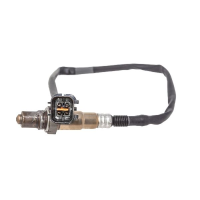
Below are the parts most often responsible for code P1279, ranked by how frequently each one is the actual culprit (per the diagnosis above). Tap any to see what we have for your vehicle.





The information in this article is provided for general reference and educational purposes only. Vehicle specifications, procedures, and part compatibility can vary by production date, trim level, and region. Always consult your vehicle's factory service manual and verify part numbers before purchasing or performing repairs. Safety-critical components such as airbags, seat belts, and braking systems should be installed by a qualified professional.
- 🧭 Diagnostic Flowchart
- 🎬 Helpful Videos
- 🛍️ Shop This Part
- What Does P1279 Mean?
- Can I Drive With P1279?
- Common Causes
- Symptoms
- Common Fixes & Costs
- DIY vs Professional
- Used vs. New Parts: Buying Guide
- What Happens If You Wait — Timeline
- Cost of Not Fixing It
- Diagnosis Steps
- When This Code Triggers (Freeze-Frame Conditions)
- Related Codes
- Climate & Environmental Factors
- How to Talk to a Mechanic About This Code
- Where to Take It: Dealer vs Independent vs Chain
- When to Walk Away From the Repair
- What Scan Tool You Need for This Code
- How to Clear the Code After You Fix It
- Will This Fail Emissions / State Inspection?
- Most Commonly Affected Vehicles
- Manufacturer-Specific Notes
- Real Owner Stories
- 2005 Nissan Sentra with intermittent lack of acceleration
- 2003 Infiniti G35 with multiple, persistent sensor codes and misfires
- 2004 Nissan Sentra with recurring P1279 after sensor replacement
- How to Prevent This Code From Triggering
- Frequently Asked Questions
- Can I just replace the oxygen sensor to fix P1279?
- What's the most common mistake when diagnosing P1279?
- I replaced the A/F sensor, but the P1279 code came back. What now?
- What is the difference between an Air/Fuel sensor and a regular Oxygen sensor?
- My car has P1279 but isn't a Nissan. What does it mean?
- How can I prevent code P1279?
- Is Bank 1 Sensor 1 the same on all cars?
- Key Takeaways
- 🎟️ Get 5% Off