

P1285 on 2013-2018 Ford C-Max Hybrid: Cylinder Head Overheat Causes and Fixes
Code P1285 on a Ford C-Max Hybrid is a critical overheat warning. Stop driving immediately. The most common causes are low coolant from leaks (check the plastic reservoir and hoses) or a faulty thermostat. A failed Cylinder Head Temperature (CHT) sensor can also trigger a false code, often due to moisture in the connector.
- P1285 is a critical overheat warning. Pull over and shut off the engine immediately to prevent catastrophic damage.
- Before suspecting a major engine failure, perform the simple checks first: ensure the coolant reservoir is full and inspect it for cracks, as this is a very common failure point.
- If the temperature gauge pegs hot instantly on a cold engine, the Cylinder Head Temperature (CHT) sensor is the most likely culprit.
- If you are losing coolant but can find no external leaks, a professional diagnosis is required to check for an internal leak (e.g., head gasket), which is a serious and expensive repair.
What's Unique About the 2013-2018 Ford C-Max
The 2013-2018 C-Max uses a naturally aspirated 2.0L Atkinson-cycle engine, which is part of a larger family of Ford 2.0L engines. While this specific hybrid model isn't as prone to the widely documented 'coolant intrusion' engine block failures as its turbocharged 2.0L EcoBoost cousins (covered in TSB 19-2346 and others), the shared architecture means any unexplained coolant loss should be taken very seriously. For the C-Max Hybrid, P1285 is more frequently triggered by conventional cooling system failures like a cracked coolant reservoir, a stuck thermostat, or a faulty CHT sensor before suspecting a worst-case internal engine failure.
Symptoms You May Notice
- Check engine light is on
- Temperature gauge reads full HOT
- Reduced engine power or 'limp mode'
- Low coolant warning light
- Audible chimes or warning messages in the instrument cluster
- Steam or sweet smell from the engine bay
- Cooling fans running constantly at high speed, even when the engine is cold.
- Hard starting or rough running.
- Immediately assuming the engine is destroyed without first checking for simple causes like low coolant, a bad sensor, or a stuck thermostat. Always perform basic cooling system checks first.
- Replacing the CHT sensor without checking the wiring connector for corrosion. Often, the pigtail connector is the actual point of failure due to moisture intrusion.
Most Likely Causes
- Low Engine Coolant Level due to External Leak 🔴 High Probability The plastic coolant expansion tank (reservoir) on this platform is a known failure point, often developing hairline cracks over time from engine heat cycles, leading to slow leaks. Hoses, like the degas hose, are also reported to fail.
How to confirm: Visually inspect the translucent coolant reservoir for cracks, especially at the seams and hose connections. Check all coolant hoses and the radiator for signs of leaks (orange or yellow crusty residue). A cooling system pressure test will definitively confirm an external leak.
Typical fix: Replace the leaking component. If the reservoir is cracked, it must be replaced. 🎬 Watch: How to replace the coolant expansion tank Leaking hoses should also be replaced.
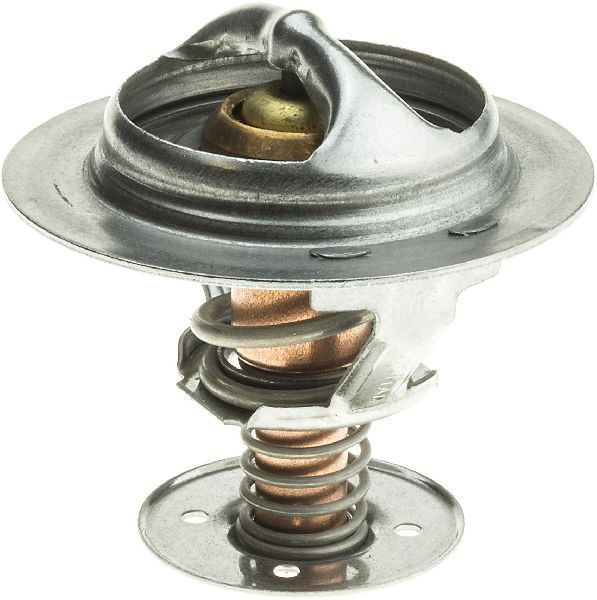
Est. part cost: $40-$120 for a new coolant reservoir; $20-$60 per hose. - Stuck-Closed Thermostat 🟡 Medium Probability → Shop Integrated Thermostat Housing Assembly The thermostat is a common wear item. On the C-Max Hybrid, it is located on the front side of the engine, low down, making it accessible from underneath the vehicle.
How to confirm: After the engine has warmed up, carefully feel the upper and lower radiator hoses. If the upper hose is hot and the lower hose is cool, the thermostat is likely stuck closed, preventing coolant from circulating through the radiator. This is a classic diagnostic step.
Typical fix: Replace the thermostat and its housing assembly. It is recommended to replace it as a complete unit. The job requires draining the coolant and working from under the car.
Est. part cost: $50-$150 - Faulty Cylinder Head Temperature (CHT) Sensor or Wiring 🟡 Medium Probability → Shop Engine Cylinder Head The CHT sensor is located on top of the engine, often between cylinders, where moisture can get into the electrical connector, causing corrosion and a false high-resistance reading. This is a known issue across many Ford models with similar engines.
How to confirm: Use an OBD-II scanner to monitor the CHT sensor data with the engine cold; it should read close to the ambient air temperature. If it reads excessively high on a cold engine (e.g., 250°F+), the sensor or its circuit is faulty. Visually inspect the sensor's connector for green or white corrosion.
Typical fix: Replace the CHT sensor and, if corroded, the pigtail connector. Apply dielectric grease to the new connector to prevent future moisture intrusion. This was the specific fix in a documented 2010 Fusion repair.
Est. part cost: $25-$70 for the sensor; $20-$40 for a pigtail connector. - Failed Cooling Fan Assembly ⚪ Low Probability
How to confirm: With the engine at operating temperature and the A/C turned on, verify that the radiator cooling fans are running. If they are not, check the related fuses and relays first. The engine will typically overheat in stop-and-go traffic but may be fine at highway speeds.
Typical fix: If fuses and relays are good, the fan motor or control module has likely failed and the entire assembly needs to be replaced.
Est. part cost: $200-$400
Rare But Worth Checking
- Internal Coolant Leak (Head Gasket or Cracked Cylinder Head/Block): While less common on this specific 2.0L naturally-aspirated hybrid engine than its 2.0L EcoBoost relatives, a major internal leak is a possible cause of severe overheating. TSB 19-2346 and its successors detail this issue for EcoBoost engines, listing P1285 as a key symptom. Symptoms include persistent unexplained coolant loss, white smoke from the exhaust, and misfire codes (P0300-P0304). A chemical block test can detect combustion gases in the coolant, confirming this very serious issue.
- Failed Water Pump: → Shop Engine Water Pump A seized water pump or a broken drive belt will stop coolant circulation entirely, leading to a rapid overheat. You may hear grinding or squealing noises from the belt area. On the 2.0L Hybrid engine, the water pump is located low on the front of the engine, near the oil filter. A manufacturer report (NHTSA ODI #11639979) describes a case where P1285 was retrieved and the dealer determined there was a coolant leak at the water pump weep hole.
- Active Grille Shutter Failure: In some Ford vehicles, cooling issues can be linked to the aerodynamic shutters. NHTSA ODI #11703132 notes a case where P1285 was accompanied by code P05A1, indicating an Active Grille Shutter failure.
Diagnosis Steps
- SAFETY FIRST: Do not open the coolant reservoir cap when the engine is hot.
- Check Coolant Level: Once the engine is completely cool, check the level in the coolant reservoir. If it is low, top it off with the correct Ford-specified coolant (Motorcraft Orange VC-3-D or the backward-compatible Yellow VC-13-G) and inspect for obvious external leaks.
- Scan for Codes: Read all stored trouble codes. Note if P1299 or any misfire codes are present, as this points to a more severe event. NHTSA ODI #11569516 illustrates a complex case where P1285 appeared alongside P0217, P0303, P0316, P1299, and P2601.
- Verify Overheat Condition: If the coolant level was correct, use a scan tool to monitor the CHT sensor reading. If the gauge pegs hot instantly on a cold start and the CHT reading is abnormally high (e.g., 250°F+), suspect a faulty CHT sensor or wiring. This indicates a sensor circuit fault, not a real overheat.
- Check for Actual Overheating: If the CHT reading climbs with engine runtime, confirm if it's a real overheat. Check cooling fan operation (especially in traffic or with A/C on) and feel radiator hoses to check for a stuck thermostat (hot upper, cool lower).
- Perform a Pressure Test: If you suspect a leak but cannot see one, perform a cooling system pressure test to reveal slow leaks from the reservoir, hoses, or radiator.
- Perform a Chemical Block Test: If you are losing coolant with no visible external leak, perform a chemical block test to check for combustion gases in the cooling system. A positive test indicates a failed head gasket or cracked cylinder head/block, which is a major repair. NHTSA ODI #11520798 describes a technician pulling a coil and plug to find coolant in the cylinder after P1285 and misfire codes were triggered.
Parts You'll Likely Need
- Engine Coolant Reservoir (Expansion Tank)
(OEM #CV6Z-8A080-A)— This plastic tank is a very common failure point on the C-Max, developing cracks from heat and age that lead to coolant leaks and overheating.
Trusted brands: Motorcraft, Dorman, Four Seasons
OEM price range: $70-$100
Aftermarket price range: $40-$80 - Thermostat and Housing Assembly
(OEM #CM5Z-8575-B (Motorcraft RT1234))— A thermostat stuck in the closed position is a frequent cause of rapid overheating. It is typically replaced as a complete housing assembly for reliability.
Trusted brands: Motorcraft
OEM price range: $100-$150
Aftermarket price range: $50-$100 - Cylinder Head Temperature (CHT) Sensor
(OEM #8S4Z-6G004-A (Motorcraft DY1145))— This sensor can fail or its connector can corrode, sending a false overheat signal to the PCM and triggering code P1285 even when the engine is not hot.
Trusted brands: Motorcraft, NTK, Bosch
OEM price range: $40-$60
Aftermarket price range: $25-$50
Related Codes That Often Appear With This One
- P1299 — P1299 ('Cylinder Head Overtemperature Protection Active') is the next stage in Ford's fail-safe strategy. It indicates the PCM has begun actively shutting down fuel injectors to cool the engine, confirming a severe overheat event was detected.
- P0217 — This is a more generic 'Engine Over Temperature Condition' code that often appears with P1285 to confirm the engine has exceeded its normal operating temperature.
- P0300-P0304 — Cylinder misfire codes may appear if a severe overheat has occurred or, more specifically, if coolant is leaking into the cylinders (coolant intrusion), which fouls the spark plugs.
Technical Service Bulletins (TSBs) & Recalls
- TSB 19-2346: Covers coolant intrusion on 2.0L EcoBoost engines (not the hybrid's naturally aspirated version, but relevant context), listing P1285 as a primary DTC.
- TSB 11-10-5 (superseded): Referenced in a repair video for a similar Ford engine, this TSB addressed MIL on with DTC P1285 due to moisture in the CHT sensor connector.
Mechanic-Grade Diagnostic Values
- CHT Sensor Resistance — expected: Approximately 2,200 - 3,000 Ω at 20°C (68°F) and 250 - 350 Ω at 80°C (176°F).. Failure: An open circuit (infinite resistance) or a reading that is drastically different from the expected value at a known temperature indicates a faulty sensor.
- CHT Sensor Signal Voltage (KOEO, Sensor Unplugged) — expected: ~5.0 Volts. Failure: If the reference voltage is not present at the harness connector with the key on, there is an open in the VREF wire from the PCM or a PCM fault.
- CHT Sensor Signal Voltage (KOEO, Cold Engine) — expected: Approximately 3.0V - 4.3V, depending on ambient temperature. For example, ~4.29V at 86°F (30°C).. Failure: A voltage reading that is very low (e.g., <0.5V) or very high (>4.6V) on a cold engine points to a circuit fault or bad sensor.
- CHT Sensor Signal Voltage (Normal Operating Temp) — expected: Approximately 1.68V - 2.03V between 194°F (90°C) and 212°F (100°C).. Failure: Voltage that does not decrease as the engine warms up, or that drops erratically, indicates a problem.
- CHT Sensor Ground Circuit Voltage Drop — expected: Below 100mV (0.1V). Failure: Voltage significantly above 100mV indicates high resistance in the ground circuit (SIGRTN) back to the PCM, which can skew the sensor's reading.
Hidden / Shadow Codes Worth Checking
- Mode 6, Test ID $81, Component ID $11: This Mode 6 test monitors the Cylinder Head Temperature sensor for circuit faults, including rationality checks against other sensors. A failure here can pre-date a full-blown P1285 code. (see via A professional scan tool capable of displaying Mode 6 data. Not all basic OBD-II readers show this level of detail.)
Scan Tool Commands That Help
- Ford IDS (Integrated Diagnostic System): Active Commands -> Cooling Fan Control — This bidirectional command allows a technician to manually command the cooling fans ON and OFF to verify the functionality of the fan motors, relays, and control circuits, completely bypassing the CHT sensor input. This is critical for ruling out a failed fan assembly when diagnosing an actual overheat condition.
- Ford IDS (Integrated Diagnostic System): Datalogger -> PID: CHT, CHT_V — Monitoring the raw CHT voltage (CHT_V) alongside the calculated temperature (CHT) is crucial. A steady voltage that results in an erratic temperature reading, or a voltage that is stuck high or low, immediately points to a sensor or wiring issue rather than a mechanical cooling problem. Some advanced aftermarket scan tools can also access this PID.
Wiring & Ground Locations
- CHT Sensor Connector (C1164 on similar models) — On the 2.0L engine, the CHT sensor is typically located on the cylinder head, between the intake runners or between two spark plug wells, under the plastic engine cover.. This connector is in a location prone to collecting water and debris, leading to corrosion of the pins. A corroded connector is a primary cause of false P1285 codes, as the high resistance mimics a high temperature reading.
- PCM Connector C175B - Pins 41 & 58 (example from similar Ford engine) — The Powertrain Control Module (PCM) is typically located in the engine bay, often near the firewall or battery.. For a definitive wiring check, technicians test for continuity between the CHT sensor connector and the corresponding pins at the PCM. For a similar Ford engine, the CHT signal wire was Yellow/Green at Pin 41 and the Signal Return (ground) was Grey/Red at Pin 58. A break in either wire will cause a P1285 code. Verifying the specific pins for the C-Max is essential but this provides a known diagnostic path.
Real Owner Repair Stories
- Ford F-150 Forum User (2006 Ford F-150 4.2L (Similar CHT sensor logic)) — P1285 and P1299 codes, temperature gauge pegged hot, but no signs of actual overheating.
❌ Tried (didn't work) Replaced the CHT sensor, Replaced spark plugs and wires, Replaced PCV valve, Replaced oil pressure sensor, Replaced upper radiator hose
✅ What actually fixed it After verifying the wiring to the CHT sensor was good, the owner replaced the thermostat, which resolved the issue. This was an unusual case where a faulty thermostat triggered the sensor-specific codes without causing an obvious boil-over. - Ford Fusion Owner (NHTSA ODI #11062287) — An owner reported that after pulling fault code P1285, the dealer replaced both the radiator fan and the head temperature sensor, which resolved the issue.
Model Year Variations Within This Range
- 2013-2018: There were no major changes to the core 2.0L Atkinson-cycle engine or its cooling system during this vehicle's production run that would significantly alter the diagnosis of a P1285 code. The primary causes and diagnostic steps remain consistent across all model years in this range.
Diagnostic Flowchart
Other Known Issues on This Vehicle
Issues unrelated to this code that are worth knowing about as an owner of this generation:
- Transmission Failure / Shudder 🔴 High — A well-documented issue with the eCVT transmission, sometimes leading to complete failure requiring replacement. Symptoms include shuddering, whining noises, or a 'Stop Safely Now' message. (Ref: Multiple TSBs exist, though no single recall covers all instances.)
- 12-Volt Battery Drain 🟠 Medium — Owners frequently report the small 12-volt battery dying unexpectedly, preventing the car from starting. This can be caused by software glitches, modules not 'sleeping' properly, or a faulty battery. (Ref: Software updates have been released to address parasitic drains.)
- Power Liftgate Malfunction 🟡 Low — The hands-free power liftgate can fail to open or close, or may open randomly. This is often due to faulty sensors, wiring issues in the flexible harness, or module problems.
- Audio/SYNC System Glitches 🟡 Low — The MyFord Touch / SYNC infotainment system is known for freezing, unresponsiveness, and Bluetooth connectivity problems. Master resets and software updates are common remedies. (Ref: Numerous software updates have been issued by Ford.)
Used vs. New Parts: Buying Guide for This Vehicle
When a used part is the smart pick: For this specific repair, using used parts is generally not recommended for the most common failure items. However, a complete cooling fan assembly from a low-mileage, rear-ended donor vehicle could be a cost-effective option if the original has failed.
Donor-vehicle mileage cap: roughly under 60000 miles for the part to have meaningful remaining life.
What to inspect on the donor part:
- For a cooling fan assembly, check for any cracks in the shroud.
- Manually spin the fan blades to ensure they move freely with no bearing noise or wobble.
- Inspect the electrical connector for any signs of corrosion, melting, or broken locking tabs.
OEM-only on this vehicle (don't cheap out):
- Cylinder Head Temperature (CHT) Sensor: Given the sensitivity of this sensor and its role in engine protection, using a new OEM (Motorcraft) part is strongly advised to ensure accurate readings and prevent false codes.
- Coolant Expansion Tank: This part fails due to age and heat cycles causing the plastic to become brittle. A used tank has already been subjected to these stresses and is likely to fail soon, making it a poor value.
Aftermarket brands forum-validated for this vehicle:
- Dorman (for Coolant Reservoir): Often provides a direct replacement, sometimes with minor design improvements over the original.
- NTK / Bosch (for CHT Sensor): These are reputable OEM suppliers and offer a reliable alternative to Motorcraft parts.
Brands owners have reported issues with on this vehicle:
- No-name or 'white-box' electronic sensors: These often have poor quality control and may be out of calibration from the start, leading to persistent or new diagnostic trouble codes.
Real Owner Stories
Aggregated from forums and TSBs cited above. Mileages and costs reflect what owners reported in those sources.
2013 Ford C-Max Hybrid
Symptoms: Classic overheating symptoms after 20 minutes of driving.
What fixed it: The issue turned out to be a major internal engine issue requiring extensive diagnosis.
Source hint: r/cmaxhybrid - Overheating Cmax
2010 Ford Fusion (Platform Mate)
Symptoms: Check engine light with P1285; moisture found in the electrical connector.
What fixed it: Replacing the CHT sensor and the pigtail connector, then applying dielectric grease to prevent future moisture intrusion.
Source hint: TSB 11-10-5 / documented 2010 Fusion repair
2013 Ford C-Max 1.0 Ecoboost
Symptoms: Failed degas hose leading to catastrophic overheat and engine replacement.
What fixed it: Engine replacement following a hose failure.
Source hint: Honest John Forums - Ford CMax 1.0 Ecoboost 2013 reg - overheating and engine replacement
Ford Truck (Generic Ford Platform)
Symptoms: Overheat event induced by towing; codes P1285 and P1299 present.
What fixed it: Identification of a slightly leaking coolant reservoir.
Source hint: Ford Truck Enthusiasts Forums - P1285/P1299
Documented NHTSA Reports
Ford Bronco Sport
Symptoms: The Check Engine light illuminated, creating a collision hazard at highway speeds.
What fixed it: Dealer diagnosis confirmed codes P1285 (Cylinder Head Overtemperature) and P05A1 (Active Grille Shutter failure).
Source hint: NHTSA ODI #11703132
Related OBD-II Codes
Frequently Asked Questions
Does TSB 19-2346 regarding coolant intrusion apply to my 2013-2018 Ford C-Max Hybrid?
My C-Max gauge instantly pegs to HOT on a cold start. Is the engine actually overheating?
Is there a specific TSB for moisture in the CHT sensor connector for the C-Max?
What specific coolant should I use to top off my 2013-2018 C-Max Hybrid?
Why are my cooling fans running at high speed even when the engine is cold?
Can a leaking degas hose cause a P1285 code on my C-Max?
Helpful Videos

We Have This Part in Stock


The information in this article is provided for general reference and educational purposes only. Vehicle specifications, procedures, and part compatibility can vary by production date, trim level, and region. Always consult your vehicle's factory service manual and verify part numbers before purchasing or performing repairs. Safety-critical components such as airbags, seat belts, and braking systems should be installed by a qualified professional.
- Ford C-Max:
- 🧭 Diagnostic Flowchart
- 🎬 Helpful Videos
- 🛍️ Shop This Part
- What's Unique About the 2013-2018 Ford C-Max
- Symptoms You May Notice
- Most Likely Causes
- Rare But Worth Checking
- Diagnosis Steps
- Parts You'll Likely Need
- Related Codes That Often Appear With This One
- Technical Service Bulletins (TSBs) & Recalls
- Mechanic-Grade Diagnostic Values
- Hidden / Shadow Codes Worth Checking
- Scan Tool Commands That Help
- Wiring & Ground Locations
- Real Owner Repair Stories
- Model Year Variations Within This Range
- Other Known Issues on This Vehicle
- Used vs. New Parts: Buying Guide for This Vehicle
- Real Owner Stories
- 2013 Ford C-Max Hybrid
- 2010 Ford Fusion (Platform Mate)
- 2013 Ford C-Max 1.0 Ecoboost
- Ford Truck (Generic Ford Platform)
- Documented NHTSA Reports
- Ford Bronco Sport
- Related OBD-II Codes
- Frequently Asked Questions
- 🎟️ Get 5% Off