

P1285 on 2015-2018 Ford Edge 2.0L EcoBoost: Cylinder Head Over Temperature Causes and Fixes
On a 2015-2018 Ford Edge with the 2.0L EcoBoost engine, code P1285 is a critical warning of an engine overheat. It is most frequently caused by a known engine design flaw that allows coolant to leak into the cylinders, requiring a complete engine replacement. This issue is the subject of multiple Ford TSBs and class-action lawsuits. Do not drive the vehicle and seek immediate professional diagnosis.
- P1285 on a 2015-2018 Ford Edge 2.0L EcoBoost is a critical alert that requires you to stop driving immediately to prevent catastrophic engine failure.
- The most likely cause is a well-documented engine block defect leading to internal coolant leaks, a repair that requires a full engine replacement.
- Before replacing any parts, a professional diagnosis is essential. This should include a chemical block test and a borescope inspection to confirm or rule out coolant intrusion.
- Do not mistake this for a simple bad sensor or thermostat. On this specific vehicle, the code usually indicates a major mechanical failure.
- Check with a Ford dealer using your vehicle's VIN to see if any customer satisfaction programs or extended warranties related to TSBs for coolant intrusion apply to your vehicle.
What's Unique About the 2015-2018 Ford Edge
For the 2015-2018 Ford Edge with the 2.0L EcoBoost engine, P1285 is not just a simple overheating code; it is a primary indicator of a well-documented, widespread engine defect. Ford has issued multiple Technical Service Bulletins (TSBs), such as 19-2346 and its successor 22-2229, acknowledging a design flaw in the engine block that can lead to coolant intrusion into the cylinders. This design features slits in the block deck between the cylinders, which can allow a crack to form and coolant to leak internally. While any car can overheat from a bad thermostat or low coolant, on this specific platform, P1285 very often signals this internal engine failure, making the diagnosis much more severe than on other vehicles. The issue has prompted multiple class-action lawsuits against Ford.
🎬 Watch: Why this coolant leak is a sad day for ownersSymptoms You May Notice
- Temperature gauge reading at maximum (HOT)
- Check engine light is on
- Reduced engine power or 'limp mode'
- Engine running rough or misfiring, especially on a cold start
- White smoke from the exhaust, which may have a sweet smell (burning coolant).
- Noticeable loss of engine coolant without visible external leaks.
- Engine shutting down on its own
- Gurgling sounds from the engine or dashboard area due to air pockets in the cooling system
- Replacing the Cylinder Head Temperature (CHT) sensor first. The P1285 code is most often triggered by a genuine, severe overheat condition, not a faulty sensor. The sensor is usually reporting the problem correctly.
- Assuming it's a simple head gasket failure. While symptoms are similar, the root cause on the 2.0L EcoBoost is often a crack in the engine block itself, making a head gasket replacement an incorrect and ineffective repair.
- Using stop-leak additives. These products are not a solution for the internal block crack and can cause further damage by clogging the radiator and heater core.
Most Likely Causes
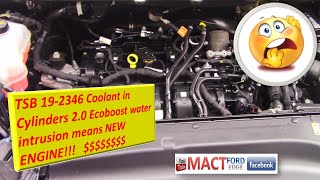
- Internal Coolant Leak (Cracked Engine Block) 🔴 High Probability A known design flaw in the 2.0L EcoBoost engine block can cause a crack between the cylinder and the cooling jacket, allowing coolant to leak directly into the combustion chamber. This is documented in Ford TSBs 19-2208, 19-2346, and 22-2229. The flaw is specifically related to slits cast into the engine block deck 🎬 Watch: How the TSB explains coolant intrusion in the cylinders between the cylinders. The issue is prevalent enough to have sparked multiple class-action lawsuits.
How to confirm: Perform a cooling system pressure test. Per the TSB, the system is pressurized to ~20 psi and held for 5 hours; a pressure drop of more than 4 psi indicates a likely internal leak. Use a borescope to visually inspect the cylinders (especially #2 and #3) for coolant, which is the definitive confirmation step. A chemical test can also detect combustion gases in the coolant.
Typical fix: The only sanctioned repair from Ford is to replace the long block engine assembly with a redesigned part (example P/N J2GZ-6006-E). The redesigned block does not have the failure-prone slits between the cylinders.
Est. part cost: $4000-$8000+ - Failed Water Pump 🟡 Medium Probability → Shop Engine Water Pump
How to confirm: Inspect the water pump for leaks from the weep hole. NHTSA ODI #11639979 describes a case where P1285 and P0217 were retrieved, showing a coolant leak specifically at the water pump weep hole. With the engine off and cool, check for excessive play in the water pump pulley. Listen for grinding or whining noises from the pump area when the engine is running. A stuck water pump can cause a rapid overheat.
Typical fix: Replace the water pump and serpentine belt. A potential OEM part number is EJ7Z-8501-H.
Est. part cost: $100-$300 - Stuck Thermostat ⚪ Low Probability → Shop Integrated Thermostat Housing Assembly
How to confirm: Feel the upper and lower radiator hoses once the engine has warmed up. If the thermostat is working, both should be hot. If the upper hose is hot and the lower is cold, the thermostat is likely stuck closed.
Typical fix: Replace the thermostat and housing, and refill with fresh coolant.
Est. part cost: $50-$150 - Cooling Fan Malfunction ⚪ Low Probability
How to confirm: With the engine at operating temperature (or when the A/C is on), check if the cooling fans are running. If not, inspect the fan fuses, relays, and wiring. This was a reported cause on a Ford Edge forum.
Typical fix: Replace the faulty cooling fan motor, relay, or repair the wiring.
Est. part cost: $150-$400
Rare But Worth Checking
- Faulty Cylinder Head Temperature (CHT) Sensor or Wiring: → Shop Engine Cylinder Head While rare, an actual overheat event can damage the CHT sensor, causing the code to persist even after the initial problem is fixed. It's also possible for the sensor or its wiring to fail and send a false overheat signal to the PCM. Ford issued TSB SSM 48991 for false overheat warnings caused by a damaged wiring harness. The CHT sensor is located on the cylinder head, often on the firewall side, making access difficult.
Diagnosis Steps
- DO NOT continue to drive the vehicle. Pull over immediately and turn off the engine.
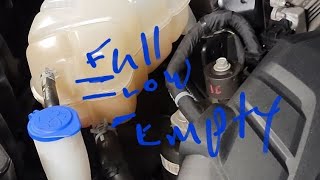
- Check the coolant level in the reservoir and radiator (only when the engine is completely cool). If it is low, this is a key symptom.
- Visually inspect the engine bay for any obvious signs of external coolant leaks (hoses, radiator, water pump).
- Given the high probability of the coolant intrusion issue on this engine, the next step should be to test for combustion gases in the cooling system using a chemical block tester.
- If the block test is positive, or if there is significant coolant loss with no external leaks, proceed to the diagnostic steps outlined in Ford's TSBs (e.g., TSB 22-2229).
- Perform a cooling system pressure test: pressurize the system to 20 psi and monitor for 5 hours. A pressure drop exceeding 4 psi strongly suggests an internal leak. NHTSA ODI #11439723 notes that a pressurized test found coolant on the cylinder walls.
- Use a borescope to inspect the inside of the cylinders for coolant, especially cylinders 2 and 3. This is the definitive diagnostic step outlined in Ford's TSBs.
- If the block test is negative and no coolant is found in the cylinders, proceed with standard cooling system diagnostics: pressure test the system to find external leaks, test thermostat operation, and verify cooling fan function.
- If all cooling system components are functional and no leaks are found, test the CHT sensor and its wiring harness for proper resistance and voltage to rule out a faulty sensor.
Parts You'll Likely Need
- Engine Long Block Assembly
(OEM #G1GZ-6006-F (example, VIN specific))— This is the official Ford-mandated repair for the common coolant intrusion issue that triggers code P1285 on this engine. The replacement should be a redesigned block to prevent recurrence.
Trusted brands: Motorcraft
OEM price range: $4000-$7000
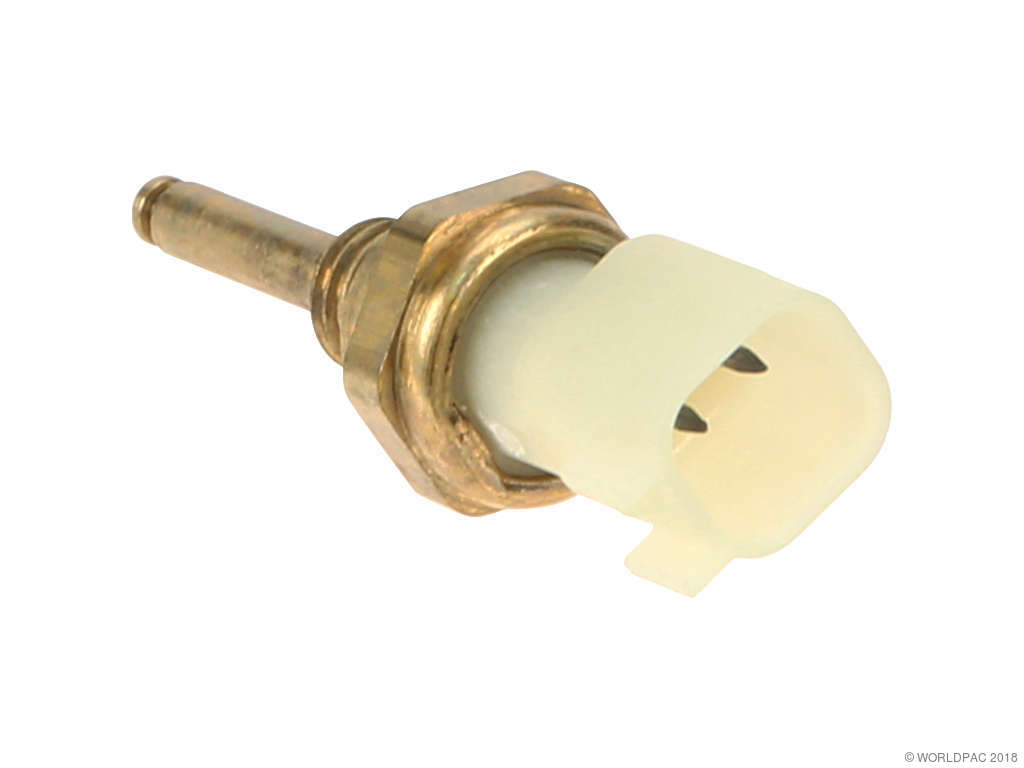
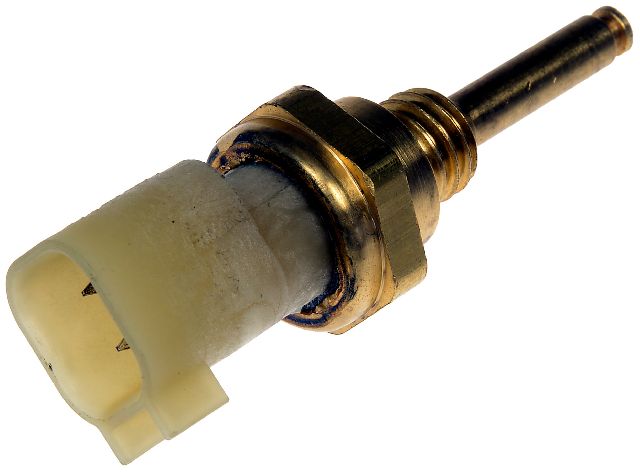
Aftermarket price range: $3500-$6000 - Cylinder Head Temperature (CHT) Sensor — In the rare case that the sensor itself has failed, or if it was damaged by a separate overheating event, it will need to be replaced.
Trusted brands: Motorcraft, Bosch, Dorman
OEM price range: $40-$70
Aftermarket price range: $20-$50
Related Codes That Often Appear With This One
- P1299 — This code, 'Cylinder Head Overtemperature Protection Active,' is the second stage of Ford's fail-safe cooling strategy. It indicates the PCM has started shutting down fuel injectors to cool the engine, and it almost always appears with P1285 if the condition persists. This relationship is confirmed in TSB Bulletin #TSB 22-2229.
- P0300-P0304 — These are random or specific cylinder misfire codes. They are frequently triggered when coolant intrudes into the cylinders, fouling the spark plugs and preventing proper combustion. They are a key symptom of the coolant intrusion issue and are mentioned in the TSBs.
- P0217 — 'Engine Overtemperature Condition.' This is a general overheat code that often accompanies the more specific P1285 code and is also listed in the relevant TSBs.
Technical Service Bulletins (TSBs) & Recalls
- TSB 19-2208: '2.0L EcoBoost - Coolant In Cylinders, White Exhaust Smoke And/Or Illuminated MIL'
- TSB 19-2346: '2.0L EcoBoost - Coolant In Cylinders, White Exhaust Smoke And/Or Illuminated MIL'
- TSB 22-2229: '2.0L EcoBoost - Coolant In Cylinders, White Exhaust Smoke And/Or Illuminated MIL' - This bulletin notes that P1285 and P1299 may be stored in the PCM due to coolant intrusion into the cylinder.
Platform-Specific Known Issues
- Coolant Intrusion due to Engine Block Design: Ford has issued multiple TSBs (including 19-2208, 19-2346, and 22-2229) for the 2.0L EcoBoost engine in the 2015-2018 Edge. These bulletins identify P1285 as a key DTC indicating coolant is leaking into the cylinders due to a flaw in the engine block. The only prescribed fix is a complete long block replacement.
- Class Action Lawsuits: Numerous class-action lawsuits have been filed against Ford for the 2.0L EcoBoost coolant intrusion issue, alleging the company knowingly sold vehicles with a defective engine design.
Mechanic-Grade Diagnostic Values
- CHT Sensor Resistance — expected: Approximately 2000-3000 Ω at 68°F (20°C), dropping to 200-300 Ω at 194°F (90°C). A detailed chart shows ~43 kΩ at 60°F (15°C).. Failure: An infinite reading (open circuit), near-zero reading (short circuit), or a value that does not correspond to the current head temperature indicates a faulty sensor.
- CHT Sensor Signal Voltage (Key On, Engine Connected) — expected: On a cold engine, voltage should be high (e.g., 2.0V - 3.0V). As the engine warms to operating temperature (~194°F), voltage should drop to around 0.5V - 2.03V.. Failure: Voltage stuck at the 5V reference or near 0V, or readings that do not correlate with engine temperature, point to a wiring or sensor fault.
- CHT Sensor Reference Voltage (Key On, Sensor Unplugged) — expected: Approximately 5 volts on the signal wire side of the harness connector.. Failure: No voltage indicates an open wire or a problem with the PCM.
Scan Tool Commands That Help
- Ford IDS (Integrated Diagnostic System): Active Commands / Bidirectional Controls — To rule out other causes of overheating if coolant intrusion is not immediately confirmed. The IDS can command the cooling fans on/off to verify their operation and monitor live data PIDs for the CHT sensor with high accuracy.
Wiring & Ground Locations
- CHT Sensor — On the cylinder head, often on the rear (firewall side) or left-hand (driver's side) of the head near the bellhousing, making it difficult to access.. The sensor provides the direct temperature reading that triggers P1285. Its location makes it susceptible to heat damage.
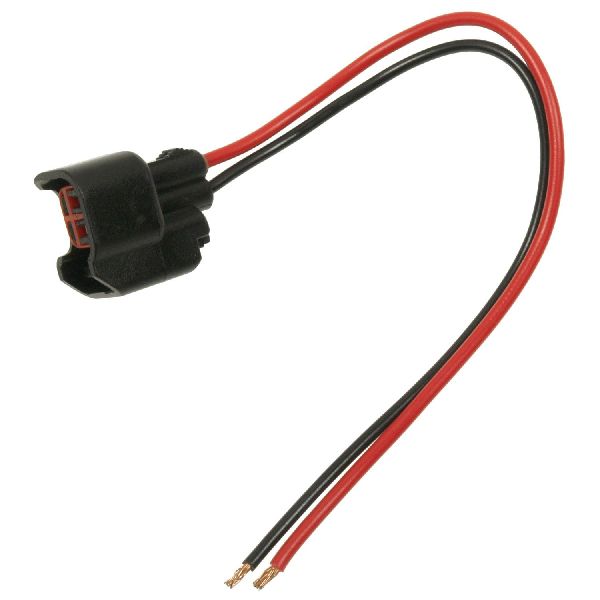
- CHT Sensor Wiring Harness — Runs from the CHT sensor to the PCM. It can be routed in tight, hot areas of the engine bay.. Ford TSB SSM 48991 specifically identifies a damaged CHT wiring harness as a potential cause of false overheating warnings and related codes. A short or open in this harness can mimic a sensor failure.
- G100 / G101 / G102 — Major chassis ground points often located on the left front of the engine compartment, near the strut tower or on the frame rails.. A poor ground connection for the PCM or sensor circuits can cause erratic sensor readings, potentially leading to false P1285 codes.
Real Owner Repair Stories
- NHTSA ODI #11666815 — An owner reported that an "Engine Overheat" message was displayed. A mechanic retrieved code P1285 and informed the owner that the engine was faulty.
- NHTSA ODI #11578312 — An owner reported symptoms including low coolant level, white exhaust smoke, and rough running. Diagnostic codes included P0300, P0217, P1285, and P1299, with the recommended fix being the replacement of the long block engine assembly.
- Multiple Ford Forums and Reddit threads (r/fordfusion, r/FordEdge) (2015-2018 Ford Edge, Fusion, Escape with 2.0L EcoBoost) — P1285, P1299, P030x codes, coolant loss with no visible leaks, white exhaust smoke, rough running.
❌ Tried (didn't work) Replacing thermostat, Replacing CHT sensor, Replacing head gasket
✅ What actually fixed it Replacement of the engine long block with the revised part number, as directed by Ford TSB 22-2229. This is the overwhelmingly common and successful repair. - YouTube video on a New Edge Mustang (Ford Mustang V6 (different vehicle, but same sensor principle)) — A genuine overheat from a loose radiator hose caused coolant to spray over the engine. After fixing the hose, code P1285 kept returning even though the car was not overheating. Code P1290 (CHT sensor circuit fault) also appeared.
❌ Tried (didn't work) Clearing the code (it returned after ~40 miles).
✅ What actually fixed it Replacing the Cylinder Head Temperature (CHT) sensor itself. The initial overheat event had damaged the sensor, causing it to send false signals.
OEM Part Supersession History
Various VIN-specific long blocks for 2015-2019 models→J2GZ-6006-E (example of revised part, always confirm with VIN)— The original engine block design featured slits between the cylinders on the block deck. The revised block design replaces these slits with small, angled, drilled holes to prevent cracks from forming and causing coolant intrusion.
Model Year Variations Within This Range
- 2015-2018: The 2015 model year marked the debut of the second-generation Edge and the new twin-scroll 2.0L EcoBoost engine design that is prone to the coolant intrusion issue. Earlier (pre-2015) 2.0L EcoBoost engines were a different design and are not affected by this specific TSB. The problematic design continued until a block revision for the 2020 model year.
Diagnostic Flowchart
Used vs. New Parts: Buying Guide for This Vehicle
When a used part is the smart pick: A used engine from a salvage yard is a cost-effective alternative to a new OEM long block ONLY if you can verify it is the updated engine design from a 2020 or newer model year vehicle.
Donor-vehicle mileage cap: roughly under 80000 miles for the part to have meaningful remaining life.
What to inspect on the donor part:
- CRITICAL: Visually inspect the engine block deck. The revised, good block has small drilled coolant passages between the cylinders. The original, bad block has long, thin slits.
- Obtain the VIN from the donor vehicle to confirm it is a 2020+ model year Ford Edge, Escape, Fusion, or other vehicle with the 2.0L EcoBoost.
- Check for any external signs of damage, corrosion, or leaking gaskets.
- If possible, get compression test numbers from the seller.
OEM-only on this vehicle (don't cheap out):
- Engine Long Block Assembly: While a used engine is an option, if buying new, an OEM Motorcraft part is the only way to guarantee you receive the latest revised block design that corrects the coolant intrusion flaw.
Aftermarket brands forum-validated for this vehicle:
- For supporting cooling system parts if replaced at the same time: Gates (thermostats, hoses), Bosch (sensors).
Brands owners have reported issues with on this vehicle:
- Unknown or unbranded engine long blocks from online marketplaces without a clear warranty or proof of the revised block design.
Real Owner Stories
Aggregated from forums and TSBs cited above. Mileages and costs reflect what owners reported in those sources.
2017 Ford Edge 2.0L EcoBoost — 65000 miles
Symptoms: Owner received an over-temperature warning on the dashboard.
What fixed it: A shop diagnosed the vehicle with possible coolant in cylinder 1. The final repair was not specified, but another owner in the thread with a 2018 model at 64k miles was denied coverage for an engine replacement by Ford.
Source hint: Reddit: 2017 possible coolant leaking in to cylinder 1
2017 Ford Edge 2.0L EcoBoost — 102000 miles
Symptoms: Owner experienced a 'textbook coolant intrusion failure.'
What fixed it: The owner was quoted for a new engine to fix the issue.
Cost: $10000-$10000
Source hint: Reddit: 2017 Ford Edge coolant intrusion (it's my turn)
2015-2018 Ford Edge 2.0L EcoBoost
Symptoms: Rough idle, especially when the engine was cold.
What fixed it: A new 2022 long block engine assembly was installed to resolve the coolant intrusion problem.
Source hint: Blue Oval Forums: Rough Idle When Cold - coolant intrusion - TSB 22-2133 & TSB 22-2229
2018 Lincoln MKC 2.0L EcoBoost — 37500 miles
Symptoms: Engine failure due to coolant intrusion.
What fixed it: The original engine was replaced, but the replacement engine failed from the exact same coolant intrusion issue in less than 5,000 miles, despite being the part number specified in TSB 22-2229.
Source hint: CarComplaints.com: 2018 Lincoln MKC Blown Head Gasket
Related OBD-II Codes
Frequently Asked Questions
What is Ford's official fix for the P1285 overheat code caused by coolant intrusion on my 2015-2018 Edge?
What is the specific design flaw in the 2.0L EcoBoost engine that causes this coolant leak?
How can a mechanic definitively prove that my engine has the internal coolant leak?
Are there any official Ford TSBs I can reference for this P1285 coolant intrusion issue?
I have a 2017 Ford Escape with the 2.0L EcoBoost, not an Edge. Could it have the same problem?
What are the most common symptoms of the engine block crack besides the check engine light for P1285?
Helpful Videos

We Have This Part in Stock


The information in this article is provided for general reference and educational purposes only. Vehicle specifications, procedures, and part compatibility can vary by production date, trim level, and region. Always consult your vehicle's factory service manual and verify part numbers before purchasing or performing repairs. Safety-critical components such as airbags, seat belts, and braking systems should be installed by a qualified professional.
- Ford Edge:
- 🧭 Diagnostic Flowchart
- 🎬 Helpful Videos
- 🛍️ Shop This Part
- What's Unique About the 2015-2018 Ford Edge
- Symptoms You May Notice
- Most Likely Causes
- Rare But Worth Checking
- Diagnosis Steps
- Parts You'll Likely Need
- Related Codes That Often Appear With This One
- Technical Service Bulletins (TSBs) & Recalls
- Platform-Specific Known Issues
- Mechanic-Grade Diagnostic Values
- Scan Tool Commands That Help
- Wiring & Ground Locations
- Real Owner Repair Stories
- OEM Part Supersession History
- Model Year Variations Within This Range
- Used vs. New Parts: Buying Guide for This Vehicle
- Real Owner Stories
- 2017 Ford Edge 2.0L EcoBoost — 65000 miles
- 2017 Ford Edge 2.0L EcoBoost — 102000 miles
- 2015-2018 Ford Edge 2.0L EcoBoost
- 2018 Lincoln MKC 2.0L EcoBoost — 37500 miles
- Related OBD-II Codes
- Frequently Asked Questions
- 🎟️ Get 5% Off