

P1285 on 2008-2012 Ford Escape 3.0L V6: Cylinder Head Overheating Causes and Fixes
P1285 means the engine's cylinder head is dangerously hot. This can be a real overheating event (like a failed water pump) or a false alarm from a bad Cylinder Head Temperature (CHT) sensor. The CHT sensor is a common failure, but it's a 3-4 hour labor job to replace because it's buried under the intake manifold. Proper diagnosis is key to avoid unnecessary, expensive repairs.
- P1285 is a CRITICAL code. Pull over and shut off the engine immediately to avoid catastrophic failure.
- The first step is to determine if the engine is actually hot. If it's a cold engine showing an overheat warning, the CHT sensor is the likely culprit.
- Be aware that replacing the CHT sensor on the 3.0L V6 is a major job (3-4+ hours of labor) due to its location under the intake manifold.
- If the engine is genuinely overheating, inspect the cooling system for common failures like a seized water pump, broken belt, stuck thermostat, or low coolant.
- This code is almost always accompanied by P1299, which confirms the engine's computer has put the vehicle into a protective 'limp mode'.
What's Unique About the 2008-2012 Ford Escape
On the 3.0L V6 Duratec engine in the second-generation Escape and its platform mates (Mercury Mariner, Mazda Tribute), the P1285 code presents a unique diagnostic challenge. The two most common causes are polar opposites: a genuine, severe overheating event or a simple failed sensor giving a false alarm. The complication is that the CHT sensor is located in a notoriously difficult-to-access spot in the valley between the cylinder heads, under the upper and lower intake manifolds, making its replacement a significant labor-intensive job. Therefore, proper diagnosis is critical to avoid either a very expensive and unnecessary sensor replacement or ignoring a real cooling system failure that could destroy the engine.
Symptoms You May Notice
- Check Engine Light is on
- Temperature gauge suddenly reads HOT, often immediately after a cold start
- Engine goes into reduced power 'limp mode' (may be indicated by a wrench light)
- Engine may stall while driving and restart after cooling down
- Cooling fans running constantly at high speed, even when the engine is cold
- Hard starting, where the engine cranks excessively before firing
- "Engine Coolant Over-Temperature" warning message displayed in the instrument cluster
- Replacing the CHT sensor without first verifying if the engine is actually overheating. If the engine is genuinely hot, the sensor is working correctly and another part of the cooling system has failed.
- Confusing the Cylinder Head Temperature (CHT) sensor with the Engine Coolant Temperature (ECT) sensor. On the 3.0L V6, the PCM relies on the CHT sensor, which measures metal temperature directly. Some scan tools may incorrectly label the CHT data as 'ECT'.
Most Likely Causes
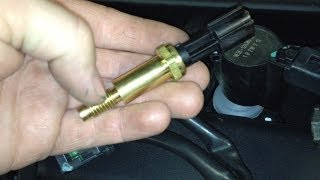
- Faulty Cylinder Head Temperature (CHT) Sensor 🔴 High Probability → Shop Engine Cylinder Head The sensor is a very common failure point on this engine. It often fails by creating an open circuit, which the PCM interprets as maximum heat, triggering a false overheat warning on a cold engine.
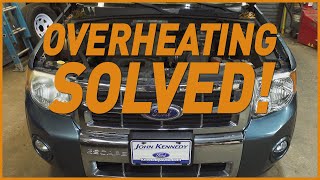
How to confirm: If the engine is cold but the temperature gauge immediately goes to HOT upon starting, and a scan tool shows a CHT reading of 250°F or higher, the sensor is almost certainly bad. 🎬 Watch: Diagnosing a Ford Escape overheat with a scan tool You can also test the sensor's resistance when cold; it should be approximately 37kΩ to 59kΩ at 60-68°F.
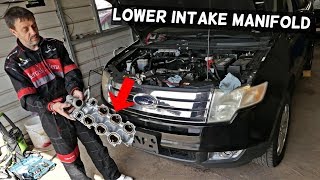
Typical fix: Replace the Cylinder Head Temperature (CHT) sensor. This is a labor-intensive job requiring removal of the upper and lower intake manifolds to gain access. It is highly recommended to replace the intake manifold gaskets at the same time.
Est. part cost: $25-$50 - Actual Engine Overheating 🔴 High Probability As vehicles age, components of the cooling system like the water pump, thermostat, and radiator are common failure points leading to genuine overheating. Manufacturer service bulletin SSM 54068 notes that an illuminated MIL with P1285 can occur during hard acceleration or under high load conditions.
How to confirm: First, verify if the engine is genuinely hot. Check for low coolant in the reservoir, visible coolant leaks under the vehicle, or use an infrared thermometer on the engine block. Check for a broken water pump belt or a seized water pump pulley. 🎬 See how a seized water pump triggers these codes
Typical fix: Repair the source of the overheat. This could be refilling coolant and fixing a leak, or replacing a seized water pump, broken belt, or stuck thermostat.
Est. part cost: $50-$200 - Damaged CHT Sensor Wiring or Connector 🟡 Medium Probability The wiring and connector are exposed to extreme heat cycles under the intake manifold, which can lead to brittleness, corrosion, and broken wires over time. Moisture intrusion is also a known issue.
How to confirm: After accessing the sensor, visually inspect the connector and wiring pigtail for any signs of corrosion, melting, or broken wires. Check for continuity and resistance through the wiring harness.
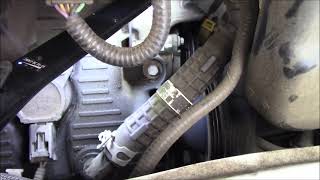
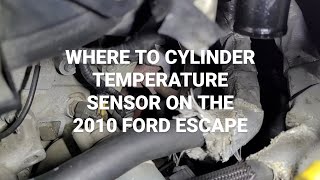
Typical fix: Replace the connector pigtail if it is damaged. This is often done at the same time as the sensor itself due to the high labor cost to access the area. The pigtail connector is often a gray, 2-terminal female connector. 🎬 Watch: Where to find the cylinder head temperature sensor
Est. part cost: $15-$30 - Internal Engine Coolant Intrusion ⚪ Low Probability In some cases, coolant may leak internally into the cylinders. TSB 22-2322 describes a condition where P1285 and P1299 are stored due to coolant intrusion into the cylinder, which may require significant engine repair.
Rare But Worth Checking
- Failing Cooling Fans: If the engine only overheats in stop-and-go traffic but is fine on the highway, the cooling fans or their control module/relays may have failed, preventing airflow through the radiator at low speeds.
- Air Trapped in Cooling System: If cooling system service was recently performed (e.g., thermostat or water pump replacement), an air pocket could be trapped in the cylinder head, causing a localized hot spot that triggers the CHT sensor even if the overall system temperature is normal.
- Manufacturing Debris: According to SSM 54288, some Ford engines may exhibit P1285/P1299 due to machining chips left in the engine during the manufacturing process.
Diagnosis Steps
- STOP DRIVING IMMEDIATELY to prevent engine damage.
- Use an OBD-II scanner to confirm the P1285 code and check for P1299 or other related codes.
- Check the freeze frame data to see the engine conditions (speed, load, temperature) when the code was set.
- CRITICAL STEP: Determine if the engine is actually overheating. If the code sets immediately on a cold start, the CHT sensor or wiring is the fault. If the engine is physically hot (radiant heat, boiling sounds), you have a real cooling system failure.
- If the engine is NOT hot: The CHT sensor or its wiring is the cause. The diagnosis is complete, and the difficult repair (intake manifold removal) must be planned.
- If the engine IS hot: Let the engine cool completely before proceeding.
- Once cool, check the coolant level in the reservoir. If low, top it off and perform a cooling system pressure test to find leaks from hoses, the radiator, water pump, or thermostat housing.
- Inspect the water pump drive belt to ensure it is present and intact. Check if the water pump pulley is seized.
- If no obvious leaks or belt issues are found, the problem could be a stuck-closed thermostat, a failing water pump (impeller failure), or a clogged radiator.
Parts You'll Likely Need
- Cylinder Head Temperature (CHT) Sensor
(OEM #9L8Z-6G004-F)— This sensor is the most common failure point, causing a false overheat signal. The Motorcraft equivalent part number is DY-1145.
Trusted brands: Motorcraft, NGK, Standard Motor Products
OEM price range: $25-$40
Aftermarket price range: $15-$30 - CHT Sensor Connector Pigtail
(OEM #Motorcraft WPT-985 (check application))— The connector under the intake manifold can become brittle or corroded. It's wise to replace it during a CHT sensor job. Aftermarket versions like Dorman 645-246 or Standard S-816 are also available.
Trusted brands: Motorcraft, Dorman, Standard Motor Products (SMP)
OEM price range: $20-$35
Aftermarket price range: $10-$25 - Engine Water Pump
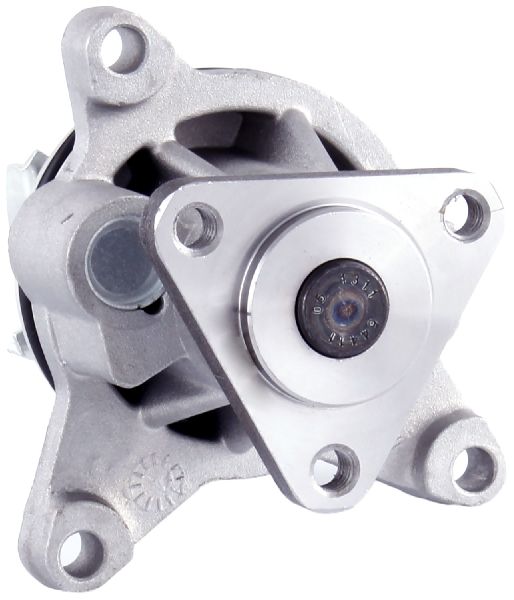
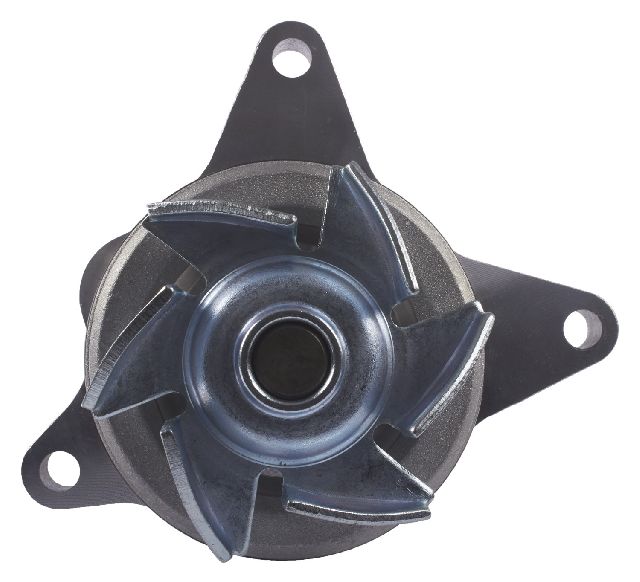
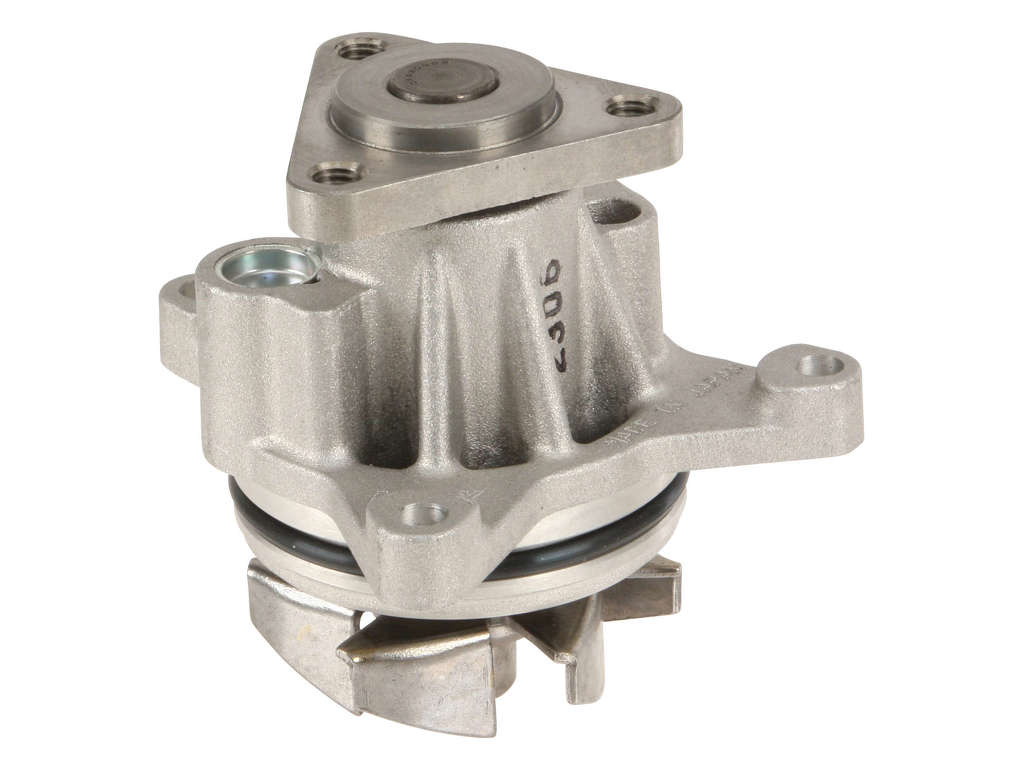
(OEM #PW-493 (Motorcraft))— A seized or failed water pump is a common cause of a genuine overheat that triggers P1285 on this specific vehicle.
Trusted brands: Motorcraft, Gates, GMB, ACDelco
OEM price range: $100-$150
Aftermarket price range: $40-$80 - Upper and Lower Intake Manifold Gaskets — These must be replaced whenever the intake manifold is removed to access the CHT sensor to prevent vacuum leaks.
Trusted brands: Fel-Pro, Motorcraft, Mahle
OEM price range: $40-$70
Aftermarket price range: $20-$40
Related Codes That Often Appear With This One
- P1299 — P1299 (Cylinder Head Overtemperature Protection Active) is the direct result of P1285. P1285 is the warning; P1299 means the PCM has taken protective action by entering limp mode. They almost always appear together.
- P0217 — This is a generic 'Engine Overtemperature Condition' code. Its presence alongside P1285 helps confirm a genuine overheating event rather than just a sensor fault.
- P0128 — P0128 (Coolant Thermostat Temperature Below Regulating Temperature) can sometimes appear with P1285 if there's an issue with the CHT sensor circuit causing erratic readings, or a thermostat that is stuck open causing the engine to warm up too slowly, followed by a separate overheating event.
- P0300-P0304 — Misfire codes can sometimes accompany P1285 if the overheating is caused by coolant intrusion into the cylinder, as noted in TSB 22-2322.
Technical Service Bulletins (TSBs) & Recalls
- TSB 11-10-5: Describes moisture intrusion into the CHT connector causing false overheat codes.
- TSB 22-2322: Addresses P1285 and P1299 codes that may be caused by coolant intrusion into the cylinder, often accompanied by misfire codes (P0300-P0304).
- SSM 54068: Notes that P1285 may be stored during hard acceleration or high load conditions due to machining chips.
- SSM 54288: Describes "Engine Coolant Over-Temperature" warnings and DTC P1285/P1299 occurring under high load conditions.
Platform-Specific Known Issues
- The location of the CHT sensor on the 3.0L V6 is under the intake manifolds, making a simple, inexpensive part replacement a very labor-intensive and costly repair (3-4 hours of labor).
- TSB 11-10-5, while for the 2.5L 4-cylinder, describes an identical failure mode where moisture enters the CHT connector, causing false P1285/P1299 codes and constant fan operation. The diagnostic principle is directly relevant.
Mechanic-Grade Diagnostic Values
- CHT Sensor Resistance (Cold Engine) — expected: 37kΩ - 59kΩ at 60-68°F (15-20°C).. Failure: An open circuit (infinite resistance) or short circuit (near zero resistance) indicates a failed sensor.
- CHT Sensor Signal Voltage (Key On, Engine Off, Cold) — expected: Approximately 3.4V at 61°F (16°C).. Failure: A reading near 5.0V indicates an open circuit (bad sensor or wiring). A reading near 0V indicates a short to ground.
- CHT Sensor Signal Voltage (Key On, Engine at Operating Temp) — expected: Approximately 2.1V at 198°F (92°C).. Failure: Voltage that does not decrease as the engine warms, or is stuck high/low, points to a sensor or circuit fault.
- CHT Sensor Reference Voltage (Sensor Unplugged, KOEO) — expected: Approximately 5.0V on the reference wire from the PCM.. Failure: If the 5V reference is missing, the fault is in the wiring harness or the PCM itself.
Scan Tool Commands That Help
- Ford IDS / ForScan: Live Data PID Monitoring (CHT) — Use this on a 'cold-soaked' engine (left overnight). Before starting, the CHT, ECT (if equipped), and IAT (Intake Air Temp) PIDs should all read within a few degrees of each other. If the CHT reads significantly higher (e.g., 250°F) than the others, the sensor or its circuit is faulty.
- Ford IDS / ForScan: Clear KAM (Keep Alive Memory) — After replacing the CHT sensor or repairing the cooling system, clearing the KAM forces the PCM to reset its adaptive learning tables. This ensures the PCM uses data from the new components immediately, rather than relying on old, learned values that could cause temporary running issues.
Wiring & Ground Locations
- CHT Sensor Connector — In the engine valley, between the cylinder heads, underneath the upper and lower intake manifolds.. This is the primary connection point for the sensor. Due to its location, it is subjected to extreme heat, which can make the connector and wires brittle and prone to failure.
- PCM Connector C175B (Pins 39 & 49) — The Powertrain Control Module (PCM) is located at the rear center of the firewall.. Wiring diagrams for the 2009 3.0L show the CHT signal wire (BLU/GRY) connects to Pin 39 and the Signal Return wire (GRN/WHT) connects to Pin 49 of connector C175B. These specific pins can be tested for continuity and voltage when diagnosing a circuit fault between the sensor and the PCM.
- G104 — At the left front corner of the engine compartment, near the Battery Junction Box (BJB).. This is a major chassis and system ground. A loose or corroded connection here can cause a variety of electrical issues, including erratic sensor readings for components grounded through this point.
- G109 — On the firewall at the rear of the engine compartment.. This is a primary ground point for engine sensors. A poor connection here can directly affect the CHT sensor's signal return path, causing incorrect readings and false codes.
Real Owner Repair Stories
- Reddit user on r/MechanicAdvice (2008 Ford Escape) — Engine overheated, P1285 code was set.
❌ Tried (didn't work) Initially unsure of the cause.
✅ What actually fixed it The user noted the vehicle had low coolant in the radiator. The immediate fix was refilling the coolant. The underlying cause was the leak that led to the low coolant condition, which then caused a real overheat event, correctly triggering the P1285 code. - NHTSA ODI #11706940 — An owner reported checking their vehicle with an OBD2 reader and finding a P1285 code, which indicated the cylinder head was over temperature. The owner noted that upon further research, the issue appeared to be known by the manufacturer.
- NHTSA ODI #11611342 — An owner was informed by a mechanic that a new engine was required due to a series of engine codes including P0300, P0301-P0304, P0316, P0217, P1285, and P1299.
Model Year Variations Within This Range
- 2008: The 2008 model year was a 'half-gen' update. It featured the new second-generation body style but carried over the powertrain from the first generation: a 200-hp 3.0L V6 and a 4-speed automatic transmission.
- 2009-2012: Starting in 2009, the 3.0L V6 was updated, increasing output to 240 hp, and was paired with a new, more efficient 6-speed automatic transmission. While the P1285 fault is common to both versions, diagnostics related to transmission or specific engine performance parameters may differ.
Diagnostic Flowchart
Other Known Issues on This Vehicle
Issues unrelated to this code that are worth knowing about as an owner of this generation:
- Severe Rear Shock Tower Rust 🔴 High — Very common in rust-belt states. The passenger side rear shock tower is especially prone to rusting completely through, causing the shock to detach from the frame. (Ref: No recall, but a well-known issue. Aftermarket repair panels are widely available (e.g., part number 924-358) due to the frequency of this failure.)
- 6F35 Transmission Failures 🔴 High — Widespread issues including harsh shifting, slipping, torque converter shudder (especially 35-45 mph), and complete failure, sometimes at low mileage. (Ref: Multiple TSBs exist, such as TSB 16-0043 for leaking axle seals. A class-action lawsuit was filed in March 2024 regarding these transmission issues.)
- Leaking Driver's Side Axle Seal 🟠 Medium — Common on 2009-2012 models with the 6F35 transmission, causing transmission fluid leaks. (Ref: TSB 16-0043 addresses this issue, which is caused by wear on the transmission case bushing.)
- Electronic Throttle Body (ETB) Failure 🟠 Medium — Can cause the vehicle to enter 'limp mode' with a wrench light on the dash. Failures are common around 70,000 miles. (Ref: Customer Satisfaction Program 13N03 was issued for some models, extending warranty coverage on the ETB. TSB 09-23-5 also addresses ETB issues causing DTC P2135.)
- 3.0L V6 Timing Cover Oil Leak 🟠 Medium — A very common oil leak from the timing cover gasket. It is a labor-intensive repair (6-7 hours) as many components need to be removed for access.
Used vs. New Parts: Buying Guide for This Vehicle
When a used part is the smart pick: For this specific repair, using used parts is generally not recommended due to the high labor cost involved. However, if a genuine overheating event damaged other components, a used radiator, cooling fan assembly, or coolant reservoir from a low-mileage donor vehicle could be a cost-effective option.
Donor-vehicle mileage cap: roughly under 80000 miles for the part to have meaningful remaining life.
What to inspect on the donor part:
- For a radiator, inspect fins for excessive damage or corrosion and check tanks for cracks or signs of past leaks (white or colored residue).
- For a fan assembly, spin the blades by hand to ensure they move freely and check the electrical connector for corrosion or damage.
- Verify the donor vehicle was not in a front-end collision, which could have caused unseen damage to cooling components.
OEM-only on this vehicle (don't cheap out):
- Cylinder Head Temperature (CHT) Sensor: Due to the 3-4+ hours of labor required to access this part under the intake manifold, installing a used or cheap off-brand sensor is a major risk. A premature failure would require repeating the entire expensive job. Stick with OEM Motorcraft or a top-tier aftermarket brand.
Aftermarket brands forum-validated for this vehicle:
- CHT Sensor: Standard Motor Products (SMP), NTK
- Intake Manifold Gaskets: Fel-Pro, Mahle
- Water Pump: Gates, GMB, ACDelco
Brands owners have reported issues with on this vehicle:
- Unknown, no-name brands for the CHT sensor from online marketplaces. The risk of infant failure is too high given the labor-intensive replacement.
Real Owner Stories
Aggregated from forums and TSBs cited above. Mileages and costs reflect what owners reported in those sources.
2010 Ford Fusion 2.5L (Related Engine)
Symptoms: Hard starting (engine cranks excessively before firing) and cooling fans running constantly.
What fixed it: Replacement of a corroded pigtail connector for the CHT sensor as per TSB 11-10-5.
Source hint: YouTube (2010 Fusion P1285 CHT sensor failure...)
2008-2012 Ford Escape 3.0L V6
Symptoms: Attempting to change the coolant temperature sensor but unable to find a tool that fits in the extremely tight location.
What fixed it: The source highlights the extreme difficulty of access under the intake manifold rather than a specific successful repair.
Source hint: Reddit r/fordescape (Changing a coolant temp sensor on 2008-2012 escape)
2008-2012 Ford Escape
Symptoms: Vehicle actually overheated; owner was advised to check for low coolant before assuming the sensor was bad.
What fixed it: Fixing the root cause of the overheat (low coolant) rather than replacing the sensor.
Source hint: Reddit r/MechanicAdvice (P1285 - Cylinder Head Over Temperature Sensed)
Related OBD-II Codes
Frequently Asked Questions
Does TSB 11-10-5 apply to my 3.0L V6 Ford Escape?
Why does my temperature gauge read HOT immediately after a cold start on my 2010 Escape?
Is the CHT sensor the same thing as the ECT sensor on the 2008-2012 Escape?
Can I replace the CHT sensor on my 3.0L V6 Escape myself?
Why are my cooling fans running at high speed when I first start my car in the morning?
Should I replace the intake manifold gaskets when fixing the P1285 code?
Helpful Videos
Used OEM Parts in Stock
New Aftermarket Parts Available


The information in this article is provided for general reference and educational purposes only. Vehicle specifications, procedures, and part compatibility can vary by production date, trim level, and region. Always consult your vehicle's factory service manual and verify part numbers before purchasing or performing repairs. Safety-critical components such as airbags, seat belts, and braking systems should be installed by a qualified professional.
- Ford Escape:
- 🧭 Diagnostic Flowchart
- 🎬 Helpful Videos
- 🛍️ Shop This Part
- What's Unique About the 2008-2012 Ford Escape
- Symptoms You May Notice
- Most Likely Causes
- Rare But Worth Checking
- Diagnosis Steps
- Parts You'll Likely Need
- Related Codes That Often Appear With This One
- Technical Service Bulletins (TSBs) & Recalls
- Platform-Specific Known Issues
- Mechanic-Grade Diagnostic Values
- Scan Tool Commands That Help
- Wiring & Ground Locations
- Real Owner Repair Stories
- Model Year Variations Within This Range
- Other Known Issues on This Vehicle
- Used vs. New Parts: Buying Guide for This Vehicle
- Real Owner Stories
- 2010 Ford Fusion 2.5L (Related Engine)
- 2008-2012 Ford Escape 3.0L V6
- 2008-2012 Ford Escape
- Related OBD-II Codes
- Frequently Asked Questions
- 🎟️ Get 5% Off